
Review · KATHMANDU
Cook and Dine with a Local family
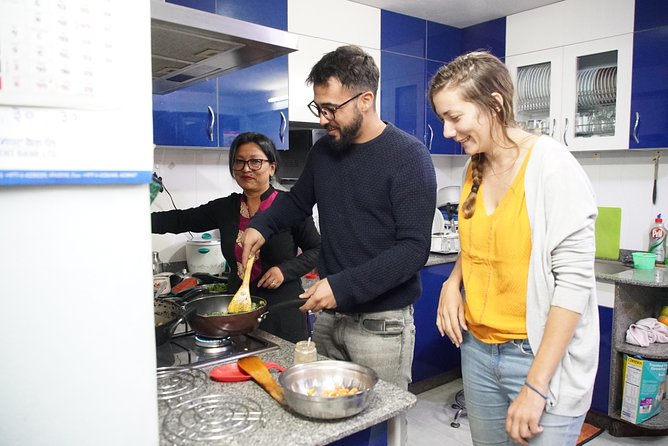
Spice shopping beats another museum stop. I love the market ingredient hunt and the hands-on dal bhat lesson, then you eat what you cook in their home. One thing to consider: it runs about five hours and starts at 3:00 pm, so it’s an afternoon plan, not a quick activity.
Your host family handles the flow, and you’ll have an English-speaking guide at the table and in the kitchen. The group is capped at four travelers, which keeps the vibe personal and makes it easier to ask why certain spices get used (and how they’re balanced).
Because the experience requires good weather, you may spend part of the time outdoors during market shopping. If weather gets rough, plans can change or you’ll be offered a different date or a refund.
In This Review
- Key highlights worth your time
- Why this Kathmandu cooking class feels real (not staged)
- Meeting at Royal Mountain Travel and the 3:00 pm start
- Market spice shopping: what you’re choosing and why it tastes different
- Inside the home: daily life, conversation, and a kitchen that teaches
- Cooking dal bhat: a simple method with real flavor logic
- Dinner in the family home: eating with context
- Price and value: what $45 actually buys you
- Weather and pacing: a few things to plan for
- Who should book this (and who might not love it)
- Should you book this cooking-with-a-local-family experience?
- FAQ
- What time does the cooking class start in Kathmandu?
- Where does the tour start and end?
- Is dinner included?
- Do I get pickup and transportation?
- Is this class limited to small groups?
- Will I have someone who speaks English?
- What is the cancellation policy?
Key highlights worth your time
- Spice shopping with your host family so you see what goes into Nepali cooking before the first pot hits the stove
- Hands-on dal bhat cooking with straightforward steps you can repeat at home
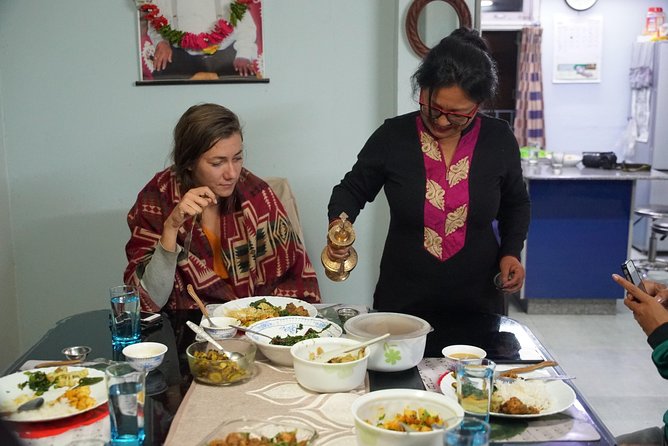
- Home-based dinner where you’re not just fed, you’re also part of the evening routine
- Small group size (max 4) for real conversations instead of a crowded classroom feel
- Pickup plus private transportation to reduce Kathmandu/valley stress before you even start cooking
Not sure yet? Here are other Kathmandu tours worth a side-by-side look.
- Everest Base Camp Trek – 14 Days★ 5.0 · 1,499 reviews
- Everest Base Camp Trek★ 5.0 · 842 reviews
- Private Kathmandu Sightseeing Tour | UNESCO World Heritage sites★ 5.0 · 756 reviews
- Kathmandu: 7 UNESCO Sites with Lunch★ 4.8 · 744 reviews
Why this Kathmandu cooking class feels real (not staged)
A standard tour will show you photos of food. This one shows you the process, from choosing spices to sitting down and eating in the same home where you cooked. That difference matters. When you buy the ingredients together and then cook them with your host, the flavor logic sticks.
What makes this experience especially strong is the family angle. You’re not just learning recipes; you’re learning how Nepali cooking fits into daily life. You’ll also interact with the host family during the meal, so questions feel natural—like asking what a spice is used for, or how a household turns simple staples into something comforting.
And yes, dal bhat is the star here, but it’s more than a dish name. It’s a template for Nepali home cooking: simple vegetables, a spice mix with turmeric, cumin, ginger, and garlic, and a rhythm that’s easy to follow even if you’re not an experienced cook.
Meeting at Royal Mountain Travel and the 3:00 pm start
The day kicks off at Royal Mountain Travel (Lal Durbar Marg, Kathmandu). The start time is 3:00 pm, and the experience returns you back to the same meeting point at the end.
That timing is actually smart for many visitors. Late afternoon is often when you can avoid the harshest sun and still finish with enough daylight for market shopping and a home dinner. Just remember it’s not a morning class, so plan your earlier hours accordingly.
One practical plus: pickup is included. So you’re not navigating streets while hungry, jet-lagged, or trying to figure out where the nearest market entrance is. Private transportation is also part of the package, which helps the whole schedule stay on track. For a small group, it’s less waiting around and more doing.
Market spice shopping: what you’re choosing and why it tastes different
You’ll head to a local market with your host family to buy groceries and spices. This is usually the fastest way to understand why Nepali food tastes the way it does. In cooking classes that start at the kitchen door, you often skip the ingredient decisions. Here, you get to choose what goes in your meal and learn what each ingredient contributes.
During this shopping time, you can expect a focus on spices and the small ingredients that make Nepali cooking feel layered without being complicated. The class centers on dal bhat flavors that come from turmeric, cumin, ginger, and garlic. Seeing them up close in the market context helps you notice the differences between dried spices, fresh aromatics, and how they’re used as part of the overall balance.
A tip for you: ask your host family what they reach for most often, not only what’s used for the class. You’ll get better insight into everyday cooking habits. Plus, it makes you more confident when you try the dish later at home.
Inside the home: daily life, conversation, and a kitchen that teaches
After market shopping, you’ll go to the host family’s home. This is where the experience becomes more than a cooking lesson. You’ll witness daily life, and you’ll have time to interact with a local family, not just the instructor.
That home setting changes how you learn. In a classroom, you follow steps. In a kitchen at home, you pick up habits: how ingredients are prepped, how spices are handled, and how a meal gets timed so dinner happens when everyone’s ready.
The class also specifies an English-speaking host family, which helps a lot. It means you can focus on the cooking rather than guessing. You can ask about technique, substitutions, or what each spice does in the final flavor.
If you’re the type who loves learning how locals live—where meals fit into the day, how families communicate at home—this part is often the payoff. It’s also a respectful way to experience Nepal that goes beyond eating: you’re learning how people cook, not just copying a recipe.




Cooking dal bhat: a simple method with real flavor logic
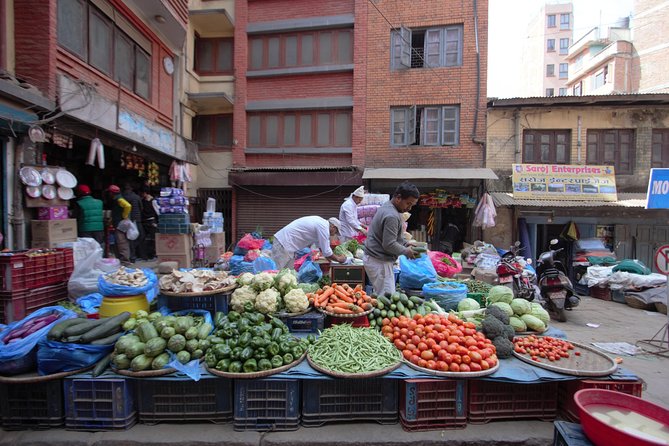
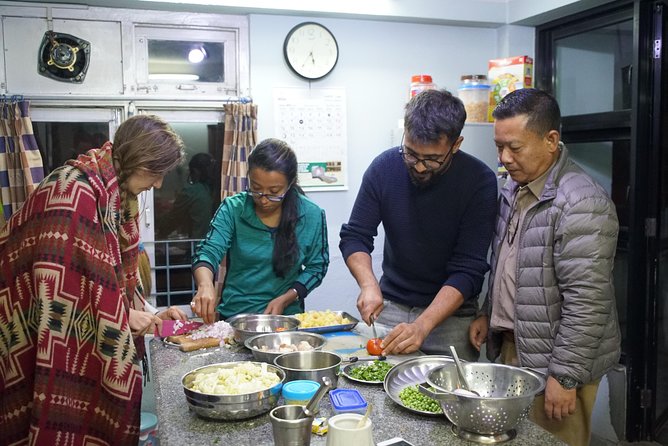
Dal bhat is the traditional meal featured in this class, and the recipe is described as easy to follow. The core idea is straightforward: cut the vegetables, then mix them with spices so everything turns flavorful.
Here’s what that typically means in practice for this style of cooking:
- Vegetable prep comes first, so the dish cooks evenly and doesn’t end up with raw bits.
- Then the spice blend steps in. The flavors mentioned include turmeric, cumin, ginger, and garlic—a combination that’s common in Nepali kitchens because it builds warmth, aroma, and depth without needing complicated tools.
- You’ll learn the steps in a way that’s meant to be repeatable. This matters if your goal is more than a one-night meal.
One of the best parts for you is that dal bhat is forgiving. Even if your knife work isn’t perfect, the dish still tastes like dal bhat. That helps beginners feel successful.
As you cook, use the time to ask questions like:
- Which spices are for aroma versus heat?
- Does fresh ginger change the flavor compared to dried?
- How does the household adjust the balance for different preferences?
You don’t need to become a spice expert overnight. The point is to understand what you’re doing so you can recreate it later without relying on a photo.
Dinner in the family home: eating with context
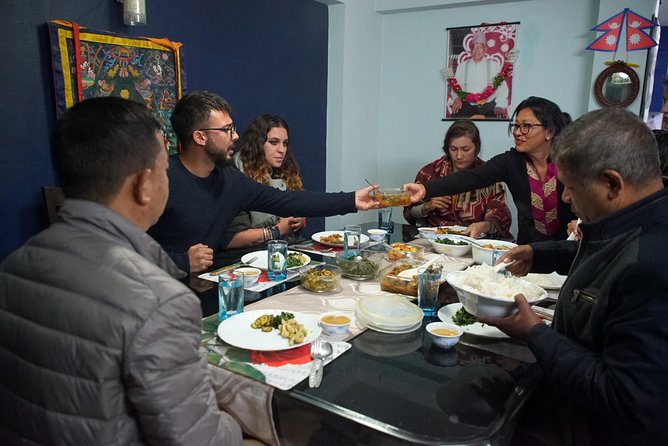
After cooking, you’ll enjoy dinner as part of the experience. This isn’t just a meal ticket. It’s an ending designed to connect cooking steps to the final result.
Eating together in the home gives you that satisfying feedback loop: you taste the dish, then you remember what you added and how it changed. That’s the kind of learning that sticks more than reading a recipe later.
You’ll also interact with the family during dinner. That’s part of the authentic feel. You get to ask about what you’re eating, how the family cooks, and what dishes fit into their routine. Since the host family is English-speaking, you’re not stuck with awkward silence or a translation gap.
If you’re worried about feeling like a temporary show-and-tell visitor, don’t be. The structure is built around sharing a meal, so it naturally invites conversation. Just be ready to stay engaged—bring curiosity, keep your questions simple, and eat slowly. Good conversations need time.
Price and value: what $45 actually buys you
At $45.00 per person for about five hours, this class offers solid value—especially because dinner and transportation are included. You’re not paying only for a recipe handout. You’re paying for:
- spice shopping at the market,
- an English-speaking host family experience,
- dinner,
- and private transportation with pickup.
That combination is where the value lives. Many cooking classes only teach technique and then send you on your way. This one includes the full arc: choose ingredients, cook in a home setting, and eat what you made with the people who live that daily life.
Also, the group size cap matters. With a maximum of 4 travelers, the host family can actually focus on you. That’s a big quality-of-experience boost. When you’re packed into a larger group, you often spend more time waiting your turn than learning.
One note for your budget: personal expenses are not included. So if you plan to buy extra snacks or souvenirs during market time, you’ll want to set aside some cash.
Weather and pacing: a few things to plan for
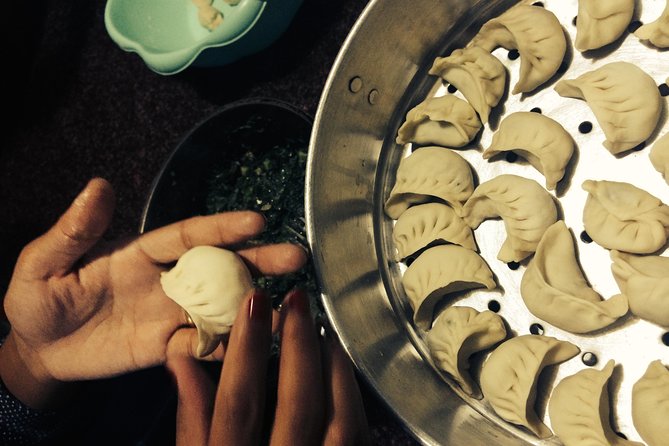
This experience requires good weather. That’s important because market shopping and parts of the day may happen outdoors. If weather turns, the operator may adjust the date or offer a full refund.
Pacing is another thing you should respect. Starting at 3:00 pm means you may want a light lunch earlier. You’ll likely be hungry by the time dinner is ready, and that hunger will make the food taste even better, in a good way.
Finally, because it’s a home-based class, expect a warm, natural schedule rather than a strict minute-by-minute classroom timetable. The goal is to cook together and share dinner, not just run a production line.
Who should book this (and who might not love it)
This is ideal if you want an authentic Kathmandu experience that focuses on food and real daily life. It’s a great fit for:
- first-time visitors who want a Nepalese food lesson that goes beyond restaurants,
- couples or small friend groups who like intimate activities,
- anyone who wants to learn spices and basic techniques rather than only eat a meal.
You might not love it if you’re short on time and need a quick, morning-only activity. The five-hour length and afternoon start can feel like a big block. Also, since it depends on good weather, you’ll want flexibility in your schedule.
Should you book this cooking-with-a-local-family experience?
If you’re choosing between another sightseeing stop and a hands-on Nepalese meal experience, I’d lean strongly toward booking. The reasons are simple: you get market spice shopping, you cook dal bhat with clear steps, and you finish with dinner in a local home. That’s a full food story, not a quick taste.
Book it if you want the small-group attention and you’re comfortable spending an afternoon learning from a local family. Skip it only if your schedule is too tight or you hate weather-dependent plans.
If you do book, go in curious. Ask about the spices, pay attention to how the host family handles ingredients, and treat the meal like a conversation, not just a meal.
FAQ
What time does the cooking class start in Kathmandu?
It starts at 3:00 pm and lasts about 5 hours.
Where does the tour start and end?
It starts at Royal Mountain Travel on Lal Durbar Marg, Kathmandu, and ends back at the same meeting point.
Is dinner included?
Yes. Dinner is included in the experience.
Do I get pickup and transportation?
Pickup is offered, and private transportation is included.
Is this class limited to small groups?
Yes. There is a maximum of 4 travelers.
Will I have someone who speaks English?
Yes. The host family provides an English-speaking experience.
What is the cancellation policy?
Free cancellation is available. You can cancel up to 24 hours in advance of the experience for a full refund.
More Tour Reviews in Kathmandu






Just Reviewed in Kathmandu
- Mountain Bike Tour
★ 5.0 · 3 reviews - Annapurna Panaroma
★ 5.0 · 3 reviews - Mount Everest Scenic Flight 50 Minutes
★ 5.0 · 3 reviews - Kathmandu : Swambhunath & Durbar Square Guided Half Day Tour
★ 3.3 · 3 reviews - Chandragiri Cable Car & Monkey Temple Tour – Private/Group
★ 5.0 · 3 reviews - Kathmandu: Shivapuri National Park Hiking Day Trip
★ 3.3 · 3 reviews