
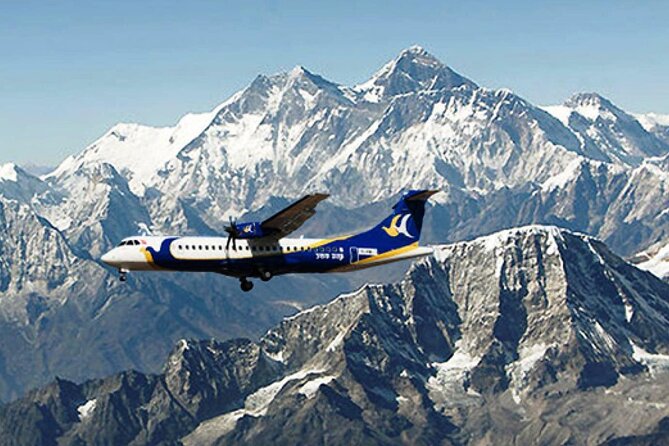
Review · EVEREST SCENIC FLIGHTS
Everest Mountain Flight
Everest is a lot closer from the window. This Everest mountain flight turns Kathmandu into a quick launch pad for a high-altitude look at Mount Everest and the wider Himalaya. What I really like is how you get a big-sky, wide-angle view system (not just a single peak moment), plus the service comes with friendly help that makes the morning feel smooth. The one thing to consider is the early start at 5:45 am and the fact that it’s a short flight, so you won’t get long on-the-ground time.
The good news: it’s built for first-time visitors who want a standout sight without committing to trekking. You also keep it simple with a small group size (max 5) and private transport included.
In This Review
- Key Points to Know Before You Fly Over Everest
- Why This Everest Mountain Flight Feels So Different
- Price and What $75 Gets You (Plus What It Doesn’t)
- Getting Started in Kathmandu: The 5:45 am Advantage (and Early Wake-Up Reality)
- From Takeoff to Turn: What the Flight Experience Typically Means
- Everest Reveals Itself: Spotting Peaks Like Lhotse, Nuptse, Makalu, and Cho Oyu
- Below You: Valleys, Glacial Lakes, and Sherpa Villages
- The Small-Group Factor: Why Max 5 Travelers Matters
- Who This Everest Mountain Flight Is Best For
- Practical Tips for a Smoother Morning
- Should You Book the Everest Mountain Flight with Nepal Mountain Adventure?
- FAQ
- What time does the Everest mountain flight start?
- Where do I redeem the ticket?
- How long is the mountain flight?
- What’s included in the price?
- Is breakfast included?
- How many travelers are in a group?
Key Points to Know Before You Fly Over Everest
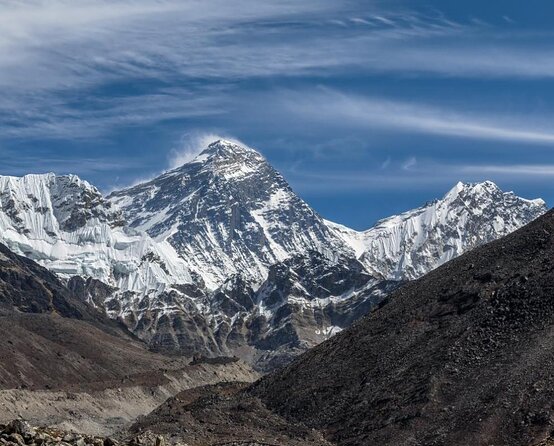
- 360-degree Himalayan views: expect a full panorama feel from the air, not a quick glance.
- Everest + neighboring peaks in one flight: Lhotse, Nuptse, Makalu, and Cho Oyu are part of the sight picture.
- Short, efficient timing: plan on about 2 to 3 hours total, with breakfast back at your hotel after.
- Small group size: a maximum of 5 travelers helps the experience stay calm and easy.
- Helpful, friendly guide support: one of the standout themes in the experience feedback.
Not sure yet? Here are other Kathmandu tours worth a side-by-side look.
- Everest Base Camp Trek – 14 Days★ 5.0 · 1,499 reviews
- Everest Base Camp Trek★ 5.0 · 842 reviews
- Private Kathmandu Sightseeing Tour | UNESCO World Heritage sites★ 5.0 · 756 reviews
- Kathmandu: 7 UNESCO Sites with Lunch★ 4.8 · 744 reviews
Why This Everest Mountain Flight Feels So Different
Most Everest trips revolve around hours of walking, days of acclimatization, or serious planning. This one takes a different route: you trade time on the trail for time looking down on the region from above. The result is a memorable bird’s-eye perspective—summit to valley—without needing trekking boots.
From the air, the geometry of the Himalaya changes everything. You see the rugged terrain, deep valleys, glacial lakes, and Sherpa villages as a connected system rather than separate highlights. That’s why even a short flight can feel like you got a complete overview.
Also, I like that this isn’t a vague sightseeing “drive and hope.” The flight is focused on the iconic Everest region and the major peaks around it. Your attention stays on the views, which is exactly what you’re paying for.
Price and What $75 Gets You (Plus What It Doesn’t)
For $75, the value is mostly about what’s included for getting off the ground and into the air. You’re not just buying a plane ticket; your package includes airport/departure tax, private transportation, and the mountain flight ticket itself.
That combination matters because early-morning logistics can quietly eat time (and sometimes money). Here, you’re paying once and getting the core components handled, which makes it easier to show up without a stressful scavenger hunt.
What’s not included is also clear: coffee/tea and breakfast are not part of the package. The plan is simple—eat breakfast at your hotel after the flight. If you’re the type who needs caffeine first thing, just budget for it or plan to pick something up before you start.
Getting Started in Kathmandu: The 5:45 am Advantage (and Early Wake-Up Reality)
The start time is 5:45 am, with ticket redemption at Sajha Bus Station, Airport, P924+8Q7, Ring Rd, Kathmandu 44600, Nepal. It’s near public transportation, and pickup is offered, which helps if you’re managing early travel while your day is still half-asleep.
Why go this early? In a region like the Himalaya, your best chance at clear views is usually tied to morning conditions. Even if you can’t control the sky, starting at the scheduled hour gives you the intended flight window for seeing Everest from above.
Here’s the consideration: you’ll need to treat this like an appointment, not a flexible plan. With a short overall duration and an early start, don’t stack it with other morning commitments that depend on a slow wake-up.
From Takeoff to Turn: What the Flight Experience Typically Means
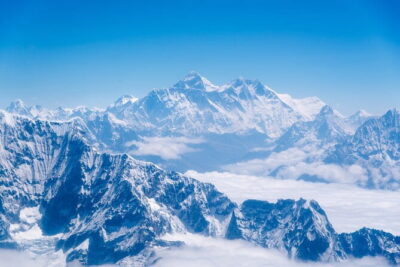
The experience is structured as one continuous airborne journey: you board in Kathmandu, the aircraft lifts away from the city, then you gain altitude toward the Himalayan views. Once you’re up high enough, the big-sky payoff starts—snow-covered peaks appear dramatically, and the mountains start lining up into a panoramic pattern.
The included mountain flight ticket is the core of the experience, but the feel comes from the time in the air. A 2 to 3 hour window is short enough to avoid tiring travel days, but long enough for multiple sight moments as the plane moves through view angles.
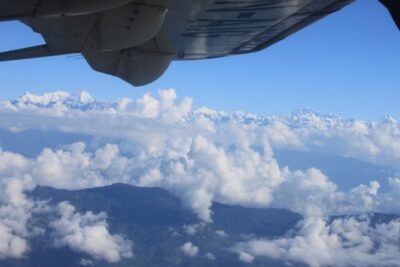
You’ll be looking out large aircraft windows for the “here it is” reveal when Everest comes into view, and then for a rotating set of major neighboring peaks. Even if you’re not a mountaineering expert, you’ll recognize the scale: the Himalaya looks massive in a way photos just can’t fully communicate.




Everest Reveals Itself: Spotting Peaks Like Lhotse, Nuptse, Makalu, and Cho Oyu
This flight is built around seeing Mount Everest (8,848m / 29,029ft) from above. That’s the headline. But the second layer is just as important: you also get views of other major peaks in the same high-altitude sight picture.
Here are the names you’ll want to listen for and try to spot when visibility allows:
- Lhotse
- Nuptse
- Makalu
- Cho Oyu
Even if you don’t memorize mountain geography, the value is that the flight doesn’t stop at one peak. You’re seeing the Everest region as a cluster of giants. From the air, their positions relative to each other can feel surprisingly clear, and that makes the whole experience more than a single photo opportunity.
If you want to get the most out of this part, bring a simple plan: pick one or two peaks to focus on by name, then let the rest be bonus sightings. That keeps you engaged instead of overwhelmed by the sheer number of peaks.
Below You: Valleys, Glacial Lakes, and Sherpa Villages
One reason people get excited about Everest flights is that they’re not just about peaks. From the air you can also see the broader “shape” of the region: deep valleys, glacial lakes, and Sherpa villages.
This is where your perspective really shifts. Ground-level trekking can feel like a series of bends, ridgelines, and moments. From the sky, you start to understand how the communities and terrain fit together under the mountain wall.
It’s also a reminder that the Everest story isn’t only about summit attempts. The region is lived in. Seeing Sherpa villages from above gives you context for what that support network and local life look like in relation to the routes and ridges below.
The Small-Group Factor: Why Max 5 Travelers Matters
This activity has a maximum of 5 travelers. That’s not a small detail. Smaller groups make it easier to manage the morning pace—especially when you’re dealing with early start timing and airport-style check-in moments.
It also affects the vibe. You get enough people for a shared experience, but not so many that the group feels rushed or chaotic. If you’re nervous about early logistics, small-group tours tend to feel calmer because the provider can keep things organized.
Who This Everest Mountain Flight Is Best For
I think this tour is a strong match if you want one of the most famous views in the world without a trekking commitment. You’ll likely enjoy it if you:
- have limited time in Kathmandu
- want a high-impact “wow” moment for your first visit
- prefer a structured morning plan with transportation handled
- don’t want to spend days hiking just to understand Everest’s scale
It’s also a good fit if you’re traveling with someone who can’t do a strenuous itinerary. The flight is the same for everyone, and the biggest variable is how the views line up from your window.
Practical Tips for a Smoother Morning
You’re starting early and spending a short amount of time on this activity, so prep matters.
A few practical moves:
- Arrive with time buffer for early check-in. This is the kind of day where being late is a bigger problem than normal.
- Bring layers. Air trips can feel cooler than you expect, especially early morning.
- Charge your phone and camera before you leave. You’ll want to capture the full panorama moments when Everest and neighboring peaks come into view.
- Plan your breakfast around the day after. The plan is explicitly to have breakfast at your hotel after the mountain flight.
Most importantly, treat this as a viewing experience, not a long day. The payoff comes from the flight window, so keep your expectations aligned with the total 2 to 3 hours.
Should You Book the Everest Mountain Flight with Nepal Mountain Adventure?
If your goal is a fast, high-visibility look at Everest and the Himalayan range without trekking, I’d call this a smart booking. For $75, you get key costs handled in the package (airport/departure tax, private transportation, and the flight ticket), and you’re also benefiting from a small group size.
I’d think twice if you strongly dislike early mornings or you need a full half-day of sightseeing beyond the flight itself. This is short by design. It’s a focused “see Everest from the air” experience, and that focus is the whole point.
FAQ
What time does the Everest mountain flight start?
The start time is 5:45 am.
Where do I redeem the ticket?
The ticket redemption point is Sajha Bus Station, Airport, P924+8Q7, Ring Rd, Kathmandu 44600, Nepal.
How long is the mountain flight?
The duration is 2 to 3 hours (approx.).
What’s included in the price?
Included items are airport/departure tax, private transportation, and the mountain flight ticket.
Is breakfast included?
No. Breakfast is not included, and you’re instructed to have breakfast at your hotel after the mountain flight. Coffee/tea is also not included.
How many travelers are in a group?
The activity has a maximum of 5 travelers.
More Tour Reviews in Kathmandu






Just Reviewed in Kathmandu
- Mountain Bike Tour
★ 5.0 · 3 reviews - Annapurna Panaroma
★ 5.0 · 3 reviews - Mount Everest Scenic Flight 50 Minutes
★ 5.0 · 3 reviews - Kathmandu : Swambhunath & Durbar Square Guided Half Day Tour
★ 3.3 · 3 reviews - Chandragiri Cable Car & Monkey Temple Tour – Private/Group
★ 5.0 · 3 reviews - Kathmandu: Shivapuri National Park Hiking Day Trip
★ 3.3 · 3 reviews
Everest Scenic Flights, compared.
 ★ 4.7Mount Everest Scenic Tour by Plane with TransfersFrom $100216 reviews
 ★ 4.5Mountain Everest Scenic Flight with Hotel Pickup and DropoffFrom $75210 reviews
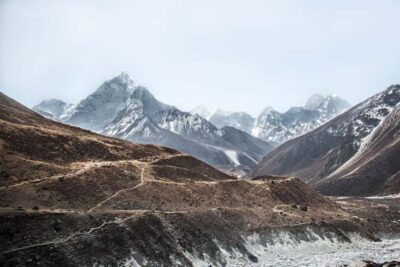 ★ 4.41 hour Panoramic Everest FlightFrom $215175 reviews
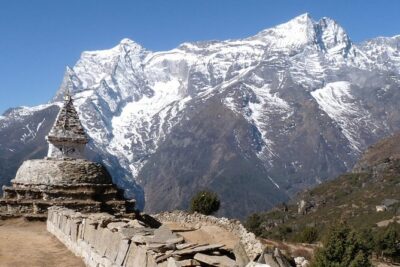 ★ 5.01 Hour Mount Everest flight from Kathmandu With Hotel Pick UpFrom $160161 reviews
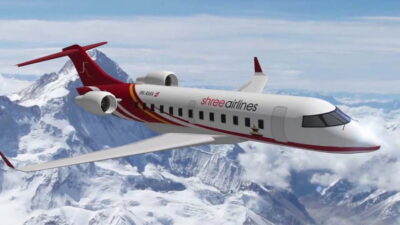 ★ 4.81-Hour Scenic Flight Over Mount EverestFrom $14054 reviews
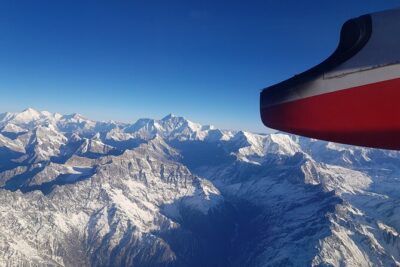 ★ 4.7Everest Flight with Window Seat and TransferFrom $7533 reviews
 ★ 5.0Mount Everest Scenic Flight by Shree Airlines with Free TransfersFrom $14030 reviews
 ★ 4.5Everest Flights from KathmanduFrom $23026 reviews
Browse the lists this tour appears in