
Review · KATHMANDU
Gurkha Knife Making
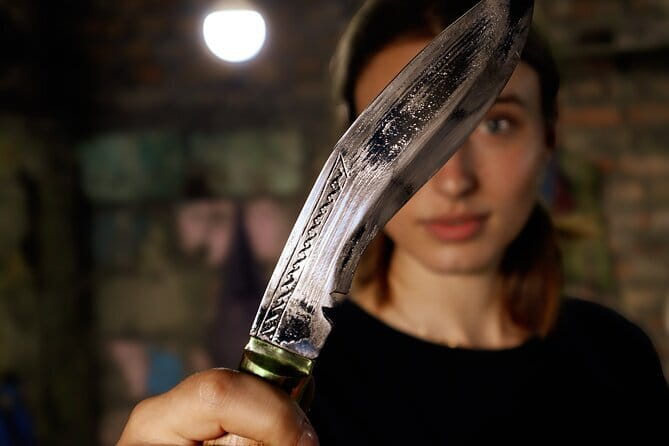
Forget souvenirs. Forge your own knife. In Kathmandu, this half-day class turns Gurkha legend into hands-on metalwork, and you’ll actually craft a real knife, not just watch. I also love the rosewood handle part and the chance to stamp my initials onto the blade.
The session runs about 4 hours, so it’s intense and practical, not a lifelong training program. Also, it’s scheduled for a morning window (roughly 7:15 AM–10:15 AM), which matters if you’re trying to sleep in.
In This Review
- Quick hits before you go
- Meeting at Garden of Dreams and getting oriented fast
- What the forge experience is really like (tea, tools, and instruction)
- The 4-hour workflow: from legend to a finished Gurkha-style knife
- Choosing your handle and stamping your initials
- Getting a 100-year guarantee: what it means for your purchase
- Price and value: is $66 reasonable in Kathmandu?
- Who should book this, and who should think twice
- Should you book Gurkha Knife Making in Kathmandu?
- FAQ
- How long is the Gurkha Knife Making session?
- Where do I meet for the experience?
- Is pickup available?
- Does the activity end at the same place it starts?
- What time does it run in the morning?
- How many people are in a group?
- What do I make during the workshop?
- What material is used for the handle?
- Can I personalize the knife?
- Is there any guarantee for the knife?
Quick hits before you go
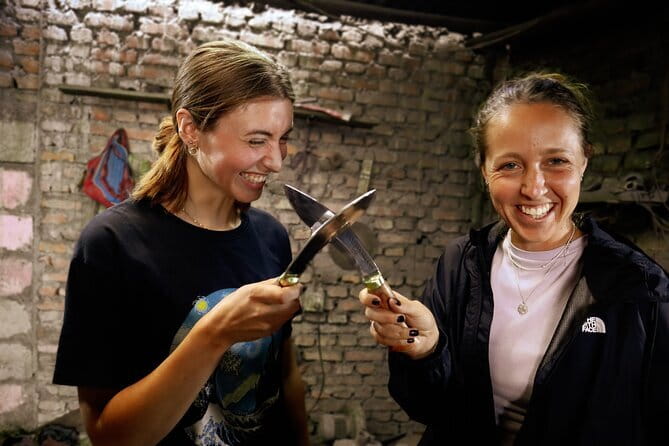
- Small group size (max 4 travelers) means more time with the smith and less waiting around.
- Stamp your initials on the blade gives your knife a personal, carry-home story.
- Indian rosewood handle adds warmth and a classic feel that looks good in photos.
- Tea and cookies keep the workshop relaxed while you work.
- 100-year guarantee is a strong signal that they want you to trust the craftsmanship.
Not sure yet? Here are other Kathmandu tours worth a side-by-side look.
- Everest Base Camp Trek – 14 Days★ 5.0 · 1,499 reviews
- Everest Base Camp Trek★ 5.0 · 842 reviews
- Private Kathmandu Sightseeing Tour | UNESCO World Heritage sites★ 5.0 · 756 reviews
- Kathmandu: 7 UNESCO Sites with Lunch★ 4.8 · 744 reviews
Meeting at Garden of Dreams and getting oriented fast
This starts in central Kathmandu at the Garden of Dreams (Tridevi Sadak, Kathmandu 44600). You’ll meet there, and the experience ends back at the same spot, so you’re not left figuring out how to get home with a hot, new souvenir.
Pickup is offered, which is handy if you’re juggling traffic and already have plans nearby. Since the activity time is a morning slot (the opening window is 7:15 AM to 10:15 AM), I’d treat this like an early checkpoint on your day: show up a bit ahead, get your bearings, and settle in.
What the forge experience is really like (tea, tools, and instruction)
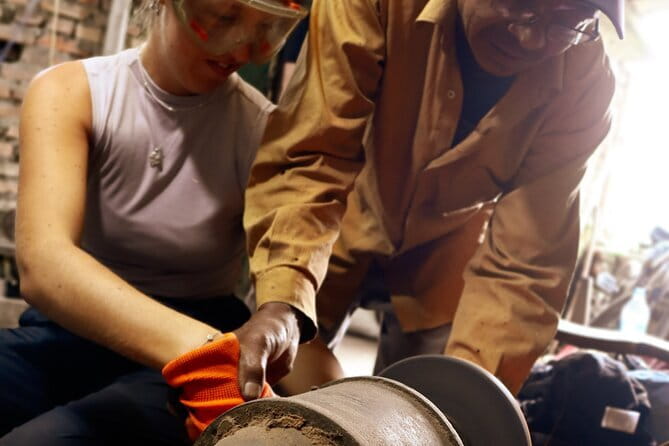
From the start, this workshop is built around a working blacksmithing setup—small, hands-on, and focused on you doing the craft steps. The atmosphere is described as relaxed, with tea and cookies during the session, so you’re not expected to “perform” for hours in silence.
You’ll work with quality Indian rosewood for the handle, which is a nice detail because it’s not an afterthought. It also means the knife you take home is meant to feel finished and usable as a crafted object, not just a metal shape with a sticker on it.
And because the group is kept to up to 4 travelers, you’re more likely to get real back-and-forth—especially if you need translation or clarification along the way. In past sessions, guides such as Aachal and Aayam have been mentioned for friendliness and good translation, while the smith (for example, Indra) is described as skilled and approachable.
The 4-hour workflow: from legend to a finished Gurkha-style knife
This is a half-day session, so expect a tight rhythm: you’ll be guided through creating your own authentic Gurkha knife in a single morning. The point isn’t to teach you every trade secret used by professional smiths—it’s to get you through the key stages with direction and a real sense of how it’s done.
Here’s what matters for your expectations:
You’ll be inside the forge environment where metalwork actually happens.
You’ll do the parts you can do safely and confidently within the time window.
The experience is also framed around the Gurkha knife’s cultural meaning—its connection to strength and resistance, and the stories tied to legendary Gurkha warriors. That context isn’t just for storytelling; it helps explain why the knife design is taken seriously, and why the maker treats the process like more than a craft demo.
Choosing your handle and stamping your initials
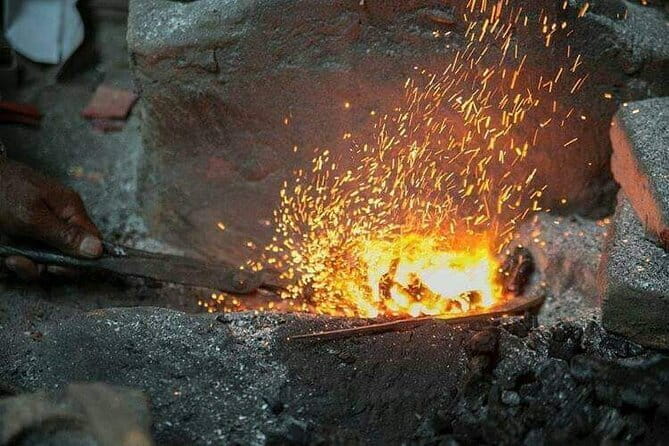
One of the best parts is that the knife is yours in more than one way. You get to add a personal touch by stamping your initials on the blade, which instantly turns the project into something you can point to later and remember clearly.
You’ll also use Indian rosewood for the handle. Even if you’re not a wood-finish expert, rosewood is the kind of material that changes the “feel” of the final object—more natural and warm than plain handle blanks. It helps the knife look and feel like a crafted heirloom rather than a generic souvenir.
If you want a smoother experience, plan to be decisive during the handle portion and ask questions while you’re there. In a small group, you can usually get practical tips without feeling rushed.

Getting a 100-year guarantee: what it means for your purchase
Most knife-making souvenirs fall into two buckets: a nice story, or a nice object. This one is designed to be both, and the big selling point you can take seriously is the 100-year guarantee.
That guarantee matters for how you evaluate value. At $66, you’re not just paying for “a fun morning.” You’re paying for instruction plus materials plus a finished knife product they’re willing to back for a very long time.
Still, I’d go in with a realistic mindset: you’re making a knife through a guided experience, not becoming a blacksmith overnight. Four hours is enough for a meaningful outcome, but it’s not enough to replace years of practice. The guarantee can help you feel confident about the final piece, though.
Price and value: is $66 reasonable in Kathmandu?
$66 for a four-hour, hands-on knife-making workshop is a fair price when you consider what’s included: instruction, materials (including the rosewood handle), the chance to stamp your initials, and a finished knife with a 100-year guarantee. For comparison, many cultural classes cost similar money but leave you with something decorative or small.
What pushes the value higher here is the small group limit (max 4 travelers) and the fact that you’re actively participating. If you enjoy learning through doing—heating, shaping, finishing—this price starts to look like a bargain.
The main “value risk” isn’t the cost; it’s timing and fit. If you’re not interested in making a real, physical item, or you hate early mornings, then the price won’t feel worth it.
Who should book this, and who should think twice
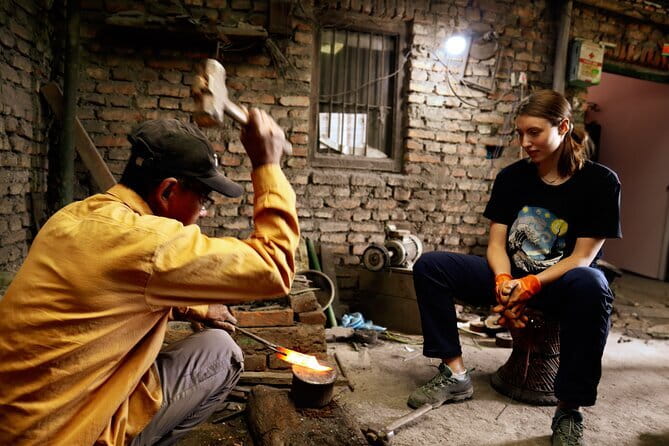
This is a strong match if you want an authentic Kathmandu experience that’s not just watching. You’ll get a working forge feel, real guidance, and the satisfaction of taking home a knife that you made, personalized, and had explained to you with translation support when needed.
It’s also a good option for people who like small groups. When the group is capped at four, the workshop doesn’t become a conveyor belt, and you can actually ask for help. The tone is described as welcoming, and the operator (Queermandu | Gay Tours Nepal) is associated with inclusive queer travel—something reflected in the supportive vibe mentioned in past experiences.
Think twice if you:
Prefer passive sightseeing over hands-on work.
Need a very late start (this runs in a morning window).
Expect to master blacksmithing as a hobby over a single session.
Otherwise, if you’re excited by craft and take-home souvenirs with real meaning, this checks a lot of boxes.
Should you book Gurkha Knife Making in Kathmandu?
Yes—if you want a half-day activity that’s practical, personal, and rooted in a craft story tied to Gurkha identity. I’d book it when you’re in the mood to learn by doing, enjoy the feeling of shaping something with your own hands, and you like the idea of leaving with a knife backed by a long guarantee.
Skip it only if your schedule can’t handle an early morning slot, or if you’d rather spend that time on walking tours and viewpoints instead of working at a forge.
FAQ
How long is the Gurkha Knife Making session?
The workshop is about 4 hours.
Where do I meet for the experience?
You meet at the Garden of Dreams, Tridevi Sadak, Kathmandu 44600, Nepal.
Is pickup available?
Yes, pickup is offered.
Does the activity end at the same place it starts?
Yes. The activity ends back at the meeting point.
What time does it run in the morning?
The opening hours list a daily morning window from 7:15 AM to 10:15 AM.
How many people are in a group?
The maximum group size is 4 travelers.
What do I make during the workshop?
You create your own authentic Gurkha knife during the session.
What material is used for the handle?
The handle is made with quality Indian rosewood.
Can I personalize the knife?
Yes. You can stamp your initials on the blade.
Is there any guarantee for the knife?
Yes, each knife is backed by a 100-year guarantee.
If you’d like, tell me your travel dates and what else you’re doing in Kathmandu that morning, and I’ll help you fit this into a tight schedule.
More Tour Reviews in Kathmandu


Just Reviewed in Kathmandu
- Mountain Bike Tour
★ 5.0 · 3 reviews - Annapurna Panaroma
★ 5.0 · 3 reviews - Mount Everest Scenic Flight 50 Minutes
★ 5.0 · 3 reviews - Kathmandu : Swambhunath & Durbar Square Guided Half Day Tour
★ 3.3 · 3 reviews - Chandragiri Cable Car & Monkey Temple Tour – Private/Group
★ 5.0 · 3 reviews - Kathmandu: Shivapuri National Park Hiking Day Trip
★ 3.3 · 3 reviews