
Review · KATHMANDU
Spiritual Nepal: Expert insight into Multifaith Journey
Two UNESCO temples in one guided walk. You’ll spend a few hours moving between Boudhanath and Pashupatinath, joining everyday religious life—prayer wheels, monks and sadhus, and the Bagmati River rituals.
I especially like the hands-on feel at Boudhanath, where you rotate the prayer wheels with locals and follow the Kora path around the white stupa. I also like that Pashupatinath brings in Hindu daily practice right up close, including the lights of Arati at the riverfront.
One consideration: this tour is short, and both crowds and timing can make it feel brisk—especially if you’re sensitive to the solemnity of what you may see near the cremation banks.
In This Review
- Key things to know before you go
- A multifaith Kathmandu shortcut that actually feels human
- Hotel Marshyangdi to Boudha: the start that saves you effort
- Boudhanath Stupa: prayer wheels, the Kora, and the weight of devotion
- What you do here
- What to watch for
- Guides matter here
- The short hop to Pashupatinath: walk or drive, same spiritual shift
- Pashupatinath Temple: sadhus, cremations, and Arati on the Bagmati
- What you can expect to see
- Optional extras: palm reading and alms
- Palm-reader interactions: let your guide do the negotiating
- Walking distance, crowds, and the “keep up” rule
- Price and value: $150 isn’t just “sightseeing”
- Who this tour suits best (and who should think twice)
- Respect rules that matter: clothing and etiquette
- Carbon-neutral angle and the local impact piece
- Guides and quality: what to look for on the day
- Should you book Spiritual Nepal: Multifaith Journey?
- FAQ
- FAQ
- How long is the Spiritual Nepal multifaith journey?
- Where does the tour start?
- What are the two main UNESCO sites visited?
- Is this tour guided, and what language is it in?
- Is transportation included?
- Are entrance fees included?
- Is food and drink included?
- Do I have to pay for offerings or a palm reading?
- How much walking is involved?
- What’s the dress code?
- Can children join?
- Can I cancel for a refund?
Key things to know before you go
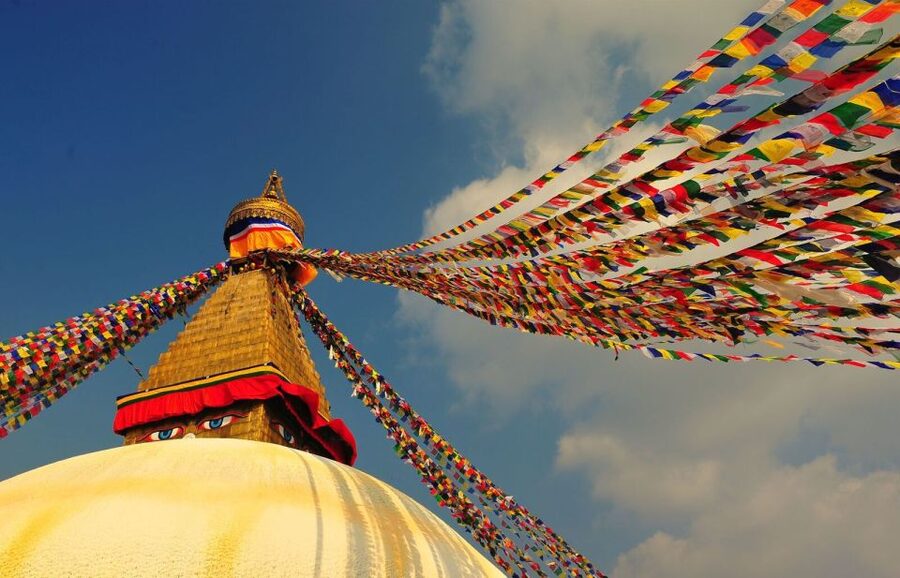
- UNESCO pair in 4 hours: Boudhanath Stupa and Pashupatinath Temple, both UNESCO Heritage sites.
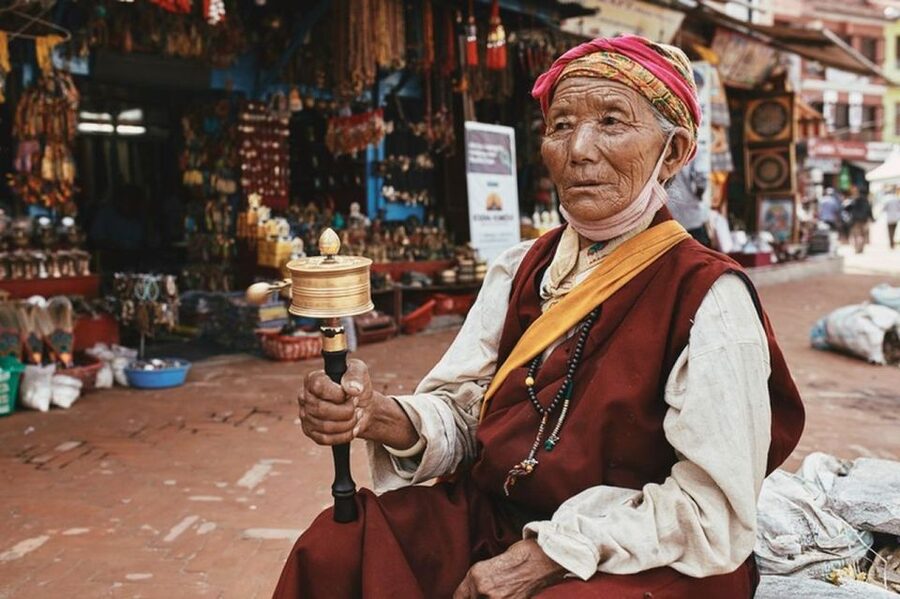
- Prayer-wheel Kora at Boudhanath: join locals as you rotate and walk the circuit around the stupa’s dome.
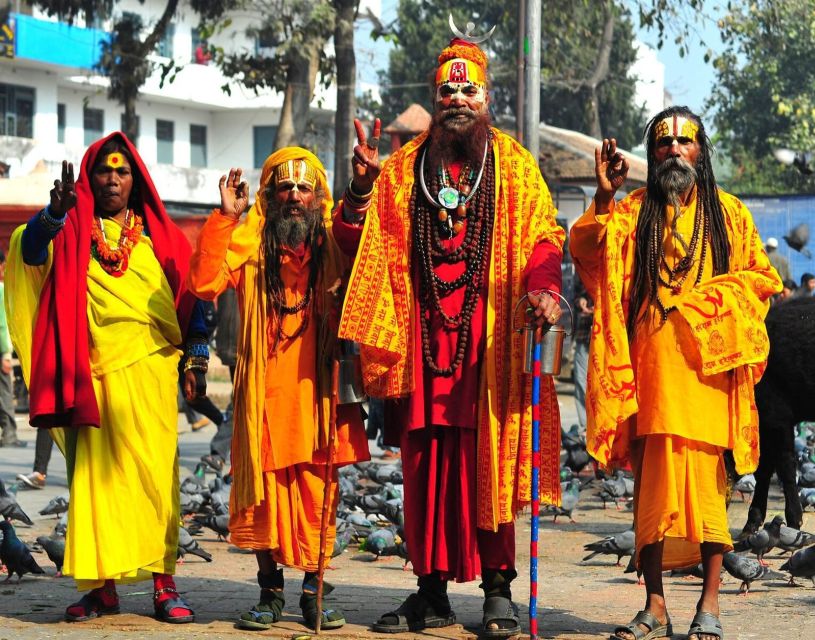
- Hindu riverfront rituals at Pashupatinath: expect sadhus’ presence, cremations along the Bagmati River, and Arati.
- Optional spiritual add-ons: butter-lamp offering, palm reading, and alms are available through your guide (extra cost).
- Small-group feel: limited group size (up to about 12 people) for easier navigation and questions.
- Good inclusion for the price: English-speaking Nepali guide, entrance fees, and transportation from Hotel Marshyangdi.
Not sure yet? Here are other Kathmandu tours worth a side-by-side look.
- Everest Base Camp Trek – 14 Days★ 5.0 · 1,499 reviews
- Everest Base Camp Trek★ 5.0 · 842 reviews
- Private Kathmandu Sightseeing Tour | UNESCO World Heritage sites★ 5.0 · 756 reviews
- Kathmandu: 7 UNESCO Sites with Lunch★ 4.8 · 744 reviews
A multifaith Kathmandu shortcut that actually feels human
This 4-hour plan is built for people who want more than a checklist. You’re not just looking at temples from the outside. You’re guided through how people use these places—daily, year-round—for prayer, devotion, and community life.
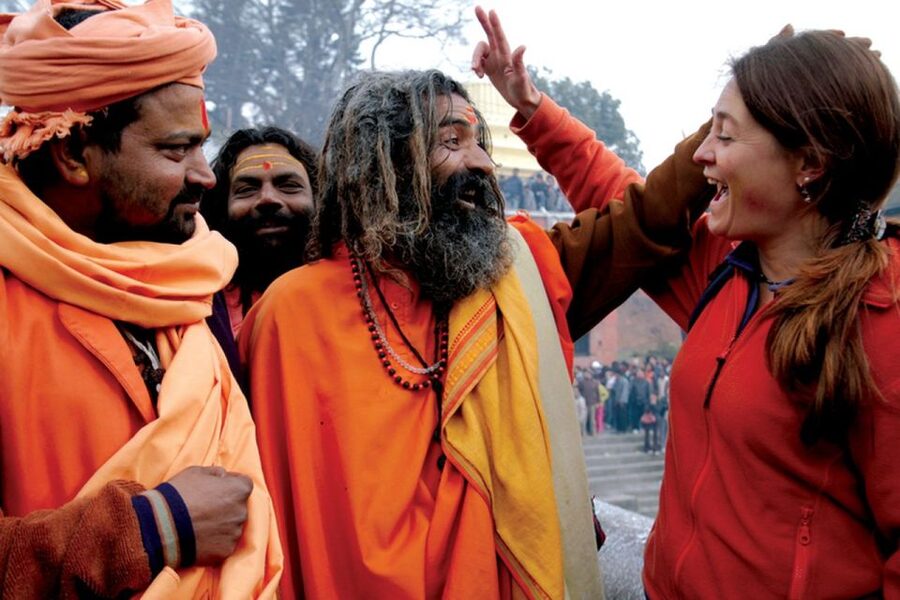
At Boudhanath, you’ll get that tactile Buddhist rhythm right away: spin the prayer wheels, follow the Kora, and watch how locals move with calm precision. Then you switch worlds at Pashupatinath, where Hindu practice runs at the river’s edge, and where sadhus and ritual moments shape the atmosphere.
If you like culture that’s lived-in—less “museum” and more “this is what people do”—this is a strong fit.
Hotel Marshyangdi to Boudha: the start that saves you effort
The tour meets at Hotel Marshyangdi. From there, the day is organized so you don’t waste time figuring out routes, tickets, or logistics. Transportation is included from the meeting point to Boudhanath, and later from Pashupatinath back to your endpoint.
That matters in Kathmandu, where roads can throw surprises. You’ll keep to a tight schedule—Boudha first, then the switch to Pashupatinath—so having a guide and driver taking care of movement helps you focus on the spiritual sights instead of navigation.
Boudhanath Stupa: prayer wheels, the Kora, and the weight of devotion
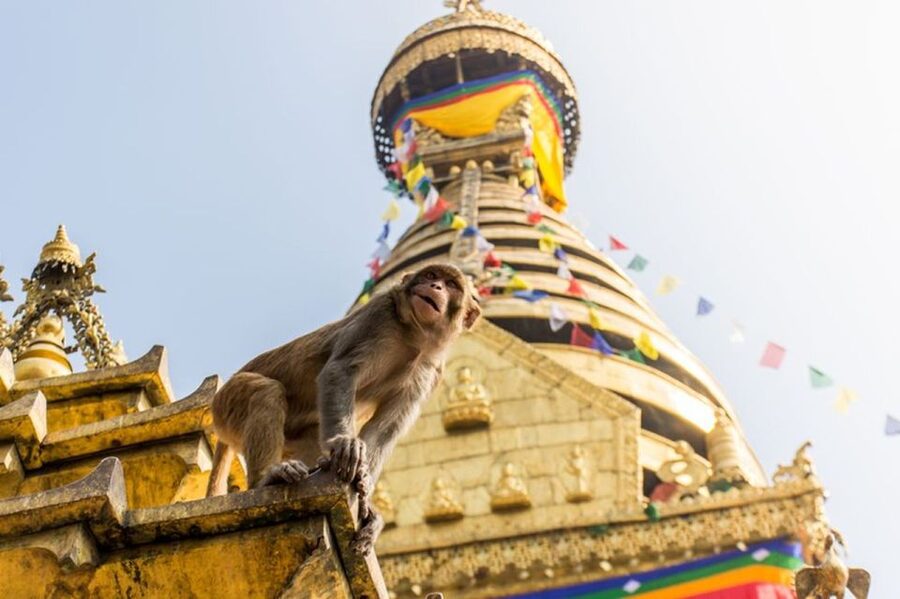
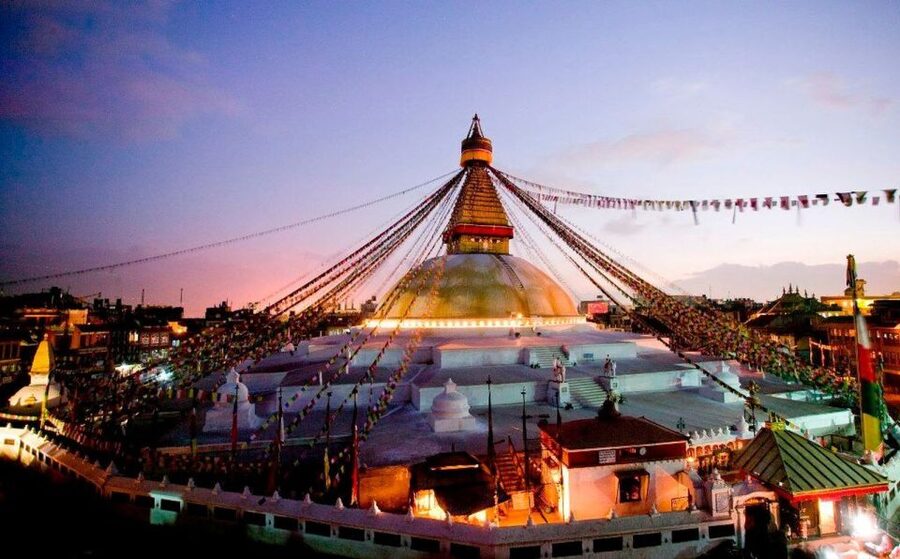
Boudhanath Stupa is Nepal’s largest Buddhist stupa, and it’s a UNESCO Heritage site. The stupa’s big, white, spherical look is the “main character,” but the experience isn’t about posing for a photo. It’s about joining a routine.
What you do here
You’ll spend about 2 hours at Boudhanath. Your guide will lead you to:
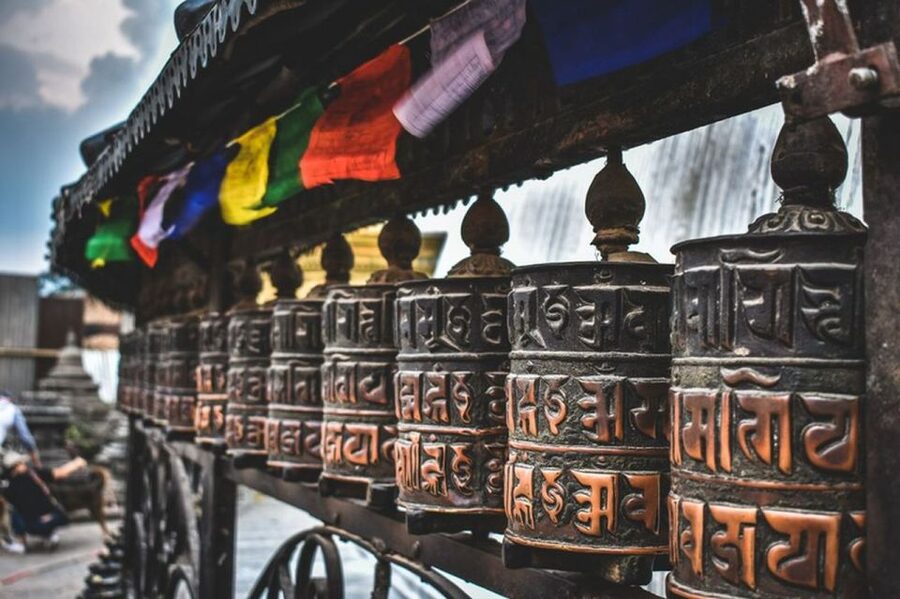
- Rotate the prayer wheels along with local Buddhists
- Walk the Kora (the circuit around the stupa)
Even if you’re not Buddhist, there’s something grounding about doing it together. The movement is simple, but it changes your pace. You stop hovering and start participating.
What to watch for
The Kora can get crowded. Keep close to your guide and group, especially when people slow down at wheel points or at corners where the flow tightens. This isn’t a place to wander off “just for a second.”
Guides matter here
A big part of the value is the English-speaking Nepali guidance. People have noted strong teaching from guides such as Rozit, Bini, and Bidhya, with clear explanations that help you understand what you’re seeing without turning it into a lecture. If you ask questions politely, you’ll likely get practical context, not just facts.
The short hop to Pashupatinath: walk or drive, same spiritual shift
After Boudhanath, you’ll either walk for about 15 minutes or take a short drive to Pashupatinath Temple. Both options exist because traffic and crowd patterns can change.
Either way, you’ll feel the transition. Boudha is centered on Buddhist practice and temple-circuit movement. Pashupatinath pulls you toward Hindu pilgrimage life and river rituals.
Pashupatinath Temple: sadhus, cremations, and Arati on the Bagmati
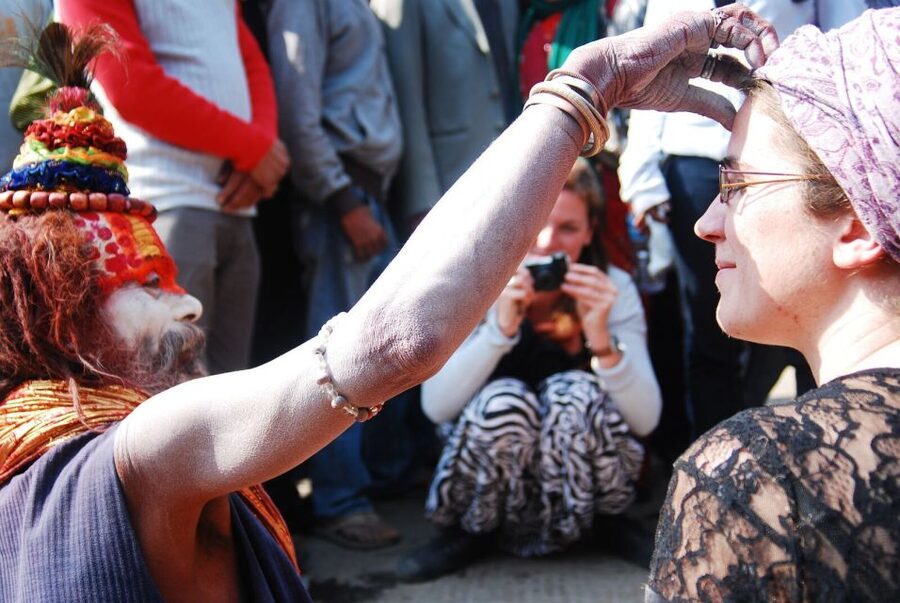
Pashupatinath is Nepal’s largest Hindu pilgrimage site and a UNESCO Heritage site. This is where the tour gets emotionally heavier—because the Bagmati River is also a working, ritual river.
What you can expect to see
Plan for about 2 hours at Pashupatinath, including:
- Glimpses of sadhus and their way of life
- Optional alms if you want to participate in the story people tell through giving
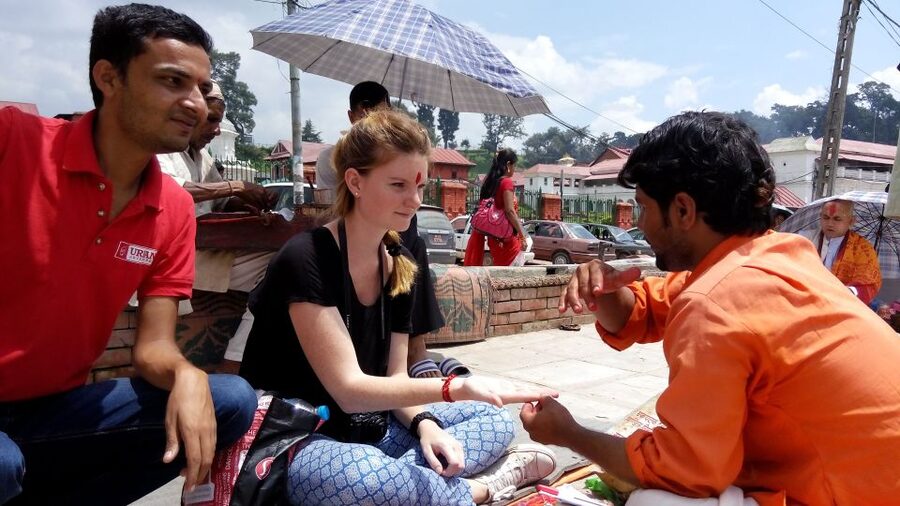
- The chance to have your future read by a local palm reader (extra cost)
- Cremations along the banks of the Bagmati River
- Arati, the light offering ritual at the temple area
You don’t need to be super religious to understand what’s happening, but you do need the right mindset: respectful, quiet attention during solemn moments.
Optional extras: palm reading and alms
There’s room for personalization, but your wallet needs to know the difference between included and optional.
Your guide can help you with interactions, including:
- Palm reading (listed as varying roughly $7.5 to $9 per person)
- Offerings and alms to sadhus/monks (not included in the tour price)
If you want the optional stuff, go in knowing it’s voluntary. You’re not required to do anything beyond the guided temple visits and rituals.
Palm-reader interactions: let your guide do the negotiating
One practical advantage here: your guide can assist with negotiating and translating the interaction. That’s useful because these exchanges often move fast, and tourists can get lost in small misunderstandings. You’ll get more out of it if you treat it as a conversation, not a transaction.
Walking distance, crowds, and the “keep up” rule
The tour includes about 2 km of walking total. That’s not a huge distance, but it’s not flat, empty, or quiet either. You’ll navigate stairs and crowd zones around religious sites.
The biggest practical tip: keep near your guide and group. The area around both sites can be busy, and there are lots of side routes that look tempting. Staying close helps you avoid missing key moments—especially during rituals.
If you’re the type who likes slow photos, plan to shorten your photo stops. This is a short tour that tries to cover a lot of meaningful moments without turning into a marathon.
Price and value: $150 isn’t just “sightseeing”
At $150 per person for a 4-hour tour, you’re paying for more than transportation. What you get included is solid:
- English-speaking Nepali guide
- Entrance fees to Boudhanath and Pashupatinath
- Transportation between the key points (from Hotel Marshyangdi to Boudha, and from Pashupatinath back to the endpoint)
What’s not included:
- Food and drinks
- Alms and palm-reader fees (and related optional interactions)
So how is this good value? Because entrances plus a knowledgeable guide plus coordination around two UNESCO sites can easily add up on your own—especially if you’re also trying to understand what you’re seeing in real time.
If you plan to add a palm reading or other offerings, that’s where your total can rise. But the base tour still gives you the guided “spiritual circuit” you came for.
Who this tour suits best (and who should think twice)
This works especially well if you want:
- A structured way to see both Boudhanath and Pashupatinath in one go
- Cultural context that’s explained during the walk
- Small-group attention (around a dozen people) so you can ask questions
It may not be ideal if:
- You dislike solemn scenes. Cremations along the Bagmati River are part of what you might see.
- You want long, slow pacing. This is a short tour, and you’ll move through crowd areas efficiently.
- You prefer purely scenic sightseeing over hands-on ritual moments.
If you’re curious, open-minded, and respectful, you’ll likely feel like you learned something real, fast.
Respect rules that matter: clothing and etiquette
Dress matters here. Nepal is conservative, and religious sites expect modest clothing. I’d plan on:
- Covering shoulders and knees
- For men: long trousers are often needed
- For women: a long skirt or sarong is often expected
If you show up in shorts or a tank top, you may slow things down while you figure out options. Better to dress like you’re visiting someone’s home of worship.
Also, keep your interactions grounded. If you choose optional offerings or photos near sadhus, budget the extra cost and use your guide to help. The guide can also help with negotiating and keeping things respectful.
Carbon-neutral angle and the local impact piece
This trip is described as carbon neutral and operated by a B Corp certified company focused on travel as a force for good. That’s a nice checkbox, but the bigger “human value” is how optional payments connect to people’s livelihoods.
If you choose add-ons—like butter-lamp offerings at Boudhanath, a palm reading, or paid interaction/photo time with sadhus—your guide can channel that in a way that supports local readers and supports the lives of sadhus who rely on these small tourist interactions.
Even if you skip optional add-ons, the guided format still brings you to the sites with less friction, which is its own kind of respect.
Guides and quality: what to look for on the day
Different guides have different teaching styles, and that can change your experience. On this kind of tour, good guides do two things:
- They give short, clear context while you’re standing in the place.
- They manage the flow in crowd areas so you don’t feel lost.
People have specifically praised English-speaking guides for being helpful, organized, and responsive—names that have come up include Rozit, Bini, Bidhya, and Subash. If you’re booking, you can also use your first 10 minutes to set expectations: ask what you can see today, and ask how long you’ll have for questions at each site.
Should you book Spiritual Nepal: Multifaith Journey?
Book it if you want a compact, guided route that connects Buddhist and Hindu practice in Kathmandu—complete with prayer wheels, Arati, and a close look at daily religious life around the temples and river.
Skip it or adjust expectations if you need:
- A relaxed pace (this tour is short)
- No exposure to solemn cremation context
- Total freedom to wander far from the group (you’ll need to stay with your guide)
FAQ
FAQ
How long is the Spiritual Nepal multifaith journey?
It runs for about 4 hours.
Where does the tour start?
The tour starts at Hotel Marshyangdi.
What are the two main UNESCO sites visited?
You visit Boudhanath Stupa and Pashupatinath Temple.
Is this tour guided, and what language is it in?
Yes. It includes an English-speaking Nepali guide.
Is transportation included?
Yes. Transportation is included from the meeting point to Boudhanath and from Pashupatinath to the endpoint.
Are entrance fees included?
Yes. Entrance fees to Boudhanath and Pashupatinath are included.
Is food and drink included?
No. Food and drinks are not included.
Do I have to pay for offerings or a palm reading?
Alms to sadhus/monks/palm reader fees are not included. Palm reading is optional, and butter lamps or interaction/photography may involve additional costs.
How much walking is involved?
The approximate walking distance is about 2 km.
What’s the dress code?
Dress conservatively: cover shoulders and knees. Men often need long trousers, and women a long skirt or sarong.
Can children join?
Yes. Children under age 6 can join free of charge.
Can I cancel for a refund?
Yes. Free cancellation is available up to 24 hours in advance for a full refund.
More Tour Reviews in Kathmandu
Just Reviewed in Kathmandu
- Mountain Bike Tour
★ 5.0 · 3 reviews - Annapurna Panaroma
★ 5.0 · 3 reviews - Mount Everest Scenic Flight 50 Minutes
★ 5.0 · 3 reviews - Kathmandu : Swambhunath & Durbar Square Guided Half Day Tour
★ 3.3 · 3 reviews - Chandragiri Cable Car & Monkey Temple Tour – Private/Group
★ 5.0 · 3 reviews - Kathmandu: Shivapuri National Park Hiking Day Trip
★ 3.3 · 3 reviews