
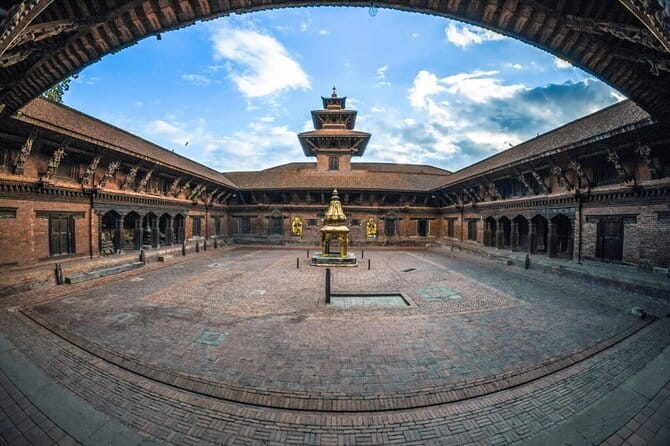
Review · BHAKTAPUR TOURS
Patan and Bhaktapur Boutique Tour
Two UNESCO squares, one small-group morning. This Patan and Bhaktapur day trip is a good way to see Newar architecture up close without getting stuck in a giant bus crowd. I like how the route mixes major sights (Patan Durbar Square and Bhaktapur Durbar Square) with smaller, story-rich stops like Patan Dhoka and Manga Hiti.
You’ll also appreciate the basics handled well: air-conditioned vehicle, onboard WiFi, and a real guide to connect the dots between temples, courtyards, and festivals. The one catch to plan for is cash entry fees at Durbar Square (NRP 1000, paid at the entrance), plus extra donation guidance for the Royal Kumari.
In This Review
- Key things that make this tour work
- Why Patan and Bhaktapur together makes sense
- Getting around Kathmandu: pickup, timing, and small-group pace
- Patan’s first landmarks: Patan Dhoka, Pimbahal, and Nag Baha Galli
- Golden Temple and Manga Hiti: two quiet stops with strong stories
- Patan Museum and Patan Durbar Square: where the carving lessons click
- Crossing into Bhaktapur: Durbar Square and the feeling of old-city continuity
- Pottery Square, Nyatapola at Taumadhi, and Dattatraya’s Peacock Window
- Money, timing, and what to bring (so the day stays easy)
- Who should book this Patan & Bhaktapur day trip
- Should you book this tour?
- FAQ
- How long is the Patan and Bhaktapur Boutique Tour?
- What’s included in the price?
- Are Durbar Square entrance fees included?
- What about other entrances like the Golden Temple and Patan Museum?
- Is lunch included?
- What time does the tour start and where does it end?
- Can I cancel for a full refund?
Key things that make this tour work
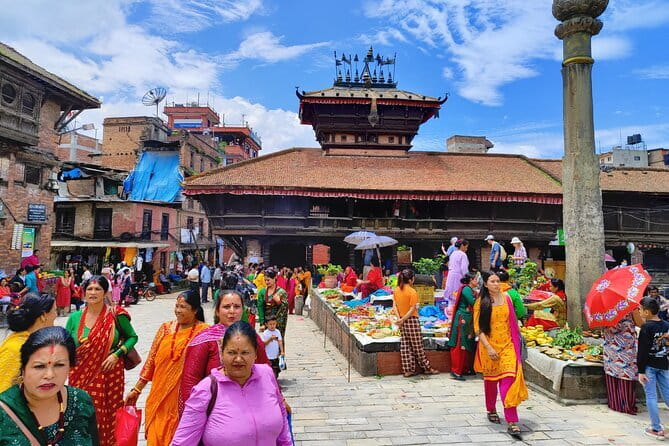
- Small group size (max 10): easier pacing and more time to ask questions.
- UNESCO in one day: Patan Durbar Square plus Bhaktapur Durbar Square, not just “quick photo stops.”
- Craft and daily-life details: stops like Pimbahal and Pottery Square connect art to everyday work.
- Comfort while traveling: air-conditioned vehicle and WiFi on board help a lot in Kathmandu traffic.
- A guide with culture depth: guides such as Shreya Karki (praised for explaining Nepal’s culture and traditions) are the kind of people who make the stones talk.
- Cash planning matters: Durbar Square entry is not included and needs cash at the gate.
Not sure yet? Here are other Kathmandu tours worth a side-by-side look.
- Everest Base Camp Trek – 14 Days★ 5.0 · 1,499 reviews
- Everest Base Camp Trek★ 5.0 · 842 reviews
- Private Kathmandu Sightseeing Tour | UNESCO World Heritage sites★ 5.0 · 756 reviews
- Kathmandu: 7 UNESCO Sites with Lunch★ 4.8 · 744 reviews
Why Patan and Bhaktapur together makes sense
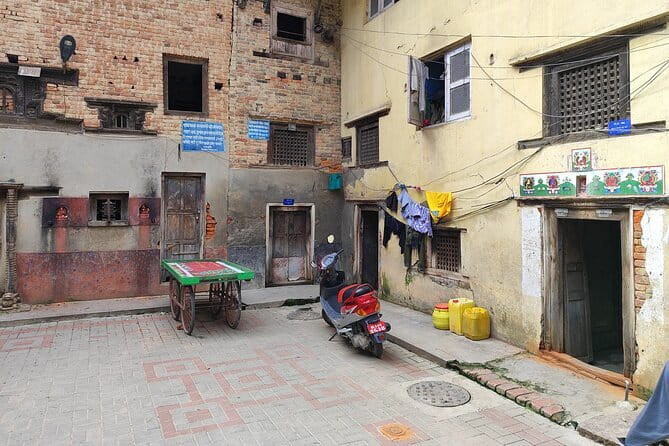
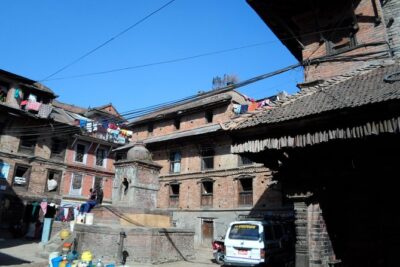
Patan (Lalitpur) and Bhaktapur are both UNESCO-listed Newar cities, and seeing them on the same day saves time and mental energy. You’ll feel the difference in style: Patan often highlights pagodas, palace courtyards, and temple carving, while Bhaktapur leans into massive temple silhouettes and a very “still lived-in” streetscape.
What I like about this pairing is how it teaches you to read architecture like a map. In Patan, you’ll notice how gateways and courtyards function as social space, not just landmarks. In Bhaktapur, you’ll start spotting patterns in windows, pagoda tiers, and temple placement that repeat across the city center.
This isn’t a “run, gun, exit” tour. Most stops are 15 to 30 minutes, so you can actually look at details without feeling rushed off the steps.
Getting around Kathmandu: pickup, timing, and small-group pace
The day starts at 8:30 am and runs about 9.5 hours total, including transportation plus time set aside for a lunch/coffee stop (lunch itself is not included). The tour offers pickup from Boudha and from KGH Hotel in central Thamel, and the listed starting point is near Filli Chai on Kathmandu Guest House Road.
Because the group is capped at 10 people, transitions are usually smoother than with larger tours. You’re also getting an air-conditioned vehicle (a real perk when roads heat up), plus WiFi on board for basic connectivity—handy for checking directions after the walk.
One practical point: the tour requires moderate physical fitness. You’ll be on foot through older-city lanes and steps. Nothing extreme is stated, but if you’re sensitive to uneven stone surfaces or lots of stairs, take it slow and use the guidance of your guide.
Patan’s first landmarks: Patan Dhoka, Pimbahal, and Nag Baha Galli
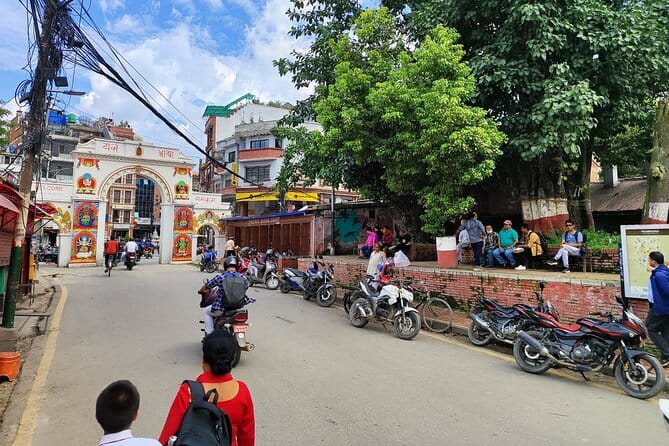
Your day begins at Patan Dhoka (Patan Gate), the decorated historic entrance into the city. Look for the paintings of the Asta Matrika, the eight mother goddesses. It’s a nice warm-up because it sets the tone: this isn’t a museum—these symbols still belong to living belief.
Next is Pimbahal, a place that feels like a time machine. You’ll hear how older visitors, pilgrims, and traders cooked food, fetched water, and rested here. The story of Gaya Baje, a Hindu priest connected to the area, adds a personal thread to what could otherwise be just courtyard walls.
Then you move to Nag Baha Galli, a serpent-dedicated courtyard tied to the Samyak Mahadan celebration, which happens every five years. Even if you’re not there during a festival, the point is clear: these courtyards aren’t random. They’re built for specific communities and rituals.
These early stops are where the tour earns its “small group” advantage. You can actually pause, look around, and connect the sites to local life instead of treating them as separate photo backgrounds.
Golden Temple and Manga Hiti: two quiet stops with strong stories
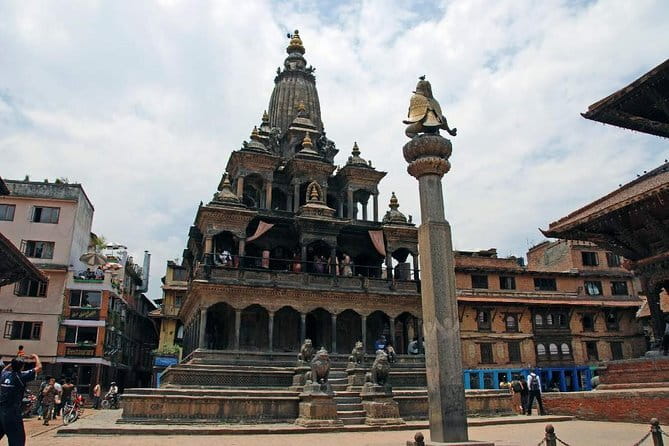
In Patan, the standout religious-art stop is the Golden Temple (Hiranya Varna Mahavihar). You’re looking at a three-story pagoda with a gilded roof and intricate carvings. The temple is dedicated to Gautam Buddha, so the mood shifts from courtyard social spaces to a calmer, devotional atmosphere.
Be ready for the practical side here: admission is not included. You’ll want to budget time and cash accordingly.
After that, swing by Manga Hiti (Manga Dhara), a historic stone water spout built during the Lichhavi period. This is one of those “wait, how cool is that?” stops because it shows that public infrastructure in old Nepal was artistic too. Carvings of gods and detailed designs make the water source feel like a shared monument, not just a utility.
If you care about how cities work day-to-day (not only what kings built), Manga Hiti is a great reality check.




Patan Museum and Patan Durbar Square: where the carving lessons click
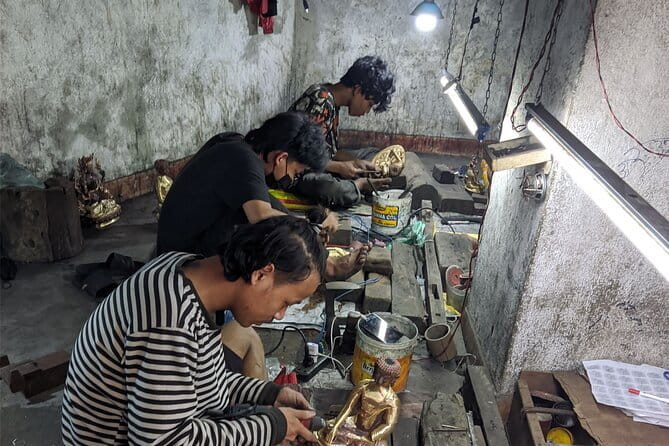
The Patan Museum sits in a restored Malla-era palace, and it’s one of the best places on the route to slow down and organize what you’ve been seeing. The museum itself is not included (so plan for the extra ticket cost if you go inside), but the setting matters: you’re already standing inside traditional structures before you look at any objects.
Then comes the big one: Patan Durbar Square, a UNESCO World Heritage Site and once the royal palace center for the Malla kings. Plan to spend real time here. The square’s temples, courtyards, and palace-era elements are closely tied to Newar craftsmanship—especially the way stone is carved into repeating patterns that look formal, but still feel detailed and human.
As with most major Durbar Square areas, entrance isn’t included, and you’ll be paying on arrival. Expect a cash payment of about NRP 1000. There’s also a recommendation to offer a minimum NRP 100 donation to the Royal Kumari. If you like to avoid awkward moments at the gate, carry small notes.
Crossing into Bhaktapur: Durbar Square and the feeling of old-city continuity
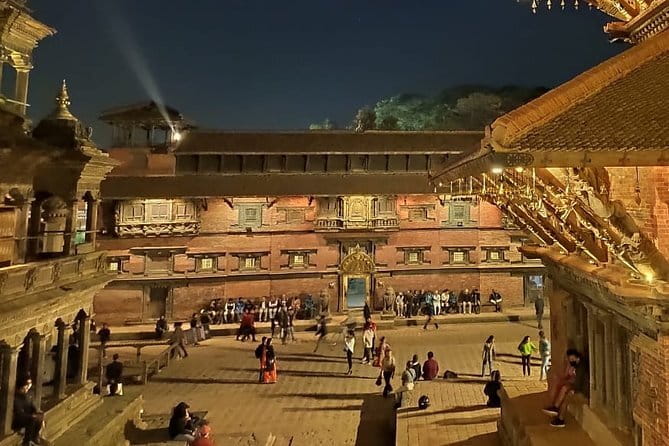
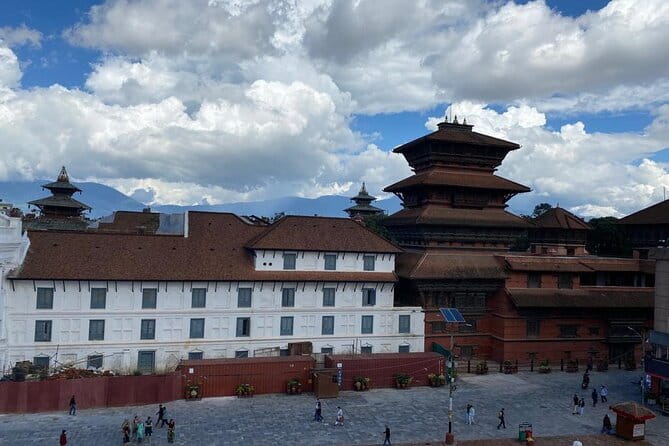
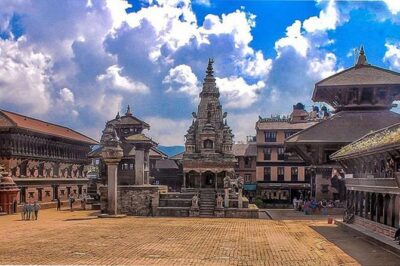
The Bhaktapur portion starts at Bhaktapur Durbar Square, another UNESCO World Heritage Site. This is where you’ll see traditional Newar architecture concentrate into a single, walkable center. Think temples and courtyards arranged in a way that makes the square feel like a living stage—less like an empty landmark and more like a place people still orbit daily.
Admission for the Durbar Square area is also not included, so bring cash for that day’s totals.
If you’re wondering what makes Bhaktapur feel different, it’s the way the city reads as a system. You notice how stonework, gateways, and temple placement guide movement through the streets.
Pottery Square, Nyatapola at Taumadhi, and Dattatraya’s Peacock Window
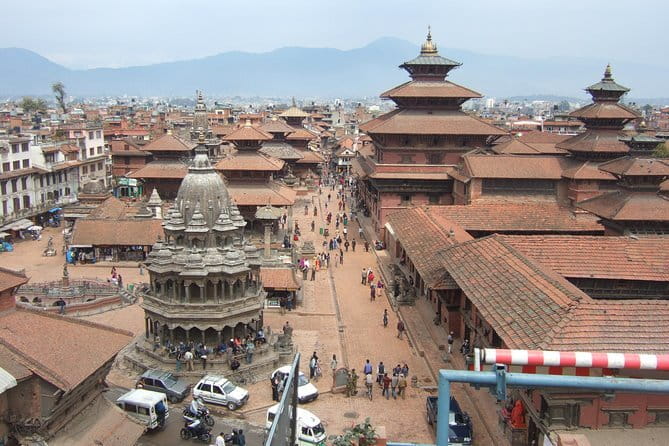
After Durbar Square, the tour leans into practical craft and religious iconography.
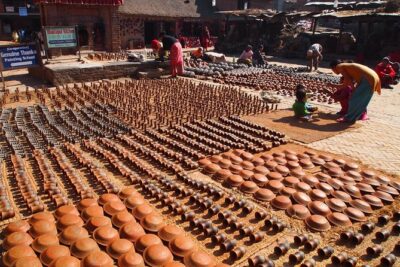
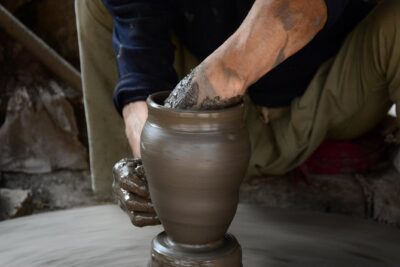
At Pottery Square, you’ll see artisans working clay and selling handmade pottery. The value here isn’t only the items—it’s the chance to watch how craft stays tied to place. You’ll be in the heart of the economy, not just the heritage postcard view.
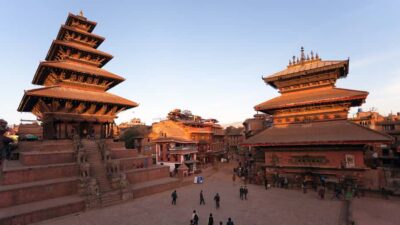
Then head to Taumadhi Square, known for Nyatapola Temple. This five-story temple dedicated to Siddhi Lakshmi is one of the most striking silhouettes in the area. It’s tall, dramatic, and easy to understand from ground level: each tier feels like it’s pushing your eyes upward.
Finally, end up at Dattatraya Temple in Dattatraya Square, which is dedicated to Dattatraya, embodying the unity of Brahma, Vishnu, and Shiva. A highlight here is the Peacock Window, famous for its decorative detail and framing. It’s a good close to the day because it shifts your attention from big temple shapes back to fine design.
Money, timing, and what to bring (so the day stays easy)
This tour is priced at $40 per person, which is fair when you factor in the air-conditioned vehicle, onboard WiFi, and a guide for a full half-day of walking and explanation. The main extra cost isn’t the guide or transport—it’s entrances.
Plan for:
- Durbar Square entry in cash (about NRP 1000 paid at the entrance).
- The guide’s donation recommendation of at least NRP 100 to the Royal Kumari.
- Other sights on the route that list admission not included, including Golden Temple and Patan Museum.
You also have a lunch/coffee window built into the day, but lunch is not included, so expect to pay for your own meal.
What to pack:
- Cash (in smaller notes if possible) for gate payments and small donations.
- Comfortable shoes with grip for stone steps.
- Water and sunscreen, especially in warmer months.
- A phone with offline maps saved, since WiFi isn’t always dependable everywhere.
Who should book this Patan & Bhaktapur day trip
This fits best if you want:
- UNESCO-level sites without building a self-guided itinerary.
- A guided day that explains meaning behind courtyards, temples, and symbols.
- A manageable pace with a max 10-person group.
It’s also a good choice for adults and older teens (the minimum age is 9), because the walking and stairs match a moderate fitness level. If you’re traveling with younger kids, note the policy that children under 9 can’t sit on laps for insurance reasons.
Should you book this tour?
Yes, I’d book it if you want a structured way to experience two of Nepal’s most famous Newar centers—Patan and Bhaktapur—in one day, with a guide who can connect the art to the culture. The route makes smart use of short stops (gateway courtyards, historic water spouts) so you don’t only see big monuments.
Skip it or at least adjust expectations if you hate managing cash at gates, because Durbar Square entrance is not included and you’ll pay in person. Also, if you need frequent breaks or wheelchair-level access, this format may feel tight since moderate walking is part of the experience.
FAQ
How long is the Patan and Bhaktapur Boutique Tour?
The tour is about 9 hours 30 minutes, including transportation and time for a lunch/coffee stop.
What’s included in the price?
The tour includes an air-conditioned vehicle, WiFi on board, and a guide.
Are Durbar Square entrance fees included?
No. Entrance to Durbar Square costs about NRP 1000 (paid in cash at the entrance). The tour also recommends a donation of at least NRP 100 to the Royal Kumari.
What about other entrances like the Golden Temple and Patan Museum?
Those entrances are listed as not included, so you should expect extra ticket costs if you want to go inside.
Is lunch included?
Lunch is not included in the tour price, though the day includes time for a lunch or coffee stop.
What time does the tour start and where does it end?
The start time is 8:30 am. The tour ends back at the meeting point.
Can I cancel for a full refund?
Yes. You can cancel up to 24 hours in advance for a full refund. If you cancel less than 24 hours before the start time, the amount paid is not refunded.
More Tours in Kathmandu




More Tour Reviews in Kathmandu




Just Reviewed in Kathmandu
- Mountain Bike Tour
★ 5.0 · 3 reviews - Annapurna Panaroma
★ 5.0 · 3 reviews - Mount Everest Scenic Flight 50 Minutes
★ 5.0 · 3 reviews - Kathmandu : Swambhunath & Durbar Square Guided Half Day Tour
★ 3.3 · 3 reviews - Chandragiri Cable Car & Monkey Temple Tour – Private/Group
★ 5.0 · 3 reviews - Kathmandu: Shivapuri National Park Hiking Day Trip
★ 3.3 · 3 reviews
Bhaktapur Tours, compared.
 ★ 5.0Private Bhaktapur and Nagarkot Day Tour From KathmanduFrom $20305 reviews
 ★ 5.0Day Trip to Bhaktapur and Panauti from KathmanduFrom $34184 reviews
 ★ 5.0Bhaktapur & Patan Durbar Square Day ToursFrom $50122 reviews
 ★ 5.0Nagarkot Sunrise & Bhaktapur UNESCO Heritage Private TourFrom $5066 reviews
 ★ 4.7Private Patan and Bhaktapur Sightseeing TourFrom $4964 reviews
 ★ 4.9Bhaktapur & Nagarkot Day Tour with Lunch – Private/GroupFrom $562 reviews
 ★ 4.0Nagarkot Sunrise & Bhaktapur Heritage Tour -Private Full Day TripFrom $6042 reviews
 ★ 5.0Kathmandu and Bhaktapur Cities Guided TourFrom $7034 reviews
Browse the lists this tour appears in