
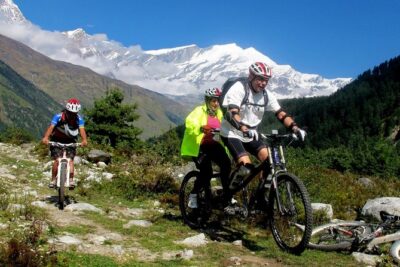
Trade traffic for steep trails. This is a true mountain-bike day, starting in Kathmandu and pushing up toward the 2,100m Nagarkot viewpoint, with villages and old-city stops along the way. I also love the way the route balances effort with payoff, so the ride feels purposeful rather than just strenuous.
The included ride support is a real plus: you get a local guide/expert mechanic, plus a helmet and a customized Giant or Fuji front suspension bike. And if you’re lucky enough to ride with Dipesh, you’ll get history-meets-real-life context that makes the places you pass feel more human and less like scenery on a map.
One consideration: this is built for professional-level riders with strong fitness. If you’re not used to long climbs, steep descents, and sustained effort, you’ll probably feel it fast.
In This Review
- Key highlights worth knowing
- Getting From Thamel to the Hills: The Morning Setup
- Sankhu Village: Newari Streets After a Harder Start
- The Climb Toward Nagarkot: From 1,300m Up to 1,950m
- Nagarkot Viewpoint at 2,100m: The Payoff Stop
- Bhaktapur Break: Medieval Old-City Time Between Riding
- Finishing Back in Thamel: A Day That Ends in Real Life
- The Real Challenge: 35 km One-Way and Professional-Level Fitness
- Bikes, Helmets, and Dipesh’s Pro-Level Guidance
- Price and Value of $165 for a Private Extreme Ride
- What to Bring (Since Bike Gear Isn’t Included)
- Who Should Book This and Who Should Skip It
- Should You Book the Kathmandu Extreme Mountain Biking Day Tour?
- FAQ
- How long is the Kathmandu Extreme Mountain Biking Day Tour?
- What route does the tour cover?
- What bikes and safety gear are included?
- Is pickup available?
- Is the tour private?
- Are meals included?
- What is the cancellation policy?
Key highlights worth knowing
- Climb to 2,100m for a major Himalayan viewpoint payoff
- 35 km one-way distance that turns into a serious full-day commitment
- Professional guide + expert mechanic for real confidence on a demanding route
- Giant or Fuji front suspension bikes plus helmet included
- Stop rhythm that makes sense: Sankhu, Nagarkot views, then Bhaktapur before returning to Thamel
Before you lock this one in, a few Kathmandu alternatives:
- Kathmandu and Surrounding Full-Day Mountain Biking Tour★ 4.7 · 12 reviews
- Cycling Tour in Kathmandu – Day Tour★ 5.0 · 5 reviews
- Kathmandu: Extreme Mountain Biking Day Tour★ 5.0 · 3 reviews
- Kathmandu Bike Tour: Patan Heritage & Newari Food by Bike★ 4.6 · 3 reviews
Getting From Thamel to the Hills: The Morning Setup
Most Kathmandu adventures start with traffic. This one starts with a focused ride day out of Thamel, the city’s busy tourist hub. Pickup is offered, and you’ll have a mobile ticket, which keeps the start straightforward.
You begin at about 1,300 meters. That altitude matters more than you might think. You’re not just riding through a city and “up a hill.” You’re gradually working into higher elevation, where breathing can feel a little different even when you’re fit.
This is also a private experience, meaning you’re not shared across a large group. That matters on a tough route because you can ride at a pace that fits your group and take pauses when they’re useful (not when the clock says “move on”).
Sankhu Village: Newari Streets After a Harder Start
Sankhu Village is your first real stop, about 17 km northeast of Kathmandu. It’s an old Newari town, and it gives you something valuable before you get fully swallowed by “ride mode.”
You get a short break—about 10 minutes—and the entry ticket here is free. In that short window, your best move is to get your bearings: look at how people live in the older town fabric, then reset your legs for the push toward Nagarkot. For many riders, Sankhu functions like a warm-up both physically and mentally.
If you’re chasing culture alongside challenge, this is a smart choice. It prevents the day from feeling like only climb-and-coast. It also gives you a glimpse of the human scale of the valley beyond the big-name viewpoints.
The Climb Toward Nagarkot: From 1,300m Up to 1,950m
From Kathmandu, the ride climbs all the way up toward Nagarkot. Along the way, you reach around 1,950 meters, before the day’s high point at the viewpoint.
This is where you’ll feel the “extreme” part. The tour is designed for professional-level riders, and the elevation gain is the obvious reason. But there’s another reason too: a longer ride at higher altitude usually means you manage effort more carefully than you would on a flatter day. If you go out too hard early, the middle-to-upper portions can feel punishing.
Practically, treat this section like a pacing test. You’re not just trying to survive the climb. You’re trying to climb efficiently enough that you still enjoy the descent and the later breaks.
Nagarkot Viewpoint at 2,100m: The Payoff Stop
Nagarkot is the star. It’s one of Nepal’s most popular Himalayan viewpoints, and the tour schedules about 30 minutes at the viewpoint.
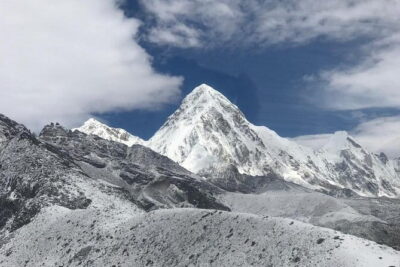
You’ll be up around 2,100 meters. On a clear day, you can see famous peaks in the far distance, including Mt. Everest. That possibility is part of why this ride is worth doing: you’re working for a view that feels earned.
Here’s how I’d use your time at the viewpoint:
- Take a slow scan first. Let your eyes adjust and map what you’re seeing.
- Then, if the weather looks good, spend a little extra time with photos and quiet watching.
- Don’t rush. Thirty minutes goes fast when you’re actually looking at mountains instead of a phone screen.
Also, since the viewpoint stop is short, your pacing earlier in the ride becomes even more important. You want to arrive feeling capable of enjoying it, not only staring because you’re exhausted.
Bhaktapur Break: Medieval Old-City Time Between Riding
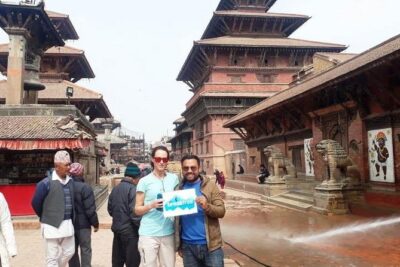
After Nagarkot, the tour descends toward Bhaktapur, a medieval city and a UNESCO World Heritage Site. You get about 30 minutes here.
This is a great contrast with the viewpoint. At Nagarkot, the reward is distance and height. In Bhaktapur, the reward is texture: old streets, historic atmosphere, and the feeling that time has moved slower than in the capital core.
The tour mentions admission ticket free for this stop as well, so you’re not hunting for fees or entry steps. It’s simply a short, guided-feeling break between riding segments.
Even with limited time, you can do one useful thing: walk with intention. Pause to look at doors, courtyards, and building details rather than trying to cover everything. That way your brain gets a rest without your body losing the plot.
Finishing Back in Thamel: A Day That Ends in Real Life
The tour ultimately halts back at Thamel. That’s helpful because it’s not just a remote endpoint. You can head straight back into Kathmandu’s everyday rhythm—food, restrooms, and a place to sort your gear.
Ending in a familiar neighborhood also reduces the “what now?” stress. When you finish a big bike day, the last thing you need is extra travel friction.
It also gives you a chance to compare what you saw uphill versus what you saw in the city. You get to feel the day as a full sequence: valley villages, mountain panorama, then old-city texture.
The Real Challenge: 35 km One-Way and Professional-Level Fitness
Let’s talk about the numbers plainly. The route covers 35 km one-way, which means you’re looking at roughly 70 km total for the full round-trip ride. The day is listed as around 6 hours (approx.), but it’s also described as an 8–9 hour round-trip experience—so I’d plan your schedule with the longer end in mind.
That time spread isn’t random. It’s the reality of riding at altitude, stopping briefly at villages and viewpoints, and taking the pace that keeps the group safe and coherent.
The tour is designed for professional-level riders, and the fitness requirement is explicit: travelers should have strong physical fitness level. If you’re a strong rider but not used to sustained climbing, you might still manage it—but you’ll need to be honest with yourself about your endurance.
If you’re considering this as a “fun challenge,” I’d call it more like a demanding training day with great rewards. If you’re already chasing tough rides, you’ll likely love the structure and the payoff stops.
Bikes, Helmets, and Dipesh’s Pro-Level Guidance
What’s included makes a noticeable difference for a ride this serious. You get:
- A local guide/expert mechanic
- A customized Giant or Fuji front suspension bike
- A helmet
- All taxes and service charge
Front suspension matters on uneven roads and rough surfaces, which you should expect when riding through rural and town-edge areas. It won’t magically erase jolts, but it helps you keep traction and control when the ground isn’t perfectly smooth.
The “expert mechanic” part is more than a nice-to-have. When you’re doing a longer, higher-effort ride, small bike issues become big issues. Having support built into the tour plan reduces stress.
One of the most praised parts of the experience is the guide’s competence. In at least one ride, Dipesh was highlighted for professional guidance and for sharing insights on the history of Nepal that actually made the stops feel relevant, not like a quick photo and off you go.
Price and Value of $165 for a Private Extreme Ride
At $165 per person, this isn’t a bargain-basement activity. But it’s also not priced like a generic sightseeing tour. You’re paying for a hard day with real ride infrastructure: bike, helmet, private group experience, and an expert guide/mechanic team.
For value, check what’s included versus what’s not:
- Included: bike + helmet, local guide/mechanic, and taxes/service.
- Not included: travel insurance, evacuation/medical expenses, meals, and a National Park Permit if applicable. Also not included are bike clothing and any support vehicle if needed.
So where does the money go? It goes into making sure you can ride safely and confidently, not into transfers and casual pacing. If you’re already comfortable on a mountain bike, the included bike rental alone helps offset cost. If you need to rent everything separately, the price can start to look more attractive.
My practical take: this is worth it if you want a guided, supported route to big-viewpoint areas without handling the complex pieces yourself.
What to Bring (Since Bike Gear Isn’t Included)
Bike clothing isn’t included, so plan your packing. Even if you’re an expert rider, a day like this can be uncomfortable if you show up under-prepared.
Bring your own riding layers and comfort gear that match your style, plus the usual ride-day basics:
- Water and an energy plan (because this is long and higher elevation)
- Sun protection (altitude hikes sun intensity)
- A way to keep essentials secure
Also keep in mind that meals aren’t included. If you’re the type who starts getting cranky when you’re hungry, plan ahead. Build a strategy for eating before the ride and during any breaks you’re offered.
Who Should Book This and Who Should Skip It
This tour suits you if:
- You’re a strong mountain biker and you’re comfortable with long distances and sustained effort
- You want real altitude riding, not just a light sightseeing spin
- You care about big views and want stops like Nagarkot and Bhaktapur built into the route
It’s less ideal if:
- You’re not used to professional-level cycling demands
- You’re hoping for an easy day with casual pacing
- You’re unsure about your fitness for a route that includes major elevation and long total distance
Kids must be accompanied by an adult, but the overall difficulty level makes this best suited to riders who can handle the physical workload.
Should You Book the Kathmandu Extreme Mountain Biking Day Tour?
If you’re the kind of rider who gets excited by steep climbs, higher elevation, and the idea of earning a major viewpoint, this tour makes strong sense. The included bike, helmet, and guide/mechanic support reduce friction on a route that could otherwise feel stressful. And the payoff stops—especially Nagarkot—are the kind you’ll remember because you worked for them.
If you’re unsure about your ability to handle professional-level endurance, I’d treat this as a “maybe later” activity. The mountains don’t care about confidence. Your legs will tell you the truth fast.
FAQ
How long is the Kathmandu Extreme Mountain Biking Day Tour?
The tour is listed as about 6 hours (approx.), and it’s also described as an 8–9 hour round-trip experience.
What route does the tour cover?
You start in Thamel, ride to Sankhu Village, continue to Nagarkot viewpoint, descend toward Bhaktapur, and then return to Thamel. The one-way distance is 35 km.
What bikes and safety gear are included?
The tour includes a customized Giant or Fuji front suspension bike and a helmet, plus a local guide/expert mechanic.
Is pickup available?
Pickup is offered.
Is the tour private?
Yes. This is a private tour/activity, with only your group participating.
Are meals included?
No. Meals are not included.
What is the cancellation policy?
This experience is non-refundable and cannot be changed for any reason.
If you want, tell me your current fitness and mountain bike experience level, and I’ll help you sanity-check whether a professional-level route like this is the right fit.
More Cycling Tours in Kathmandu
More Tours in Kathmandu


More Tour Reviews in Kathmandu
Just Reviewed in Kathmandu
- Mountain Bike Tour
★ 5.0 · 3 reviews - Annapurna Panaroma
★ 5.0 · 3 reviews - Mount Everest Scenic Flight 50 Minutes
★ 5.0 · 3 reviews - Kathmandu : Swambhunath & Durbar Square Guided Half Day Tour
★ 3.3 · 3 reviews - Chandragiri Cable Car & Monkey Temple Tour – Private/Group
★ 5.0 · 3 reviews - Kathmandu: Shivapuri National Park Hiking Day Trip
★ 3.3 · 3 reviews
Cycling Tours, compared.
 ★ 4.7Kathmandu and Surrounding Full-Day Mountain Biking TourFrom $8012 reviews
 ★ 5.0Cycling Tour in Kathmandu – Day TourFrom $1505 reviews
Kathmandu Bike Tour: Patan Heritage & Newari Food by BikeFrom $283 reviews
★ 5.0Cycling Tour in Kathmandu – Day TourFrom $1505 reviews
Kathmandu Bike Tour: Patan Heritage & Newari Food by BikeFrom $283 reviews
 ★ 5.0Mountain Bike TourFrom $1203 reviews
Browse the lists this tour appears in