
Review · 1-DAY TOURS
Kathmandu introductory tour, a typical day trip in Kathmandu
Kathmandu can feel like a traffic puzzle with temples stacked on top of it. This Kathmandu introductory tour turns that chaos into a clean, guided route through four major UNESCO sites—so you know what you’re looking at instead of just taking photos. I love the simple structure (you hit the big sights without wasting time), and I also like that you get an experienced guide plus an air-conditioned car when the day heats up.
The only thing to plan around is that entrance tickets and monument fees are not included, and one stop (Pashupatinath) has limits on what visitors can access. If you’re expecting everything to be fully included and low-effort, this may feel a little more pay-as-you-go than you hoped.
In This Review
- Key highlights at a glance
- A 6–8 hour Kathmandu starter plan that actually makes sense
- Price and logistics: what $50 covers, and what to budget for
- Your guide shapes the whole day: Siri and Sheree in the spotlight
- Stop 1: Swayambhunath Temple and the Monkey Temple climb
- Stop 2: Kathmandu Durbar Square and Taleju’s continued religious role
- Stop 3: Boudhanath Stupa, kora steps, and prayer wheels you can touch
- Stop 4: Pashupatinath Temple and why the riverbank matters
- What to pack and how to make this day trip smoother
- Who this tour suits best (and who might want a different plan)
- Should you book this Kathmandu introductory tour?
Key highlights at a glance
- AC car + pickup keeps the day moving comfortably around Kathmandu traffic.
- UNESCO World Heritage sites in one route: Swayambhunath, Kathmandu Durbar Square, Boudhanath, and Pashupatinath.
- Prayer flags (Lungta) at Swayambhunath, plus the famous nearby monkeys.
- Boudhanath Stupa kora with prayer wheels for a hands-on spiritual experience.
- Pashupatinath ritual viewing from the left bank, even with the main temple closed to visitors.
- Guides like Siri and Sheree get praised for being friendly, responsible, and easy to understand.
Before you lock this one in, a few Kathmandu alternatives:
- Kathmandu: 7 UNESCO Sites Tour in 1 Day (Private Tour)★ 4.9 · 204 reviews
- Day Trip to Bhaktapur and Panauti from Kathmandu★ 5.0 · 184 reviews
- The Most Beautiful 1 Day Experience in Kathmandu Nepal★ 5.0 · 84 reviews
- Nagarkot Sunrise & Bhaktapur Heritage Tour -Private Full Day Trip★ 4.0 · 42 reviews
A 6–8 hour Kathmandu starter plan that actually makes sense
This is the kind of day trip that helps you get your bearings fast. You start at 9:15 am, then work through a logical set of stops that covers both Buddhist and Hindu Kathmandu in a single sweep. You’re not trying to conquer the city on your own, and you’re also not locked into some unrealistic all-day march. Think: enough time to see what matters, plus a guide to connect the dots.
The duration (about 6 to 8 hours) is a sweet spot for a first day. It gives you time at each highlight—roughly 30 minutes at Swayambhunath, 1 hour at Kathmandu Durbar Square, 45 minutes at Boudhanath Stupa, and 1 hour at Pashupatinath—without turning the day into a blur of “next stop, go, go, go.” You’ll still feel the momentum of Kathmandu, but you won’t be running on empty.
And because it’s a private tour with only your group, it tends to feel more relaxed than the kind of group schedule where you’re always tugged along at someone else’s pace. If you want answers while you walk, this format usually makes that easier.
Price and logistics: what $50 covers, and what to budget for
At $50 per person, this tour can be good value—especially if you’re pairing sightseeing with the convenience of an air-conditioned car and pickup. The included items are straightforward: an experienced tour guide and transport that keeps you out of “heat + traffic + figuring it out” mode.
But you should budget extra for two big categories:
- Monument entrance tickets are not included.
- Food and drink are not included, and tips are also not included.
That’s pretty normal for Kathmandu day tours, but it’s still worth flagging. If you plan to grab snacks during the day (and you probably will), decide in advance how you’ll handle that—cash, cards, and bottled water. Also, at places like Pashupatinath, some extras can cost more (more on that below).
One other practical detail: you get a mobile ticket. That’s helpful when you’re juggling travel days and don’t want one more paper thing in your bag.
Your guide shapes the whole day: Siri and Sheree in the spotlight
A route like this lives or dies by the guide. These sites look impressive, sure—but the real payoff is knowing why the layout matters, what objects mean, and what you’re seeing beyond the postcard.
I like that this operator has a track record of strong guide service. In the feedback, Siri comes up again and again for being friendly and for speaking Spanish very well. That matters more than people think: when you understand what’s happening at religious sites, you stop guessing and start noticing details you’d otherwise miss.
Another name that appears is Sheree, praised for being exceptionally attentive and responsible. For you, that usually translates into a calmer day: fewer moments where you’re lost in the crowd, fewer awkward misunderstandings, and more time spent actually absorbing the place.
So while you’re paying for “a tour,” you’re really paying for interpretation. And on a first visit to Kathmandu, interpretation saves you from a lot of wasted head-scratching.
Stop 1: Swayambhunath Temple and the Monkey Temple climb
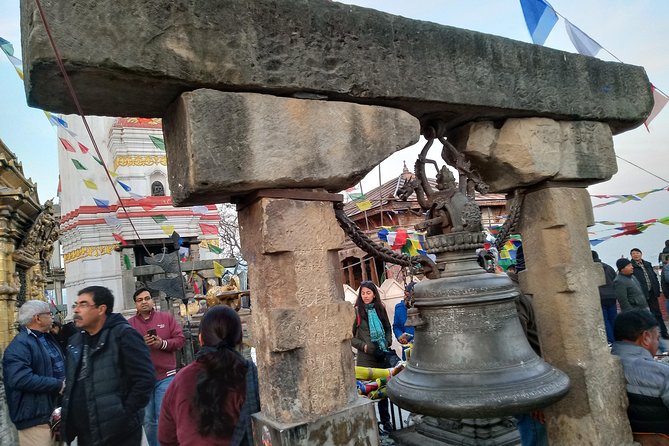
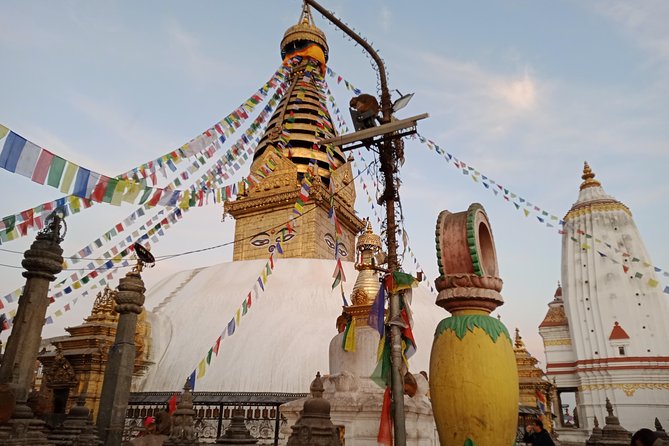
Swayambhunath sits above the Kathmandu Valley and gives you a view that feels like the city’s entire story is written out below. This is one of the main reasons people love starting here: you get an instant sense of geography before you go deeper into Kathmandu’s temples.
Your time on-site is about 30 minutes, which is enough for the essentials if you’re moving steadily. Plan for stairs right from the area near the parking lot. It’s not a long hike, but it’s real steps—so if you’re carrying a heavy daypack or have mobility limits, wear grippy shoes and take it slow.
Now the fun part: the monkey temple nickname is earned. You may see monkeys around the temple area, so keep small food items secured and don’t act like you’re offering a snack buffet.
One of my favorite details here is the prayer flags, called Lungta. Even if you don’t read the symbolism, you’ll feel the mood. Flags like these are part of how you experience Buddhism in Kathmandu—not just by looking, but by seeing prayers literally tied to the landscape.
Watch-out: the place is active. That means you’ll want to stay aware of where you step and be respectful of devotees moving through the area.




Stop 2: Kathmandu Durbar Square and Taleju’s continued religious role
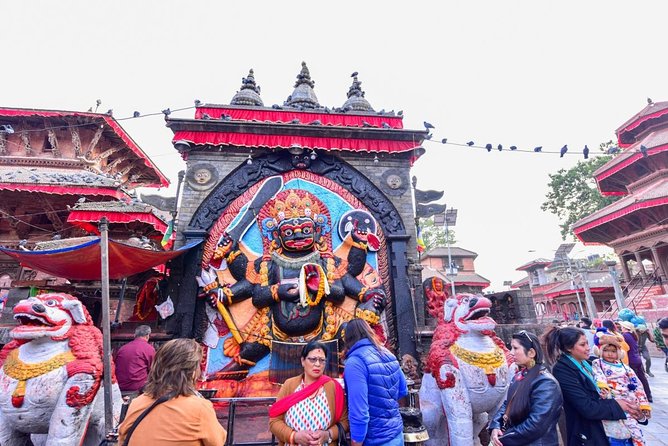
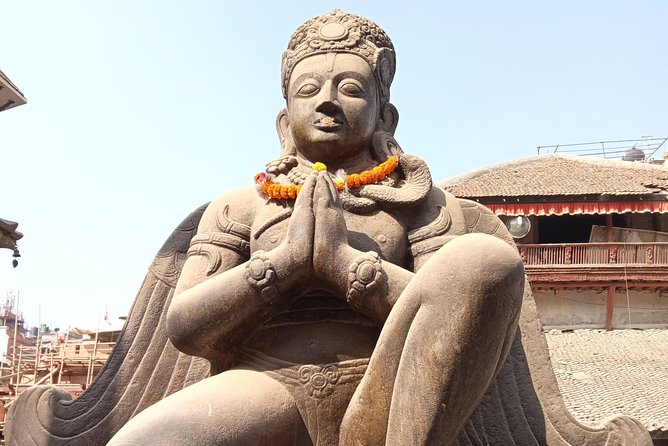
Next up is Kathmandu Durbar Square, right in the central zone. This is a UNESCO site and a major one: you’re looking at a palace complex and temples dating back to the 16th and 17th centuries. That time depth matters. You’re not just visiting one building—you’re walking through a whole complex that shows how power and religion were braided together.
Your visit runs about 1 hour, which is a good chunk for a place this full of carvings and courtyards. Take your time, because the big structures are only the starting point. You’ll want to notice how the space is layered—temples inside squares, doorways tucked around corners, and little shifts in architecture that help you read the site like a map.
There’s also a powerful detail connected to the royal tradition: the tallest temple for the tutelary deity of the royal family, Taleju. The information shared during the visit includes the fact that animal sacrifice is still linked to Dashain, Nepal’s major Hindu festival. Whether you personally feel comfortable with that kind of ritual topic or not, it’s part of the living religious fabric of the place.
Practical note: entrance tickets here are not included, so decide if you want to do the paid entry areas or focus on what you can see without them.
Stop 3: Boudhanath Stupa, kora steps, and prayer wheels you can touch
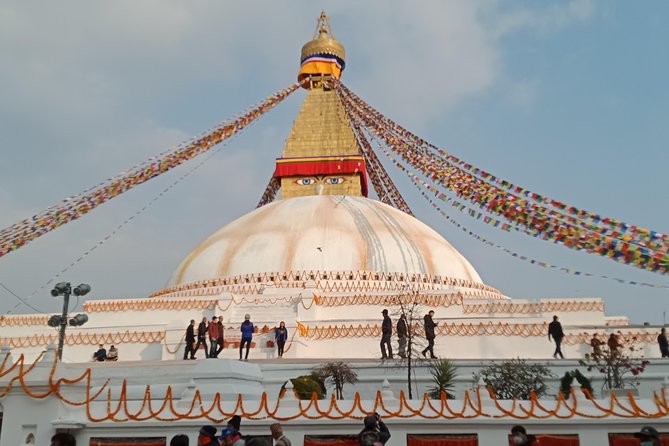
At Boudhanath Stupa, you step into a quieter kind of awe. This is described as the biggest stupa in Nepal, and it’s the kind of landmark that changes how you look at Kathmandu. Instead of temples rising at every angle, you get one massive spiritual center with activity flowing around it.
You get about 45 minutes here. The highlight is the kora, a walking circuit around the stupa. As you move along, you’ll pass prayer wheels that people spin as they go. This is one of those moments where you stop being a spectator and become part of the rhythm—without needing any special training.
You may also notice smaller monasteries in the area that open later in the afternoon time. If you catch one that’s open, you can enter following local rules—one specifically mentioned detail is that you should remove your shoes before going inside.
I like Boudhanath because it’s not just a place to stand. Your body gets involved: you walk the circuit, you watch people’s pace, and you feel the repeating motion of prayer.
Timing reality check: if your day runs earlier or later than expected, monastery opening hours could affect what you can enter. Still, the stupa itself is the anchor.
Stop 4: Pashupatinath Temple and why the riverbank matters
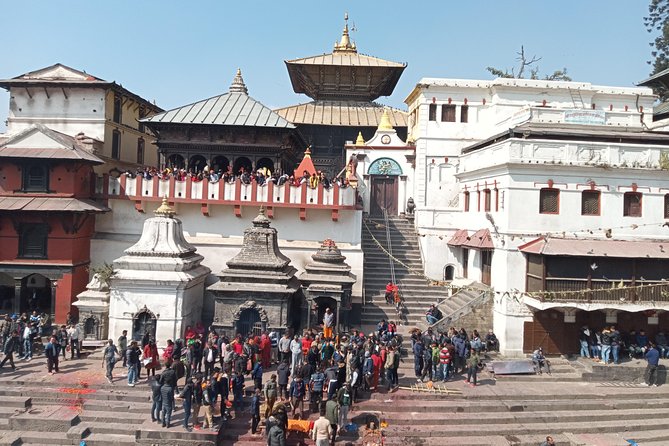
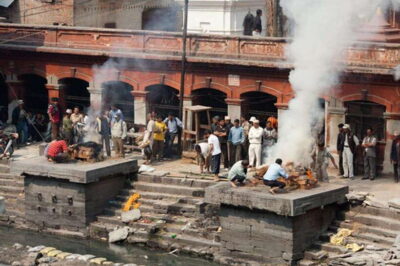
Pashupatinath is one of those locations where you feel the spiritual intensity even before you fully understand it. This stop is about 1 hour, and it comes with an important twist: the main temple is closed for visitors.
That doesn’t mean it’s a dead stop. Many people come specifically to observe Hindu death rituals connected with the river. The information shared on the tour explains that the ceremony is performed on the right bank, while you can observe from the left bank. So the viewpoint you’re taking matters, and the guide helps you understand where to stand and what you’re looking at.
This is the part where you should mentally prepare: you’re seeing a ritual tied to grief, faith, and cultural practice. If you’re sensitive to that, give yourself permission to look briefly and then step back. You don’t have to force a long stare to still “get it.”
One more detail to know: there may be a chance to take a photo with sadhus religious people, but that typically requires extra payment. If photos aren’t your thing, you can focus on the river action and temple structures around the complex.
And again, entrance fees are not included, so if you plan to go into any ticketed areas, set that expectation now.
What to pack and how to make this day trip smoother
Because you’re visiting both temple zones and active religious areas, the “comfort layer” matters.
- Bring water and small snacks. Food and drink aren’t included, and you don’t want to hunt for it while everyone else is already moving.
- Wear comfortable walking shoes. You’ll handle stairs at Swayambhunath, and the sites involve steady walking and uneven ground.
- Keep your phone charged. A mobile ticket is provided, but you’ll still want your camera and maps ready for the gaps between stops.
- Expect a mix of sun and shade. The day includes outdoor viewing at multiple sites, and you’ll likely appreciate that air-conditioned car between stops.
Also, keep an eye on your timing. Each stop has a set visit window, so if you get stuck chatting or exploring beyond the group, you can cut into the next site.
Who this tour suits best (and who might want a different plan)
This Kathmandu introductory tour fits best if you want:
- a first-time overview of Kathmandu’s major UNESCO sites
- a guided explanation that helps you understand what you’re seeing
- an efficient day with AC transport and pickup
It’s also a solid choice if you’re traveling as a couple or small group and want a private format with your own guide conversation.
You might want to consider a different option if:
- you’re the type who wants long stays at each site (this is structured time)
- you strongly prefer fully-inclusive pricing (entrance tickets and food aren’t included)
- you’re uncomfortable with observing religious rituals at Pashupatinath
Still, even with those caveats, the route works well as a Kathmandu “orientation day.”
Should you book this Kathmandu introductory tour?
I’d book it if you want a dependable, well-paced way to see Kathmandu’s biggest UNESCO hits without turning your day into guesswork. For the cost, you’re getting the part that matters most: a guide who can translate the sights into meaning, plus a comfortable way to move between distant areas in an air-conditioned car.
Book it especially if you like clear plans, you want to learn fast, and you don’t mind paying separate entrance fees. If you’re flexible about that—and ready for stairs and sacred spaces—this is a strong way to start your Kathmandu trip on solid footing.
More 1-Day Tours in Kathmandu


More Tours in Kathmandu




More Tour Reviews in Kathmandu




Just Reviewed in Kathmandu
- Mountain Bike Tour
★ 5.0 · 3 reviews - Annapurna Panaroma
★ 5.0 · 3 reviews - Mount Everest Scenic Flight 50 Minutes
★ 5.0 · 3 reviews - Kathmandu : Swambhunath & Durbar Square Guided Half Day Tour
★ 3.3 · 3 reviews - Chandragiri Cable Car & Monkey Temple Tour – Private/Group
★ 5.0 · 3 reviews - Kathmandu: Shivapuri National Park Hiking Day Trip
★ 3.3 · 3 reviews
1-Day Tours, compared.
 ★ 4.97 UNESCO Sites Tour in 1 Day (Private Tour)From $4204 reviews
 ★ 5.0Day Trip to Bhaktapur and Panauti from KathmanduFrom $34184 reviews
 ★ 5.0The Most Beautiful 1 Day Experience in Kathmandu NepalFrom $8084 reviews
 ★ 4.0Nagarkot Sunrise & Bhaktapur Heritage Tour -Private Full Day TripFrom $6042 reviews
 ★ 5.01 Day Kathmandu Valley Sightseeing TourFrom $3537 reviews
 ★ 4.5Chandragiri Hill Day Trip from KathmanduFrom $6525 reviews
 ★ 5.0Amazing 1 Day Trekking Experience in Kathmandu NepalFrom $13024 reviews
 ★ 4.0Himalayan White Water Rafting Day Trip from KathmanduFrom $5222 reviews