
Review · 3-DAY EXPERIENCES
3 days in Kathmandu
Kathmandu’s highlights fit in three days. I like this plan because it groups the city’s big spiritual and royal sights into a small group schedule, with an English-speaking guide who helps you connect the dots as you move from one landmark to the next. You’ll also have private, door-to-door ease thanks to included transport.
What I also like is the ending: a farewell dinner gives your last evening a natural wrap-up, instead of turning it into another solo hunt for food. The one watch-out is that monument entry fees aren’t included for most stops, so you should budget a bit extra for tickets once you’re out there.
In This Review
- Key Things I’d Prioritize on This Tour
- Why a 3-Day Kathmandu Plan Works When Time Is Tight
- Price and What You’re Really Paying for at $398
- Day 1: Kathmandu Durbar Square, Pashupatinath, Swayambhunath, Boudhanath
- Kathmandu Durbar Square (about 1 hour)
- Pashupatinath Temple (about 2 hours)
- Swayambhunath Temple (about 1 hour)
- Boudhanath Stupa (about 2 hours)
- Day 2: Bhaktapur Durbar Square and Patan Durbar Square in “short-but-meaningful” time
- Bhaktapur Durbar Square (about 3 minutes listed)
- Patan Durbar Square (about 3 minutes listed)
- A note on the day’s pacing
- Day 3: Sleeping Vishnu, Kopan Monastery, and Narayanhiti Palace Museum
- Budhanilkanth Temple (about 1 hour, admission included)
- Kopan Monastery (about 1 hour, admission included)
- Narayanhiti Palace Museum (about 1 hour)
- The Private Minivan Advantage in Kathmandu Traffic
- Entrance Fees and Tickets: What to Budget Before You Go
- Temple Etiquette That Makes the Trip Smoother
- Who This Tour Fits Best (and Who Might Want a Different Style)
- Final Thoughts: Should You Book This 3-Day Kathmandu Highlights Tour?
- FAQ
- What time does the tour start, and where is the meeting point?
- How long is this Kathmandu experience?
- What does the $398 per person price include?
- Are monument entry fees included?
- What about accommodations and meals?
- Is this a group tour or private for just my party?
- Do I get a ticket by phone or app?
- What sites are visited across the three days?
- When does the tour end?
- Is free cancellation available?
Key Things I’d Prioritize on This Tour
- Small-group feel with an itinerary built to reduce waiting and keep things moving
- Private minivan transport that saves time and energy between far-flung sites
- A strong mix of Hindu and Buddhist landmarks in one tight three-day arc
- Real standouts like Pashupatinath, Swayambhunath, and Boudhanath with long time blocks
- Budhanilkanth and Kopan Monastery include admission, which is nice when you’re managing costs
- A farewell dinner to close the trip in a relaxed way
Before you lock this one in, a few Kathmandu alternatives:
- 3-Day Chitwan National Park Jungle Safari Tour Package with Pick Up★ 5.0 · 184 reviews
- From Kathmandu/Pokhara: 3-Day All-Inclusive Chitwan Safari★ 4.6 · 133 reviews
- Kathmandu: 3-Day Chitwan Safari Tour with Hotel Transfers★ 4.6 · 127 reviews
- Kathmandu/Pokhara: 3 Day Chitwan Jungle Safari Tour★ 4.7 · 87 reviews
Why a 3-Day Kathmandu Plan Works When Time Is Tight
If you only have a short window in Kathmandu, the biggest risk is collecting landmarks without understanding them. This kind of three-day schedule helps you avoid that trap. You get a logical flow across the Kathmandu Valley, and the day lengths are built around time at major sites rather than rushing through everything at a photo speed.
The other practical win is group size and support. This is set up as a private tour just for your group, and you travel with an English-speaking licensed guide. In feedback about the experience, Maina is repeatedly singled out for being organized and kind—exactly the sort of guide you want when sites have spiritual meaning and cultural rules.
One more thing: the tour is framed as family-friendly, which usually means the pacing is reasonable and you’re not stuck with long, exhausting breaks between stops. Still, Kathmandu has stairs, uneven ground, and temple areas that ask for respectful behavior. So it’s “doable” for most people, but it’s not an all-flat stroll.
Price and What You’re Really Paying for at $398
At $398 per person for about three days, you’re not just buying access to temples. You’re buying three big parts of travel friction control: guide time, transport, and a scheduled dinner.
Here’s what’s included:
- Dinner
- English-speaking licensed tour guide
- Transport by private tourist vehicles (a minivan)
And here’s what’s not included:
- Accommodations and meals besides the dinner
- Monument entry fees for most stops
That means your real “all-in” cost depends on tickets. Budhanilkanth Temple and Kopan Monastery list admission as included, but places like Durbar Square, Pashupatinath, Swayambhunath, Boudhanath, Bhaktapur, Patan, and Narayanhiti don’t list admission tickets as included. In plain terms: the tour price covers the backbone of your days, and you’ll handle the sites’ ticket costs on the ground.
Is it good value? For most short-stay visitors, yes—because minivan + guide + routing is where money often disappears in Kathmandu if you try to DIY every move. The tour gives you a plan so you spend your time looking, not bargaining and reorganizing.
Day 1: Kathmandu Durbar Square, Pashupatinath, Swayambhunath, Boudhanath
Day 1 is where you get the “Kathmandu feeling” fast: royal-era architecture mixed with living Hindu and Buddhist practice. You start with a 9:15am meeting in Thamel, then move through four major stops with different spiritual moods.
Kathmandu Durbar Square (about 1 hour)
Kathmandu Durbar Square is tied to palace life, including royal residences until the 19th century and ceremonies such as coronations. Even if you’re not hunting every detail, this is a strong first stop because it sets the historical mood. Durbar Squares are also excellent for orientation: you’ll quickly understand how the valley’s religious and civic spaces sit side by side.
Entry isn’t included here, so plan for tickets. Also, wear shoes that handle stone steps and uneven ground, because this is one of those places where your attention should stay on the architecture, not your feet.




Pashupatinath Temple (about 2 hours)
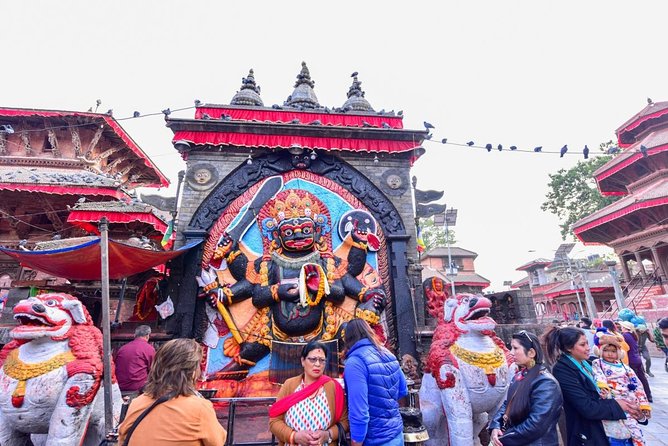
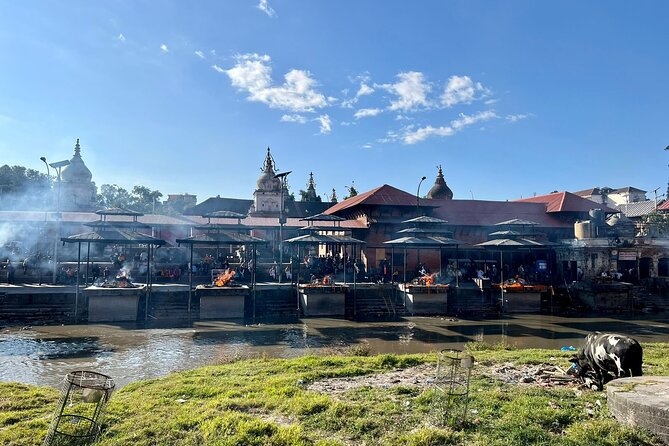
Next comes Pashupatinath, a pagoda-style Hindu temple dedicated to Lord Shiva. It’s described as a powerhouse of Hindu spiritual power, set along the Bagmati River. And behind the temples are cremation grounds—so you’re stepping into a place with intense religious significance.
This is a stop where respectful behavior matters. Keep your voice down, follow any local guidance, and be mindful with photos. Two hours is a long-enough block to watch how people move through the space without feeling trapped in a rush.
Swayambhunath Temple (about 1 hour)
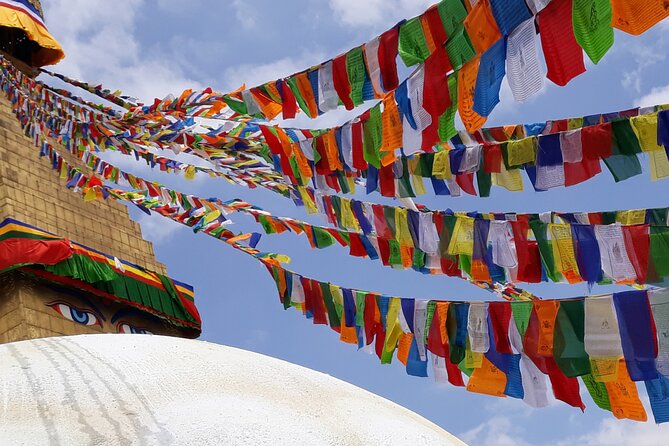
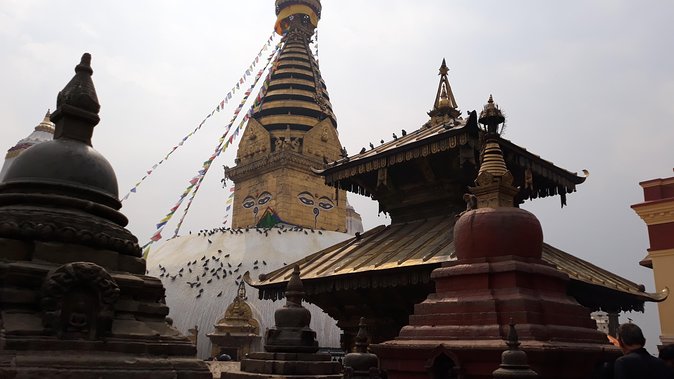
Then you get a totally different vibe: Swayambhunath is a Buddhist stupa said to be about 2000 years old. The structure is described with a gilded spire and whitewashed dome, plus thousands of fluttering prayer flags. One of the most distinctive details is that four faces of Buddha look out across the valley in the cardinal directions.
This stop is ideal for catching the “valley view” effect. Even if you don’t get a perfect panorama every angle, the architecture and prayer-flag colors do the work. Again, entry isn’t included, so budget for tickets.
Boudhanath Stupa (about 2 hours)
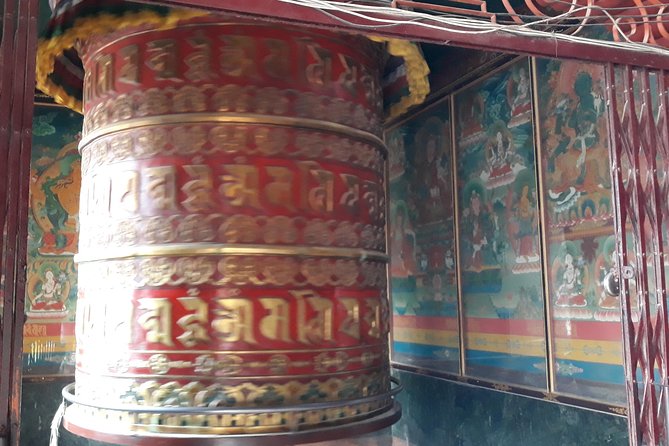
Day 1 finishes with Boudhanath, a UNESCO-listed stupa where pilgrims gather daily for ritual circumnavigation around the dome. Tibetan Buddhist culture is visible and active here, and the lanes around the stupa are described as packed with monasteries and Buddhist-life details.
Two hours is a good duration for Boudhanath because it’s not just a single viewpoint. You can watch movement around the dome and take in the surrounding religious activity. Entry isn’t included, so expect tickets as part of the day’s cost.
Day 2: Bhaktapur Durbar Square and Patan Durbar Square in “short-but-meaningful” time
Day 2 keeps you in the valley’s historic core, but the time allocations here are more compact. You go to Bhaktapur Durbar Square and Patan Durbar Square, both with admission not included and listed durations that look very short on paper. That can be a feature if you’re okay with a quick survey, or a drawback if you’re the type who likes to linger.
Bhaktapur Durbar Square (about 3 minutes listed)
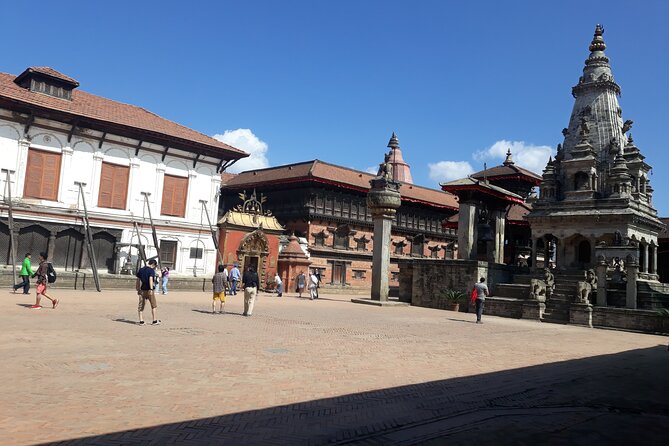
Bhaktapur is described as the third medieval city-state in the Kathmandu Valley, founded in the 9th century. It’s known for three major squares full of temples and for the palace of 55 windows built by King Bupatindra Malla. A highlight is the Nyatapola Temple, a pagoda-style temple on five terraces with pairs of figures—strong men, elephants, lions, griffins, and goddesses—built by King Bhupatindra Malla.
With only a very short time window listed, you’ll want to decide what you want most:
- a first look at the big palace-and-temple layout, or
- a closer look at one signature temple feature.
If you’re the type who takes lots of photos, bring patience. If you’re the type who likes to ask questions, this is where a guide can steer you toward the most meaningful angles fast.
Patan Durbar Square (about 3 minutes listed)
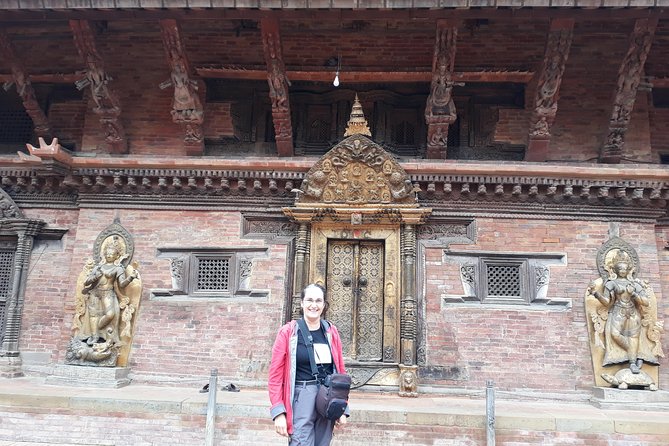
Patan offers another palace complex and temple mix similar in spirit to Kathmandu’s Durbar Square. You’re told it’s the center of Patan’s religious and social life and includes a museum with bronze statues and religious objects.
One described monument is a 17th-century stone temple dedicated to Krishna, built entirely of stone. Even with limited time, this is the kind of place where a guide’s explanation can make the architecture click.
A note on the day’s pacing
Because the listed time blocks for Bhaktapur and Patan are so short, I’d treat Day 2 as your “highlights sweep.” If you want slow wandering, you’ll likely want to return on your own later. But if your goal is to check the major valley sites efficiently, Day 2 does that.
Day 3: Sleeping Vishnu, Kopan Monastery, and Narayanhiti Palace Museum
Day 3 is a strong contrast day. You start with a Vishnu temple scene, move to a quiet monastery setting, then end with a museum linked to Nepal’s modern royal history.
Budhanilkanth Temple (about 1 hour, admission included)
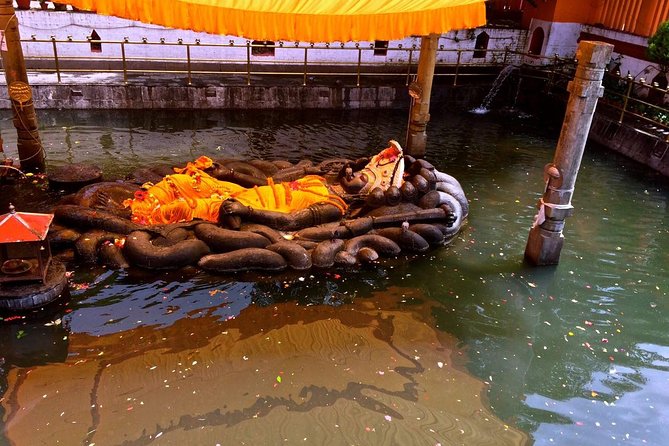
Budhanilkanth Temple is a Vishnu temple with a beautifully carved stone statue of Sleeping Vishnu in an open setting. Admission is included here, which is one less cost to track on the final day.
This is a good pause after temple-hopping earlier in the trip. The Sleeping Vishnu detail is a simple visual hook that helps you slow down and actually look. Still, wear something comfortable and respectful—open-air temple spaces can get warm, and you’ll be standing and walking around while you take it in.
Kopan Monastery (about 1 hour, admission included)
Next is Kopan Monastery, described as having a quiet garden where monks and nuns from around the world visit to meditate and practice Buddhism. Admission is included, which again helps your budget.
This stop is ideal if you want a mental breather. You’re not just learning names and dates; you’re visiting a space built for practice. The one thing to keep in mind: monastery areas often ask for calm behavior. Keep your phone use low, speak softly, and follow any instructions the guide gives.
Narayanhiti Palace Museum (about 1 hour)
Finally, Narayanhiti Palace Museum brings you back to Nepal’s royal past. It’s described as the last palace of the King of Nepal, now operating as a museum. It’s also noted as the site of the Royal Massacre in 2001.
Museums like this can feel heavier than the temple stops, and that’s not a bad thing. It’s important context for understanding how modern Nepal shaped itself. Plan for a reflective last hour and give yourself enough mental space to absorb what you’re seeing.
The Private Minivan Advantage in Kathmandu Traffic
Kathmandu can be chaotic, and distances can feel longer than they look on a map. Having transport included by private tourist vehicles is the reason this tour feels manageable.
With a minivan, you avoid the cost and hassle of coordinating rides between far-flung sites like Pashupatinath, Swayambhunath, and Boudhanath. You also spend less time waiting around for the next person to catch a bus or figure out directions. The result is a tour that stays on schedule enough for a short visit.
One trade-off: you’re traveling by road rather than letting each area become your base for slow exploration. So if you love roaming one neighborhood for hours, you might feel like the days are structured. For a three-day highlights trip, though, it’s a smart trade.
Entrance Fees and Tickets: What to Budget Before You Go
Most stops explicitly list admission tickets as not included. The two exceptions are:
- Budhanilkanth Temple (admission included)
- Kopan Monastery (admission included)
Everything else—Kathmandu Durbar Square, Pashupatinath, Swayambhunath, Boudhanath, Bhaktapur Durbar Square, Patan Durbar Square, and Narayanhiti Palace Museum—lists admission as not included.
So here’s my practical advice: don’t wait until you reach the gate to discover you need tickets. Bring a little cash for ticket purchases, and keep an open mind that ticket lines and rules can vary by site. Your guide will help, but you’ll still want your wallet ready.
Temple Etiquette That Makes the Trip Smoother
You’ll visit major Hindu and Buddhist sites, plus a palace museum. That mix means your behavior matters more than usual.
What I suggest:
- Dress with respect for temples (shoulders and knees covered is a safe rule of thumb).
- Expect stairs and uneven stone. Comfortable footwear is worth it.
- Keep your voice low at cremation-ground-adjacent areas like Pashupatinath.
- At monasteries, keep your phone use minimal and follow any instructions for quiet.
Also, prayer flags and active devotional areas like Boudhanath aren’t just photo backdrops. If you treat them like that, you’ll miss the point. A good guide helps you see what to notice and how to do it respectfully.
Who This Tour Fits Best (and Who Might Want a Different Style)
This plan is a strong fit for:
- short-stay visitors who want the key Kathmandu Valley sights in three days
- people who prefer private transport and an organized route over DIY juggling
- solo travelers—especially since the guide experience is highlighted as warm and professional in feedback you can read before you book
- families who want a structured itinerary, capped with a scheduled dinner at the end
It may be less ideal if:
- you hate museums connected to difficult modern events (Narayanhiti includes the 2001 royal massacre context)
- you’re the type who wants to linger for hours at each Durbar Square (Day 2’s listed time at Bhaktapur and Patan is quite short)
Final Thoughts: Should You Book This 3-Day Kathmandu Highlights Tour?
If you want a time-efficient Kathmandu hit, this tour makes sense. You’re getting the big names—Durbar Square, Pashupatinath, Swayambhunath, Boudhanath, plus the valley’s other royal squares—and you’re not spending your limited days negotiating transport.
I’d book it if you’re comfortable budgeting for monument entry fees and you enjoy a mix of spirituality and history. I’d think twice only if you strongly prefer slow, neighborhood-by-neighborhood wandering, since the structure moves you through several major sites each day.
If you do book, ask your guide what you should prioritize inside each site. With a schedule this packed, a couple of smart choices will make the difference between seeing a lot and truly noticing what you’re seeing.
FAQ
What time does the tour start, and where is the meeting point?
The tour starts at 9:15 am and the meeting point is Thamel, Kathmandu 44600, Nepal.
How long is this Kathmandu experience?
It’s listed as approximately 3 days.
What does the $398 per person price include?
The included items are dinner, an English-speaking licensed tour guide, and transport by private tourist vehicles (a minivan).
Are monument entry fees included?
No. Monument entry fees are not included for most stops. The plan lists admission as included for Budhanilkanth Temple and Kopan Monastery.
What about accommodations and meals?
Accommodation and meals are not included, except for the dinner included with the tour.
Is this a group tour or private for just my party?
This is private. Only your group participates.
Do I get a ticket by phone or app?
You receive a mobile ticket.
What sites are visited across the three days?
The schedule includes Kathmandu Durbar Square, Pashupatinath Temple, Swayambhunath Temple, Boudhanath Stupa, Bhaktapur Durbar Square, Patan Durbar Square, Budhanilkanth Temple, Kopan Monastery, and Narayanhiti Palace Museum.
When does the tour end?
The tour ends back at the meeting point.
Is free cancellation available?
Yes, free cancellation is available up to 24 hours before the experience’s start time for a full refund.
More 3-Day Experiences in Kathmandu


More Tour Reviews in Kathmandu






Just Reviewed in Kathmandu
- Mountain Bike Tour
★ 5.0 · 3 reviews - Annapurna Panaroma
★ 5.0 · 3 reviews - Mount Everest Scenic Flight 50 Minutes
★ 5.0 · 3 reviews - Kathmandu : Swambhunath & Durbar Square Guided Half Day Tour
★ 3.3 · 3 reviews - Chandragiri Cable Car & Monkey Temple Tour – Private/Group
★ 5.0 · 3 reviews - Kathmandu: Shivapuri National Park Hiking Day Trip
★ 3.3 · 3 reviews
3-Day Experiences, compared.
 ★ 5.03-Day Chitwan National Park Jungle Safari Tour Package with Pick UpFrom $180184 reviews
 ★ 4.63-Day All-Inclusive Chitwan SafariFrom $149133 reviews
 ★ 4.63-Day Chitwan Safari Tour with Hotel TransfersFrom $151127 reviews
 ★ 4.73 Day Chitwan Jungle Safari TourFrom $12987 reviews
 ★ 5.02 Night 3 Days Pokhara City TourFrom $10022 reviews
 ★ 5.0Kathmandu Shivapuri National Park and Nagarkot Hiking – 3 DaysFrom $35021 reviews
 ★ 5.0Chisapani – Nagarkot Trek Nepal – 3 DaysFrom $42516 reviews
 ★ 5.02 Nights 3 Days Pokhara Tour Package with Hotel Pick Up/Drop OffFrom $20015 reviews