
Review · TOURS
Buddhist Pilgrimage Tour In Nepal
Three Buddhist stops, one quiet day. This one-day Kathmandu Valley pilgrimage is built around Buddhist chant and monk-led moments, while you visit three major sites that help you understand how Buddhism lives alongside Nepal’s Hindu culture. I like that the day is organized, calm, and focused, not random sightseeing.
What I also like is the practical value: admission tickets and local taxes are part of the plan, and you ride in private comfortable vehicles with a trained English-speaking guide. One thing to plan for: meals and your Nepal visa fee are not included, so budget extra beyond the $150 price.
In This Review
- Key things to know before you go
- A calm, one-day circuit through Kathmandu Valley’s Buddhist anchors
- Boudhanath Stupa: scale, symbolism, and why it’s a pilgrimage magnet
- Kopan/Kapan Monastery: Gelug traditions and monk-led practice time
- Lunch in Thamel at The Ship Restaurant (and then you head to Swayambhunath)
- Swayambhunath Temple, the Monkey Temple: structures, peace, and a famous Kathmandu view
- Price and logistics: is $150 worth it?
- Who this pilgrimage tour fits best
- How to make your visit smoother (simple, practical prep)
- Should you book this Buddhist Pilgrimage Tour in Kathmandu?
- FAQ
- What time does the tour start?
- How long is the experience?
- Where does the tour begin and end?
- How many people are in the group?
- Which sites are included in the tour?
- What’s included in the price?
- Is a Nepal visa included?
Key things to know before you go
- Monk-led chanting is part of the spiritual flow, not just a lecture
- A small group (max 10) makes it easier to ask questions
- Three major pilgrimage sites in Kathmandu Valley in one day
- Admission tickets included for the stops on the route
- Private vehicle transport helps you avoid wasting time in transit
- Mobile ticket and a smooth handoff for your day out
Not sure yet? Here are other Kathmandu tours worth a side-by-side look.
- Everest Base Camp Trek – 14 Days★ 5.0 · 1,499 reviews
- Everest Base Camp Trek★ 5.0 · 842 reviews
- Private Kathmandu Sightseeing Tour | UNESCO World Heritage sites★ 5.0 · 756 reviews
- Kathmandu: 7 UNESCO Sites with Lunch★ 4.8 · 744 reviews
A calm, one-day circuit through Kathmandu Valley’s Buddhist anchors
If you want a structured introduction to Buddhism in Nepal, this tour does the job. You start in the morning (9:15am) and finish back at the meeting point, with a guide and driver handling the movement between sites. The route is built around some of the best-known pilgrimage landmarks in the Kathmandu Valley, so you get meaning as well as sights.
The cultural angle matters here. Nepal is mostly Hindu, but Buddhism is woven into everyday life and major architecture. And since Buddha was born here, it’s not just a foreign religion transplanted to the country—it’s part of the national story. Your guide is there to connect the dots with clear explanations, especially if you have questions about practice, beliefs, or what you’re seeing at each stop.
Also, the group stays small (up to 10). That changes the vibe. You’re not lost in a crowd, and it’s easier to hear the guide’s answers when you ask follow-ups.
A one-day format does come with a trade-off: you’ll move between places on schedule. It’s a good pace for orientation, but it’s not the kind of day where you can linger for hours at one spot.
Boudhanath Stupa: scale, symbolism, and why it’s a pilgrimage magnet
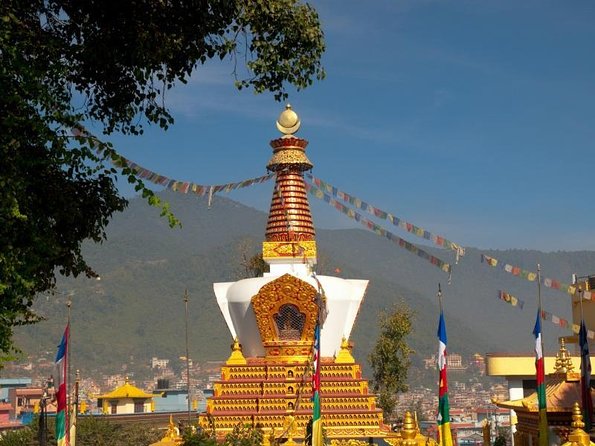
Your day begins at Boudhanath Stupa, about four miles from central Kathmandu. The big draw is simple: this is one of the largest stupas in the world, and it’s a major center for Buddhist pilgrimage. If you’ve seen photos before, the real thing hits harder because the scale is physical. This is one of those places where even before you understand every detail, you feel the focus.
The stop runs about one hour, and admission is included. You’ll be with your guide during that time, which is the key practical advantage. You’re not just walking around wondering what things mean. You’re learning enough to recognize the basics—what a stupa represents, why this site matters to pilgrims, and how the rituals you observe connect to belief.
This is also where the tour’s spiritual tone starts. The whole experience is designed around finding inner peace and using chanting/mantra practice as a bridge between sightseeing and understanding. If you’re the type who wants your travel days to feel purposeful (not just packed), this start sets that expectation.
One consideration: Boudhanath is a very active pilgrimage area. If you’re looking for complete silence, you might not get it. But you should get something better: an authentic sense of people coming here for devotion.
Kopan/Kapan Monastery: Gelug traditions and monk-led practice time
Next, you head to the monastery stop—Kopan (often written as Kapan) Monastery. The route includes a point about beating daytime traffic, so the timing is built to keep you moving without wasting too much of your day. When you arrive, you’ll spend about one hour there, again with admission included.
This stop is tied to the Gelug tradition of Tibetan Buddhism. That detail matters because it helps you frame what you see and how you’re guided to think about it. In other words, it’s not treated as a generic “temple stop.” You’re getting a specific Buddhist line of practice within the broader Nepal context.
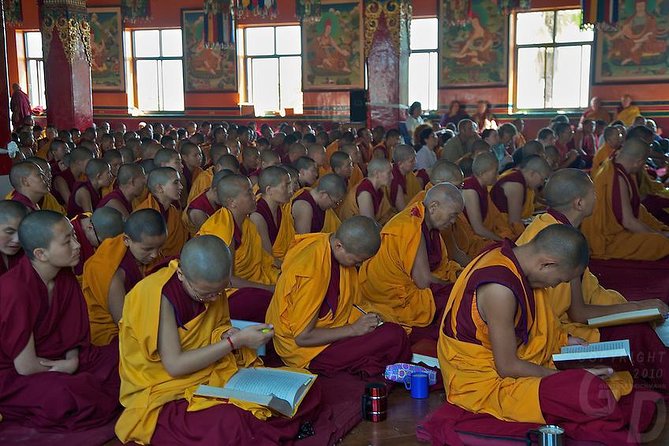
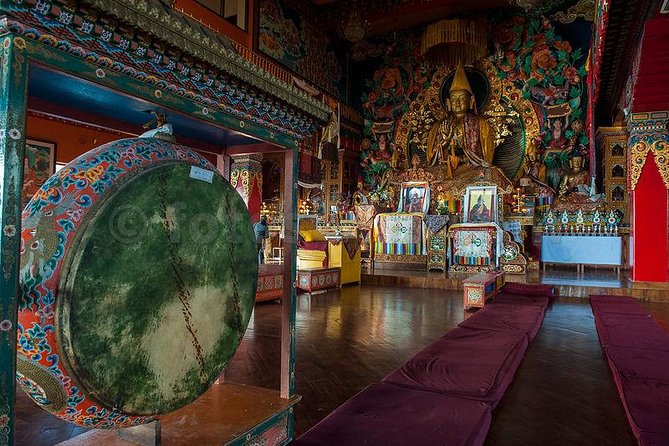
The tour also includes a more personal spiritual element. The overview describes chanting the mantra alongside holy monks. Even if you don’t consider yourself religious, this can still be meaningful travel: it’s a chance to experience how belief expresses itself through sound, rhythm, and group participation.
What makes this monastery moment valuable is that it’s not just visual. Monasteries are where you can feel structure and discipline—how practice happens, not just how buildings look. Your English-speaking guide helps translate the meaning behind what you’re observing, so you’re more likely to remember the why, not just the where.
Small-group bonus: with a max of 10, you can ask questions instead of just listening from the back.
Lunch in Thamel at The Ship Restaurant (and then you head to Swayambhunath)
After the monastery visit, you make your way toward Thamel for lunch. The plan includes reserving a table at The Ship Restaurant and bar, with dal-bhat called out as the traditional meal you can enjoy.
Here’s the practical truth: your tour package coverage doesn’t clearly state that lunch is included in the price. What you can count on is that your day includes a scheduled lunch stop in Thamel, with the restaurant reservation arranged for you. If you want your costs fully predictable, check what’s covered when you book, and be ready for normal meal spending.
Thamel is a handy place to pause because it’s easy to orient yourself before the next big site. You get a bit of a reset in the middle of the day, then continue on to Swayambhunath.
Swayambhunath Temple, the Monkey Temple: structures, peace, and a famous Kathmandu view
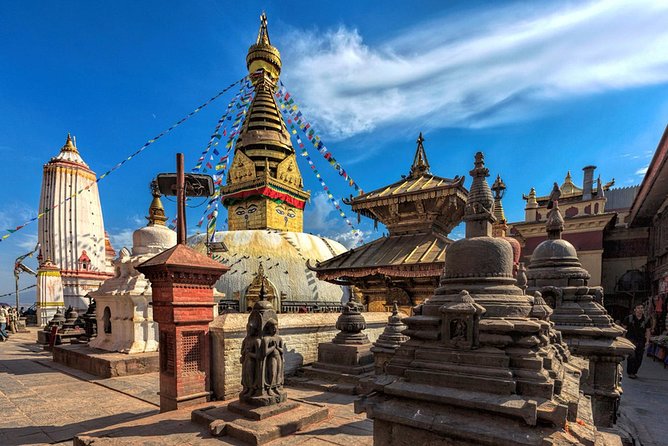
The final major pilgrimage stop is Swayambhunath Temple—commonly known as the Monkey Temple. The tour calls out the amazing structures here, which is accurate: this is one of those Kathmandu landmarks you’ll recognize quickly, even if you’ve never been.
From Kapan/Kopan Monastery, you head to this site, with the tour describing admission ticket included for the visit. The itinerary text suggests a short allotted time for this segment, so keep expectations realistic. Think of this as a meaningful introduction and orientation, not a long, slow wander where you can fully explore every corner.
Still, the value is clear: it completes the Kathmandu Valley triangle. You started at Boudhanath, moved into monastery practice, and end at a major temple site that’s instantly recognizable and tied to a strong public pilgrimage identity. And the day’s larger theme stays consistent—connecting what you see with what it represents, and aiming for peace rather than rushing.
Also helpful: starting at 9:15am gives you more daylight hours to work with, and finishing back where you met means less stress about transport at the end of the day.
Price and logistics: is $150 worth it?
At $150 per person, the question isn’t just cost—it’s what you’re buying. This tour includes several items that usually add up when you plan your own day: private comfortable vehicles, a fully trained English-speaking professional guide, and all government and local taxes. Admission tickets for the listed stops are included as well.
That’s a lot of “infrastructure” wrapped into one fee. If you’ve ever tried to piece together transport, entry fees, and a guide across multiple sites in one morning, you know how quickly time and money slip away. This tour tries to keep that friction low.
It’s also booked ahead of time on average (about 18 days). With a max group size of 10, that small capacity can mean it’s not a last-minute impulse kind of day. If your dates are firm, reserve earlier rather than gambling on availability.
What’s not included also matters for value:
- Nepal visa fee (you’re expected to bring accurate USD cash and two passport photographs)
- Meals and accommodations in Kathmandu
- Tips for staff
- Any optional activities during free time
In other words, the $150 is strong for the guided, ticketed, transported part of the day. It’s not a full “everything covered” package once you step outside the scheduled stops.
Who this pilgrimage tour fits best
This is a smart choice if you want:
- an easy first introduction to Buddhism in Nepal
- a structured route through three major Kathmandu Valley pilgrimage sites
- time with an English-speaking guide so you can ask questions instead of guessing
The tour is listed as suitable for most travelers, and the small group size is friendly if you prefer interaction. It also works well if you’re traveling with someone who wants meaning from their sightseeing day, not just photos.
If you only care about self-guided wandering and don’t want any organized chanting or guided explanations, you might feel the schedule is more structured than you want. But if you like a day that feels spiritually grounded, it makes sense.
How to make your visit smoother (simple, practical prep)
A few practical habits will help you get more out of the day:
- Bring what you need for the visa process. The tour data specifically notes accurate USD cash plus two passport photographs.
- Arrive ready for a morning start. The tour starts at 9:15am, and it’s built around travel time and site timing.
- Wear comfortable, respectful clothing. You’ll be in religious spaces and with monks, so keep it modest and easy to move in.
- Use the guide’s attention. The experience is repeatedly praised for the guide’s ability to answer culture and Buddhism questions. So ask things as they come up.
- Plan for lunch costs and your own spending. The day includes a lunch stop in Thamel at The Ship Restaurant and bar, but the broader package coverage doesn’t list meals as included—so treat lunch as your responsibility unless confirmed otherwise.
And yes, keep expectations realistic: this is one day. The goal is understanding and peace-setting, not a full, multi-day deep study.
Should you book this Buddhist Pilgrimage Tour in Kathmandu?
I’d book it if you want a focused, meaningful day with a guide and tickets handled, especially if this is your first trip to Kathmandu Valley Buddhist sites. The combination of private transport, small group size, and admission-covered stops makes it feel efficient without feeling rushed.
Skip it—or at least think twice—if you want total freedom to wander long hours on your own, or if you dislike structured religious practice elements like chanting. Also, budget for what’s not included: visa fee, meals, accommodations, and tips.
If you want a day that helps you connect Buddhism’s place in Nepal with what you can actually see in front of you, this one-day pilgrimage circuit is a solid value at $150.
FAQ
What time does the tour start?
The tour starts at 9:15am in Kathmandu.
How long is the experience?
It runs for about 1 day (approximately).
Where does the tour begin and end?
It starts in Kathmandu (Kathmandu Valley) at the meeting point listed and ends back at the same meeting point.
How many people are in the group?
The maximum group size is 10 travelers.
Which sites are included in the tour?
The tour includes Boudhanath Stupa, Kopan/Kapan Monastery, and Swayambhunath Temple (Monkey Temple).
What’s included in the price?
Included items are private comfortable vehicles, a trained English-speaking guide, staff salary and insurance, local taxes, and admission tickets for the stops on the route. You also get a mobile ticket.
Is a Nepal visa included?
No. The Nepal visa fee is not included, and you’ll need to bring accurate USD cash and two passport photographs.
More Tours in Kathmandu


More Tour Reviews in Kathmandu
Just Reviewed in Kathmandu
- Mountain Bike Tour
★ 5.0 · 3 reviews - Annapurna Panaroma
★ 5.0 · 3 reviews - Mount Everest Scenic Flight 50 Minutes
★ 5.0 · 3 reviews - Kathmandu : Swambhunath & Durbar Square Guided Half Day Tour
★ 3.3 · 3 reviews - Chandragiri Cable Car & Monkey Temple Tour – Private/Group
★ 5.0 · 3 reviews - Kathmandu: Shivapuri National Park Hiking Day Trip
★ 3.3 · 3 reviews
Tours, compared.
 ★ 5.0Everest Base Camp Helicopter Tour landing at Everest View HotelFrom $1,575668 reviews
 ★ 5.0Full Day 7 UNESCO Tour with Lunch – Private/GroupFrom $10415 reviews
 ★ 5.0Private Bhaktapur and Nagarkot Day Tour From KathmanduFrom $20305 reviews
 ★ 4.9Food and Drink Walking TourFrom $34292 reviews
 ★ 5.0Full Day Top 4 UNESCO Tour with Lunch – Private/GroupFrom $10269 reviews
★ 5.0Kathmandu Food and Drink Walking TourFrom $36266 reviews
★ 5.0Full Day Top 4 UNESCO Tour with Lunch – Private/GroupFrom $10269 reviews
★ 5.0Kathmandu Food and Drink Walking TourFrom $36266 reviews
 ★ 5.0UNESCO Seven World Heritage Tour in KathmanduFrom $180253 reviews
★ 4.9Full-Day 7 UNESCO Tour with Lunch – Private/GroupFrom $5247 reviews
★ 5.0UNESCO Seven World Heritage Tour in KathmanduFrom $180253 reviews
★ 4.9Full-Day 7 UNESCO Tour with Lunch – Private/GroupFrom $5247 reviews