
Review · HISTORICAL TOURS
Cultural tour in Kathmandu
Kathmandu’s old-world corners can feel overwhelming, but this tour gives them order and meaning in a day. I like how it stitches together UNESCO-listed heritage—Patan’s art and Kathmandu Durbar Square—with the spiritual calm of Swayambhunath. I also appreciate that you’re not left guessing: the local team’s planning and smooth flow through the sites makes the whole day feel taken care of.
The biggest heads-up is physical. Swayambhunath is reached by 365 stone steps, and that can be tough if you’re not into stairs or uneven stone paths.
In This Review
- Key things you’ll notice right away
- Patan and Kathmandu Durbar Square: the Kathmandu story in two halves
- Morning logistics that actually help: 8:15 start, pickup, and air-con
- Patan: Krishna Temple, the chowks, and the Malla-art you can actually see
- Traditional houses and alley views: how to slow down in Kathmandu
- Swayambhunath (monkey temple): 365 steps, panoramic payoff
- Kathmandu Durbar Square: Kumari, the nine-story pagoda, and wooden craft
- The value question: what $102.57 buys you in a private, 8-hour day
- Who this tour fits best (and who should plan differently)
- Tips that make the day easier (without killing the magic)
- Should you book this Kathmandu Cultural Tour?
- FAQ
- What’s the duration of the Kathmandu cultural tour?
- What time does the tour start?
- Is pickup included?
- What’s included in the price?
- Is lunch included?
- Is this a private tour?
- Do I need a ticket?
- Is good weather required?
- Are service animals allowed?
- Should you book this tour if you have limited mobility?
Key things you’ll notice right away
- Patan’s Malla-period artistry, with stops around Krishna Temple, multiple chowks, and golden temple areas
- Krishna Temple’s 21 pinnacles, a standout detail for anyone into architecture and craftsmanship
- Swayambhunath’s 365 steps, plus sweeping city views from the Nepal’s oldest stupa area
- Kathmandu Durbar Square’s nine-story pagoda palace, tied to the Living Goddess Kumari
- Private-tour feel, with pickup by an air-conditioned vehicle and bottled water included
Deeper into old Kathmandu
- Private Kathmandu Sightseeing Tour | UNESCO World Heritage sites★ 5.0 · 756 reviews
- UNESCO Seven World Heritage Tour in Kathmandu★ 5.0 · 253 reviews
- Nepal Discovery Tour: Heritage Sites & Scenic Hill Easy Hike★ 5.0 · 121 reviews
- Kathmandu Private Sightseeing Tour | UNESCO World Heritage Sites★ 5.0 · 109 reviews
Patan and Kathmandu Durbar Square: the Kathmandu story in two halves
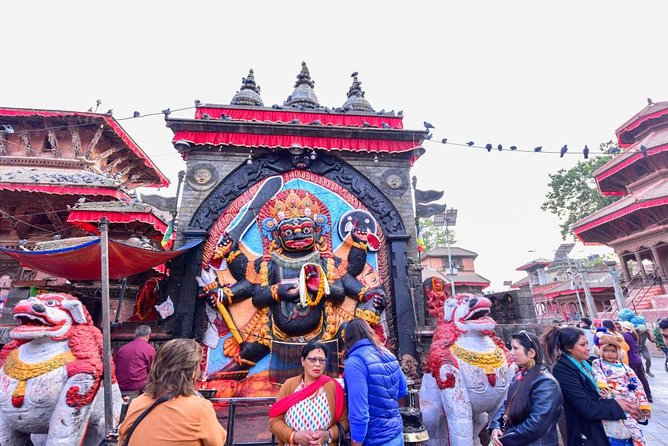
If you want Kathmandu to make sense, this is a smart route. You start in Patan and end in Kathmandu Durbar Square, and that pairing helps you read the city like a single idea told through different neighborhoods. Patan gives you the craft and design side—temples, chowks (squares), and details you’d miss if you only rushed between famous icons. Then Kathmandu Durbar Square adds the power-and-ritual side, where architecture reflects royal life and living spiritual tradition.
One of the best things about this day is that it’s not just sightseeing. It’s built to help you connect art to history. The focus is Malla-period arts and architecture, plus the way Hindu and Buddhist practices, along with Tibetan cultural influence, show up throughout Nepal’s spiritual spaces. In plain terms: you’re learning how the city’s sacred look was made, and why it keeps mattering.
The private-tour format also changes the experience. You’re not getting shoved into a crowd rhythm. Instead, your group moves through each stop as a unit, which makes it easier to ask questions and slow down when a doorway, carved beam, or courtyard catches your eye.
Morning logistics that actually help: 8:15 start, pickup, and air-con
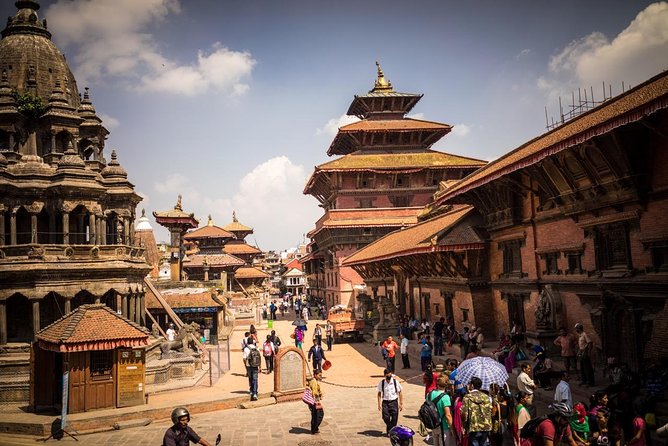
The day starts around 8:15 am, and you get picked up (per the tour info) for an air-conditioned vehicle. That matters in Kathmandu. Even when the morning feels fine, you can get hit with heat fast, plus the traffic can turn a normal walk-and-look day into a shuffle. An air-conditioned ride gives you a real buffer, especially if you’re doing temples back-to-back.
You’ll also have a mobile ticket, and your confirmation comes at booking. I like that because it cuts down on last-minute admin. Bottled water is included too, which is an easy win for a long morning stretching into the afternoon.
What you should plan: lunch isn’t included, so you’ll want to either grab something before the tour or plan to eat after you finish in Kathmandu Durbar Square. Coffee or tea also isn’t included, so don’t count on a mid-tour stop for caffeine.
Patan: Krishna Temple, the chowks, and the Malla-art you can actually see
Patan is where this tour starts paying off visually. You move into areas centered on Krishna Temple, a stone-built temple known for artistic design with 21 pinnacles. That number is the kind of detail that makes a difference. Instead of just thinking, wow, it’s old, you notice the design choices—how the structure rises, how it’s meant to be read from different angles, and how craftsmanship shapes the feeling of sacred space.
From there, the tour continues through multiple points that highlight how Patan’s religious and artistic life overlaps. You’ll visit areas around Mahaboudha, plus several chowks: Mul Chowk, Sundari Chowk, Mani Chowk, and Narayan Chowk. You’ll also be taken to golden temple and the surrounding stupas.
Why these stops matter: chowks aren’t random squares. They act like stages. Temples, statues, and carved features sit in these spaces for a reason—people gather, move through alleys, and see the same structures from changing viewpoints during daily life. In other words, these areas help you notice patterns: where the city places devotion, how the architecture guides foot traffic, and how art becomes part of everyday movement.
Even the alley time fits the plan. You’ll pass through narrower lanes and traditional houses, which is where Kathmandu can stop feeling like a set of landmarks and start feeling like a living place. If you’ve ever visited historic areas where everything feels staged, this part is meant to do the opposite: help you watch the city’s texture from corner to corner.
Traditional houses and alley views: how to slow down in Kathmandu
Kathmandu can feel chaotic on your own, and that’s exactly why guided movement is useful here. The tour’s design encourages you to pay attention as you go—watching how buildings sit close together, how stone and wood details show up in unexpected places, and how the same sight changes as you shift your position.
I like this approach because it turns “walking around” into “reading.” You start connecting the dots between what you’re seeing and what you were told to look for. When you notice carvings, rooflines, door frames, and courtyards, you begin to understand why certain sites are UNESCO-listed in the first place.
You’ll also get plenty of viewpoints from different corners. That’s helpful at a spiritual site too, since the mood changes with light and perspective. For a city like Kathmandu, where religion and architecture run side-by-side, viewpoint variety isn’t a bonus—it’s part of the experience.




Swayambhunath (monkey temple): 365 steps, panoramic payoff
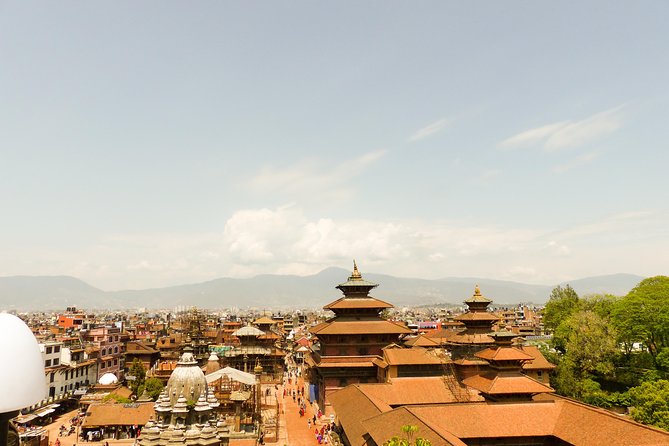
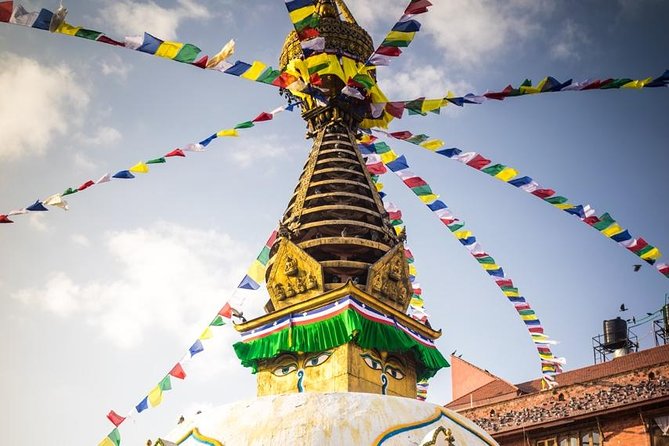
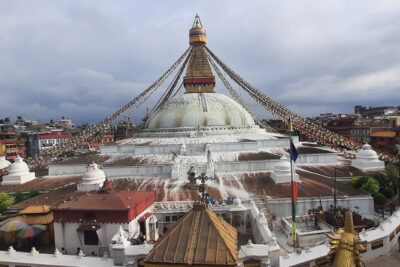
Then comes the main spiritual climb: Swayambhunath, often called the monkey temple. You’ll follow the 365 stone steps up to one of Nepal’s oldest stupa areas. The number alone tells you what kind of effort this is. It’s not a quick stop; it’s a climb designed into the experience.
Once you reach the top area, you’re rewarded with panoramic views over Kathmandu. This is one of those moments where Kathmandu’s sprawl turns into a map. You can see the city spread out below and understand why this hilltop spot has held significance for so long.
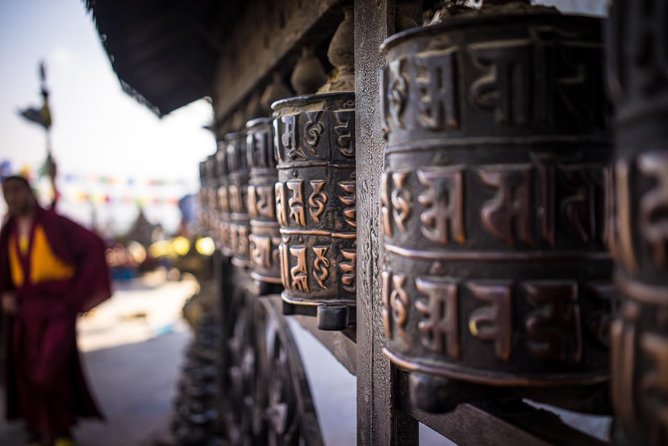
The tour also frames the place as a hallmark of faith and harmony for centuries, with the site described as a starting point for the glory of the Kathmandu Valley. Even if you don’t know the full story ahead of time, the physical layout helps you feel it: sacred structures, prayer in motion, and the sense that the space is meant for reflection as much as for photo stops.
Possible drawback to keep in mind: those steps. If your knees don’t like stairs, you’ll feel it. Also, uneven stone and busy temple foot traffic mean you should wear shoes with real grip and plan your pace. I’d rather you take your time than rush and end up stressing out.
Kathmandu Durbar Square: Kumari, the nine-story pagoda, and wooden craft
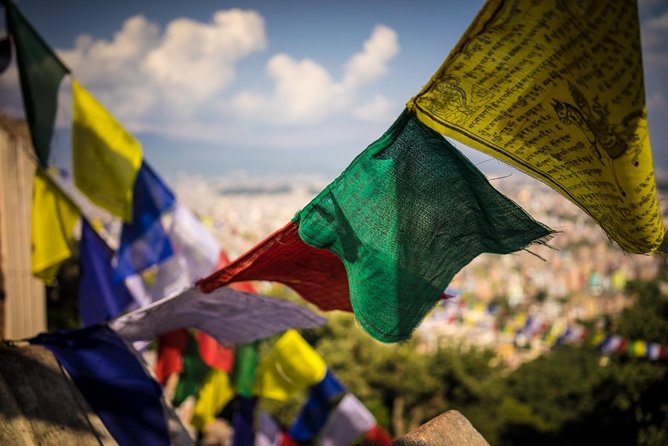
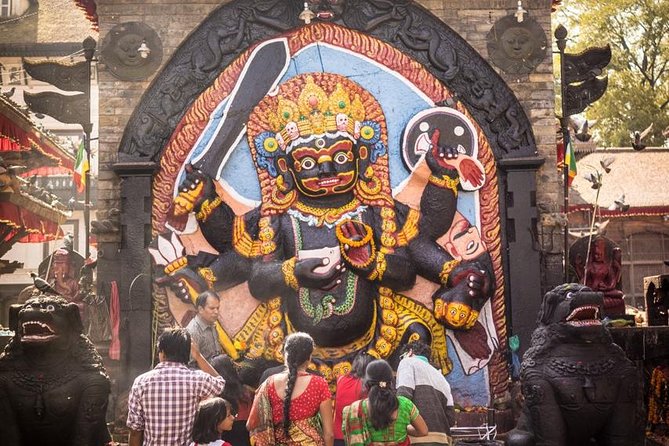
The day ends at Kathmandu Durbar Square, an area that used to be a royal palace complex and now connects royal-era architecture to spiritual life. This is also UNESCO-listed, and it’s where you’ll see the Living Goddess Kumari (as described in the tour info) in a setting built for ceremony and presence.
The square includes ancient temples, palaces, and a courtyard. The main attraction is the pagoda-style palace with nine stories, and it’s especially worth it for the way it changes how you see the space. From the right angles, the palace reads like stacked layers—each one adding height, rhythm, and detail.
This part of the tour leans hard into craftsmanship. The palaces and pagodas are known for arts and superior examples of wooden craft that flourished in the 14th century. You don’t need to be an architecture nerd to get the impact. When you look closely at woodwork and see how the design carries both function and beauty, the building stops being just a backdrop.
And because you’re finishing here, it’s a strong final note. Swayambhunath gives you views from above; Durbar Square gives you the sense of power and tradition in the center of the city. Put together, it’s a balanced arc: climb, panorama, then return to a sacred civic stage.
The value question: what $102.57 buys you in a private, 8-hour day
At $102.57 per person for an 8-hour cultural day, the value depends on what you want from Kathmandu.
If you’re going to do these sites in one day anyway, you’re paying for three practical things:
- Transport with air-conditioning, which saves time and fatigue
- All fees and taxes handled for you
- Bottled water and a structure that prevents wasted hours
Where it gets more interesting is the private aspect. Your group only participates, so you’re not stuck waiting for constant regrouping in a mixed crowd. That’s the difference between checking boxes and actually getting explanations as you move.
Also, your time is used well. You’re not just dropping into one landmark. You’re hitting Patan’s artistry and Kathmandu’s ceremonial center in one continuous route, which is exactly what helps first-timers learn the city’s logic fast.
Just remember what’s not included: lunch and coffee/tea. If you plan to spend extra time hunting for food stops, that can cut into the day’s flow. I’d treat meals as something you handle around the tour schedule.
Who this tour fits best (and who should plan differently)
This tour is a great match if you:
- Want UNESCO heritage without building a full self-guided route
- Like architecture and spiritual sites with meaningful design details
- Prefer a private, calmer pace and real time for questions
- Travel with the mindset that you’ll pay attention, not just scroll through photos
It may be less ideal if you:
- Struggle with stairs or long walking days (hello, 365 steps at Swayambhunath)
- Need lots of breaks for comfort. The tour runs about 8 hours, and you’ll be on your feet for temple viewing and courtyard time.
Good news: service animals are allowed, and the tour notes that most travelers can participate. Still, “most” doesn’t mean “everyone,” and your comfort with uneven stone and steps is the deciding factor.
Tips that make the day easier (without killing the magic)
A few small choices make a big difference on this kind of Kathmandu day.
Wear shoes that grip. You’ll go from stone stairs to courtyards, and you don’t want to feel clumsy in sacred spaces. Bring a light layer too. Mornings can feel cooler, and you may be in sun once you’re closer to the hilltop views.
Plan your food. Since lunch isn’t included, you’ll want something either before you start or scheduled right after you finish at Kathmandu Durbar Square. Also, since coffee/tea isn’t included, it helps to bring expectations for water and basic energy instead of hoping for a mid-tour café moment.
Finally, keep your camera ready but don’t let it steal your attention. At places like Krishna Temple’s pinnacles, the wooden craft at Durbar Square, and the view from Swayambhunath, the details are best when you slow down for a minute and look without rushing.
Should you book this Kathmandu Cultural Tour?
I’d book it if you want a structured cultural day that connects Patan art with Kathmandu Durbar Square’s living tradition, while still getting that spiritual reset at Swayambhunath. The private format, air-conditioned ride, included fees, and the way the route is designed to help you read the city fast make it a strong use of a limited vacation day.
I wouldn’t book it on autopilot if stairs are a major issue. The 365 stone steps are the one clear physical challenge described in the tour, and everything else is about managing time and attention, not strain.
If you’re choosing between a chaotic self-guided day and a guided one, this tour is the calmer path. It gives you a reason to look closely, not just a list of stops.
FAQ
What’s the duration of the Kathmandu cultural tour?
The tour runs for about 8 hours.
What time does the tour start?
The start time is 8:15 am.
Is pickup included?
Pickup is offered as part of the experience.
What’s included in the price?
The price includes an air-conditioned vehicle, all fees and taxes, and bottled water.
Is lunch included?
No. Lunch isn’t included, and coffee or tea also isn’t included.
Is this a private tour?
Yes. It’s private, so only your group participates.
Do I need a ticket?
You’ll receive a mobile ticket.
Is good weather required?
Yes. The experience requires good weather. If it’s canceled due to poor weather, you’ll be offered a different date or a full refund.
Are service animals allowed?
Service animals are allowed.
Should you book this tour if you have limited mobility?
The tour says most travelers can participate, but it includes a climb up 365 stone steps at Swayambhunath. If stairs are difficult for you, plan carefully.
The Old Kathmandu, Properly Toured


More Tours in Kathmandu



More Tour Reviews in Kathmandu




Just Reviewed in Kathmandu
- Mountain Bike Tour
★ 5.0 · 3 reviews - Annapurna Panaroma
★ 5.0 · 3 reviews - Mount Everest Scenic Flight 50 Minutes
★ 5.0 · 3 reviews - Kathmandu : Swambhunath & Durbar Square Guided Half Day Tour
★ 3.3 · 3 reviews - Chandragiri Cable Car & Monkey Temple Tour – Private/Group
★ 5.0 · 3 reviews - Kathmandu: Shivapuri National Park Hiking Day Trip
★ 3.3 · 3 reviews
Historical Tours, compared.
 ★ 5.0UNESCO Seven World Heritage Tour in KathmanduFrom $180253 reviews
 ★ 5.0Nepal Discovery Tour: Heritage Sites & Scenic Hill Easy HikeFrom $375121 reviews
 ★ 5.0Kathmandu Private Sightseeing Tour | UNESCO World Heritage SitesFrom $35109 reviews
 ★ 5.0Full Day Private Top 4 UNESCO Heritage Tour W/Lunch.From $1086 reviews
 ★ 5.0Kathmandu World Heritage TourFrom $5074 reviews
 ★ 5.0Nagarkot Sunrise & Bhaktapur UNESCO Heritage Private TourFrom $5066 reviews
 ★ 5.0Kathmandu Heritage Tour (Full Day)From $3863 reviews
 ★ 5.0Kathmandu Top 4 or 2 UNESCO World Heritage Sites Day TourFrom $4052 reviews
Browse the lists this tour appears in