
A short trek with big views. This Sanga to Panauti walk is a 10-kilometer day hike on a newer trail, plus a guided cultural story that turns the countryside outside Kathmandu into a living, human place.
I especially loved the views from the ridges and the fact that you walk through villages where foreign tourists are still uncommon. One thing to consider: there’s a steep ascent near the start, and the path has steep drops in places—so it’s best if you feel comfortable hiking downhill on uneven ground.
In This Review
- Key points before you go
- Start at Sanga: Giant Shiva vibes and easy orientation
- The first climb: what “easy-moderate” really means
- Ridge walking with steep drops: the view is worth the care
- Forest and village paths: why the route feels newer and more local
- Culture on the move: Tamang en route, Newar at the finish
- Arriving in Panauti: a spiritual hill town at day’s end
- The lunch plan: buy with a local family, plus a homestay option
- Logistics that matter: transfers, meeting point, and group size
- Price and value: what you’re paying for beyond the walk
- How fit do you need to be?
- Should you book this Sanga to Panauti hike?
- FAQ
- FAQ
- How long is the Sanga to Panauti day hike?
- What time does the hike start?
- Is lunch included in the price?
- Are transfers included?
- How many people are in the group?
- What fitness level do I need?
- Will I have an English-speaking guide?
- Is there an entrance fee?
- Is cancellation free?
- Are service animals allowed?
Key points before you go
- Newer trail, fewer tourists: You’ll spend more time with local life than with other visitors.
- Sanga’s Shiva statue area: Your hike starts just outside the eastern edge of the Kathmandu Valley, near the famous giant Shiva statue.
- Half-hour climb early on: Expect your legs to wake up right away, then the route levels out.
- Guide-led cultural focus: You’ll hear explanations of Tamang culture en route and Newar culture as you near Panauti.
- Small group size (max 15): It feels manageable and helps you stay together on a route that’s not crowded.
- Meal opportunities in Panauti: You can buy a Nepali lunch with a local family, and there’s also a women-run community homestay lunch option on extra expense.
More trails out of Kathmandu, boots ready
- Everest Base Camp Trek – 14 Days★ 5.0 · 1,499 reviews
- Everest Base Camp Trek★ 5.0 · 842 reviews
- Everest Base Camp Trekking★ 5.0 · 485 reviews
- Nagarkot Sunrise View and Day Hiking from Kathmandu★ 5.0 · 471 reviews
Start at Sanga: Giant Shiva vibes and easy orientation
The day begins around Royal Mountain Travel on Lal Durbar Marg. From there, you get transported out to Sanga, which sits just outside the eastern edge of the Kathmandu Valley. It’s known to most people as the home of the tallest Shiva statue in the world, and that matters because your hike starts in the same hill country setting—the sort of place where temples and views are part of the daily scene.
Once you’re on the trail, you quickly get your bearings. After a steep ascent for about half an hour, the walking becomes mostly flatter. That pattern is great if you want a hike that gives you effort up front without turning into a full-day grind every step of the way.
The first climb: what “easy-moderate” really means
This is an easy-moderate hike, about 6.2 miles (10 kilometers), but don’t let the label fool you. The first stretch includes a steep uphill segment. It’s not described as endless, but it is long enough to feel in your calves and lungs if you’re not used to altitude-adjacent trekking.
The good news is that after that initial push, the route mostly flattens out. You also have a guide to keep the group moving and to help with route confidence. That’s especially valuable on a newer, less-trafficked trail where getting turned around would be easy if you were trying to navigate without help.
Ridge walking with steep drops: the view is worth the care
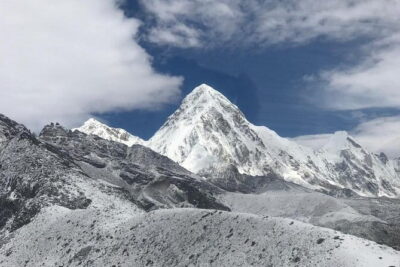
After the climb, you’ll hike along ridgelines with steep drops below. That’s one of the reasons the scenery can be so rewarding: you’re positioned to see rice fields and farmland spreading out in layers, and on clear days you may even get unobstructed Himalayas in the distance.
Here’s the practical part: steep drops mean you should slow down at corners and on uneven sections. I’d treat this like a “watch your footing” day, not a “speed-walk for photos” day. If it’s a bright clear morning, you’ll want to pause often—those ridgeline viewpoints are the payoff.
Forest and village paths: why the route feels newer and more local
A key advantage of this hike is that it follows an under-visited route. The trail development is only a few years old, so you’re less likely to feel like you’re walking through a tourist corridor. Instead, you pass through villages where foreign visitors aren’t the norm.
One of the nicest parts of this itinerary is that you don’t just stroll past scenery—you walk through places people actually live. That shows up in small, everyday moments: the rhythm of paths, the mix of farmland and homes, and how the landscape is shaped for daily work, not for postcards.
And yes, the forest stretch can be a highlight. Even when the main draw is the ridgeline view, the shaded sections break up the walk and feel like a mini reset from the open exposure.
Culture on the move: Tamang en route, Newar at the finish
The guide experience is a big deal on this hike. The route is paired with cultural context—so you’re not just moving from A to B, you’re learning how local communities connect to the land.
Expect the guide to explain Tamang culture as you trek through the villages along the way. Then, as you reach the destination, the focus shifts to the Newari culture of Panauti. That arc—culture first in the countryside, then culture in town—helps the day feel coherent.
If you end up with a guide who works like Ssyam (the name shows up in positive feedback), you’ll likely find the stories easy to follow and tied directly to what you’re seeing. That kind of guidance is what makes “views” turn into “understanding.”
Arriving in Panauti: a spiritual hill town at day’s end
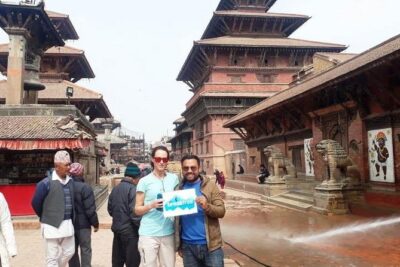
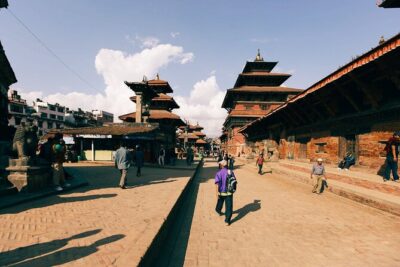
You’ll conclude in Panauti, a small but beautiful Newar town surrounded by green hills and holy rivers. It’s described as a spiritual place with both Hindu and Buddhist temples, and that blend shows up in the way the town feels: quiet, focused, and layered with religious life.
Local folklore adds an extra layer. One story says Panauti was an offering from a King of Bhaktapur to his sister as a dowry gift. Even if you just treat that as a piece of local lore, it helps explain why people talk about Panauti as meaningful beyond being simply scenic.
Also note the practical reality: some of the sites visited have significant damage due to the April and May 2015 earthquakes. So don’t expect every structure to look perfectly restored. What you’re getting is a look at the place as it exists now—still lived in, still cared for, and still worth your attention.
The lunch plan: buy with a local family, plus a homestay option
Food is part of the value here. You’ll be able to purchase a Nepali lunch with a local family in Panauti to refuel after the walk. The price you pay for the meal isn’t included in the tour price, but the option is built into the day so you’re not scrambling for lunch at the end.
If you want an extra cultural angle, there’s also a tip to eat at the Panauti Community Homestay, run by local women. It’s described as an example of women-led entrepreneurship, and it’s a strong choice if you want a more structured local meal setting. Since it’s an additional expense, you can decide based on your budget and curiosity.
Either way, plan on lunch being a real part of your day, not an afterthought. You’ll finish trekking with enough appetite that choosing a local meal instead of trying to find a more familiar option feels like the smarter move.
Logistics that matter: transfers, meeting point, and group size
The tour is priced at $65 per person and runs about 8 hours. That makes it a classic day-hike length: enough time to get a proper countryside experience, but not so long that it feels like a full vacation.
You also get transport from Kathmandu to Sanga and from Panauti back to Kathmandu. One detail to confirm before you go: the summary talks about hotel transfers, while the included list says hotel pickup and drop-off isn’t included. In real life, that can mean you’ll be taken to the start/end points rather than collected directly from your exact hotel lobby. If you’re staying in a very specific area, it’s worth double-checking where the pickup/drop happens.
A couple other useful facts:
- The group is limited to 15 travelers max, which helps keep the hike comfortable and reduces waiting.
- Your ticket is mobile, so you don’t need to hunt for printed paperwork.
- The hike is guided in English, and service animals are allowed.
Price and value: what you’re paying for beyond the walk
$65 isn’t just for a path and a viewpoint. You’re paying for:
- Transport out of and back into Kathmandu
- An English-speaking hiking guide (the cultural storytelling is part of the product)
- The safety and route confidence that comes with a guide on a less-touristed trail
- A planned finish in Panauti with a local meal option
If you tried to DIY this hike, you might save money but you’d likely spend time figuring out logistics, and you’d lose the cultural explanations that connect Tamang and Newar context to the route. For many people, that’s the difference between a nice stroll and a day that feels meaningful.
How fit do you need to be?
The route is described as easy-moderate, and the guidance notes a moderate physical fitness level. Translation: you should be comfortable walking for several hours and handling uneven ground, with attention needed on the ridgeline sections.
Footwear matters here. Even though the distance is only 10 kilometers, the combination of an early steep climb and later steep drops means you want shoes with real grip. If you get anxious on exposed edges, you’ll want to move carefully and take your time.
Should you book this Sanga to Panauti hike?
Book it if you want a Kathmandu-area day hike that feels less like a checklist and more like a cultural walk through living villages. The mix of ridgeline scenery, forest breaks, and a finish in Panauti—plus the guide-led Tamang/Newar explanations—makes it a strong choice for independent travelers who still want structure.
I’d skip it (or at least think twice) if steep uphills or steep drop-offs make you uneasy, because that first half-hour climb plus later exposed ridgeline sections are part of the deal. Also, if you’re expecting pristine, fully restored temple sights, remember that earthquake damage affected some visited areas.
If you’re looking for value, this one hits a sweet spot: guided safety, a smaller group, a less crowded trail, and a real local meal component in a town that’s more than just a stop on the way somewhere else.
FAQ
FAQ
How long is the Sanga to Panauti day hike?
It runs about 8 hours (approx.). The hiking distance is listed as 6.2 miles (10 kilometers).
What time does the hike start?
The start time is 8:00 am.
Is lunch included in the price?
Lunch isn’t included. You can purchase a Nepali lunch with a local family in Panauti to refuel, and there’s also an optional women-run community homestay lunch on additional expense.
Are transfers included?
Transportation from Kathmandu to Sanga and from Panauti to Kathmandu is included. Hotel pickup and drop-off is listed as not included, so you should confirm exactly how pickup/drop is handled for your hotel.
How many people are in the group?
The hike has a maximum of 15 travelers.
What fitness level do I need?
You should have a moderate physical fitness level. The route includes a steep ascent early on and ridgeline sections with steep drops.
Will I have an English-speaking guide?
Yes, an English-speaking hiking guide is included.
Is there an entrance fee?
An entrance fee is applicable to children 10 years and above.
Is cancellation free?
Yes. Free cancellation is available, with a full refund if you cancel up to 24 hours before the experience starts.
Are service animals allowed?
Yes, service animals are allowed.
More Trekking Out of Kathmandu


More Tour Reviews in Kathmandu

Just Reviewed in Kathmandu
- Mountain Bike Tour
★ 5.0 · 3 reviews - Annapurna Panaroma
★ 5.0 · 3 reviews - Mount Everest Scenic Flight 50 Minutes
★ 5.0 · 3 reviews - Kathmandu : Swambhunath & Durbar Square Guided Half Day Tour
★ 3.3 · 3 reviews - Chandragiri Cable Car & Monkey Temple Tour – Private/Group
★ 5.0 · 3 reviews - Kathmandu: Shivapuri National Park Hiking Day Trip
★ 3.3 · 3 reviews
Dhulikhel & Namobuddha Day Trips, compared.
 ★ 5.0Day Trip to Bhaktapur and Panauti from KathmanduFrom $34184 reviews
 ★ 4.8Dhulikhel to NamoBuddha Day Hike with LunchFrom $462 reviews
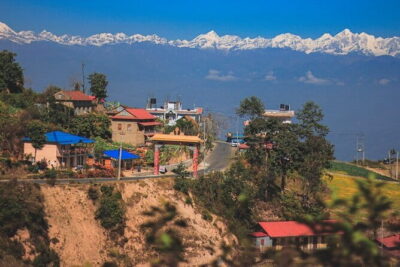 ★ 5.0Dhulikhel, Namobuddha & Panauti: A Scenic Day Tour from KathmanduFrom $6536 reviews
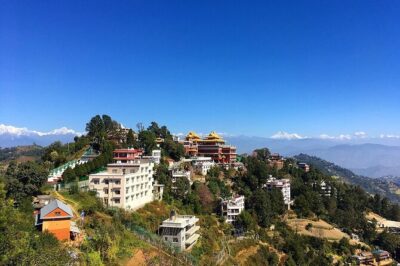 ★ 5.0Private Scenic Day Hike to NamoBuddhaFrom $532 reviews
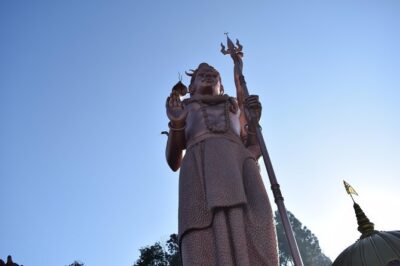 ★ 5.0Namo Buddha and Thrangu Tashi Yangtse Monastery Half-Day TourFrom $10424 reviews
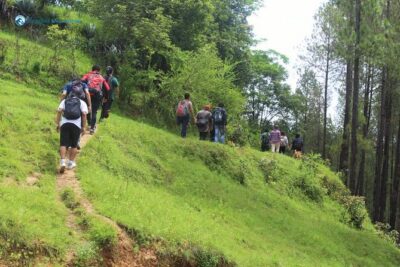 ★ 5.0Namobuddha Monastery Hiking Day Tour via Panauti from KathmanduFrom $7015 reviews
 ★ 5.0Bhaktapur Sightseeing & Dhulikhel, Namo Buddha, Panauti TourFrom $7514 reviews
 ★ 5.0Zipline Adventure in Dhulikhel with Pickup & LunchFrom $207 reviews
Browse the lists this tour appears in