
Review · EVEREST HELICOPTER TOURS
Everest Base Camp Helicopter Tour
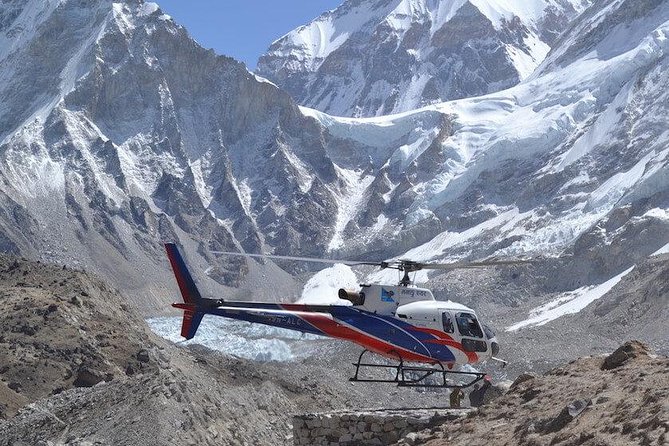
This is the fastest way to see Everest up close. You’re based in Kathmandu and, with the right weather, you get a short helicopter ride that includes flyovers of the Base Camp area, multiple landing points, and even the chance to land at Base Camp or Kalapatthar depending on helipad conditions. It’s not a trek. It’s a concentrated dose of Himalaya drama in half a day.
I love two things most: the multiple landing points that break up the flight with real moments to look out and take photos, and the way the schedule is built for views—especially the planned group splitting around Pheriche to help protect window-seat chances on that important stretch. One possible drawback: the whole experience is weather-dependent, and if conditions aren’t right, the day can change.
In This Review
- Quick reality check before you fall in love with Everest
- Key highlights worth your attention
- What you’re really paying for: time, access, and a weather window
- From Kathmandu to the mountains: how the day flows
- Stop 1: Kathmandu airport departure with Base Camp area flyover
- Stop 2: Lukla fuel drop
- Stop 3: Pheriche and the group-splitting window-seat plan
- Base Camp area viewing moment: Everest, Lhotse, Nuptse, and friends
- Stop 4: Syangboche Marg and possible breakfast at Hotel Everest View
- The return to Kathmandu: your route may change with fuel
- Aircraft and seating: why the plan matters more than the flight time
- What to wear and pack for cold surprises at altitude
- Who this tour suits best (and who should skip it)
- About guides: history and context can change how you see Everest
- Should you book Everest Base Camp by helicopter?
- FAQ
- What time does the tour start from Kathmandu?
- Does the tour include pickup and drop-off?
- Where can the helicopter land during the Everest portion?
- What stops are included during the flight?
- Is breakfast included at Hotel Everest View?
- Is there a weight limit for passengers?
- If the tour is canceled because of weather, do I get a refund?
Quick reality check before you fall in love with Everest
You’re spending most of your time in transit, not walking. The helicopter flight segments are short—total flight time is only about 1 to 2 minutes in the listing summary style, while the full tour runs roughly 4 to 6 hours with pickups, transfers, and stops. That means you’ll want to show up sharp (start time is 7:15am) and be ready to move on the provider’s timing, not yours.
Also note the practical limits: the tour has a maximum of 6 travelers, and there’s a weight cap of 209 lbs / 95 kg (if you’re over 100 kg, the listing says you may need to pay extra). In a trip like this, those details matter more than people expect.
More of the range from the air
- Everest Base Camp Helicopter Tour landing at Everest View Hotel★ 5.0 · 668 reviews
- Everest Base Camp Helicopter Tour landing at Hotel Everest View★ 5.0 · 218 reviews
- Everest Base Camp Trek with Helicopter Return from Gorakshep to Lukla★ 5.0 · 161 reviews
- Everest Base Camp helicopter tour with landing★ 5.0 · 61 reviews
Key highlights worth your attention
- Group sizes capped at 6: smaller groups usually feel calmer in a process that’s already time-driven.
- Fuel-stop structure: quick stops at Lukla keep the flight running smoothly.
- Pheriche split for window seats: a group-splitting plan helps allocate window views for the Base Camp portion.
- Base Camp area flyover with named peaks: you’ll get views of Everest and neighboring giants like Pumori, Lhotse, and Nuptse when visibility allows.
- Syangboche Marg break with possible breakfast: a landing at the Hotel Everest View area can turn the flight into a real pause.
- Helipad conditions decide Base Camp vs Kalapatthar: your day’s outcome can change depending on what the aircraft can safely do.
What you’re really paying for: time, access, and a weather window
At $1,700, this tour isn’t cheap—so you should think about value in “what would it cost you to do this any other way?” A full trek to Everest Base Camp takes weeks and the experience is different in tone. Here, you’re buying speed plus access to the Base Camp area from the air, with landing options that are otherwise hard to arrange.
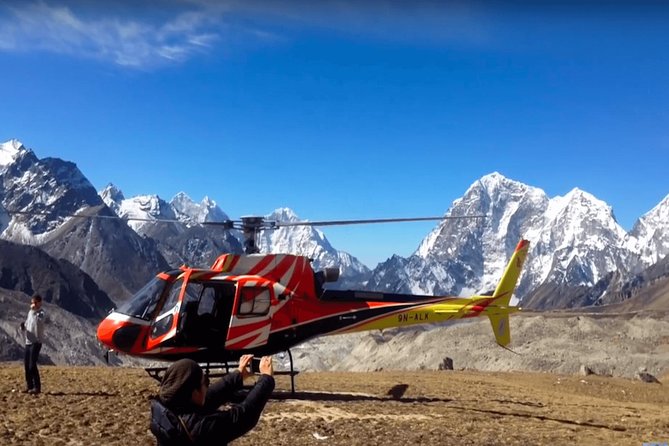
The price also reflects the setup: hotel pickup and drop-off, a sharing-flight format with a pilot, and aircraft used on the route (the listing names an Airbus H125 and Eurocopter 350 model). You’re also paying for the logistical brainwork of timing fuel stops, coordinating group moves, and adapting when helipad conditions shift your exact landing target.
Just keep expectations grounded. Your biggest variable is weather. When visibility is poor, what you see (or where you land) can change. The tour provider’s policy says that if it’s canceled due to poor weather, you’ll be offered a different date or a full refund, which is reassuring—but only if you’re flexible and can actually travel again soon.
From Kathmandu to the mountains: how the day flows
Your day starts early. Pickup and meeting points are built around a 7:15am start time, and the provider asks for your hotel name and address so they can set the pick-up time. Since this is a helicopter tour, you’ll want to be dressed and ready the night before, not scrambling in the morning.
Once you’re at the Kathmandu airport, the flight plan follows a pattern designed for efficiency:
Stop 1: Kathmandu airport departure with Base Camp area flyover
This is where the “wow” usually begins—before any landing. You fly from Kathmandu toward the Everest Base Camp area with a flyover of the highest viewpoint around Base Camp. The goal is simple: give you the aerial perspective that shows where Everest sits in relation to the surrounding peaks.
You should plan to bring your phone and camera charged and quick to grab. The flyover section is your chance to spot the geography and orient yourself, so later photos make more sense. If you’re the type who likes to understand what you’re looking at, you’ll likely enjoy the named peaks you can pick out later (more on that at the flyover/landing viewing moment).
Stop 2: Lukla fuel drop
Then comes a short stop at Lukla for fuel purposes. The listing calls out that this is the airport where trekkers commonly land and begin their trek to Everest Base Camp. From the air, it’s interesting to see how this hub plays a role in both helicopter day trips and multi-day treks.
The stop itself is quick (about 10 minutes), so treat it like a brief pause, not sightseeing time.
Stop 3: Pheriche and the group-splitting window-seat plan
Next is Pheriche, described as an old splitting place when more than three passengers are flying together. Here’s the practical twist: the listing says that if the group is split, it can be done in a way that helps guarantee window seats for everyone on the Everest Base Camp portion only.
You may need to accept that this is a controlled, operational process. It’s not a casual “hang around and chat” stop. It’s about sequencing passengers and aircraft so you get the best view possible during the most important moment.
This stop is listed at around 25 minutes, so it’s enough time to take photos, but not enough time for a full routine reset.
Base Camp area viewing moment: Everest, Lhotse, Nuptse, and friends
From this point, the tour shifts into pure scenery mode. The listing frames it as a Base Camp tour with clear opportunities for the best views of Mount Everest and other high mountains. It specifically calls out views of Mount Everest, Pumori, Lhotse, and Nuptse.
Keep in mind: “clear” is weather-dependent. Your job is to go prepared for changing conditions—because the mountains don’t care about schedules.
Stop 4: Syangboche Marg and possible breakfast at Hotel Everest View
Then you land at Syangboche Marg, described as a landing breakfast point during the helicopter flight. The plan includes a stop at Hotel Everest View, but it’s explicitly subject to weather. When the weather cooperates, the listing says you usually get about one hour there.
If you want breakfast, the listing states it costs USD 31 per person, and you’ll need to carry the amount. This is one of those details that makes a big difference: it turns a flight-only experience into a moment that feels more like a trip, with an actual basecamp-area viewpoint stop.
If weather doesn’t allow the hotel stop, you’ll still get the rest of the viewing plan, but this is the segment most tied to comfort and a sense of place.
The return to Kathmandu: your route may change with fuel
Heading back is the mirror image, but with one key difference: the listing notes the captain may fly via Lukla or directly depending on the fuel situation. Translation: your return path isn’t always identical, and you should be okay with small changes.
The return segment is about 1 hour, with a flight back to Kathmandu from the Everest Base Camp area. The listing also notes hotel Everest View to Kathmandu via Lukla takes around one hour.
It ends with the usual hotel drop-off. In a tour like this, the ride back can feel almost anticlimactic—until you realize you’ve gone from early-morning Kathmandu to Everest-area views and back before most people finish lunch.
Aircraft and seating: why the plan matters more than the flight time
A lot of people see the “flight time” number and assume it’s over almost instantly. But the experience is more than the air time. It’s the structure around it: fuel stops, planned landings, and the Pheriche splitting plan designed to support what you care about—window views during the Base Camp portion.
The listing includes the aircraft models (Airbus H125 / Eurocopter 350 model names). You shouldn’t expect a comfort-first ride like a commercial jet. Still, the planning focus here is on getting you the right angles at the right time, not on turning the cabin into a luxury lounge.
Because the group is limited to a maximum of 6, you’re less likely to feel lost in a big crowd at the airport. That matters when things are time-sensitive.
What to wear and pack for cold surprises at altitude
The listing’s clothing guidance is blunt: bring warm dress even in summer. It calls out around -5°C in summer and -10°C in winter for higher point only. Even if you’re not walking, wind and temperature at elevation can still bite.
Here’s what you should do in practical terms:
- Dress in layers so you can adjust quickly during brief stops
- Have gloves and a warm hat ready
- Keep a neck layer handy; it’s often overlooked
And don’t forget paperwork. You need to provide a passport copy (the listing says a picture on your phone works and you don’t need the original passport). That’s one more “morning-of” stressor you can avoid by handling it ahead of time.
Who this tour suits best (and who should skip it)
This is a great fit if you:
- Want Everest views without trekking for days
- Prefer a structured half-day schedule with pickup and drop-off
- Can be flexible about exact landing outcomes (Base Camp vs Kalapatthar is helipad-condition dependent)
- Like photography and want named-peak recognition (Everest, Pumori, Lhotse, Nuptse)
It may be a poor fit if you:
- Don’t handle weather uncertainty well
- Need a fully accessible, slow-moving experience with lots of time on foot (this is a rapid, helicopter-based format)
- Are traveling with a child under 10; the listing says it’s not recommended
The listing also says a moderate physical fitness level is ideal, which usually means you should be comfortable with getting in and out of vehicles and standing during brief stops.
About guides: history and context can change how you see Everest
Even though the tour is built around helicopter flight and stops, a guide can seriously shape the experience by giving context—especially in Kathmandu and around the Everest storyline.
In Travel Pinto feedback, names like Bishal and Bashu show up for Kathmandu and Everest-area guidance, and Mohan is noted for bringing Himalayan and ancient-history context to life. If your overall plan includes a guided component beyond the flight day, those are the kinds of names worth asking about so you get more than just photos.
If you end up with more time at viewpoint stops, a guide’s explanation of what you’re looking at can make the whole day feel richer, not just faster.
Should you book Everest Base Camp by helicopter?
If your goal is Everest sighting fast—this is a strong option. The combination of early pickup, a tight route with fuel stops, planned viewing moments, and the chance of landing (depending on helipad conditions) makes it a very “you get your return on time” experience.
I’d say book if:
- You have flexibility for weather and can travel the suggested dates
- You’re okay with a short, operational day rather than a long scenic hike
- You care about visibility and window views enough to follow the group-splitting plan
Hold off if:
- You’re sensitive to cold and don’t want to layer up
- Your schedule can’t absorb a weather change
- You expect a long stay at Base Camp like a trek would provide
Bottom line: this tour is value when you treat it as a half-day access pass to the Everest region—less about lingering, more about seeing the right angles at the right time.
FAQ
What time does the tour start from Kathmandu?
The tour meeting/start time is listed as 7:15am, with hotel pickup offered.
Does the tour include pickup and drop-off?
Yes. The listing includes hotel pickup and drop-off. You’ll need to provide your hotel name and address so they can set your pickup time.
Where can the helicopter land during the Everest portion?
The listing says the plan can include landing in Base Camp or Kalapatthar, depending on helipad conditions.
What stops are included during the flight?
The flight plan includes stops at Lukla for fuel (about 10 minutes), Pheriche (about 25 minutes), and a viewpoint/break landing area at Syangboche Marg near Hotel Everest View (about 1 hour, subject to weather). The exact base camp area viewing portion is part of the flight.
Is breakfast included at Hotel Everest View?
Breakfast is not included. The listing says there’s an optional breakfast for USD 31 per person, subject to weather conditions.
Is there a weight limit for passengers?
Yes. The listing states a total weight per passenger of 209 lbs (95 kg). If you’re more than 100 kg, you may need to pay an extra amount.
If the tour is canceled because of weather, do I get a refund?
The listing says the experience requires good weather. If it’s canceled due to poor weather, you’ll be offered a different date or a full refund.
More of Nepal from the Air

More Tours in Kathmandu


More Tour Reviews in Kathmandu

Just Reviewed in Kathmandu
- Mountain Bike Tour
★ 5.0 · 3 reviews - Annapurna Panaroma
★ 5.0 · 3 reviews - Mount Everest Scenic Flight 50 Minutes
★ 5.0 · 3 reviews - Kathmandu : Swambhunath & Durbar Square Guided Half Day Tour
★ 3.3 · 3 reviews - Chandragiri Cable Car & Monkey Temple Tour – Private/Group
★ 5.0 · 3 reviews - Kathmandu: Shivapuri National Park Hiking Day Trip
★ 3.3 · 3 reviews
Everest Helicopter Tours, compared.
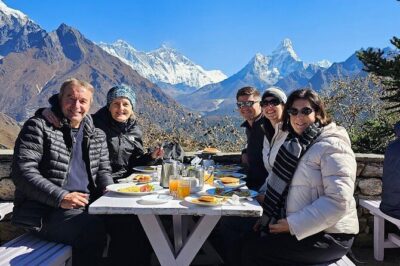 ★ 5.0Everest Base Camp Helicopter Tour landing at Everest View HotelFrom $1,575668 reviews
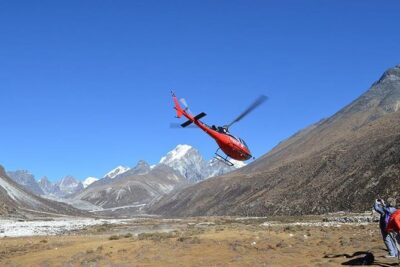 ★ 5.0Everest Base Camp Helicopter Tour landing at Hotel Everest ViewFrom $1,600218 reviews
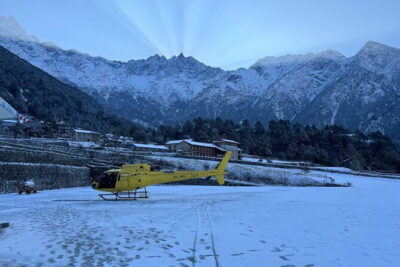 ★ 5.0Everest Base Camp helicopter tour with landingFrom $1,60061 reviews
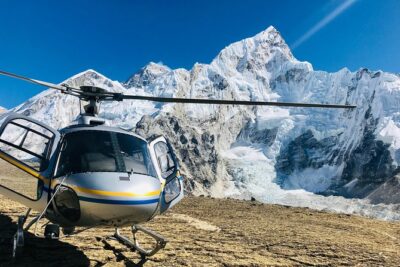 ★ 5.0Everest Base Camp Helicopter Tour with Hotel Everest View LandingFrom $1,49052 reviews
★ 5.0Everest Base Camp Helicopter Tour landing at Everest View Hotel.From $1,98534 reviews
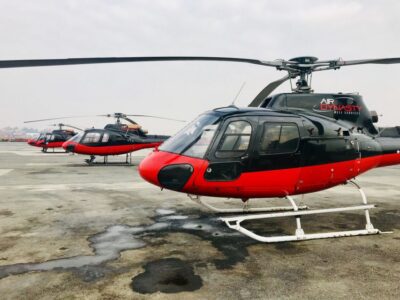 ★ 4.9Everest Base Camp Helicopter TourFrom $1,86330 reviews
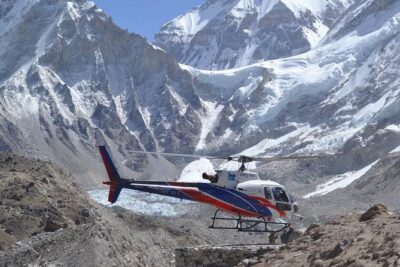 ★ 5.0Everest base camp Helicopter TourFrom $1,70026 reviews
★ 5.0Everest Base Camp Helicopter TourFrom $1,60024 reviews
Browse the lists this tour appears in