
Review · EVEREST HELICOPTER TOURS
Everest Base Camp Helicopter Tour landing at Hotel Everest View
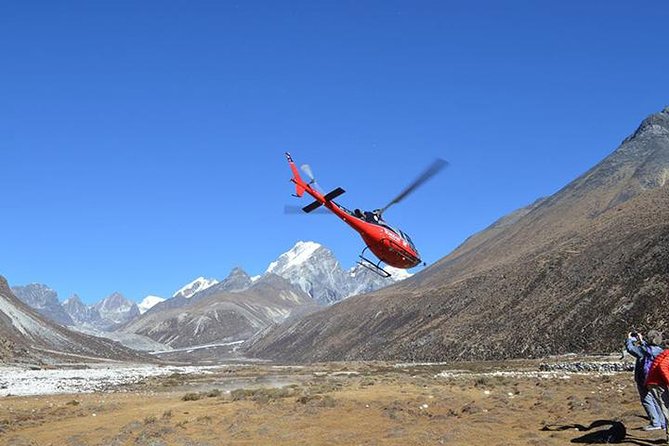
One of the fastest ways to meet Everest is from the air. This helicopter tour strings together quick hops and scenic flyovers, with a special moment: a landing at Hotel Everest View in Syangboche Marg (weather permitting) for views and an optional breakfast.
The two things I really like about this experience are the Kala Patthar-style perspective you get during the Base Camp area viewing, and the fact that the operator plans for window seats. The schedule includes multiple stops that keep the scenery changing, not just one long viewpoint from the same angle.
The main drawback is simple: weather controls everything. The tour runs only in good conditions, and the Hotel Everest View landing plus breakfast time are explicitly subject to weather and fuel needs.
In This Review
- Key highlights worth planning for
- What you’re really buying on this Everest helicopter day
- From Kathmandu airport to the Everest Base Camp area (the first wow)
- Lukla stop: why it’s there and what it changes
- Pheriche and the window-seat plan (a smart detail)
- Everest Base Camp flyover: the “quick hit” you plan for
- Kala Patthar views: why this part matters
- Landing at Hotel Everest View: the stop that turns it real
- The return: Kathmandu timing and the fuel-variable route
- Price and value: is $1,600 really buying you something special?
- What to wear: the temperature shock you should plan for
- Weight limits and the details that matter for safety
- The vibe onboard and how to get the most from it
- Should you book this Everest Base Camp helicopter tour landing at Hotel Everest View?
- FAQ
- How long is the entire tour?
- What’s the flight like, and what aircraft is used?
- Is pickup and drop-off included?
- Is breakfast at Hotel Everest View included?
- What extra fees should I expect besides the tour price?
- Do I need the original passport?
Key highlights worth planning for
- Hotel Everest View landing option: a rare stop that turns the day from pure flying into a brief Everest-in-the-real-world moment.
- Kala Patthar focus: the goal is that close-up, high-view angle of Everest and the surrounding peaks.
- Window-seat strategy: they can split the group at Pheriche so you’re more likely to get the seats you paid to see from.
- Short helicopter segments, long views: the total ride time is brief, but the scenery hits hard in those minutes.
- Small group setup: shared flights with a pilot, typically 5–6 passengers, with an overall cap of 15.
More of the range from the air
- Everest Base Camp Helicopter Tour landing at Everest View Hotel★ 5.0 · 668 reviews
- Everest Base Camp Helicopter Tour landing at Hotel Everest View★ 5.0 · 218 reviews
- Everest Base Camp Trek with Helicopter Return from Gorakshep to Lukla★ 5.0 · 161 reviews
- Everest Base Camp helicopter tour with landing★ 5.0 · 61 reviews
What you’re really buying on this Everest helicopter day
This isn’t a multi-day trek. It’s a high-altitude, high-view “Greatest Hits” flight focused on maximizing Everest visuals in a half-day window. You’re looking at dramatic mountain geometry—snowfields, ridges, deep valleys, and glacial rivers—without the hours of walking that normally get you there.
The tour is built around short segments and multiple landing points. That matters because, at this altitude, the view isn’t just “nice.” It’s the difference between spotting peaks from far away versus getting that near-to-sky perspective that makes Everest feel unreal.
You’ll also see why the operator is strict about timing and weather. Helicopters can fly, land, and reposition, but they still depend on safe conditions. If you’re the type who panics at uncertainty, this is the one you plan early in your Nepal stay so you have backup options.
From Kathmandu airport to the Everest Base Camp area (the first wow)
You start at Kathmandu airport, then go airborne toward the Everest Base Camp area. The route includes a flyover of the highest viewpoint around the Base Camp region, then a continuation toward Lukla by helicopter.
This is where the day sets expectations. Even if you’ve seen Everest photos before, aerial views create a different scale. From above, the terrain becomes a 3D map: sharp ridges, breakpoints in glaciers, and the way valleys carve the mountains into layers. You don’t need narration—your eyes do the work.
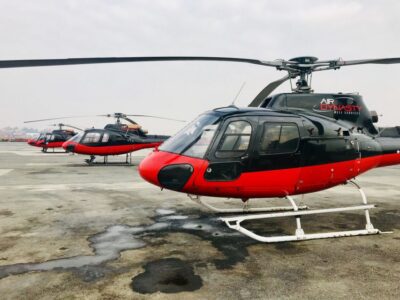
Aircraft used can be an Airbus H125 or Eurocopter 350, depending on the day. Either way, the experience is about rapid exposure to big scenery rather than comfort-level luxury.
Lukla stop: why it’s there and what it changes
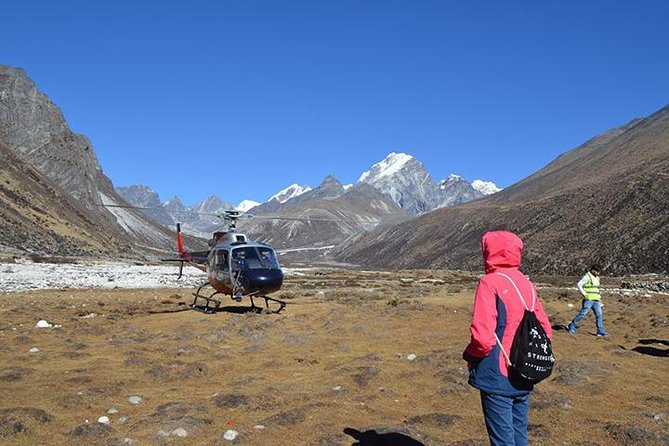
You’ll make a stop at Lukla (including a brief fuel purpose stop). Lukla is not just a dot on the map; it’s the airport trekkers often connect through on the way toward the Everest region.
In practical terms, the Lukla stop is short—about 10 minutes—but it helps you understand what kind of operation this is. You’re not flying a direct “hero route.” You’re taking the same air-system logic used in the Everest region: fuel, repositioning, and safe routing.
What I’d watch for here is simple: use this quick break to re-check your layers. If you’re wearing a light jacket because Kathmandu felt mild, Lukla is where you’ll feel the altitude shift more strongly.
Pheriche and the window-seat plan (a smart detail)
Next comes Pheriche, with a stop around 20 minutes. This is also where the operator’s seating plan can come into play.
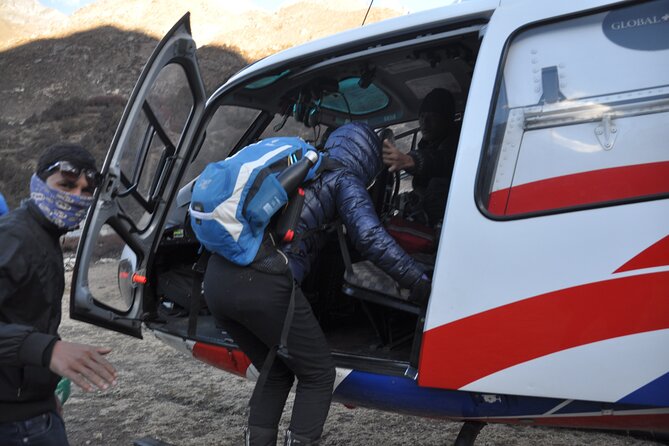
Here’s the practical part: if the group is more than three people flying together, they may split the group so that two people fly first, then three people. The stated goal is window seats guaranteed for the Everest Base Camp part of the flight.
That sounds like a small operational note, but it’s a big deal in the sky. You can’t take good photos through a blocked view, and you can’t enjoy the peaks if you’re facing the wrong direction. If you care about photos or you just want the best chance of seeing Everest clearly, this strategy is one of the best “value signals” in the whole day.
Also, Pheriche is a meaningful midpoint in the region. It gives the day a sense of progression instead of turning into nonstop flying.
Everest Base Camp flyover: the “quick hit” you plan for
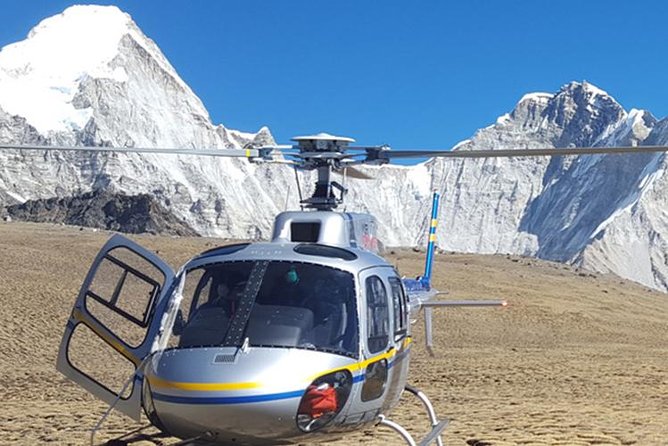
After the Pheriche pause, you’re set up for the Base Camp area experience. The emphasis is on the best view of Mount Everest and other highest mountains, with the opportunity to take videos and photos.
In this phase, the helicopter isn’t doing something theatrical like a long hover. It’s doing what helicopters do well: getting you into the right angles and timing so the mountains line up visually. That’s why the tour focuses on multiple landing points and flyover moments rather than one single stop.
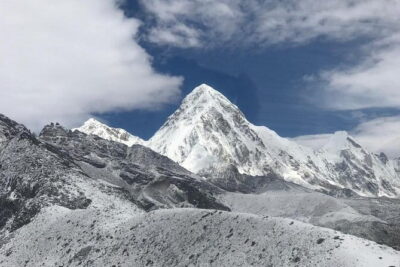
What you can expect to spot (as described in the route info) includes major neighbors around Everest—peaks like Pumori, Lhotse, and Nuptse. You don’t need expert-level geography to appreciate them. From the air, the massif shapes are obvious, and the layers of ridges help you understand why climbers and trekkers talk about this region like a whole separate world.
A practical tip: keep your camera accessible. You’ll be tempted to fumble with zippers and gloves, and the best angles can be brief.
Kala Patthar views: why this part matters
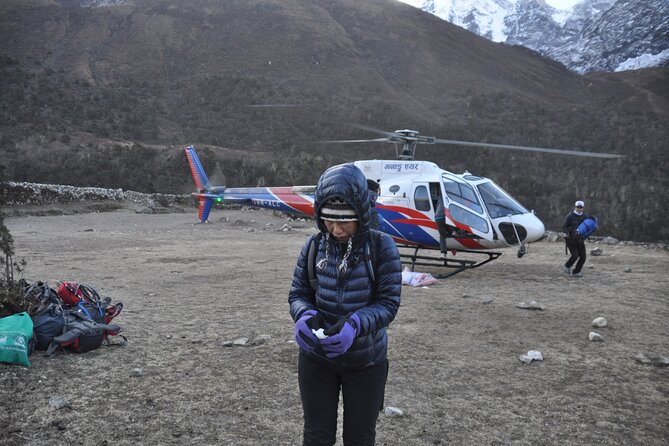
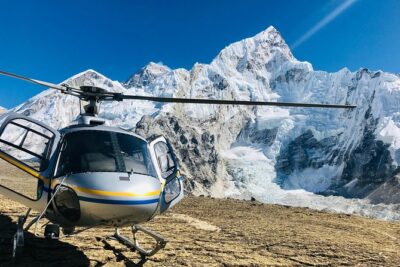
The tour’s big promise is the Kala Patthar perspective and the chance to see Everest with a close-up feel. In the supplied feedback, people consistently describe the views as intense and surreal from the helicopter, especially when the scenery shifts toward the Kala Patthar area.
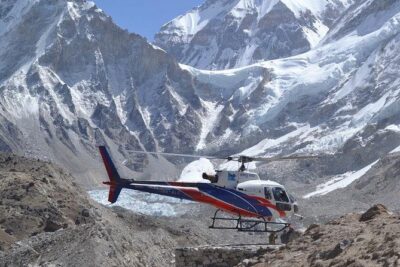
What makes Kala Patthar special (even in helicopter form) is that it brings Everest into a visual relationship that feels more personal than distant panoramas. You get a sense of steepness, sharp ice edges, and the way the glaciers sit below the peaks.
I’d frame this as “the moment your Everest expectation changes.” If you’ve only seen Everest from ground-level viewpoints, aerial Kala Patthar-style visuals are the reality check. It’s not just tall. It’s jagged, textured, and layered in a way that photos can’t fully capture.
Landing at Hotel Everest View: the stop that turns it real
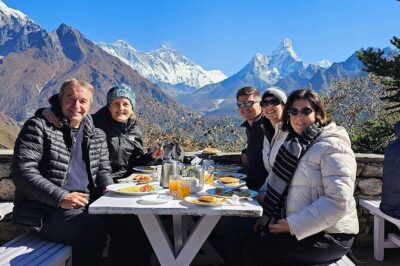
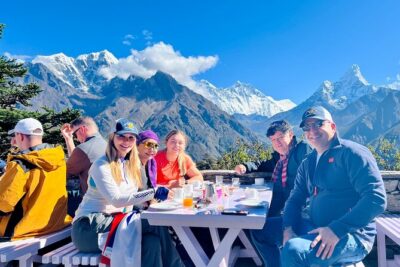
This is the standout detail for your specific tour title. The plan includes a landing at Hotel Everest View during Syangboche Marg, typically for about one hour, and breakfast is possible if conditions allow.
Two things make this stop valuable:
1) You get a break from the cockpit. Even a short landing changes how you experience the mountains. You can stand, re-balance your body, and take in the view without being strapped into a flight seat.
2) It creates a “destination moment.” Helicopter tours can feel like constant moving targets. Hotel Everest View gives the day a recognizable point on the map.
The catch: the landing is subject to weather. The tour notes say breakfast time depends on weather, so you shouldn’t assume this will always happen exactly as scheduled.
If breakfast is offered, you should plan for it as an extra cost. The info states a set breakfast at USD 31 per person, paid in line with the operator’s guidance. It’s also listed as weather-dependent.
If you’re someone who hates spending money on surprise add-ons, treat the breakfast as optional and decide when you know what weather is doing.
The return: Kathmandu timing and the fuel-variable route
Heading back to Kathmandu is another helicopter leg, with landing and then completion via Lukla or possibly a more direct route.
The operator notes that the captain can fly either via Lukla or directly depending on the fuel situation. That’s normal in helicopter operations. It also explains why the day feels efficient but not entirely predictable.
What you should do is plan your Nepal day around the idea that the full tour runs roughly 4 to 6 hours total. The flight segments are described as very short (flight time often listed as 4 to 6 minutes), but your total window is longer because it includes takeoff, short stops, landing time, and safety buffers.
If you’ve scheduled a long dinner or a late-night commitment right after, give yourself breathing room. Everest weather can make a good morning become a slower afternoon.
Price and value: is $1,600 really buying you something special?
At $1,600 per person, this tour is not “cheap,” and you should judge it by what it replaces.
You’re paying for:
- A high-altitude aerial day focused specifically on Everest Base Camp area viewing and Kala Patthar-style perspectives
- A guided logistics setup with hotel pickup and drop-off
- Shared helicopter flights with a pilot and multiple stops, not just one view
Where the value can feel real is when you compare it to the alternative: reaching these angles with trekking. The trade is time. Trekking buys you more days, gradual acclimatization, and deeper time in villages. A helicopter buys you something different: quick access to big views with far less physical effort and far less time on the trail.
Where you must be careful is with the extra fees. The price doesn’t include:
- National park fee: USD 26
- Airport tax: USD 8
- Khumbu village development fees: USD 16
- Optional breakfast at Hotel Everest View: USD 31 (if available)
So the real “all-in” cost may be higher once you add required fees and decide about breakfast. Still, if your goal is purely the Everest visual hit and you have limited days, the structure of the day can feel like targeted value.
What to wear: the temperature shock you should plan for
Altitude temperatures can surprise you. The tour info asks you to bring warm clothing for around:
- Summer: down to about 0°C (and mentions higher points where it can be colder)
- Winter: down to about -10°C for higher points
- It also suggests warm dress for -5°C in summer and -2°C in winter, reflecting the reality that conditions vary with season and route angles
Practical takeaway: don’t rely on Kathmandu street-style layering. Bring a warm jacket from home if you can, or plan to buy in Kathmandu before the trip. Gloves, a warm hat, and a dependable mid-layer are the difference between enjoying photos and counting minutes.
Also, you’ll likely be outside briefly if a landing happens at Hotel Everest View. That makes warmth even more important.
Weight limits and the details that matter for safety
The tour states a total weight per passenger limit of 221 lbs. It also says if your body weight is over 100 kg, you should send a message after booking.
That’s not “small print.” It’s the kind of detail that affects whether the operator can safely plan your seating and aircraft configuration. If you’re in that range, handle it early rather than waiting until the day before.
The vibe onboard and how to get the most from it
This is a shared helicopter experience—5 to 6 passengers per group with a pilot. The tour also notes a maximum of 15 travelers, so you’re not dealing with a huge crowd in the sky.
That matters because:
- The operator can manage seating and window access better
- People can hear instructions and keep movement simple at pickup points
- Photo-taking feels less like chaos
Based on the feedback style in the provided responses, Dipak Sapkota is the named contact associated with coordination. In other words: you’re not just buying a ticket; you’re dealing with a specific local organizer who appears to manage the day’s flow.
If you want the best experience, show up calm and ready. Small delays can happen when the weather shifts. If you’re packed too light (or too tightly), you’ll spend energy on gear instead of scenery.
Should you book this Everest Base Camp helicopter tour landing at Hotel Everest View?
Book it if you:
- Have limited time in Nepal and want Everest views without trekking days
- Care about getting a Kala Patthar-style perspective
- Like the idea of landing at a real viewpoint place like Hotel Everest View (weather permitting)
- Want a small-group helicopter day with a plan for windows
Skip or reconsider if you:
- Get frustrated by weather uncertainty. This is a “good weather only” type of experience.
- Have a tight schedule immediately after the tour and can’t handle changes.
- Are hoping for a long on-the-ground experience. This is brief by design—your main payoff is the aerial viewpoints.
If you do book, the best move is to schedule it earlier in your stay. That way, if conditions don’t cooperate, you’re more likely to have the flexibility to reschedule without derailing the rest of your trip.
FAQ
How long is the entire tour?
The tour runs about 4 to 6 hours total, though the helicopter flight time segments are listed as roughly 4 to 6 minutes.
What’s the flight like, and what aircraft is used?
You fly in helicopter segments with a pilot. The route notes that the aircraft may be Airbus H125 or Eurocopter 350.
Is pickup and drop-off included?
Yes. Hotel pickup and drop-off is included. You’ll need to provide your hotel name and address to receive the pickup time.
Is breakfast at Hotel Everest View included?
Breakfast is not included. A set breakfast at Hotel Everest View costs USD 31 per person, and it is subject to weather conditions.
What extra fees should I expect besides the tour price?
Besides the $1,600 price, the information lists National park fee (USD 26), airport tax (USD 8), and Khumbu village development fees (USD 16) as not included.
Do I need the original passport?
No original passport is required. The tour says a passport copy works, and a picture on your phone is also acceptable.
More of Nepal from the Air
More Tours in Kathmandu


More Tour Reviews in Kathmandu
Just Reviewed in Kathmandu
- Mountain Bike Tour
★ 5.0 · 3 reviews - Annapurna Panaroma
★ 5.0 · 3 reviews - Mount Everest Scenic Flight 50 Minutes
★ 5.0 · 3 reviews - Kathmandu : Swambhunath & Durbar Square Guided Half Day Tour
★ 3.3 · 3 reviews - Chandragiri Cable Car & Monkey Temple Tour – Private/Group
★ 5.0 · 3 reviews - Kathmandu: Shivapuri National Park Hiking Day Trip
★ 3.3 · 3 reviews
Everest Helicopter Tours, compared.
 ★ 5.0Everest Base Camp Helicopter Tour landing at Everest View HotelFrom $1,575668 reviews
 ★ 5.0Everest Base Camp helicopter tour with landingFrom $1,60061 reviews
 ★ 5.0Everest Base Camp Helicopter Tour with Hotel Everest View LandingFrom $1,49052 reviews
★ 5.0Everest Base Camp Helicopter Tour landing at Everest View Hotel.From $1,98534 reviews
★ 5.0Everest Base Camp Helicopter Tour with Hotel Everest View LandingFrom $1,49052 reviews
★ 5.0Everest Base Camp Helicopter Tour landing at Everest View Hotel.From $1,98534 reviews
 ★ 4.9Everest Base Camp Helicopter TourFrom $1,86330 reviews
 ★ 5.0Everest base camp Helicopter TourFrom $1,70026 reviews
★ 5.0Everest Base Camp Helicopter TourFrom $1,60024 reviews
★ 5.0Everest base camp Helicopter TourFrom $1,70026 reviews
★ 5.0Everest Base Camp Helicopter TourFrom $1,60024 reviews
 ★ 5.0Everest Base Camp Helicopter Tour with Stop at Everest View HotelFrom $1,57519 reviews
Browse the lists this tour appears in