
Review · EVEREST BASE CAMP TREKS
Everest Base Camp Trek with Helicopter Return from Gorakshep to Lukla
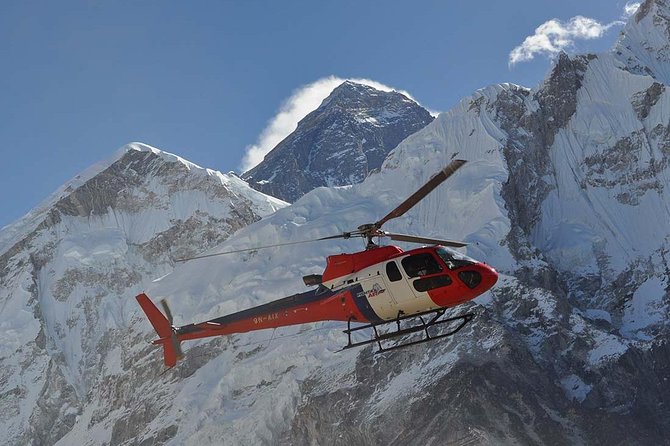
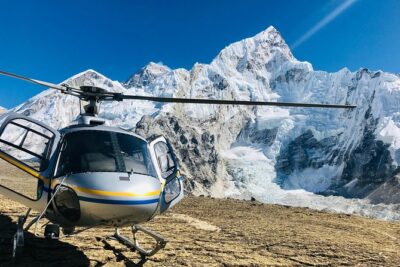
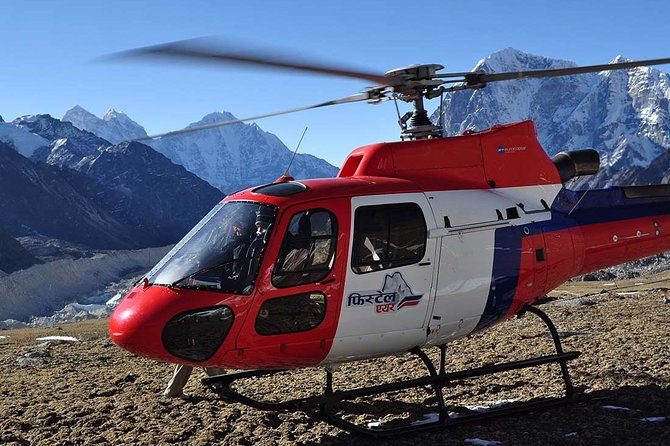
A helicopter home changes everything. This Everest Base Camp trek is built for big mountain payoff: Sherpa villages, suspension bridges, the Khumbu Glacier, and then a shared helicopter ride (about 20 minutes) from Gorakshep to Lukla. I like that it still feels like a true trek all the way to Everest Base Camp, not a shortcut that skips the experience.
I also like the human side of this trip. You’re assigned a trekking guide (people like Rajendra, Ram, or Madan have been part of past groups) and you get porters, typically one porter for every two guests, so the days focus on walking and acclimatization, not dragging gear uphill.
One thing to consider is the elephant in the sky: the helicopter relies on weather. If mountain conditions aren’t right, your plan may be adjusted under the trip’s good-weather terms, so keep your schedule flexible and don’t treat Lukla flights or the heli segment like a guaranteed single moment.
In This Review
- Key highlights you should know
- Why the heli return from Gorakshep is the real game-changer
- Kathmandu arrival: the small details that set your pace
- Lukla flights and the start of Khumbu: expect the world to feel sharp
- Phakding to Namche Bazaar: suspension bridges and the altitude lesson
- Everest View Point day: acclimatize without wasting effort
- Tengboche and Dingboche: monasteries, mani stones, and climbing with purpose
- Nangkartshang Peak day: the smart rest day that keeps you progressing
- Lobuche and the glacier edge: where the trek turns serious
- Everest Base Camp day at 5,365 m: iconic, but not a walk in the park
- Kala Pattar at 5,555 m: the payoff day that rewards patience
- Helicopter return from Gorakshep to Lukla: 20 minutes of relief
- Safety and comfort touches that actually help
- Price and logistics: what $3,000 buys you, and what it doesn’t
- Who should book this trek with helicopter return
- Should you book this Everest Base Camp trek with heli return?
- FAQ
- What is the approximate duration of this Everest Base Camp trek?
- Where are the flights taken, and how long are they?
- How long is the helicopter ride?
- What accommodations are included?
- Are permits included?
- Are meals included on the trek?
- Is oxygen monitoring included?
- Is travel insurance included?
Key highlights you should know
- Helicopter return from Gorakshep cuts the long fatigue-heavy trek back toward Lukla
- Acclimatization days built in at Namche and with the Nangkartshang Peak hike
- Altitude monitoring kit included, including an oxymeter to track oxygen saturation
- Guide and porter staffing: English-speaking guide, plus porter ratio of about 1:2
- Meals and key permits included, including TIMS and Everest National Park permits
- Small group size with a maximum of 14 travelers
More trails out of Kathmandu, boots ready
- Everest Base Camp Trek – 14 Days★ 5.0 · 1,499 reviews
- Everest Base Camp Trek★ 5.0 · 842 reviews
- Everest Base Camp Trekking★ 5.0 · 485 reviews
- Nagarkot Sunrise View and Day Hiking from Kathmandu★ 5.0 · 471 reviews
Why the heli return from Gorakshep is the real game-changer
Most Everest Base Camp itineraries include a grind: you climb in, then you also walk out, often while your legs are already cooked. Here, the plan uses a shared helicopter ride from Gorakshep to Lukla. That single swap matters because it changes how you experience the last high-altitude days. You still earn the view, but you don’t have to repeat the same heavy downhill logistics with weakened stamina.
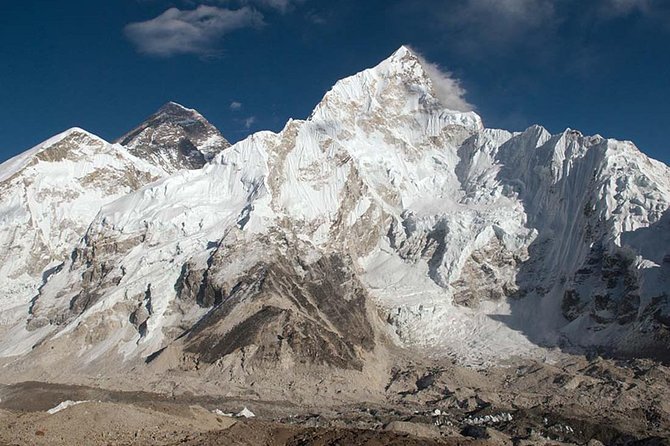
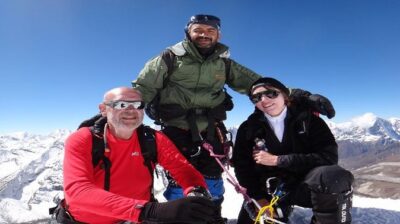
The trek also keeps its structure. You still hike to Everest Base Camp at 5,365 m and then go for Kala Pattar (5,555 m), which is where a lot of people find their clearest, most dramatic Everest perspectives. The heli isn’t a free pass to skip effort. It’s a way to protect your energy for what matters most: the highest moments.
Just be ready for the reality of mountain aviation. Flights and helicopters in Nepal depend on weather. This company’s policy explicitly ties the experience to good conditions, so the safest mindset is: expect the plan, but stay flexible.
Kathmandu arrival: the small details that set your pace
You start in Kathmandu with a meet-and-greet at Tribhuvan International Airport. Then you get a transfer to a three-star hotel by private tourist vehicle, plus a pre-trip meeting where you’ll meet your guide. That pre-walk briefing is more useful than it sounds. Everest treks work best when expectations are clear: what to pack, how to acclimatize, what the day rhythm feels like.
You’ll have two nights in Kathmandu on twin sharing basis with breakfast included. That’s practical for one simple reason: you arrive at altitude-adjacent time zones with jet lag and decisions to make. A real bed and proper breakfast help you start the trek with less chaos.
Also pay attention to what’s not in your Kathmandu package. Lunch and dinner in Kathmandu aren’t included. Budget a little extra for those meals, or plan a simple local dinner close to your hotel so you’re not spending trek energy on restaurant hunting.
Lukla flights and the start of Khumbu: expect the world to feel sharp
Day one of the trekking arc sends you from Kathmandu to Lukla by a short scenic flight (about 35 minutes) to Tenzing and Hillary Airport at 2,804 m. Lukla itself isn’t a town you linger in. It’s more like the gateway where the logistics click into place and the trail begins.
Then you head toward Phakding. This is where you start learning the rhythm: slow steps, steady breathing, and the habit of stopping before you feel desperate. The route follows the Dudh Koshi valley, crossing suspension bridges and walking through a mix of village life and hillside trail.
What I like about beginning here is how quickly you get Sherpa culture in small doses. You’re not immediately at the highest altitudes, so you get acclimatization plus context. That matters because later days feel tougher, and you’ll appreciate having already adapted to the pace.
Phakding to Namche Bazaar: suspension bridges and the altitude lesson
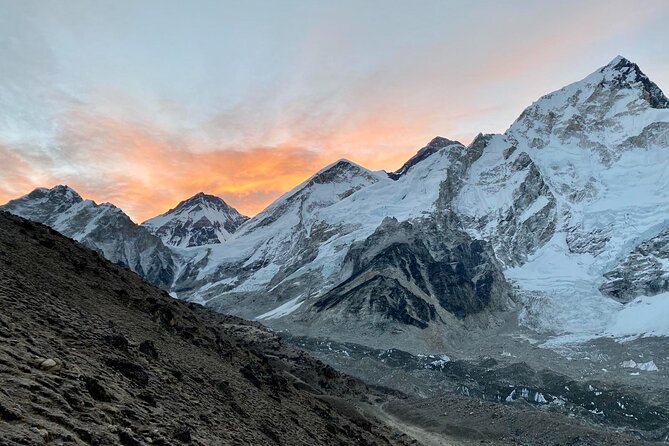
The hike to Namche Bazaar takes about six hours total, and it’s built around the Dudh Koshi river with multiple suspension bridge crossings. It’s one of those routes that doesn’t let you forget you’re in the mountains: sound of water, prayer flags, and constant up-and-down that forces you to move gently.
Namche is also your first major altitude marker. It’s the place where your body will start negotiating with altitude. The trek’s flow reflects that. You’re not just passing through; you’re positioning yourself for acclimatization.
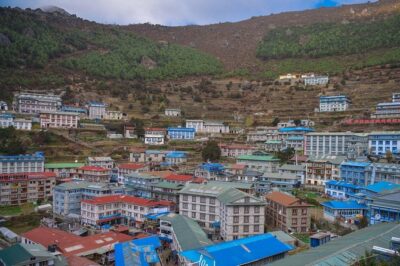
And Namche is where the trip’s culture becomes more visible. You’ll feel the mix of trekkers and local life, plus the practical reality that this town is a hub for services, gear, and trail support.
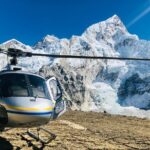
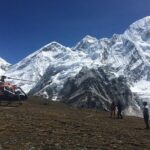
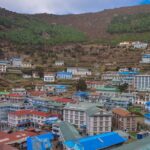
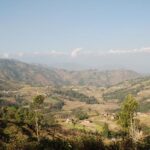
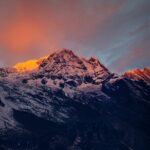
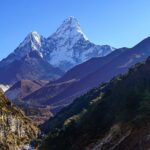
More of the range from the air
Everest View Point day: acclimatize without wasting effort
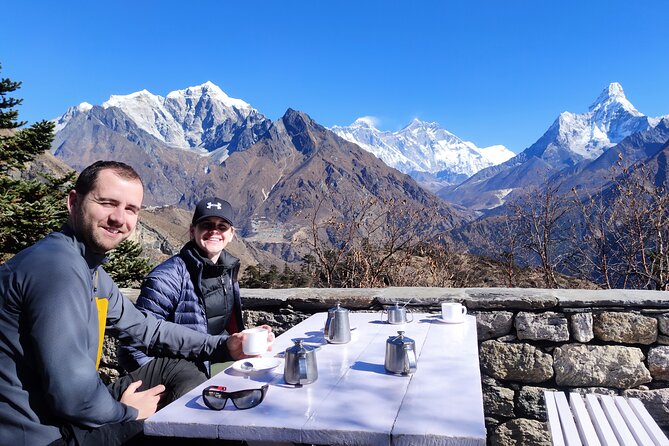
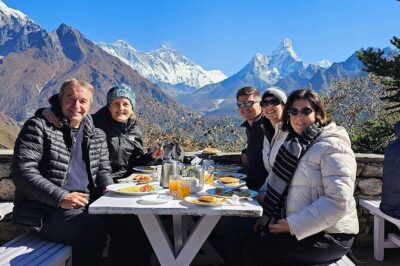
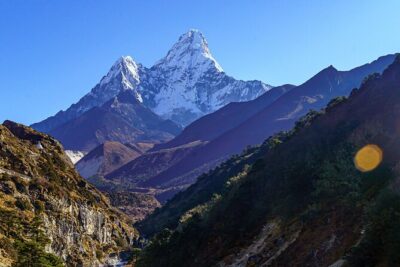
Instead of rushing to higher altitudes every day, you take a dedicated acclimatization day in and around Namche at Everest View Point. The point of this day is simple: adjust to thinning air pressure while still getting rewarding Himalayan views.
You also get a short trek in the area around Namche. That matters because complete rest days can make you stiff or restless. A gentle hike keeps your legs loose while your body processes altitude changes.
If you’re tempted to test your limits here, resist. This is exactly where people accidentally pay for impatience later. Use this day the way it’s intended: slow, steady, and focused on getting your altitude strategy right.
Tengboche and Dingboche: monasteries, mani stones, and climbing with purpose
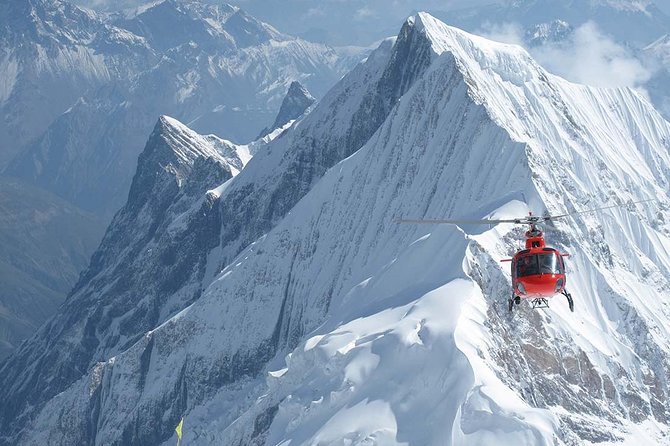
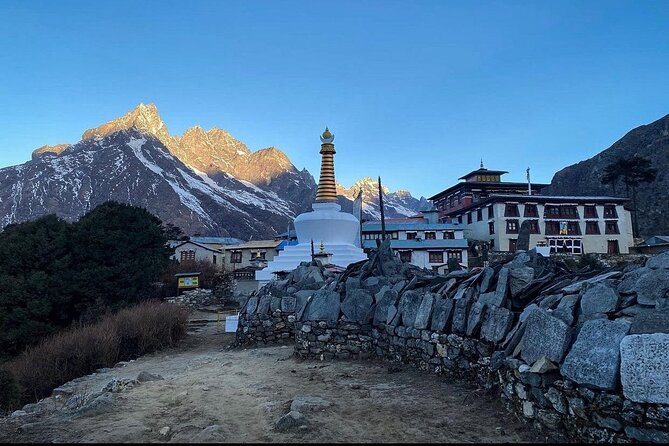
From Namche you continue toward Tengboche, reaching about 3,860 m. The day follows the Dudh Kosi with glacial water energy and mountain views that can stop you mid-step. Tengboche is well known for the monastery setting, and it’s part of the emotional texture of the trek. It gives the mountains a spiritual and human scale.
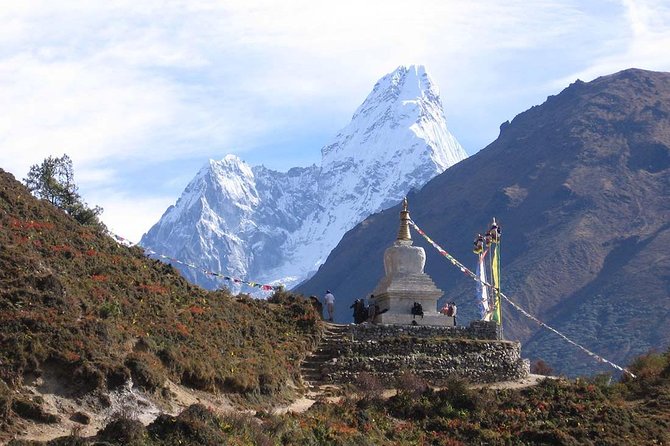
Then the route shifts toward Dingboche. You’ll cross suspension bridges again, and you’ll climb among huge amounts of mani stones. That kind of repeated visual—prayer stones stacked by generations—turns the trail into something more than a workout. It also helps you understand why trekkers and locals move differently on these trails. Everything feels slower and more intentional.
This stretch is also where you should watch your breathing and pacing closely. As altitude rises, “normal trekking effort” becomes “significant exertion.” Keep your pace conservative and let the guide set expectations. It’s better to arrive feeling capable than to arrive wrecked.
Nangkartshang Peak day: the smart rest day that keeps you progressing
Instead of heading straight toward Everest Base Camp, you do an acclimatization hike to Nangkartshang Peak, just above Dingboche. The trip deliberately avoids forward progress toward base camp on this day, because acclimatization is the hidden work behind successful high-altitude trekking.
I like this approach because it respects physiology. You get the benefit of movement without the pressure of gaining altitude toward the ultimate goal. Plus, you get a strong viewpoint experience. It helps you feel connected to the big picture on a day when you’re not “chasing” Everest.
Lobuche and the glacier edge: where the trek turns serious
Lobuche is the bridge between Sherpa village trekking and the colder, heavier feel of the high Khumbu zone. The trail follows the lateral moraine of the Khumbu Glacier, passing stone memorials for climbers who perished on nearby summits. It’s a sobering stretch and an important moment of perspective.
From here, it’s a real psychological shift. You’re close enough to Everest that your brain starts treating the mountains like they’re staring back. This is where a guide’s confidence and a group’s steady pace matter. If you find yourself rushing, force yourself back into rhythm.
The good news is that this day still gives you time in your head for the next big push: Base Camp at 5,365 m and then Kala Pattar.
Everest Base Camp day at 5,365 m: iconic, but not a walk in the park
Everest Base Camp is described as a big and difficult day walk along the Khumbu Glacier up to 5,365 m. Even if you aren’t using mountaineering gear, it’s not an easy stroll. The altitude and the terrain do the work of “difficulty.”
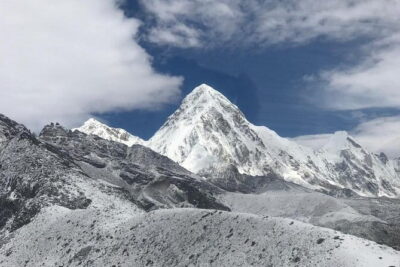
The upside is obvious: this is the closest you can get to Mt. Everest without technical climbing. You’re far from the summit, but the scale feels close. The glacier corridor and the sense of space around you make Base Camp feel like its own world.
The trade-off: you’ll likely feel the day more than you expected. Bring a calm attitude, keep moving steadily, and don’t compare your pace to anyone else. Your job is to show up and keep your breathing under control.
Kala Pattar at 5,555 m: the payoff day that rewards patience
Kala Pattar is planned as one of the most difficult yet rewarding days. You spend the morning climbing this small peak at about 5,555 m, and the reward is the views. This is one of those treks-within-a-trek moments: the effort is real, but the angle you gain can change the way Everest looks.
I like that the itinerary gives you time pressure in a managed way. You’re not just told to “go and suffer.” You’re guided through the climb as part of a structured plan, with the expectation that it’s demanding and timed for the best possible visibility.
If you’re prone to pushing hard, treat this day as a lesson. The goal is to reach the viewpoint with enough energy to enjoy it, not sprint up and collapse at the top.
Helicopter return from Gorakshep to Lukla: 20 minutes of relief
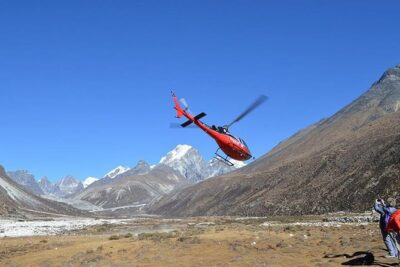
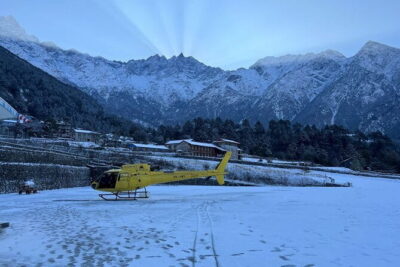
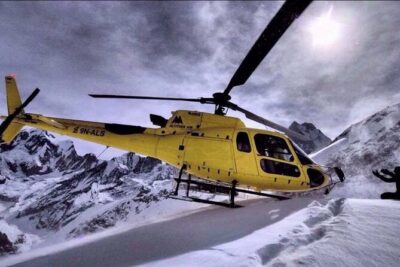
After the high points, you head back toward Gorakshep for the helicopter segment. The flight is shared, and it’s about 20 minutes from Gorakshep to Lukla. That’s a quick reset of your body and your mood.
Here’s why this matters: after trekking at altitude, even a “short” walk can feel huge. Helicopter return reduces the time your legs spend fighting altitude fatigue, while still leaving you with a final look at the mountains you’ve earned.
Then you take the scenic flight back to Kathmandu (about 35 minutes) and get transferred to your hotel on arrival. You’ll end the trek with time to decompress instead of immediately being forced into another long travel day.
Safety and comfort touches that actually help
This trip includes a few practical support details that make a real difference when you’re far from big-city medicine.
- You get a first-aid kit with an oxymeter to measure oxygen saturation. That doesn’t replace judgment, but it adds useful information when altitude symptoms show up.
- Filtered water is provided on the trails using a Katadyn Pocket Water Filter. That means you aren’t relying on questionable water sources, and you can hydrate more consistently.
- Your meals (breakfast, lunch, dinner) are included during the trek, plus a farewell dinner. That removes a big decision load from your day.
- The guide is described as Ace the Himalaya licensed and English-speaking, and you’re paired with local porters. Having trained local support changes how smoothly the trek runs.
From the reviews, one pattern repeats: people like the way guides keep logistics tight and morale steady. Names that show up include Raj, Ram, Madan, and Saman, plus porters such as Jot and Sher. That kind of continuity helps on a trek where weather, pace, and altitude can all shift the plan.
Price and logistics: what $3,000 buys you, and what it doesn’t
At $3,000 per person for roughly 12 days, the headline price is high until you break down what’s included.
Included items that matter:
- Kathmandu-to-Lukla flights and the return flight
- Shared helicopter ride from Gorakshep to Lukla
- Everest National Park permits and TIMS permit
- Twin-sharing 3-star hotel accommodation in Kathmandu (2 nights) with breakfast
- Trekking guesthouse accommodation in Lukla, Phakding, and Namche with attached toilets (as described)
- Standard meals during the trek (breakfast, lunch, dinner) plus farewell dinner
- Guide and porters (porter ratio about 1:2)
- Water filtration support on the trail
- Oxygen-saturation monitoring tool in the first-aid kit
Not included items you must budget:
- Travel insurance that covers emergency rescue and evacuation
- International flights and airport departure taxes
- Nepal entry visa
- Lunch and dinner while in Kathmandu
- Personal trekking equipment
- Alcohol and personal drinks
- Tips for trekking staff and driver
My take on value: this price makes the “expensive parts” feel bundled. In particular, the helicopter return is a costly add-on on most other options. If you want Everest Base Camp without turning the exit day into another suffering session, heli return is the reason this trip can justify itself.
Who should book this trek with helicopter return
This is a great fit if you:
- want a guided trek with permits handled and daily logistics managed
- care about acclimatization structure, including the Namche and Nangkartshang Peak days
- want the iconic Base Camp and Kala Pattar viewpoints
- feel nervous about the long walk back down and want a helicopter return to protect your energy
It may not be a great fit if:
- you’re very budget-focused and aren’t prioritizing the heli segment
- you need absolute schedule certainty regardless of mountain weather
- you don’t want a demanding high-altitude day like Base Camp at 5,365 m and the Kala Pattar climb
The trip calls for moderate physical fitness. That’s fair if you train for steady hiking and handle altitude realistically. You do not need technical mountaineering skills for this route, but you do need endurance.
Should you book this Everest Base Camp trek with heli return?
I’d book it if you want a classic Everest Base Camp experience with one smart luxury: removing the most punishing part of the return. The itinerary includes real acclimatization and keeps you moving at a pace that makes sense at altitude. The added support details—oxymeter, filtered water, guide-and-porter structure—also help you stay safer and less stressed.
I’d think twice if weather sensitivity would break your trip. Nepal’s mountains can shut down flights and change plans. If you’re someone who needs a single fixed schedule with no flexibility, you’ll want to plan with extra breathing room and good travel insurance.
If you choose this option, prep well, keep your pace conservative, and treat acclimatization days as part of the summit strategy, not a detour. That mindset is what turns an exhausting trek into a memorable one.
FAQ
What is the approximate duration of this Everest Base Camp trek?
It’s listed as about 12 days.
Where are the flights taken, and how long are they?
You fly from Kathmandu to Lukla and then back to Kathmandu. Each flight is described as about 35 minutes.
How long is the helicopter ride?
The helicopter segment is a shared ride from Gorakshep to Lukla, and it’s described as about 20 minutes.
What accommodations are included?
You get a three-star hotel in Kathmandu (twin sharing, breakfast included for 2 nights). During the trek, you stay in guesthouses in Lukla, Phakding, and Namche, with attached toilets in those towns as described.
Are permits included?
Yes. Everest National Park permits and a TIMS permit are included.
Are meals included on the trek?
Yes. Standard meals during the trek are included: breakfast, lunch, and dinner, plus a farewell dinner on the last night.
Is oxygen monitoring included?
Yes. The first-aid kit includes an oxymeter to measure oxygen saturation.
Is travel insurance included?
No. Travel insurance that covers emergency rescue and evacuation is not included.
More of Nepal from the Air
More Trekking Out of Kathmandu
More Tour Reviews in Kathmandu
Just Reviewed in Kathmandu
- Mountain Bike Tour
★ 5.0 · 3 reviews - Annapurna Panaroma
★ 5.0 · 3 reviews - Mount Everest Scenic Flight 50 Minutes
★ 5.0 · 3 reviews - Kathmandu : Swambhunath & Durbar Square Guided Half Day Tour
★ 3.3 · 3 reviews - Chandragiri Cable Car & Monkey Temple Tour – Private/Group
★ 5.0 · 3 reviews - Kathmandu: Shivapuri National Park Hiking Day Trip
★ 3.3 · 3 reviews
Everest Base Camp Treks, compared.
 ★ 5.0Everest Base Camp Trek – 14 DaysFrom $1,8001,499 reviews
 ★ 5.0Everest Base Camp TrekFrom $1,790842 reviews
 ★ 5.0Everest Base Camp TrekkingFrom $1,350485 reviews
 ★ 5.0Everest Base Camp Trekking – 13 DayFrom $1,399365 reviews
★ 5.0Everest Base Camp TrekFrom $1,445350 reviews
★ 5.0Everest Base Camp Trek -14 DaysFrom $1,420321 reviews
★ 5.0Everest Base Camp Trekking – 13 DayFrom $1,399365 reviews
★ 5.0Everest Base Camp TrekFrom $1,445350 reviews
★ 5.0Everest Base Camp Trek -14 DaysFrom $1,420321 reviews
 ★ 5.012 Days Everest Base Camp TrekFrom $1,099289 reviews
 ★ 5.0Everest Base Camp Trekking – 2025/2026From $1,339199 reviews
Browse the lists this tour appears in