
Review · PATAN & LALITPUR TOURS
Folklore and Everyday Life in Ancient Patan
Ancient Patan has stories in the walls. This walking tour moves through narrow lanes and courtyard worlds, using faith and local custom to explain how Patan’s past still shapes daily life. I especially liked two things: the way the guide connects spiritual practice to everyday urban life, and Sandip’s smart, funny storytelling that makes the city feel understandable fast.
One thing to consider: the route is intentionally built around the old town area near the main square, not Patan Durbar Square itself. If that big palace-temple complex is your top priority, plan to add it on after the tour since it’s not covered here.
In This Review
- Key Highlights You’ll Actually Care About
- Starting at Patan Dhoka: You Get Oriented Fast
- Why Courtyards Explain Patan Better Than Palaces Alone
- Stop 1: Pimbahal and the Monastery That Holds the Town’s Spiritual Weight
- Stop 2: Nyakhachowk—Falchaa, Ancestral Shrines, and a Mosque Courtyard
- Stop 3: Nagbahaa—How Global Influence Shows Up in Local Iconography
- Stop 4: Swotha Square Finish Line and the Easiest Add-On to Durbar Square
- Price and Value: $65 for a Guide-First Courtyard Walk
- Who This Tour Fits Best (and Who Might Feel Restless)
- Practical Tips So You Enjoy the Walk More
- Should You Book This Patan Courtyard and Folklore Tour?
- FAQ
- How long is the Patan folklore and everyday life walking tour?
- How much does the tour cost?
- Where does the tour start and end?
- Does the tour include Patan Durbar Square?
- What are the main stops on the itinerary?
- Is admission included for the stops?
- What time does the tour start?
- How big is the group?
- Do I need a printed ticket?
- What happens if weather is bad?
- Are pick-up and drop-off included?
Key Highlights You’ll Actually Care About
- Small-group pace (max 10): less rushing, more time to ask questions and look closely at details.
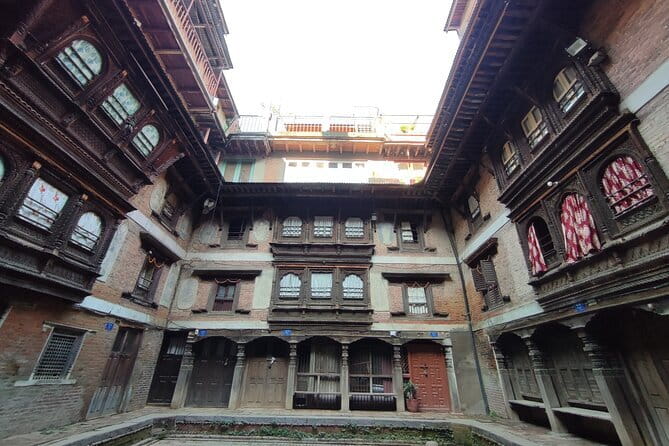
- Courtyards as cultural classrooms: you’ll learn why places like Pimbahal matter beyond their beauty.
- Religion that shows up in daily life: Newar Buddhism and Tantric Hinduism are explained through how people live and build.
- Architecture you can spot immediately: ancestral shrines, vernacular houses, and courtyard layout are part of the lesson.
- Global influences in local iconography: you’ll hear how Greek/Hellenistic impressions show up in Buddhist/Hindu imagery.
- A handy finish near Patan Durbar Square: you end at Swotha Square, a short walk from the main palace complex if you want to keep going.
Not sure yet? Here are other Kathmandu tours worth a side-by-side look.
- Everest Base Camp Trek – 14 Days★ 5.0 · 1,499 reviews
- Everest Base Camp Trek★ 5.0 · 842 reviews
- Private Kathmandu Sightseeing Tour | UNESCO World Heritage sites★ 5.0 · 756 reviews
- Kathmandu: 7 UNESCO Sites with Lunch★ 4.8 · 744 reviews
Starting at Patan Dhoka: You Get Oriented Fast

The tour begins at Patan Dhoka (Patan Dhoka Road, Lalitpur). From the first minutes, you’re not just sightseeing. You’re learning how Patan is organized: narrow streets funnel you into wider courtyard spaces, where most of the meaningful social and religious life happens.
This approach matters. Patan isn’t laid out like a museum map. If you only bounce between major temples, you miss the logic of the town. The guide’s job here is to help you read that logic—where worship happens, where families store shrines, and why courtyards act like community centers.
You’ll also get a practical advantage: the tour runs for about 2 to 2.5 hours, so it’s long enough to make sense of the area but not so long you feel cooked by the end.
Why Courtyards Explain Patan Better Than Palaces Alone
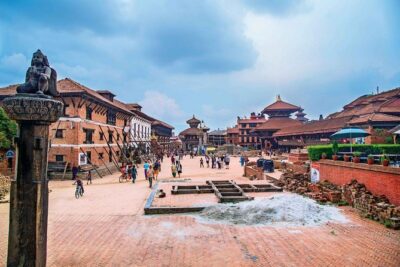
The theme is simple and effective: ancient Patan grew through courtyard neighborhoods, where spiritual practice and daily work were woven together. You walk through narrow lanes, then the space opens up into courtyards next to towering palaces and ornate shrines.
That layout is the point. Courtyards are where you see the real rhythm of tradition—people gather, ceremonies play out, and small objects (carvings, offerings, household shrines) carry meaning. So even if you’re not a “religion person,” you’ll still come away understanding how belief shapes design, routines, and relationships.
The tour also frames what’s happening now. It talks about how young Nepalis hold onto cultural norms while engaging modern values. That isn’t just a slogan; you hear it while watching how local spaces are used today.
Stop 1: Pimbahal and the Monastery That Holds the Town’s Spiritual Weight
Your first big stop is Pimbahal, introduced as a Newar Buddhist monastery connected to indigenous knowledge and spiritual practice. The scale is the headline: it’s described as one of the most respected and embellished monastery areas, with 4,000+ ordained monks in the monastic order.
What you’re looking for here is craft and purpose. The tour highlights intricate woodwork and the strong sense that this is not a “single building to photograph,” but a living religious hub. Even if you only catch parts of the architecture while walking through, you’ll learn what to notice: ornamental details, the seriousness of religious space, and the way monastic life links to the wider town.
A bonus: admission is listed as free at this stop, so you can spend your money on a good guide (already included) instead of last-minute tickets.
Stop 2: Nyakhachowk—Falchaa, Ancestral Shrines, and a Mosque Courtyard
From Pimbahal, the walk turns onto a quieter path where you can observe traditional architecture up close. One term you’ll hear is falchaa, which are resting areas. The tour uses these spots to show how the city is designed for daily movement—places to pause, meet, and watch life go by.
Then you enter another courtyard at Nyakhachowk. This stop focuses on vernacular houses, ancestral shrines, and a courtyard that includes a mosque (the exact name isn’t included in your details, but the mosque presence is part of the stop). That mix is important. Patan doesn’t separate communities into tidy boxes. Faith and neighborhood life overlap in real space.
At this point, you’ll likely start seeing why the tour avoids rushing straight to a single landmark. Courtyards are where you can connect architecture to meaning: why shrines sit where they do, how the courtyard shape supports community routines, and how buildings reflect local traditions.
Again, admission is listed as free for this stop.




Stop 3: Nagbahaa—How Global Influence Shows Up in Local Iconography

Next is Nagbahaa (Nag Bahal), described as one of the largest courtyards in old Patan. This is a shorter stop—about 15 minutes—but it’s packed with an idea that makes the whole region feel bigger.
The guide brings up globalization in ancient times and points to Greek/Hellenistic impressions showing up in Buddhist/Hindu iconography. In plain terms, you’re being asked to notice that cultural exchange isn’t a modern invention. Motifs travel, styles shift, and local religious art absorbs outside influence while keeping its own identity.
Why this stop is worth your time: it changes your reading of what you see. Instead of treating carvings as decoration, you start treating them as historical evidence—clues about trade routes, cultural contact, and how artists communicated ideas through visual language.
Admission is listed as free here too.
Stop 4: Swotha Square Finish Line and the Easiest Add-On to Durbar Square
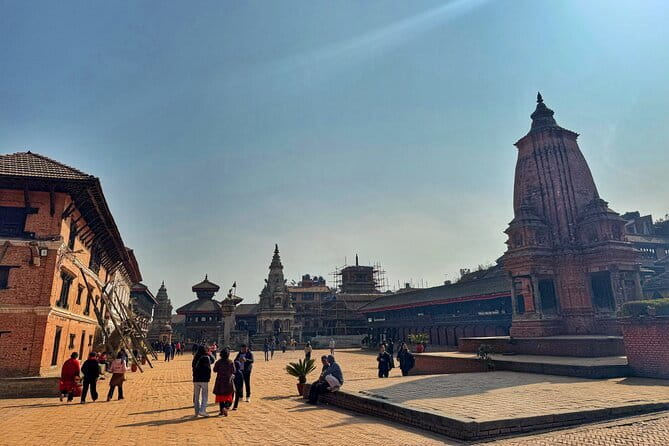
The tour ends at Swotha Square, where you’ll find several temples and shrines plus tea shops. This is a good way to close: you’re in a lived-in public space, not at a gate that dumps you back into traffic.
The tour notes that you can get guided help toward Patan Durbar Square afterward, but the main palace-temple complex isn’t part of the walking route. The practical takeaway is simple: if you want the big-ticket sights, you can keep going on your own right after the tour.
Your ending location is also convenient. Swotha Square is described as only a couple minutes’ walk to Patan Durbar Square, so you don’t lose an afternoon to getting from place to place. If you do go, the museum inside the old palace complex is described as worth visiting, but expect extra admission fees.
Price and Value: $65 for a Guide-First Courtyard Walk
At $65 for about 2 to 2.5 hours, this tour is priced for people who want local interpretation, not just street-level photos. The guide is included, and the group size is capped at 10 travelers, which usually means you’ll spend less time waiting and more time actually hearing what’s being pointed out.
The other value factor is the admissions layout you’re given: each listed stop has free admission. The main extra cost risk is if you choose to add Patan Durbar Square afterward, since that complex and museum have extra admission fees.
In other words, you’re paying for context. If you enjoy learning how places work—faith, architecture, and community life—this price can feel very fair. If you only want the headline monuments, you might feel like you’re paying for a lot of “side streets.” The tour itself is upfront about that focus.
Who This Tour Fits Best (and Who Might Feel Restless)
This is a strong fit if you:
- want to understand Kathmandu Valley culture beyond the obvious stops
- enjoy learning about Newar Buddhism and Tantric Hinduism through real places
- like walking at a human pace with a guide who answers questions
- appreciate small-scale details like shrines, courtyard layout, and art references
It may feel less ideal if you:
- are only interested in Patan’s main Durbar Square palace complex
- hate walking in dense old-town streets
- want a strictly monument-hopping itinerary with big-ticket time at each site
Also, it starts at 10:00 am, so plan your morning accordingly. Since good weather is required, have a flexible day and expect that things could shift if skies don’t cooperate.
Practical Tips So You Enjoy the Walk More
A few things help you get more out of the experience:
- Wear shoes with grip. Old Patan lanes are uneven and courtyard steps can be slick if it’s damp.
- Bring a light layer. Temples and courtyards can feel cooler in shade, even on sunny days.
- If you’re curious about faith, come with questions. The tour is built around Newar Buddhist and Tantric Hindu ideas shaping everyday life.
- If Patan Durbar Square is on your must-see list, plan the add-on now rather than deciding at the end.
If you’re traveling with a service animal, service animals are allowed.
Should You Book This Patan Courtyard and Folklore Tour?
Yes—if you want to understand Patan like a local neighborhood, not like a checklist. The strongest reason to book is the guide’s ability to connect courtyards, religion, and daily life into one readable story, with Sandip highlighted for clear knowledge and a great sense of humor. The route is also well-paced for a short visit, and the ending at Swotha Square keeps it easy to add Patan Durbar Square afterward.
Skip it only if Durbar Square itself is your main goal and you don’t care about the surrounding old-town courtyards. This tour is intentionally about the area around the main square, with a more local, nuanced perspective.
If you’re the kind of traveler who likes learning what to look for—shrines, courtyard design, iconography references—this tour will feel like time well spent.
FAQ
How long is the Patan folklore and everyday life walking tour?
It runs about 2 hours to 2 hours 30 minutes.
How much does the tour cost?
The price is $65.
Where does the tour start and end?
It starts at Patan Dhoka (Patan Dhoka Road, Lalitpur) and ends at Swotha Square (a short walk from Patan Durbar Square).
Does the tour include Patan Durbar Square?
No. Patan Durbar Square is not covered, but you can add it on after the tour if you want.
What are the main stops on the itinerary?
The walk includes Pimbahal, Nyakhachowk, Nagbahaa (Nag Bahal), and ends at Swotha Square.
Is admission included for the stops?
Admission is listed as free for the listed stops during the tour. Patan Durbar Square has extra admission fees if you visit independently afterward.
What time does the tour start?
The start time is 10:00 am.
How big is the group?
The tour has a maximum of 10 travelers.
Do I need a printed ticket?
No. It uses a mobile ticket.
What happens if weather is bad?
The tour requires good weather. If it’s canceled due to poor weather, you’ll be offered a different date or a full refund.
Are pick-up and drop-off included?
No, pick-up and drop-off are not included.
More Tour Reviews in Kathmandu






Just Reviewed in Kathmandu
- Mountain Bike Tour
★ 5.0 · 3 reviews - Annapurna Panaroma
★ 5.0 · 3 reviews - Mount Everest Scenic Flight 50 Minutes
★ 5.0 · 3 reviews - Kathmandu : Swambhunath & Durbar Square Guided Half Day Tour
★ 3.3 · 3 reviews - Chandragiri Cable Car & Monkey Temple Tour – Private/Group
★ 5.0 · 3 reviews - Kathmandu: Shivapuri National Park Hiking Day Trip
★ 3.3 · 3 reviews
Patan & Lalitpur Tours, compared.
 ★ 5.0Bhaktapur & Patan Durbar Square Day ToursFrom $50122 reviews
 ★ 4.7Private Patan and Bhaktapur Sightseeing TourFrom $4964 reviews
 ★ 5.0Patan and Bhaktapur City Full Day TourFrom $5024 reviews
 ★ 4.5City tour of Bhaktapur and Patan Durbar SquareFrom $11020 reviews
 ★ 5.0Patan Heritage Tour – Private/Small GroupFrom $514 reviews
 ★ 5.0Kathmandu and Patan Heritage and Living Goddess Experience TourFrom $5012 reviews
 ★ 5.0Patan & Bhaktapur Durbar Square Tour with Lunch – Private/GroupFrom $511 reviews
 ★ 5.0Bhaktapur darbar, Patan Darbar square & Changu Narayan in 1 dayFrom $5010 reviews
Browse the lists this tour appears in