
Review · PATAN & LALITPUR TOURS
Patan Heritage Tour – Private/Small Group
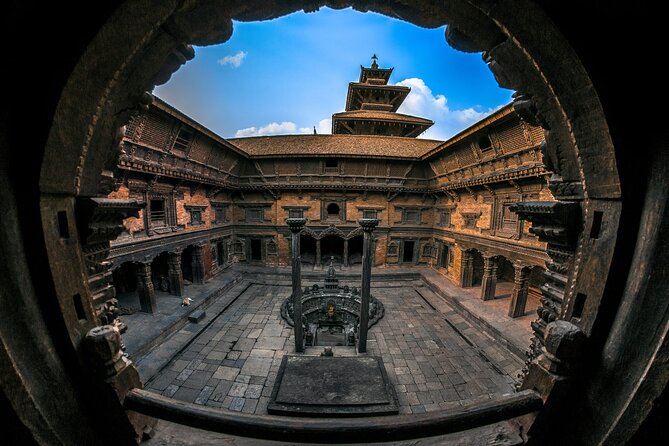
Patan in three hours, with zero guesswork. This small-group walk (max 5) turns street-level wandering into a guided story of Newar Buddhism and everyday traditions that still shape Lalitpur. You get a plan that hits the big names—Ganesh Mandir, Golden Temple, Patan Durbar Square, and Patan Museum—plus the quieter lanes that explain how people actually live around these monuments.
What I like most is the pacing: you’re not rushed, and the guide adjusts based on your interests. And the second win is the “why it matters” framing, linking Vajrayana-influenced Newar Buddhism to the spaces you’re standing in. One thing to consider: parts of the major sites are not included, so you’ll want cash ready for the Durbar Square entrance.
The route starts at Patan Dhoka and ends right back there, so it’s easy to build into a bigger Kathmandu day. You also get the advantage of an English-speaking guide, plus the tour uses a mobile ticket. Still, it’s a walking tour through old streets, so bring comfortable shoes and plan for a bit of uneven pavement and stairs near courtyards.
In This Review
- Key highlights I’d circle
- Why this Patan heritage walk feels different
- Small-group pacing and the meeting point that keeps it simple
- Ganesh Mandir: the quick story stop that warms up your eye
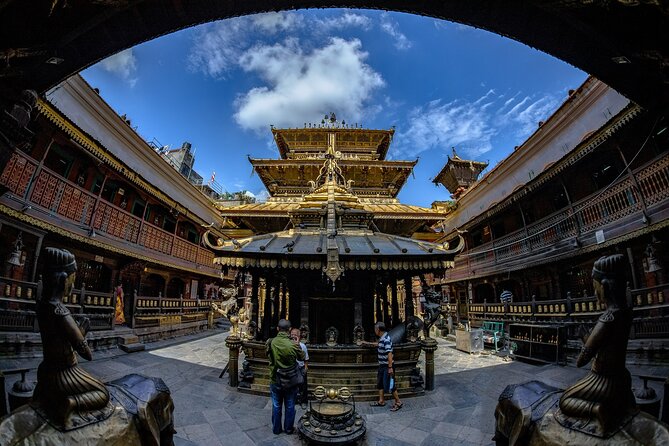
- The Golden Temple (Hiranya Varna Mahavihar): Vajrayana meets the street
- Patan Durbar Square: where Malla kings turned power into stone
- Patan Museum: the best place to understand what you’re seeing
- Patan Dhoka murals and the security story at the gate
- Price, value, and what to budget on the day
- The guide experience: why names like Santosh and Shreya matter
- Who should book this Patan Heritage Tour
- Should you book it?
- FAQ
- How long is the Patan Heritage Tour?
- What is the group size?
- Where do we meet and where does it end?
- Is the guide English speaking?
- Are entrance fees included for all stops?
- How much is the Durbar Square entrance fee?
- Is coffee or tea included?
- Is there free cancellation?
- Is there a youth/student discount?
Key highlights I’d circle
- Max 5 people means you can ask questions without shouting over a crowd
- Ganesh Mandir stop includes a quick story that sets the tone for the day
- Golden Temple (Hiranya Varna Mahavihar) connects Buddha’s teachings with Vajrayana strands
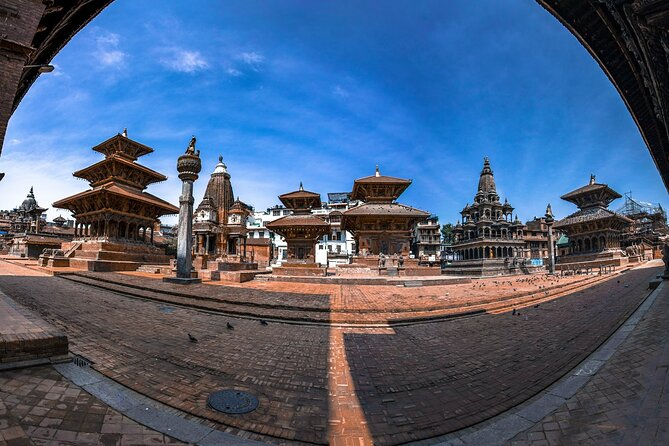
- Patan Durbar Square focuses on Malla-era architecture, shrines, and royal palace life
- Patan Museum is worth it for understanding traditional sacred arts in its historic setting
- Patan Dhoka murals give you a practical feel for how the old city guarded itself
Just your group, at your own pace
- Private Kathmandu Sightseeing Tour | UNESCO World Heritage sites★ 5.0 · 756 reviews
- Kathmandu: Full Day 7 UNESCO Tour with Lunch – Private/Group★ 5.0 · 415 reviews
- Private Bhaktapur and Nagarkot Day Tour From Kathmandu★ 5.0 · 305 reviews
- Kathmandu: Full Day Top 4 UNESCO Tour with Lunch – Private/Group★ 5.0 · 269 reviews
Why this Patan heritage walk feels different
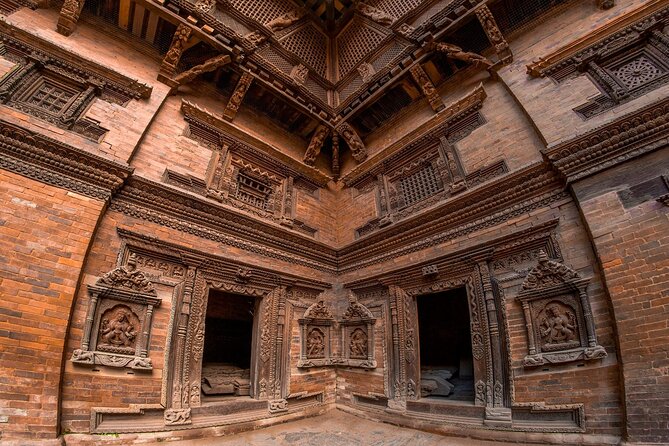
Patan, also called Lalitpur, can look like a collection of temples and courtyards from far away. But on this tour, it starts to feel like a living city with memory. The best part is that the guide doesn’t treat the monuments like museum objects. Instead, the walk ties Newar Buddhist tradition—especially Vajrayana-influenced practice—to the physical places you’re seeing.
You’ll also get a clear through-line that makes the city make more sense. Early on, the tour sets you up to read symbols and stories as you move: Lord Ganesha’s elephant-head legend, then the Golden Temple’s religious context, then royal and civic life at Patan Durbar Square. By the time you’re looking at details at the gate, it all clicks together.
And at around 3 hours, it’s a manageable length. You don’t need a full-day commitment, but you still cover enough ground to feel like you learned the city’s basic language.
Small-group pacing and the meeting point that keeps it simple
This is a private/small group tour capped at 5 travelers, which changes the whole experience. With fewer people, you’re more likely to get real back-and-forth questions—about Buddhism, architecture, or what daily life looks like around these sites. It also helps with timing. You’re not trapped in a rigid crowd schedule, and the tour can flex depending on what you care about most.
The tour meets at Patan Dhoka, Lalitpur 44600, Nepal, and it ends back at the same meeting point. That matters more than you’d think. After the walk, you can immediately continue on your own—grab a meal, head to another neighborhood, or return to your hotel without needing extra navigation.
You should also plan for the fact that the key stops involve walking through older parts of town. The streets are narrow in places, and the terrain can be uneven around courtyards. Nothing extreme is mentioned, and most people can participate, but comfortable shoes are a smart move.
Ganesh Mandir: the quick story stop that warms up your eye
The first stop is Ganesh Mandir, a shrine dedicated to Lord Ganesha. It’s on the way from Patan Dhoka toward the Golden Temple area. The visit is brief—about 15 minutes—and the entry is free.
What makes this stop useful is its function in the bigger tour. Ganesh is a common thread in South Asian devotional life, and hearing the story about how he got his elephant head gives you an easy entry point for the symbolism you’ll keep encountering. Think of it as a warm-up lesson: you start paying attention to what the city is trying to say, not just what it looks like.
If you like guided context, this is a good start because it frames what you’ll see later in more serious religious spaces.
The Golden Temple (Hiranya Varna Mahavihar): Vajrayana meets the street
Next up is the Golden Temple (Hiranya Varna Mahavihar). This is described as a Newari Buddhist monastery with roots in the 14th century. Expect about 15 minutes here.
Two practical points matter:
- The admission for this stop is not included
- The tour will focus on the story of Buddha’s teachings and how Vajrayana shows up in these Newar Buddhist traditions
What I like about this approach is that it doesn’t turn the Golden Temple into a lecture. You get the religious background you need to understand what you’re seeing, without needing a degree in Buddhist studies first. If you’ve ever stood in a temple and felt like you were missing the point, this stop is designed to prevent that.
Also, keep your expectations realistic: it’s a short visit. If you want deep time inside the monastery, this tour is more of a guided orientation. Use it to understand what you’re looking at, then decide if you want more time on your own afterward.
Deeper into old Kathmandu


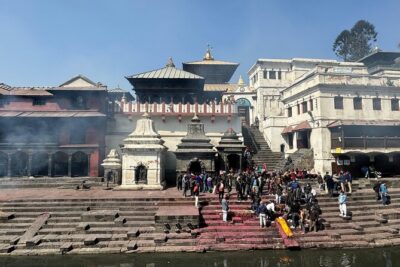
Patan Durbar Square: where Malla kings turned power into stone
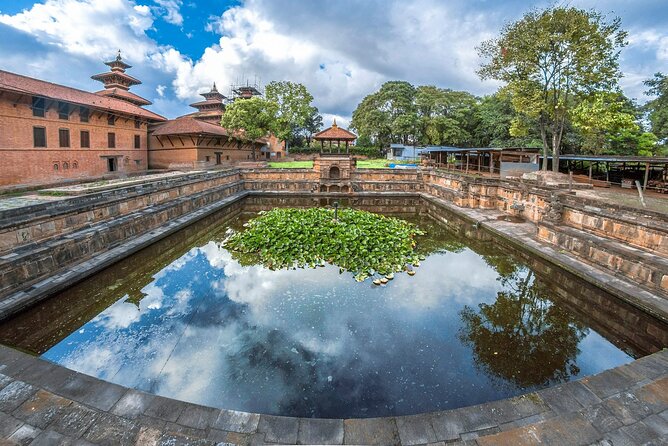
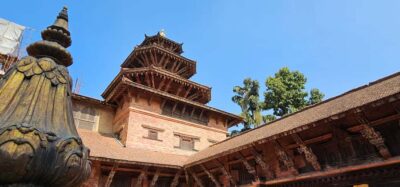
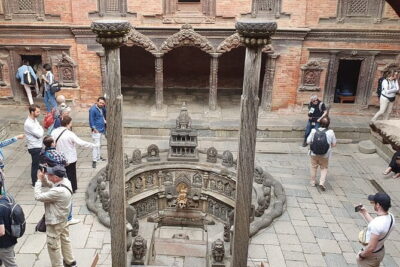
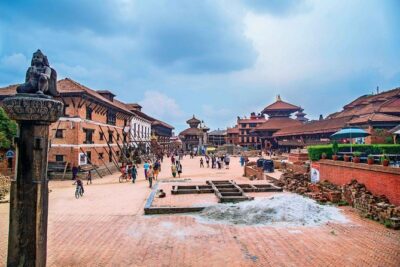
The highlight for many people is Patan Durbar Square, where you’ll spend about 45 minutes. The tour explains it as the ancient royal palace area where the Malla Kings of Patan lived.
This stop matters because it’s not only about temples. It’s also about governance, status, and urban design. You’ll be guided through Nepalese architecture buildings, shrines, and the royal palace spaces—so you can see how political life and religious life were intertwined.
Here’s the practical catch: Durbar Square entrance is not included. You’ll need to pay an entrance fee in cash at the site, listed as NRP 1000 (about US$9). The guide also recommends paying a minimum of NRP 100 as a donation to the Royal Kumari.
If you’re trying to plan your day like a local, treat this as part of your temple-going budget. Don’t be caught scrambling at the gate.
What I like about giving this time is that the architecture needs attention. Courtyards and carved details take longer than you expect. If you rush through Durbar Square on your own, you often miss the layout and the story. With the guide, you’ll understand why certain areas feel public, sacred, or royal—and how the space works as a whole.
Patan Museum: the best place to understand what you’re seeing
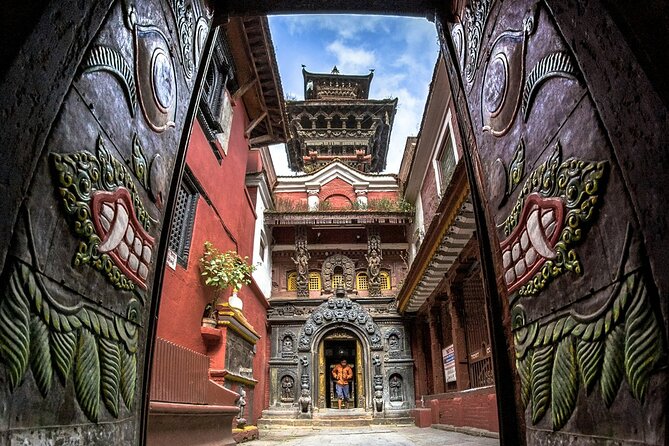
After the palace square, the tour moves to the Patan Museum. You’ll spend about 1 hour here, and the admission is not included.
The museum is described as showcasing traditional sacred arts of Nepal, housed in an old residential court associated with the former Malla palace world. This is exactly the kind of setting that helps you connect objects to real cultural function.
This stop is a value-add for anyone who loves craftsmanship. Even if you’re not a museum person, the Patan Museum can help you “translate” what you saw outside. Instead of looking at carvings, religious objects, or art details as random decorations, you get a better idea of what their purpose likely was in sacred settings.
A small practical tip: since the museum ticket isn’t included, check your plan for how you’ll pay on the day. The tour provides a mobile ticket, but the entrance fees for certain sites still require separate payment.
Patan Dhoka murals and the security story at the gate
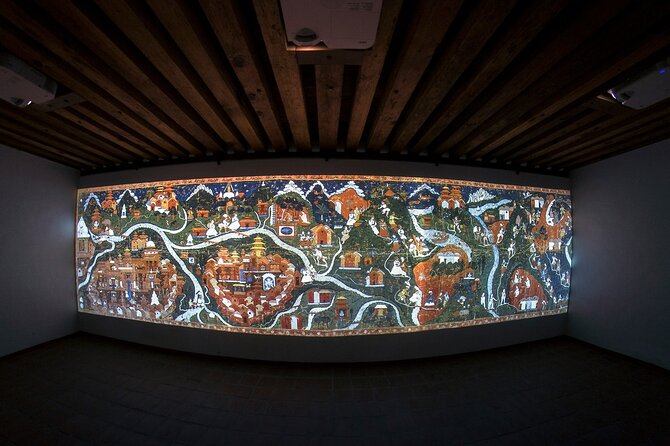
The last stop loops you back to where the tour began, at Patan Dhoka (Patan Gate). It’s a 15-minute stop, and it’s free.
This section focuses on the gate itself—especially the murals on the walls and a story about how the Malla kings arranged security for the old city. That’s a great twist because gates are usually framed only as entrances. Here, you learn to see them as an urban defense tool and a political symbol.
The mural details can be easy to overlook if you’re just snapping photos. With a guide pointing out what you should notice, you’ll come away with a stronger sense of how the city was organized, not just how it looked.
It also closes the tour in a satisfying way. You started at the gate with a sense of orientation. You end at the same point with a clearer understanding of the city’s logic.
Price, value, and what to budget on the day
The price is listed at $5.00 per person, with a note that the youth price is for students with a student card. That’s extremely affordable for a 3-hour guided walk that covers multiple major sites.
So where does the value show up?
- You’re paying for context, not just directions.
- You’re getting a small group size (max 5), which is usually where guided value gets real.
- The route includes both major monuments and the in-between streets that are hard to navigate alone.
Now, the honest budgeting part: some admissions are not included.
- Golden Temple admission: not included
- Patan Durbar Square: NRP 1000 cash at the entrance (plus a recommended NRP 100 donation)
- Patan Museum admission: not included
Also, coffee/tea is not included, so plan to buy your refreshment elsewhere.
If you’re trying to travel smart, set aside a little extra for entrances and have a small amount of cash ready before you meet the guide. That one habit makes the day smoother.
The guide experience: why names like Santosh and Shreya matter
A big part of the tour’s success is the guides. Names that come up strongly include Bajey, Santosh (also written Santos), and Shreya Karki. Across these different guides, the pattern is the same: they know how to explain faith and culture without turning it into a dry lecture.
One useful detail from the way the tours are described: the guide adjusts the level of detail based on what you find interesting. That means if you’re more into architecture, you’ll get more focus on courtyards and structures. If you’re more into Buddhism, you’ll get more on teachings and how Vajrayana influences the Newar tradition you see around you.
It’s also described as a friendly experience, where the guide acts more like a capable city friend than a distant professional. If this is your first guided walk in Kathmandu Valley, that tone makes the learning easier.
Who should book this Patan Heritage Tour
Book this tour if you:
- Want a short, high-impact Patan orientation without committing to a full day
- Like walking routes where a guide helps you read symbolism and architecture
- Are curious about Newar culture and the blend of Hindu and Buddhist devotional life you’ll see across the city
- Prefer a small group and questions you can actually ask
It’s also a solid pick if you’re staying near central Lalitpur and want a day plan that’s easy to plug into your schedule, since it returns you to the meeting point.
You might not love it as much if you’re the type who wants hours inside each major site. This tour is designed to connect dots. It gives you guided understanding, not deep solo time at every stop.
Should you book it?
If you’re considering it for Patan, I’d say yes—especially at the listed price. The combination of small-group structure, a route that covers the key religious and royal spaces, and a guide who can tailor the detail level is exactly what makes a walking tour worth paying for.
Just do two things to make your day go smoothly: wear comfortable shoes, and bring cash for the entrances that are not included. If you can handle those basics, you’ll get a guided walk that makes Patan feel like a city with living traditions, not just a list of monuments.
FAQ
How long is the Patan Heritage Tour?
The tour is about 3 hours.
What is the group size?
It’s a small-group tour with a maximum of 5 travelers.
Where do we meet and where does it end?
You meet at Patan Dhoka, Lalitpur 44600, Nepal, and the tour ends back at the same meeting point.
Is the guide English speaking?
Yes, the tour includes an English speaking guide.
Are entrance fees included for all stops?
No. Golden Temple (Hiranya Varna Mahavihar), Patan Durbar Square, and Patan Museum are listed as not included.
How much is the Durbar Square entrance fee?
You pay NRP 1000 (about US$9) in cash at the entrance, and the guide recommends paying at least NRP 100 as a donation to the Royal Kumari.
Is coffee or tea included?
No, coffee and/or tea is not included.
Is there free cancellation?
Yes. You can cancel up to 24 hours in advance for a full refund.
Is there a youth/student discount?
The price for youth is for students with a student card.
Private Days, Your Group Only


More Tours in Kathmandu


More Tour Reviews in Kathmandu


Just Reviewed in Kathmandu
- Mountain Bike Tour
★ 5.0 · 3 reviews - Annapurna Panaroma
★ 5.0 · 3 reviews - Mount Everest Scenic Flight 50 Minutes
★ 5.0 · 3 reviews - Kathmandu : Swambhunath & Durbar Square Guided Half Day Tour
★ 3.3 · 3 reviews - Chandragiri Cable Car & Monkey Temple Tour – Private/Group
★ 5.0 · 3 reviews - Kathmandu: Shivapuri National Park Hiking Day Trip
★ 3.3 · 3 reviews
Patan & Lalitpur Tours, compared.
 ★ 5.0Bhaktapur & Patan Durbar Square Day ToursFrom $50122 reviews
 ★ 4.7Private Patan and Bhaktapur Sightseeing TourFrom $4964 reviews
 ★ 5.0Patan and Bhaktapur City Full Day TourFrom $5024 reviews
 ★ 4.5City tour of Bhaktapur and Patan Durbar SquareFrom $11020 reviews
 ★ 5.0Kathmandu and Patan Heritage and Living Goddess Experience TourFrom $5012 reviews
 ★ 5.0Patan & Bhaktapur Durbar Square Tour with Lunch – Private/GroupFrom $511 reviews
 ★ 5.0Bhaktapur darbar, Patan Darbar square & Changu Narayan in 1 dayFrom $5010 reviews
 ★ 5.0Nagarkot Sunrise, Bhaktapur and Patan Durbar Square Tour in KathmanduFrom $13010 reviews
Browse the lists this tour appears in