
Review · HISTORICAL TOURS
Kathmandu 4-Heritage Sites Tour
Four UNESCO stops in one focused day. You get temples, royal Newar spaces, and Hindu rituals packed into six hours with hotel pickup.
What I like most is the order: you start at Kathmandu Durbar Square for the living goddess, then climb into the views at Swayambhunath, slow down at Boudhanath, and end at the most intense spiritual stop, Pashupatinath on the Bagmati River. The second big plus is that the tour is built around a live English guide plus a private, air-conditioned vehicle and bottled water.
One thing to think about: this kind of day tour is only as good as the guide’s energy and explanations, and your experience can feel smoother or flatter depending on that.
In This Review
- Key things that make this day tour work
- Four UNESCO heritage stops in one tight Kathmandu day
- Morning pickup from Thamel or your hotel lobby: the easy part
- Kathmandu Durbar Square and Kumari Ghar: a royal space with a living presence
- Swayambhunath Monkey Temple: stupa shrines and valley panoramas
- Boudhanath Stupa: why the quiet break feels like a reset
- Pashupatinath Temple on the Bagmati River: rituals and cremation up close
- How group size, transport, and the English guide change your day
- Price and what you’re really paying for at about $3.94
- What to bring, and what to expect from a 6-hour schedule
- Who this Kathmandu heritage circuit suits best
- Should you book this Kathmandu 4-Heritage Sites Tour?
- FAQ
- How long is the Kathmandu 4-Heritage Sites Tour?
- Where can I be picked up?
- Is the tour private or shared?
- What’s included in the price?
- Are monument entrance fees included?
- Do I need a meal plan for the day?
- Is the tour suitable for wheelchair users or limited mobility?
Key things that make this day tour work
- Kumari Ghar access time: you’re scheduled for a guided hour at Kathmandu Durbar Square, centered on the living goddess site
- Panoramic payoff at Swayambhunath: temple time plus valley views are part of the plan, not an afterthought
- Boudhanath pause built in: an hour at the large spherical stupa gives you a quieter rhythm before the final ritual stop
- Pashupatinath is the emotional finish: you get to watch Hindu ritual life along the Bagmati River, including cremation
- Private, English-led, AC transport: hotel pickup/drop plus bottled water makes the logistics feel low-stress
Deeper into old Kathmandu
- Private Kathmandu Sightseeing Tour | UNESCO World Heritage sites★ 5.0 · 756 reviews
- UNESCO Seven World Heritage Tour in Kathmandu★ 5.0 · 253 reviews
- Nepal Discovery Tour: Heritage Sites & Scenic Hill Easy Hike★ 5.0 · 121 reviews
- Kathmandu Private Sightseeing Tour | UNESCO World Heritage Sites★ 5.0 · 109 reviews
Four UNESCO heritage stops in one tight Kathmandu day
This is a full-day pilgrimage-style circuit through the Kathmandu Valley’s most recognizable sacred and historic landmarks. In six hours, you move from a royal-era Newar heart to Buddhist stupa spirituality, and then onto a Hindu temple complex where rituals and cremation happen along the river.
For your time, the structure is smart. You’re not wandering randomly across the city. You get four guided stops of about an hour each, which means you can actually take in what you’re seeing instead of just collecting photos.
This tour also fits a specific kind of traveler: someone who wants meaning and context, not only sightseeing. If you’re the type who likes learning how places work—how a site’s purpose shapes its architecture and daily life—you’ll likely enjoy the day.
The main tradeoff is the pace. Six hours sounds long until you remember that you’re hopping between major sites and spending time walking inside temple areas with a guide. If you prefer slow travel, you may wish you had a longer stay to stretch things out.
Morning pickup from Thamel or your hotel lobby: the easy part
The day starts with hotel pickup using a private air-conditioned vehicle. Your pickup options are either Thamel or your hotel/apartment entrance in Kathmandu, and you’re asked to be ready five minutes before the scheduled pickup time in your lobby or at your apartment entrance.
That small timing detail matters in cities like Kathmandu. Tight meeting points reduce stress. And because this is a private group, you’re not stuck waiting behind other groups.
The tour also includes bottled drinking water, which sounds minor until you’re out for several hours in the heat and walking between sites. You’ll also want a small daypack, a camera, and cash—cash is specifically listed as something to bring.
One practical point: this activity includes express security check so you can skip the line in that step. It won’t remove every hassle of being at popular religious sites, but it helps you protect the time you’ve paid for.
Kathmandu Durbar Square and Kumari Ghar: a royal space with a living presence
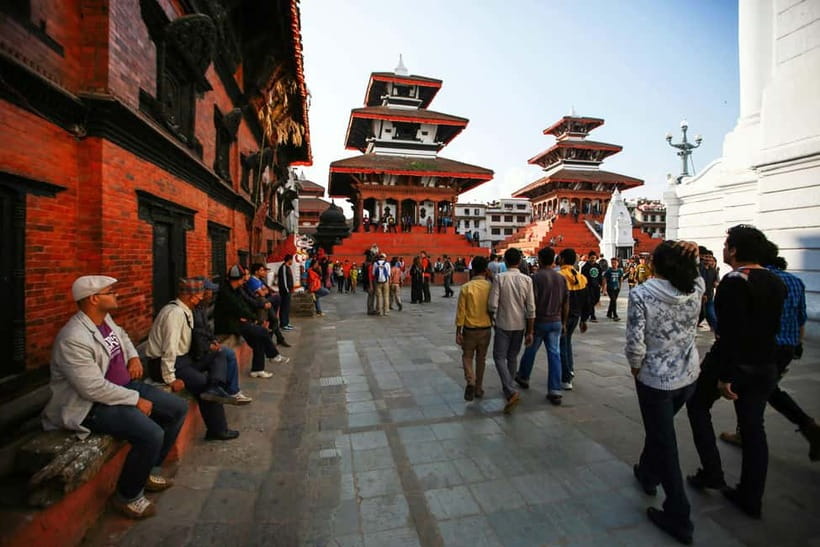
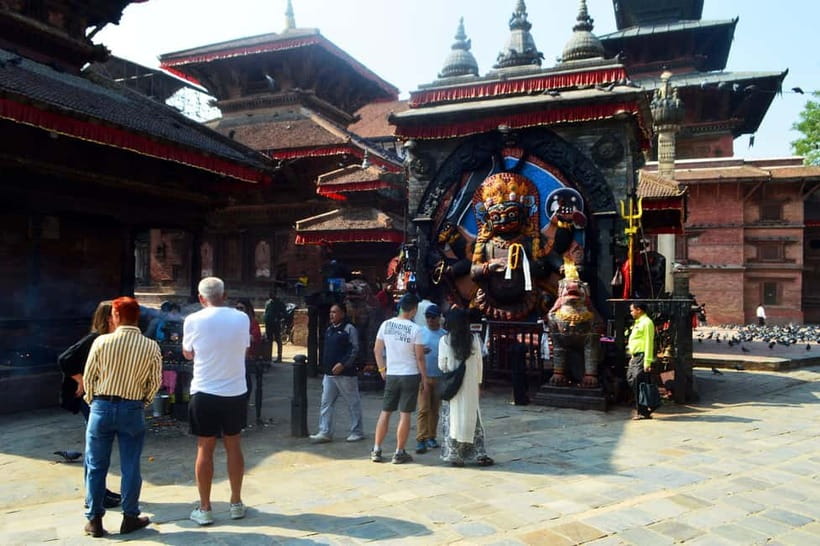
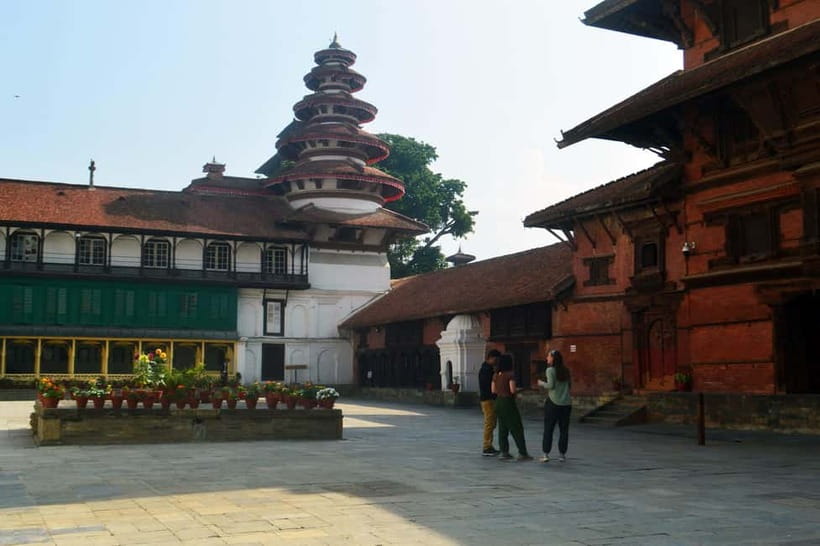
Your first main stop is Kathmandu Durbar Square, with a guided tour scheduled for about one hour. This is where the city’s historic palace area and courtyard spaces come into view, and it’s also the place tied to the Kumari Ghar, the residence associated with the living goddess Kumari.
What makes this stop special is that it’s not only about architecture. It’s also about a living cultural institution—something that stays present while the city changes around it. Even if you’ve only heard of Kumari briefly, being physically in the palace courtyards gives you a better sense of why this tradition is anchored here.
During your guided hour, you’ll explore the historic palace areas and courtyards, and you’ll do it with a guide rather than treating it like a checklist. That matters because Durbar Square can look like a beautiful jumble until someone explains what you’re looking at and why different corners matter.
A drawback to plan for: Durbar Square is a high-interest location. You’ll likely spend some time moving through parts of the complex and keeping pace with the schedule. If you’re trying to linger quietly on every wall detail, the hour can feel a bit short.
Tip for value: bring your camera, but also bring patience. At this stop, you’ll get more out of thoughtful observation than rapid shooting.
Swayambhunath Monkey Temple: stupa shrines and valley panoramas
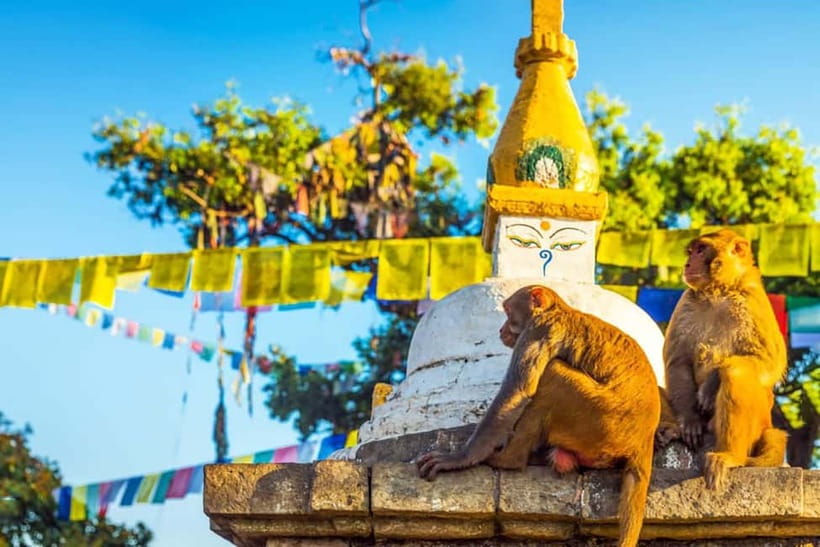
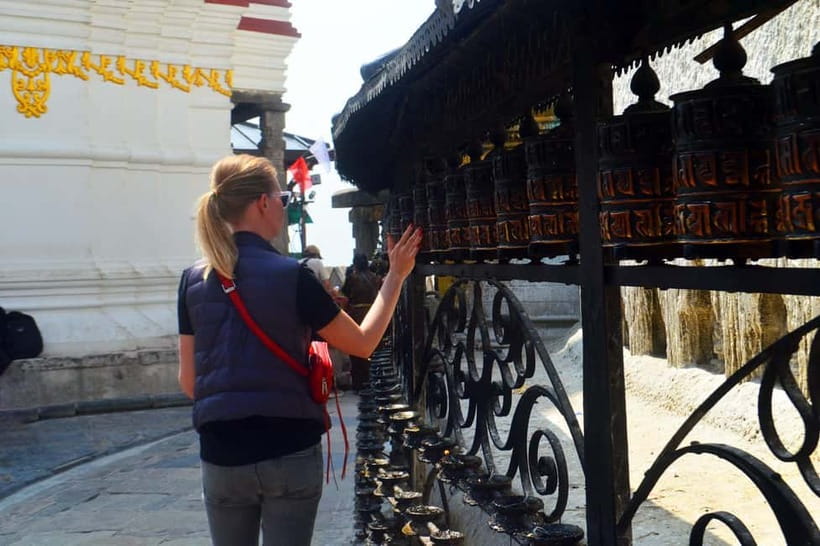
Next up is Swayambhunath, also guided for about one hour. This stop is built around three things: the ancient stupa, nearby shrines, and the payoff view over the Kathmandu Valley.
If you’re hoping for the classic Kathmandu perspective—the capital spreading out below—you’ll want to pay attention during the time you have at viewpoints within the Swayambhunath complex. The tour doesn’t treat views as optional. It’s part of why the stop is scheduled.
The Monkey Temple aspect is part of the experience name itself, so expect the area to feel lively. You can also expect a mix of pilgrims and tourists depending on the day. The guide’s role here is useful: you’ll get help figuring out what to focus on and how the stupa area connects to the surrounding shrine spaces.
Potential consideration: this is another major site where people move in clusters. If your ideal travel pace is slow and quiet, you may need to consciously choose when to stand and when to walk. Use your guide to help you prioritize the key sights within the hour.




Boudhanath Stupa: why the quiet break feels like a reset
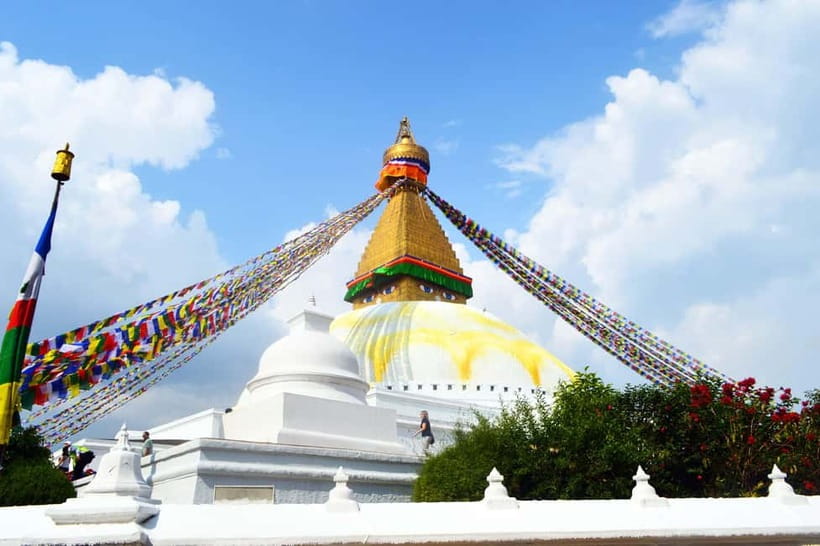
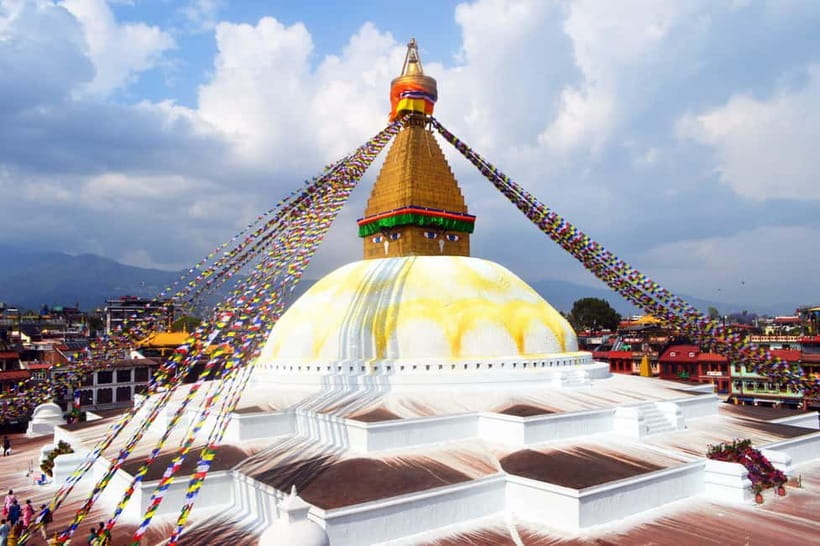
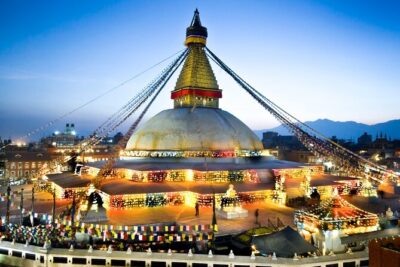
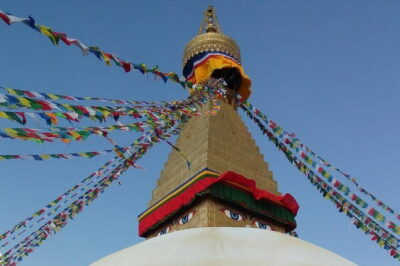
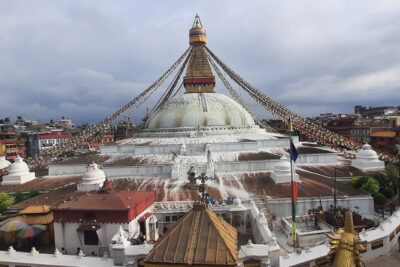
After the heights and viewpoints, the tour shifts to a different tempo at Boudhanath Stupa. You get about one guided hour here, and the focus is on the stupa itself—especially its monumental, large spherical form—and the atmosphere of prayer flags and stupas.
This is the stop that works as a mental reset. After climbing and crowd energy, Boudhanath often gives you a chance to slow down. The tour plan explicitly includes a respite moment, so you’re not rushing straight from one site to the next without a breath.
What you’ll likely notice first is the scale. Boudhanath’s spherical stupa isn’t just impressive visually; it also acts like a centerpiece that organizes movement and attention around it. In practical terms, it gives you a stable reference point, which makes your hour feel more intentional.
This stop is also a good place for reflective travel photos. The prayer flags create visual rhythm, and the stupa offers a strong composition even when you’re standing at a distance. Just remember: your time here is scheduled. If you spend too long hunting the perfect angle, you’ll feel it later at the final stop.
Pashupatinath Temple on the Bagmati River: rituals and cremation up close
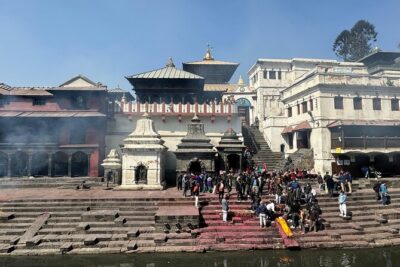
Your final major stop is Pashupatinath Temple, guided for about one hour. The tour description emphasizes a sacred sanctuary where Hindu rituals unfold along the banks of the Bagmati River, including cremation rituals.
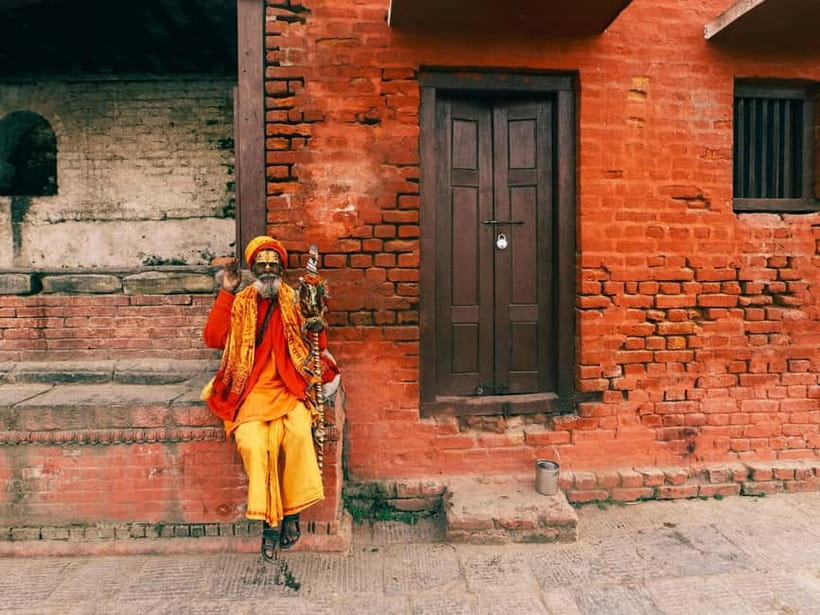
This is the part of the day that most strongly shifts from sightseeing into something heavier. Even if you’re not there for religious practice, you’re witnessing a real, ongoing tradition. That can be moving, and it can also feel intense for visitors who aren’t used to seeing cremation rites.
This is where having an experienced guide matters most. A guide can help you understand what you’re seeing and how the site’s river setting shapes the ritual flow. It also helps with practical pacing so you don’t end up in the wrong spot or miss what’s scheduled to be the focus of your hour.
A consideration: because cremation rituals are involved, the emotional tone can be strong. I’d suggest approaching it with respect and keeping your expectations flexible. If you’re sensitive to this topic, prepare yourself for the fact that the tour’s final stop is intentionally the most serious one.
How group size, transport, and the English guide change your day
This tour is a private group with live guidance in English. You’re also riding in a private air-conditioned vehicle, which helps on a long day when you’re going from hotel to site to site.
Here’s the hidden value: a private setup reduces waiting and bottlenecks. You can keep your attention on the places you’re visiting instead of constantly checking where everyone else is.
That said, there’s one note worth taking seriously. The overall experience depends heavily on your guide’s approach. One review comment pointed out that the day can hinge on the guide’s attitude and whether they use the time well. So if you have the option to ask a few questions early on, do it. Ask something practical like what to focus on during the hour at each stop, and whether certain moments are likely to be the most meaningful.
Also, because the itinerary is built around four one-hour guided segments, your guide’s explanations are what turn those hours into more than a quick walk-through. If the guide is engaging, you’ll feel the day click into place.
Price and what you’re really paying for at about $3.94
The listed price is $3.94 per person, and the inclusions matter more than the number. For that cost, you get:
- Hotel pickup and drop
- A private air-conditioned vehicle
- An experienced tour guide
- Bottled drinking water
- A four–World Heritage Sites day tour
- Express security check to help you save time
The big value here is the package logic. Transport + guide + multiple UNESCO sites in one day means you’re paying for coordination, not only access to sights.
What’s not included is also important. Meals are not provided, and monument entrance fees are not included (with an add-on available). So your out-of-pocket cost could rise a bit depending on what fees apply on the day.
My advice for budgeting: bring cash (it’s listed), plan for a meal stop on your own, and treat entrance fees as a possible extra rather than a guaranteed add-on amount. That way, you avoid unpleasant surprises and still keep the day smooth.
What to bring, and what to expect from a 6-hour schedule
You’re looking at a 6-hour duration, so it’s a real day tour, not a quick hop. Bring:
- Passport
- Camera
- Cash
- Daypack
Those items are listed for a reason. Passport is required, camera is obviously useful across multiple sites, cash helps for anything you might want to pay for that day, and a small daypack keeps you ready while you’re moving between stops.
You should also expect that this isn’t designed for anyone who needs step-free movement. It’s specifically listed as not suitable for people with mobility impairments or wheelchair users.
For timing, you’ll start in the morning with pickup, then work through Durbar Square, Swayambhunath, Boudhanath, and Pashupatinath, finishing with return transfer back to your hotel or apartment—drop-off options include Kathmandu and Thamel.
Who this Kathmandu heritage circuit suits best
This is a strong match if you want:
- A one-day plan through major UNESCO heritage sites
- A guided experience where someone explains what you’re seeing
- A day that includes both historic palace spaces and ongoing religious practice
- The chance to witness the living goddess Kumari area at Kathmandu Durbar Square (via the Kumari Ghar focus)
It’s also a good fit for travelers who like structure. Four stops, one guide, one day, clear sequence. When you’re short on time in Kathmandu Valley, this kind of itinerary can be efficient without feeling like you’re sprinting through everything.
If you’re traveling with mobility needs, though, this one is not for you. And if you dislike intense religious settings—especially the cremation element at Pashupatinath—then you might prefer a more history-only route.
Should you book this Kathmandu 4-Heritage Sites Tour?
I’d book this if your goal is to get a meaningful sampler of Kathmandu Valley in a single day: Durbar Square + Kumari Ghar, Swayambhunath viewpoints, Boudhanath stupa calm, and Pashupatinath rituals along the Bagmati River. The combination is exactly what makes this tour different from a generic city walk.
I’d be cautious if you’re very sensitive to cremation rituals or if you know you’ll struggle with a packed schedule and lots of moving between sites. Also, if you’ve had bad luck with guides in the past, take five minutes at the start to ask what the day’s priorities are—so you can steer your experience toward explanations, not just standing around.
If you want a clear, guided, UNESCO-centered day without spending your time stitching together transport and separate tickets, this tour is a practical choice.
FAQ
How long is the Kathmandu 4-Heritage Sites Tour?
The tour duration is 6 hours.
Where can I be picked up?
Pickup options include Thamel and Kathmandu (your hotel lobby or apartment entrance).
Is the tour private or shared?
It’s listed as a private group.
What’s included in the price?
Included are hotel pickup and drop, a private air-conditioned vehicle, an English live tour guide, bottled drinking water, and the four UNESCO heritage sites tour.
Are monument entrance fees included?
No. Monument entrance fees are not included, though there is an add-on available.
Do I need a meal plan for the day?
Meals are not included, so you’ll need to plan for your own food.
Is the tour suitable for wheelchair users or limited mobility?
No. It’s listed as not suitable for people with mobility impairments or wheelchair users.
The Old Kathmandu, Properly Toured



More Tours in Kathmandu



More Tour Reviews in Kathmandu




Just Reviewed in Kathmandu
- Mountain Bike Tour
★ 5.0 · 3 reviews - Annapurna Panaroma
★ 5.0 · 3 reviews - Mount Everest Scenic Flight 50 Minutes
★ 5.0 · 3 reviews - Kathmandu : Swambhunath & Durbar Square Guided Half Day Tour
★ 3.3 · 3 reviews - Chandragiri Cable Car & Monkey Temple Tour – Private/Group
★ 5.0 · 3 reviews - Kathmandu: Shivapuri National Park Hiking Day Trip
★ 3.3 · 3 reviews
Historical Tours, compared.
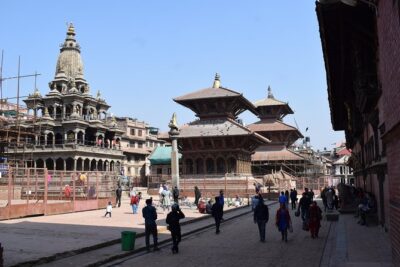 ★ 5.0UNESCO Seven World Heritage Tour in KathmanduFrom $180253 reviews
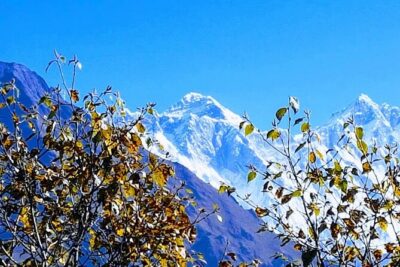 ★ 5.0Nepal Discovery Tour: Heritage Sites & Scenic Hill Easy HikeFrom $375121 reviews
 ★ 5.0Kathmandu Private Sightseeing Tour | UNESCO World Heritage SitesFrom $35109 reviews
 ★ 5.0Full Day Private Top 4 UNESCO Heritage Tour W/Lunch.From $1086 reviews
 ★ 5.0Kathmandu World Heritage TourFrom $5074 reviews
 ★ 5.0Nagarkot Sunrise & Bhaktapur UNESCO Heritage Private TourFrom $5066 reviews
 ★ 5.0Kathmandu Heritage Tour (Full Day)From $3863 reviews
 ★ 5.0Kathmandu Top 4 or 2 UNESCO World Heritage Sites Day TourFrom $4052 reviews
Browse the lists this tour appears in