
Review · KATHMANDU CITY SIGHTSEEING TOURS
Kathmandu City Tour in 6 Hours – Discover the Cultural Highlights
Kathmandu in one car loop. This half-day tour is interesting because it blends Hindu and Buddhist sites in a tight route: Swayambhu’s Monkey Temple area, Patan Durbar Square, Pashupatinath Temple, and Boudhanath’s giant stupa. I like the private vehicle with driver, and I also like that the plan gives you real time at each stop instead of treating temples like fast-food. One thing to consider: entrance fees and any guide you hire are extra, so your final spend can climb a bit.
Expect about 5 to 6 hours, though you should plan for 6 to 7 hours in real life. The tour starts at 9:15am and meets at Mountain Hike Nepal in Satghumti, Kathmandu. A guide is not included, but the people running the tour can help you get one if you want extra context at the sites.
In This Review
- Key things to know before you go
- How this Kathmandu tour feels: a focused loop, not a checklist
- The price: what you’re really paying for (and what to budget)
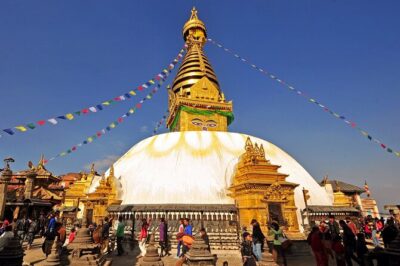
- Swayambhu Mahachaitya (Monkey Temple): Hindu-Buddhist mix with hilltop character
- Patan Durbar Square: Newari design, old bricks, and temple clusters
- Pashupatinath Temple: Shiva on the Bagmati riverfront
- Boudhanath (Buddha Stupa): a South Asia scale stupa with Tibet trade-route roots
- Timing and pacing: why the “5–6 hours” estimate works
- Getting pickup right: meeting point vs door-to-door service
- Should you add a guide? My take based on how the route works
- What kind of traveler should book this?
- Quick practical advice for a smoother day
- Should you book the Kathmandu City Tour in 6 Hours?
- FAQ
- How long is the Kathmandu City Tour?
- What is the price per person?
- What’s included in the tour price?
- Are entrance fees included?
- Is a guide included?
- What are the main stops on the itinerary?
- What time does the tour start and where is the meeting point?
- Is pickup from my accommodation included?
- What if the weather is bad?
- What is the minimum age for this tour?
Key things to know before you go
- Driver-led transport: you skip the hassle of figuring out routes across town and focus on the sights.
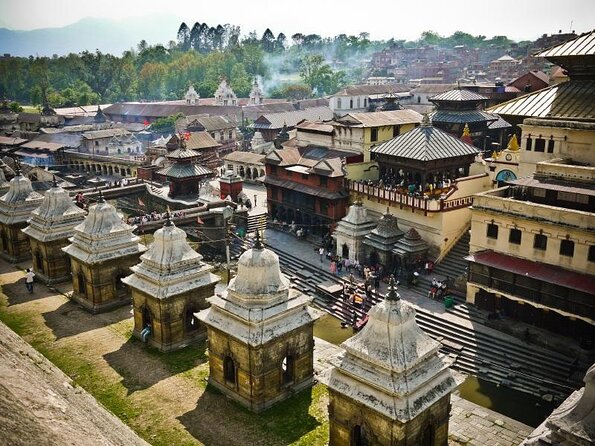
- Four major sacred stops: Swayambhu, Patan Durbar Square, Pashupatinath, and Boudhanath are all in one loop.
- No guide included: you can hire one separately if you want deeper explanations.
- Entrance fees are extra: your ticket price is only for the transport service.
- Ages 10 and up: it’s a good option for older kids and teens who can handle temple time.
Bigger sweeps across the valley
- Kathmandu: Private City Guided Tour★ 4.9 · 174 reviews
- Kathmandu City Tours★ 5.0 · 66 reviews
- Kathmandu Valley City Day Tour★ 5.0 · 40 reviews
- Full Day Kathmandu City Sightseeing Tour of UNESCO Heritage Sites★ 5.0 · 36 reviews
How this Kathmandu tour feels: a focused loop, not a checklist
This is a transport service with a driver, built for people who want the highlights without constantly navigating. You’re covering multiple districts and a few very different kinds of sacred spaces, so having one vehicle do the switching is the whole point.
I also like how the stops are chosen for variety. You get hilltop views and monkeys at Swayambhu, dense Newari city life at Patan Durbar Square, Shiva-centered worship at Pashupatinath, then a huge stupa linked to Buddhist routes toward Tibet at Boudhanath. In one day, you see how religion, architecture, and neighborhood identity mix together in Kathmandu.
The tour is private for your group, so it won’t feel like a noisy bus tour. If you’re traveling with family or friends and want the pace to be yours, that matters. And because it’s only your group, you can often move on to the next stop without feeling rushed by strangers.
The price: what you’re really paying for (and what to budget)
It costs $54.95 per person, and that price is for the vehicle and the driver’s side of things. Included are the private vehicle, the driver salary and expenses, plus fuel, parking fees, and insurance. That’s not small. In Kathmandu, transport logistics can eat time fast, so paying for a driver is buying back your day.
What’s not included is where people sometimes get surprised: entrance fees for the monuments/sightseeing stops are extra. Tips aren’t included either. And if you want a guide to explain what you’re seeing, that’s also an added cost.
My practical suggestion: decide upfront whether you’ll need a guide. If you like walking into places and figuring things out quietly, you may be fine without one. If you want strong English explanations and a smooth sense of meaning for each site, budget for an optional guide.
Swayambhu Mahachaitya (Monkey Temple): Hindu-Buddhist mix with hilltop character
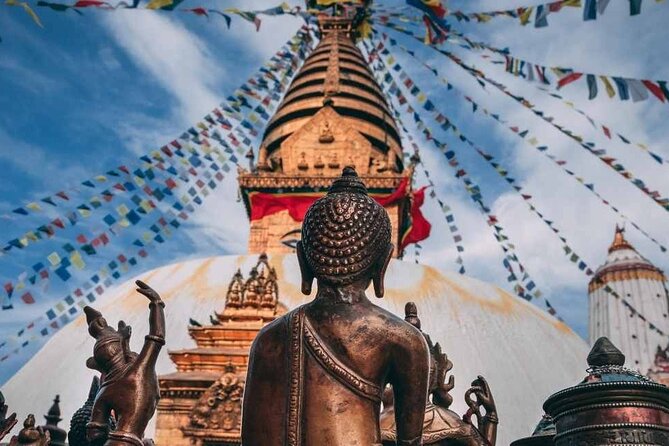
Your first stop is Swayambhu Mahachaitya, often known for the Monkey Temple area. The big appeal here is the spiritual mix. This site has a compelling blend of Hindu shrines and Buddhist stupas, so you’re not seeing one religion boxed in. You’re seeing how the two traditions share space in Kathmandu.
You’ll have about 1 hour here, and that’s a realistic amount of time for the typical rhythm: wander, look closely at shrine areas, and take in the overall layout before you head back down. The monkey population is famous, but the main value isn’t just the wildlife. It’s how the site feels layered—religion, ritual space, and city energy all in one place.
One consideration: this is the kind of place where you’ll want to keep your eyes on your belongings and be a bit cautious around monkeys. Not because it’s dangerous, but because it’s chaotic in a very normal way for a live temple site. Keep your reactions calm, and you’ll enjoy it more.
Best for you if you want a quick hit of Kathmandu’s spiritual vibe plus a scenic start to your day.
Patan Durbar Square: Newari design, old bricks, and temple clusters
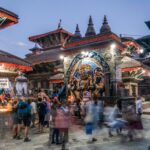
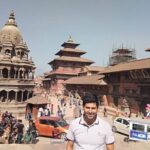
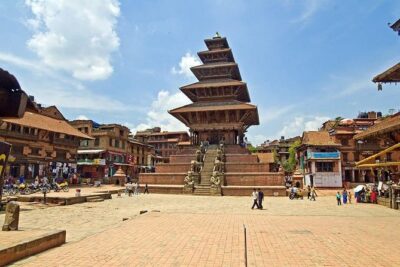
Next up is Patan Durbar Square, where you spend about 1 hour. If you like architecture that looks handmade and lived-in, this stop is a strong match. The square tells the history and culture of the Newari people, and you’ll see it in the built details.
Look at the floor: it’s described as red bricks laid in square patterns. That kind of ground-level texture matters more than people think. It gives the square a distinct feel compared to places built for tourists first.
Patan Durbar Square also includes older residential Newari buildings and lots of temples. That combination makes it more than a single monument. It’s a whole pocket of the city where religious buildings sit close to the human side of neighborhood life.
If you don’t have a guide, you can still enjoy this area by taking your time with small visual clues: roof shapes, temple placement, and the way entrances and courtyards connect. If you do hire a guide, ask them what makes Newari temple style different, because that’s where the “why” becomes clearer.
Best for you if you enjoy city history that shows up in streets and stone rather than just in one big building.




Pashupatinath Temple: Shiva on the Bagmati riverfront
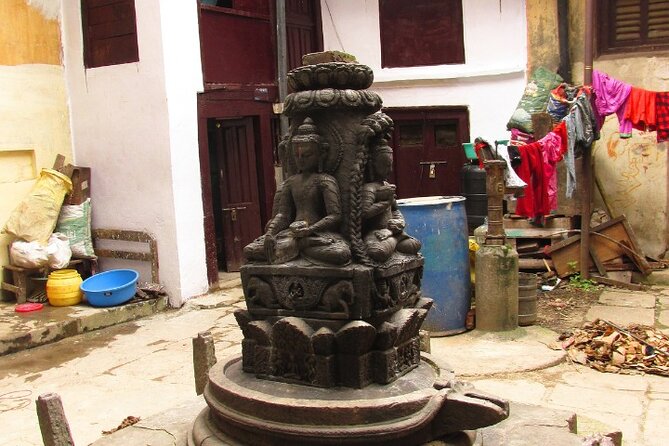
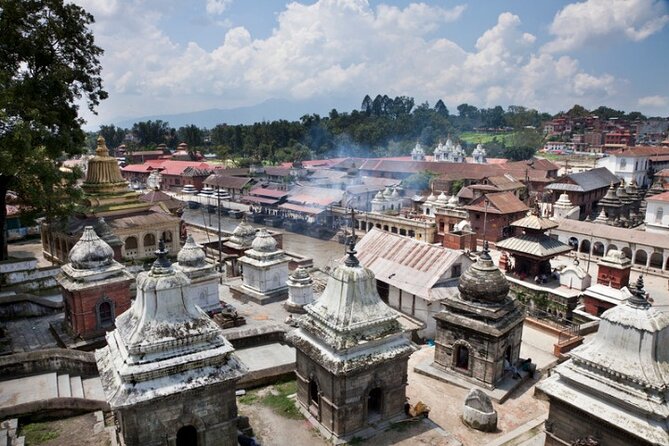
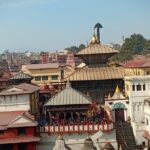
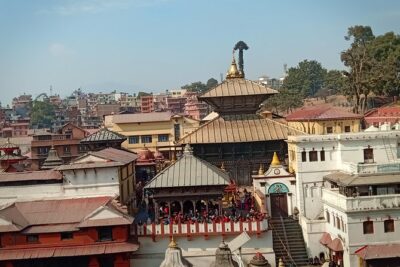
Stop three is Pashupatinath Temple, and it takes about 2 hours. This is one of the main temples of Lord Shiva, located on the banks of the Bagmati River. That river setting is part of the atmosphere—your eyes keep dropping back to the water while the temple complex pulls you in with smaller shrines.
What I’d focus on here is not just the main temple area. The temple zone is described as having many smaller temples of several Hindu deities. So even though Shiva is the headline, the overall space includes a broader Hindu religious map.
Because your time here is longer than the earlier stops, you have a better chance to slow down. Use that time to look around instead of sprinting for the most obvious photo spot. The complex reads differently if you keep walking through smaller sections.
If you’re considering a guide, this is a good place to have one. Pashupatinath is the kind of location where context changes everything. Without it, you can still admire the architecture and setting, but with it, you’ll understand the logic of the layout and worship focus.
Best for you if you want the most serious, central-feeling Hindu site on the route.
Boudhanath (Buddha Stupa): a South Asia scale stupa with Tibet trade-route roots
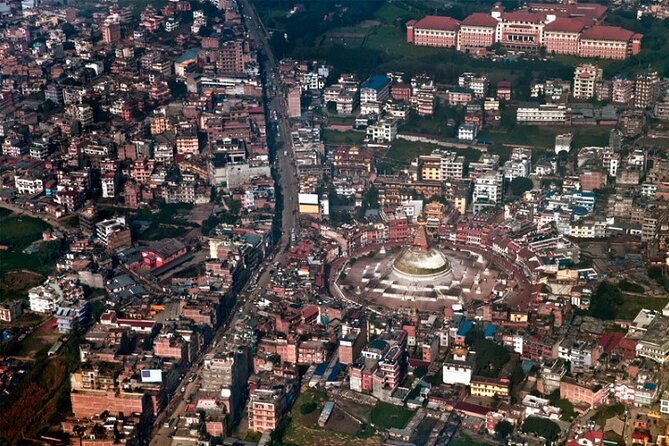
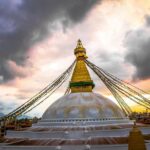
Your final cultural stop is the Buddha Stupa area, connected to Boudhanath. It’s described as one of the biggest stupas in South Asia, and it sits on an ancient exchange path to Tibet. That matters because it frames the stupa as part of a long movement of people, ideas, and religious influence.
You’ll have about 1 hour here. The main stupa is built in a Nepali Buddhist fashion, and the site includes additional surrounding stupas/structures described in the tour details. This makes the experience feel like a big spiritual complex rather than a single object.
If you like noticing ritual spaces, Boudhanath is ideal. Even if you don’t fully know the symbolism, the scale alone creates a slower pace. Just stand back, watch how people move around the stupa area, and let your eyes adjust.
I also like that the Boudhanath stop works as a calmer ending. After Pashupatinath, it’s a different spiritual mood—more centered on Buddhist stupa architecture and Tibetan connection themes.
Best for you if you want a meaningful ending that feels bigger than the city itself.
Timing and pacing: why the “5–6 hours” estimate works
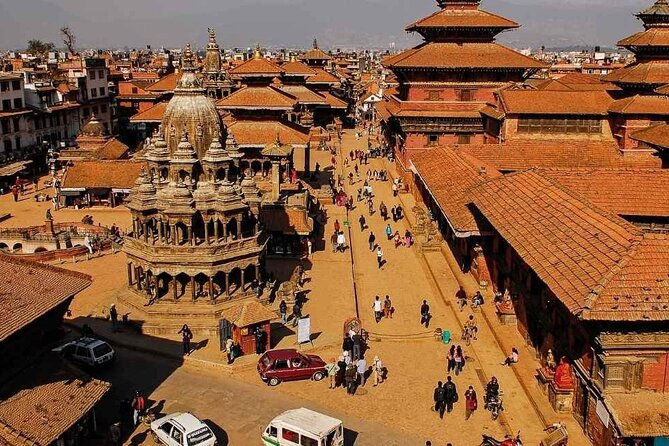
The tour runs about 5 to 6 hours, with a note to plan 6 to 7 hours overall. That extra hour matters in Kathmandu, because temple visits don’t feel like museum visits. You’ll likely pause, observe, and re-orient yourself at each stop, especially at Swayambhu and Pashupatinath.
The schedule also gives balance. Swayambhu is short and scenic, Patan is compact but visually dense, Pashupatinath gets more time, and Boudhanath finishes the loop at a steady pace.
Another pacing win: it’s a private vehicle with driver, so your downtime between stops is limited. You’re not changing transport systems or hunting for rides, which keeps the day from turning into errands.
Getting pickup right: meeting point vs door-to-door service
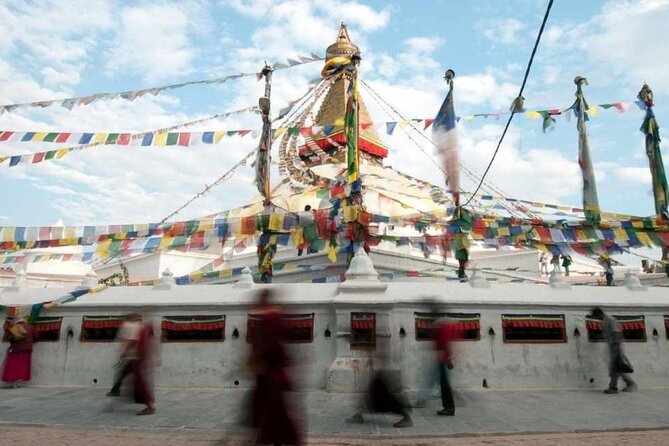
The tour information lists a meeting point at Mountain Hike Nepal – Official Tours & Trekking Company in Satghumti, Kathmandu 44600. Start time is 9:15am, and the activity ends back at the meeting point.
At the same time, the tour description states there’s door-to-door service from your accommodation in Kathmandu, using your driver. In other words, you may be picked up closer to where you’re staying, but you should still be aware that the official reference point is Satghumti.
So here’s the smart move: confirm how pickup works for your exact hotel when you book. That one message can save you a lot of guesswork that day.
Should you add a guide? My take based on how the route works
A guide is not included, but you can hire one. For me, the question is simple: do you want your temples to be mostly visual, or do you want meaning too?
If you’re okay with reading signs and taking in atmosphere, you can do this without a guide. The architecture and settings are strong enough on their own.
If you want deeper explanations in English and a clearer story for each stop, hiring a guide is most useful at the places where context matters most: Patan Durbar Square and Pashupatinath. Swayambhu and Boudhanath are still rewarding without guidance, but a guide can help connect the Hindu-Buddhist mix and the long-route background that makes the stupas more than just impressive.
Also, a note from how the operator tends to work: their staff and coordination are known for being friendly, with solid English explanations. That’s exactly what you want on a half-day tour where you can’t afford to waste time.
What kind of traveler should book this?
This tour fits best if:
- you have limited time in Kathmandu and want major cultural highlights
- you prefer a driver-led loop over public transit planning
- you’re traveling with family or a small group and want a private setup
- you enjoy sacred architecture and city-level history
It may not be ideal if:
- you want a long, slow temple day with deep stops at dozens of sites
- you expect entrance fees to be included
- you need a guided experience with no extra costs (since a guide is optional here)
Quick practical advice for a smoother day
Wear footwear you’re happy to walk in. Temple areas often involve uneven ground and lots of standing time. Keep your phone and camera accessible, but also remember that some places feel better when you stop filming for a minute and just look.
Bring a light layer if you’re out in the morning air. And for Swayambhu, be mindful around the monkeys. Keep snacks and bags secured, and you’ll stay relaxed.
If you care about photography, arrive with a flexible mindset. Religious sites are active spaces, so you’ll sometimes need to wait for the right moment.
Should you book the Kathmandu City Tour in 6 Hours?
If you want a clean, efficient way to hit Kathmandu’s biggest cultural landmarks in one day, I’d say yes. The value comes from the private vehicle with driver plus a smart mix of sites that show Hindu and Buddhist Kathmandu in different forms.
Book it if you:
- want a practical half-day plan
- like architecture and sacred spaces
- can budget for entrance fees and possibly an optional guide
Skip it only if you’re looking for a long guided deep-dive or you’re trying to keep costs to the bare minimum with no extra fees at the sites.
FAQ
How long is the Kathmandu City Tour?
The tour is about 5 to 6 hours, and you should plan for 6 to 7 hours in total.
What is the price per person?
It costs $54.95 per person.
What’s included in the tour price?
A private vehicle with driver is included, along with the driver salary and expenses, plus vehicle fuel, parking fees, and insurance.
Are entrance fees included?
No. Entrance fees for sightseeing or monument visits are an additional cost.
Is a guide included?
No. A guide is not included, but you can hire one if you want.
What are the main stops on the itinerary?
The tour includes Swayambhu Mahachaitya, Patan Durbar Square, Pashupatinath Temple, and the Buddha Stupa (Boudhanath area).
What time does the tour start and where is the meeting point?
The start time is 9:15am, and the meeting point is Mountain Hike Nepal – Official Tours & Trekking Company in Satghumti, Kathmandu 44600.
Is pickup from my accommodation included?
The tour description says the driver provides door-to-door service from your accommodation in Kathmandu, though the listed meeting point is Satghumti.
What if the weather is bad?
The tour requires good weather. If it’s canceled due to poor weather, you’ll be offered a different date or a full refund.
What is the minimum age for this tour?
The tour is for ages 10 and above.
The Valley, End to End
More Tours in Kathmandu




More Tour Reviews in Kathmandu




Just Reviewed in Kathmandu
- Mountain Bike Tour
★ 5.0 · 3 reviews - Annapurna Panaroma
★ 5.0 · 3 reviews - Mount Everest Scenic Flight 50 Minutes
★ 5.0 · 3 reviews - Kathmandu : Swambhunath & Durbar Square Guided Half Day Tour
★ 3.3 · 3 reviews - Chandragiri Cable Car & Monkey Temple Tour – Private/Group
★ 5.0 · 3 reviews - Kathmandu: Shivapuri National Park Hiking Day Trip
★ 3.3 · 3 reviews
Kathmandu City Sightseeing Tours, compared.
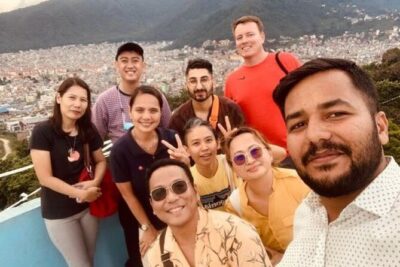 ★ 5.0Kathmandu Private Sightseeing Tour | UNESCO World Heritage SitesFrom $35109 reviews
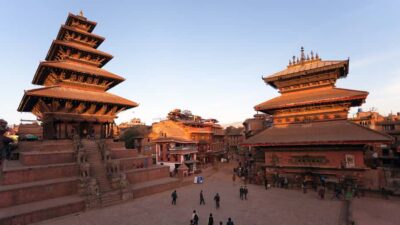 ★ 4.7Private Patan and Bhaktapur Sightseeing TourFrom $4964 reviews
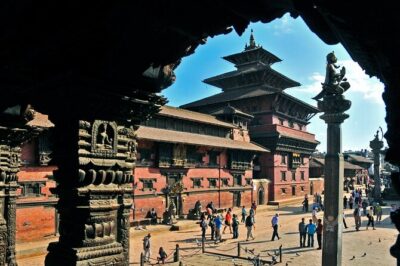 ★ 5.0Kathmandu Highlights: Private UNESCO World Heritage Sites TourFrom $4950 reviews
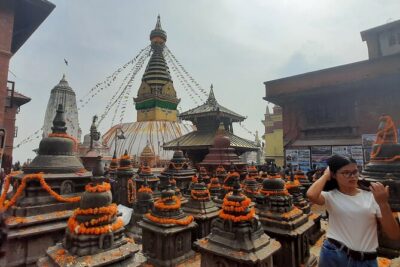 ★ 5.0Explore Kathmandu in 2 Days: UNESCO Sites & Nagarkot Sunrise TourFrom $10037 reviews
 ★ 5.01 Day Kathmandu Valley Sightseeing TourFrom $3537 reviews
 ★ 5.04 UNESCO City Sightseeing in KathmanduFrom $5036 reviews
 ★ 5.0Full Day Kathmandu City Sightseeing Tour of UNESCO Heritage SitesFrom $5036 reviews
 ★ 5.0Private Full-Day Kathmandu All 7 UNESCO World Heritage Sites TourFrom $8030 reviews
Browse the lists this tour appears in