
Review · KATHMANDU UNESCO HERITAGE TOURS
Explore Kathmandu in 2 Days: UNESCO Sites & Nagarkot Sunrise Tour
If you like temples, this tour hits the right notes fast. It strings together UNESCO landmarks across Kathmandu Valley, then adds the kind of early-morning payoff you remember. You’ll also get a hands-on stop at a Thanka art school and an off-tempo visit to a Singing and Healing Bowl Center that breaks up the sightseeing grind.
Two things I especially like: the plan uses a professional guide who can explain what you’re actually looking at, and it runs with hotel pickup and drop-off by tourist car so you’re not stuck figuring out logistics after each busy stop. The guide Prakash gets extra credit in the feedback for making the trip feel both organized and fun, with strong communication and good timing.
One possible drawback: the big UNESCO entrance fees and temple admission costs are not included, and meals are on you. Also, Nagarkot means an early wake-up, with the Nagarkot leg starting around 4 a.m.
In This Review
- Key Things To Know Before You Go
- Why This 2-Day Kathmandu Plan Works (and how to pace it)
- Day 1: Pashupatinath, Boudhanath, and Swayambhunath in one focused sweep
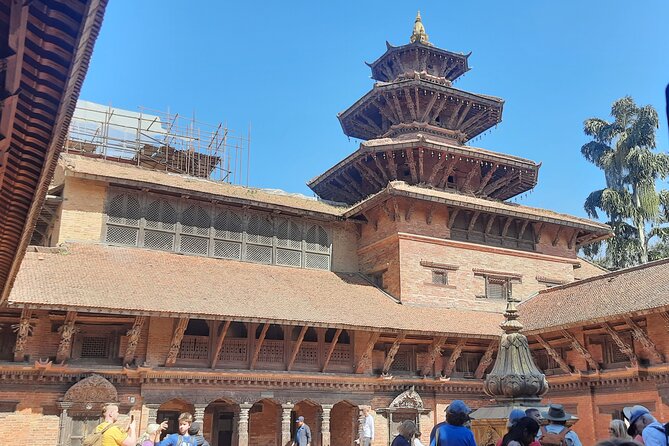
- Patan Durbar Square and the Golden Temple: where Newar craft is the star
- Thanka art school and the Singing and Healing Bowl Center break up the day
- Day 2 at Nagarkot: planning for the 4 a.m. sunrise
- Bhaktapur Durbar Square: the UNESCO stop that feels like a living museum
- Pottery Square: a small shopping stop with real local craft
- Price and Entrance Fees: what $100 really becomes
- What’s included, what isn’t, and how to avoid friction
- The guide matters: Prakash and why communication shows
- Who this tour suits best
- Should you book this Kathmandu, Nagarkot, and Bhaktapur tour?
- FAQ
- How long is the Kathmandu UNESCO and Nagarkot sunrise tour?
- What is the tour price?
- Is hotel pickup and drop-off included?
- Are meals included in the tour price?
- Are UNESCO entrance fees included?
- Does the tour include a guide?
- What activities are included besides sightseeing?
- Is the Nagarkot sunrise part very early?
- Is this tour private or shared?
Key Things To Know Before You Go
- Hotel pickup and drop-off by tourist car helps you conserve energy for the walking parts.
- Nagarkot sunrise starts very early (about 4 a.m.), so treat this as a morning-first day.
- UNESCO entrance fees are extra: you’ll pay about NPR 4600 or USD 35 for the 5 UNESCO sites.
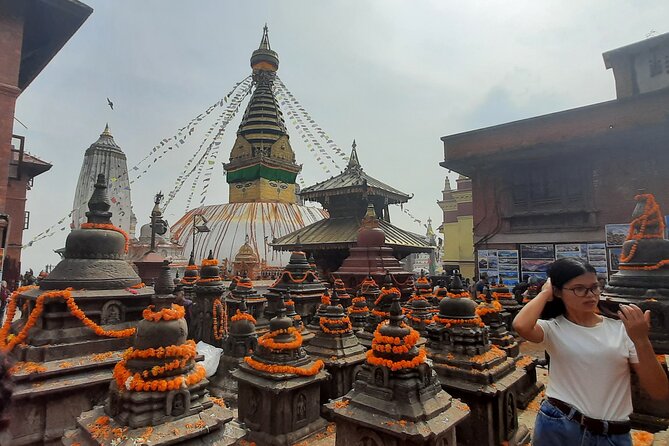
- You’ll see Kathmandu’s key spiritual hubs: Pashupatinath, Boudhanath, and Swayambhunath.
- Thanka art + natural-color painting designs gives you a creative break between temples.
- The tour is private to your group, so the pace can feel more comfortable than a big group bus.
Other early starts worth the alarm
- Nagarkot Sunrise View and Day Hiking from Kathmandu★ 5.0 · 471 reviews
- Kathmandu: Nagarkot Sunrise View & Morning Hike with Lunch★ 4.9 · 188 reviews
- Kathmandu: Nagarkot Sunrise and Hike Tour to Changu Narayan★ 4.7 · 151 reviews
- Nagarkot Sunrise & Hike to Changu Narayan Day Tour from Kathmandu★ 5.0 · 126 reviews
Why This 2-Day Kathmandu Plan Works (and how to pace it)
This is a “great hits” route with a smart rhythm: heavy temple mornings, then breaks that keep the day from feeling like one long line. Day 1 leans into Kathmandu Valley’s UNESCO classics—major Hindu temples, huge Buddhist stupas, and the Newar architecture of Patan. Day 2 shifts from city stone to mountain views with a sunrise push, then finishes in Bhaktapur, where the pace feels a touch slower.
The big value here is that the tour bundles the sights that are hard to sequence on your own. With pickup and drop-off, you can focus on timing your visits rather than hopping between neighborhoods with guesswork. And because it’s private for your group, you’re not stuck waiting on strangers who took the scenic detour to “just grab a snack.”
Still, don’t treat it like a casual stroll. You’ll climb stairs at Swayambhunath, and you’ll spend meaningful time inside major temple complexes. Wear shoes you trust, and plan to move.
Day 1: Pashupatinath, Boudhanath, and Swayambhunath in one focused sweep
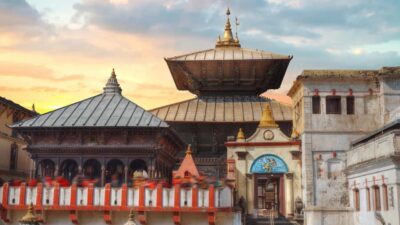
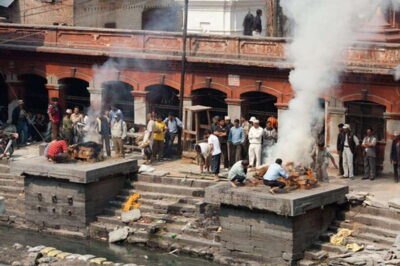
Day 1 centers on three famous spiritual stops that give you a feel for Kathmandu’s Hindu-Buddhist mix. First up is Pashupatinath Temple, one of the most important Hindu temples in Kathmandu. It’s known for its large Shiva temple and for the open cremation ceremony view along the Bagmati River bank. If this is your first time seeing this kind of public ritual setting, it can feel intense—but it’s also part of why the site is so significant.
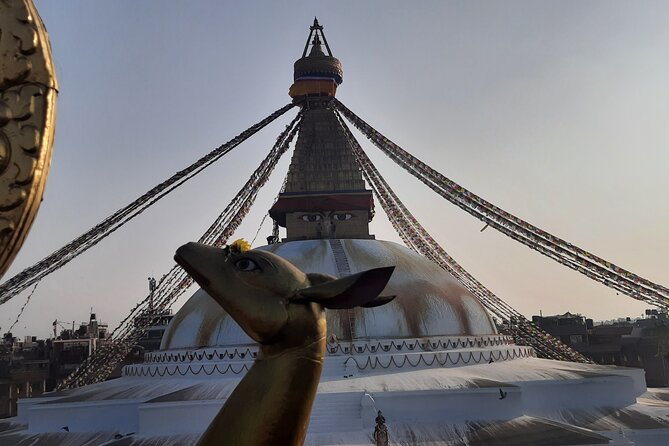
Next is Boudhanath Stupa, massive and surrounded by monasteries. This is where you feel the Tibetan cultural influence more strongly, with a calmer mood than you might expect in a city center. It’s a great contrast stop: the scale of the stupa gives you a way to slow down while still seeing something undeniably iconic.
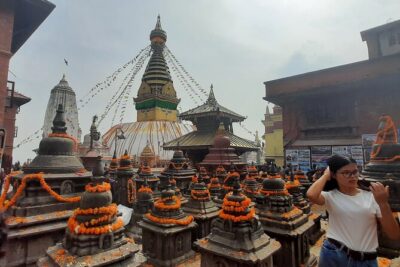
Then comes Swayambhunath, often called the Monkey Temple. The main stupa sits on a hill, and you reach it via a long stair climb. That walk matters. It’s not just a route—it gives you a changing viewpoint of the area as you approach the top.
Practical note: many of these major religious sites don’t include admission in the tour price. The guide helps you know where to go, but you should expect to pay temple/site entry fees separately.
Patan Durbar Square and the Golden Temple: where Newar craft is the star
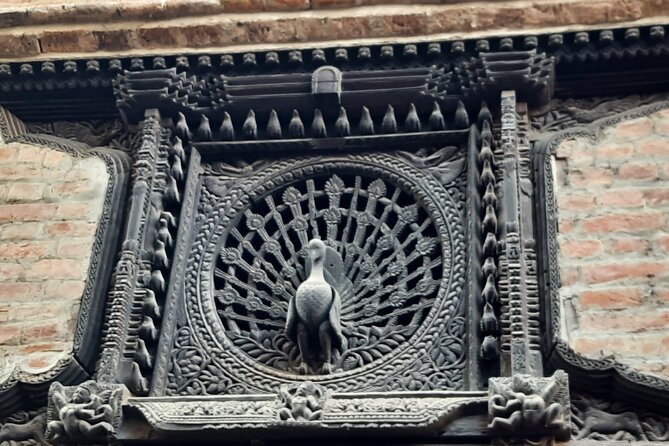
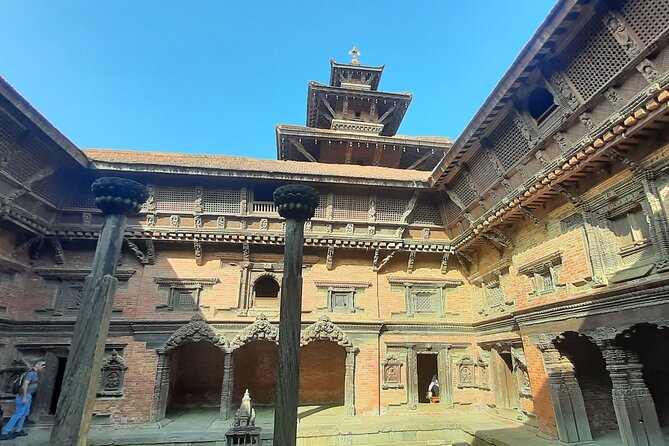
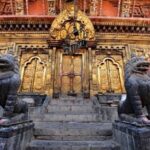
After the big stupa-and-temple stops, Day 1 shifts to Newar architecture at Patan Durbar Square in Lalitpur. This is where wood and stone carvings become the main event. You get to see the kinds of detailed windows, temple walls, and sculpted elements that Newar craftsmen were known for under the Malla kings—art that feels made to be stared at closely, not just photographed from a distance.
A highlight here is Golden Temple (Hiranya Varna Mahavihar). The real name sounds formal, but the nickname explains why people remember it. The front part of the temple is plated in golden color, which makes it easy to spot among the surrounding architecture. Even if you’re not a “temple person,” this one works because the visual effect is instant, and the craftsmanship is the point.
If you want a simple strategy, spend your time this way: look at the overall square first, then go back and focus on carvings, doorways, and small sculptural details. That double look tends to make the architecture click.
Thanka art school and the Singing and Healing Bowl Center break up the day
Most temple-heavy itineraries leave you hungry for something different. This one gives you that mental break.
At the Boudha Stupa Thanka Center, you visit a Thanka and painting school where art is made on cotton clothes using natural colors. The designs you might see referenced include things like mandala patterns, wheel of life themes, Buddha life story scenes, and even single-point meditation style paintings. Even if you don’t produce your own artwork, it’s a clear, educational way to connect what you saw in temples to how symbolism is carried through art.
You also stop at a Singing and Healing Bowl Center (included). The tour doesn’t list what happens in that session in detail, but the purpose is the same as any good decompression break: shift from walking and reading temple inscriptions to a more sensory, calming experience.
If you’re the type who gets museum-fatigue, this is the stop that resets you.
Before you lock this one in, a few Kathmandu alternatives:
Day 2 at Nagarkot: planning for the 4 a.m. sunrise
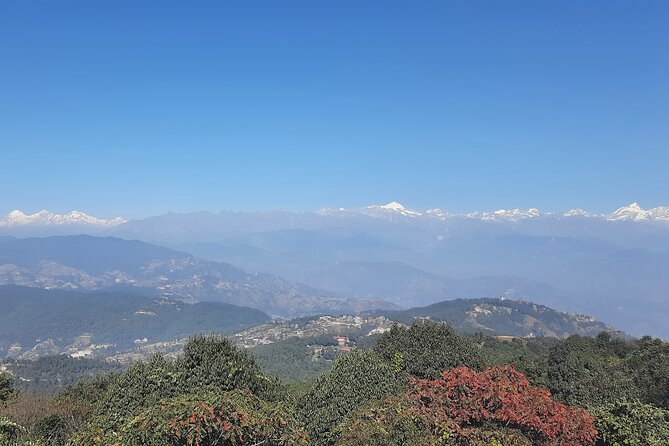
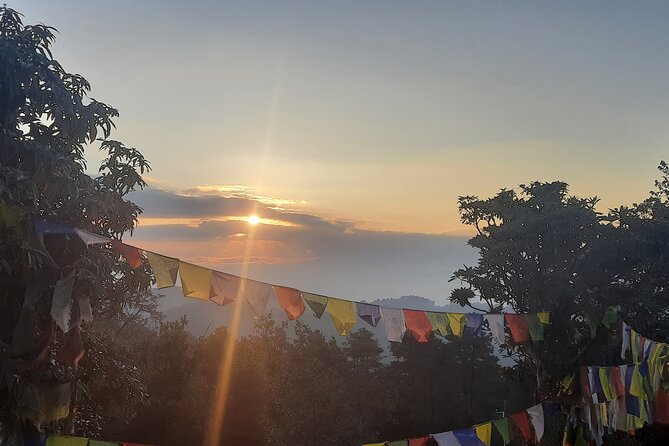
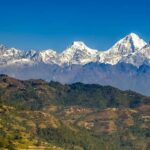
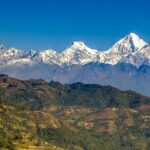
Day 2 starts with the most dramatic timing requirement: you head to Nagarkot early—about 4 a.m.—after roughly 1 hour and 30 minutes of driving from Kathmandu (around 35 km). The goal is sunrise plus Himalayas views. The tour specifically calls out the possibility of seeing Mt. Everest and other mountains, plus Kathmandu Valley and a view of Bhaktapur.
Is sunrise worth it? If the weather cooperates, yes—because the payoff is tied to the time of day. If it’s cloudy, you still get high-elevation views and a sense of scale, but you’ll be less thrilled by the “Everest moment.” That’s just how mountain mornings work.
Timing is everything here. Bring patience for the early hour, and treat this as a watch-and-wait experience. You’re not doing a checklist; you’re waiting for light.
Bhaktapur Durbar Square: the UNESCO stop that feels like a living museum
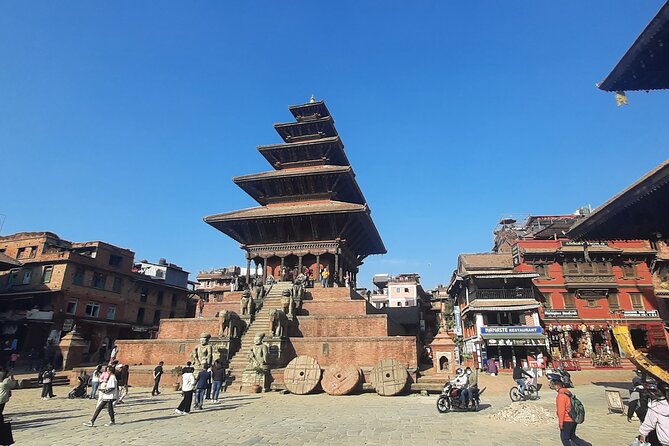
After breakfast, the tour shifts to Bhaktapur Durbar Square, an ancient city area often described as a city of devotees and a living museum. What I like about Bhaktapur on this kind of route is that it feels more “local” than the huge-ticket Kathmandu sites. It still has UNESCO-level architecture, but the streets and squares don’t feel like they exist only for visitors.
The tour highlights four major squares in Bhaktapur, which gives you a good structure for exploring rather than getting lost in the sheer amount of stonework and lanes. Expect to focus on major temple spaces and squares that help you understand how the city was built to function socially, religiously, and artistically.
Two specific temple stops help anchor the visit. Nyatapola Temple is described as the tallest temple in Bhaktapur, dedicated to Goddess Siddhi Laxmi. It’s also noted as a great example of Nepali pagoda-style temple design. Near it is the Bhairab Temple, so you don’t lose time bouncing between distant points—everything clusters around the Durbar area.
Then you visit Dattatreya Temple, dedicated to God Dattatreya, described as a mixed incarnation of Brahma, Vishnu, and Shiva. If you’ve been looking at Hindu symbolism all day, this stop ties the dots.
Pottery Square: a small shopping stop with real local craft
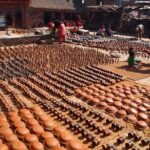
Between temple stops, you’ll visit Pottery Square in Bhaktapur. This is one of those practical add-ons that can be more meaningful than the usual souvenir trap, because it’s described as handmade work created by local makers. You’ll see pottery items made by hand and have time to pick up Bhaktapur souvenirs.
My advice: don’t treat this like a market sprint. Use it as a pause. Look at what’s made locally, compare a couple of pieces, and decide what feels like it belongs in your home—because that’s what you’ll still like when you’re unpacking later.
Price and Entrance Fees: what $100 really becomes
At $100 per person, the base price is attractive for a two-day route that includes pickup/drop-off, a professional guide, and included activities like Thanka art school and a Singing and Healing Bowl Center. The trade-off is what’s not included.
You should budget for:
- UNESCO entrance fees for 5 UNESCO World Heritage Sites: about NPR 4600 or USD 35 per person.
- Meals: you’ll pay for your own food and drinks.
- Gratuities: tipping is expected in Nepal.
So the all-in cost is likely closer to $135+ per person before meals and tips, depending on how you eat. If you compare that to self-guided travel plus a guide (especially for sunrise timing and site sequencing), it still often feels like good value, especially since this is a private group tour and includes hotel transfers.
What’s included, what isn’t, and how to avoid friction
Included:
- Hotel pickup and drop-off by tourist car
- A professional guide
- Thanka art school visit
- Singing and Healing Bowl Center
- A bottle of water per person
Not included:
- Meals
- Gratuities
- Entrance fees (UNESCO site fees)
Here’s the practical takeaway: the tour will get you to the right places, explain what you’re seeing, and handle the movement between sites. What you handle is mainly your own food choices and the site entry costs when you arrive.
Because you’ll pay some admissions separately, I suggest arriving with a simple mindset: you’re not “missing something.” You’re just covering the real-world cost of seeing major UNESCO religious complexes.
The guide matters: Prakash and why communication shows
Two separate pieces of feedback stand out: the tour is praised for being on time, and for the guide’s communication and humor. The guide named in the reviews is Prakash, and that’s a meaningful detail. A Kathmandu route can feel chaotic if you’re trying to manage the city on your own. A guide who keeps things moving—and explains what you’re looking at—can turn a list of sights into an actual experience.
If you want a small test before you fully rely on a guide: ask what to expect at the next site and how much walking it involves. On a route like this, knowing the next step reduces stress.
Who this tour suits best
This fits you if:
- You want a tight two-day hit of Kathmandu Valley UNESCO sites plus Bhaktapur
- You’re happy with early mornings for a chance at Nagarkot sunrise
- You like having a guide handle the pacing between scattered neighborhoods
- You want more than temple photos, with art and a bowl-sound break built in
It may not fit if:
- You prefer slow travel and lots of free time to wander without structure
- You strongly dislike paying separate entrance fees at major sites
- You’re not prepared for stair climbs and an early 4 a.m. start
Should you book this Kathmandu, Nagarkot, and Bhaktapur tour?
Yes, if you want a well-paced route that covers the major UNESCO stops and still adds human-scale experiences like Thanka art and the singing bowl session. The value is strongest when you factor in transport, a guide, and included cultural stops—especially if you’re short on time.
Book it with one expectation clear: you’ll pay additional site fees and meals separately, and sunrise requires an early wake-up. If that’s workable for you, this is a smart way to see Kathmandu’s spiritual and historic core in two days without getting tangled in logistics.
FAQ
How long is the Kathmandu UNESCO and Nagarkot sunrise tour?
It runs for 2 days (approx.).
What is the tour price?
The price is $100.00 per person.
Is hotel pickup and drop-off included?
Yes. Hotel pickup and drop by tourist car are included.
Are meals included in the tour price?
No. Meals are not included, and you’ll pay for food and drinks yourself.
Are UNESCO entrance fees included?
No. Entrance fees for 5 UNESCO World Heritage Sites are not included, and the cost is listed as NPR 4600 (about USD 35) per person.
Does the tour include a guide?
Yes. A professional guide is included.
What activities are included besides sightseeing?
The tour includes a visit to a Thanka art school and a stop at a Singing and Healing Bowl Center.
Is the Nagarkot sunrise part very early?
Yes. The Nagarkot departure is about 4 a.m., heading to Nagarkot for sunrise and Himalayas views.
Is this tour private or shared?
It’s a private tour/activity, so only your group participates.
Worth the Early Alarm
More Tours in Kathmandu


More Tour Reviews in Kathmandu
Just Reviewed in Kathmandu
- Mountain Bike Tour
★ 5.0 · 3 reviews - Annapurna Panaroma
★ 5.0 · 3 reviews - Mount Everest Scenic Flight 50 Minutes
★ 5.0 · 3 reviews - Kathmandu : Swambhunath & Durbar Square Guided Half Day Tour
★ 3.3 · 3 reviews - Chandragiri Cable Car & Monkey Temple Tour – Private/Group
★ 5.0 · 3 reviews - Kathmandu: Shivapuri National Park Hiking Day Trip
★ 3.3 · 3 reviews
Kathmandu UNESCO Heritage Tours, compared.
 ★ 4.87 UNESCO Sites with LunchFrom $2744 reviews
 ★ 5.0Full Day 7 UNESCO Tour with Lunch – Private/GroupFrom $10415 reviews
 ★ 5.0Full Day Top 4 UNESCO Tour with Lunch – Private/GroupFrom $10269 reviews
 ★ 5.0UNESCO Seven World Heritage Tour in KathmanduFrom $180253 reviews
★ 4.9Full-Day 7 UNESCO Tour with Lunch – Private/GroupFrom $5247 reviews
★ 5.0UNESCO Seven World Heritage Tour in KathmanduFrom $180253 reviews
★ 4.9Full-Day 7 UNESCO Tour with Lunch – Private/GroupFrom $5247 reviews
 ★ 4.97 UNESCO Sites Tour in 1 Day (Private Tour)From $4204 reviews
 ★ 4.9Top 4 UNESCO Tour with Lunch – Private/GroupFrom $5181 reviews
 ★ 5.0Kathmandu Private Sightseeing Tour | UNESCO World Heritage SitesFrom $35109 reviews
Browse the lists this tour appears in