
Review · KATHMANDU CITY SIGHTSEEING TOURS
Kathmandu Day Tour
Four UNESCO stops, one well-planned day. Kathmandu’s top cultural sites fit into a single long outing, with an English-speaking guide (for example Kedar or Dil, when available) who helps you connect the dots between Hinduism, Buddhism, and Newari life.
I like how entrance fees are included, so you can spend your time looking instead of negotiating ticket counters. I also like the comfort factor: an air-conditioned vehicle keeps the transfer time from feeling like punishment.
One practical drawback: meals and drinks are not included, and tipping the guide and driver is expected, so you’ll want to plan for lunch and extra cash.
In This Review
- Key things to know before you go
- Why This Kathmandu UNESCO Circuit Works in One Day
- Pickup at Ace the Himalaya (Thamel) and How the Day Feels
- Kathmandu Durbar Square: Palaces, Courtyards, and Museum Stops
- Swayambhu (Monkey Temple): Hilltop Views Over the Valley
- Pashupatinath Temple: Hindu Sacred Space and the Shiva Linga
- Boudhanath Stupa: 2,500 Years of Buddhism and Prayer Wheels
- Price and Value: Does $85.34 Make Sense?
- Timing, Group Size, and Getting Comfortable in a Busy City
- What I’d Pack and Plan (So You Don’t Feel Rushed)
- Should You Book This Kathmandu Day Tour?
- FAQ
- How long is the Kathmandu Day Tour?
- What is the price per person?
- Where do I meet the tour, and where does it end?
- How many stops are included?
- Are entrance fees included?
- What’s included in the tour price?
- What is not included?
- Is there a limit on group size?
- Is good weather required?
Key things to know before you go
- A tight circuit of Kathmandu UNESCO World Heritage sites in a 7–8 hour day
- Entrance fees included at every major stop, including Kathmandu Durbar Square and the stupas/temples
- Hilltop views and temple energy at Swayambhu, plus the monkey-filled grounds
- Two major religion hubs in one day: Hindu Pashupatinath and Buddhist Boudhanath
- Small group size (max 15) for easier pacing and question time
- Mobile ticket plus pickup at Ace the Himalaya in Thamel
Not sure yet? Here are other Kathmandu tours worth a side-by-side look.
- Everest Base Camp Trek – 14 Days★ 5.0 · 1,499 reviews
- Everest Base Camp Trek★ 5.0 · 842 reviews
- Private Kathmandu Sightseeing Tour | UNESCO World Heritage sites★ 5.0 · 756 reviews
- Kathmandu: 7 UNESCO Sites with Lunch★ 4.8 · 744 reviews
Why This Kathmandu UNESCO Circuit Works in One Day
If you only have a day in Kathmandu, this tour is built for that exact reality: get you to the big icons without making you play logistics roulette. The route connects the city’s main cultural power centers, so you see how Newari-era palaces sit beside living religious practice, and how Hindu and Buddhist traditions both shape daily life.
The payoff is not just that the sights are famous. It’s that you have a guide to help you interpret what you’re seeing—why a pagoda matters, why a stupa’s layout is symbolic, and why people keep returning to these places. You also get a predictable rhythm: quick orientation, then time on-site with included tickets.
The schedule is also realistic. Each stop gets enough time to walk the grounds and take in the main features, but not so much time that you’re stuck in one location all day. It’s a good fit if you want the highlights, then still have energy left for dinner back in Thamel.
Pickup at Ace the Himalaya (Thamel) and How the Day Feels
The tour starts at Ace the Himalaya A1 Business complex on Thamel Marg. That matters because Thamel is the tourist hub where you’re most likely already staying, so you’re not spending half the morning crossing the city.
From there, you’re in an air-conditioned vehicle with an authorized English-speaking city guide. That combination is a real time-saver in Kathmandu, where traffic and routing can be unpredictable. You can use the travel time to ask questions, too—especially useful if you’re arriving from a trek and want context fast.
This is a group experience with a maximum of 15 people. Smaller groups tend to move with fewer headaches: less waiting around, easier crowd navigation, and more chances to ask why things are shaped the way they are. If you’re traveling with limited time, that’s a quiet but meaningful advantage.
Kathmandu Durbar Square: Palaces, Courtyards, and Museum Stops
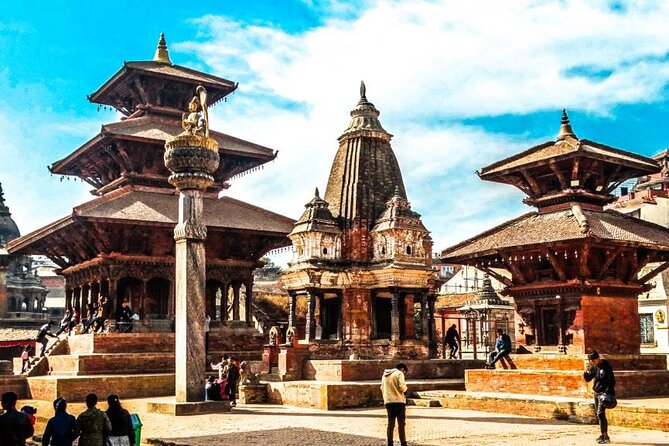
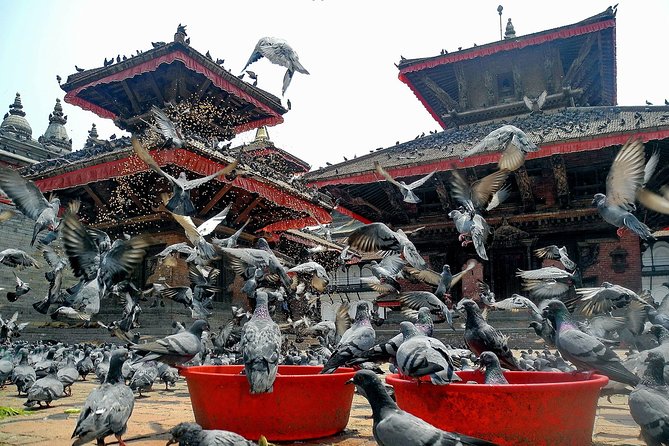
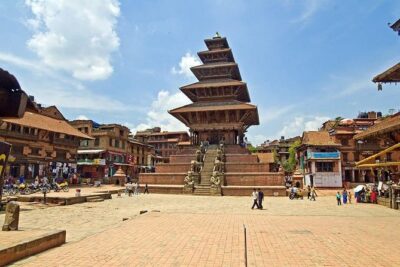
Kathmandu Durbar Square is the starting point for a reason. This is where you feel the long arc of the city’s power, with palaces, courtyards, and temples built from the 12th through the 18th centuries. It used to be the seat of the ancient Malla kings of Kathmandu, so you’re walking through the physical heart of an older political era.
You also get the extra layer of staying power here: there are three museums inside the palace building. Even if you only skim, the museum presence helps explain how the site evolved and what objects, architecture, and royal traditions were tied to the complex.
The stop is about 30 minutes, and that’s the main tradeoff. It’s enough time to get oriented and see the signature spaces, but you won’t leave with every detail. If a part of the complex grabs you, focus on one lane—palace courtyard views, temple details, or the museum area—then let the rest be “next time” material.
Tip for your brain: think of Durbar Square as the city’s architectural résumé. Everything after this stop will start making more sense once you see the palace-temple setup in one place.
Swayambhu (Monkey Temple): Hilltop Views Over the Valley
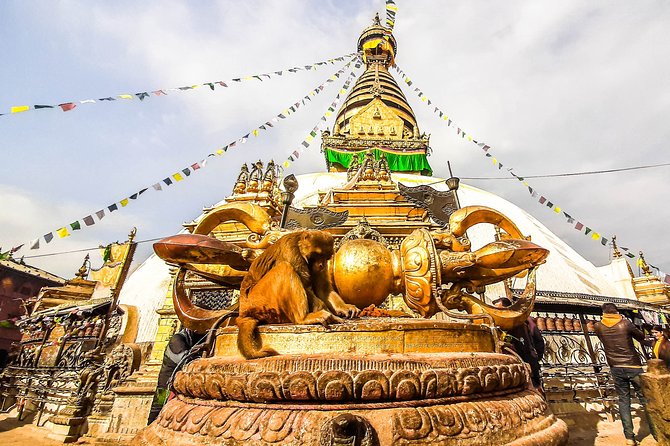
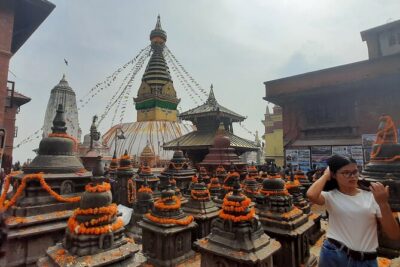
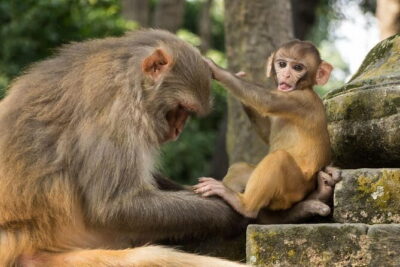
Next comes Swoyambhu Mahachaitya, also known as Swayambhu and often nicknamed the Monkey temple because of the monkeys living in the premises. It sits on a hillock on the western side, which means it naturally becomes a viewpoint. When you’re up there, you can look out over the valley and get a different sense of scale for Kathmandu.
The included time here is about 1 hour. That works well because you’ll likely take time for the climb, then slow down to enjoy the views and the temple areas at the top. And yes, you’ll be in the monkey zone. Keep your belongings secured and don’t treat the area like a quiet museum courtyard—these animals are part of daily life around the site.
This is also a stop where the guide’s explanation really pays off. Even without going deep into every symbol, you learn to read what you’re seeing: why this site became such a draw, what role the hilltop placement plays, and how the name connects to what you observe on the ground.
If you like viewpoints and photo angles, this is your best bet on the schedule. It breaks up the day nicely after the palace complex.




Pashupatinath Temple: Hindu Sacred Space and the Shiva Linga
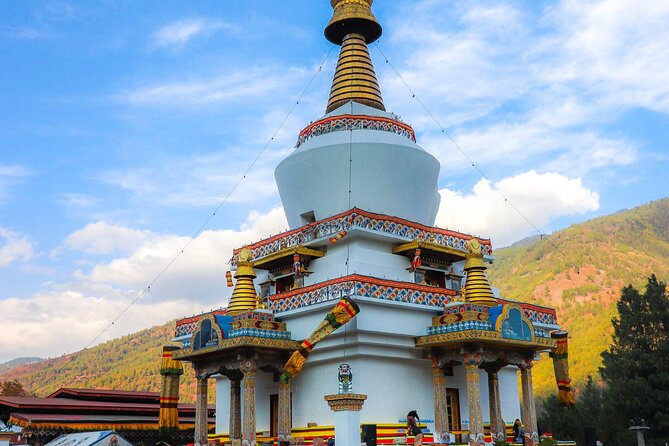
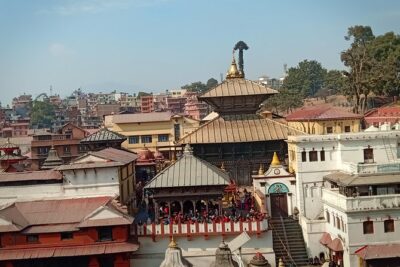
Pashupatinath Temple is one of the most sacred Hindu shrines in the world, and the tour takes you there in about 45 minutes. It lies around 5 km east of the city center, so the ride matters—you get a breather in transit, then arrive at a site that feels different instantly.
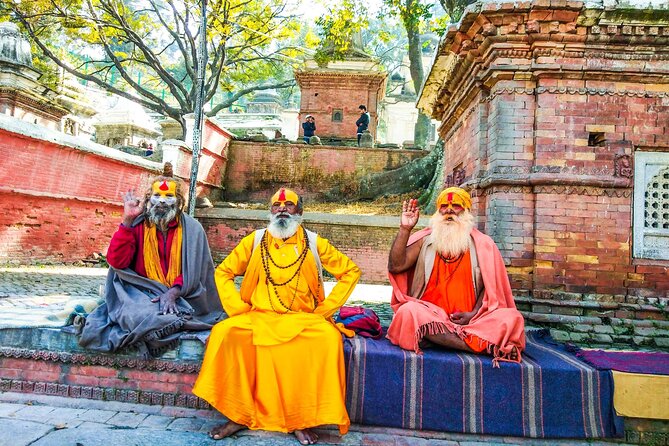
The key detail is the pagoda-style structure housing the sacred Linga (the phallic symbol) of Lord Shiva. That one element helps you understand why devotees come here: the site is not just impressive architecture. It’s a focal point for worship.
Pashupatinath is active religious space, so the tone shifts from sightseeing energy to something more solemn. That’s not a bad thing—it’s the point. Just be mindful with your pace, keep your attitude respectful, and let the spirituality set the tempo.
A practical consideration: 45 minutes goes fast at a place like this, especially if you’re taking in ornamentation and trying to follow your guide’s explanations. Choose what you want most—overview of the main features, or extra attention to the temple structure—then stick with it. You’ll feel less rushed.
Boudhanath Stupa: 2,500 Years of Buddhism and Prayer Wheels
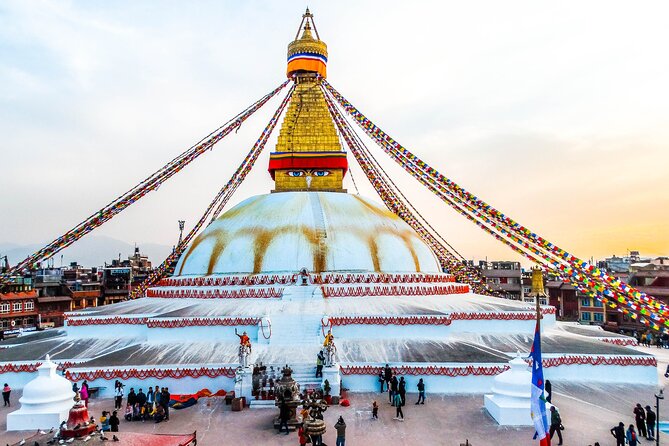
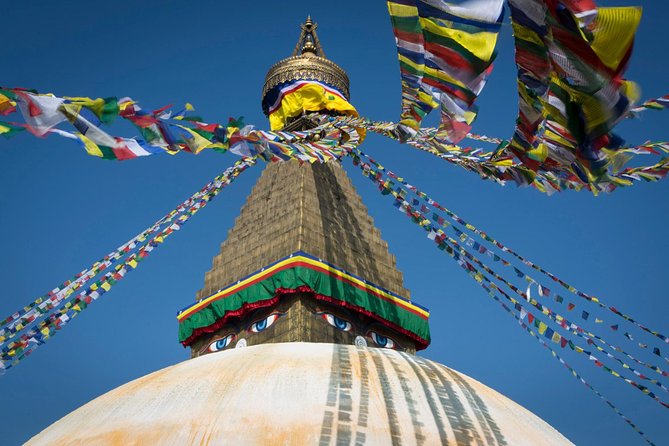
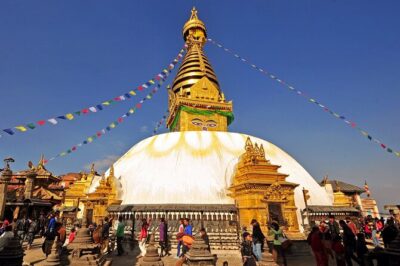
Then you head to Boudhanath Stupa, a Buddhist monument often described as about 2,500 years old and built in the 5th century. The stupa’s design includes four pairs of eyes of Lord Buddha facing the cardinal directions. It’s a powerful visual, and it also explains why the stupa feels like it’s watching you while you watch it.
The tour stop here is about 45 minutes. That’s enough time to grasp the layout, spend a while around the stupa, and understand the ritual behavior around it. A big part of Boudhanath’s atmosphere comes from Tibetan Buddhist pilgrims who walk around the stupa and spin prayer wheels.
If you like people-watching with a purpose, this is it. You’re not only looking at the stupa—you’re observing devotion in motion. Your guide’s background can help you connect the dots between the symbolism (eyes, directions) and the action (prayer wheels, continuous movement).
There’s also a social and spiritual network around Boudhanath, with smaller spaces related to Buddhist life. The time isn’t long, but the energy is. When the day is done, this is often the stop people remember most clearly because it’s both iconic and active.
Price and Value: Does $85.34 Make Sense?
At $85.34 per person for a 7–8 hour group tour, the value depends on what you’d otherwise pay for on your own. Here, entrance fees for the major stops are included, plus an air-conditioned vehicle and an authorized English-speaking guide.
That’s important. In Kathmandu, ticketing and site access can turn into a scavenger hunt when you’re short on time. Paying up front for a route where entrance fees are handled means you get fewer headaches and more sight time. It also protects you from the most common solo-traveler issue: spending energy trying to figure out logistics instead of learning what you’re seeing.
Two costs to keep in mind: meals/drinks are not included, and tipping the guide and driver is expected. Also, the tour’s not a full-day “hang out in every corner” plan. It’s a highlights circuit, so if you’re the type who wants hours inside museums or deep architectural study, you might feel a little time-compressed.
But if you want the major Kathmandu cultural landmarks in one go, with tickets sorted and a guide to translate the meaning, this price is easier to justify.
Timing, Group Size, and Getting Comfortable in a Busy City
This tour runs about 7 to 8 hours. That’s a full day, but it’s also long enough to get from site to site without feeling like you’re sprinting across Kathmandu. The air-conditioned vehicle helps, especially if you’re dealing with heat, sun, or just the general stress of city traffic.
The group size maxes at 15 travelers, which is a sweet spot for a day tour. You’ll likely have some space to move, but you won’t be stuck in an endless caravan. And because you’re not in a huge group, questions don’t vanish into the crowd.
One scheduling reality: you’re visiting major religious and heritage sites in one day, so crowd levels can change based on time of day and ongoing activities. The guide’s job is to keep you moving in a sensible flow, so don’t treat the day like a DIY checklist where you can linger forever. The best strategy is to trust the order, then slow down if a stop genuinely grabs you.
Also, this experience requires good weather. If weather becomes an issue, you’ll be offered a different date or a full refund. That matters in Kathmandu because hilltop and exterior viewing can be affected by conditions.
What I’d Pack and Plan (So You Don’t Feel Rushed)
Because meals and drinks aren’t included, I’d treat lunch as a pre-planned moment rather than an afterthought. You’ll have better energy if you either bring a snack for the day or plan where you’ll eat once you’re back near the meeting point.
You’ll also want to handle small, practical things that come with temple and stupa visits: secure your phone and belongings (monkeys at Swayambhu are a real factor), wear comfortable shoes, and keep your pace steady. Your guide can help set expectations, but your comfort is on you.
Lastly, plan for tips. It’s expected, and it’s part of why the guides and drivers can deliver a smooth, guided experience without cutting corners.
Should You Book This Kathmandu Day Tour?
I think this is a strong choice if you want Kathmandu’s top heritage and religious landmarks in one manageable day. You get a logical route, an English-speaking guide, entrance fees included, and a small-group setting that makes questions easier. It’s especially useful if you’re pairing Kathmandu with another trip, because it saves you from figuring out transport and tickets while you’re already in travel mode.
But I wouldn’t book it if your priority is deep, slow sightseeing at one location. The stops are timed, so you’ll get the main features, not everything. Also, if you hate being on a fixed schedule for 7–8 hours, this might feel like a lot.
If you can handle a full day and you want the highlights with meaning attached, this Kathmandu UNESCO circuit is a practical, good-value way to see the big names—without turning your day into a logistics project.
FAQ
How long is the Kathmandu Day Tour?
The tour lasts about 7 to 8 hours.
What is the price per person?
The price is $85.34 per person.
Where do I meet the tour, and where does it end?
You meet at Ace the Himalaya A1 Business complex, Thamel Marg, Kathmandu 44600, Nepal. The tour ends back at the same meeting point.
How many stops are included?
The tour includes four stops: Kathmandu Durbar Square, Swoyambhu Mahachaitya, Pashupatinath Temple, and Boudhanath Stupa.
Are entrance fees included?
Yes. Entrance fees for the mentioned cultural sites are included.
What’s included in the tour price?
The tour includes an air-conditioned vehicle, an authorized English-speaking city tour guide, entrance fees for the sites, and official expenses.
What is not included?
Meals and drinks are not included. Tipping for the guide and driver is expected.
Is there a limit on group size?
Yes. The tour has a maximum of 15 travelers.
Is good weather required?
Yes. This experience requires good weather. If canceled due to poor weather, you’ll be offered a different date or a full refund.
More Tours in Kathmandu




More Tour Reviews in Kathmandu




Just Reviewed in Kathmandu
- Mountain Bike Tour
★ 5.0 · 3 reviews - Annapurna Panaroma
★ 5.0 · 3 reviews - Mount Everest Scenic Flight 50 Minutes
★ 5.0 · 3 reviews - Kathmandu : Swambhunath & Durbar Square Guided Half Day Tour
★ 3.3 · 3 reviews - Chandragiri Cable Car & Monkey Temple Tour – Private/Group
★ 5.0 · 3 reviews - Kathmandu: Shivapuri National Park Hiking Day Trip
★ 3.3 · 3 reviews
Kathmandu City Sightseeing Tours, compared.
 ★ 5.0Kathmandu Private Sightseeing Tour | UNESCO World Heritage SitesFrom $35109 reviews
 ★ 4.7Private Patan and Bhaktapur Sightseeing TourFrom $4964 reviews
 ★ 5.0Kathmandu Highlights: Private UNESCO World Heritage Sites TourFrom $4950 reviews
 ★ 5.0Explore Kathmandu in 2 Days: UNESCO Sites & Nagarkot Sunrise TourFrom $10037 reviews
 ★ 5.01 Day Kathmandu Valley Sightseeing TourFrom $3537 reviews
 ★ 5.04 UNESCO City Sightseeing in KathmanduFrom $5036 reviews
 ★ 5.0Full Day Kathmandu City Sightseeing Tour of UNESCO Heritage SitesFrom $5036 reviews
 ★ 5.0Private Full-Day Kathmandu All 7 UNESCO World Heritage Sites TourFrom $8030 reviews
Browse the lists this tour appears in