
Review · HISTORICAL TOURS
Kathmandu Heritage Sites Joining Tours
Some days in Kathmandu feel like a greatest-hits album. This one strings together four major sacred stops in a single morning-to-afternoon loop. You’ll see Hindu and Buddhist monuments, plus Newari culture at Kathmandu Durbar Square, including the Living Godness Kumari setting.
What I like most is the tight focus on the sites that define the Kathmandu Valley. I also appreciate the practical setup: group transportation with a driver, a small group size (up to 15), and a mobile ticket. The main thing to keep in mind is that entrance fees and the on-site guide are not included, so you’ll need to budget a little extra once you’re there.
In This Review
- Key highlights you’ll actually use
- Why these Kathmandu Valley sites fit together
- Price and what it really buys you
- Meeting at Paknajol Marg and the pace of the day
- Swayambhunath Temple: hill views and those famous steps
- Kathmandu Durbar Square: Newari monuments and the Kumari context
- Boudhanath Stupa: UNESCO size with Buddhist focus
- Pashupatinath Temple: Hindu pilgrimage in full motion
- Transportation and the service quality you can count on
- What to budget for at the gates
- Who this tour suits best (and who should reconsider)
- Practical tips for your day at these sacred sites
- Should you book Kathmandu Heritage Sites Joining Tours?
- FAQ
- How much does the Kathmandu heritage sites joining tour cost?
- How long is the tour?
- What are the main sites included?
- Are entrance fees included in the price?
- Is transportation included?
- Where do you meet, and when does it start?
- How big is the group?
- Is free cancellation available?
Key highlights you’ll actually use
- Hilltop Swayambhunath (1 hour): steps, views over the valley, and a perspective you can’t easily get elsewhere
- Kathmandu Durbar Square (2 hours): temples tied to very old Kathmandu landmarks and the Kumari context
- Boudhanath’s scale: one of the world’s largest stupas by size, with UNESCO status since 1979
- Pashupatinath as a living temple: sadhus, markets, and monkeys in the mix (religion in real time)
- Small group feel: max 15 people, plus a team that keeps service moving
Deeper into old Kathmandu
- Private Kathmandu Sightseeing Tour | UNESCO World Heritage sites★ 5.0 · 756 reviews
- UNESCO Seven World Heritage Tour in Kathmandu★ 5.0 · 253 reviews
- Nepal Discovery Tour: Heritage Sites & Scenic Hill Easy Hike★ 5.0 · 121 reviews
- Kathmandu Private Sightseeing Tour | UNESCO World Heritage Sites★ 5.0 · 109 reviews
Why these Kathmandu Valley sites fit together
This tour works because each stop shows a different “language” of belief in Kathmandu. Swayambhunath gives you the Buddhist hill-and-stupa viewpoint. Durbar Square turns the dial toward Newari heritage and Hindu royal-era monuments. Then Boudhanath and Pashupatinath bring you to two heavyweights of Buddhist and Hindu practice.
You also get a natural flow: you start with a panoramic viewpoint, move into the dense historic core, and finish with temples where you see religious life up close. That order matters when you only have part of a day, because you’re not spending your time crisscrossing the city blindly.
Price and what it really buys you
The price is $55 per person for a 6 to 8 hour experience. For that amount, the tour includes group transportation with a driver, which can be the most time-consuming part to coordinate on your own.
Not included: entrance fees, a guide, meals, and tips. That doesn’t make it “bad value,” but it does mean your total cost won’t be just the $55 if you want to go in at every site or add deeper explanations. If you prefer a tight, self-paced approach, you can often keep costs lower; if you want someone to interpret the places, plan on paying for that layer.
Group discounts are mentioned, and you’ll be traveling in a small group (up to 15). That tends to be a good balance in Kathmandu: you get company without turning the day into a long conveyor belt.
Meeting at Paknajol Marg and the pace of the day
You start from Paknajol Marg, Kathmandu 44600, with the activity starting at 9:15 am. The tour also describes pickup from Outshine Adventure around 9:30 am, so expect a short window between check-in and departure.
The whole day is built for movement: you’ll be walking at least a bit at each stop, and you’ll be stepping through crowded temple areas where local activity never fully pauses. The good news is that the schedule gives you defined time blocks—Swayambhunath for about 1 hour and Kathmandu Durbar Square for about 2 hours—so you’re not stuck wondering how long you’ll be waiting around.
Swayambhunath Temple: hill views and those famous steps
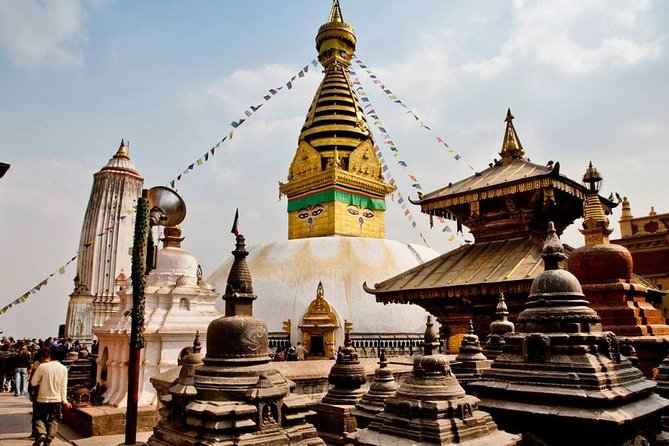
Swayambhunath sits on a hill west of central Kathmandu, and you’ll reach it by climbing steps. The payoff is the panoramic view of the Kathmandu Valley and the surrounding hills—plus a feeling of being “above” the city, not just inside it.
This stop is about more than photos. When you look out from the hill, you start to understand why Kathmandu Valley’s sites are so visually dramatic. You also get a different angle on the terrain, because the nearby hills create a view corridor you don’t easily get from street level.
Time-wise, you get about 1 hour, and that’s enough for a careful wander, photo breaks, and taking in the valley view without making the whole day a climb marathon.




Kathmandu Durbar Square: Newari monuments and the Kumari context
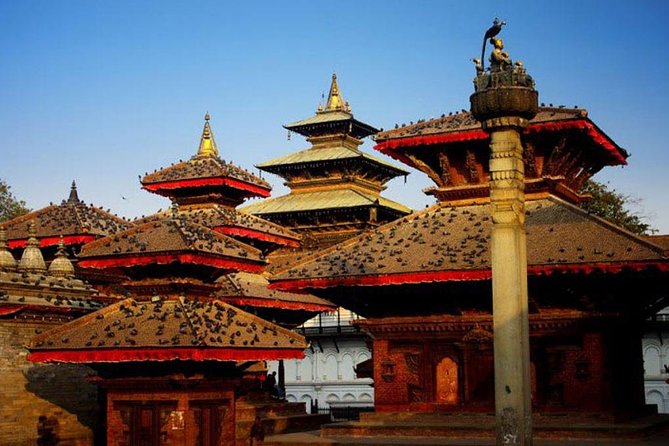
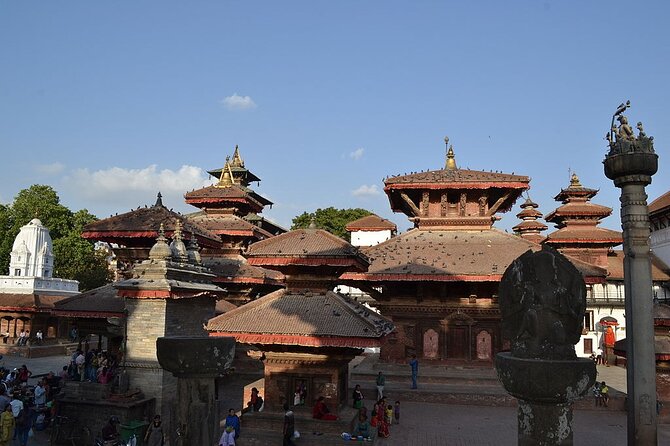
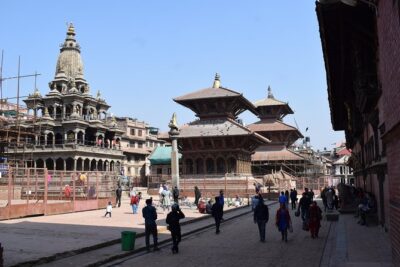
Kathmandu Durbar Square is where the historic core feels thick with meaning. You’ll have roughly 2 hours here, including access to the Basantapur area. This is also where you’ll encounter the Kasthamandap, described as one of the oldest surviving buildings in the Kathmandu Valley to date.
The tour highlights temples here that date back as far as the third century. That’s a big claim, but the practical takeaway is this: Durbar Square isn’t just a pretty stop—it’s one of the places where old Kathmandu is physically layered into the present.
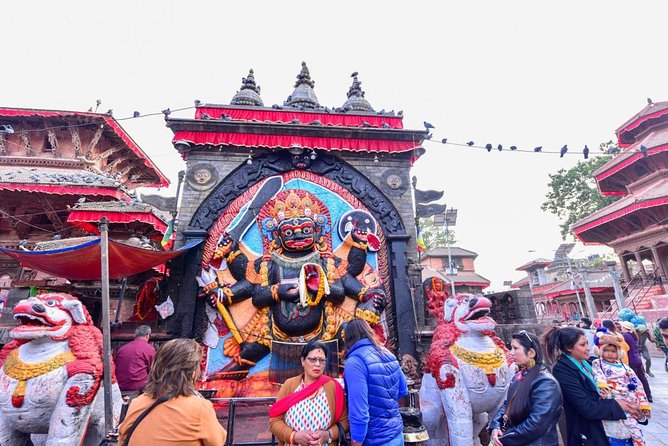
The experience also points you toward the Living Godness Kumari in the Durbar Square setting. Even if you don’t spend extra time focused only on her, knowing the Kumari tradition gives you a better lens for why the square matters culturally, not just architecturally.
A consideration: Durbar Square is a core sightseeing area, and the streets around it can feel busy. If you prefer quiet spaces, give yourself a few minutes to step away from the busiest lanes when you want to actually look at details.
Boudhanath Stupa: UNESCO size with Buddhist focus
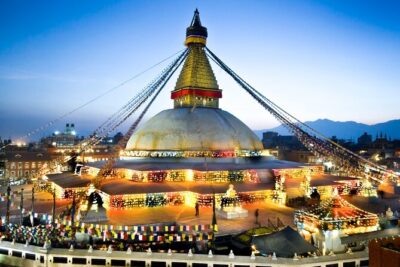
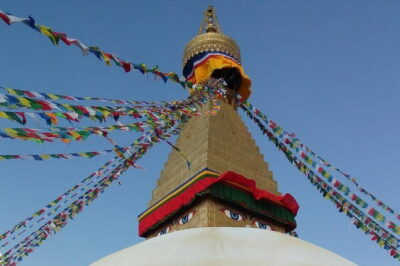
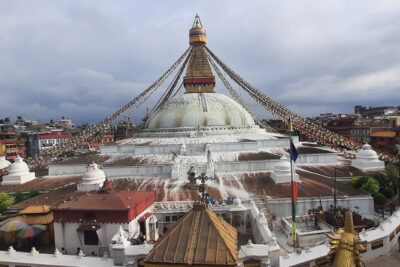
Boudhanath Stupa is one of the biggest Buddhist stupas in the world. The stats here are striking: it’s described as about 390 feet (120 meters) in diameter, and it sits about 5 km northeast of central Kathmandu. It’s also a UNESCO World Heritage Site since 1979.
What I like about this stop is how “big religion” becomes physically understandable. When a stupa is that large, you feel it as a center of gravity for the area. You’re not just viewing a monument; you’re watching devotion and daily movement happen around it.
One practical note: the schedule lists 2 minutes for this stop. That likely means you get quick highlights—enough for a clear look, a few key photos, and guidance—rather than a long, slow circuit. If you want extra time, keep an eye on the group pace and be ready to move efficiently.
Pashupatinath Temple: Hindu pilgrimage in full motion
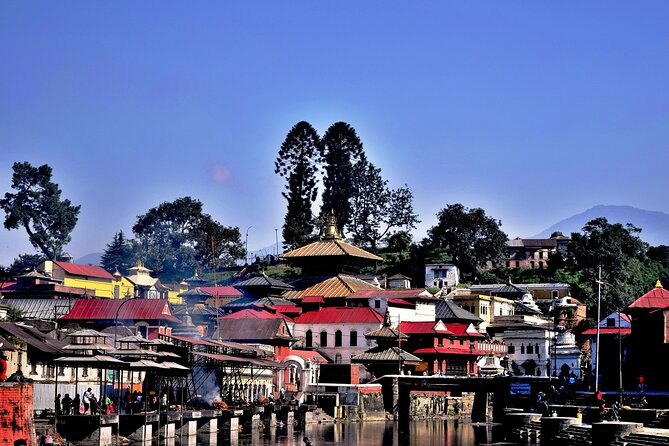
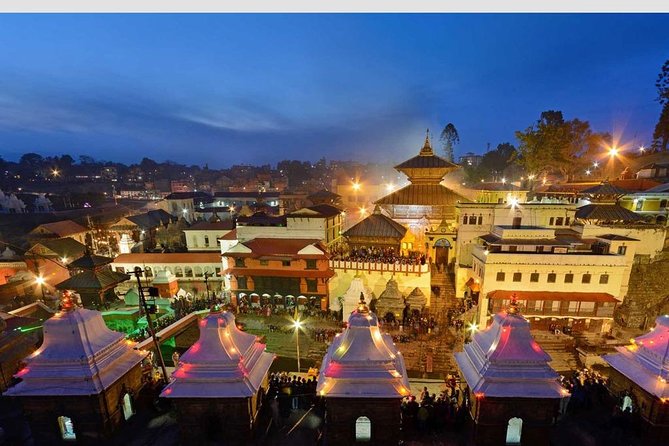
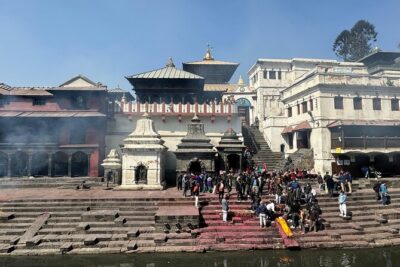
Pashupatinath is presented as the holiest Hindu shrine in Nepal, with construction dating to the early 5th century. This is the kind of place where religion is not staged. You’ll likely see Hindu sadhus, markets with lots of people, and even monkeys in the vicinity—so the atmosphere is alive and sometimes chaotic.
I also like that the stop isn’t treated as a museum visit. The emphasis is on cultural and spiritual experience, so your guide helps you interpret what you’re seeing while you’re seeing it.
Time-wise, the schedule lists 1 minute for the stop. That’s extremely short on paper. In real life, it usually means a quick, high-impact viewing window—enough to register the scale and significance—then you move onward. If you want a longer look, you may need to do a separate self-guided return later (or ask the guide in advance how flexible that time is).
Transportation and the service quality you can count on
The transport is included as group transportation with a driver. That matters in Kathmandu, because it reduces decision fatigue. You spend your energy on the sites instead of figuring out routes and timing.
The service reputation is also strong. In past experiences with Outshine Adventure, the team credited for professional planning and smooth coordination includes people like Gokul Sapkota. You’ll also see support mentioned from Ashmita—helpful when needs come up—and a guide named Siri who assisted with communication for a non-English speaker. That mix tells me this company is set up to handle the everyday friction points that happen during tours.
Also worth noting: reviews mention vehicles being kept clean. That sounds basic, but on a long day it changes the feeling of comfort between stops.
What to budget for at the gates
Entrance fees are not included. Guide is also not included, and meals and tips are not included.
So I suggest you plan a small “on-the-day” budget for:
- entrance fees for the sites you choose to enter
- any guide add-on you want for deeper explanations
- water/snacks if you get hungry between stops
- tips, if that’s part of your travel style
If you’re trying to keep costs tight, you can still enjoy a lot from outside viewpoints and guided walking portions. But for a full experience in religious sites, entrance fees are usually part of the reality.
Who this tour suits best (and who should reconsider)
This is a good fit if:
- you want a high-coverage Kathmandu Valley day without multiple separate bookings
- you like religious and cultural sites with strong local context
- you’re okay with some stops being quick highlight visits
It might be less ideal if:
- you want long, slow time inside each temple complex
- you prefer fully independent travel where you linger for as long as you like
- you expect entrances and a guide to already be paid for in the $55
If you’re visiting for the first time and want the “big four” of the valley—Swayambhunath, Durbar Square, Boudhanath, and Pashupatinath—this tour is built for that.
Practical tips for your day at these sacred sites
Religious places mean a different pace and a different kind of attention. Keep your camera ready, but don’t treat every moment like a photo op. The best results come when you pause and actually look, especially at the stupa and temple details.
Wear comfortable shoes. Swayambhunath is up a hill with steps, and Kathmandu’s historic areas involve uneven sidewalks and crowd navigation. Bring a light layer too, since Kathmandu weather can shift through the day.
If you’re sensitive to crowds, pick your “quiet minutes” strategically. For example: at Durbar Square, spend your first 10 minutes scanning and orienting, then move closer to specific structures when you can.
Finally, plan on simple timing discipline. A day like this runs on group momentum, and that’s how you protect the value you paid for.
Should you book Kathmandu Heritage Sites Joining Tours?
If you want an efficient, structured introduction to the Kathmandu Valley’s defining sacred sites, I’d say yes. The $55 price is attractive for a day that includes transport, a small group limit, and access to a sequence that makes cultural sense.
Book it if you:
- want Swayambhunath viewpoints, Durbar Square heritage, Boudhanath scale, and Pashupatinath pilgrimage all in one loop
- are okay budgeting separately for entrance fees and a guide layer
I’d hesitate if you need a long sit-down time inside each complex. Some stop windows are very short on paper, so your enjoyment will depend on how quickly you’re able to transition from one site to the next.
FAQ
How much does the Kathmandu heritage sites joining tour cost?
It costs $55.00 per person.
How long is the tour?
The duration is listed as 6 to 8 hours (approx.).
What are the main sites included?
The tour includes Swayambhunath Temple, Kathmandu Durbar Square, Boudhanath Stupa, and Pashupatinath Temple.
Are entrance fees included in the price?
No. Entrance fee is not included.
Is transportation included?
Yes. The tour includes transportation as group size with driver.
Where do you meet, and when does it start?
The meeting point is Paknajol Marg, Kathmandu 44600, Nepal, and the activity start time is 9:15 am.
How big is the group?
The tour has a maximum of 15 travelers.
Is free cancellation available?
Yes. You can cancel for a full refund up to 24 hours before the experience’s start time.
The Old Kathmandu, Properly Toured


More Tours in Kathmandu



More Tour Reviews in Kathmandu




Just Reviewed in Kathmandu
- Mountain Bike Tour
★ 5.0 · 3 reviews - Annapurna Panaroma
★ 5.0 · 3 reviews - Mount Everest Scenic Flight 50 Minutes
★ 5.0 · 3 reviews - Kathmandu : Swambhunath & Durbar Square Guided Half Day Tour
★ 3.3 · 3 reviews - Chandragiri Cable Car & Monkey Temple Tour – Private/Group
★ 5.0 · 3 reviews - Kathmandu: Shivapuri National Park Hiking Day Trip
★ 3.3 · 3 reviews
Historical Tours, compared.
 ★ 5.0UNESCO Seven World Heritage Tour in KathmanduFrom $180253 reviews
 ★ 5.0Nepal Discovery Tour: Heritage Sites & Scenic Hill Easy HikeFrom $375121 reviews
 ★ 5.0Kathmandu Private Sightseeing Tour | UNESCO World Heritage SitesFrom $35109 reviews
 ★ 5.0Full Day Private Top 4 UNESCO Heritage Tour W/Lunch.From $1086 reviews
 ★ 5.0Kathmandu World Heritage TourFrom $5074 reviews
 ★ 5.0Nagarkot Sunrise & Bhaktapur UNESCO Heritage Private TourFrom $5066 reviews
 ★ 5.0Kathmandu Heritage Tour (Full Day)From $3863 reviews
 ★ 5.0Kathmandu Top 4 or 2 UNESCO World Heritage Sites Day TourFrom $4052 reviews
Browse the lists this tour appears in