
Review · BHAKTAPUR TOURS
Kathmandu: Private Bhaktapur and Patan Sightseeing Tour
A single golden gate can teach you a lot. This private Kathmandu Valley tour connects Patan and Bhaktapur through UNESCO-listed squares, standout temples, and Newari traditions in a tight 6-hour window. It is a nice way to see how two former kingdoms shaped Kathmandu Valley’s look and feel.
What I like most is how the guide turns the stones into stories, not just sights. Two things that really land: the guided walk through Durbar Square complexes, and the chance to focus on temple details like carvings, courtyards, and monument landmarks such as Bhaktapur’s Nyātāpola. One watch-out: admission fees are not included, and you’ll want to bring cash on the day.
If you’re comparing this to a long, free-form day, the structure is both the strength and the tradeoff. You get a clear route and low-stress transport, but it also means you’re concentrated on the palace-square areas more than the wider neighborhoods.
In This Review
- Key points worth knowing
- Patan and Bhaktapur in One Smooth 6-Hour Circuit
- First Stop: Patan Durbar Square and Its Newar Royal-Temple Mix
- Next Up: Bhaktapur Durbar Square and the Golden-Gate Power Zone
- Nyātāpola Temple: The Five-Tier Vertical Landmark
- Pottery Square for Handicraft Shopping
- How the Guides Change the Experience (Nilakantha and Sharmila)
- Transportation, Timing, and the Advantage of Private AC
- Price and Value: What $45 Really Buys
- What to Bring (and What to Skip)
- Who This Tour Suits Best
- Should You Book This Kathmandu Valley Private Tour?
- FAQ
- How long is the Kathmandu: Private Bhaktapur and Patan Sightseeing Tour?
- Where does the tour start and end?
- Which sites are included on the tour?
- Is there a guided component?
- How do you get to each destination?
- Are meals included in the price?
- Do I need cash during the tour?
- What should I bring or wear?
Key points worth knowing
- UNESCO World Heritage stops: Patan Durbar Square and Bhaktapur Durbar Square
- Temple and carving focus, including Bhaktapur’s Golden Gate area and woodwork landmarks
- Nyātāpola Temple as a major highlight, including its five tiers and historic commissioning
- Newari culture shows up in crafts, daily courtyard life, and the way the squares are used
- Private AC car/van and hotel pickup make timing easier than self-guided hopping
- English live guide helps you connect what you’re seeing to Hindu and Malla-era context
Just your group, at your own pace
- Private Kathmandu Sightseeing Tour | UNESCO World Heritage sites★ 5.0 · 756 reviews
- Kathmandu: Full Day 7 UNESCO Tour with Lunch – Private/Group★ 5.0 · 415 reviews
- Private Bhaktapur and Nagarkot Day Tour From Kathmandu★ 5.0 · 305 reviews
- Kathmandu: Full Day Top 4 UNESCO Tour with Lunch – Private/Group★ 5.0 · 269 reviews
Patan and Bhaktapur in One Smooth 6-Hour Circuit
This is the kind of tour that works when you want big cultural hits without the logistical headache. You start with hotel pickup in Kathmandu at 10:00, then head to Patan first. The ride is short enough to keep the day moving, and once you’re in the heritage areas, you stay in “walking, looking, learning” mode.
The tour is built for an efficient loop: Patan Durbar Square in the morning, then the drive to Bhaktapur, and finally a return to your hotel in the mid-afternoon. At 45 dollars per person, you’re paying for a guided, private experience with transportation and a few small time-savers. Entrance fees and meals are extra, so your real daily cost is price plus on-site tickets.
A big practical win is the private group setup. You’re not squeezing into other people’s pace, and the guide can shape explanations based on what you actually care about—temples, architecture, or the people and traditions behind them.
First Stop: Patan Durbar Square and Its Newar Royal-Temple Mix
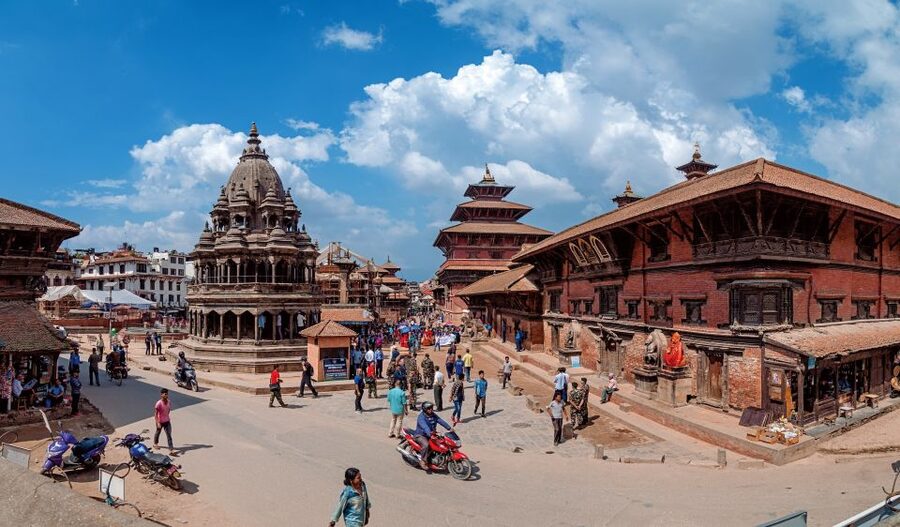
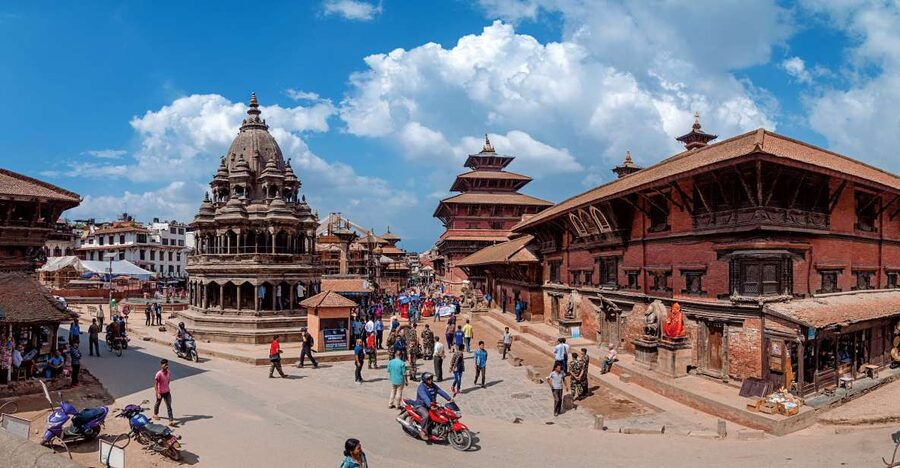
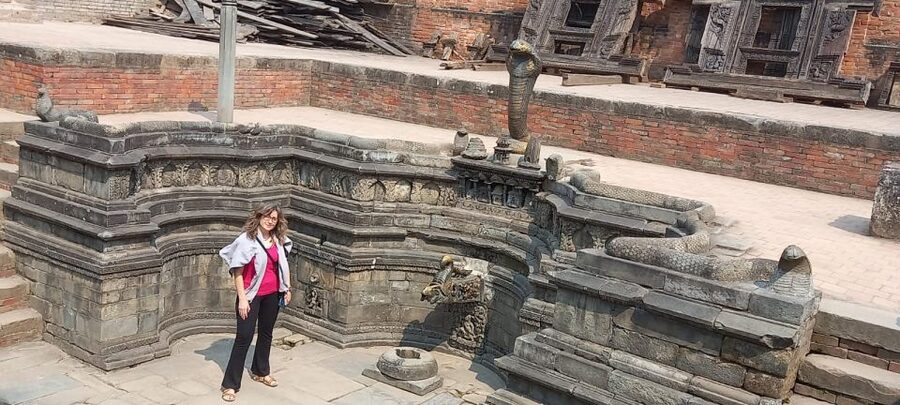
Patan’s Durbar Square (in Lalitpur) feels like a concentrated lesson in Newar architecture and Malla-era royal power. You’ll spend about 1.5 hours here with a guide, and that timing matters. It is enough time to slow down and notice details instead of treating the square like a checklist.
In this space, the royal palace story isn’t separate from religion. You move through a cluster of temples and statues, with carved and built forms that show how rulers and faith were intertwined. The square’s ground is known for its red-brick tiled look, which makes the space feel intentionally designed rather than just built over time.
A key specific highlight is the Krishna Mandir, built in stone and often singled out as one of the most famous features in Patan’s Durbar Square area. This is the kind of detail that’s easy to miss if you’re walking alone, because a guide will explain what to look for and why the work matters.
If you care about “how cities look and function,” Patan is also a good place to observe courtyards and temple placement. Even when you’re just passing between structures, you can start to see patterns: where visitors gather, where religious activity concentrates, and how the palace-royal layout shapes movement.
What to watch for in Patan: the walking surfaces can be uneven, and you’ll want comfortable shoes. Bring a camera, but also take a few minutes just to stand still and look. Temples can be busy visually, and the quiet moment helps you understand scale.
Next Up: Bhaktapur Durbar Square and the Golden-Gate Power Zone
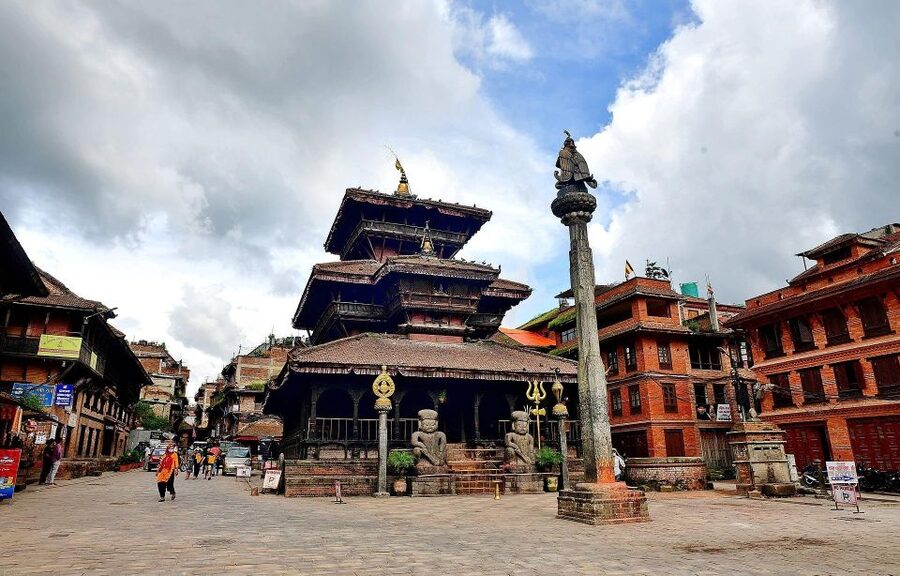
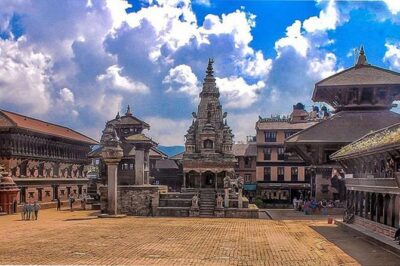
Bhaktapur’s Durbar Square is where the day shifts from “beautiful and interesting” to “wow, this place is doing something special.” You’ll have about 2.25 hours here, and that longer stop pays off.
This is a former royal palace complex tied to the Malla kings of Nepal and later the kings of Bhaktapur, spanning centuries until the kingdom was conquered in 1769. That timeline isn’t just trivia. It helps you understand why the square feels like layered authority: old palace functions, later uses, and then the continuing presence of temples and public spaces.
Even though the area has been used over time for government offices, schools, and private houses, you still see the classic elements of traditional Nepalese architecture. In other words, the heritage isn’t only preserved behind ropes. It’s part of how people organize daily life around history.
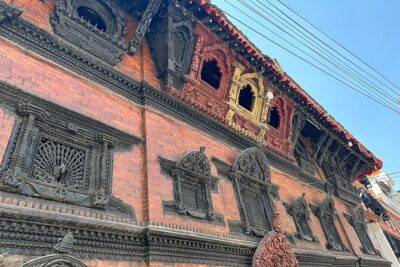
The Golden Gate area is one of the most memorable moments. Behind it, you can find the 55 Jhyale Durbar, known for preeminent wood carving work from the Malla period. If carvings are your thing, this is where your camera will fill up fast, but it is also where your guide’s explanation matters—otherwise the details can turn into visual noise.
Nyātāpola Temple: The Five-Tier Vertical Landmark
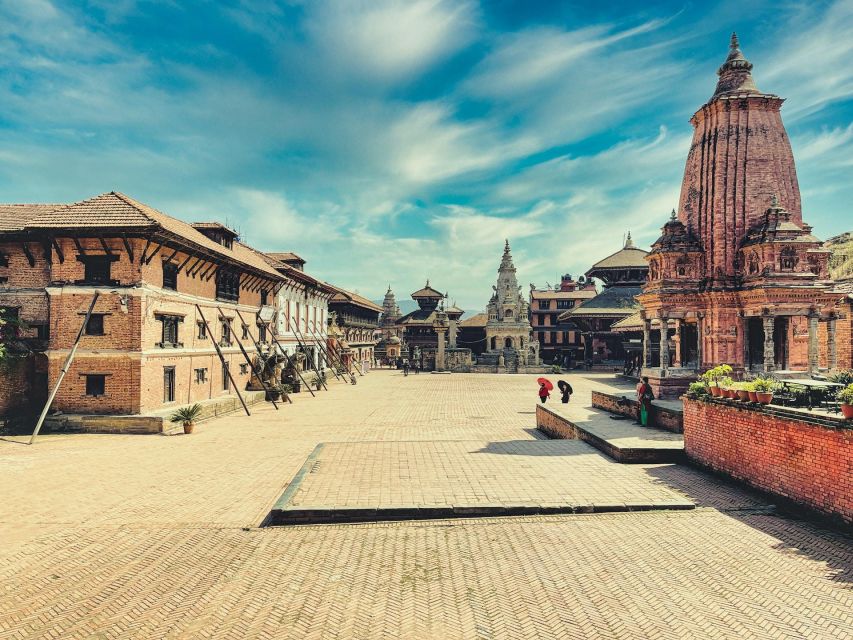
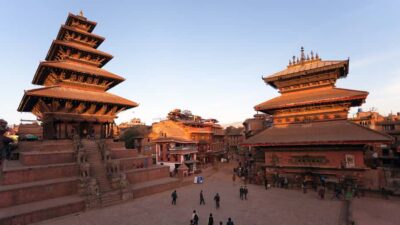
One of the most concrete “don’t miss it” stops in Bhaktapur is Nyātāpola Temple. It is described as the tallest monument in the city and also the tallest temple of Nepal. The construction is linked to King Bhupatindra Malla, with completion in 1702.
Why does this matter beyond the fact it is tall? Because a five-tier temple is basically a design argument. The stacked height changes how you read the whole Durbar Square area—suddenly your eye has a direction, and your photos feel more grounded in a sense of scale. When you’re there, it’s worth pausing long enough to notice how the tiers relate to each other and how the temple sits in the spatial layout of the square.
If you’re traveling with someone who likes architecture, Nyātāpola is a strong match. If your interests are more religious or cultural, it still works because the guide can connect the monument to the commissioning king and the temple tradition.




Pottery Square for Handicraft Shopping
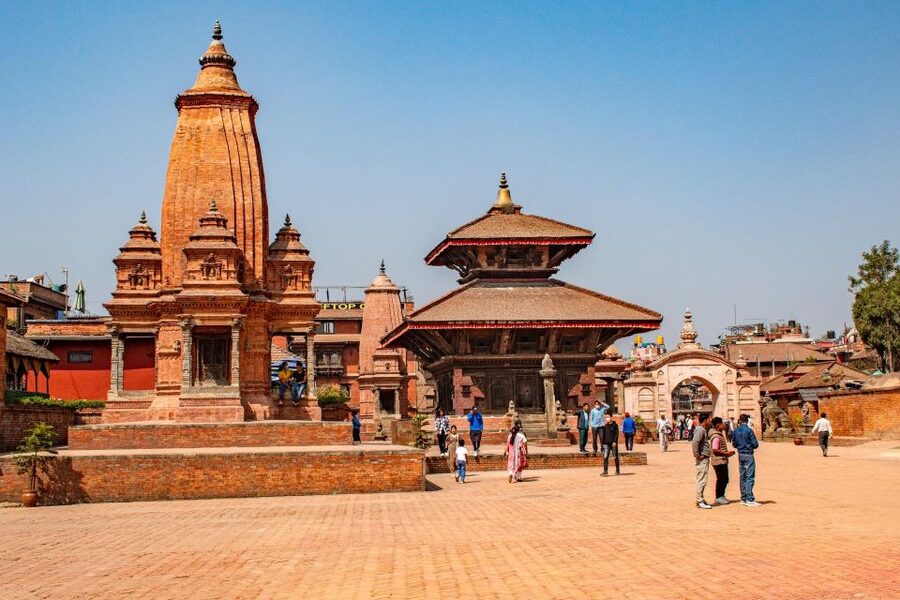
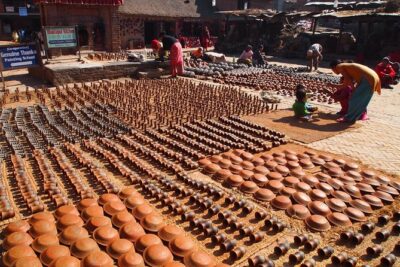
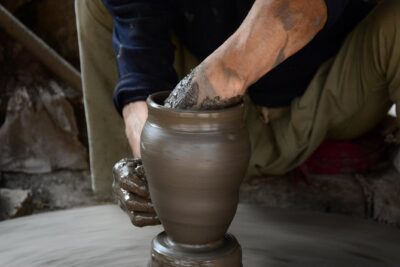
Bhaktapur’s Durbar Square area also connects to practical culture—especially through the Pottery Square. The name points to what you’ll find there: a hub for pottery work and Nepalese handicrafts.
Even if you’re not in “I must buy something” mode, this is a good place to understand how heritage sites connect to everyday craft economy. You can pick up small souvenirs here without the feeling that you’re shopping in a totally separate, tourist-only zone.
The tour information also notes that Pottery Square isn’t as big as Durbar Square, which is good to know. You can spend a little time here without losing momentum for the main monuments.
How the Guides Change the Experience (Nilakantha and Sharmila)
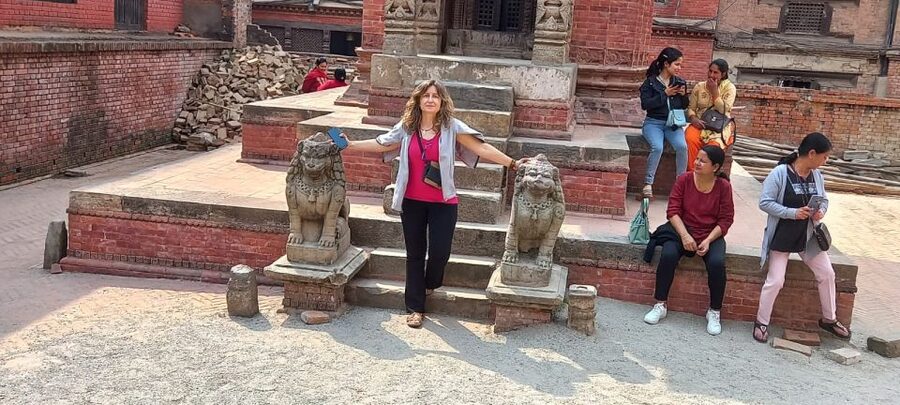
A tour like this lives or dies by explanation. The strongest feedback for this kind of Kathmandu Valley sightseeing tends to be about the guide’s ability to make connections between buildings, religion, and local culture.
Two names that stand out from experience reports are Nilakantha and Sharmila. Nilakantha is praised for teaching Nepalese and Hindu history and culture with perfect English and real enthusiasm. Sharmila is also described as excellent, with strong knowledge of history and religion.
You don’t need the guide to recite dates the whole time. What you want is help noticing what matters: why a temple form looks the way it does, what a carved detail is representing, and how the architecture reflects the values of the people who built and used it.
If you book this, keep an eye on your own curiosity cues. Ask questions when something catches your attention—carving style, temple meaning, or why a palace complex evolved into later uses. A good guide will turn your questions into a faster, smarter way to learn.
Transportation, Timing, and the Advantage of Private AC
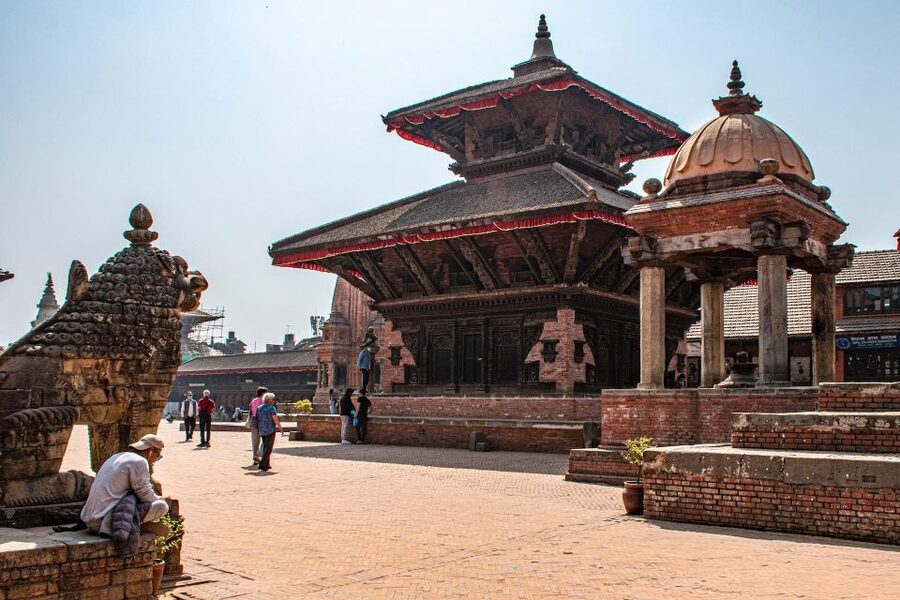
The logistics are simple, which is what you want on a heritage day. You start with hotel pickup, then drive to Patan (about half an hour). After Patan, you head to Bhaktapur (around 40 minutes, depending on traffic), then return to Kathmandu.
The ride being in a private AC car/van is a practical benefit. Kathmandu can be warm, and even a short drive can change your comfort level during a long day of walking and standing at monuments.
This tour is also structured enough that you are not guessing timing. You have guided windows at each Durbar Square, plus a clear return to your hotel. The tradeoff is flexibility: you follow the schedule, and you can’t wander off for hours on your own.
Price and Value: What $45 Really Buys
At $45 per person for 6 hours, this is not priced like a “budget slap-on-a-bus” tour. You’re paying for hotel pickup and drop-off, a live English guide, and private transport in an AC vehicle, plus bottled water.
What you should plan for separately:
- Monument entrance fees (you’ll need cash)
- Meals (not included)
So the value equation is about convenience plus guided context. If you can’t easily self-organize transport and want someone to help you understand what you’re seeing, $45 can feel fair. If you love figuring things out solo and don’t care about explanations, you might find better value by going independently. But if you want the architecture and religious context to make sense while you’re standing in front of it, the guide is a big part of what you’re paying for.
One more value point: there’s an express security check included. That doesn’t remove ticket costs, but it can shave down some friction when you’re moving between heritage zones.
What to Bring (and What to Skip)
Because the tour focuses on outdoor monument areas, you want gear that makes walking easy. Bring:
- Comfortable shoes for uneven ground and longer standing
- A camera for carvings, temple tiers, and courtyard scenes
- Cash for monument entrance fees
- Sunglasses, especially if you’re visiting during warmer daylight hours
- Try to keep luggage small, since oversize luggage isn’t allowed
If you’re the type who packs a lot of extras, keep it lean. The tour constraints are simple, and traveling light reduces stress while you’re moving from one area to another.
Who This Tour Suits Best
This is ideal for you if:
- You want UNESCO-level architecture without spending a full day organizing transport yourself
- You like guided interpretation, especially around Hinduism and Nepalese cultural context
- You enjoy Newari design details and want help noticing them in real time
- You prefer a private pace over a crowded group
It may be less ideal if:
- You’re planning to spend long hours shopping or wandering outside the Durbar Square zones
- You hate set schedules and want total free roaming
For many visitors to Kathmandu Valley, this makes a smart “first real day” choice. You’ll get orientation fast, then you can return later to explore at your own speed if you want.
Should You Book This Kathmandu Valley Private Tour?
I’d book it if you want Patan plus Bhaktapur in one guided day and you care about understanding what you’re seeing, not only capturing photos. The combination of Durbar Square complexes, the major temple landmarks like Nyātāpola, and a guide with strong English and historical context gives you good returns on your time.
Skip it only if you strongly prefer independent travel with no guide, or if you know you’d rather spend your limited time on things not centered on these heritage squares. Otherwise, this is a solid way to connect Kathmandu Valley’s past kingdoms to the living culture you can still sense in the courtyards and temple spaces.
FAQ
How long is the Kathmandu: Private Bhaktapur and Patan Sightseeing Tour?
It runs for 6 hours.
Where does the tour start and end?
It starts with hotel pickup in Kathmandu and ends with drop-off back at your hotel in Kathmandu.
Which sites are included on the tour?
The tour includes Patan Durbar Square and Bhaktapur Durbar Square.
Is there a guided component?
Yes, you’ll have a live tour guide in English.
How do you get to each destination?
You travel by private AC car or van.
Are meals included in the price?
No, meals are not included.
Do I need cash during the tour?
Yes, you should bring cash to pay monument entrance fees.
What should I bring or wear?
Bring a camera, cash, comfortable shoes, and sunglasses. Oversize luggage is not allowed.
Private Days, Your Group Only


More Tours in Kathmandu


More Tour Reviews in Kathmandu




Just Reviewed in Kathmandu
- Mountain Bike Tour
★ 5.0 · 3 reviews - Annapurna Panaroma
★ 5.0 · 3 reviews - Mount Everest Scenic Flight 50 Minutes
★ 5.0 · 3 reviews - Kathmandu : Swambhunath & Durbar Square Guided Half Day Tour
★ 3.3 · 3 reviews - Chandragiri Cable Car & Monkey Temple Tour – Private/Group
★ 5.0 · 3 reviews - Kathmandu: Shivapuri National Park Hiking Day Trip
★ 3.3 · 3 reviews
Bhaktapur Tours, compared.
 ★ 5.0Private Bhaktapur and Nagarkot Day Tour From KathmanduFrom $20305 reviews
 ★ 5.0Day Trip to Bhaktapur and Panauti from KathmanduFrom $34184 reviews
 ★ 5.0Bhaktapur & Patan Durbar Square Day ToursFrom $50122 reviews
 ★ 5.0Nagarkot Sunrise & Bhaktapur UNESCO Heritage Private TourFrom $5066 reviews
 ★ 4.7Private Patan and Bhaktapur Sightseeing TourFrom $4964 reviews
 ★ 4.9Bhaktapur & Nagarkot Day Tour with Lunch – Private/GroupFrom $562 reviews
 ★ 4.0Nagarkot Sunrise & Bhaktapur Heritage Tour -Private Full Day TripFrom $6042 reviews
 ★ 5.0Kathmandu and Bhaktapur Cities Guided TourFrom $7034 reviews
Browse the lists this tour appears in