
Review · KATHMANDU DURBAR SQUARE TOURS
Swayambhu and Kathmandu Durbar Square Half Day Tour
Two UNESCO sites. One tight schedule.
If you want Kathmandu context fast, this half-day tour is a practical win: I like the convenience of hotel transfers and I also like that entrance tickets are handled for you, so you can spend your time looking instead of organizing. The route connects Hindu and Buddhist traditions through Swayambhu (Monkey Temple) and Kathmandu’s royal-era Durbar Square, with a local guide to put the pieces together.
The main thing to consider is pace. This is built for a quick overview—each major highlight gets a short visit, and a few areas are described as busy (like the shopping market and Akash Bhairav Temple), so you’ll want realistic expectations about how much you can linger.
In This Review
- Key highlights you’ll actually feel
- A half-day that gets you oriented in Kathmandu
- Swayambhunath, the Monkey Temple viewpoint everyone talks about
- A short detour inside: Amideva Buddha Park
- Kathmandu Durbar Square: where royal power met daily life
- Kumari Chowk: the living goddess stop
- Hanuman Dhoka: royal-square power with a people-centered feel
- Basantapur Tower and the craft-street atmosphere
- Akash Bhairav Temple: quick, busy, and a tasty pause
- The local shopping market: where you watch Kathmandu at work
- Why your guide matters: the Pankaj factor
- Price and value: what $65 covers and why it’s fair
- Timing and comfort: how to make four hours feel worthwhile
- Who this tour fits best (and who might want more time)
- Should you book this half-day Swayambhunath and Durbar Square tour?
- FAQ
- How long is the Swayambhu and Kathmandu Durbar Square half-day tour?
- What’s included in the tour price?
- Are entrance tickets included for both places?
- Is food or drinks included?
- Is pickup offered, and is it a private group tour?
- Can I cancel for a full refund?
Key highlights you’ll actually feel
- Hotel pickup and drop-off saves you time and hassle in a traffic-clogged city
- Entrance fees included means fewer ticket lines and more time on-site
- Swayambhu to Durbar Square in one loop gives you two UNESCO World Heritage stops without backtracking
- Guide-led culture explanations helps you understand Hindu and Buddhist symbols instead of just seeing them
- Royal-square highlights in compact time covers Kumari Chowk, Hanuman Dhoka, and Basantapur Tower efficiently
Not sure yet? Here are other Kathmandu tours worth a side-by-side look.
- Everest Base Camp Trek – 14 Days★ 5.0 · 1,499 reviews
- Everest Base Camp Trek★ 5.0 · 842 reviews
- Private Kathmandu Sightseeing Tour | UNESCO World Heritage sites★ 5.0 · 756 reviews
- Kathmandu: 7 UNESCO Sites with Lunch★ 4.8 · 744 reviews
A half-day that gets you oriented in Kathmandu
Kathmandu can feel like a puzzle at first. This tour is designed to help you get your bearings fast by linking two big UNESCO sites in one clean morning-or-afternoon style outing. You’re not just hopping between landmarks—you’re moving through spaces where Nepalese Hindu and Buddhist life has been layered for a long time.
The value for many people is simple: you get hotel pickup and drop-off plus private vehicle transport, so you’re not spending your limited time figuring out routes. And because entrance tickets are included, you can keep the momentum going right away.
Swayambhunath, the Monkey Temple viewpoint everyone talks about
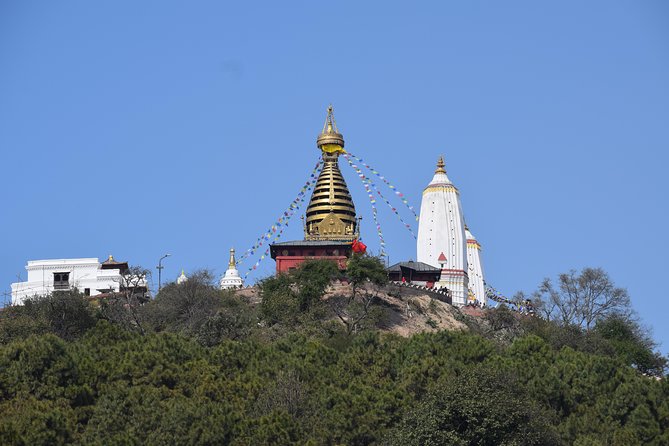
Swayambhu sits on a hill overlooking Kathmandu and the valley beyond, which makes it feel like a natural “orientation point.” The nickname Monkey Temple comes from the monkeys associated with the site, so expect the area to feel lively and active rather than quiet and museum-like.
In about 45 minutes, you’ll have time to take in the hilltop atmosphere and get a sense of why this place matters both spiritually and visually. The standout here is the combination of big views with religious detail. Even if you’re not a hardcore temple person, Swayambhunath is the kind of stop where your brain says, ah, this is why people keep coming back.
What to watch for: because it’s an active temple area, it’s not the place to expect slow walking or long pauses. You’ll want comfortable shoes and a ready-to-look attitude.
A short detour inside: Amideva Buddha Park
Inside the Monkey Temple complex is a small area called Amideva Buddha Park, and it’s a neat example of what a guide can add. This stop is only about 15 minutes, but it’s described as interesting and less common—rare tourists, and a chance to see something you might otherwise skip.
You’ll find a large statue featuring three symbols and Buddha. That detail matters, because it makes the area feel like part of a larger belief system rather than random decoration. Your guide can connect what you’re seeing to the wider Hindu and Buddhist traditions you’re studying across the tour.
Practical tip: since the time is tight here, keep your phone away during the first look. Let your eyes absorb the layout and symbolism; photos are easier after you understand what you’re actually photographing.
Kathmandu Durbar Square: where royal power met daily life
Next comes Kathmandu Durbar Square, the historic heart linked to royal dynasties in the Kathmandu Valley until 2008. This is the kind of place where the stories are layered into the buildings: kings were crowned here, lived here, and ruled from here.
You get about 30 minutes at Durbar Square, which is just enough to understand the vibe and hit a few core spots. The real benefit of having a guide is context—without it, you might walk past carvings and courtyards and miss why they’re significant. With a guide, you’re more likely to notice patterns: religious symbolism, royal architecture, and how the square connects to community life.
A drawback to plan for: 30 minutes is quick. If you love reading every inscription or tracing every architectural detail, you’ll likely want a longer standalone visit after this.




Kumari Chowk: the living goddess stop
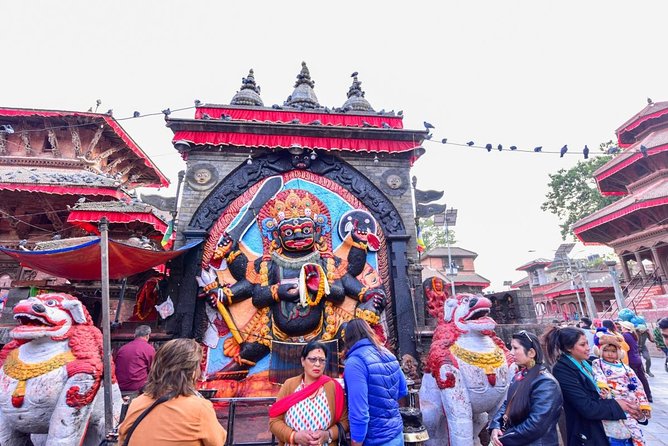
Kumari Chowk is one of the popular areas inside Durbar Square, and it’s a highlight for many visitors. You may have a chance to see live Goddess Kumari. The stop also includes a look at the peacock window and fine carving.
Two things make this stop memorable:
- It’s directly tied to a living tradition rather than only a historical artifact.
- The craftsmanship details give you something tangible to focus on during a short time window.
Consideration: live traditions can be unpredictable, and the tour doesn’t promise a specific viewing moment. Your best move is patience and good positioning when you reach the area—don’t spend all your time scanning photos before you’ve looked at what’s happening around you.
Hanuman Dhoka: royal-square power with a people-centered feel
Inside the Durbar Square area is Hanuman Dhoka, described as a popular place where you can enjoy local life and learn about the people and their culture. You’ll have about 15 minutes here.
This is a nice pacing change from the more symbolic stops. Instead of only focusing on temples and icons, Hanuman Dhoka gives you a sense of the square as a living space—where religious and everyday life overlap.
What I like about this structure: you get a mix of “big meaning” (Kumari) and “daily presence” (Hanuman Dhoka). That balance helps the half-day feel complete rather than just a checklist of monuments.
Basantapur Tower and the craft-street atmosphere
Basantapur Tower is described as an open area around the Durbar Square—busy, with street energy, and a place where you can buy handicrafts and enter the Durbar Square area.
This stop is about 15 minutes. For many first-timers, it’s a helpful breather. You’re not only looking at history; you’re also seeing how the area functions for shopping and street culture right now.
Practical approach: if you want to shop, treat this as your “browse time.” If you try to shop at every stop, you’ll feel rushed. Here, you can slow down a bit and pick up simple souvenirs while the route continues.
Akash Bhairav Temple: quick, busy, and a tasty pause
Akash Bhairav Temple is a small stop, but it’s described as one of the busiest places in town. You’ll have about 15 minutes here.
It’s the kind of place where the point isn’t a long sightseeing session—it’s a short hit of local temple atmosphere. And yes, there’s also a suggestion of grabbing delicious lassi nearby during the stop, which is a simple way to refuel without derailing the itinerary.
If you’re sensitive to crowds: keep your expectations realistic. This is one of the “busier” points on the route, and you’ll get a snapshot rather than a quiet experience.
The local shopping market: where you watch Kathmandu at work
On the way to Durbar Square, you’ll pass a stop connected with the busiest local shopping market in Kathmandu. This isn’t framed as a major cultural lecture—more like a chance to observe local shopping and get a feel for day-to-day movement.
Because your time is limited, think of it as sensory context. You’ll see what people actually buy and how the market energy supports the surrounding landmarks.
Good to know: the tour includes transport and guidance, so you’re not left guessing what’s relevant. You can simply watch, take in the rhythm, and decide later if you want to return on your own.
Why your guide matters: the Pankaj factor
One name came up clearly: Pankaj. The biggest praise wasn’t just that he was friendly—it was that he was informative and fun, and he explained Hindu and Buddhist culture in a way that fits a half-day.
That’s the real difference between a guided loop and a DIY wander. When you’re only in each spot for 15 to 45 minutes, you need the guide to do the heavy lifting: translate symbol meanings, connect the temples to what you’re seeing, and help you understand why Swayambhu and Durbar Square complement each other.
How to get the most out of it: ask short questions as you walk. For example, ask what to look for next at the next stop, or what the symbol you’re seeing typically represents. It’s the quickest way to turn a fast tour into an actually memorable one.
Price and value: what $65 covers and why it’s fair
At $65.00 per person for about 4 hours, this tour can be a good value if you’d otherwise pay for transport and entrance tickets separately. Here’s what you get that usually costs time or money when you plan on your own:
- Hotel pickup and drop-off
- Transport by private vehicle
- A professional guide
- All entrance fees (including admission to both major places)
That last part matters. Temple-area admissions can add up, and dealing with them on your own eats into the short time you have. With this setup, you can keep moving and trust that your time on-site is protected.
Food and drinks are not included, so budget for that separately. The tour also suggests lassi around Akash Bhairav Temple, but you still need to pay for what you order.
Group discounts are mentioned too, which can make the cost even easier to swallow if you’re traveling with others.
Timing and comfort: how to make four hours feel worthwhile
Because this tour is tightly scheduled, your comfort choices affect your whole experience. You’ll be doing multiple short visits across hilly and temple-town conditions, so:
- Wear comfortable shoes you can trust for uneven ground.
- Keep your daypack light; you’ll move through different spots quickly.
- Bring water, since food and drinks are not included.
Also, plan your mindset. This isn’t a slow, deep temple day. It’s a “you’ll learn the story in pieces” format. If you treat it like orientation plus a highlight reel, you’ll feel satisfied instead of rushed.
Who this tour fits best (and who might want more time)
This tour is a strong fit if:
- You’re short on time in Kathmandu and want two UNESCO sites efficiently.
- You want both Hindu and Buddhist context rather than a purely visual walk.
- You’d rather follow a local guide than figure everything out alone.
It may be less ideal if:
- You want lots of time at Durbar Square to linger over details and museums-like exploration.
- You don’t like busy areas, since the route includes stops described as busy (like Akash Bhairav Temple and the local shopping market).
Still, even if you’re picky, the tour can serve as a great first pass. After that, you’ll know exactly what you want to return to.
Should you book this half-day Swayambhunath and Durbar Square tour?
If your goal is a fast, meaningful introduction to Kathmandu’s culture and history, I think this is worth booking. The biggest reasons are the practical ones: pickup and drop-off, private transport, a professional guide, and entrance fees already covered. That combo makes it easy to spend your time inside the places instead of outside them.
Book it when you want structure. Don’t book it if you’re hoping for a slow, quiet, long-stay exploration of every corner. But for a first visit, this is a tidy way to see the Monkey Temple viewpoint side and the royal-square heritage side in just half a day.
FAQ
How long is the Swayambhu and Kathmandu Durbar Square half-day tour?
It lasts about 4 hours.
What’s included in the tour price?
Hotel pickup and drop-off, transport by private vehicle, a professional guide, and all entrance fees are included.
Are entrance tickets included for both places?
Yes, admission tickets to Swayambhunath and Kathmandu Durbar Square are included.
Is food or drinks included?
No. Food and drinks are not included.
Is pickup offered, and is it a private group tour?
Pickup is offered (hotel pickup and drop-off included). It’s also described as a private tour/activity where only your group participates.
Can I cancel for a full refund?
Yes, you can cancel for free up to 24 hours in advance for a full refund.
More Tours in Kathmandu




More Tour Reviews in Kathmandu




Just Reviewed in Kathmandu
- Mountain Bike Tour
★ 5.0 · 3 reviews - Annapurna Panaroma
★ 5.0 · 3 reviews - Mount Everest Scenic Flight 50 Minutes
★ 5.0 · 3 reviews - Kathmandu : Swambhunath & Durbar Square Guided Half Day Tour
★ 3.3 · 3 reviews - Chandragiri Cable Car & Monkey Temple Tour – Private/Group
★ 5.0 · 3 reviews - Kathmandu: Shivapuri National Park Hiking Day Trip
★ 3.3 · 3 reviews
Kathmandu Durbar Square Tours, compared.
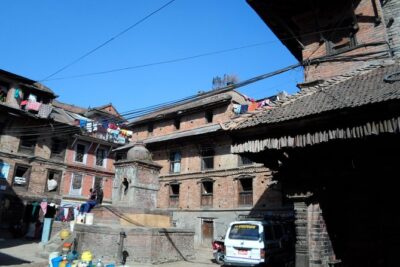 ★ 5.0Bhaktapur & Patan Durbar Square Day ToursFrom $50122 reviews
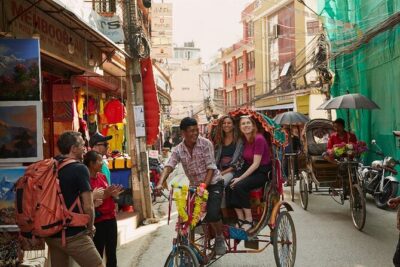 ★ 5.0Kathmandu Sunset Tour by Rickshaw Including Durbar Square VisitFrom $5073 reviews
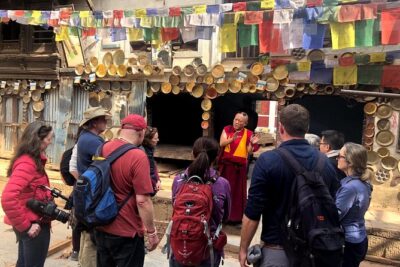 ★ 5.0Old Kathmandu Walking Tour, Historic World Heritage Durbar SquareFrom $2822 reviews
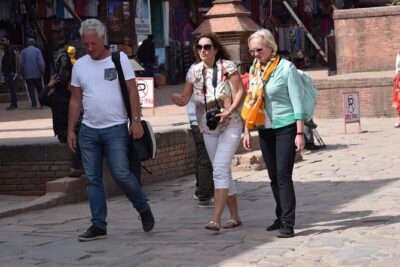 ★ 4.5City tour of Bhaktapur and Patan Durbar SquareFrom $11020 reviews
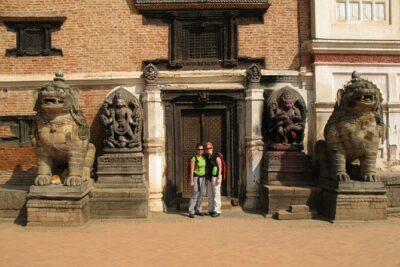 ★ 5.0Bhaktapur Old City and Durbar Square Half-Day TourFrom $6515 reviews
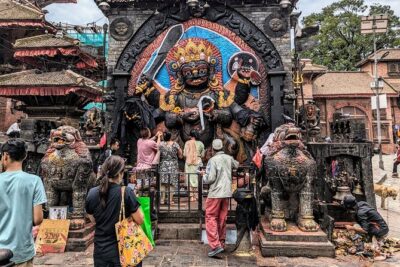 ★ 5.0Kathmandu Durbar Square – Private/Small GroupFrom $1513 reviews
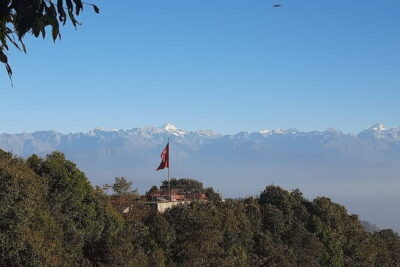 ★ 5.0Nagarkot Sunrise & Bhaktapur Durbar Square UNESCO Heritage TourFrom $5512 reviews
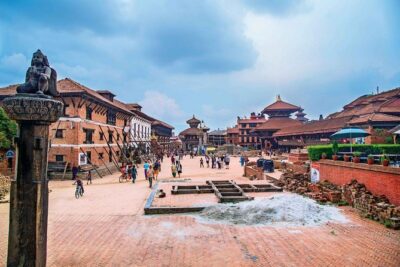 ★ 5.0Patan & Bhaktapur Durbar Square Tour with Lunch – Private/GroupFrom $511 reviews
Browse the lists this tour appears in