
Review · KATHMANDU DURBAR SQUARE TOURS
Kathmandu Sunset Tour by Rickshaw Including Durbar Square Visit
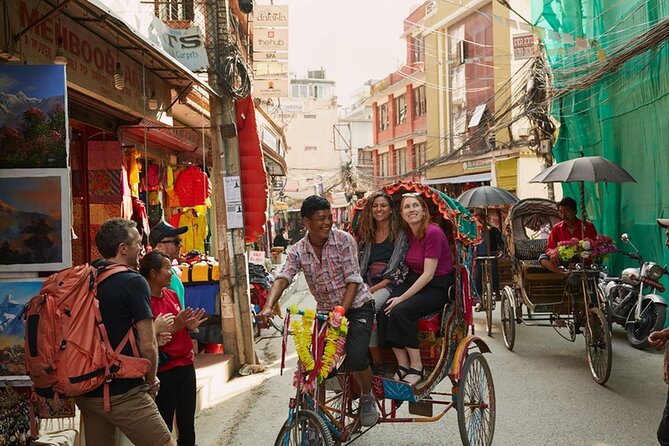
Kathmandu by rickshaw at sunset hits different. You glide from Thamel through street markets to Durbar Square, then switch to walking so you can actually see the details as the light softens. It’s a small-group tour (up to 12) that keeps the pace easy, but the city still feels full-on around you.
I love the view angle the rickshaw gives you—high enough to spot temple rooftops, shop signs, and foot traffic without craning your neck. I also like the mix of riding and getting off your seat for Durbar Square, including time to pause, people-watch, and grab a chai if you want. One thing to consider: nighttime lighting in Kathmandu can be uneven, so bring your patience for photos after sunset and wear shoes with grip on older stone and uneven paths.
In This Review
- Key things that make this Kathmandu sunset rickshaw tour worth it
- Sunset on Wheels: why 6:00 pm is the right time in Kathmandu
- Where you meet: Hotel Marshyangdi and an easy start in Thamel
- Thamel to Asan: market smells, temple corners, and watching the city work
- Getting to Durbar Square: from street noise to stone details
- Durbar Square on foot: temples, courtyards, Freak Street, and Gaddhi Baithak
- Guides matter: Nikita, Sanjeeb, and why explanation is part of the value
- Price and what you’re actually getting for $50.30
- Carbon-neutral and local impact: small choices that add up
- Festival nights can happen: what to expect if the street is loud
- Practical tips for an easier ride and better photos
- The tour flow, in plain terms: what you’ll do in each segment
- Should you book this Kathmandu sunset rickshaw tour?
Key things that make this Kathmandu sunset rickshaw tour worth it
- A 6:00 pm start means you catch the shift from day heat to evening bustle
- Thamel to Asan gives you a fast taste of markets and local temple corners
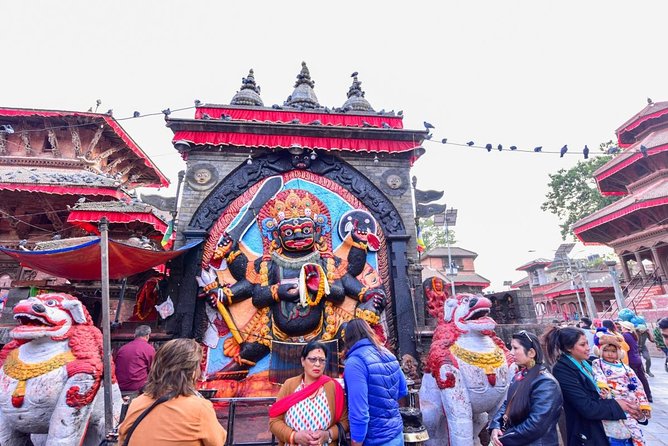
- Durbar Square on foot lets you slow down where temples, courtyards, and shrines cluster closely
- Durbar Square entrance is included so you’re not hunting for tickets mid-tour
- Up to 12 people keeps your guide’s attention more real than rushed
- Carbon-neutral, B Corp-style values plus direct rickshaw support for drivers
Other ways into a Kathmandu evening
- 3 Nights 4 Days Chitwan National Park with Tower Night Stay★ 5.0 · 41 reviews
- 3 night 4 Day Yoga & Ayurveda Retreat to Detox the Body & Mind, Nepal★ 5.0 · 37 reviews
- Kathmandu: Pashupatinath Temple Evening Aarati Tour★ 5.0 · 36 reviews
- Kathmandu: Pashupatinath Temple Aarti Night Tour★ 4.8 · 29 reviews
Sunset on Wheels: why 6:00 pm is the right time in Kathmandu
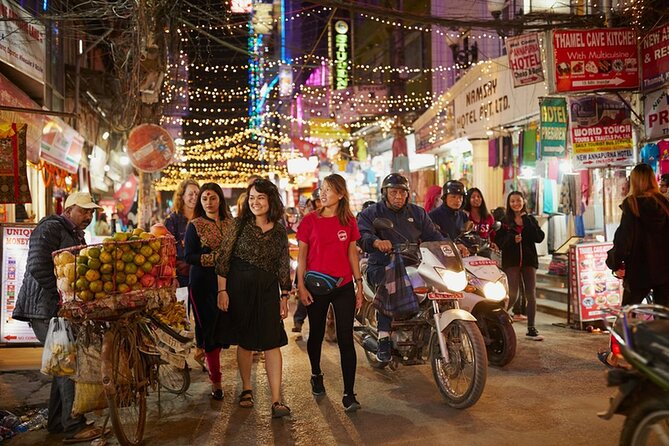
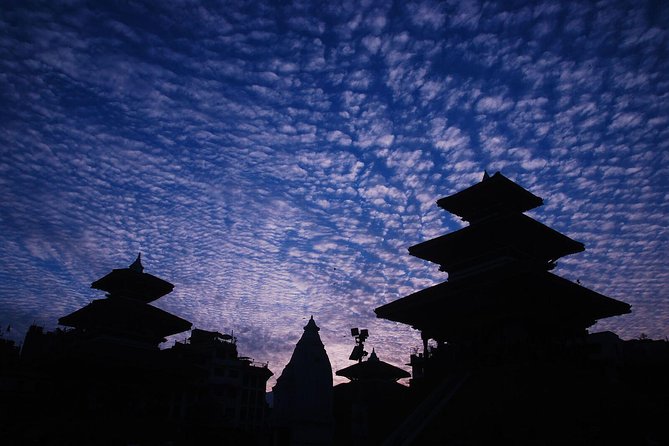
This tour starts at 6:00 pm, and that timing matters more than it sounds. Early evening is when Kathmandu’s street life starts to feel more human: shops are still open, food smells move through the lanes, and temples look dramatic as shadows stretch across carvings and courtyards.
At the same time, you’re not stuck with midday traffic and sun. You’ll be moving through narrow streets at a laid-back pace, so you can watch without feeling like you’re sprinting between monuments. The rickshaw ride also gives you that useful “in between” perspective—between walking, where your eyes are close to the ground, and driving, where everything flashes by.
Where you meet: Hotel Marshyangdi and an easy start in Thamel
You’ll meet at Hotel Marshyangdi, Chaksibari Marg, Kathmandu, and your first push is straight into Thamel, Kathmandu’s main tourist hub. Don’t expect quiet. Thamel is where you’ll see hotels, restaurants, shops, and street activity all layered together. It’s a good place to start because it gives you quick context for what you’ll see later.
For the first stage, you board your personal rickshaw and settle in for the ride as your driver works through pedestrian-heavy streets. You’ll have an elevated seat that’s high enough to look down the lane and spot what’s ahead—useful in a city built around tight turns and sudden intersections.
Quick practical tip: this is a rickshaw ride. Bring something light to cover your shoulders or arms if you like, and wear clothing that won’t mind getting a bit dusty. Kathmandu streets can be lively in more ways than one.
Thamel to Asan: market smells, temple corners, and watching the city work
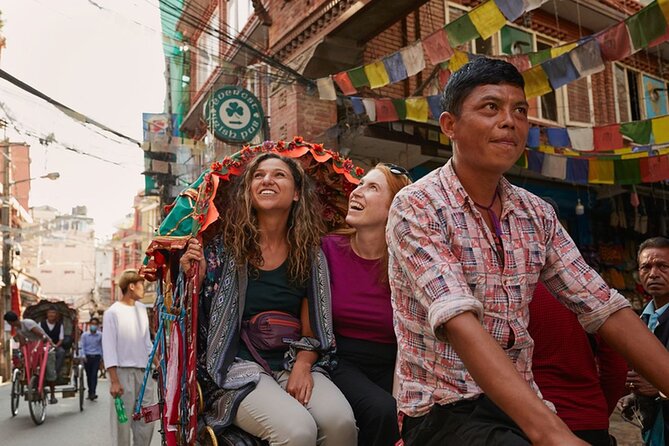
From Thamel you’ll head toward Asan, with time to pass by market stalls and square areas along the way. This is where Kathmandu’s daily rhythm really shows. You’re not just seeing buildings—you’re seeing commerce, craftsmanship, and the kind of foot traffic that comes from people living and working nearby.
When you reach Asan, you get the chance to stand around and look closely at one of the area’s historic market zones. The focus here is practical shopping: spices, herbs, and all sorts of goods moving between vendors and buyers. The lanes can feel packed, so this part of the tour is more about observation than rushing to tick boxes.
A fun detail the guide brings up is the Annapurna Temple, tied to the idea of Anna as Food and Purna as Fulfil. You’ll also stop by other temple spots around the market area, including:
- Seto Machindranath, also known as Janabaha Dyo, a deity worshiped by both Hindus and Buddhists in Kathmandu
- Aakash Bhairab, described here as tied to the first king in Nepal Bhasa, known as King Yalambar
I like these stops because they explain how Kathmandu’s religious life doesn’t sit off to the side. In this part of town, shrines and devotion sit right inside everyday shopping.
Getting to Durbar Square: from street noise to stone details
After Asan, you ride through narrow lanes to reach Kathmandu Durbar Square. This is the UNESCO-listed core where palaces, courtyards, and temples cluster within a small area. The time on the clock shifts here—from watching streets flow to noticing how older structures relate to each other.
Riding in gets you there, but it’s the next part—getting off your rickshaw—that makes Durbar Square click. Kathmandu has plenty of temples. Durbar Square is special because the density of historical structures is high, so you can walk a few minutes and feel like you’ve stepped into a whole architectural chapter.
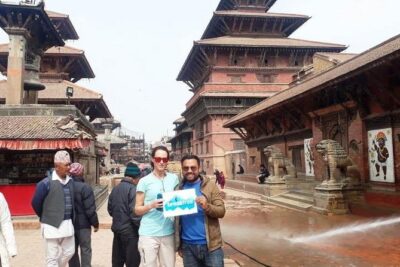
Durbar Square on foot: temples, courtyards, Freak Street, and Gaddhi Baithak
Your Durbar Square time is 1 hour 25 minutes, and the entrance fee is included. You’re doing the right order: arrive as daylight fades, then walk while the light is forgiving enough for close-up photos and slow reading of details.
Inside Durbar Square, you’ll see lots of temple and shrine groupings—more than 50 within a few blocks. Your guide helps you make sense of what you’re seeing instead of just following signs.
One standout mentioned in the tour is Gaddhi Baithak, a white building with European influence built during the Rana regime. It’s known today for ceremonial programs taking place from its balcony. Even if you don’t catch an event, it’s a striking contrast against the older wooden and stone elements around it, and your guide will point out why it matters.
You’ll also get time to hang around the lively inner streets where food stalls and shops sit near temples. There’s even a spot some people call Freak Street, where you can find shops tied to the long-ago hippie era vibe in the area. If you want a break, you can sit on a bench and do the underrated travel skill: watching how locals move through the space.
If you get chilly, you might be able to warm up with chai from a local vendor or pub in the area. That’s not just a drink stop—it’s your way to reset before heading back into the traffic noise.
And yes, this is also where you’ll get a Buddhist Sigal shrine visit as part of the time in the Durbar Square complex. If you’re interested in how faiths layer in Kathmandu, this helps connect dots.
Guides matter: Nikita, Sanjeeb, and why explanation is part of the value
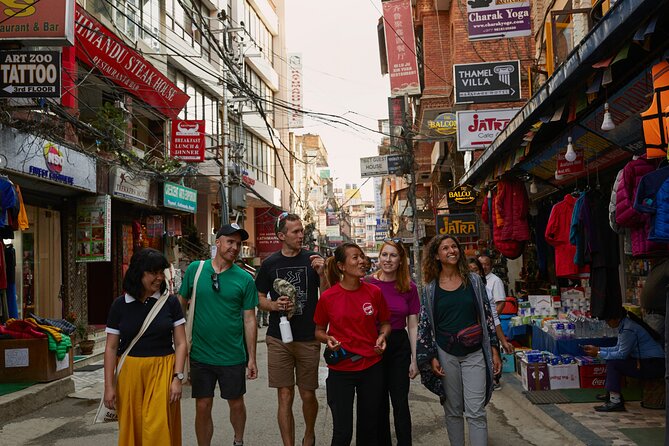
The riding helps, but the guide is what makes it stick in your memory. In past runs of this tour, guides like Nikita and Sanjeeb have been specifically praised for being welcoming, warm, and good at pointing out what you’re looking at.
What I’d watch for on your side: the best guides don’t just recite facts. They show you what to notice—temple features, names, the small cues that tell you what era you’re standing in. If your guide is doing that, you’ll walk away feeling like Kathmandu made sense, not just like you saw a lot of photos.
Price and what you’re actually getting for $50.30
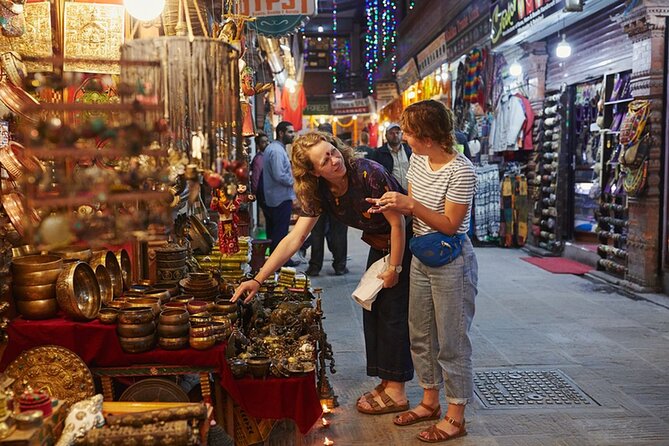
At $50.30 per person for about 2 hours 30 minutes, this tour prices itself as “more than a cab ride, less than a big day trip.” And that’s the right way to think about it.
Here’s what you’re paying for:
- Rickshaw hire included, so you’re not arranging transport on your own
- Durbar Square entrance fee included, which matters in a place where you’d otherwise have to factor tickets into your plan
- A guide and driver who handle the pacing and routing through busy lanes
- A real stop on foot at Durbar Square, instead of just a photo-at-the-gate approach
Food and drinks are not included, so factor in that you might want chai or a snack during the walking portion. Still, the overall value is strong because the tour covers both transport and the key historic area entry.
If you’re already doing a full-city sightseeing day, there can be some overlap, since Durbar Square and central markets are common in many itineraries. In that case, I’d treat this as the evening “soft landing” version—more relaxed and easier than squeezing temples into a packed daytime schedule.
Carbon-neutral and local impact: small choices that add up
This tour is described as carbon neutral and run by a B Corp certified company committed to using travel for good. Even if you don’t track emissions, these labels often correlate with attention to how operations work in practice.
More concrete is the local impact:
- Entrance fees to Kathmandu Durbar Square support preservation of cultural heritage
- Rickshaws are hired directly from drivers, which is a real money-flow difference versus a middle layer taking most of the profit
For you, the payoff is simple: you’re not just consuming sights. You’re also supporting the people who make the experience possible.
Festival nights can happen: what to expect if the street is loud
One thing I’m glad to note: this tour can coincide with festival evenings. In past experiences, people packed the area, with drums, chanting, and dancing. That can turn a normal evening stop into something extra alive.
If that happens to your date, don’t fight it. Build a little extra buffer into your mental schedule. Even with a planned route, crowds can change the pace, and your guide will likely adjust while still getting you through the important points.
Practical tips for an easier ride and better photos
A few street-level tips will help this feel smooth:
Bring the right footwear
Durbar Square involves walking on stone and uneven ground. Wear shoes with grip and don’t rely on flip-flops or very soft soles.
Plan for nighttime lighting
Even with clear skies, Kathmandu lighting can be patchy at street level. For photos, rely on your phone’s night mode if you use it, and avoid assuming you’ll get crisp shots everywhere. Sometimes the better move is to take fewer pictures and enjoy the place with your eyes first.
Set expectations about any add-ons
One caution that comes up in similar evening city planning: if you’re doing anything outside the included plan, agree on the price first. For this tour, you’ll return to the meeting point, but if you’re adding rides afterward, handle the cost talk cleanly.
Bring a light layer
Evenings can feel cooler as the sun drops. A light jacket helps you stay comfortable during the walking portion.
The tour flow, in plain terms: what you’ll do in each segment
To make this easy to visualize, here’s the rhythm of the whole experience:
- Thamel (about 15 minutes): meet, board, and get started
- Asan (about 50 minutes): market atmosphere plus temple stops around the market zone
- Kathmandu Durbar Square (about 1 hour 25 minutes): walking time in the dense temple and shrine area, with Gaddhi Baithak and time in the surrounding lively lanes
- Return ride: hop back on the rickshaw after exploring and head back to the original meeting point
It’s structured, but not stiff. You get enough time to breathe between the big moments.
Should you book this Kathmandu sunset rickshaw tour?
Book it if you want a low-stress introduction to central Kathmandu that mixes street life with real temple time. The combo of an easy rickshaw ride plus walking through Durbar Square is a great formula for an evening: you get movement, then you get to slow down.
Skip it (or pair it differently) if:
- you already have a very dense itinerary that includes the exact same core sights in the same timeframe
- you’re not comfortable with uneven stone walking after dark
- you dislike crowds, since Asan and Durbar Square areas can get busy, especially around events
My take: for $50.30, you’re buying transport, a guide, and included entry to one of Kathmandu’s most concentrated historic areas—plus the chance to see the city shift from day mode to night mode. If that sounds like your kind of travel evening, this one fits well.
When the Lights Come On
More Tours in Kathmandu


More Tour Reviews in Kathmandu

Just Reviewed in Kathmandu
- Mountain Bike Tour
★ 5.0 · 3 reviews - Annapurna Panaroma
★ 5.0 · 3 reviews - Mount Everest Scenic Flight 50 Minutes
★ 5.0 · 3 reviews - Kathmandu : Swambhunath & Durbar Square Guided Half Day Tour
★ 3.3 · 3 reviews - Chandragiri Cable Car & Monkey Temple Tour – Private/Group
★ 5.0 · 3 reviews - Kathmandu: Shivapuri National Park Hiking Day Trip
★ 3.3 · 3 reviews
Kathmandu Durbar Square Tours, compared.
 ★ 5.0Bhaktapur & Patan Durbar Square Day ToursFrom $50122 reviews
 ★ 5.0Old Kathmandu Walking Tour, Historic World Heritage Durbar SquareFrom $2822 reviews
 ★ 4.5City tour of Bhaktapur and Patan Durbar SquareFrom $11020 reviews
 ★ 5.0Bhaktapur Old City and Durbar Square Half-Day TourFrom $6515 reviews
 ★ 5.0Kathmandu Durbar Square – Private/Small GroupFrom $1513 reviews
 ★ 5.0Nagarkot Sunrise & Bhaktapur Durbar Square UNESCO Heritage TourFrom $5512 reviews
 ★ 5.0Patan & Bhaktapur Durbar Square Tour with Lunch – Private/GroupFrom $511 reviews
 ★ 4.5Private Half-Day Tour of Kathmandu Durbar Square and Swayambhunath TempleFrom $4711 reviews
Browse the lists this tour appears in