
Review · KATHMANDU UNESCO HERITAGE TOURS
Old Kathmandu Walking Tour, Historic World Heritage Durbar Square
Old Kathmandu can feel like a puzzle. This walking tour pulls you through the city’s everyday rhythm and sacred spaces, from Thamel-linked ancient shrines to UNESCO Kathmandu Durbar Square and the Living Goddess at Kumari Chowk. I like that you get both the big-name highlight and the lesser-seen courtyards where Kathmandu’s stories actually live.
I also like how the tour wraps with a simple tea or coffee chat with your guide, so the day turns into something you understand, not just something you photographed. A practical heads-up: entry fees for Kathmandu Durbar Square (and the related Durbar Square / Swayambhu Stupa area you pass through) are not included in the price, so your final cost may be a little higher.
Key highlights like the 108 Avalokitesvara icons at Janabaha Dyo (Seto MachhindraNath Temple) and the Buddhist monastic remains at Itum Bahal are the kinds of details you’d easily miss on your own. Plus, it’s a private tour for your group, starting at 9:00 am and running about 4 to 5 hours—a manageable length when your Kathmandu time is tight.
In This Review
- Key highlights
- Entering Old Kathmandu With a Local Starting Point (Thamel first, then the temples)
- Price and value: $28 makes sense, but Durbar Square entry costs extra
- A realistic 4–5 hour route: quick stops, good pacing, and time for questions
- Bikramshila Mahavihar (Thambahil): how Thamel connects to Kathmandu’s oldest Newar threads
- Asan Bazaar: the oldest living market where locals still buy everything daily
- Janabaha Dyo (Seto MachhindraNath Temple): 108 Avalokitesvara icons and compassion in stone
- Itum Bahal: courtyards and the surviving footprint of an 11th-century monastery
- Kathmandu Durbar Square and Kumari Chowk: UNESCO major sights plus a living tradition
- Kathesimbu / Dharmakirti Vihara: a Swayambhunath-style replica you can link to the main pilgrimage
- Cafe Mitra: the tea-and-chat finish that turns facts into understanding
- What the guides bring (and why the details land)
- Who this tour suits best in Kathmandu, and who might skip it
- Should you book the Old Kathmandu Walking Tour for Durbar Square and Kumari?
- FAQ
- How long is the Old Kathmandu Walking Tour?
- Where does the tour start and where does it end?
- What time does the tour begin?
- Is pickup available?
- Is the tour private or shared?
- What does the price include?
- Are entry fees included for Durbar Square?
- How much does the tour cost?
- Do I need to buy tickets in advance?
- What is the cancellation policy?
Key highlights
- Thamel’s name traces back to Thambahil (Bikramshila Mahavihar), a rare stop most people skip.
- Asan Bazaar lets you see a living market still used for everyday buying and selling.
- Janabaha Dyo / Seto MachhindraNath Temple features 108 engraved Avalokitesvara icons tied to local devotion.
- Itum Bahal shows the kind of 11th-century monastery layout you only catch when someone points it out.
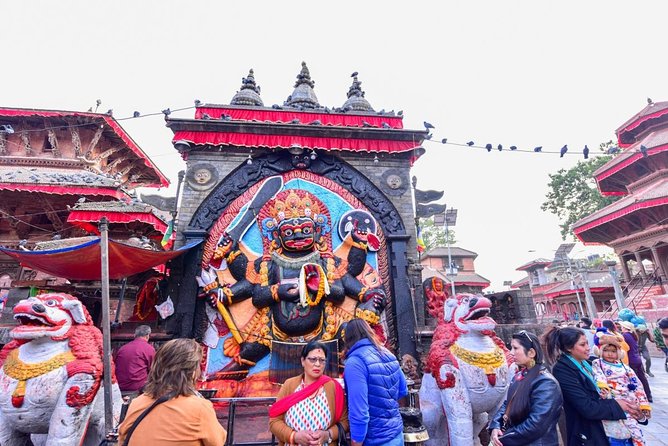
- Kumari Chowk at Durbar Square is a top cultural moment, especially if you’re there at the right time.
- Cafe Mitra debrief: tea or coffee with your guide to turn the walk into context.
Kathmandu at walking pace, more routes
- Kathmandu Food and Drink Walking Tour★ 5.0 · 266 reviews
- Kathmandu: Food and Drink Walking Tour★ 4.9 · 119 reviews
- Walking Street Food Tour in Kathmandu★ 5.0 · 111 reviews
- Walking Food Tour in Hidden Local Eateries of Kathmandu★ 5.0 · 40 reviews
Entering Old Kathmandu With a Local Starting Point (Thamel first, then the temples)
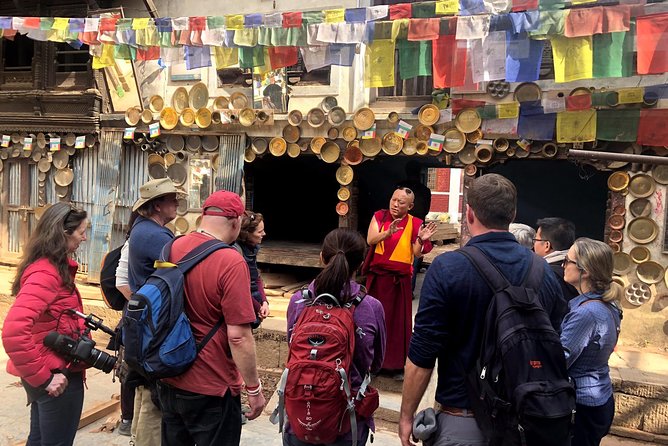
The tour is built for people staying in tourist Thamel. If you’re there, you’ll start close to your hotel lobby. If you aren’t, they’ll pick you up and bring you to the starting area in about a 20-minute drive, then you begin the walk from the city’s older core.
The best part here is not just convenience—it’s timing and flow. Starting in the morning helps you move through markets and temple squares while they’re still active but not totally swallowed by the day’s rush. You also get that rare combination of small-scale street life and major UNESCO-level sites without feeling like you’re doing two separate tours.
Price and value: $28 makes sense, but Durbar Square entry costs extra
At $28 per person, this tour sits in a sweet spot for Kathmandu: it’s not cheap enough to be random, and it’s not expensive enough to feel like a special-only luxury experience. You also get private transportation plus coffee and/or tea, and your guide brings you around in a way that’s hard to replicate solo unless you already know the neighborhoods well.
The trade-off is clear: entry fees to Kathmandu Durbar Square premises and the Swayambhu Stupa area are not included. In practical terms, that means you should budget a bit more than $28 if you want everything fully covered on the day. The upside is that many of the earlier shrine and monastery stops include free admission, so you’re not paying the whole time.
A realistic 4–5 hour route: quick stops, good pacing, and time for questions
The tour is designed with shorter “look-and-learn” stops—typically around 15 to 30 minutes—so you can absorb details without burning out. Then it spends longer at Durbar Square and Kumari Chowk, where you’ll want time to simply stand back and see how the space is arranged: courtyards, temple clustering, and the way worship happens in public.
You should plan to be on your feet for most of the morning. This is generally suitable for most people since it’s described as accessible for most travelers, but it’s still a walking city tour with stone steps and tight spaces. The payoff is that you see many separate sites in one run, instead of picking just one “big thing” and calling it a day.
Bikramshila Mahavihar (Thambahil): how Thamel connects to Kathmandu’s oldest Newar threads
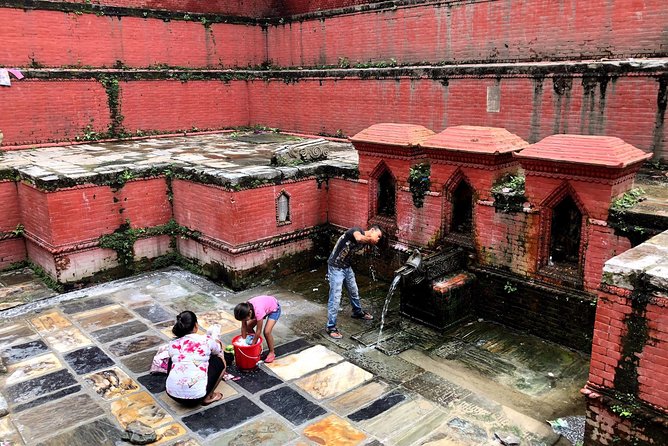
Stop one is Bikramshila Mahavihar (also known as Thambahil). This is one of those spots that sounds like a footnote until your guide explains why it matters. The tour points out that the name Thamel is tied to this historic monument—so you’re not just seeing Old Kathmandu, you’re seeing the roots of the tourist Kathmandu you already arrived in.
You’ll get about 15 minutes here. Since the admission ticket is listed as free, it’s a great opener: a quiet, rarely visited start that sets the tone. This is where the tour’s theme becomes clear—local Newar Buddhist culture is not “behind the scenes.” It’s foundational.
Deeper into old Kathmandu
Asan Bazaar: the oldest living market where locals still buy everything daily
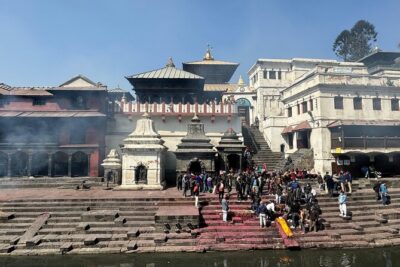
Next comes Asan, described as Kathmandu’s oldest living market. This isn’t a craft fair set up for visitors. It’s a working place where locals buy and sell everyday goods—vegetables, clothing, metal items—and even spiritual items.
Asan is one of those stops where you should slow down and watch. Notice how commerce blends with devotion and routine. Your guide’s job is to help you read the scene, not just march you past it, and that’s where a good morning tour pays off.
Admission is free for this stop too, which means you’re paying for the perspective, not another ticket.
Janabaha Dyo (Seto MachhindraNath Temple): 108 Avalokitesvara icons and compassion in stone
Stop three is Janabaha Dyo, also known as the Seto MachhindraNath Temple. Here’s the cultural link that makes the stop more than “another shrine”: it’s described as a native deity of Kathmandu and Tibetan Buddhists. Your guide connects it to Avalokitesvara, the god of compassion, and points out the 108 engraved icons representing major forms of Avalokitesvara.
This is the kind of detail that changes how you see temple walls. Instead of treating the building like décor, you start looking for meaning in repetition, icons, and how people react when they recognize a devotion.
Again, this stop is about 15 minutes and free admission. It’s a quick hit, but it’s a memorable one if you like symbolism you can actually see.
Itum Bahal: courtyards and the surviving footprint of an 11th-century monastery
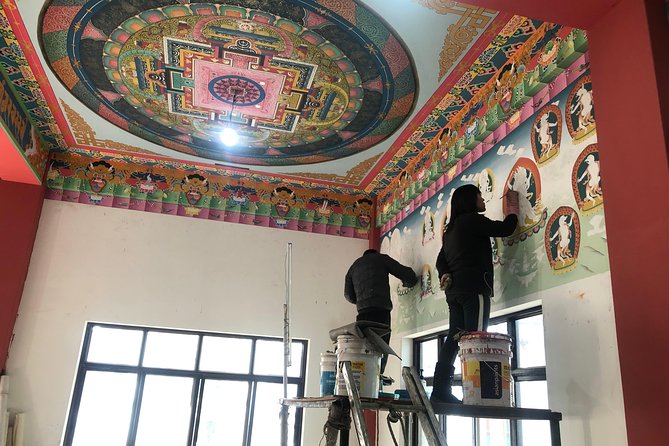
Then you move to Itum Bahal, once described as one of the larger Buddhist monasteries in ancient Kathmandu. The key thing to notice is what remains: there’s a surviving section of the original monastic building and courtyards connected to Goddess Tara.
You’ll likely spend around 30 minutes here. The value of this stop is that it shows you Kathmandu’s monastery tradition in a way that’s physical. It’s not just a name on a map; it’s a layout you can understand as a living religious space—even if parts have changed over time.
If your goal is to see Kathmandu as more than monuments, this is one of the best places in the itinerary to do it.
Kathmandu Durbar Square and Kumari Chowk: UNESCO major sights plus a living tradition
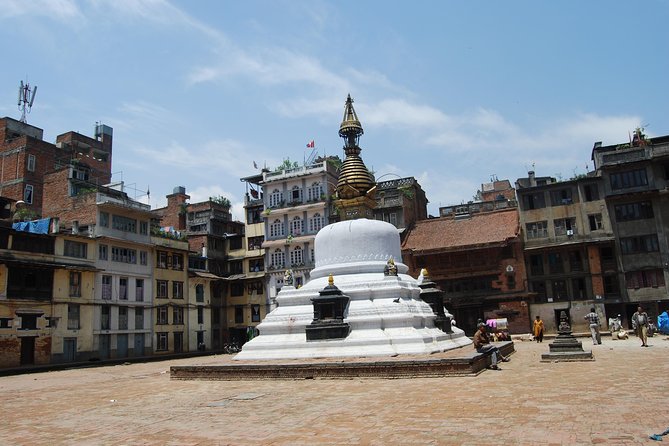
Now you reach the big one: Kathmandu Durbar Square. The tour frames it as a 17th-century palace of Nepal’s kings, surrounded by multiple temples. This isn’t a single building you move through quickly—it’s a temple environment, and the architecture is meant to be looked at from different angles.
You’ll spend about 45 minutes at Durbar Square. Entry for this part is not included, so check your budget early. If you’re coming from a day without ticket planning, this is the one cost that can surprise people.
Inside the same Durbar Square area you reach Kumari Chowk, home of the Kumari (Living Goddess). The building is described as around 300 years old, and if you’re lucky, you can see the living goddess. This is often the emotional centerpiece of the morning because it’s not only about history—it’s about a tradition that continues.
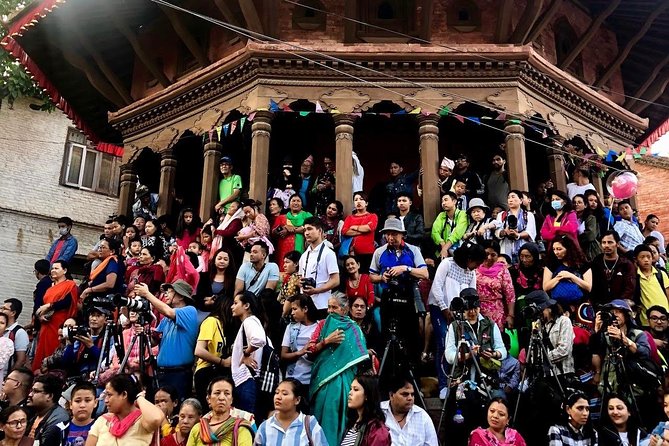
One practical tip: give yourself patience here. Crowds gather, and your time is only so long. A good guide helps you find the right vantage and understand what you’re seeing beyond the obvious.
Kathesimbu / Dharmakirti Vihara: a Swayambhunath-style replica you can link to the main pilgrimage
After Durbar Square, the walk continues toward the Buddhist stupa complex of Kathesimbhu, also called Dharmakirti Vihara. The key detail is that the complex houses a replica of the Swayambhu Stupa, tied to the bigger Swayambhunath pilgrimage that many people build their Kathmandu visit around.
This is a smart inclusion if you like connections. You see a major reference point duplicated in a local context, which helps you understand Kathmandu’s religious geography. You also get a change of pace after the densest part of the Durbar Square experience.
Entry fees for this area are also not listed as included, so think of it as another “maybe pay” moment depending on how things are handled on the day.
Cafe Mitra: the tea-and-chat finish that turns facts into understanding
The tour ends back in Thamel at Cafe Mitra, with about 30 minutes to unwind. This is where the tour’s structure feels thoughtful: not just a list of stops, but a human wrap-up.
Coffee and/or tea are included, and the goal is a casual conversation with your guide. This is also a chance to ask questions you didn’t want to stop for mid-walk, like what you should see next, where to eat nearby, or what traditions you saw that might not have been obvious at first glance.
What the guides bring (and why the details land)
The tour stands or falls on the guide, and the guide names from real experiences here are a big part of the appeal. One guide, Mr. Mahesh Shreshtha, is mentioned as experienced and able to point out details you would likely miss if you were wandering alone. Another guide, Modo, is described as great, including a moment where someone was able to meet a Hindu priest at a small temple and have a real interaction.
Not every day will contain the exact same side encounter, but the pattern is consistent: you’re not just walking through spaces; you’re learning how locals see them. That’s the difference between a “tour” and a guided city morning.
Who this tour suits best in Kathmandu, and who might skip it
This tour fits best if you want an orientation to Old Kathmandu without building a complex itinerary. You get a balance of market life and sacred sites, and the stops are short enough that you don’t feel stuck in one place for half a day.
It’s also a good pick if you’re the type who likes meaningful details—like icon counts, monastery layouts, and the links between neighborhoods and monuments. And because it’s described as suitable for most travelers, it’s a strong option for people who want a structured morning plan.
If you’re in Kathmandu for a very short time and only want one signature photo location, you might feel this is “too much.” This is a walking route with multiple stops. But if you want to see how Kathmandu’s old core works, this is one of the better uses of a half day.
Should you book the Old Kathmandu Walking Tour for Durbar Square and Kumari?
I’d book this tour if you want a morning that gives you both context and key sights. The price is reasonable for what you get: private transport help, a guided walking route through meaningful religious neighborhoods, and a relaxed tea finish that helps you process what you saw.
The only real caution is the entry fees that are not included for Kathmandu Durbar Square and the Swayambhu Stupa area you visit later. If you’re okay budgeting a bit extra and you like guided city walking, this is the kind of experience that helps Kathmandu click.
FAQ
How long is the Old Kathmandu Walking Tour?
It runs about 4 to 5 hours.
Where does the tour start and where does it end?
It starts at Amrit Marg, Kathmandu 44600 and ends at Cafe Mitra, Thamel Marg, Kathmandu 44600.
What time does the tour begin?
The start time is 9:00 am.
Is pickup available?
Yes. If you’re in Thamel, you start near your hotel lobby. If not, there is pickup and a drive of about 20 minutes to the starting point.
Is the tour private or shared?
It’s a private tour/activity, meaning only your group participates.
What does the price include?
The tour includes private transportation and coffee and/or tea.
Are entry fees included for Durbar Square?
No. The entry fee to Kathmandu Durbar Square premises is not included, and the Swayambhu Stupa entry fee is also not listed as included.
How much does the tour cost?
The price is $28.00 per person.
Do I need to buy tickets in advance?
You get a mobile ticket, and confirmation is received at booking time.
What is the cancellation policy?
You can cancel for free up to 24 hours in advance for a full refund. If you cancel less than 24 hours before the start time, the amount paid is not refunded.
Kathmandu on Foot: More Walks


More Tours in Kathmandu


More Tour Reviews in Kathmandu

Just Reviewed in Kathmandu
- Mountain Bike Tour
★ 5.0 · 3 reviews - Annapurna Panaroma
★ 5.0 · 3 reviews - Mount Everest Scenic Flight 50 Minutes
★ 5.0 · 3 reviews - Kathmandu : Swambhunath & Durbar Square Guided Half Day Tour
★ 3.3 · 3 reviews - Chandragiri Cable Car & Monkey Temple Tour – Private/Group
★ 5.0 · 3 reviews - Kathmandu: Shivapuri National Park Hiking Day Trip
★ 3.3 · 3 reviews
Kathmandu UNESCO Heritage Tours, compared.
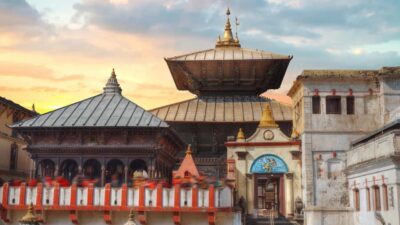 ★ 4.87 UNESCO Sites with LunchFrom $2744 reviews
 ★ 5.0Full Day 7 UNESCO Tour with Lunch – Private/GroupFrom $10415 reviews
 ★ 5.0Full Day Top 4 UNESCO Tour with Lunch – Private/GroupFrom $10269 reviews
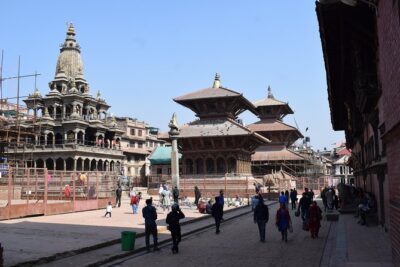 ★ 5.0UNESCO Seven World Heritage Tour in KathmanduFrom $180253 reviews
★ 4.9Full-Day 7 UNESCO Tour with Lunch – Private/GroupFrom $5247 reviews
★ 5.0UNESCO Seven World Heritage Tour in KathmanduFrom $180253 reviews
★ 4.9Full-Day 7 UNESCO Tour with Lunch – Private/GroupFrom $5247 reviews
 ★ 4.97 UNESCO Sites Tour in 1 Day (Private Tour)From $4204 reviews
 ★ 4.9Top 4 UNESCO Tour with Lunch – Private/GroupFrom $5181 reviews
 ★ 5.0Kathmandu Private Sightseeing Tour | UNESCO World Heritage SitesFrom $35109 reviews
Browse the lists this tour appears in