
Review · TOURS
Temples and Stupas Tour in Kathmandu Valley
Three sacred Kathmandu stops, one smooth day. This Temples and Stupas Tour in Kathmandu Valley stacks three UNESCO sites into one organized loop, with an AC van and an English-speaking guide so you can skip the usual cab-game. I like how the day is built around stories you can actually see: royal power at Durbar Square, and deep Hindu and Buddhist practice at Pashupatinath and Boudhanath.
I also really appreciate the human side of the tour—when the guide is in teacher mode, you get history and meaning tied directly to what’s in front of you. Names that come up with this operator include Ms. Deepa and Kalpana, and both are described as strong at answering questions and explaining what you’re looking at. One drawback to keep in mind: the tour price covers guiding and transport, but entrance fees are not included, and there can be slower “explanation time” during travel between stops.
You’ll be out for about 7 hours starting at 9:00 am, and the group stays small (up to 10). You’ll use a mobile ticket on the day, meet at Royal Mountain Travel on Lal Durbar Marg, and head back to the same place at the end.
In This Review
- What makes this Kathmandu Valley loop work so well
- Starting at Royal Mountain Travel: how the 9:00 am day feels
- Durbar Square: where kings built, and Newari detail still tells the story
- Pashupatinath Temple: Shiva worship, holy men, and the cremation reality
- Boudhanath Stupa: Buddhist devotion that attracts Hindu respect too
- The guide experience: where the tour can feel either perfect or just okay
- Price and value: $34 is fair, but entrances change the math
- Small-group strengths (and where they can still feel rushed)
- Who should book this tour, and who should skip it
- Should you book the Temples and Stupas Tour in Kathmandu Valley?
- FAQ
- What sites are included in the Temples and Stupas Tour in Kathmandu Valley?
- How long is the tour?
- What time does the tour start, and where do I meet?
- What’s included in the tour price?
- Are entrance fees included?
- How big is the group?
What makes this Kathmandu Valley loop work so well
- UNESCO trio in one day: Durbar Square, Pashupatinath, and Boudhanath—three big-name sites without DIY logistics.
- Small-group size (max 10): enough people to feel social, not so many that you’re herded.
- English guide + AC vehicle: helpful in a city where getting from A to B can eat your day.
- Religious contrast, side-by-side: Hindu Shiva worship at Pashupatinath and Buddhist devotion at Boudhanath.
- Respectful on-the-ground moments: you may even see holy men at Pashupatinath—and sometimes a cremation scene depending on what’s happening.
- You pay for entrances separately: budget for site fees on top of the $34 tour price.
Not sure yet? Here are other Kathmandu tours worth a side-by-side look.
- Everest Base Camp Trek – 14 Days★ 5.0 · 1,499 reviews
- Everest Base Camp Trek★ 5.0 · 842 reviews
- Private Kathmandu Sightseeing Tour | UNESCO World Heritage sites★ 5.0 · 756 reviews
- Kathmandu: 7 UNESCO Sites with Lunch★ 4.8 · 744 reviews
Starting at Royal Mountain Travel: how the 9:00 am day feels
This tour begins at Royal Mountain Travel on Lal Durbar Marg in Kathmandu, with a 9:00 am start. Plan your morning so you arrive on time. With a schedule this tight—about two hours at each stop—being late can throw off your whole flow.
You’re in an air-conditioned vehicle, and the group size stays under 10. That’s a big deal in Kathmandu, where traffic and waiting can turn a “short trip” into a long one. Also, because the meeting point is near public transportation, it’s easier to get there without a whole airport-to-hotel chain of rides.
One practical tip: because the tour does not include food and drinks, think about when you’ll eat. You’ll want a plan for lunch or a snack break, especially if you’re sensitive to long stretches without a meal.
Durbar Square: where kings built, and Newari detail still tells the story
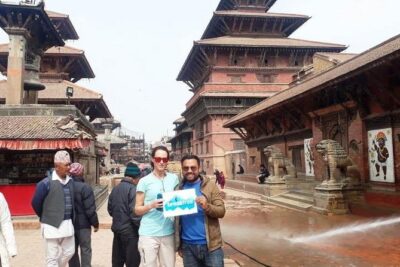
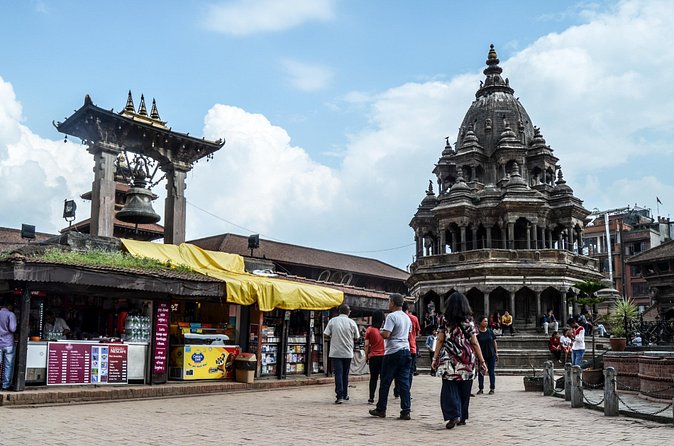
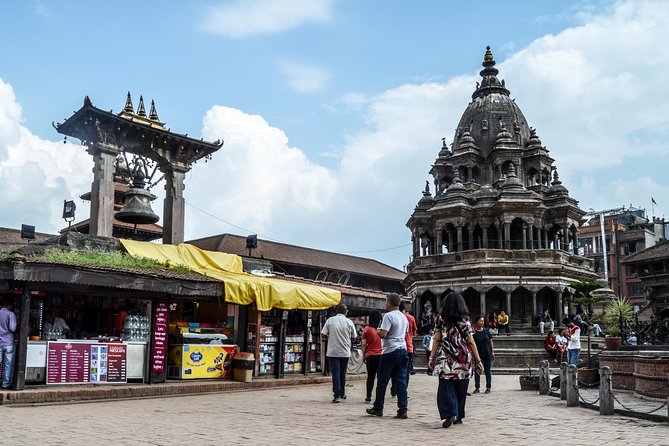
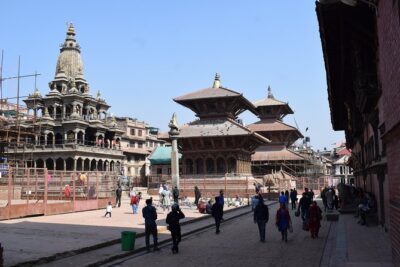
Durbar Square is the royal chapter of this day. You’ll spend about two hours here, walking through the space where rulers once centered their power, and where temple life continues around those old palace structures.
What I like about a Durbar Square stop is that it’s not just “pretty buildings.” It’s a living layout—courtyards, temples, and stonework that make it easier to understand how Kathmandu Valley societies organized themselves. You also get the chance to connect the architecture to the people who made and used it, instead of treating it like a museum stop.
The guide time matters here. When the explanation clicks, the fine Newari architecture language starts to feel less abstract. One thing you should consider: this kind of site can be busy with people, activity, and shifting viewpoints. If you’re the type who needs slow pacing and lots of photos, you might feel a little time pressure with a two-hour block. That’s the trade-off for packing three UNESCO highlights into one day.
Pashupatinath Temple: Shiva worship, holy men, and the cremation reality
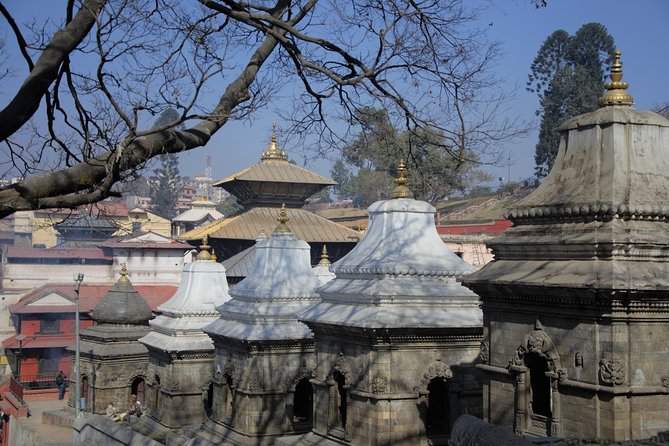
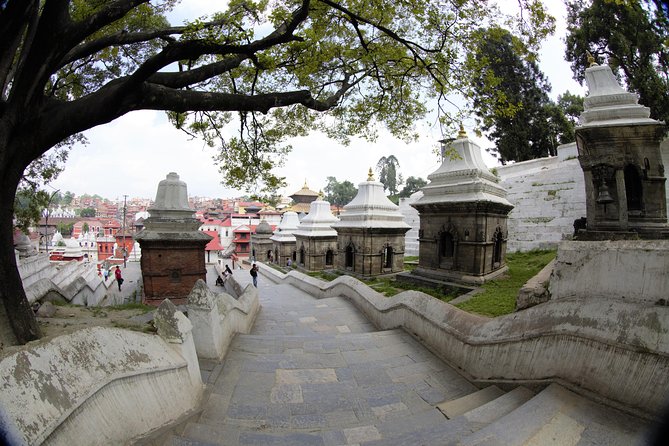
Then you head to Pashupatinath Temple, dedicated to Shiva. The temple’s identity is tied to the name Pashupatinath—Lord of Animals—and it’s described as a final destination for Hindu devotees. That meaning matters when you’re standing there. You’re not just watching a tourist landmark; you’re in the orbit of ongoing faith.
This stop lasts about two hours, and it’s the most emotionally intense one on the loop. You may see Hindu holy men, and there’s also the possibility of witnessing a cremation scene depending on what’s happening when you arrive. Even if you don’t see a cremation, you’ll still feel how daily worship and sacred ritual shape the space.
A practical way to handle this stop is to keep your expectations grounded. Go in with respect, watch what people are doing, and follow your guide’s cues for where to stand and how to move. If you’re sensitive to intense religious practices or graphic scenes, this is the stop to think about first. It’s also a place where the guide’s explanations can change your whole experience—from shock to understanding—because you’ll know what you’re seeing and why it’s happening.
Boudhanath Stupa: Buddhist devotion that attracts Hindu respect too
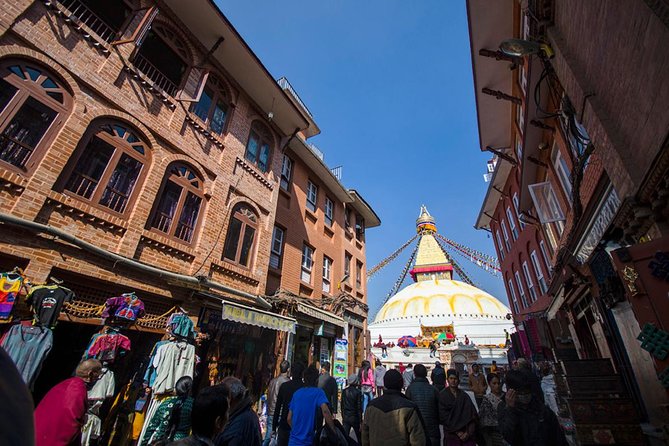
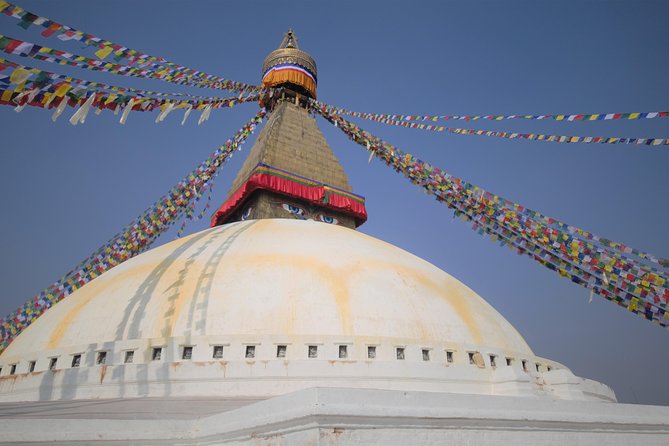
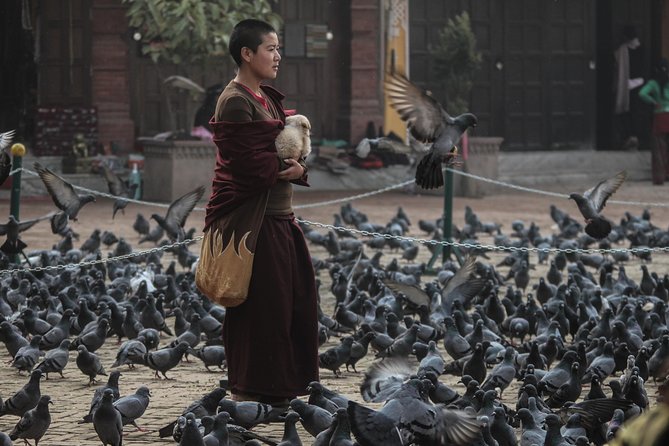
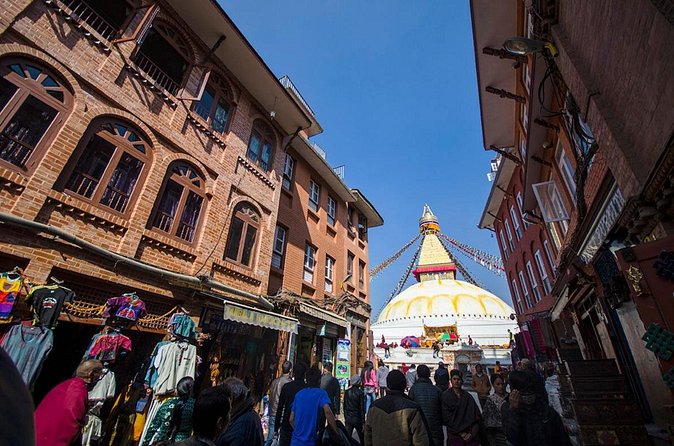
Next comes Boudhanath Stupa, and this is your spiritual pause. You’ll have about two hours here, and the main idea is clear: it’s one of Nepal’s holiest sites. The stupa draws deep Buddhist faith, and Hindus in Nepal also pay equal respect.
What I like about Boudhanath on this itinerary is the contrast. After Shiva-centered rituals at Pashupatinath, Boudhanath gives you a different religious rhythm. Same country, same Kathmandu Valley devotion—two faith systems living close enough that you can compare them in real time.
Boudhanath also tends to be a great place for questions. When the guide is strong, you’ll get explanations that make the visible details feel purposeful instead of random. You’ll learn what the stupa represents and how people relate to it, and that turns a simple walk around a monument into something more meaningful.
If you’re the type who enjoys slow looking, this stop is often where you’ll appreciate time the most. Two hours is still not endless, but it’s usually enough to get your bearings, watch the flow of people, and absorb the atmosphere.
The guide experience: where the tour can feel either perfect or just okay
This tour rises or falls on the guiding. The best versions of this day are described as well-organized and packed with explanation. When the guide is tuned in, you don’t just get facts—you get answers. With guides like Ms. Deepa and Kalpana coming up in this operator’s ecosystem, the pattern is that the guide talks history and culture in a way you can actually connect to each site. One detail that sticks: the teaching doesn’t stop the moment the group sits down. The guide keeps responding to questions even during downtime.
But there’s also a caution from real-world experience. Sometimes, you may notice long gaps where the guide and driver communicate among themselves in Nepalese, so you get less narration while riding in the vehicle. If you’re the kind of traveler who relies on the guide for the full value of the tour, be ready to take initiative.
How to make this work for you:
- Ask questions before you hop out of the car. You’ll usually get better answers when you’re standing right in the setting.
- Keep a mental list of what you want explained—Shiva and cremation practice at Pashupatinath, or what Boudhanath means for Buddhists and Hindus.
- Don’t assume every moment between stops will come with commentary. Use those stretches to regroup and reset.
Price and value: $34 is fair, but entrances change the math
The tour costs $34 per person, booked about 15 days in advance on average. For that price, you get an English-speaking tour guide and transport in an air-conditioned vehicle as per group size.
What’s not included is just as important:
- Food and drinks
- Hotel pickup and drop-off
- All fees and taxes (including entrance fees)
So the real cost is the $34 plus whatever site admissions apply during your visit. One example cost mentioned in real travel experience puts entrance fees at around 2000 rupees total, described as 1000 rupees at two stops. That gives you a useful budgeting anchor, even though the exact sites that charge can vary by situation.
In plain terms: this is good value if you want structure and interpretation more than you want to run the show yourself. If you’d rather explore independently and you’re comfortable arranging your own transport between the sites, you might squeeze more out of your time by going solo. But if you hate negotiating rides and want your day built for you, this price is easy to justify.
Also remember: you’ll be using a mobile ticket. That’s simple, but it also means you should have your phone ready and charged. Don’t leave it to chance.
Small-group strengths (and where they can still feel rushed)
This tour caps at 10 travelers, which is a sweet spot. You’re less likely to be stuck waiting for someone slow at the gate, and the guide can usually manage the group without shouting over everyone’s headphones.
Still, this is a three-stop day. Each stop gets about two hours. That schedule is totally fine for first-time visitors who want the major hits of Kathmandu Valley, but it’s not built for people who want to linger for hours in one place.
Think of it like a well-run highlights reel. You’ll see a lot, and you’ll learn enough to understand what you saw. If you want deep study, plan a second day for one site, especially if a subject grabbed you—like Shiva rituals or the stupa’s role in Buddhist practice.
Who should book this tour, and who should skip it
This is a strong fit if:
- You want to cover Durbar Square + Pashupatinath + Boudhanath in one day.
- You dislike bargaining with drivers and prefer a planned route.
- You’d rather learn from a guide than wander through UNESCO sites guessing what matters.
You might think twice if:
- You’re working with very fragile timing. One traveler described missing the tour because of a major flight delay. If your travel day is unpredictable, build in buffer time or have a backup plan.
- You want lots of personal space and slow pacing at each stop. Two hours per site can feel quick if you like to sit and stare.
Should you book the Temples and Stupas Tour in Kathmandu Valley?
Yes—if you want an organized, small-group way to see three of Kathmandu Valley’s best-known UNESCO sites without handling transport stress.
Book it if you value:
- Clear structure for a first Kathmandu day
- A guide who can explain what you’re looking at (and who can handle questions)
- A smooth route that keeps you from turning this into a half-day of logistics
Before you go, do two simple things:
- Budget extra for entrance fees and keep some cash handy.
- Plan for meals since food and drinks aren’t included.
If you’re ready for a day that mixes royal-era architecture, Shiva-centered pilgrimage, and Buddhist devotion in a single sweep, this tour is an efficient way to get your bearings fast—and leave Kathmandu with real context, not just photos.
FAQ
What sites are included in the Temples and Stupas Tour in Kathmandu Valley?
The tour visits three UNESCO-classic locations: Pashupatinath Temple, Durbar Square (Central), and Boudhanath Stupa.
How long is the tour?
The experience lasts about 7 hours.
What time does the tour start, and where do I meet?
It starts at 9:00 am. The meeting point is Royal Mountain Travel on Lal Durbar Marg, Kathmandu 44601, Nepal.
What’s included in the tour price?
You get an English-speaking tour guide and transport by an air-conditioned vehicle as per group size. Entrance fees, food, and drinks are not included.
Are entrance fees included?
No. Entrance fees are applicable and admission ticket costs are not included in the tour price.
How big is the group?
The tour has a maximum of 10 travelers.
More Tours in Kathmandu



More Tour Reviews in Kathmandu

Just Reviewed in Kathmandu
- Mountain Bike Tour
★ 5.0 · 3 reviews - Annapurna Panaroma
★ 5.0 · 3 reviews - Mount Everest Scenic Flight 50 Minutes
★ 5.0 · 3 reviews - Kathmandu : Swambhunath & Durbar Square Guided Half Day Tour
★ 3.3 · 3 reviews - Chandragiri Cable Car & Monkey Temple Tour – Private/Group
★ 5.0 · 3 reviews - Kathmandu: Shivapuri National Park Hiking Day Trip
★ 3.3 · 3 reviews
Tours, compared.
 ★ 5.0Everest Base Camp Helicopter Tour landing at Everest View HotelFrom $1,575668 reviews
 ★ 5.0Full Day 7 UNESCO Tour with Lunch – Private/GroupFrom $10415 reviews
 ★ 5.0Private Bhaktapur and Nagarkot Day Tour From KathmanduFrom $20305 reviews
 ★ 4.9Food and Drink Walking TourFrom $34292 reviews
 ★ 5.0Full Day Top 4 UNESCO Tour with Lunch – Private/GroupFrom $10269 reviews
★ 5.0Kathmandu Food and Drink Walking TourFrom $36266 reviews
★ 5.0Full Day Top 4 UNESCO Tour with Lunch – Private/GroupFrom $10269 reviews
★ 5.0Kathmandu Food and Drink Walking TourFrom $36266 reviews
 ★ 5.0UNESCO Seven World Heritage Tour in KathmanduFrom $180253 reviews
★ 4.9Full-Day 7 UNESCO Tour with Lunch – Private/GroupFrom $5247 reviews
★ 5.0UNESCO Seven World Heritage Tour in KathmanduFrom $180253 reviews
★ 4.9Full-Day 7 UNESCO Tour with Lunch – Private/GroupFrom $5247 reviews