
A mountain sunrise twice in one trek. This Annapurna Base Camp journey strings together village life, big panoramic Himalayan views, and two early starts for sunrise at Poon Hill and at Base Camp. I like how the plan is built around daily walking that actually makes sense, with teahouses along the way and a guide who keeps the whole rhythm moving. One thing to consider: nights are basic, with toilets and bathrooms outside, and cold weather can be real at higher elevations.
This trek is also unusually good for first-timers because you get acclimatization time while still collecting views. You’ll pass through Gurung and Pun communities, walk through terraced farmlands that thin out as you climb, and enjoy the Modi River area before you finally reach the 4310m Base Camp zone. The route also includes Ghorepani–Poon Hill, so you’re not just chasing one destination.
In This Review
- Key highlights worth your attention
- Annapurna Base Camp plus Poon Hill: the best mix for views
- Price and logistics: what $835 buys you (and what it doesn’t)
- Outdoor Himalayan Treks: smooth planning with real names behind it
- Day 1 to 3: Ulleri, rhododendron forest, and Poon Hill sunrise
- Day 1: After breakfast, drive then walk to Ulleri
- Day 2: Ghorepani and rhododendron forest walking
- Day 3: Sunrise at Poon Hill, then down to Ghorepani and on to Tadapani
- Day 4 to 6: Chhomrong ups and downs, Modi River day, then the 4310m moment
- Day 4: Kimrong Khola to Chhomrong, then Sinuwa
- Day 5: Mostly along the Modi River bank (fewer views, good trekking)
- Day 6: Trek to Annapurna Base Camp (4310m) plus sunset
- Day 7 to 9: Base Camp sunrise, bamboo descent, Jhinu hot spring relief
- Day 7: Sunrise at Base Camp, breakfast, then descend to Bamboo
- Day 8: Down to Jhinu Danda, then Modi River bank hot springs
- Day 9: A short walk, then ride to Pokhara and farewell
- Altitude and pacing: how to stay comfortable around 4000m+
- Teahouses and meals: basic comfort, predictable routine
- What to pack for cold nights and early starts
- Best-fit traveler: who this trek suits best
- Should you book this Annapurna Base Camp trek?
- FAQ
- How high does this Annapurna Base Camp trek go?
- What transfers are included in the package?
- What meals and accommodations are included?
- What is not included in the price?
- How does free cancellation work?
- Is this trek private or group-based?
Key highlights worth your attention
- Two sunrise targets: Poon Hill first, then Annapurna Base Camp the next morning
- Rhododendron walking when the spring blooms hit
- Real village trekking through Gurung and Pun settlements, not just scenery
- The Modi River stretch: long, scenic walking even on a day with fewer views
- Jhinu Danda hot spring stop to reset your legs after the big climb
More trails out of Kathmandu, boots ready
- Everest Base Camp Trek – 14 Days★ 5.0 · 1,499 reviews
- Everest Base Camp Trek★ 5.0 · 842 reviews
- Everest Base Camp Trekking★ 5.0 · 485 reviews
- Nagarkot Sunrise View and Day Hiking from Kathmandu★ 5.0 · 471 reviews
Annapurna Base Camp plus Poon Hill: the best mix for views
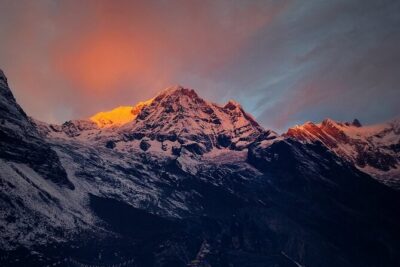
If you like mountain moments, this route is built to give you more than one kind. You’ll start with the classic Ghorepani side trip to Poon Hill, where early morning light often turns the Annapurna range into something sharp and dramatic. Then, later, you reach Base Camp for that second sunrise and sunset payoff.
I also like that you don’t rush straight to the highest point. The trek climbs gradually through settlements, farmlands, and forest, with the trail getting more exposed as you go higher. That slow shift matters because it gives your body time to adjust and gives you time to experience how daily life changes with altitude.
And because the itinerary includes both the “viewpoint” days and the “walk through valleys and villages” days, you’re not stuck waiting for one dramatic minute at the top. You’ll have good photo opportunities along the way, but you’ll also have a lot of actual trekking.
Price and logistics: what $835 buys you (and what it doesn’t)
At $835 per person for about 9 days, the real value isn’t just the trek itself. It’s the way the package covers the stuff that usually adds friction: guide support, key transfers, and most meals.
Here’s what’s included that most people care about:
- Tea house accommodation during the trek (basic rooms; toilets/bathrooms are outside)
- Pokhara–Hile and Jhinu–Pokhara transfers
- Hotel pickup and drop-off included
- Meals: breakfast (8), lunch (9), dinner (8)
- A professional English-speaking trekking guide, with the guide’s wages, accommodation, meals, transport, and insurance handled
- Emergency rescue support for evacuation/medication
- Government and service charges listed as included (no hidden-cost surprises)
What you’ll still pay separately:
- Drinks like cold drinks, bottled water, and tea/coffee
- Personal extras (wifi, hot showers, snacks, and other day-to-day add-ons)
- Tips for the guide (expected)
- Travel insurance
- Anything not explicitly in the inclusion list
So I look at this as a “managed trekking” price. You’re paying to reduce decision fatigue and to make sure someone is watching the route, timing, and safety details. If you’re the type who wants a clean plan and fewer headaches, this price makes more sense. If you already know exactly how you’ll handle permits, logistics, and food choices, you might compare options—but for most first-time trekkers, paying for organization is the smart move.
Outdoor Himalayan Treks: smooth planning with real names behind it
From the feedback I’ve seen, the biggest praise isn’t the view itself (because, yes, the views are the point). The praise is about the workflow: pickup, timing, coordination, and responsiveness before and during the trip.
Names that show up in their customer experiences include Ram, Dilli, and Tupie. When a company can handle airport-to-hotel movement smoothly and keep the trek schedule clear, you usually spend less energy worrying and more energy enjoying the trail.
I also like that the team comes off as flexible. If you need to adjust timing or add guidance for what to do in Kathmandu or Pokhara alongside the trek, that kind of support is genuinely useful. On these trips, good advice can help you avoid wasted time—like picking the wrong activity day or leaving yourself too little buffer for weather.
Day 1 to 3: Ulleri, rhododendron forest, and Poon Hill sunrise
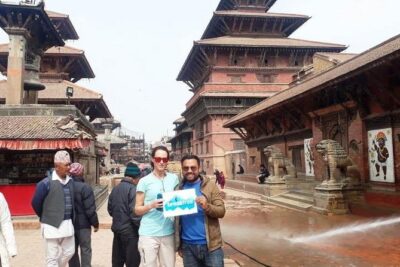
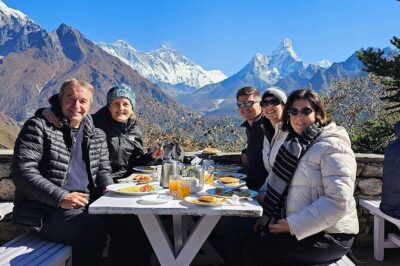
Day 1: After breakfast, drive then walk to Ulleri
You’ll start with your guide meeting you after breakfast at your place, then you’ll travel toward Ulleri. The plan splits the journey into a private jeep ride for the early section (up to Hile) followed by walking onward to Ulleri. After that, you check in for the night at a tea house.
This day is about getting your legs moving without making you sprint too hard right away. It also sets the tone: expect a lot of “short segments that add up,” not one huge push.
Day 2: Ghorepani and rhododendron forest walking
After breakfast, you head toward Ghorepani. This is one of the better days for scenery texture because you’ll walk through rhododendron forest. In springtime, the trees can bloom, which makes the trail feel less like a conveyor belt and more like a living hike.
You’ll stop for lunch at a local restaurant in between, then check in for the night in Ghorepani.
A practical note: even if you’re chasing views, forest days still demand steady pace. Those slopes can feel manageable until you realize how much time your legs are working.
Day 3: Sunrise at Poon Hill, then down to Ghorepani and on to Tadapani
The big early start is here. You hike up to Poon Hill for sunrise, then trek back down to Ghorepani for breakfast. After that, you continue to Tadapani.
This is a classic pattern: climb for light, descend to recover, then keep trekking. For me, that’s why Poon Hill is such a smart add-on. You get a major payoff before most of the day is even done.
The trade-off is sleep and fatigue. If you’re not used to early wake-ups, plan to treat Day 3 like a slow-and-steady day after the sunrise.
Day 4 to 6: Chhomrong ups and downs, Modi River day, then the 4310m moment
Day 4: Kimrong Khola to Chhomrong, then Sinuwa
Today is described as full of up and downs. You hike down to Kimrong Khola, then up to Chhomrong, and continue further to Sinuwa for your overnight.
This kind of day is where trekkers either feel strong or get frustrated, and it depends on your pacing. The best strategy is to keep your effort consistent: don’t burn matches early, and let the climbs come and go at a steady tempo.
You’ll feel like the trail is constantly asking for attention, but that’s also the charm: you’re not just walking in a straight line toward Base Camp; you’re building altitude and experience through varied terrain.
Day 5: Mostly along the Modi River bank (fewer views, good trekking)
This is the day you might mentally set up differently. The route says you mostly walk along the bank of the Modi River, and you won’t see mountain views much on this day. Night is in a simple lodge in Deurali.
I actually like this design, even if it’s not a postcard day. A less-view-heavy walking day can still be relaxing because you’re not constantly looking up. You can focus on rhythm, breath, and footwork, and save your energy for the higher elevations that come next.
Day 6: Trek to Annapurna Base Camp (4310m) plus sunset
This is the headline day. You trek up to Annapurna Base Camp at 4310 meters, with a sunset view and an overnight night on the lap of the Annapurna Himalayan range.
At this point, the trek becomes about high-altitude effort and patience. Even if you feel good, don’t turn it into a race. Let your breathing guide you. When you arrive, you’ll likely feel an instant shift—your body understands it has reached something important.
Day 7 to 9: Base Camp sunrise, bamboo descent, Jhinu hot spring relief
Day 7: Sunrise at Base Camp, breakfast, then descend to Bamboo
You get sunrise view from Annapurna Base Camp again. After breakfast, you descend on the same trail to Bamboo for the night.
This is a smart approach: you revisit the Base Camp area in early light, then you start moving downhill to support acclimatization. Descending is often where trekkers feel proud and relieved at the same time—proud you made it, relieved you can start lowering elevation.
Day 8: Down to Jhinu Danda, then Modi River bank hot springs
You continue descending to Jhinu Danda, check in at a lodge, and then walk down to the Modi River bank to enjoy the natural hot spring. It’s the planned leg-reset after about a week of trekking.
This is one of the most satisfying “reward” elements of the itinerary. Legs get sore; altitude is heavy; then you soak and feel like a human again.
Day 9: A short walk, then ride to Pokhara and farewell
On the last day, you walk for about an hour, then catch your ride to Pokhara. Your guide leaves you at your hotel and the trek finishes.
The short walk matters. It keeps the end from feeling like a second grind. You’re still moving, but you’re not paying a penalty for having done the hard parts already.
Altitude and pacing: how to stay comfortable around 4000m+
This trek reaches 4310 meters, so you should treat altitude seriously even if you’re generally fit. The itinerary does a helpful job of spacing effort: you climb over multiple days, with overnight stops and a clear rhythm that lets your body adjust.
I’d also pay attention to what the trek signals about fitness: the tour is set for travelers with moderate physical fitness level. That usually means you can handle steady uphill walking for several hours, not that you need technical hiking skills.
Practical pacing advice based on the plan:
- Keep a steady effort on climbing days like Day 4 and Day 5
- Expect fatigue to build as you approach Base Camp
- Use the descent to Bamboo as your recovery phase, not an excuse to rush
And because the package includes emergency rescue support for evacuation/medication, you’re not navigating safety alone.
Teahouses and meals: basic comfort, predictable routine
Accommodation is basic teahouse lodging. Rooms are simple, and toilets and bathrooms will be outside. That’s normal in this region, but it matters for planning what you bring and how you move at night.
Food is included in a structured way:
- Breakfast: 8 included
- Lunch: 9 included
- Dinner: 8 included
The itinerary also uses lodge check-ins consistently, so you get regular breaks. That predictability makes a difference when temperatures drop.
One more practical thing: drinks are not included. If you like tea/coffee or you want bottled water, budget for it. Hydration still matters on altitude days, but you’ll manage that through the places you stop.
What to pack for cold nights and early starts
The provided packing guidance is clear: you’ll want serious cold-weather layers. I’d plan around these essentials:
- Down jacket
- Sleeping bag
- Full sleeve warm layers, warm hat
- Gloves and warm socks
- Trekking boots plus slippers
- Thermal undergarments and a fleece jacket
- A water bottle and day bag
- A gortex jacket
- Headlight
- Sunglasses and cold/sun creams
- If you have them, trekking-friendly sunglasses and extra liners
This isn’t overkill. At higher elevations, nights can feel sharp, and early mornings mean you’ll likely be outside before you’re fully warm.
Also, the tour notes formal dress code. That doesn’t mean fancy clothes—it means be prepared to look presentable in lodge areas and follow local expectations.
Best-fit traveler: who this trek suits best
This trek is a strong match if you want:
- Big viewpoint moments (Poon Hill sunrise and Base Camp sunrise)
- A guided plan that reduces logistics stress
- To experience village life with ethnic communities like Gurung and Pun
- A finish with physical recovery built in via Jhinu hot springs
It may be less ideal if:
- You hate early wake-ups
- You need private bathroom comfort inside your room
- You dislike “up and down” trekking days (Day 4 is specifically described as that kind of day)
Should you book this Annapurna Base Camp trek?
I’d book this if you want a guided route that balances views with real trekking time, and you value smooth execution. The combination of Poon Hill + Annapurna Base Camp means you’re not banking everything on one summit moment. Plus, the package covers the key parts that usually cost time and energy: guide support, transfers, and most meals.
I would think twice only if you’re not comfortable with basic teahouse standards (especially outside toilets/bathrooms) or if cold-weather packing is a dealbreaker. If you handle those two realities, the itinerary feels designed to give you a satisfying, full-value Annapurna experience without chaos.
FAQ
How high does this Annapurna Base Camp trek go?
Annapurna Base Camp on this route is listed at 4310 meters.
What transfers are included in the package?
The package includes Pokhara to Hile transfers and Jhinu to Pokhara transfers.
What meals and accommodations are included?
Accommodation is basic teahouse lodging during the trek, and toilets/bathrooms are outside. Meals included are breakfast (8), lunch (9), and dinner (8).
What is not included in the price?
Drinks (like bottled mineral water, tea/coffee, and cold drinks), personal expenses (like extra snacks or wifi), guide tips (expected), travel insurance, and anything not listed as included are not included.
How does free cancellation work?
You can cancel for a full refund up to 24 hours before the experience’s start time. If you cancel less than 24 hours before, the amount paid is not refunded.
Is this trek private or group-based?
This is described as a private tour/activity where only your group participates.
More Trekking Out of Kathmandu
More Tour Reviews in Kathmandu
Just Reviewed in Kathmandu
- Mountain Bike Tour
★ 5.0 · 3 reviews - Annapurna Panaroma
★ 5.0 · 3 reviews - Mount Everest Scenic Flight 50 Minutes
★ 5.0 · 3 reviews - Kathmandu : Swambhunath & Durbar Square Guided Half Day Tour
★ 3.3 · 3 reviews - Chandragiri Cable Car & Monkey Temple Tour – Private/Group
★ 5.0 · 3 reviews - Kathmandu: Shivapuri National Park Hiking Day Trip
★ 3.3 · 3 reviews
Hiking & Trekking, compared.
 ★ 5.0Everest Base Camp Trek – 14 DaysFrom $1,8001,499 reviews
 ★ 5.0Everest Base Camp TrekFrom $1,790842 reviews
 ★ 5.0Everest Base Camp TrekkingFrom $1,350485 reviews
 ★ 5.0Nagarkot Sunrise View and Day Hiking from KathmanduFrom $45471 reviews
 ★ 5.0Annapurna Circuit Trek with Tilicho LakeFrom $1,093368 reviews
 ★ 5.0Everest Base Camp Trekking – 13 DayFrom $1,399365 reviews
★ 5.0Everest Base Camp TrekFrom $1,445350 reviews
★ 5.0Everest Base Camp Trek -14 DaysFrom $1,420321 reviews
★ 5.0Everest Base Camp Trekking – 13 DayFrom $1,399365 reviews
★ 5.0Everest Base Camp TrekFrom $1,445350 reviews
★ 5.0Everest Base Camp Trek -14 DaysFrom $1,420321 reviews