
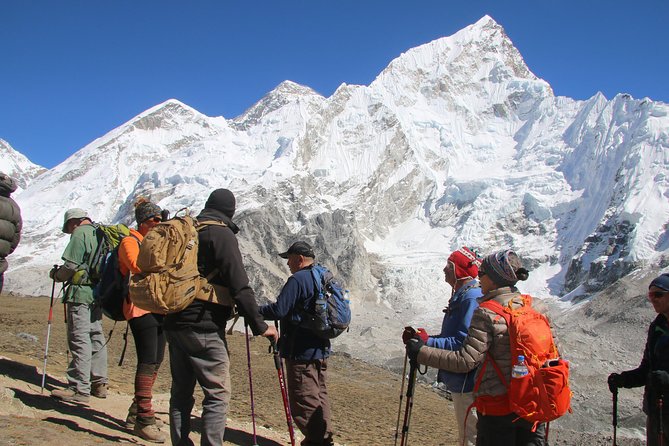
Review · HIKING & TREKKING
Everest Base Camp Budget Trekking
Everest in 14 days, on a budget. This trek is interesting because it pairs the classic Lukla start with a careful acclimatization rhythm at Namche and again higher up, so you’re not just grinding uphill day after day. I also like that you get a professional English-speaking guide plus porters to handle the logistics and keep the pace sensible.
One thing to plan for is budget math on the trail. Meals not included during trekking, and you’re limited to 15 kg luggage, which can force extra packing decisions or daily spending for snacks and drinks.
In This Review
- Key highlights worth your attention
- The big picture: what this Everest Base Camp budget trek really offers
- Day-by-day route: from Kathmandu to Phakding and into Khumbu altitude
- Namche and Dingboche: the altitude planning that separates success from suffering
- The long climb: Lobuche and Everest Base Camp at 5,160 m
- Kalapattar day: the high-view payoff without technical climbing
- Flights back to Kathmandu: what to expect and how weather can affect you
- Price and value: what $900 covers and where costs pop up
- Lodges, sleeping gear, and comfort on a budget trail
- Guide and team: why “private” matters on a route this demanding
- Fitness and health: who this trek fits, and what to think about first
- Should you book this Everest Base Camp budget trek?
- FAQ
- Is the trek only for a private group?
- How long is the Everest Base Camp trek?
- What is included in the flight plan?
- What luggage limit should I plan for on the Lukla flights?
- Are permits included for the Everest region?
- Are meals included during the trekking days?
- Do I get sleeping gear for the trek?
- Is hot shower included on the trek?
- What about altitude sickness and acclimatization days?
Key highlights worth your attention
- Lukla flights are built in, round-trip, with a tight luggage limit (15 kg per person).
- Two dedicated acclimatization days help you manage altitude: in Namche and again later on the route.
- Permits and TIMS are handled, including Everest National Park permit, community fees, and TIMS card costs.
- A private setup means it’s only your group, not a big shared cattle-call.
- Sleeping bag is provided for trekking and is refundable after you finish.
- Farewell cultural Nepali dinner is included on the last day.
More trails out of Kathmandu, boots ready
- Everest Base Camp Trek – 14 Days★ 5.0 · 1,499 reviews
- Everest Base Camp Trek★ 5.0 · 842 reviews
- Everest Base Camp Trekking★ 5.0 · 485 reviews
- Nagarkot Sunrise View and Day Hiking from Kathmandu★ 5.0 · 471 reviews
The big picture: what this Everest Base Camp budget trek really offers
Everest Base Camp is the kind of destination that sounds simple until you look at the altitude. This version keeps things budget-friendly by focusing on the trail infrastructure: established routes through the Solukhumbu trekking region, plentiful lodges, and a schedule built around getting your body used to higher elevations.
What I like here is the mix of organization and “real trek” time. You’re not chasing comfort at every bend, but you also aren’t left to guess your way through permits, pacing, and the early rising logistics. The trip is designed for moderately fit people, and the route itself climbs high and stays high, with rest stops that actually matter.
The other key point is that this is a true trek route plan, not just a couple of viewpoints. You’ll walk multiple days at elevation, including a high turnaround at Everest Base Camp and a later push to Kalapattar for panoramic views.
Day-by-day route: from Kathmandu to Phakding and into Khumbu altitude
Day 1 is straightforward: pickup at the international airport in Kathmandu, then transfer to your hotel. Even with a budget trek, this matters because it helps you settle before flight day. Kathmandu logistics can be confusing if you’re arriving jet-lagged, so getting you placed is a win.
Day 2 is the classic jump: fly from Kathmandu to Lukla, then trek to Phakding (about 3–4 hours), at 2,652 m. This first walking day is intentionally short-ish. You’re not trying to “train” here; you’re transitioning from town life into mountain rhythm—steady uphill, frequent pauses, and learning how your body reacts to thinner air.
Day 3 climbs to Namche Bazaar (about 5–6 hours) up to 3,440 m. This is where the trek starts feeling more like a Himalayan trek than a hike. Namche is also a practical waypoint because it’s higher, busier than most villages on the trail, and a natural place to build your altitude routine.
Namche and Dingboche: the altitude planning that separates success from suffering
Day 4 is an acclimatization day in Namche. This is not a “free day” in the sense of doing nothing; it’s a health decision. The region is known for acute mountain sickness risk, especially once you go above about 4,500 m, and the itinerary explicitly builds rest into the climb.
Day 5 then takes you to Tengboche (about 5–6 hours) at 3,860 m. You’ll keep gaining elevation, but you’ll do it in a controlled way that follows the earlier pattern: walk enough to progress, stop often, and avoid reckless speed.
Day 6 continues to Dingboche (about 5–6 hours) at 4,410 m. Dingboche sits at a critical altitude band where many people start noticing the effects of elevation. Day 7 is the second acclimatization day there, which is a big deal for long-term comfort and for reducing the chance you’ll spend the next few days feeling wrecked.
If you’ve ever wondered why Everest trekking schedules can look slow on paper, this is why. Slow isn’t a style choice; it’s the strategy that helps you keep going.
The long climb: Lobuche and Everest Base Camp at 5,160 m
Day 8 goes to Lobuche (about 5–6 hours) at 4,910 m. By now, the air is thin enough that even relaxed trekking feels like work. Lodges and trail support are part of the reason this region is so popular, but the physical demand still catches people who show up thinking this is “just hiking.”
Day 9 is the big day to Everest Base Camp (5,160 m). You’ll trek there (about 5–6 hours total walking time listed for the day including the return to Gorekshep), then you turn around and head back down to Gorekshep. That back-and-forth matters: you don’t get a single pass and done; you spend time at Base Camp, then you come back to sleep.
Here’s a practical consideration: after reaching Base Camp, you can feel tempted to rush the return. Don’t. Your breathing is still adjusting, and fatigue is part of the job. A calm pace here is what helps you be functional the next day when the heights get even higher again.


Kalapattar day: the high-view payoff without technical climbing
Day 10 is a star. You hike up to Kalapattar (5,545 m) (listed as 6–7 hours), then trek down to Pheriche (4,210 m). This is the day that often turns “I came to say I did it” into “I get it now.” You’ll reach one of the higher points on the trek, so the views tend to feel more dramatic than at Base Camp alone.
The descent to Pheriche is not just for comfort. It’s a smart altitude trade: you spent time higher, then you give your body relief. That matters after a day at big elevation. Also, the route is set up so you’re not repeatedly sleeping at extreme heights for too many nights in a row.
Day 11 brings you back toward Namche (about 6–7 hours). Day 12 then heads down to Lukla (about 6–7 hours). This return leg is still a hike, but it’s often psychologically easier: you’ve already hit your big objective, and now you’re moving toward the finish line.
Flights back to Kathmandu: what to expect and how weather can affect you
Day 13 is the flight back to Kathmandu (listed altitude: 1,337 m). After days above 4,000 m, dropping back to near-basing altitude can feel like a gift. Day 14 is your final departure onward.
One caution built into the overall setup: the itinerary includes flights, but helicopter rescue and helicopter charter fees are not included if flights delay or get postponed due to bad weather. That doesn’t mean delays will happen. It means you should mentally budget for the possibility that mountain weather can change plans.
If you’re the type who hates uncertainty, you’ll still have fun here, but it helps to carry a flexible mindset.
Price and value: what $900 covers and where costs pop up
At $900 per person for about 14 days, this feels like solid budget territory for an Everest Base Camp trek, especially because several expensive admin items are included: flights (Kathmandu–Lukla–Kathmandu), guide and porter support, and the Everest National Park permit plus TIMS and community fees.
But you should also be clear-eyed about what isn’t included. The package does not include all foods during the trekking, nor does it include beverages, alcohol, mineral water, or boiled water during the trek. It also doesn’t include hot showers.
That means your true day-to-day budget depends on how you eat and drink at the lodges. Some people keep it lean with simple meals and limited snacks. Others spend more for comfort and for staying energized. Either way, don’t assume $900 is the entire trip cost once you’re on the trail.
Also note the flight baggage rule: only 15 kg luggage per person. On a trek like this, packing light isn’t just about convenience; it’s about staying within the system.
Lodges, sleeping gear, and comfort on a budget trail
The itinerary is built on lodge trekking in the Solukhumbu trekking region, where trails are described as well maintained and where you’ll find plenty of places to sleep. You should expect basic mountain lodge accommodations rather than hotel-style luxury.
One included practical item is good quality sleeping baggage during the trekking, and it’s refundable after you finish. That can reduce what you need to buy or rent before you go, which is a real budget win.
For the rest, plan like a mountaineer-in-training: layers, a willingness to sleep in colder rooms, and an attitude that comfort is secondary to altitude management.
Guide and team: why “private” matters on a route this demanding
This is a private tour/activity, so it’s only your group. That matters because trekking pace and rest decisions can change based on how your body feels each day. A big group can slow everyone down or pressure the slower walkers. A private setup gives your guide more room to manage pacing without constant group friction.
You also get a professional English-speaking trekking guide and necessary porters. The tour includes staff food, accommodation, salary, transportation, insurance, equipment, and medicine for all staff, plus a first aid kit. That’s the kind of behind-the-scenes planning that keeps the trek from feeling chaotic.
In planning conversations, the provider’s team shows up as a real point of contact (names like Surya and Samsher appear in coordination). That kind of responsiveness can make a huge difference when you’re organizing an Everest trek from abroad.
Fitness and health: who this trek fits, and what to think about first
This trek is described as suitable for people with moderate fitness. No previous adventures experience is required, but you should do some physical preparation beforehand. The guidance suggests running, swimming, and walking as helpful.
Most importantly, if you have pre-existing medical issues, you should seek medical advice before considering the trek. That’s not a marketing line; it’s the honest reality of a high-altitude route.
Also, the trek climbs above 4,500 m multiple times. Acute mountain sickness is a serious risk here, so ascending slowly and using the scheduled rest days is key. If you’re prone to headaches at altitude or you’ve had altitude sickness in the past, you’ll want extra caution and careful planning.
Should you book this Everest Base Camp budget trek?
I’d book this itinerary if you want a classic Everest Base Camp experience with organized acclimatization, a guided pace, permits handled, and solid value for the trek infrastructure. The private setup is especially appealing if you want to walk at your own rhythm without fighting a crowd.
I’d think twice or budget carefully if you’re counting on the trek package to cover all meals and drinks, because food and beverages during the trek are not included. Also plan for cold lodge nights and the strict 15 kg baggage limit.
If you can handle those two realities and you take the acclimatization days seriously, this is a practical way to reach Everest Base Camp with fewer unknowns.
FAQ
Is the trek only for a private group?
Yes. This is listed as a private tour/activity, and only your group will participate.
How long is the Everest Base Camp trek?
The duration is listed as 14 days (approx.).
What is included in the flight plan?
The itinerary includes flight fare from Kathmandu to Lukla and back to Kathmandu, and also includes the KTM–LUKLA–KTM flight cost for guides.
What luggage limit should I plan for on the Lukla flights?
The itinerary states that only 15 kg luggage is allowed per person.
Are permits included for the Everest region?
Yes. The Everest National park permit, local Community fees, and the TIMS card fees are included.
Are meals included during the trekking days?
No. The package does not include lunch, dinner, and others expenses in Kathmandu, and it also states that all foods during the trekking are not included.
Do I get sleeping gear for the trek?
Yes. Good quality sleeping baggage is provided during the trekking, and it is refundable after you finish the trek.
Is hot shower included on the trek?
No. Hot shower during the trekking is listed as not included.
What about altitude sickness and acclimatization days?
Acute mountain sickness is listed as a serious risk in this region, and the itinerary includes acclimatization days in Namche and later on the route. Ascending slowly and taking the recommended rest day is described as essential.
More Trekking Out of Kathmandu






More Tour Reviews in Kathmandu




Just Reviewed in Kathmandu
- Mountain Bike Tour
★ 5.0 · 3 reviews - Annapurna Panaroma
★ 5.0 · 3 reviews - Mount Everest Scenic Flight 50 Minutes
★ 5.0 · 3 reviews - Kathmandu : Swambhunath & Durbar Square Guided Half Day Tour
★ 3.3 · 3 reviews - Chandragiri Cable Car & Monkey Temple Tour – Private/Group
★ 5.0 · 3 reviews - Kathmandu: Shivapuri National Park Hiking Day Trip
★ 3.3 · 3 reviews
Hiking & Trekking, compared.
 ★ 5.0Everest Base Camp Trek – 14 DaysFrom $1,8001,499 reviews
 ★ 5.0Everest Base Camp TrekFrom $1,790842 reviews
 ★ 5.0Everest Base Camp TrekkingFrom $1,350485 reviews
 ★ 5.0Nagarkot Sunrise View and Day Hiking from KathmanduFrom $45471 reviews
 ★ 5.0Annapurna Circuit Trek with Tilicho LakeFrom $1,093368 reviews
 ★ 5.0Everest Base Camp Trekking – 13 DayFrom $1,399365 reviews
★ 5.0Everest Base Camp TrekFrom $1,445350 reviews
★ 5.0Everest Base Camp Trek -14 DaysFrom $1,420321 reviews