
Review · HIKING & TREKKING
Everest Base Camp Standard Trek
Two flights and a whole lot of altitude. What makes this Everest Base Camp trek feel special is the mix of big scenery and real support, from meeting your crew in Lukla to guided moments like Kala Patthar. I like how they build in acclimatization with Namche Bazaar and Dingboche rest days, and I also like that you get sleeping bag and trekking layers plus meals handled for you. The one drawback to plan around is weather: Lukla flights are famously sensitive, and cold nights can bite hard at high altitude.
This is a route that follows the Dudh Koshi valley rhythm: pine forest, suspension bridges, Sherpa villages, rhododendron climbs, and prayer flags that slowly become part of the scenery. You’re not just walking from viewpoint to viewpoint—you’re learning the pacing that keeps your body from burning out.
By the end, you’ll be back in Kathmandu for sightseeing and a farewell dinner, which helps the trip feel like a complete arc rather than a one-note slog. And with a price around $2,000, the value mostly comes from what’s included: flights to and from Lukla, park entry systems, most meals on trek, guide and porters, and hotel in Kathmandu.
In This Review
- Key highlights worth knowing before you go
- Flying Kathmandu to Lukla: the moment your trip becomes real
- Day 1 down to Phakding: Cheplung views and a gentler first day
- Day 2 to Namche Bazaar: suspension bridges, park entry, and Sherpa life
- Day 3 in Namche: rest day that still keeps you moving
- Day 4 to Tengboche: rhododendron climbing and the monastery atmosphere
- Day 5 to Dingboche: fields, stone walls, and a slow shift upward
- Day 6 in Dingboche: acclimatization with optional viewpoint hikes
- Day 7 to Lobuche: memorial stones and the approach to the high moraine
- Day 8 to Everest Base Camp via Gorak Shep: thin air and gray-and-bright tents
- Day 9 to Kala Patthar: pre-dawn cold for 360-degree views
- Day 10 back toward Namche: prayer flags, animal sightings, and suspension bridges
- Day 11 to Lukla: the rocky descent that tests your knees
- Day 12 Kathmandu: rest, souvenirs, and a farewell dinner
- Price and value: what $2,000 really covers
- The people factor: why Bhim and the team show up in strong reviews
- Who should book this Everest Base Camp trek
- Should you book? A quick decision checklist
- FAQ
- How long is the Everest Base Camp trek?
- Where does the trek start and end?
- Is airport transportation included in the package?
- Are flights to and from Lukla included?
- What kind of lodging do I get in Kathmandu and on the trek?
- Are park fees included?
- What trekking meals and gear are included?
- What if poor weather affects the trip?
- Is this tour private or group-based?
Key highlights worth knowing before you go
- Lukla flight experience: a short hop that delivers big Himalaya views right at the start
- Acclimatization built into the schedule: rest days at Namche Bazaar and Dingboche
- Tengboche monastery visit: one of the most atmospheric stops in the Khumbu region
- Kala Patthar morning push: pre-dawn start for wide 360-degree views
- Support that comes with names: guests praised guide Bhim and helpers like Bandhu, Ramesh, and Umesh
- Gear and food largely handled: sleeping bag, warm layers, and three meals a day on trek
More trails out of Kathmandu, boots ready
- Everest Base Camp Trek – 14 Days★ 5.0 · 1,499 reviews
- Everest Base Camp Trek★ 5.0 · 842 reviews
- Everest Base Camp Trekking★ 5.0 · 485 reviews
- Nagarkot Sunrise View and Day Hiking from Kathmandu★ 5.0 · 471 reviews
Flying Kathmandu to Lukla: the moment your trip becomes real
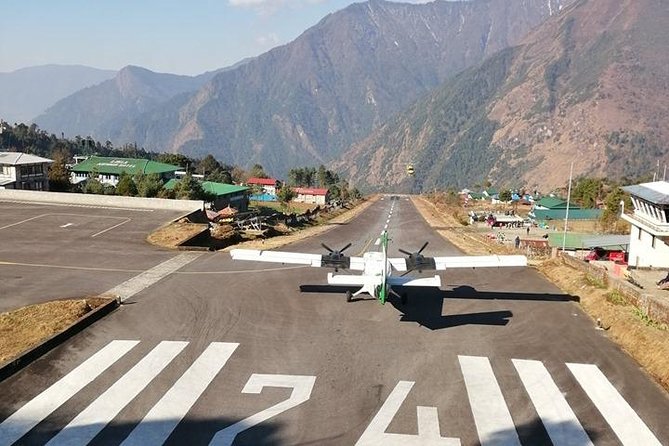
Most Everest Base Camp trips start with the flight people remember for years. This one goes from Kathmandu to Lukla in about 30 minutes, starting around 9,186 ft. Even with jet-lag or nerves, that quick aerial slice over the mountains tends to reset your brain. Then you land at a hillside airstrip surrounded by peaks—Lukla really does feel like a door into the Khumbu.
In Lukla, you meet your trekking crew and start organizing right away. That short setup period matters. After months of planning, you want your group to feel synced early: when to wake up, how to carry your essentials, and what pace your guide expects. It’s also the first day where you’re already practicing the rhythm you’ll use all trek: walk steadily, stop often, drink when you should.
Practical consideration: the itinerary includes flights and makes the schedule weather-dependent. If you’re the type who hates waiting, keep a little patience in your backpack. The trekking itself is reliable, but flight timing can shift.
Day 1 down to Phakding: Cheplung views and a gentler first day
After Lukla, Day 1 is a gradual descent toward Phakding. You’ll walk from Lukla through areas like Cheplung village, where you can catch a glimpse of Mt. Khumbila (18,900 ft), described as a sacred mountain never climbed. That kind of detail is more than trivia. It helps you understand why locals treat specific peaks with reverence, not just awe.
This first day has a built-in purpose: you’re easing your body into altitude and distance. You’re descending, yes, but you’re still learning how the air feels, how your breathing changes with effort, and how your legs respond the next morning. Staying in Phakding sets you up for the longer Day 2 push toward Namche Bazaar.
What I like: the route starts with variety—village views, mountain glimpses, and a gradual change of terrain—so you’re not just shuffling uphill on day one.
Day 2 to Namche Bazaar: suspension bridges, park entry, and Sherpa life
Day 2 moves you through the heart of the valley story. You’ll walk through pine forest along the Benkar valley, cross the Dudh Koshi River, pass villages like Chumoa, and reach Monjo, the entrance area for Everest National Park. There’s a suspension bridge moment early on, and that’s important: these bridges aren’t scenery props. They also force you to slow down, look where you step, and keep your balance with trekking poles.
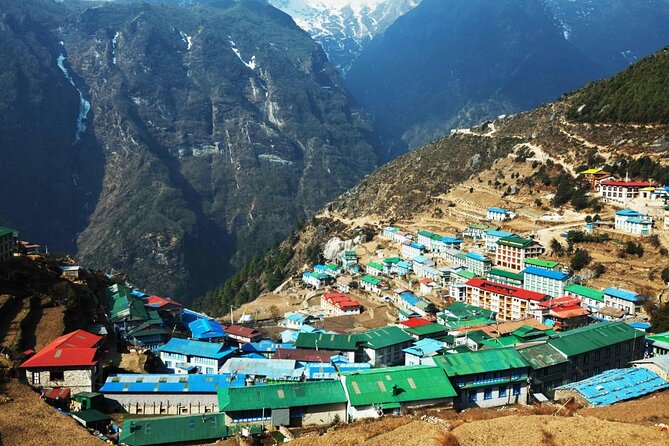
As you continue, you follow and cross back and forth with the Dudh Koshi and Bhote Koshi rivers. Then comes the real shift: a steep ascent into Namche Bazaar, the main center of the Khumbu region. The uphill is a workout, but it’s also a payoff, especially when weather permits and you can view Mt. Everest and Mt. Lhotse from near Namche.
Even if your goal is Base Camp, Namche Bazaar is a key gear-change day. It’s where you get access to internet cafes, shops, restaurants, ATMs, and government offices. In other words, it’s not just a dot on the map—it’s where the trek starts to feel like a real community corridor.
Consideration: Day 2 gives you a big climb. If you come in feeling energetic, your job is to pace anyway. Fast starts are how people end up tired before they even reach the higher villages.
Day 3 in Namche: rest day that still keeps you moving
Day 3 is designed as a rest and relaxation day in Namche Bazaar. This is exactly the kind of scheduling choice that helps you enjoy the trek instead of just surviving it. You’re at altitude, and your body needs a day to adapt without increasing the altitude dramatically.
You can keep it easy or add a short day hike if conditions are right. The program mentions a hike toward Khumjung village (12,401 ft), a Sherpa settlement where you can look at local flora and fauna at that altitude. Even if you keep it short, a controlled hike gives your body movement without a full day of steep effort.
This is also the day where your guide can help you interpret what you’re feeling. If you’re dizzy, unusually tired, or sleeping poorly, don’t ignore those signs. Use the rest day for recovery, not pushing for bragging rights.


Day 4 to Tengboche: rhododendron climbing and the monastery atmosphere
Today you head toward Tengboche. The route description includes a downward stretch toward the Dudh-Koshi River, then a similar ascent through rhododendron forests. This is one of the most memorable kinds of hiking in the Khumbu: your effort feels rewarded because the trail gives you changing views as you climb.
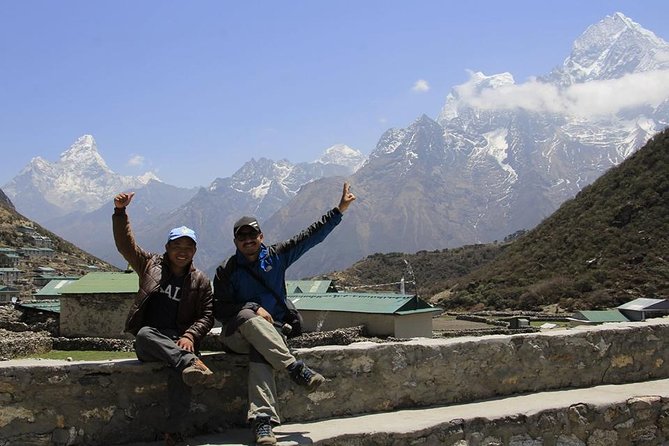
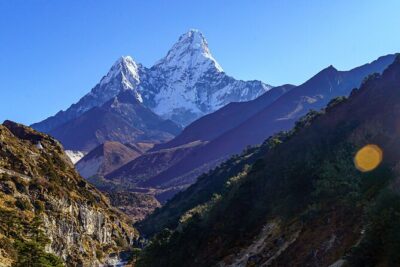
As you descend and ascend, you may see peaks such as Everest, Lhotse, Nuptse, Ama Dablam, Thamserku, and Kongde. Then you reach Tengboche and visit the Tengboche monastery, described as the largest monastery in the region. You get time there to soak in the views of Everest, Ama Dablam, and surrounding peaks.
Why this stop matters: monastery visits can turn a trek from physical-only into cultural travel. Even if you’re not a religious traveler, you’re witnessing how the local community frames these mountains as sacred, not just climbable objects.
The night in Tengboche helps you settle before the higher, colder days ahead.
Day 5 to Dingboche: fields, stone walls, and a slow shift upward
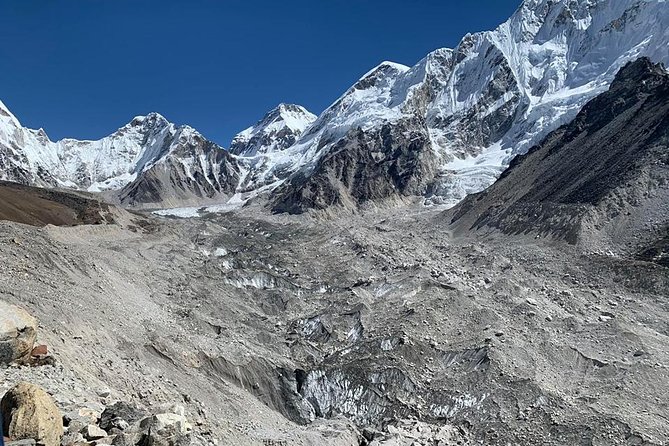
Day 5 brings you through forests filled with birch, conifers, and rhododendrons. Then the route moves past the Imja Valley and Lobuche River, before climbing toward Dingboche. Dingboche is set at a higher altitude and the scenery changes again: you see fields enclosed by stone walls that protect crops like barley, buckwheat, and potatoes from cold winds and grazing animals.
That “working mountain” detail is one of my favorite parts of Everest trekking routes. You’re not hiking through empty wilderness. People farm, protect crops, and build lives around harsh conditions.
Day 6 in Dingboche: acclimatization with optional viewpoint hikes
Day 6 is a rest and acclimatization day in Dingboche. You can take day hikes to Nagarjun Hill or Chukkhung Valley for views of Makalu, Lhotse, Chalotse, Tawache, and Ama Dablam. These hikes aren’t about distance for its own sake—they’re about letting your body adjust while giving your eyes something worth the effort.
If you’ve done other high-altitude treks, you’ll recognize the logic. The goal is to go high enough to stimulate adaptation, but not so high that you wreck yourself for the next movement day. This schedule does that.
Tip for your mindset: treat acclimatization days like part of the itinerary’s magic, not a pause from the journey.
Day 7 to Lobuche: memorial stones and the approach to the high moraine
Day 7 takes you toward Lobuche. You climb gradually to Duglha, at the end of the Khumbu terminal moraine. Then you tackle a steep trail up to Chupki Lhara, where you find memorial stones with prayer flags for Scott Fischer and Babu Chiri Sherpa. The program notes that Babu Chiri Sherpa was a 10-time Everest submitter and that he perished on a mission.
This is one of those moments that changes how you look at the trek ahead. Base Camp is famous and often photographed, but this stop reminds you that the mountain carries history—risk, ambition, and loss—far beyond your own hike.
After Chupki Lhara, you follow the Khumbu moraine and face peaks like Khumbutse, Lingtren, Pumori, and Mahalangur Himal. The trail then eases off and you reach Lobuche for the night.
Day 8 to Everest Base Camp via Gorak Shep: thin air and gray-and-bright tents
Day 8 is the classic “you’re really here” day. You walk from Gorak Shep toward Everest Base Camp, following the route through the once vast Gorak Shep Lake. You pass memorials linked to the Indian army mountaineers, and you’ll notice something you should respect: the path can be misleading, so you’ll want to follow your lead Sherpa closely.
The trek is strenuous, and the reason is simple: thin air. Expect rocky dunes, moraine sections, and streams as you make your final approach. When you arrive at Base Camp, the tents of mountaineers can look bright against the monotony of gray surroundings, especially in spring. From here, the views include Nuptse, Khumbuste, and Pumori.
Then you head back to Gorak Shep for the night, which is how you’ll get recovery before the big viewpoint morning.
If you want a practical strategy: don’t treat Base Camp like a single-photo sprint. Take your time absorbing it. That’s where the experience turns from effort to memory.
Day 9 to Kala Patthar: pre-dawn cold for 360-degree views
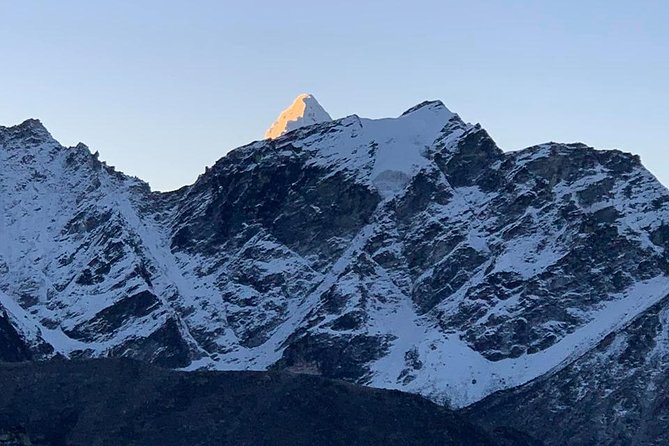
Day 9 starts early with pre-dawn darkness and cold temperatures around -10 to -14 C. Cold winds can add to the bite. This is the day described as leading to Kala Patthar, and it’s framed as your 360-degree up-close view moment.
As dawn approaches, peaks like Lingtren, Khumbutse, and Changtse can tower to the east, while Everest begins to reveal itself. Then Kala Patthar delivers the wide panorama: the program calls it 360 degrees of formidable views of Mt. Everest.
This is the part of the trek where you’ll want good layering discipline, gloves you can use, and the patience to wait for the best light. After the viewpoint time, you head back for the overnight in Pheriche (your listed stop for the day).
Worth knowing: the viewpoint is a workout even if your legs are tired. You’re climbing in the cold, when your body tightens up. Slow and steady beats speed here.
Day 10 back toward Namche: prayer flags, animal sightings, and suspension bridges
Today is a long “get your legs back” style day. You start from Pheriche and move toward the route that passes the Dudh Koshi gorge, including rhododendrons and juniper trees. The trail includes prayer-flag stretches and another suspension bridge over the Dudh Koshi River.
The program even mentions possible wildlife sightings in the forest—colorful pheasants and mountain goats. Whether or not you see them, the route through pine forests and descending terrain is still a different feel from the high, rocky approach days.
You pass Sansa, where you can enjoy views of Ama Dablam, Thamserku, and Nuptse, then continue through winding trails and back down toward Namche Bazaar.
Consideration: steep descent can be harder than the uphill. Keep your steps controlled on the rough bits.
Day 11 to Lukla: the rocky descent that tests your knees
Day 11 descends steeply downward. It’s described as rocky terrain that you’ll need to navigate cautiously, with legs that can feel shaky. If you’ve done any hiking, you know this day can catch you off guard. Even with a guide and a well-managed route, your body has to handle gravity.
Then, after crossing suspension bridges over fast-flowing rivers and tributaries, the trail becomes more level and natural. Finally you reach Lukla. This is where the trek starts feeling like it flew by, and you’ll probably notice the contrast: you’ve been surrounded by giant peaks for days, then suddenly you’re back in the gateway village rhythm.
Day 12 Kathmandu: rest, souvenirs, and a farewell dinner
The last day flips the altitude switch. You catch an early flight to Kathmandu after reaching Lukla, then you can rest or do souvenir shopping. Your guides can help with shopping, which is handy because Kathmandu can be a little chaotic when you’re tired.
There’s also a farewell dinner in the evening to celebrate finishing the journey. That small ritual matters more than you’d think. It turns the hard work into closure.
Price and value: what $2,000 really covers
A big question with a trek like this is what you’re paying for besides the name Everest. Here, the value is in the bundle:
- Flights to and from Lukla
- Transportation to and from Tribhuvan Airport
- A 3-star or above hotel in Kathmandu with breakfast included
- Local guest house accommodations during the trek
- Government-authorized guide and porters
- Meals on the mountain: breakfast, lunch, and dinner (handled as hygienic meals)
- Equipment like a sleeping bag and warm layers, plus a first aid kit
- TIMS card and Sagarmatha National Park entry fee
- Insurance coverage for the trekking operation (as listed), plus pay for guides and porters
- A post-trek celebration dinner in Kathmandu
You’re also getting a tour format that’s described as private—only your group participates. Even if there are group discounts, the private feel can help if you want your schedule and pace managed to your group’s needs.
Where costs may surprise you: international airfare isn’t included, and meals in Kathmandu beyond breakfast, as well as tips and personal shopping, are on you. You’ll also sometimes pay for hot showers or charging where available.
In plain terms: you’re paying for reduced mental load. You’ll spend money, yes, but you won’t be responsible for assembling half the logistics yourself.
The people factor: why Bhim and the team show up in strong reviews
A consistent theme in the feedback is that the guide can make or break the experience. People specifically praised Bhim for being smart, experienced, funny, and helpful—and for keeping them feeling good during the trek. Another review highlighted a smoother support network from staff including Bandhu, Ramesh, and Umesh.
You can’t always count on the same guide for your dates, but you can count on this type of expedition depending on strong local leadership. With a trek that includes cold mornings and thin-air days, a guide who knows pacing and communication becomes part of the safety system, not just a storytelling bonus.
Who should book this Everest Base Camp trek
This trek fits best if you:
- Have moderate physical fitness and are comfortable with a multi-day trek with ascents and descents
- Want a classic Everest Base Camp route with built-in acclimatization days
- Prefer organized logistics where meals, lodging, park entry items, and equipment basics are handled
You might rethink it if:
- You get very stressed by cold mornings and long travel days
- You know you struggle with downhill fatigue, especially after days at altitude
- You’re unable to be flexible about flight timing due to weather
Should you book? A quick decision checklist
Book this trek if you want a well-supported classic Everest Base Camp experience with acclimatization, monastery culture at Tengboche, and the big viewpoint payoff at Kala Patthar. The price looks high until you list what’s included—then it starts to feel more like an all-in mountain program than a bare-bones hike.
Don’t book if you’re expecting a light stroll. This is a real trek, with cold pre-dawn hours and thin-air effort. The people who love it most tend to be the ones who come prepared to pace, listen to their guide, and treat rest days as part of the plan.
If you’re aiming for Everest for the first time and want the route to be managed end-to-end, this one is a strong candidate.
FAQ
How long is the Everest Base Camp trek?
It’s listed as 12 days approximately, running from Kathmandu to Lukla, then trekking through the Khumbu region before returning to Kathmandu.
Where does the trek start and end?
The trek starts in Lukla after a flight from Kathmandu and ends back in Kathmandu with an early flight from Lukla.
Is airport transportation included in the package?
Yes. Transportation to and from Tribhuvan Airport is included.
Are flights to and from Lukla included?
Yes. All transportation for the trek, including flights to and from Lukla is included.
What kind of lodging do I get in Kathmandu and on the trek?
In Kathmandu, you get a 3-star or above hotel with breakfast included. During the trek, you stay in local guest houses.
Are park fees included?
Yes. The Sagarmatha National Park entry fee is included, along with the TIMS card.
What trekking meals and gear are included?
During the trek, you get breakfast, lunch, and dinner (listed as hygienic meals). Gear included includes a sleeping bag and warm layers (plus a first aid kit).
What if poor weather affects the trip?
The experience requires good weather. If it’s canceled due to poor weather, you’ll be offered a different date or a full refund.
Is this tour private or group-based?
It’s described as private, meaning only your group participates.
More Trekking Out of Kathmandu






More Tour Reviews in Kathmandu




Just Reviewed in Kathmandu
- Mountain Bike Tour
★ 5.0 · 3 reviews - Annapurna Panaroma
★ 5.0 · 3 reviews - Mount Everest Scenic Flight 50 Minutes
★ 5.0 · 3 reviews - Kathmandu : Swambhunath & Durbar Square Guided Half Day Tour
★ 3.3 · 3 reviews - Chandragiri Cable Car & Monkey Temple Tour – Private/Group
★ 5.0 · 3 reviews - Kathmandu: Shivapuri National Park Hiking Day Trip
★ 3.3 · 3 reviews
Hiking & Trekking, compared.
 ★ 5.0Everest Base Camp Trek – 14 DaysFrom $1,8001,499 reviews
 ★ 5.0Everest Base Camp TrekFrom $1,790842 reviews
 ★ 5.0Everest Base Camp TrekkingFrom $1,350485 reviews
 ★ 5.0Nagarkot Sunrise View and Day Hiking from KathmanduFrom $45471 reviews
 ★ 5.0Annapurna Circuit Trek with Tilicho LakeFrom $1,093368 reviews
 ★ 5.0Everest Base Camp Trekking – 13 DayFrom $1,399365 reviews
★ 5.0Everest Base Camp TrekFrom $1,445350 reviews
★ 5.0Everest Base Camp Trek -14 DaysFrom $1,420321 reviews