
Five UNESCO stops in one Kathmandu day. This tour is interesting because it tackles five UNESCO World Heritage sites with a real local guide, so you’re not just staring at stone and hoping it makes sense. I especially like the way it starts at Swayambhunath and then stitches together Kathmandu’s major spiritual and palace-area sights without wasting your whole day.
I also like the practical pacing. Each stop is about 30 minutes, and the plan covers Pashupatinath, Patan Durbar Square, and both Durbar Square areas, so you get a strong Kathmandu Valley snapshot in 4 to 6 hours. The one drawback to plan for is logistics around entrance fees, since monuments fees (worth about $30) and lunch are not included.
In This Review
- Key highlights worth knowing before you go
- Price and logistics: what your $40 really buys
- Swayambhunath Monkey Temple: a hilltop start with Hindu-Buddhist vibes
- Patan Durbar Square: Newari architecture packed into a small visual world
- Boudhanath Stupa: the giant dome that frames Buddhist devotion
- Pashupatinath Temple complex: Nepal’s national deity in a riverbank setting
- Kathmandu Durbar Square and the Kumari Temple: a palace square with a living connection
- How the guides improve the day (especially on a tight schedule)
- Pacing, time windows, and what to do if you want more
- Who this tour fits best
- Should you book this full day Kathmandu UNESCO tour?
- FAQ
- What time does the tour start?
- How long is the Kathmandu Valley UNESCO tour?
- Which UNESCO World Heritage sites are included?
- Is pickup included?
- Are entrance fees included?
- Is lunch included?
- What if I cancel?
- What happens if weather is poor?
Key highlights worth knowing before you go
- Five UNESCO sites in one outing: a fast, high-impact introduction to Kathmandu Valley’s major heritage areas.
- Swayambhunath as the opener: a hilltop start that blends Hindu and Buddhist themes in one place.
- Patan’s Newari temple density: concentrated palace-temple architecture that you can actually see and compare in a short time.
- Boudhanath’s scale: a giant stupa setting that feels commanding even when you only have about 30 minutes.
- Pashupatinath on the Bagmati River: Nepal’s national-deity seat framed inside a major temple complex.
- Small group size: capped at 15 travelers, which usually makes timing and guide attention easier.
Deeper into old Kathmandu
- Private Kathmandu Sightseeing Tour | UNESCO World Heritage sites★ 5.0 · 756 reviews
- UNESCO Seven World Heritage Tour in Kathmandu★ 5.0 · 253 reviews
- Nepal Discovery Tour: Heritage Sites & Scenic Hill Easy Hike★ 5.0 · 121 reviews
- Kathmandu Private Sightseeing Tour | UNESCO World Heritage Sites★ 5.0 · 109 reviews
Price and logistics: what your $40 really buys
The headline price is $40 for a full-day Kathmandu Valley tour with private transportation and an experienced tour guide. For this kind of route, it’s solid value, mainly because you’re paying for someone to route you through multiple heritage sites plus handle the movement across the valley.
Two “do the math” items matter:
- Monument entrance fees are not included, listed as worth about $30.
- Lunch isn’t included, so you’ll need to budget extra if you get hungry during the tour window.
Duration is 4 to 6 hours (approx.), starting at 9:15 am. With five UNESCO stops, that means each place gets a focused visit rather than a long, slow wander. If you like your sightseeing with lots of time to sit, read, and take photos, you may feel a bit rushed at times. If you prefer a guided hit-list day that sets you up for deeper exploration later, this format fits well.
Good news: you’ll get a mobile ticket, and pickup is offered. The group size is small (maximum of 15), so you’re not stuck in a huge crowd where the guide’s attention disappears.
Also, this experience requires good weather. If weather turns, the operator will offer another date or a full refund (per the tour rules). In monsoon season or during heavy clouds, that weather dependency is worth keeping in mind.
Swayambhunath Monkey Temple: a hilltop start with Hindu-Buddhist vibes
Your day centers on Swayambhu (Swayambhunath), widely known as the Monkey Temple. This is where the tour’s character shows up quickly: it’s described as a blend of Hinduism and Buddhism, and it’s set up so you’ll notice both traditions in the same complex.
Plan for a 30-minute stop here. That’s enough time to take in the big visual elements—chaityas, stupas, and the overall layout—but not enough for a slow, ceremonial visit. What makes this opening stop feel rewarding is the viewpoint and the way it orients you. Even if you arrive with only basic background, the guide’s explanations (the kind you hear from people like Ajit, Ganesh, and others in this program’s history) help you “read” what you’re looking at rather than just collecting pictures.
There’s also a legend attached to the site that ties into the valley’s origin story: it’s said to have evolved spontaneously when the valley formed out of a primordial lake more than 2,000 years ago. You don’t need to memorize the legend to enjoy it; it works because it gives meaning to why this place is treated as especially holy.
Practical angle: because this is a hilltop religious site, it’s the kind of stop where you’ll want to wear footwear that can handle uneven ground and stairs. The tour doesn’t mention special gear, so just assume normal comfort matters.
Patan Durbar Square: Newari architecture packed into a small visual world
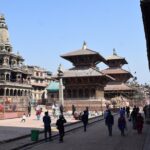
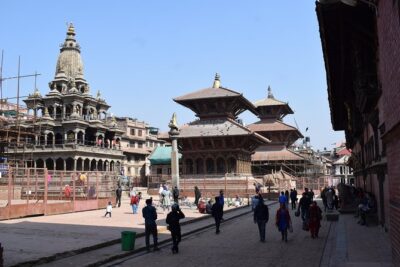
After the hilltop opening, the tour shifts to Patan Durbar Square, the ancient palace area of Patan. This stop is described as visually stunning because of the concentrated mass of temples in Newari architecture. In other words, the “wow” isn’t one single building. It’s the density—how many temple forms and carvings you can compare close-up in a short time.
You’ll get about 30 minutes here as well. That time window can still work, because the square’s design does some of the guiding for you. If the guide points out what to notice—pagoda-like temple shapes, the way structures cluster, and how the area functions as a palace-temple zone—you’ll leave with a clearer sense of Patan’s role in Kathmandu Valley culture.
One reason this stop pairs well with a guided format is the chance to connect art and daily life. In the program’s stories, guides have been known to include local food stops around the area—like a momo moment—so your “heritage” day doesn’t feel like it’s only about monuments and rules. If you’re the type who thinks sightseeing should also taste like the place, this is a big plus.
A small caution: entrance tickets for monuments are not included, and there can be optional museum or indoor areas depending on what’s open and what you choose. If you care about museums, ask your guide what’s actually worth paying for once you’re there, since not everything may be included in your time.
Boudhanath Stupa: the giant dome that frames Buddhist devotion
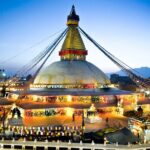
Next, you’ll head to Boudhanath Stupa, described as one of the oldest monuments of Gautam Buddha, with a date reference around the 14th century. The stupa itself is enormous, built around a giant dome, with a Buddhist pyramid shape on top.
This place is the opposite of the dense temple clustering in Patan. Boudhanath gives you breathing room. The stupa dominates the setting, and your brain naturally shifts from “count the carvings” to “watch how the whole space works.” Even with a 30-minute stop, it can feel like more because your eyes keep returning to the same focal point.
The tour’s wording includes the idea that the monument was created just after Buddha’s passing. Even if you treat that as tradition rather than a strict timeline, it gives the emotional logic of why the stupa is taken so seriously.
What I like about having a guide here: your time is limited, so you need someone to tell you what to prioritize. A good guide will help you understand the design language—why the dome matters, why the elements sit where they sit—and how to connect this to the broader Buddhist landscape in the valley.
Entry fees are not included for monuments. If you’re paying for the experience because you want to see everything, budget that separate cost. If you’re mainly there to see the stupa and the surrounding sacred area, you’ll likely be fine with the time allotted.
More full days, well spent
Pashupatinath Temple complex: Nepal’s national deity in a riverbank setting
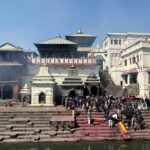
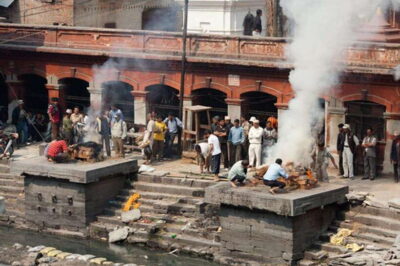
The tour includes Pashupatinath, described as the biggest Hindu temple in Nepal and India, and a major Hindu pilgrimage site on the bank of the Bagmati River. It’s known as the seat of Nepal’s national deity, and the tour frames it as a sprawling temple complex rather than a single building stop.
This is the kind of place where a 30-minute visit can go two ways:
- If you go in with no context, it can feel like a lot of buildings and details with no organizing thread.
- If you have a guide who explains the layout and what each area represents, you leave feeling you understood something, not just saw it.
That’s why the guide matters here. The tour includes an experienced tour guide, and from the program’s guide history, people like Ramesh and Ganesh have been praised for explaining details thoroughly. That’s exactly what you need at a complex like Pashupatinath. You’re not trying to “finish” the site. You’re trying to grasp the structure of the pilgrimage world in front of you.
Another practical consideration: this is an active religious destination. Your visit will likely be shaped by what’s going on around you at that time. You’ll get the benefit of a guide who can help you move at a respectful pace and keep your group aligned.
Entrance fees for monuments are not included. Ask your guide what’s optional. If you want maximum value, decide ahead of time whether you care most about the exterior complex experience or about paid areas inside.
Kathmandu Durbar Square and the Kumari Temple: a palace square with a living connection
The tour finishes with Kathmandu Durbar Square and includes a visit to the Kumari Temple. Durbar Square-style sites are all about palatial power expressed through stone. But what makes Kathmandu Durbar Square feel extra meaningful is that the tour explicitly calls out Kumari Temple, which signals a living cultural thread rather than just preserved ruins.
You’ll have about 30 minutes at this stop. That’s short, but you can still cover the essentials if you’re using the guide to prioritize what to see. You’ll likely see major palace-square architecture and the key elements tied to the Kumari Temple.
This is also a place where the tour format works well for practical reasons. Since you’ve already built context at Swayambhunath, Patan Durbar Square, and Boudhanath, Kathmandu Durbar Square becomes easier to interpret. It’s not just another temple stop. It’s the political and cultural center expressed through architecture.
If you’re planning your day around photo timing, remember this is the final major cluster of sites. If crowds build, your guide will help keep your group from losing time.
How the guides improve the day (especially on a tight schedule)
A lot of Kathmandu sightseeing is “where do I go next?” This tour takes that stress away with guided routing and private transportation, plus a maximum of 15 people.
What makes the guide portion feel worth it is what the guide does when time is limited:
- Explains what you’re seeing at each UNESCO stop instead of letting you wander aimlessly.
- Helps connect architecture to culture, especially at dense places like Patan Durbar Square.
- Adds local context, like steering you toward food around the heritage areas.
In the stories attached to this tour, guides such as Shiva, Ramesh, Ajit, and Ganesh come up repeatedly, often for clarity and helpful city guidance. One guide was described as taking visitors to local street food experiences, including a stop for momo during the Patan portion. Another was praised for taking people toward local lanes for snacks and even pointing out where to grab lassi near Indra Chowk. Even if you don’t chase those exact food stops, the point stays the same: the best value of a tour day is when the guide helps you experience Kathmandu as a city, not just a checklist of monuments.
So here’s my advice: ask your guide a simple question when you arrive—what should I prioritize in the 30 minutes here? You’ll get a better day instantly, and you’ll feel less like you’re being rushed by the schedule.
Pacing, time windows, and what to do if you want more
This tour is built for efficiency: 5 UNESCO sites in 4 to 6 hours, with about 30 minutes per major stop. That’s not a flaw. It’s a style.
If you want to get the most out of a timed day:
- Treat each stop as a “first read,” not a full study.
- Focus on getting your bearings and learning the key features the guide points out.
- Save the longer museum-like exploration for another half-day if you want to go deeper later.
Also, remember that entrance fees aren’t included. If you end up paying for a few optional areas, the money adds up. It’s still a fair setup for the value you get, but you should plan your budget so you don’t feel surprised mid-day.
Weather matters too. Since the experience requires good weather, cloudy or rainy conditions can affect comfort and timing. If you’re booking close to the end of your trip, you might want buffer time for the tour to run as planned.
Who this tour fits best
This is a great match if you:
- Want a high-value UNESCO sampler without spending your whole day commuting and figuring out routes.
- Prefer guided clarity at major sacred sites and palace squares.
- Are comfortable with a structured schedule and short visits at each stop.
It might be less ideal if you:
- Want to linger for long periods at every site.
- Plan to do lots of extra paid museum time at each stop.
- Are easily fatigued by switching locations frequently within a half-day window.
Should you book this full day Kathmandu UNESCO tour?
If your goal is to understand Kathmandu Valley quickly and credibly, book it. For $40, you’re getting a guided route across multiple UNESCO sites plus private transportation, and the small group size helps keep the day from feeling like an assembly line.
I’d only pause if you hate short stops or you’re sensitive to paying additional monuments entrance fees on top of the base price. If you go in knowing that lunch isn’t included and that each stop is about 30 minutes, you’ll likely find this tour gives you exactly what most people want from a first Kathmandu day: orientation, context, and enough inspiration to come back for deeper exploration.
FAQ
What time does the tour start?
The tour starts at 9:15 am.
How long is the Kathmandu Valley UNESCO tour?
It runs for about 4 to 6 hours.
Which UNESCO World Heritage sites are included?
You’ll visit Swayambhunath (Monkey Temple), Boudhanath Stupa, Pashupatinath Temple, Patan Durbar Square, and Kathmandu Durbar Square (including the Kumari Temple).
Is pickup included?
Yes. Pickup is offered, and the tour includes private transportation.
Are entrance fees included?
No. Monuments entrance fees worth about $30 are not included.
Is lunch included?
No. Lunch is not included.
What if I cancel?
This experience is non-refundable and cannot be changed for any reason.
What happens if weather is poor?
This experience requires good weather. If it’s canceled due to poor weather, you’ll be offered a different date or a full refund.
The Old Kathmandu, Properly Toured


More Tours in Kathmandu



More Tour Reviews in Kathmandu




Just Reviewed in Kathmandu
- Mountain Bike Tour
★ 5.0 · 3 reviews - Annapurna Panaroma
★ 5.0 · 3 reviews - Mount Everest Scenic Flight 50 Minutes
★ 5.0 · 3 reviews - Kathmandu : Swambhunath & Durbar Square Guided Half Day Tour
★ 3.3 · 3 reviews - Chandragiri Cable Car & Monkey Temple Tour – Private/Group
★ 5.0 · 3 reviews - Kathmandu: Shivapuri National Park Hiking Day Trip
★ 3.3 · 3 reviews
Kathmandu UNESCO Heritage Tours, compared.
 ★ 4.87 UNESCO Sites with LunchFrom $2744 reviews
 ★ 5.0Full Day 7 UNESCO Tour with Lunch – Private/GroupFrom $10415 reviews
 ★ 5.0Full Day Top 4 UNESCO Tour with Lunch – Private/GroupFrom $10269 reviews
 ★ 5.0UNESCO Seven World Heritage Tour in KathmanduFrom $180253 reviews
★ 4.9Full-Day 7 UNESCO Tour with Lunch – Private/GroupFrom $5247 reviews
 ★ 4.97 UNESCO Sites Tour in 1 Day (Private Tour)From $4204 reviews
 ★ 4.9Top 4 UNESCO Tour with Lunch – Private/GroupFrom $5181 reviews
 ★ 5.0Kathmandu Private Sightseeing Tour | UNESCO World Heritage SitesFrom $35109 reviews
Browse the lists this tour appears in