
Review · KATHMANDU FOOD & STREET FOOD TOURS
Kathmandu Food Crawl & Market Tour
Kathmandu street food tells stories fast, and this 2-hour crawl through Ason Bazar is the kind of trip that turns a food stop into a real culture walk. With English-speaking guide Santosh Pandey, you’ll move through Kathmandu market lanes, learning what people eat, why they eat it, and how daily life shows up in the stalls and sounds around you.
I love how the tour anchors you at Ason Bazar, Kathmandu’s oldest local market, instead of hopping randomly from one snack stand to another. I also love the food plan itself, especially the Newari staples like yomari and samay baji, which give you a clear sense of Indigenous Newar flavor and ritual food.
One consideration: these are market tastings with real street-food intensity, including spice and an amount of food that can feel like more than a snack. If you’re sensitive to heat or you want a very light experience, you’ll want to plan your pace and expectations.
In This Review
- Key highlights
- Ason Bazar and the Newari food you can actually taste
- Meeting at Chhaya Devi Complex: how the 2-hour walk works
- Yomari, samay baji, and other Newari staples on the menu
- Street-food hits: momo, chatamari, and laphing
- Market sights beyond food: crafts, traditions, and local lifestyle
- Price and value of a guided tasting in Kathmandu
- Who this tour fits best (and who should skip it)
- Practical tips before you go looking for Newari flavors
- Should you book this Kathmandu Food Crawl & Market Tour?
- FAQ
- How much is the Kathmandu Food Crawl & Market Tour?
- How long does the tour last?
- Where do we meet for the tour?
- Is the tour guide available in English?
- What’s included in the $28 price?
- Is there free cancellation?
- Can I reserve now and pay later?
Key highlights
- Ason Bazar, Kathmandu’s oldest local market with context you can actually use while you walk
- Newari food tastings like yomari and samay baji that connect dishes to local tradition
- Street-food lineup featuring momo, chatamari, and laphing in variations common around Kathmandu markets
- Market craft and culture stops focused on Newars plus other Kathmandu communities
- A guided Q&A vibe with Santosh Pandey that makes it easier to talk to people and ask what you’re eating
- Big tasting portions for a short tour since you get at least five items plus drinks
More to eat and drink around Kathmandu
- Kathmandu: Food and Drink Walking Tour★ 4.9 · 292 reviews
- Kathmandu Food and Drink Walking Tour★ 5.0 · 266 reviews
- Kathmandu: Food and Drink Walking Tour★ 4.9 · 119 reviews
- Walking Street Food Tour in Kathmandu★ 5.0 · 111 reviews
Ason Bazar and the Newari food you can actually taste
If you only come to Kathmandu for the big sights, you’ll still leave hungry in the best way. This tour is built around the idea that food in Kathmandu isn’t separate from life on the street. You’ll see how people shop, snack, and socialize, all while you try dishes that locals treat as normal.
A big part of the value is the Newari focus. Newar cuisine shows up across Kathmandu in forms that range from everyday market food to items tied to special occasions. On this crawl, you’re set up to taste two standout Newari ideas: yomari and samay baji. Yomari is a sweet steamed dumpling filled with molasses and sesame seeds. Samay baji is a ceremonial platter approach, typically including beaten rice with spiced buffalo meat and a spread of pickles. Even if you’re not thinking about tradition, these dishes give you a clean snapshot of how ingredients, texture, and ritual can live side by side.
And here’s what I like about the setup: it’s not just “try something random.” You get enough structure to recognize what you’re tasting—sweet, savory, spiced, sour/pickled—so the experience sticks after you leave the market.
Meeting at Chhaya Devi Complex: how the 2-hour walk works
You meet at the main gate of Chhaya Devi Complex (also listed as Chhaya Center). That matters because Kathmandu can be easy to navigate wrong, especially if you’re new to the street layout. A fixed meeting point keeps the tour simple: you show up, find the guide, and you’re off.
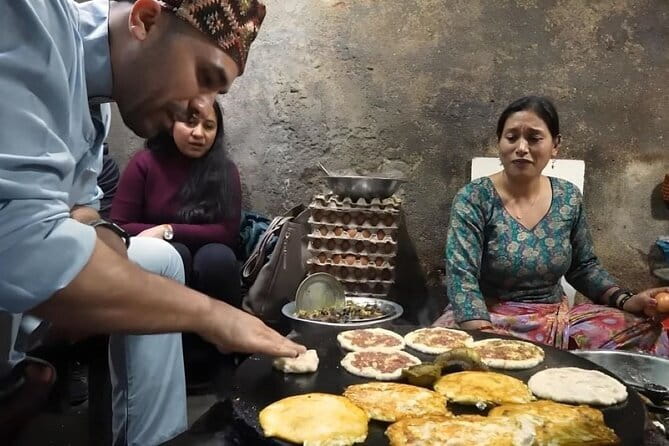
The tour lasts about 2 hours, which is a sweet spot. Long enough to try multiple foods and get market context, short enough that you don’t feel trapped in one neighborhood all day. You’ll spend that time moving through food market areas, learning what’s happening at stalls and how locals use the market as part of daily life.
One practical thing to keep in mind: this is a walking experience through active market space. You don’t need trekking shoes, but comfortable footwear helps. If your plan includes a second activity later, go easy on scheduling right after the tour—because you’ll likely eat more than you expect.
Yomari, samay baji, and other Newari staples on the menu
Newari food is where this crawl earns its name. You’re not just tasting Nepal in general; you’re tasting an Indigenous Newar food culture that Kathmandu has lived with for a long time.
Start with yomari. It’s a dessert-style dumpling—sweet, steamed, and built around filling. The molasses-and-sesame combo is the kind of flavor pairing that can surprise you if you’ve mostly had Nepalese food elsewhere. It also gives you a contrast point early in the walk: sweet before you go back to savory and spiced items.
Then there’s samay baji. This is more “platter and balance” than “one snack.” The beaten rice base, the spiced buffalo meat element, and the mix of pickles all work together. That balance is a clue to how Newari meals are often thought about: not one flavor at a time, but a set of tastes that make each other more interesting. If you tend to eat meals in a straight line—one dish, then another—this kind of platter format can change how you notice flavors.
This tour also frames Newari food inside the broader mix of Kathmandu’s communities. You’ll hear about crafts and traditions tied to Newars, and you’ll also see evidence of other cultural influences moving through the market spaces. The result is that you leave with a better sense of why certain foods show up where they do.
Street-food hits: momo, chatamari, and laphing
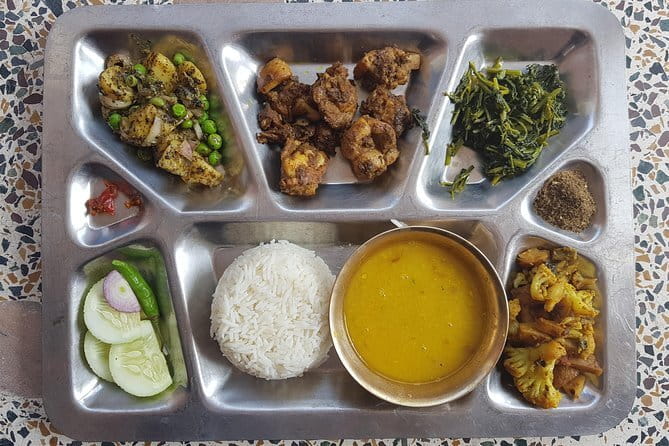
After the Newari anchor dishes, the crawl turns to the wider Kathmandu street-food scene. This is where you get variety fast, and where the city’s cross-border flavor shows up clearly.
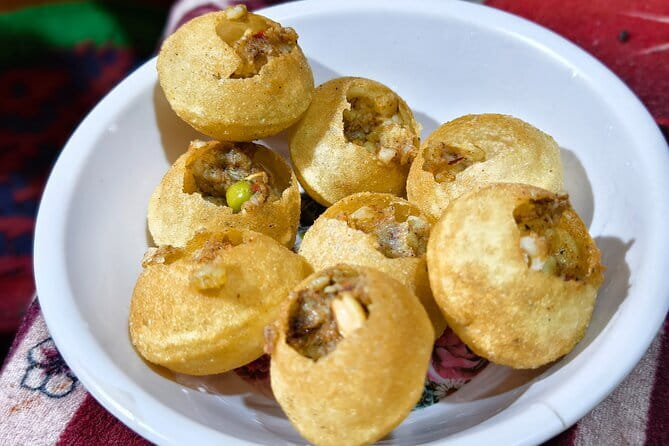
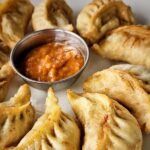
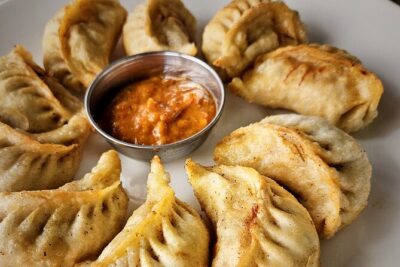
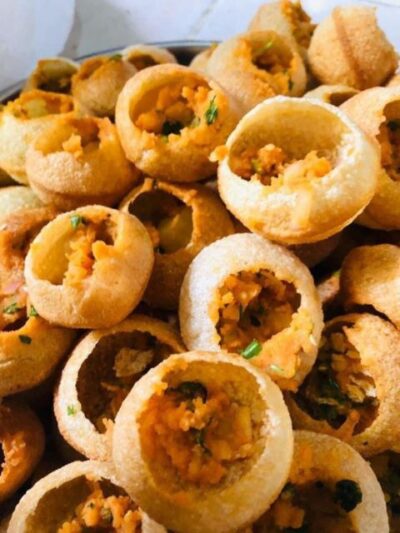
You’ll try momo—spicy dumplings in the many variations people make across Kathmandu. The fun part of momo here is not just taste; it’s comparison. One stall’s version can feel different from another because of how the filling, dipping sauce, and spice level are handled. If you like street food for the “choose your own adventure” part, momo is the right ticket.
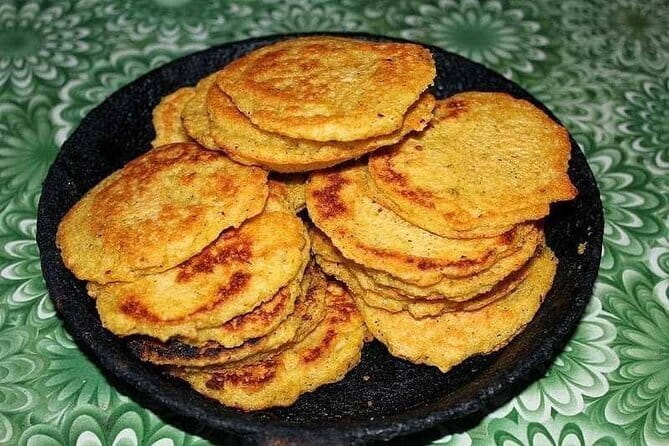
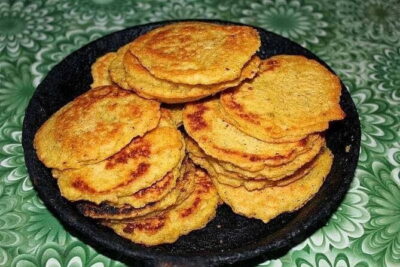
Then there’s chatamari, often described as a Newari pizza. It’s the kind of food that helps you understand how local street cooking can borrow familiar shapes without copying the same logic. Instead of thinking pizza rules, think flat, savory, and meant to be eaten in the market rhythm.
One more local favorite worth looking for is laphing. It’s a cold, spicy mung bean noodle dish that locals actually seek out. If you usually avoid spicy noodle foods, you might want to give laphing a fair try on this tour because it’s served as part of the local everyday lineup, not as a gimmick. Also, cold noodles can feel refreshing after warm items, which helps you keep eating without feeling wrecked.
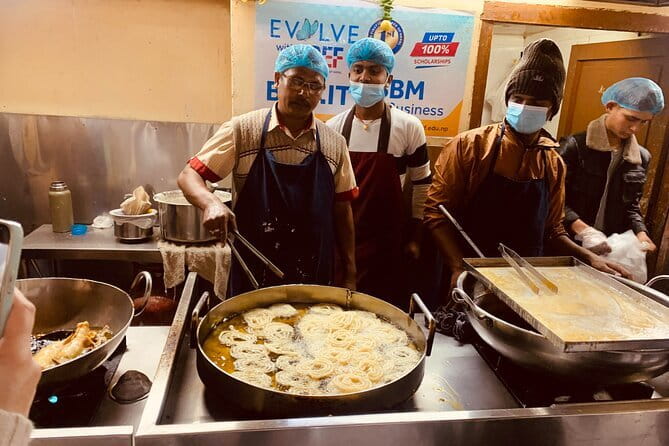
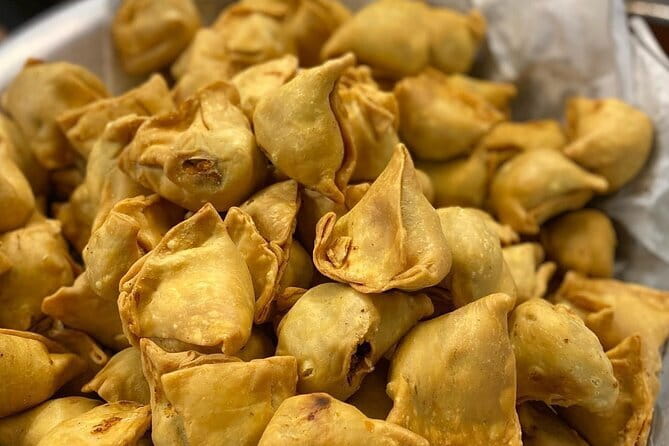
Kathmandu street food also blends influences from Nepali, Tibetan, and Indian food traditions, and you’ll taste that blend in the sauces, spice styles, and how vendors build meals to eat quickly. It’s a good lesson: the market isn’t a museum. It’s a working kitchen system.
Other plates worth the detour
Market sights beyond food: crafts, traditions, and local lifestyle
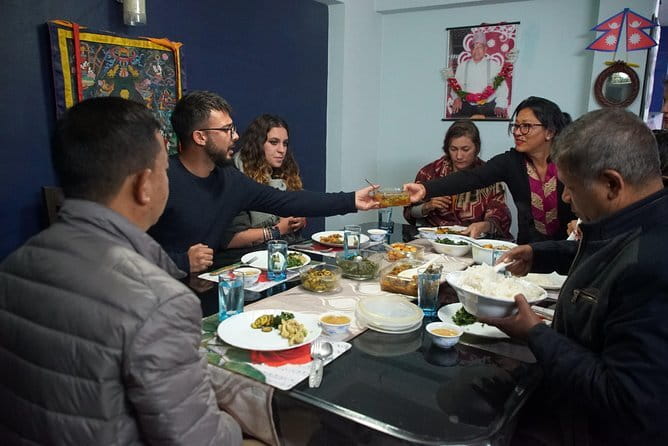
Food is the headline, but the tour earns repeat value by adding context while you walk. You’ll explore crafts and traditions of Newars and other cultures around Kathmandu, and you’ll get a chance to touch—realistically, through conversation and observation—on locals’ lifestyle, culture, and traditions.
This part matters because it changes your role from “customer eating stuff” to “visitor learning the logic.” When your guide explains what you’re seeing and why certain foods matter to local routines, you start noticing details you’d miss alone: what’s being prepared right now, what looks popular, and which foods feel like everyday comfort versus special-occasion ritual.
It also helps you interact with people more naturally. You’ll be walking through an active market, not a quiet tourist street. With the right guide, you can ask questions and get context without turning it into awkward small talk. Santosh Pandey’s style, as reflected in how he guides conversations, is friendly and approachable—useful if you’re the type who wants to understand what you’re eating, not just eat it.
Price and value of a guided tasting in Kathmandu
At $28 per person for a 2-hour food crawl, the pricing feels fair if you focus on what you’re paying for: a guide, market access, and multiple tastings. You’re not just paying for food. You’re paying for someone to lead you into local eating spaces that you might skip on your own.
Here’s the key value detail: the tour includes all government taxes and official expenses, plus foods and beverages. The food is listed as a minimum of five items with drinks. In practice, that can add up fast—more than “a few bites.” That’s important in a place where street food is inexpensive in general, because the guide’s role is partly about helping you sample widely without wasting time hunting down the right stalls.
So the real question for you is whether you value guidance. If you’re confident navigating markets alone and you already know what you want to try, you could DIY. If you’d rather spend your energy eating and learning than figuring out where to go next, a guided crawl often wins.
Who this tour fits best (and who should skip it)
This tour is a great match if you want a focused taste of Kathmandu in a short window. It works especially well for first-timers who feel overwhelmed by where to eat, and for food-lovers who like learning the meaning behind dishes.
It’s also a strong fit if you enjoy markets as a way of understanding a city. You’re not just chasing restaurant meals. You’re walking through an older market area—Ason Bazar—where everyday food culture is visible.
You might want to think twice if you’re very sensitive to spicy food, because the lineup includes clearly spicy items like laphing and momo with spicy variations. Also, if you prefer small tastings only, note that you’ll likely leave feeling very satisfied. This isn’t a “one snack and stroll” setup.
Practical tips before you go looking for Newari flavors
A little prep makes a big difference with market eating.
First, plan a light meal earlier in the day. Since you’ll get multiple tastings plus drinks, arriving hungry helps you enjoy the range instead of forcing it.
Second, bring an open mind. Sweet yomari, savory samay baji, and spicy street dishes play different roles. If you go in only expecting one style of flavor, you might miss the point of the tour’s mix.
Third, ask questions when you can. The whole experience is designed around talking with your guide and learning what the ingredients and traditions mean. If something looks confusing, that’s your cue to ask. You’re paying for a knowledgeable food guide in an English-speaking format.
Should you book this Kathmandu Food Crawl & Market Tour?
I’d book it if you want a short, structured food experience that still feels local. The mix of Ason Bazar market walking plus Newari tastings like yomari and samay baji gives you both a specific cultural angle and everyday street-food variety like momo, chatamari, and laphing.
I’d skip it if you can’t handle spicy foods or if you strictly prefer sit-down meals with lighter portions. Also skip it if you only want “scenic sightseeing,” because the focus here is markets and eating, not big viewpoints.
For most people who want Kathmandu food with context, this tour is an efficient way to get your bearings quickly and leave with a full stomach and clearer memories than a list of restaurant names.
FAQ
How much is the Kathmandu Food Crawl & Market Tour?
The price is $28 per person.
How long does the tour last?
The tour lasts 2 hours.
Where do we meet for the tour?
You meet at the main gate of Chhaya Devi Complex (Chhaya Center).
Is the tour guide available in English?
Yes. The tour includes an English-speaking live tour guide.
What’s included in the $28 price?
The tour includes the English-speaking tour guide, all government taxes and official expenses, and all foods and beverages (a minimum of 5 items with drinks).
Is there free cancellation?
Yes. You can cancel up to 24 hours in advance for a full refund.
Can I reserve now and pay later?
Yes. The tour offers reserve now & pay later, so you can book your spot and pay nothing today.
Eat and Drink Around Kathmandu
More Tours in Kathmandu


More Tour Reviews in Kathmandu


Just Reviewed in Kathmandu
- Mountain Bike Tour
★ 5.0 · 3 reviews - Annapurna Panaroma
★ 5.0 · 3 reviews - Mount Everest Scenic Flight 50 Minutes
★ 5.0 · 3 reviews - Kathmandu : Swambhunath & Durbar Square Guided Half Day Tour
★ 3.3 · 3 reviews - Chandragiri Cable Car & Monkey Temple Tour – Private/Group
★ 5.0 · 3 reviews - Kathmandu: Shivapuri National Park Hiking Day Trip
★ 3.3 · 3 reviews
Kathmandu Food & Street Food Tours, compared.
 ★ 4.9Food and Drink Walking TourFrom $34292 reviews
★ 5.0Kathmandu Food and Drink Walking TourFrom $36266 reviews
★ 4.9Food and Drink Walking TourFrom $28119 reviews
★ 4.9Food and Drink Walking TourFrom $34292 reviews
★ 5.0Kathmandu Food and Drink Walking TourFrom $36266 reviews
★ 4.9Food and Drink Walking TourFrom $28119 reviews
 ★ 5.0Walking Street Food Tour in KathmanduFrom $48111 reviews
 ★ 5.0Secret Food Tour – Food Bites and Sights Kathmandu 14+ TestingsFrom $3582 reviews
 ★ 4.7Kathmandu Secret Food Crawl & Local Market TourFrom $2854 reviews
 ★ 5.0Kathmandu Food & Drink and Shopping Rickshaw TourFrom $2548 reviews
 ★ 5.0Walking Food Tour in Hidden Local Eateries of KathmanduFrom $3640 reviews
Browse the lists this tour appears in