
Review · KATHMANDU UNESCO HERITAGE TOURS
Kathmandu UNESCO World Heritage Tour
Seven UNESCO stops in one day.
This Kathmandu UNESCO World Heritage Tour strings together major sights like Kathmandu Durbar Square, Patan, Bhaktapur, and the big spiritual landmarks, with multilingual male/female guides translating the meaning behind the stonework and rituals. I also like the built-in chance to linger and ask questions at each place, so you’re not just herded from one photo spot to the next.
One thing to plan for: site entry fees and your meals are not included, so it can cost a bit more than the headline price once you add tickets and food.
In This Review
- Key Highlights Worth Booking For
- Kathmandu UNESCO in a Single 9-Hour Loop
- The Real Win: Guides Who Keep the Meaning Clear
- Price and Value: $99 for a Full-Day UNESCO Route
- Pickup at Kaiser Library and a Mobile Ticket
- Stop-by-Stop: What Each UNESCO Site Adds to Your Day
- Kathmandu Durbar Square: Royal Courtyards and Architecture Up Close
- Patan Durbar Square: Craftsmanship and Temple Details
- Bhaktapur Durbar Square: Medieval Feeling in Stone
- Changu Narayan Temple: Oldest Hindu Temple in the Mix
- Pashupatinath Temple: Spiritual Atmosphere and Reverence
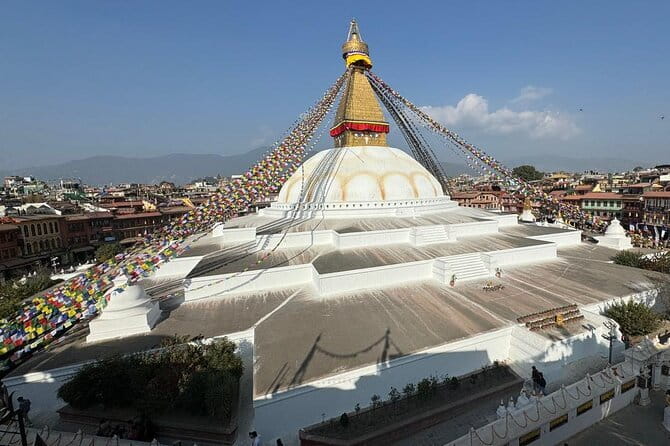
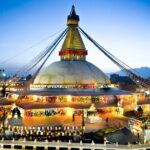
- Boudhanath Stupa: Buddhist Monument at Full Scale
- Swayambhunath: Hilltop Views and Stupa History
- What’s Not Included: Tickets, Meals, and Transport Comfort
- Group Size Reality: Up to 100 Travelers
- Who This Tour Fits Best
- Should You Book This Kathmandu UNESCO World Heritage Tour?
- FAQ
- How long is the Kathmandu UNESCO World Heritage Tour?
- Do they offer pickup?
- Where is the meeting point?
- Is the guide multilingual and male/female?
- Do I get a mobile ticket?
- Are admission tickets included for the UNESCO sites?
- Is lunch included?
- Are tips or gratuities included?
- What is the maximum group size?
- Is there free cancellation?
Key Highlights Worth Booking For
- Multilingual guidance (male or female) that turns monuments into context
- A tight UNESCO circuit across multiple neighborhoods in one day
- About 1 hour per stop, with time to look closely and move at a human pace
- Deepak as the listed provider, and at least one review highlights a female guide named Rabina
- Pickup from Kaiser Library and a mobile ticket for simpler check-in
- Max 100 travelers, so you’ll want to be comfortable sharing space in popular areas
Deeper into old Kathmandu
- Private Kathmandu Sightseeing Tour | UNESCO World Heritage sites★ 5.0 · 756 reviews
- UNESCO Seven World Heritage Tour in Kathmandu★ 5.0 · 253 reviews
- Nepal Discovery Tour: Heritage Sites & Scenic Hill Easy Hike★ 5.0 · 121 reviews
- Kathmandu Private Sightseeing Tour | UNESCO World Heritage Sites★ 5.0 · 109 reviews
Kathmandu UNESCO in a Single 9-Hour Loop
Kathmandu can be loud, fast, and slightly chaotic. This tour helps you cut through that by giving you a structured route through the city’s UNESCO World Heritage Sites in one day. You’re looking at a full 9 hours (approx.), which is long enough to feel like you accomplished something, but not so long that you’re stuck wandering alone until sunset.
The big value for me is that you’re not assembling your own route from scratch. You get a guided flow that moves between royal squares, ancient temples, and major religious monuments. If you’ve only got a short stay in Kathmandu, this is a practical way to see a lot without turning the day into map-reading and guesswork.
You’ll also notice the tour is designed for variety. The itinerary mixes Hindu and Buddhist sites, and you’ll see how different communities shape the city’s architecture, rituals, and street life around these landmarks.
The Real Win: Guides Who Keep the Meaning Clear
A tour can show you buildings. A good guide helps you understand what you’re looking at—and this is where the tour earns its strong reputation.
What I like most is the focus on interpretation: the guide explains historical and cultural significance at each stop, not just a list of dates. That matters in Kathmandu because many of these places are active religious sites. When you know what you’re seeing, you’re more likely to respect the moment instead of treating it like a quick background for your camera.
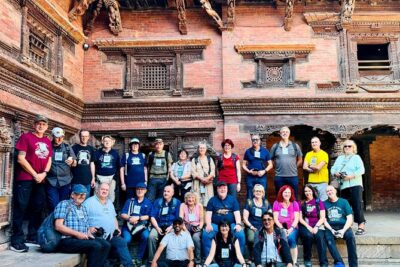
I also appreciate that the tour is set up with multilingual male/female guides. One review experience called out a female guide named Rabina for being especially knowledgeable about Nepal’s history, and the provider is listed as Deepak Kushwaha. Even if you don’t get the same guide, the pattern is clear: you’re meant to get more than directions—you’re meant to get explanation.
Finally, the pacing seems designed for questions and casual exploration. In other words, you’re not only sprinting between stamps.
Price and Value: $99 for a Full-Day UNESCO Route
At $99 per person, this isn’t a luxury price, but it’s also not trying to be budget-cheap. The value comes from what’s included and what’s handled for you: you’re paying for guided access to multiple UNESCO sites in one day, plus pickup and a guide.
Here’s the trade-off. The tour price does not include admission tickets, lunch, dinner, tips, or personal expenses. It also notes that an air-conditioned vehicle is not included. So your final cost will depend on the site entry fees and what you eat during the day.
Still, if you’d otherwise pay for separate guides, waste time arranging transport between locations, or struggle with what to see first, this structured approach can save you both money and energy. When I’m comparing options, I treat this like a “time-saved” purchase: someone else organizes the route and context, and you spend your effort on looking closely and taking breaks.
Pickup at Kaiser Library and a Mobile Ticket
Your start and finish are both at Kaiser Library (Kanti Path, Kathmandu), and pickup is offered. That’s important because Kathmandu navigation can be easier when you’re starting from one known landmark instead of trying to meet a driver in the wrong lane.
The tour also uses a mobile ticket, which usually means less paperwork at the start and a smoother check-in if you’re traveling with a phone-only setup.
You’ll also want to keep expectations realistic: this is a city-based walking and sightseeing day. It’s listed as near public transportation and “most travelers can participate,” which suggests it’s generally workable. But you should still come ready for a long, busy day.
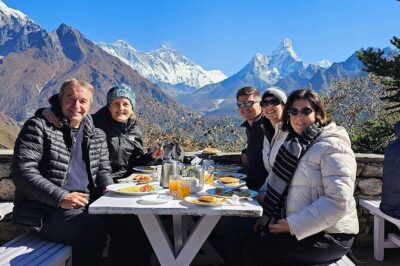
Stop-by-Stop: What Each UNESCO Site Adds to Your Day
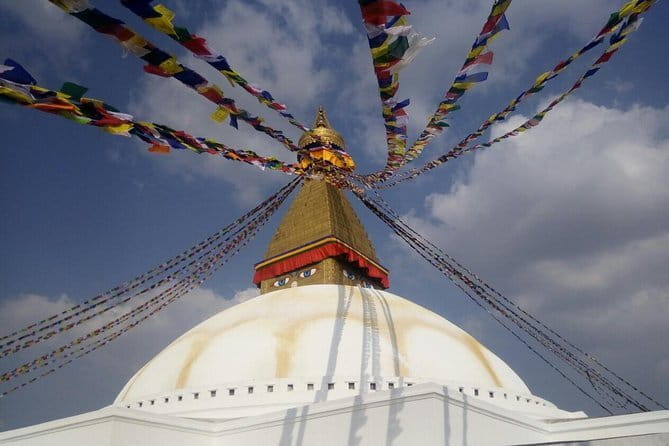
Kathmandu Durbar Square: Royal Courtyards and Architecture Up Close
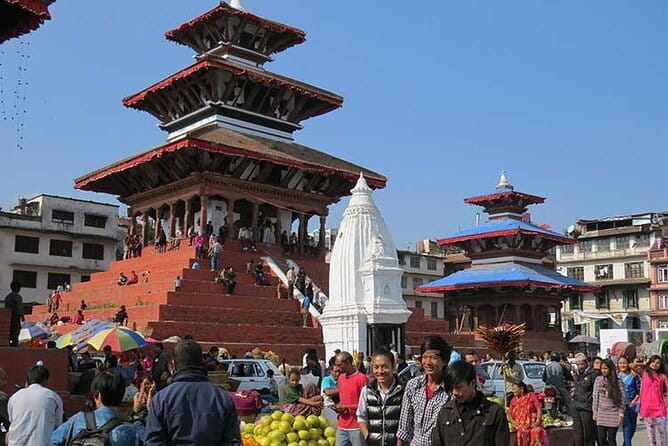
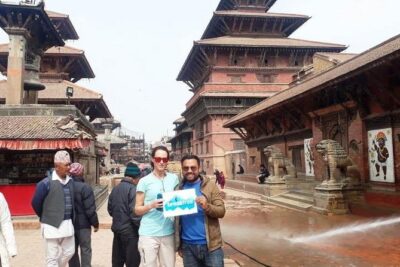
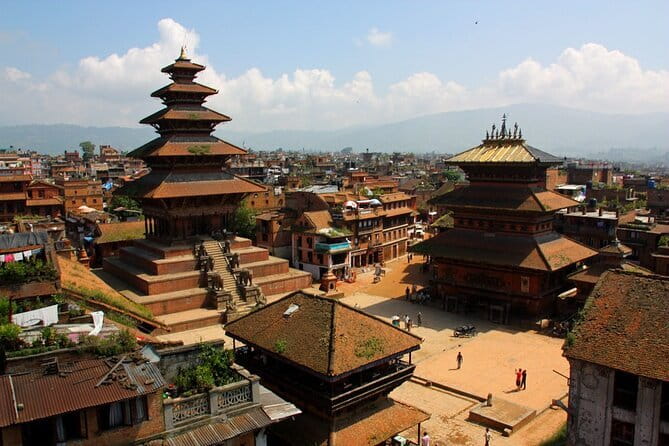
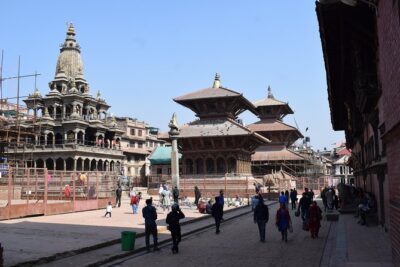
You start at Kathmandu Durbar Square, one of the best places to get grounded in how Kathmandu’s royal and civic life shaped the city. Expect guided time that focuses on the complex’s history, the architecture, and the feel of an ancient royal space that still connects to daily culture around it.
This stop is a good “warm-up.” Before you head to other neighborhoods and religious monuments, you’ll learn how the city’s past shows up in layout, design, and ornament.
Watch-out for your own expectations: Durbar Square is often the first major stop in many Kathmandu itineraries. Going early in your day helps, but it still can be crowded. If you like quiet looking time, be ready to pick your spots and let the guide show you what to prioritize.
Patan Durbar Square: Craftsmanship and Temple Details
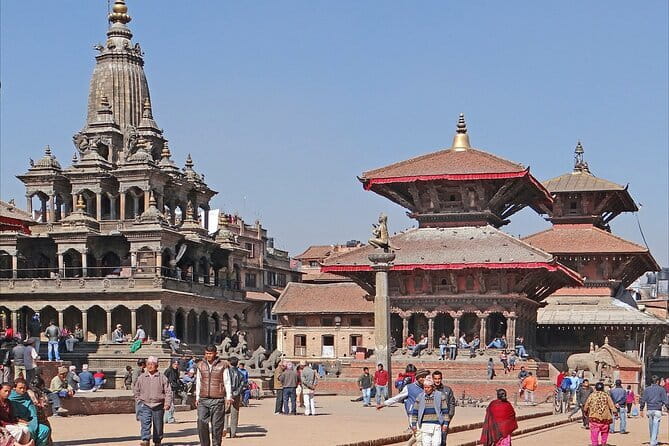
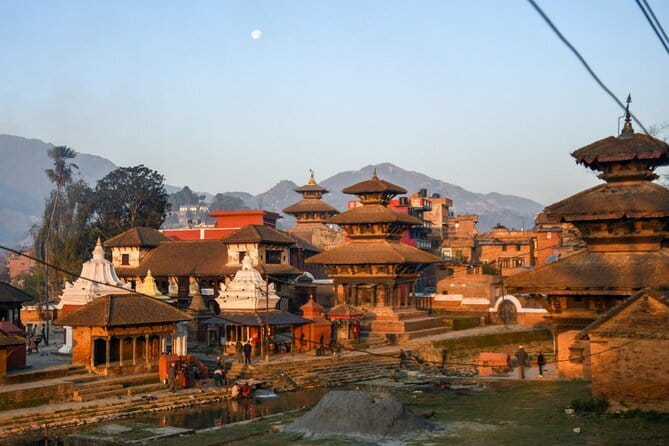
Next comes Patan Durbar Square, another UNESCO royal complex, with a strong emphasis on craftsmanship—temples, palaces, and courtyard spaces. Patan tends to feel more focused on artistry, and the guide’s job here is to help you notice what’s intentional: how the structures relate and how decorative elements communicate status and belief.
This stop pairs well with Kathmandu Durbar Square because you get a contrast. Two durbar squares, same concept, different expressions.
A practical tip: if you enjoy photography, this is a place to slow down. The guided hour is where you’ll have a chance to look at details instead of only photographing the front view.
Bhaktapur Durbar Square: Medieval Feeling in Stone
Then you move to Bhaktapur Durbar Square, known for its medieval character and intricate work. The tour highlights temples and statues, including the Vatsala Temple. This stop can feel like you’ve stepped into a different tempo—more about atmosphere and craftsmanship than about a single “must-see” object.
I like Bhaktapur-style stops because they reward patient looking. If you’re the type who likes corners, doorways, and small carvings, you’ll likely enjoy the time here.
One consideration: it’s another busy site. You’ll get guidance, but you’ll still be navigating through the reality of popular UNESCO spaces.
Changu Narayan Temple: Oldest Hindu Temple in the Mix
After the durbar squares, the itinerary slows a bit into sacred depth with Changu Narayan Temple, described as Nepal’s oldest Hindu temple and also UNESCO-listed. The tone here shifts toward serenity and ancient architecture.
This is a great stop for balance. After walking royal complexes, you get a feeling for older religious roots and the longevity of Hindu traditions in Kathmandu’s cultural landscape.
If you’re trying to understand Kathmandu as more than monuments, Changu Narayan helps you see the continuity: the city’s identity is tied to worship sites that have existed long before the modern tourist maps.
Pashupatinath Temple: Spiritual Atmosphere and Reverence
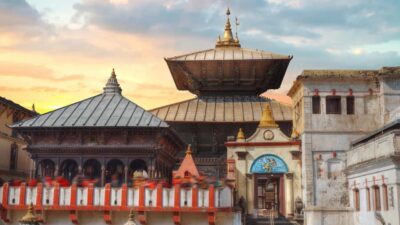
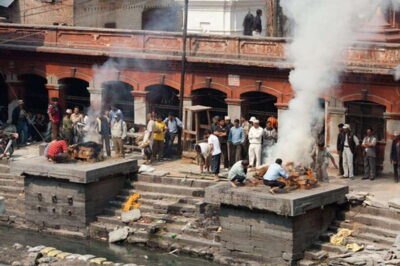
Next is Pashupatinath Temple, one of Nepal’s most revered Hindu temples and part of the UNESCO World Heritage framework. The guide leads you through the sacred environment and helps frame what makes the site special.
This stop can be emotionally intense if you pay attention to ritual and spiritual behavior. Even if you’re visiting respectfully as a curious outsider, you’ll likely find that the presence of worshippers shapes the mood more than at many “museum-like” attractions.
Practical advice: give yourself mental space here. Don’t try to treat it like a quick checklist. Your guide will help you understand what you’re observing.
Boudhanath Stupa: Buddhist Monument at Full Scale
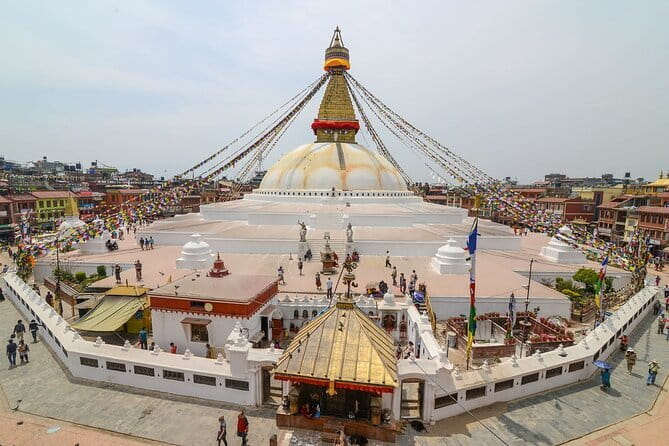
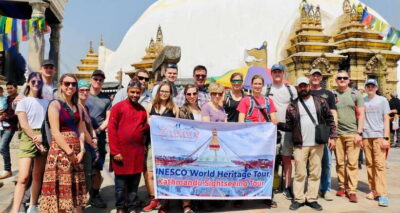
Then the day turns Buddhist with Boudhanath Stupa, noted as one of Nepal’s most important Buddhist monuments. The tour’s focus is the spiritual splendor of the stupa and the experience of walking around it with your guide.
If you like landmarks that feel monumental and symbolic, this is one of the strongest parts of the itinerary. The stupa’s size and the surrounding devotional activity make it easy to feel how this site functions as a lived place of worship, not just architecture.
A useful mindset: at Boudhanath, your best photos often come after you pause. Let your eyes adjust and watch how people move around the stupa.
Swayambhunath: Hilltop Views and Stupa History
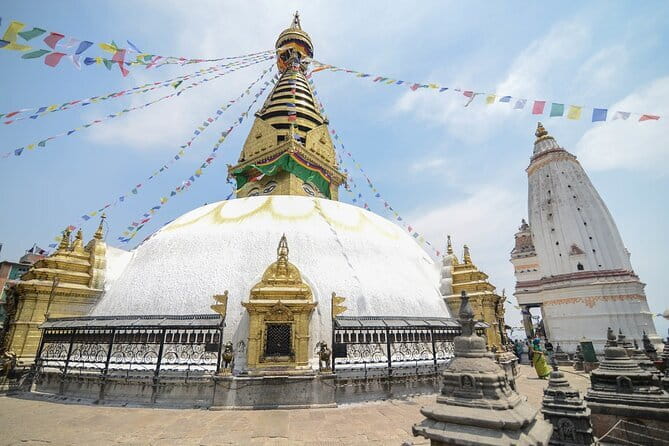
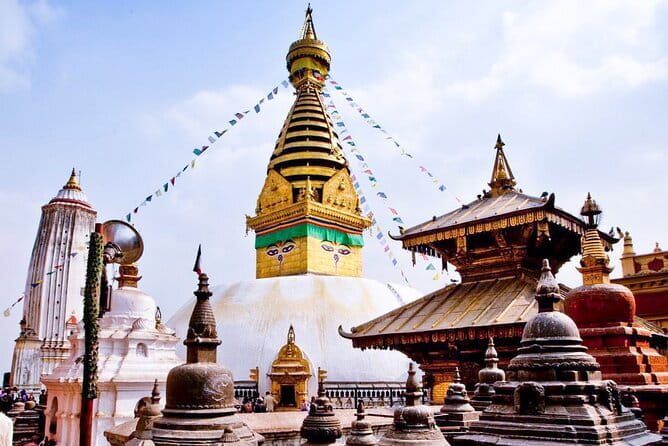
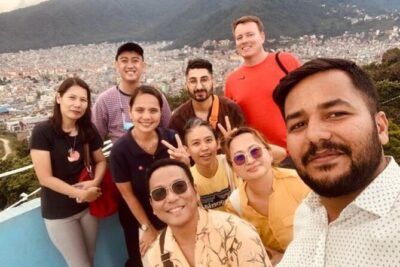
Finally, you reach Swayambhunath, the hilltop Swayambhunath Mahachaitya overlooking Kathmandu. The guide explains the stupa’s history and architecture, while the location gives you a chance to see the city from above.
This stop makes sense as the closing act because it ties together what you’ve been seeing all day. You go from street-level and courtyard-level UNESCO into a panoramic perspective that helps you understand Kathmandu’s layout.
One realistic consideration: hilltop viewpoints can mean stairs, slope, or uneven ground depending on where you enter. The tour doesn’t spell out physical difficulty, so the safe approach is to wear comfortable shoes and accept that this is the end of a long day.
What’s Not Included: Tickets, Meals, and Transport Comfort
This tour lists some clear exclusions, and you should treat them as part of your budget.
- Admission tickets are not included at each stop (Durbar Square sites, Changu Narayan, Pashupatinath, Boudhanath, and Swayambhunath).
- Lunch and dinner are not included, plus tips or gratuities and personal expenses.
- Air-conditioned vehicle is not included, which matters if you’re sensitive to heat or prefer AC.
So how do you plan smartly? I suggest you:
1) Set aside a daily cash/transaction plan for entry fees.
2) Plan food timing—either an early lunch nearby or a simple meal during breaks—so you don’t end up paying more or eating something you regret.
3) Pack light but practical: water, a hat or sunscreen if it’s sunny, and something comfortable for long periods standing or walking.
Group Size Reality: Up to 100 Travelers
The tour caps at 100 travelers. That doesn’t mean you’ll always feel like you’re in a crowd, but it does mean the day can get busy around popular monuments.
If you’re the type who loves personal space, arrive with the mindset of “guided order, shared space.” Your best advantage is the guide’s ability to manage where you look and when you move.
For photos, expect that some angles will be blocked at the busiest moments. The upside is that good guidance helps you pick better viewing positions without wasting time.
Who This Tour Fits Best
This Kathmandu UNESCO World Heritage Tour is a great fit if you:
- Have limited time in Kathmandu and want a structured UNESCO hit-list
- Want guidance that explains meaning, rituals, and architectural choices
- Prefer not to coordinate separate tickets, transport links, and “what should I see first?” decisions
- Appreciate a mix of Hindu and Buddhist sites in one day
It’s less ideal if you:
- Hate paying additional entry fees at multiple stops
- Want a relaxed pace with lots of free time for wandering without any schedule
- Are extremely sensitive to the physical demands of a long, full day
Should You Book This Kathmandu UNESCO World Heritage Tour?
If you’re trying to make your Kathmandu days count, I think this tour is worth serious consideration. You’re getting a full UNESCO circuit in roughly 9 hours, with pickup, a mobile ticket, and multilingual guidance that focuses on meaning—not just sightseeing.
The main reason to pause is the add-on cost reality: admission tickets and meals are extra. If you’re traveling with a strict budget or you hate paying separate site fees, you might find a different approach more comfortable.
But if you want a guided day that connects Kathmandu’s UNESCO sites into one understandable story—and you’d rather spend energy looking than organizing—this is a solid buy. I’d book it early in your stay so you can build confidence for the rest of your time in the city.
FAQ
How long is the Kathmandu UNESCO World Heritage Tour?
It runs for about 9 hours (approx.).
Do they offer pickup?
Yes. Pickup is offered, and the tour ends back at the meeting point.
Where is the meeting point?
The tour starts and ends at Kaiser Library (P878+H4G, Kanti Path, Kathmandu 44600, Nepal).
Is the guide multilingual and male/female?
Yes. You’ll have a multilingual male/female guide.
Do I get a mobile ticket?
Yes. The tour includes a mobile ticket.
Are admission tickets included for the UNESCO sites?
No. Admission tickets are listed as not included.
Is lunch included?
No. Lunch is not included.
Are tips or gratuities included?
No. Tips or gratuities are not included.
What is the maximum group size?
The experience has a maximum of 100 travelers.
Is there free cancellation?
Yes. You can cancel for a full refund if you cancel up to 24 hours in advance.
The Old Kathmandu, Properly Toured


More Tours in Kathmandu



More Tour Reviews in Kathmandu

Just Reviewed in Kathmandu
- Mountain Bike Tour
★ 5.0 · 3 reviews - Annapurna Panaroma
★ 5.0 · 3 reviews - Mount Everest Scenic Flight 50 Minutes
★ 5.0 · 3 reviews - Kathmandu : Swambhunath & Durbar Square Guided Half Day Tour
★ 3.3 · 3 reviews - Chandragiri Cable Car & Monkey Temple Tour – Private/Group
★ 5.0 · 3 reviews - Kathmandu: Shivapuri National Park Hiking Day Trip
★ 3.3 · 3 reviews
Kathmandu UNESCO Heritage Tours, compared.
 ★ 4.87 UNESCO Sites with LunchFrom $2744 reviews
 ★ 5.0Full Day 7 UNESCO Tour with Lunch – Private/GroupFrom $10415 reviews
 ★ 5.0Full Day Top 4 UNESCO Tour with Lunch – Private/GroupFrom $10269 reviews
 ★ 5.0UNESCO Seven World Heritage Tour in KathmanduFrom $180253 reviews
★ 4.9Full-Day 7 UNESCO Tour with Lunch – Private/GroupFrom $5247 reviews
★ 5.0UNESCO Seven World Heritage Tour in KathmanduFrom $180253 reviews
★ 4.9Full-Day 7 UNESCO Tour with Lunch – Private/GroupFrom $5247 reviews
 ★ 4.97 UNESCO Sites Tour in 1 Day (Private Tour)From $4204 reviews
 ★ 4.9Top 4 UNESCO Tour with Lunch – Private/GroupFrom $5181 reviews
 ★ 5.0Kathmandu Private Sightseeing Tour | UNESCO World Heritage SitesFrom $35109 reviews
Browse the lists this tour appears in