
Review · HIKING & TREKKING
Khopra Danda Trek
Khopra Danda Trek is a mountains-and-lake kind of route. You climb to Khopra Danda at 3,637m for big Himalayan panoramas, then push higher to Khayer Lake at 4,660m and finish with Tatopani hot water ponds.
I especially like the way this itinerary mixes classic Annapurna views with a newer, less-familiar ridge feel. Two highlights for me are the early-morning viewpoints (Poon Hill and Muldai) and the practical pacing that gives you guesthouse nights before the Khayer Lake tent day.
One consideration: the altitude days stack up, and the Khayer Lake day asks you to carry the required food and supplies from Khopra Danda because you sleep in tents at the lake.
In This Review
- Key Things I’d Highlight Before You Go
- Entering Nepal: Kathmandu Durbar Square to Pokhara Setup
- Tikhedhunga and the Modi Khola Valley: Your First Real Trek Legs
- Ghorepani via Ulleri: Over 3,000 Steps and a Guesthouse Night
- Poon Hill Sunrise to Tadapani: Golden Light, Then You Keep Moving
- Tadapani to Dobato: Villages, Flora/Fauna, and 3,350m Views
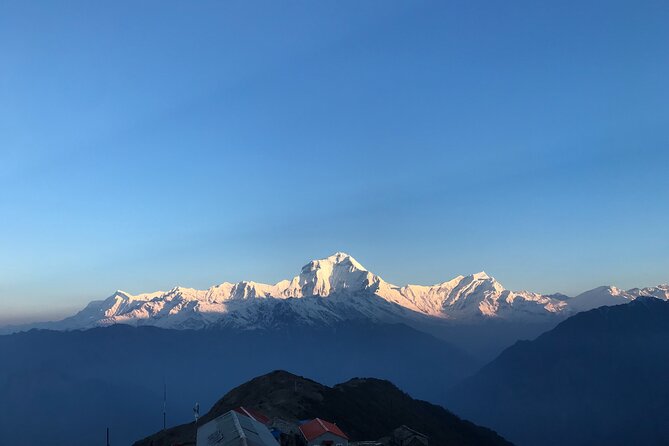
- Muldai Viewpoint at 3,637m: The 25-Mountain Morning Moment
- Chistibung to Khopra Ridge: Short Walk, Big Horizon
- Khayer Lake at 4,660m: Sacred Brahma Temple and a Tent Night
- Tatopani Hot Water Ponds: Relief After the High Day
- Back to Pokhara by Jeep: Off-Road to Black-Topped Relief
- Kathmandu Wrap-Up: Bus or Flight, Then Airport Transfer
- Price and Value: What $1,120 Buys You Here
- Pacing, Altitude, and Your Biggest Comfort Risks
- Who This Trek Fits Best (and Who Should Be Cautious)
- Should You Book Khopra Danda Trek with Hike On Trek?
- FAQ
- How long is the Khopra Danda Trek?
- Where does the tour start and where does it end?
- What time does the tour start?
- What fitness level do I need?
- What is the highest elevation on this trek?
- Do I sleep in tents during the trek?
- What is special about Tatopani at the end of the hike?
- Are entrance tickets included for all sightseeing stops?
- What is the cancellation policy if weather is bad?
Key Things I’d Highlight Before You Go
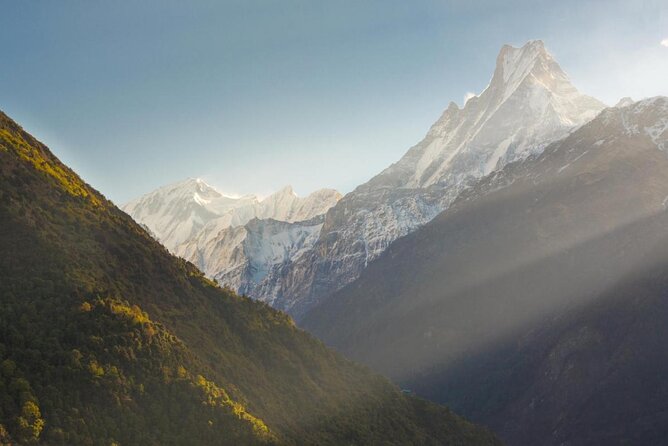
- A newer branch after Poon Hill: the trek follows the Ghorepani–Poon Hill area, then moves into the Khopra Danda ridge zone.
- Morning viewpoints with clear payoff: Muldai is set up for a 25-mountain view, and Poon Hill is built around sunrise light.
- Khayer Lake is the big physical day: 4,660m, a sacred Brahma temple site, and a tent night that requires pre-planning your load.
- Tatopani hot water ponds for recovery: a nice end-of-trek reset after higher elevations.
- Small-group feel (max 25): enough company for safety and energy, without turning it into a crowd.
- Service has a track record: consistent praise for Hike On Trek’s office and field staff, with Samir noted for shaping a unique itinerary.
More trails out of Kathmandu, boots ready
- Everest Base Camp Trek – 14 Days★ 5.0 · 1,499 reviews
- Everest Base Camp Trek★ 5.0 · 842 reviews
- Everest Base Camp Trekking★ 5.0 · 485 reviews
- Nagarkot Sunrise View and Day Hiking from Kathmandu★ 5.0 · 471 reviews
Entering Nepal: Kathmandu Durbar Square to Pokhara Setup
Day 1 starts right after you land in Kathmandu, with a sightseeing plan built around Kathmandu Durbar Square. The visit runs about 3 hours and includes the admission ticket. It’s a good first-day match for jet lag because you’re moving, but not hiking.
Day 2 shifts gears to Pokhara by private drive. It’s a 4–5 hour ride from Kathmandu, and you’ll also have time for Pokhara city sightseeing (about 7 hours total), with admissions listed as free. I like this stage because Pokhara is where your trek story starts to feel real: you can see the mountains, sort your gear, and adjust to being in a trekking corridor.
Practical note: your tour start point is Tribhuvan International Airport, and the start time listed is 10:45am. That matters because you may arrive the night before or early in the morning—either way, it’s best to keep your first day flexible and not overbook.
Tikhedhunga and the Modi Khola Valley: Your First Real Trek Legs
On Day 3, you drive from Pokhara to Nayapul (about 1.5 hours). After you get things sorted out, you’ll hire porters and then walk to Tikhedhunga at 1,750m. The trek takes around 5 hours.
The route follows the Modi Khola downstream as you move along the Annapurna valley corridor. That detail is more than scenery trivia: river paths tend to feel steady underfoot and give you a gentle rhythm for day one of hiking. If you’re nervous about starting, this is the kind of warm-up that builds confidence.
Ghorepani via Ulleri: Over 3,000 Steps and a Guesthouse Night
Day 4 is the step day. You’ll hike from Tikhedhunga and climb through more than 3,000 stone steps to Ulleri, then continue up to Ghorepani. The total time is listed at 6–7 hours, and you’ll stay overnight in a guesthouse.
Why this day matters: it trains your pacing for the rest of the trek. You’re not just “walking”—you’re climbing in a very specific, repetitive way, so you learn how to handle your breath and foot rhythm. If you’re the type who sprints early, you’ll feel it fast on stone steps.
Also, this is your classic base for the Annapurna viewpoint circuit. Even if the goal is Khopra later, Ghorepani is where the trek really comes alive.
Poon Hill Sunrise to Tadapani: Golden Light, Then You Keep Moving
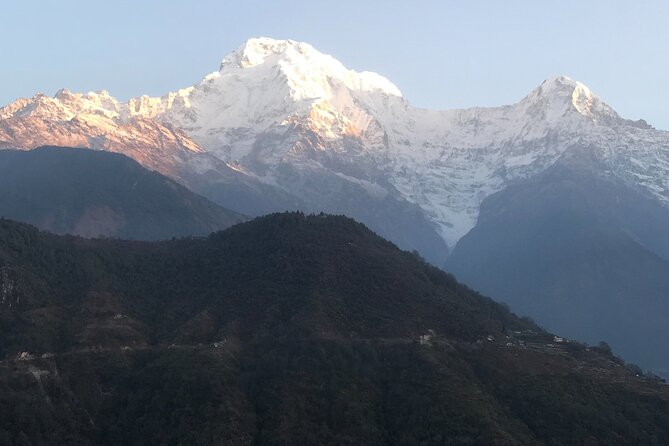
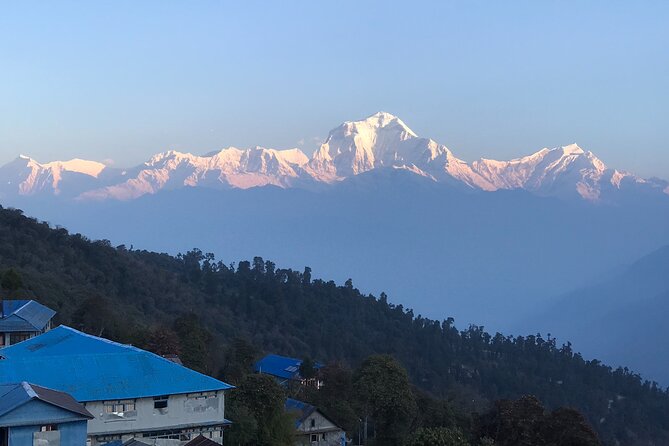
Day 5 begins with Poon Hill. From Ghorepani you’ll reach the top for the best views across the Annapurna and Dhaulagiri ranges. You’re also set up to catch mountains turning golden in sunrise light, then you return to Ghorepani and continue toward Tadapani.
The walking time is 6–7 hours, and you’ll stay overnight in a guesthouse in Tadapani. The route passes through Deurali on the way to Tadapani.
A key trade-off today: this is not a slow sightseeing day. You’ll do the sunrise mission, then you still have hours of hiking. The payoff is that you get both the emotional highlight (sunrise) and the practical progress (moving deeper into the route). Admission tickets for this day are listed as not included, so it’s worth confirming what cost expectations you’ll have on your particular date.


Tadapani to Dobato: Villages, Flora/Fauna, and 3,350m Views
Day 6 takes you from Tadapani to Dobato (3,350m). It’s about a 6.5-kilometer trek, taking roughly 5–6 hours. You’ll pass through villages and you can expect encounters with local flora and fauna along the way, plus continued mountain views that the plan describes as silvery.
This is a good day for two reasons. First, Dobato gives you another altitude staging point before the higher viewpoint push. Second, the trek time is long enough to feel like a real trekking day, but not so long that it feels like punishment.
Muldai Viewpoint at 3,637m: The 25-Mountain Morning Moment
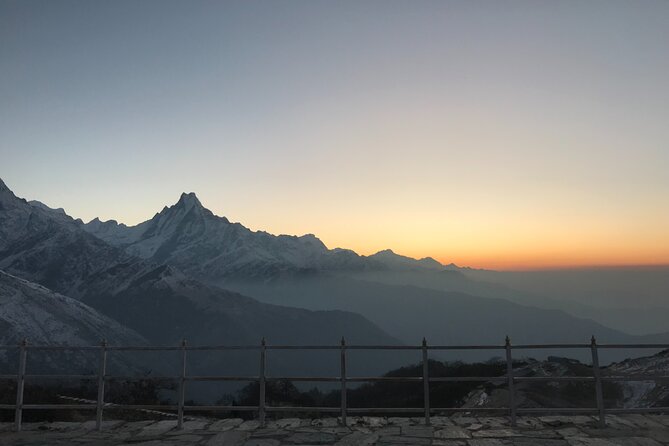
Day 7 is split into two goals. Early, you hike up to Muldai viewpoint at 3,637m for morning views described as a 25-mountain panorama across Annapurna and Dhaulagiri ranges. Later, you return to Dobato and continue trekking to Chistibung, via Bayli Kharka.
The total time is listed around 5 hours, with an overnight stay at Chistibung. The structure here is smart: you get the early payoff when visibility tends to be better, then you stop the day with forward progress.
If you want a practical tip, it’s this: treat early hikes like work, not like a leisurely walk. The goal is the viewpoint, so go steady and let the mountain views happen on their own schedule.
Chistibung to Khopra Ridge: Short Walk, Big Horizon
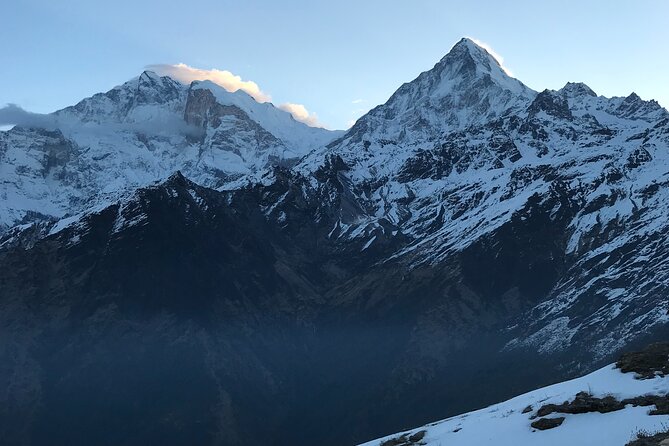
Day 8 shifts to something lighter. After about 3 hours from Chistibung, you reach Khopra ridge, where you get wide views of peaks including Dhaulagiri, Annapurna, Nilgiri, and other mountains in the region. The whole Day 8 trek time is listed as about 4 hours.
Then you rest the rest of the day in Khopra community lodges, with special emphasis in the provided info on hospitality. I like this kind of day because it protects your energy. You’ve just trained your legs for early mornings and stepped climbs, and Khopra is where you can breathe and enjoy the ridge without feeling rushed.
Admission tickets on this day are listed as not included, so factor that into any personal spending plan.
Khayer Lake at 4,660m: Sacred Brahma Temple and a Tent Night
Day 9 is the big push. After breakfast, you trek up to Khayer Lake at 4,660m. It’s described as exhausting, taking about 5 hours.
This lake is sacred, and it’s associated with a Brahma temple. Even if you’re not coming for religious sites, it adds meaning to the effort because it changes the mood of the hike from “just altitude” to “a specific destination with a reason.”
Then comes the logistical reality: you’ll set tents and stay overnight at the lake. The plan also states that required kinds of stuff and food must be carried from Khopra Danda for this day. So you’ll want to think of Day 9 as a carry-heavy day, even if the rest of the trek includes guesthouse nights.
If you dislike carrying extra weight, this is the day that will test your comfort the most.
Tatopani Hot Water Ponds: Relief After the High Day
Day 10 brings a welcome change. After lunch, you descend toward Tatopani. The time is listed as about 5 hours, and Tatopani is known for hot water ponds where you can soak for muscle comfort during the trek.
That hot-pond idea isn’t a small detail. After days at higher elevations and a tent night at 4,660m, recovery is part of the itinerary’s value. It gives you a tangible reason to keep your legs happy for the final travel days.
You’ll stay overnight in Tatopani.
Back to Pokhara by Jeep: Off-Road to Black-Topped Relief
Day 11 is travel-focused. You’ll drive back to Pokhara by jeep, following the off-road trail until Beni, then using a black-topped road from Beni through Nayapul. The ride is listed at about 5 hours, and you’ll spend the night in Pokhara.
This day tends to feel great because it breaks the trekking rhythm. Your body gets a reset, and you get time to clean up and mentally transition from trail mode to city mode.
Kathmandu Wrap-Up: Bus or Flight, Then Airport Transfer
Day 12 returns you to Kathmandu. You can take a tourist bus for countryside viewing, or you can take the flight back. The time listed is about 4 hours, with an overnight stay in Kathmandu.
Day 13 is the airport finish. You’ll have an airport representative transport you to Kathmandu International Airport about 3 hours before your flight, and the transfer time listed is 30 minutes. It’s a clean end to the trip, and it gives you a buffer for delays without stretching the final day.
Price and Value: What $1,120 Buys You Here
The listed price is $1,120 per person. That can feel like a big number until you look at what the plan actually includes and what it’s trying to do: connect you to multiple major viewpoints, keep you moving through varied terrain, and include a city start that isn’t just drop-off chaos.
A few value signals that show up in the plan:
- Timed sightseeing with admissions clarity: Kathmandu Durbar Square has admission included on Day 1, while some other admissions are listed as free, and some days list admission as not included. This reduces surprise costs compared to vague packages.
- A full 13-day arc: you’re not just doing a short ridge walk. You get Ghorepani/Poon Hill, then the Khopra ridge experience, plus Khayer Lake and Tatopani hot ponds.
- Service and staff attention: the feedback provided in the info emphasizes good service, office coordination, and field staff support. One mention specifically calls out Samir for creating a unique itinerary when booking.
One practical way to judge the value: think about how much you’d spend if you had to stitch together transport, sequencing, and multi-day logistics yourself. This plan is built to reduce friction and keep you focused on hiking days.
Pacing, Altitude, and Your Biggest Comfort Risks
This trek is for people with moderate physical fitness. That wording fits the mix of long walking days and early mornings, but here’s the real truth: the route includes hard-effort segments.
Your main altitude anchors:
- 3,637m at the high viewpoint stage (Muldai) and also the overall trek elevation focus
- 4,660m at Khayer Lake
Your comfort risk anchors:
- Day 4’s step-heavy ascent to Ghorepani
- Day 9’s Khayer Lake push plus the tent night and the instruction to carry required food and stuff from Khopra Danda
So if your body handles steep climbs and you can manage one genuinely heavy carry day, you’re in the right zone. If you struggle with steep, repetitive climbs or you don’t handle altitude well, you should reconsider or ask for advice before committing.
Who This Trek Fits Best (and Who Should Be Cautious)
This is a strong match if you want:
- Big Annapurna and Dhaulagiri views across multiple days (not just one viewpoint hit)
- A route that includes classic Poon Hill sunrise energy and then moves into the Khopra area
- The kind of memorable day that’s not just walking: Khayer Lake’s sacred setting plus a tent night
Be cautious if:
- You don’t like carrying your own supplies for a designated day (Day 9 is explicit about carrying from Khopra Danda)
- You want every day to be easy and flat, because the itinerary includes stone steps and steep morning climbs
Should You Book Khopra Danda Trek with Hike On Trek?
If you want a trek that combines famous sunrise magic with a newer ridge direction—and you’re okay with one tougher high-day—then yes, I’d consider booking Khopra Danda Trek with Hike On Trek.
What pushes it over the line for me is the combination of:
- clear emphasis on viewpoint payoff (Poon Hill and Muldai)
- a distinct destination day at Khayer Lake with tent camping
- the practical comfort finish at Tatopani hot ponds
- service quality signals in the provided info, including a named staff member (Samir) connected to itinerary planning
If your top priority is a totally gentle hike with no tent night and no heavy carry day, you might be happier with a different Annapurna route.
FAQ
How long is the Khopra Danda Trek?
The trek is listed as 13 days approximately.
Where does the tour start and where does it end?
It starts at Tribhuvan International Airport in Kathmandu and the endpoint is in the Annapurna Region associated with Khopra Danda.
What time does the tour start?
The start time is listed as 10:45 am.
What fitness level do I need?
The information says you should have moderate physical fitness.
What is the highest elevation on this trek?
The highest elevation mentioned is Khayer Lake at 4,660 meters.
Do I sleep in tents during the trek?
Yes. On Day 9, you trek to Khayer Lake and set tents for the overnight stay.
What is special about Tatopani at the end of the hike?
Tatopani is known for hot water ponds, which you can use to help relax muscle pain during the trek.
Are entrance tickets included for all sightseeing stops?
Not all. Kathmandu Durbar Square admission is included on Day 1, some admissions are listed as free on other days, and some days list admission tickets as not included (Day 5 and Day 8).
What is the cancellation policy if weather is bad?
You can cancel for free up to 24 hours in advance for a full refund. The plan notes the experience requires good weather, and if it’s canceled due to poor weather, you’ll be offered a different date or a full refund.
More Trekking Out of Kathmandu






More Tour Reviews in Kathmandu




Just Reviewed in Kathmandu
- Mountain Bike Tour
★ 5.0 · 3 reviews - Annapurna Panaroma
★ 5.0 · 3 reviews - Mount Everest Scenic Flight 50 Minutes
★ 5.0 · 3 reviews - Kathmandu : Swambhunath & Durbar Square Guided Half Day Tour
★ 3.3 · 3 reviews - Chandragiri Cable Car & Monkey Temple Tour – Private/Group
★ 5.0 · 3 reviews - Kathmandu: Shivapuri National Park Hiking Day Trip
★ 3.3 · 3 reviews
Hiking & Trekking, compared.
 ★ 5.0Everest Base Camp Trek – 14 DaysFrom $1,8001,499 reviews
 ★ 5.0Everest Base Camp TrekFrom $1,790842 reviews
 ★ 5.0Everest Base Camp TrekkingFrom $1,350485 reviews
 ★ 5.0Nagarkot Sunrise View and Day Hiking from KathmanduFrom $45471 reviews
 ★ 5.0Annapurna Circuit Trek with Tilicho LakeFrom $1,093368 reviews
 ★ 5.0Everest Base Camp Trekking – 13 DayFrom $1,399365 reviews
★ 5.0Everest Base Camp TrekFrom $1,445350 reviews
★ 5.0Everest Base Camp Trek -14 DaysFrom $1,420321 reviews