
Review · HIKING & TREKKING
Mohare Danda Trek
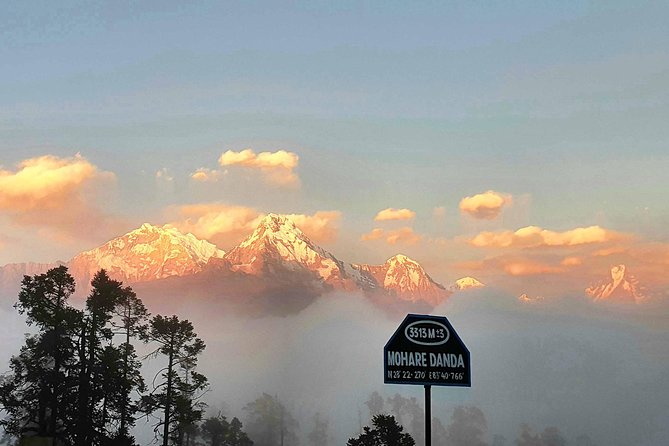
Mohare Danda feels like Nepal with fewer crowds. This 12-day trek in Annapurna’s foothills brings you to Mohare hill station (3300m) for close-up views of Annapurna and Dhaulagiri, plus stays in eco-community lodges that support local projects. Two things I really like are the trail’s mix of forest hiking and big mountain sightlines, and the chance to visit community spots like an organic farm school and a Magar settlement. The one drawback to plan for: the walking days are long enough that you need a moderate fitness level, and you should budget extra for Kathmandu/Pokhara meals plus heritage entrance fees (about USD 50 per person).
I also like the hands-on support built into the trip. Asian Heritage Treks and Travels runs the group with a professional English-speaking local guide, and the trek includes porter service with a 2 trekkers to 1 porter ratio, which makes a real difference when your days include uphill slogs and early starts.
The trek capped with Kathmandu Valley heritage and a pottery workshop also keeps the trip from feeling like only a physical grind. A small but meaningful note from past travelers: Norris (guide) and Melan (porter) were praised for taking good care of the group and sharing a lot of practical local trail and life details.
In This Review
- Key highlights worth knowing
- Mohare Danda’s eco-community lodge idea (and what you’ll actually feel)
- Price, what you get, and where extra costs can sneak in
- Getting from Kathmandu to Pokhara (days 1 to 3) without wasting daylight
- From Kali Gandaki to Bans Kharka (Day 4): the first real taste of the Annapurna foothills
- Bans Kharka to Naangi (Day 5): villages plus community learning
- Mohare Danda itself (Day 6): sunset views at the top without doing technical hiking
- Sunrise then Ghorepani (Day 7): long views, gradual effort, and lodge time
- Poon Hill sunrise and the walk to Ghandruk (Day 8): classic viewpoints plus village atmosphere
- Down to Nayapul and onward to Pokhara (Day 9): the last hike day matters
- Kathmandu Valley culture in the back half (days 10 to 11): temples and hands-on crafts
- Guide, porter, and eco-lodge comfort: what changes day-to-day
- Who should book Mohare Danda, and who should think twice
- Should you book this Mohare Danda Trek?
- FAQ
- What is the meeting point and start time?
- How long is the Mohare Danda Trek?
- Is airport pickup or transfers included?
- What is the maximum group size?
- Are permits included for the trekking portion?
- Is porter service included during the trek?
- What meals are included?
- Are heritage site entrance fees included?
Key highlights worth knowing
- Eco-community lodges: your stay links to local community projects, not just beds for the night.
- Mountain views from Mohare Danda (3300m): strong sightlines toward Annapurna and Dhaulagiri.
- Community visits on trail: organic farm school plus a Magar settlement stop.
- Sunrise options built in: early starts at Mohare Danda and Poon Hill (3210m).
- Porter support: included, with a clear 2 trekkers to 1 porter ratio.
- Small group size: maximum 12 travelers, which usually means less chaos on shared logistics.
More trails out of Kathmandu, boots ready
- Everest Base Camp Trek – 14 Days★ 5.0 · 1,499 reviews
- Everest Base Camp Trek★ 5.0 · 842 reviews
- Everest Base Camp Trekking★ 5.0 · 485 reviews
- Nagarkot Sunrise View and Day Hiking from Kathmandu★ 5.0 · 471 reviews
Mohare Danda’s eco-community lodge idea (and what you’ll actually feel)
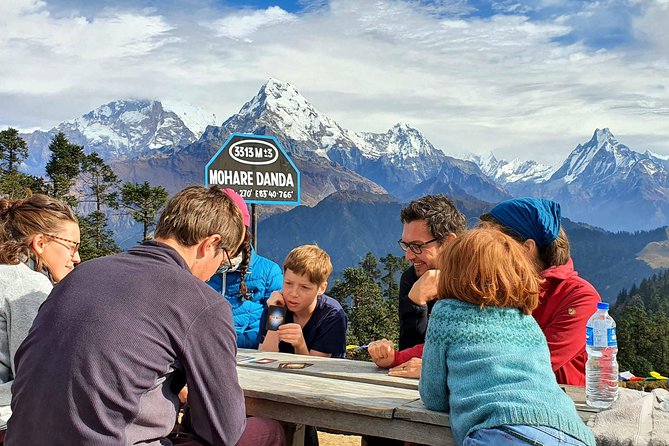
This trek is built around a quieter route in the Annapurna foothills, designed to support sustainable ecotourism and community efforts. In practice, that matters because you’re not only hiking through tea-house country—you’re sleeping in an eco-community lodge setup that’s tied to local management.
On Day 5 you also walk in a way that touches daily rural life. The route goes from Bans Kharka toward Naangi with village passing and mountain views, then you visit an organic farm school and a Magar settlement. That isn’t just a sightseeing detour; it’s the kind of stop that helps you understand why the lodges and services exist beyond tourism.
Then on Day 6, you reach Mohare Danda and spend time at a high viewpoint for sunset. The trail funnels you through oak and rhododendron forests, and when you finally get the wide open views, it feels earned rather than staged.
Price, what you get, and where extra costs can sneak in
The listed price is USD 1,375.33 per person for a roughly 12-day experience. That sounds high until you break down what’s handled for you: private land transportation throughout, a professional English-speaking local guide, trek permits (including ACAP and TIMS), and porter service (2 trekkers to 1 porter). On top of that, the trip covers lodging for multiple legs: Kathmandu hotel nights, Pokhara hotel nights, and 5 nights in eco-community lodges on a full-board basis during the trek.
The big things that are not included:
- Meals and drinks in Kathmandu and Pokhara (the trip covers breakfast/lunch/dinner counts only as listed for the itinerary, while it explicitly notes food in the city areas isn’t included)
- Entrance fees for heritage sites (approx. USD 50 per person)
- Tipping for guide, driver, and supporters
- Travel insurance, international flights, and the Nepal visa fee
My practical take: this trek can be good value if you’d otherwise be paying separately for permits, guides, and logistics on your own. But if you’re trying to keep a tight budget, the city-meal gap and heritage fees can add up faster than you expect.
Getting from Kathmandu to Pokhara (days 1 to 3) without wasting daylight
Day 1 is your soft landing in Kathmandu. You’re met at the airport with a representative holding your nameplate, then transferred to a downtown hotel near the tourist hub (Thamel area). The drive includes sights like Pashupatinath Temple, Narayanhity (Royal Palace Museum), and Garden of Dreams, then you end up in Thamel for evening time.
Day 2 is a focused Kathmandu heritage day that also sets a cultural tone for the trek. You start at Swayambhunath (the monkey temple) for sunrise-style panoramic views over Kathmandu and the Himalayan ranges, then move to Boudhanath Stupa (dating back to about 600 A.D.). After that you visit Pashupatinath Temple and nearby Guhyeshwori Temple. You’ll also see ritual cremations along the Bagmati River, which is powerful and emotionally intense, even if you’re just watching respectfully from the edges.
Day 3 shifts gears with a drive to Pokhara. The travel time listed is about 3 hours, and the point here is simple: you’re moving into the Annapurna region without losing the whole day in transit. Pokhara is the launchpad for so many hiking routes, and by the time you arrive, you’re in the right mental zone—less temple touring, more trekking readiness.
From Kali Gandaki to Bans Kharka (Day 4): the first real taste of the Annapurna foothills
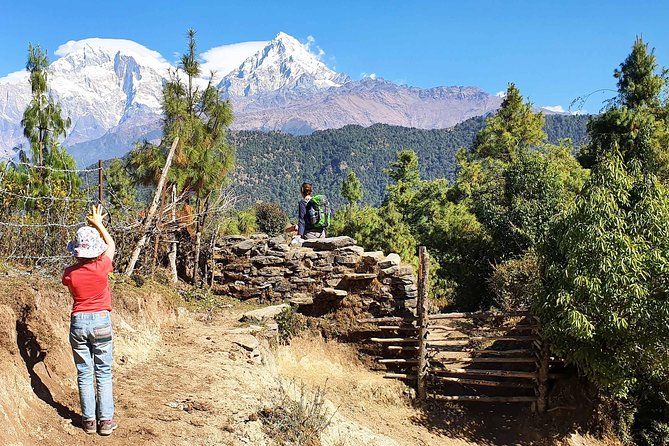
Day 4 begins with a transfer to Galeshwor along the Kali Gandaki River (about 3 hours). Then you start trekking to Bans Kharka for roughly 3 hours.
The most memorable part of this segment is crossing a suspension bridge over the Kali Gandaki River. The itinerary also calls this gorge the deepest, so you should expect a dramatic feeling of depth underfoot. The rest of the day is a hike through lush forest terrain, finishing at Bans Kharka where you build altitude slowly.
If you tend to get restless on early days, this is a good start. It’s not too long, but it still gives you that trail rhythm—walk, pause for views, repeat.


Bans Kharka to Naangi (Day 5): villages plus community learning
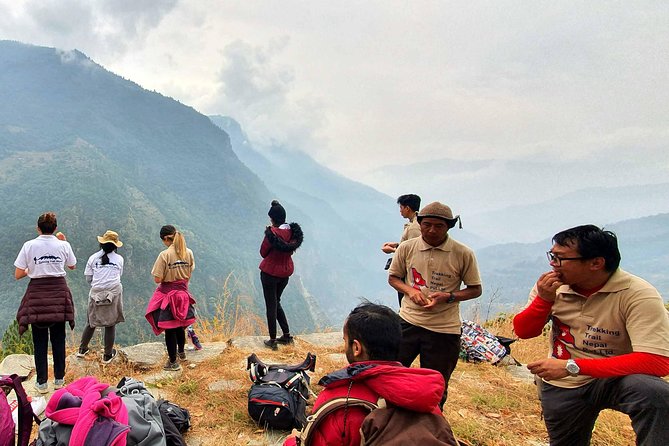
Day 5 is one of the longer walking days at about 6 to 7 hours from Bans Kharka to Naangi. The route goes along villages and includes mountain views and impressive scenery, which matters because you’re not just grinding upward—you’re moving through lived-in countryside.
You also visit an organic farm school and a Magar settlement. This is one of those itinerary pieces that adds meaning to the trek. If you’re the type who likes to understand how tourism can support local life, you’ll probably feel glad this stop is on a hiking day rather than tacked on as a separate excursion.
Practical note: long days like this can make evening logistics matter more. With lodge-based nights, you’ll want to keep your energy for the arrival meal and rest.
Mohare Danda itself (Day 6): sunset views at the top without doing technical hiking
Day 6 is your “arrival day” at Mohare Danda. The walk is listed at around 7 hours, and the trail goes through forests of oak and rhododendrons. You also get framed views of peaks including Mt. Fishtail, south Annapurna, Dhaulagiri, Tukche, and more.
In the evening, you head to a viewpoint from Mohare Danda station for sunset. This is a major reason many people choose this trek: you can get big Himalayan drama while still staying in a route that doesn’t require technical mountaineering skills.
One caution: sunset days often mean you’ll be tired. Bring a steady pace early, and don’t save all your energy for the last hour. Once you get there, just focus on enjoying the light changes.
Sunrise then Ghorepani (Day 7): long views, gradual effort, and lodge time
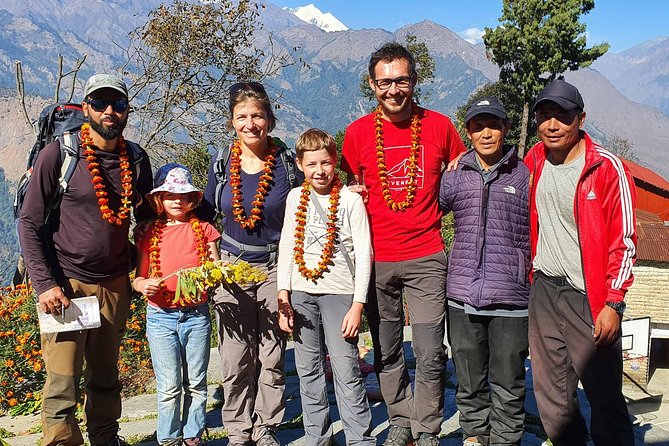
Day 7 starts early with sunrise views and clear mountain sightlines—Mount Fishtail, Dhaulagiri I and II, Tukche, south Annapurna, Nilgiri, and others. After that, you trek toward Deurali and continue onward to Ghorepani.
The walk time is listed at about 5 hours to reach Ghorepani. The itinerary describes gradual ups and downs, which is often the easiest way to think about this day: less steep climbing, more sustained walking.
When you reach Ghorepani, you check into the lodge and rest. This is a smart setup because Day 8 includes another early start for sunrise at Poon Hill.
Poon Hill sunrise and the walk to Ghandruk (Day 8): classic viewpoints plus village atmosphere
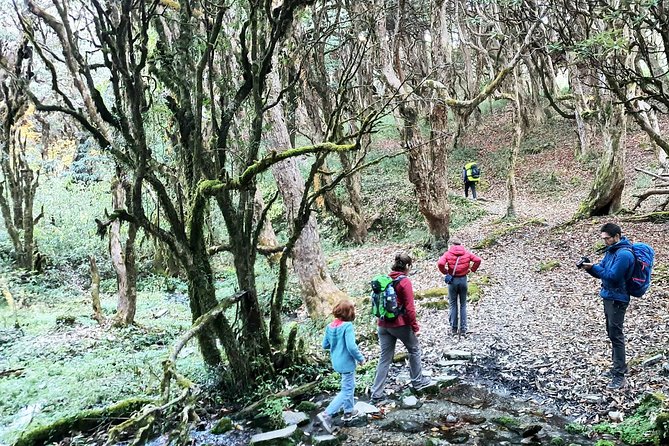
Day 8 has a built-in rhythm: sunrise at Poon Hill (3210m), then breakfast back at Ghorepani, then trekking on to Ghandruk.
The early trek to Poon Hill runs through culturally rich villages set against mountain backdrops. You get sunrise over Annapurna and a panoramic view that includes several mountains, including Annapurna and Dhaulagiri. Then you return for breakfast, so you’re not left guessing where the next meal comes from.
After breakfast, the Ghandruk section is about 7 hours. The route includes flatlands, forests, cultivated land, and a suspension bridge over Khumbu Khola, finishing at Ghandruk village. Ghandruk is the kind of place where you feel you’re arriving at a real community, not just a checkpoint.
Down to Nayapul and onward to Pokhara (Day 9): the last hike day matters
Day 9 is the final trekking day. You descend to Nayapul, taking about 5 hours, and the trail is described as paved by stones. You walk through villages and terrace farming areas, cross Modi Khola, reach Birethanti, then continue into Nayapul.
Then your private vehicle meets you and takes you to Pokhara, where you transfer to your hotel. This day is a useful emotional reset: you go from exertion to comfort in a pretty direct way.
If you’ve got any travel-worn legs, this is still doable, but it’s smart to keep your footing steady. Stone paths can be uneven, and you’ll be happier if you treat the descent as “careful, not fast.”
Kathmandu Valley culture in the back half (days 10 to 11): temples and hands-on crafts
After Pokhara, Day 10 returns you to Kathmandu by road (about 6 hours). You get time to stroll in Thamel and handle shopping and souvenirs. This is handy if you want trekking gear you forgot, or just want a last taste of Kathmandu street life.
Day 11 is where the itinerary shows it’s not a one-track trip. You visit Bhaktapur Durbar Square, then go to Pottery Square where a workshop is arranged so you can make a clay pot with a local craftsman. After lunch, you head to Patan Durbar Square for sightseeing, plus stops like Krishna Temple and Patan Museum. The day also includes the Golden Temple and Banglamukhi Temple.
This is a good pairing with a trek because you get both sides of Nepal: the mountain days and the city days where heritage is still part of daily life.
Day 12 ends the program with guidance and a private van transfer to Tribhuvan International Airport about 3 hours before your flight.
Guide, porter, and eco-lodge comfort: what changes day-to-day
The trip includes a professional English-speaking local guide and porter service. The porter ratio (2 trekkers to 1 porter) is a practical detail that can change your whole experience. It means you’re less likely to turn the hike into a contest for who can carry the most.
If you want a real-world example of how that feels in action, past travelers praised Norris for strong guidance and context on trail and local life, and Melan for careful porter support.
Accommodation-wise, you get 4 nights in Kathmandu at a 4-star hotel (listed as Yatri Suites & Spa or similar) and 2 nights in Pokhara at Batika Classic Hotel or similar. During the trek, you stay for 5 nights in eco-community lodges on a full-board basis. The full-board setup matters because it reduces the daily decisions you’d otherwise make about meals and where to find them.
Also, the group size is capped at 12 travelers. On popular routes, that doesn’t guarantee quiet, but it does help keep logistics manageable for the guide and smoother for you.
Who should book Mohare Danda, and who should think twice
This trek fits best if you like mountain views but don’t want a technical climbing trip. You also need a sense of comfort with moderate physical effort. The itinerary includes multiple long walking days—Day 5 (6 to 7 hours) and Day 8 (7 hours), plus Day 6 (about 7 hours).
You’ll also be at meaningful elevation: Mohare hill station is listed at 3300m, and Poon Hill is 3210m. That doesn’t mean you’re doing extreme altitude, but it does mean mornings can feel cold and you’ll want to pace yourself.
Think twice if:
- You’re hoping for a very short trek with minimal hiking time.
- You’re on a tight food/entry-fee budget, since Kathmandu and Pokhara food plus heritage entrance fees are not included (and drinks are extra).
Should you book this Mohare Danda Trek?
I’d book this trek if you want a route that mixes real community stops with big Annapurna and Dhaulagiri viewpoints, while still keeping logistics handled. The eco-community lodge angle is more than a slogan here; it ties directly into the itinerary through community-based learning and local lodge management.
You should also like the pace: early mornings for sunrise, steady hiking days, and lodge-based nights that keep things simple.
Skip it (or at least budget carefully) if you don’t want additional costs for heritage site entry fees and meals in Kathmandu and Pokhara. Also be honest about fitness: the walking days add up over 12 days.
FAQ
What is the meeting point and start time?
The tour starts at Tribhuvan Airport in Kathmandu, Nepal, at 9:00 am.
How long is the Mohare Danda Trek?
It’s listed as approximately 12 days.
Is airport pickup or transfers included?
Yes. The itinerary includes airport and land transportation by private vehicle, and it also mentions a private van for the final airport transfer.
What is the maximum group size?
The trip has a maximum of 12 travelers.
Are permits included for the trekking portion?
Yes. The package includes permits such as ACAP and TIMS, plus other necessary permits.
Is porter service included during the trek?
Yes. Porter service is included, with a ratio of 2 trekkers to 1 porter.
What meals are included?
During the trek, accommodation is listed on a full board basis (breakfast, lunch, and dinner). Food in Kathmandu and Pokhara is not included, and all drinks are extra.
Are heritage site entrance fees included?
No. Entrance fees for heritage sites are listed as approximately USD 50 per person and are not included.
More Trekking Out of Kathmandu






More Tour Reviews in Kathmandu




Just Reviewed in Kathmandu
- Mountain Bike Tour
★ 5.0 · 3 reviews - Annapurna Panaroma
★ 5.0 · 3 reviews - Mount Everest Scenic Flight 50 Minutes
★ 5.0 · 3 reviews - Kathmandu : Swambhunath & Durbar Square Guided Half Day Tour
★ 3.3 · 3 reviews - Chandragiri Cable Car & Monkey Temple Tour – Private/Group
★ 5.0 · 3 reviews - Kathmandu: Shivapuri National Park Hiking Day Trip
★ 3.3 · 3 reviews
Hiking & Trekking, compared.
 ★ 5.0Everest Base Camp Trek – 14 DaysFrom $1,8001,499 reviews
 ★ 5.0Everest Base Camp TrekFrom $1,790842 reviews
 ★ 5.0Everest Base Camp TrekkingFrom $1,350485 reviews
 ★ 5.0Nagarkot Sunrise View and Day Hiking from KathmanduFrom $45471 reviews
 ★ 5.0Annapurna Circuit Trek with Tilicho LakeFrom $1,093368 reviews
 ★ 5.0Everest Base Camp Trekking – 13 DayFrom $1,399365 reviews
★ 5.0Everest Base Camp TrekFrom $1,445350 reviews
★ 5.0Everest Base Camp Trek -14 DaysFrom $1,420321 reviews