
Review · KATHMANDU UNESCO HERITAGE TOURS
Nagarkot Sunrise With 7 UNESCO World Heritage Private Tour
Golden dawn over seven UNESCO sites. This Nagarkot sunrise experience pairs a pre-dawn Himalayan viewpoint (Nagarkot sits at 2175m) with a full sweep of Kathmandu Valley’s major religious landmarks, so you get big views and deep culture in one day. I love the private AC vehicle and the English-speaking guide who ties the sites together, and I like that the day is structured around major Hindu and Buddhist places. The main drawback to plan for: you’ll pay UNESCO entrance fees on top (around 6000 Nepali rupee), and food isn’t included.
One of the best parts is how the guide explains what you’re seeing, not just where it is. Santosh (with Mount Glory Treks) is described as passionate about the religions, rituals, and daily rhythms, which really matters on a route like this when you move from Shiva ceremonies to prayer wheels and temple-complex details. You also get time that’s meant to connect with festival tradition and everyday local food and lifestyle, not only monuments in a checklist.
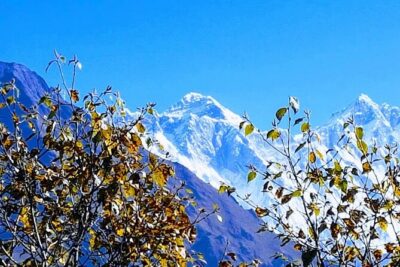
Sunrise is the big show, and on clear days you may catch views toward Everest, but early mornings also mean colder air. You’ll be out for about 12 hours with pickup from Kathmandu and a return to the city afterward, so wear comfy shoes and expect a fast pace rather than a slow wander.
In This Review
- Key things I’d prioritize before you go
- Sunrise From Nagarkot’s 2175m Ridge: What You’ll See
- Kathmandu Valley’s 7 UNESCO Stops: Seeing the Belief Map
- Swayambhunath, Boudhanath, and Pashupatinath: Why the Guide Changes Everything
- Durbar Squares in Bhaktapur and Patan: Craft You Can Spot
- Kathmandu Durbar Square and Changu Narayan: Old Faith, Different Scale
- Price and Logistics: Is $172 Good Value Here?
- Practical Stuff That Makes the Day Feel Better
- Who This Tour Fits Best (and Who Might Want a Different Style)
- Should You Book the Nagarkot Sunrise With 7 UNESCO World Heritage Private Tour?
- FAQ
- How long is the tour?
- Is this a private group tour?
- Where does pickup happen?
- Is the guide available in English?
- What transport is included?
- Is sunrise included at Nagarkot?
- Which UNESCO sites are included?
- Are UNESCO entrance fees included in the price?
- Are meals included?
Key things I’d prioritize before you go
- Nagarkot sunrise from 2175m: timed for the best light over the Himalayas.
- Private, air-conditioned transport: easier legs when the day runs from morning until evening.
- Seven UNESCO sites in Kathmandu Valley: Hindu temples and Buddhist stupas in one route.
- A guide like Santosh: clear explanations of religions and rituals you’ll actually notice on-site.
- UNESCO fees and meals are extra: budget for entrance tickets and bring a plan for lunch.
- Cold-morning reality: the sunrise is worth it, but you’ll want warm layers.
Just your group, at your own pace
- Private Kathmandu Sightseeing Tour | UNESCO World Heritage sites★ 5.0 · 756 reviews
- Kathmandu: Full Day 7 UNESCO Tour with Lunch – Private/Group★ 5.0 · 415 reviews
- Private Bhaktapur and Nagarkot Day Tour From Kathmandu★ 5.0 · 305 reviews
- Kathmandu: Full Day Top 4 UNESCO Tour with Lunch – Private/Group★ 5.0 · 269 reviews
Sunrise From Nagarkot’s 2175m Ridge: What You’ll See
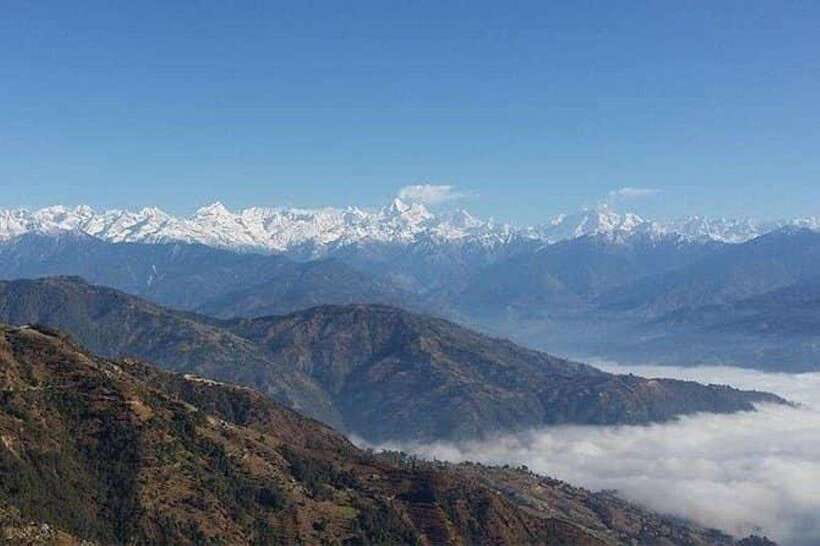
Nagarkot is one of those places where the payoff is simple: you show up early, you get a view, and then the sky changes. The plan here sets aside about two hours for the sunrise portion, with pickup in Kathmandu before heading up to Nagarkot’s hill station height (2175m). That altitude helps you clear some of the haze that can hide mountain views closer to the valley floor.
What makes this stage worth your time is the way the sunrise acts like a headline for the whole day. After the Himalayan glow, the rest of Kathmandu Valley’s UNESCO sites don’t feel random. You’re not just visiting buildings. You’re moving through a region where religion, daily life, and geography all show up in the same story.
Practical note: sunrise timing works best when the weather is clear. The tour description mentions Everest visibility on clear days, which is the right expectation to hold. So if your morning is hazy, don’t assume you’ve ruined the trip. You’ll still get the sunrise light and the viewpoint over the mountain range.
And yes, mornings can feel cold. Even if you’re in Kathmandu and the daytime might be comfortable, expect cooler air up on the ridge. Bring layers you can peel off later.
Kathmandu Valley’s 7 UNESCO Stops: Seeing the Belief Map
This is not a random temple tour. It’s designed to cover seven UNESCO World Heritage sites inside the Kathmandu Valley—so you get a “belief map” of Nepal in one long loop. The value is that the route moves through places that represent different streams of devotion while still sharing common artistic and sacred-space logic.
Here’s how the day adds up for you:
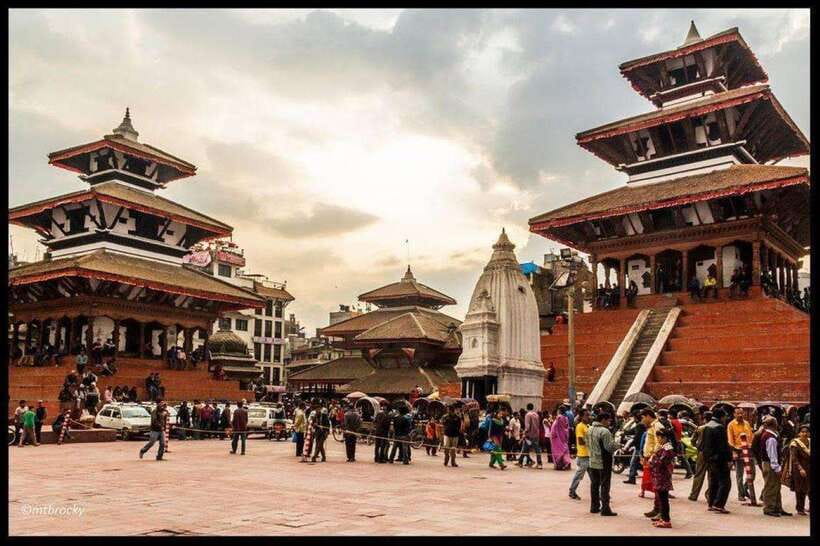
- Kathmandu Durbar Square anchors the route in historic royal and religious space, with palaces, courtyards, and temples around a major central plaza.
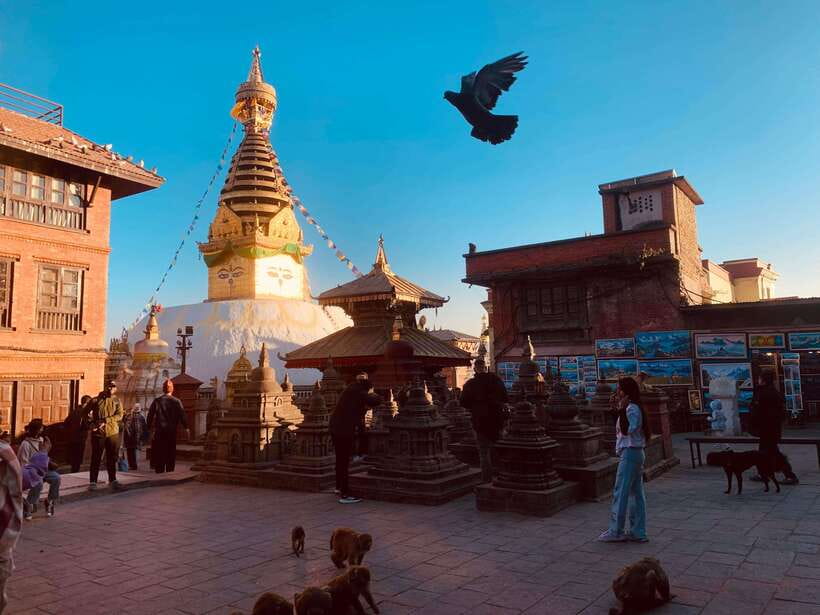
- Swayambhunath Stupa (Monkey Temple) gives you a high, city-overview perspective and the classic blend of Buddhism and Hindu reverence, plus prayer wheels and the monkeys that live there.
- Boudhanath Stupa shifts you into Tibetan Buddhist focus with one of Nepal’s largest stupas and a strong “community around the monument” feel from surrounding monasteries and daily practice.
- Pashupatinath Temple centers the Hindu tradition to Lord Shiva along the Bagmati River, including major ceremonies people travel for.
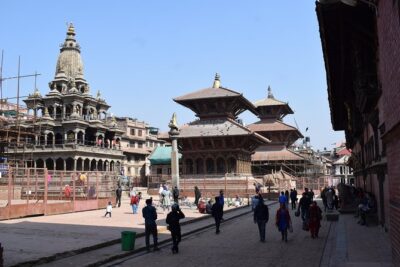
- Patan Durbar Square (in Lalitpur) showcases Newari architecture and Malla-period craftsmanship, plus temples like the Krishna Mandir area.
- Bhaktapur Durbar Square turns into a living museum feel for traditional art and architecture, with landmarks like the 55-Window Palace and Nyatapola Temple.
- Changu Narayan Temple provides an older anchor point, noted as one of the oldest Hindu temples in the valley with detailed carvings.
With this structure, you don’t just “see temples.” You start to notice how sacred spaces are built to guide attention—upward at stupas, outward from hilltops, and down toward riverbank ritual space. A good guide matters here, because it’s easy to stand in front of a stupa or temple and miss why it’s set up the way it is.
Swayambhunath, Boudhanath, and Pashupatinath: Why the Guide Changes Everything
There’s a difference between sightseeing and understanding what you’re looking at. The tour’s value shows up most at the places where the meaning isn’t obvious at first glance.
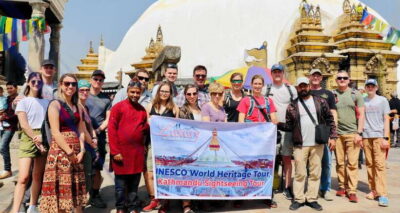
At Swayambhunath, you’re dealing with a stupa complex that’s revered in both Buddhism and Hinduism. That alone changes how you read the place: prayer wheels, stupa symbolism, and the hilltop layout all point to a site meant for contemplation and observation. And yes, the monkeys are part of the setting, so expect a little chaos around the edges and plan to move carefully.
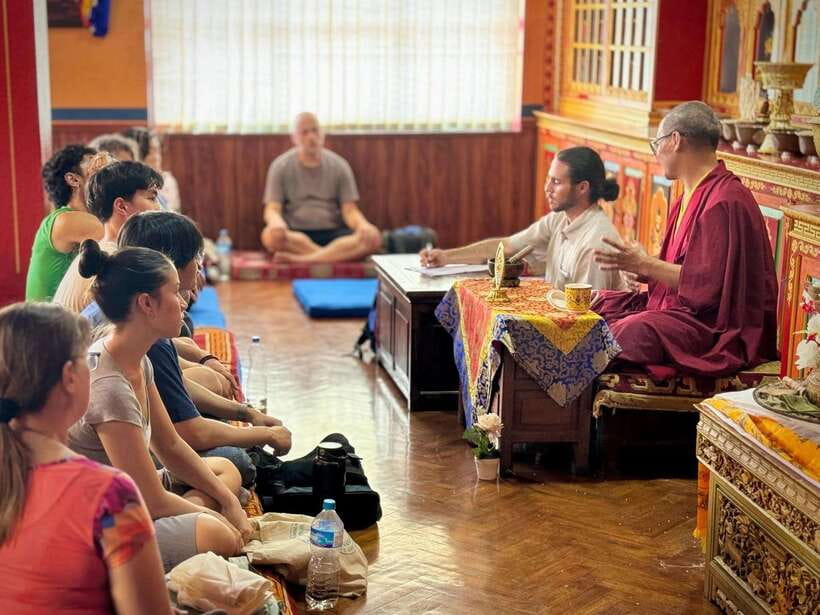
At Boudhanath Stupa, the description emphasizes its size and mandala design, plus the cluster of monasteries and Tibetan culture around it. This is one of the stops where you’ll likely feel the “community gravity” of religion—people come here to practice, not just to take photos. A guide helps you sort what’s ceremonial, what’s devotional, and what’s everyday movement around the complex.
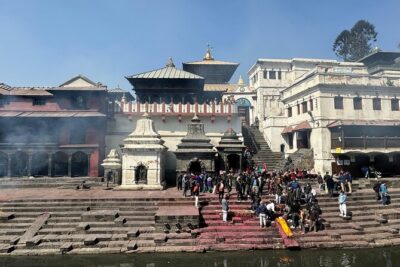
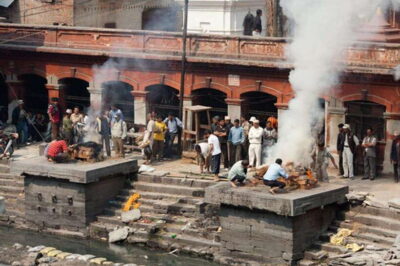
Then there’s Pashupatinath Temple, dedicated to Lord Shiva on the Bagmati River. The tour description flags traditional ceremonies, including cremations along the riverbank. This is the stop where sensitivity matters. It can be intense to watch rituals unfold, and you may feel it more than you expect. If you like your experiences gentle and low-emotion, this section is the one you should think about carefully before you go. If you want real on-the-ground cultural meaning, this is also one of the most powerful parts.
A strong English guide is key because they can help you understand the symbolism and the rhythm of ceremonies without turning it into a shock-fest.
Durbar Squares in Bhaktapur and Patan: Craft You Can Spot
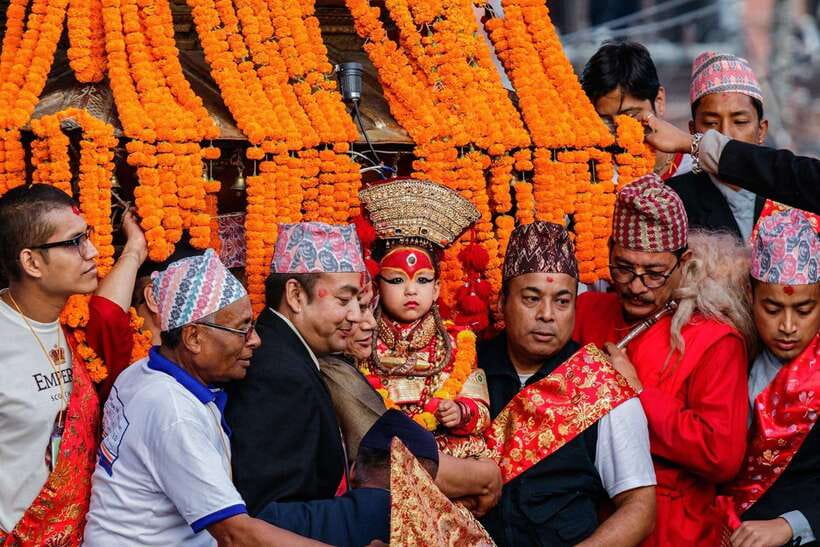
Durbar Squares are where you see skill you can almost count. On this tour you’ll hit Bhaktapur Durbar Square and Patan Durbar Square, both of which are known for Newari architecture and Malla-era style.
In Bhaktapur, the highlights called out include the 55-Window Palace, Vatsala Temple, and Nyatapola Temple. Even if you don’t know the names before you arrive, you can usually tell why these stand out: the facades are detailed, the temple forms are distinct, and the whole square feels like a place built for close viewing. This stop is also a good break from the long view-chasing of sunrise, since you can slow down mentally even if the overall day stays busy.
In Patan, the focus is on craftsmanship and the dense cluster of temples. The tour description points to the Krishna Mandir among other features. Patan also helps you understand why people talk about Newari design as more than “old stone.” It’s about proportions, wood-and-stone details, and the way temple spaces guide movement.
If you only have a day, these squares are efficient. If you crave more time for each carving and courtyard, you may want a follow-up walk later in Kathmandu, but as a first full hit, these two stops do a lot of work.
Deeper into old Kathmandu
Kathmandu Durbar Square and Changu Narayan: Old Faith, Different Scale
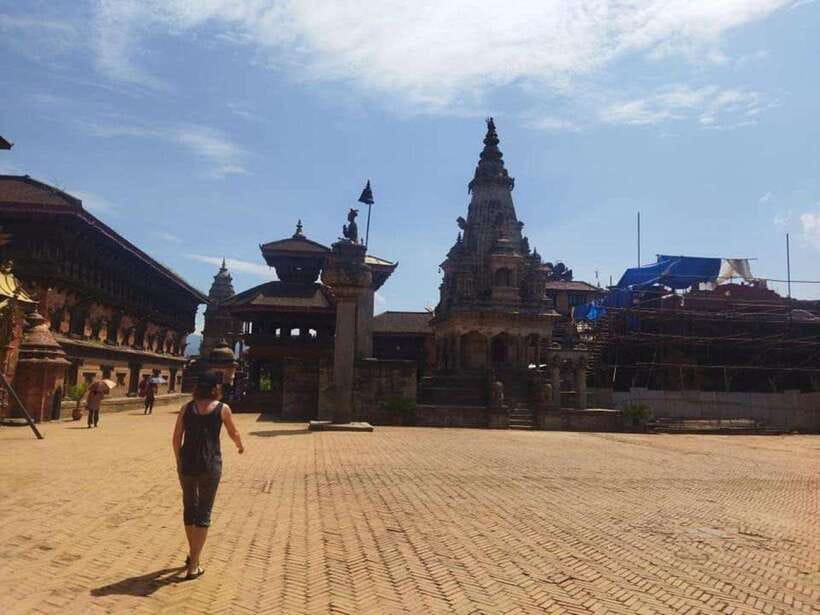
Kathmandu Durbar Square brings you to the heart of the city’s old royal and religious world. The plan describes it as a historic plaza with palaces, courtyards, and temples, and it’s tied to the Malla kings as a former royal palace. Even if you’ve seen other historic squares, Kathmandu Durbar has a character that comes from being both sacred and civic at the same time.
Then there’s Changu Narayan Temple, positioned as the oldest Hindu temple in the Kathmandu Valley (dating back to the 4th century per the tour description). It’s on a hilltop and praised for intricate carvings. This is the kind of stop that rewards you if you like details. If you’re the type who gets bored unless you see something huge, you might still enjoy Changu Narayan because it’s compact and the carvings are what you focus on.
Timing matters too: it’s given a shorter sightseeing window (about 30 minutes), which means you won’t get lost for hours, but you still get the key experience: look closely at the carvings, notice the architecture style, then keep moving.
Price and Logistics: Is $172 Good Value Here?
At $172 per person for a 12-hour private tour, the biggest value driver is not the sightseeing itself—it’s the private vehicle and the English-speaking guide covering multiple UNESCO sites in one day.
Your money is buying you:
- Private, air-conditioned transport (useful when the schedule is long and you’re hopping between the valley’s major districts).
- An English-speaking guide who can make the religion and architecture “click” rather than staying as a list of names.
- Hotel pickup and drop-off inside Kathmandu Valley, which saves time and hassle.
What can affect your final cost is what’s not included:
- UNESCO entrance fees are not included and are listed at around 6000 Nepali rupee (so budget for that).
- Food and drinks aren’t included, so you’ll need to plan a lunch or snacks.
For a day that includes sunrise plus seven UNESCO sites, this price is in the “reasonable for private day” zone, especially if you want comfort and context instead of DIY route planning. If you’re traveling on a tight budget, you could do more independently, but you’d likely lose the guide’s explanations and the efficiency of a single coordinated schedule.
Practical Stuff That Makes the Day Feel Better
This tour runs like a full-day circuit, so small planning choices make a big difference.
Entrance fees and cash: UNESCO fees are extra. The amount is given as around 6000 Nepali rupee. Having cash ready helps you avoid scramble time when you reach ticket areas.
Food and water: A bottle of mineral water is included. That’s helpful, but since meals and drinks aren’t included, don’t count on food being automatically handled. I’d plan snacks or a simple meal plan based on what time you’ll realistically reach breaks.
Clothes for sunrise: Expect temperature changes. Bring layers for Nagarkot early in the day, then shift to lighter clothes for the temple stops.
Footwear and pace: Even with a private vehicle, you’ll be walking in temple complexes and palace squares. Comfortable shoes matter more than fancy ones.
Respectful behavior at ceremony sites: Pashupatinath is the most delicate stop in terms of ceremony visibility. If you’re unsure about how to behave, ask your guide for the practical do’s before you arrive. A little preparation helps you feel grounded rather than awkward.
Who This Tour Fits Best (and Who Might Want a Different Style)
This experience is ideal if you:
- Want one day that hits major UNESCO sites without figuring out routes and timings yourself.
- Enjoy religious and cultural interpretation, especially around Hindu and Buddhist traditions.
- Like private comfort. An AC vehicle makes the long day feel doable.
It may be less ideal if you:
- Prefer slow, unstructured sightseeing. This is a packed, coordinated route.
- Get overwhelmed easily by ceremony intensity. Pashupatinath can be emotionally heavy.
- Hate early starts. Nagarkot sunrise means you’ll start before the day really warms up.
Should You Book the Nagarkot Sunrise With 7 UNESCO World Heritage Private Tour?
If you want a first-time Kathmandu add-on that feels meaningful, not random, I’d say this tour is a strong pick. The combination of Nagarkot sunrise plus the seven UNESCO sites gives you both nature’s big view and Nepal’s spiritual architecture in a single day, and the private setup means you spend less time negotiating and more time understanding.
Book it if you’re okay paying extra for UNESCO fees and you can handle a long day with multiple temple complexes. If you’re sensitive to ceremony scenes or you want a relaxed pace, consider a gentler, more time-between-stops option.
FAQ
How long is the tour?
The tour duration is listed as 12 hours.
Is this a private group tour?
Yes, it is a private group.
Where does pickup happen?
Hotel pickup is included inside Kathmandu Valley.
Is the guide available in English?
Yes, the tour includes an English-speaking live guide.
What transport is included?
You’ll travel in a private vehicle with air conditioning.
Is sunrise included at Nagarkot?
Yes. The tour includes Nagarkot sunrise, with a listed sunrise viewing time of about 2 hours.
Which UNESCO sites are included?
The tour lists seven UNESCO World Heritage Sites in Kathmandu Valley: Kathmandu Durbar Square, Swayambhunath Stupa, Boudhanath Stupa, Pashupatinath Temple, Patan Durbar Square, Bhaktapur Durbar Square, and Changu Narayan Temple.
Are UNESCO entrance fees included in the price?
No. UNESCO entrance fees are not included, and the cost is listed as around 6000 Nepali rupee.
Are meals included?
No. Food and drinks are not included. A bottle of mineral water is included.
Private Days, Your Group Only


More Tours in Kathmandu


More Tour Reviews in Kathmandu




Just Reviewed in Kathmandu
- Mountain Bike Tour
★ 5.0 · 3 reviews - Annapurna Panaroma
★ 5.0 · 3 reviews - Mount Everest Scenic Flight 50 Minutes
★ 5.0 · 3 reviews - Kathmandu : Swambhunath & Durbar Square Guided Half Day Tour
★ 3.3 · 3 reviews - Chandragiri Cable Car & Monkey Temple Tour – Private/Group
★ 5.0 · 3 reviews - Kathmandu: Shivapuri National Park Hiking Day Trip
★ 3.3 · 3 reviews
Kathmandu UNESCO Heritage Tours, compared.
 ★ 4.87 UNESCO Sites with LunchFrom $2744 reviews
 ★ 5.0Full Day 7 UNESCO Tour with Lunch – Private/GroupFrom $10415 reviews
 ★ 5.0Full Day Top 4 UNESCO Tour with Lunch – Private/GroupFrom $10269 reviews
 ★ 5.0UNESCO Seven World Heritage Tour in KathmanduFrom $180253 reviews
★ 4.9Full-Day 7 UNESCO Tour with Lunch – Private/GroupFrom $5247 reviews
 ★ 4.97 UNESCO Sites Tour in 1 Day (Private Tour)From $4204 reviews
 ★ 4.9Top 4 UNESCO Tour with Lunch – Private/GroupFrom $5181 reviews
 ★ 5.0Kathmandu Private Sightseeing Tour | UNESCO World Heritage SitesFrom $35109 reviews
Browse the lists this tour appears in