
Review · PRIVATE
Private Day Tour: Kathmandu Valley
One day in Kathmandu can feel like a month. This private route threads Hindu and Buddhist landmarks together with a Thangka painting visit, so you don’t just look at temples—you understand how living traditions get taught and practiced.
I love the way this tour packs multiple headline sites into one 7-hour block. You’ll hit major Kathmandu Valley icons like Pashupatinath and Boudhanath, then add a training school stop that turns sacred art into something you can actually picture and explain.
The one possible drawback: entrance fees and a dedicated tour guide aren’t included, so you’ll want to budget a bit extra if you’re the type who likes deep explanations at each stop.
In This Review
- Key Things to Know Before You Go
- Why This Private Kathmandu Valley Tour Works for First-Timers
- The Morning Start: Pashupatinath and the Hindu Temple Atmosphere
- Patan Durbar: Historic Royal-Square Energy in the Kathmandu Valley
- Swoyambhunath Stupa: A Different Kind of Sacred Landmark
- Buddhnath Stupa: The World’s Largest (and Why That Matters)
- Hanuman Dhoka: A Historic Palace-Area Stop That Connects the Dots
- The Thangka Painting Training School: Where Art Becomes a Living Lesson
- The “Culture and Heritage” Stop: Time for Context
- Price and Value: What $60 Covers for Up to Four People
- Logistics That Actually Affect Your Comfort
- Service Quality: English-Speaking Support and Helpful Problem-Solving
- Who Should Book This Tour
- Should You Book Kathmandu Valley Private Day Tour?
- FAQ
- FAQ
- How long is the Kathmandu Valley private day tour?
- What is the price for this tour?
- What’s included in the price?
- Are entrance fees included?
- Is a tour guide included?
- What time does the tour start?
- Is this a private tour?
- How does the child rate work?
- What is the cancellation policy?
Key Things to Know Before You Go

- Private van pickup and drop-off: It’s designed for an easy start, especially if you’re new to the city.
- Big-ticket sacred stops: You’ll see Pashupatinath, Boudhanath, and other major Kathmandu Valley highlights in one day.
- Hands-on style learning: The Thangka training school adds meaning beyond photos.
- Cultural contrast, not repeats: Hindu temples, Buddhist stupas, and historic palace-area sites keep the day from feeling one-note.
- Good value for small groups: Up to 4 people pay the group rate, which makes the price easier to swallow.
Just your group, at your own pace
- Private Kathmandu Sightseeing Tour | UNESCO World Heritage sites★ 5.0 · 756 reviews
- Kathmandu: Full Day 7 UNESCO Tour with Lunch – Private/Group★ 5.0 · 415 reviews
- Private Bhaktapur and Nagarkot Day Tour From Kathmandu★ 5.0 · 305 reviews
- Kathmandu: Full Day Top 4 UNESCO Tour with Lunch – Private/Group★ 5.0 · 269 reviews
Why This Private Kathmandu Valley Tour Works for First-Timers
Kathmandu can be overwhelming fast. Roads feel chaotic, signage can be limited, and the city’s biggest sights are scattered in ways that punish anyone traveling solo or by bus. This tour is built to solve that problem with a private setup: you get hotel pickup and drop-off plus transport in a private A/C vehicle.
What makes it extra useful is the mix of stops. Yes, you cover the headline sacred places—Pashupatinath, Boudhanath, and more. But you also get a Thangka stop where Buddhist art training is part of the day, not an optional add-on. If you’ve ever visited a temple and then wondered how the symbols and stories actually become art you can carry home, this will help.
There’s also a practical comfort piece: mineral water is included, and the tour comes with an English-speaking driver. Even if you don’t go for a separate guide, you’ll still have someone who can help keep your timing sane.
The Morning Start: Pashupatinath and the Hindu Temple Atmosphere

You begin with Pashupatinath Temple, one of Kathmandu’s most important Hindu sites. In the real world, sacred places like this aren’t “set dressing.” They’re active, busy, and devotional, and you feel that immediately as you enter the temple complex area.
This stop is a smart opener because it gives you one half of Kathmandu’s spiritual identity right away. The tour’s goal is to show the city’s melting-pot culture, and starting with a sprawling Hindu complex sets the tone for what follows.
Why I like this order: it’s easier to notice contrasts later. After you’ve seen the Hindu environment, switching to Buddhist sites won’t feel random. It’ll feel like a conversation between traditions.
Watch-outs to consider: temple areas can have rules, and things can get crowded. Also, since entrance fees aren’t included, you’ll want to make sure you carry enough cash or are prepared for whatever payment method is expected on-site.
Patan Durbar: Historic Royal-Square Energy in the Kathmandu Valley
Next, you’re taken to Patan Durbar. The day’s overview frames this part as a visit to the oldest former kingdom in the Kathmandu Valley, which makes it more than a quick photo stop. This is where the city’s layers show up in architecture and layout—an area that helps you understand why Kathmandu Valley heritage is talked about as a whole system rather than isolated landmarks.
Patan Durbar is also a good “structure stop.” Temples can feel overwhelming in detail, especially if you’re trying to process everything at once. A durbar-style complex gives your eyes a different job: scanning carvings, courtyards, and the sense of a historic seat of power.
The main value here for you: it helps you see how sacred life and civic life overlap. You’re not only visiting religious buildings—you’re seeing how people organized community, authority, and belief in the same urban space.
If you want to get the most out of this stop, plan to move slowly. Let your brain catch up. With a private day tour, you can often keep a comfortable pace without the pressure of a big bus schedule.
Swoyambhunath Stupa: A Different Kind of Sacred Landmark
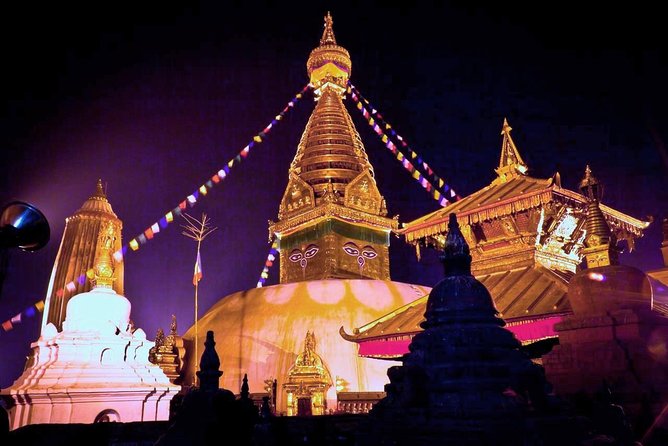
After Patan, the route includes Swoyambhunath Stupa. A stupa is its own visual language, and this stop shifts your day from temple-complex vibes to stupa-centered sightlines and sacred space.
This is one of those locations where it’s helpful to just pay attention to the overall form. Even if you don’t catch every story detail, you’ll still understand the intent of the place: it’s designed for reverence and for people to orient themselves around something spiritual and symbolic.
Potential drawback: because you’re already hitting multiple major sites that day, your attention can fatigue. If you’re prone to “checklist mode,” Swoyambhunath is where slowing down pays off. Give yourself a moment to look up, then look around, then look back up.




Buddhnath Stupa: The World’s Largest (and Why That Matters)
Then you go to Buddhnath Stupa—described as the largest Buddhist stupa in the world. That’s a big claim, but it also tells you what the tour is trying to deliver: a scale moment.
When a site is that monumental, the value isn’t only the bragging rights. It’s the way the environment shapes behavior. You’ll feel that shift when you move from a temple complex to a massive stupa space. This is where you start noticing patterns: the flow of pilgrims, the rhythms of worship, and the overall “Buddhist geography” of the area.
For your trip planning: this is the stop that most makes the tour feel worth doing in a single day. If you’re spending limited time in Kathmandu, seeing Boudhanath at the right time of day can be the highlight that justifies everything else you packed in.
Hanuman Dhoka: A Historic Palace-Area Stop That Connects the Dots
The day also includes Hanuman Dhoka. While it’s listed as a stop rather than described in detail, its inclusion makes the itinerary feel more like a “Kathmandu whole” experience rather than a string of unrelated landmarks.
Hanuman Dhoka works as a connective tissue stop. After you’ve seen Pashupatinath (Hindu), Swoyambhunath (stupa), and Buddhnath (stupa), this type of historic area helps you reframe the city as a living place with layers of power, tradition, and culture.
Why you’ll like it: it gives your brain a break from comparing religious elements and lets you focus on how Kathmandu’s historic identity shows up in space.
The Thangka Painting Training School: Where Art Becomes a Living Lesson
Here’s the part that turns this tour from sightseeing into learning. You’ll stop at a Thangka painting training school to see how intricate, time-honored Buddhist art is taught and made.
This matters for two reasons.
First, Thangka isn’t just decoration. It’s linked to religious symbolism and to long-standing teaching traditions. Seeing it through a training school format makes the art feel grounded, not mysterious.
Second, it changes what you take home mentally. After a Thangka stop, you’ll look at Buddhist iconography differently. Even if you don’t buy anything, you’ll have a better sense of what goes into the images and why repetition and precision matter in sacred artwork.
Tip for getting value: if your driver or guide is able to explain what you’re seeing, ask basic questions like how training works or how artists learn the imagery. The tour doesn’t promise a full “classroom session,” but a training school visit usually gives you enough context to ask practical questions.
The “Culture and Heritage” Stop: Time for Context
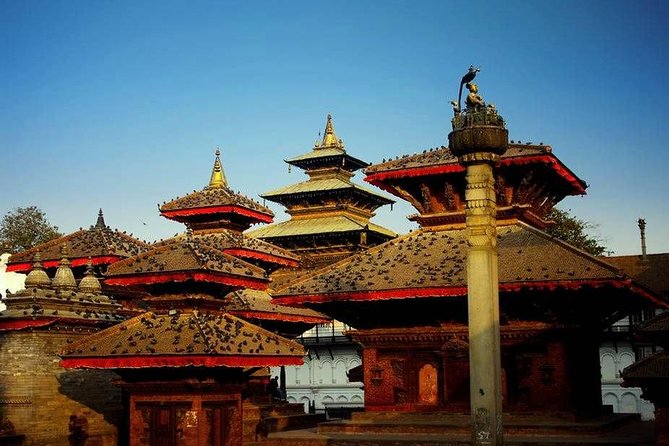
The route also includes a Culture and Heritage site. Since it’s described more generally than the temples and stupa stops, treat this as your “context buffer.” These sites often help you connect what you saw earlier with how Kathmandu explains its heritage.
In a day that includes multiple sacred spaces, this kind of stop can prevent the trip from feeling like motion only. It creates a chance to slow down, absorb, and refocus.
If you’re the type who hates filler, you can still make it worthwhile by deciding what you want from it: a deeper sense of culture, a breather from crowds, or a practical explanation of what connects the day’s different landmarks.
Price and Value: What $60 Covers for Up to Four People
At $60 per group (up to 4), this tour is priced like a small-team day out, not a solo-premium service. That matters. Many Kathmandu sightseeing options push you toward paying per person even when the work is basically the same—getting you from A to B and keeping you oriented.
In terms of what’s included, you get hotel pickup and drop-off, a private A/C vehicle, mineral water, an English-speaking good driver, plus fuel charge, parking charge, and road tax. That’s a lot of the hidden costs stripped away up front.
What’s not included is equally important: entrance fees, a dedicated tour guide, and tipping aren’t included. In other words, your $60 is mainly the transportation + service foundation, and the sacred-site costs are your add-on.
If you’re traveling as a couple or a small family, this price can be very fair. If you’re solo and paying for the whole group yourself, it may feel tighter. But even then, private transport in Kathmandu can save you from stress and time loss.
My practical advice: budget for entrance fees and plan a small amount for gratuities. And if you want deeper storytelling at each stop, consider arranging a tour guide option in addition to what the driver provides.
Logistics That Actually Affect Your Comfort
This is a private tour/activity—your group only—so you’re not doing the awkward “everyone move together” dance with strangers. The start time is 8:15 am, which is ideal for beating some of the day’s biggest crowds and heat.
You also get a mobile ticket, and you’ll receive confirmation at the time of booking. There’s even a “near public transportation” note, which can help if you need a backup plan, but the tour is set up primarily as pickup-driven.
As for timing, the total day is listed as about 7 hours. In Kathmandu, real-world timing depends on traffic and how long you choose to linger at each holy site. The best approach is to expect a full, active day with short breaks built in by the transport.
Also, note the child rate rule: child pricing applies only when sharing with two paying adults. If you’re traveling with kids, that’s worth checking early so you don’t get surprised at checkout.
Service Quality: English-Speaking Support and Helpful Problem-Solving
The driver support is a big part of how smooth the day feels. The tour includes an English-speaking driver, and the style of support described in past experiences points to hands-on help with pacing and last-minute logistics.
For example, one booking experience credited Dipak as knowledgeable and dependable with good English. Another credited Binod with making things easy during a tight rainy-season trip. In a separate Kathmandu stay context, a guide named Khumud and a driver named Raju were praised for arranging things with heart and attention.
You shouldn’t expect the same people on every departure, but the pattern matters: this company doesn’t treat service like paperwork. They aim to keep your day moving and manageable.
Who Should Book This Tour
This is the right choice if you want:
- A first-timer-friendly day that covers major Kathmandu Valley sacred sites
- A private format with pickup, A/C transport, and driver support
- A mix of sightseeing and culture learning, especially the Thangka training school part
- A manageable time commitment (about 7 hours) without feeling like you’re sprinting
It’s also a good fit for travelers who prefer structure. Temple cities reward the people who show up with a plan, water, and someone to keep the logistics under control.
If you’re an ultra-independent traveler who likes wandering without schedules, you might find the fixed route limiting. But if you’re trying to see the essentials and understand the spiritual-art side of Kathmandu, this day tour makes sense.
Should You Book Kathmandu Valley Private Day Tour?
If you have one day (or you’re saving energy), I’d say yes—with two conditions.
First, go in knowing that entrance fees and a formal tour guide aren’t included. That’s not a dealbreaker, it just affects your total cost and how much narration you’ll get at each stop.
Second, lean into the Thangka school stop. It’s the section that turns a standard temple checklist into a story you can carry home. When you only have a limited number of hours in Kathmandu, that kind of meaningful stop is what makes the day feel worth it.
FAQ
FAQ
How long is the Kathmandu Valley private day tour?
The tour lasts about 7 hours.
What is the price for this tour?
It is $60.00 per group, up to 4 people.
What’s included in the price?
Hotel pickup and drop-off, transport by a private A/C vehicle, mineral water, an English-speaking good driver, and fuel, parking, and road tax are included.
Are entrance fees included?
No. Entrance fees are not included, and admission tickets are not included.
Is a tour guide included?
A tour guide is not listed as included. An English-speaking driver is included.
What time does the tour start?
The start time is 8:15 am.
Is this a private tour?
Yes. It’s a private tour/activity, and only your group participates.
How does the child rate work?
A child rate applies only when sharing with 2 paying adults.
What is the cancellation policy?
Free cancellation is available. You can cancel up to 24 hours in advance for a full refund. Canceling less than 24 hours before the start time does not get refunded.
Private Days, Your Group Only


More Tours in Kathmandu


More Tour Reviews in Kathmandu




Just Reviewed in Kathmandu
- Mountain Bike Tour
★ 5.0 · 3 reviews - Annapurna Panaroma
★ 5.0 · 3 reviews - Mount Everest Scenic Flight 50 Minutes
★ 5.0 · 3 reviews - Kathmandu : Swambhunath & Durbar Square Guided Half Day Tour
★ 3.3 · 3 reviews - Chandragiri Cable Car & Monkey Temple Tour – Private/Group
★ 5.0 · 3 reviews - Kathmandu: Shivapuri National Park Hiking Day Trip
★ 3.3 · 3 reviews
Private, compared.
 ★ 5.0Full Day 7 UNESCO Tour with Lunch – Private/GroupFrom $10415 reviews
 ★ 5.0Private Bhaktapur and Nagarkot Day Tour From KathmanduFrom $20305 reviews
 ★ 5.0Full Day Top 4 UNESCO Tour with Lunch – Private/GroupFrom $10269 reviews
★ 4.9Full-Day 7 UNESCO Tour with Lunch – Private/GroupFrom $5247 reviews
 ★ 4.97 UNESCO Sites Tour in 1 Day (Private Tour)From $4204 reviews
 ★ 4.9Top 4 UNESCO Tour with Lunch – Private/GroupFrom $5181 reviews
 ★ 5.014-Day Private Annapurna Base Camp TrekFrom $1,090180 reviews
 ★ 4.9Private City Guided TourFrom $40174 reviews