
Review · KATHMANDU UNESCO HERITAGE TOURS
Private Full-Day Tour of Kathmandu Valley With World Heritage Temples and Patan
UNESCO temples hit hard in Kathmandu. This is a private full-day loop through Kathmandu Valley’s World Heritage sites, with a guide to translate what you’re seeing across Hindu and Buddhist Nepal. I like the smart pacing—covering Swayambhunath, Patan Durbar Square, Boudhanath Stupa, and Pashupatinath in one day—and I also like that entrance fees and a dedicated driver are handled. One caution: it’s not a sit-and-stare day; you’ll be walking in busy temple areas and on uneven ground, and you’ll need a decent fitness level.
You start at 8:15am and usually finish around 7 to 8 hours later, riding in a private air-conditioned car or van. Pickup is offered from the central Kathmandu area, but exact hotel pickup/drop-off isn’t guaranteed—so I’d confirm your meeting point in advance. Also, some sites were damaged in the 2015 earthquake and are still in reconstruction, so you may see scaffolding or restored sections.
If you’ve got a group, you’ll likely appreciate the private setup and group discounts. And based on past guide mentions—people talk glowingly about guides such as Rohit, Noor, and Ram, plus a longtime contact figure named Khum—the odds are good you’ll get practical explanations and calm handling in crowded spots.
In This Review
- Key highlights you’ll feel right away
- Why this private Kathmandu Valley day works (and for whom)
- Entering Swayambhunath (Monkey Temple) with the best viewpoints first
- Patan Durbar Square: temples, artisans, and the City of a Thousand Roofs
- Boudhanath Stupa: one of the biggest Buddhist shrines in the world
- Pashupatinath Temple and the Bagmati River ghats
- Transportation, timing, and what the day feels like in motion
- Price and value: what $107 is really buying you
- What I’d ask your guide before you even start
- Should you book this Kathmandu Valley day tour?
- FAQ
- What’s the duration of the Kathmandu Valley private tour?
- What time does the tour start?
- Which World Heritage sites are included?
- Are entrance fees included?
- Is lunch included?
- Do I get pickup from my hotel?
- Is this a private tour?
- What’s the dress code?
- Is free cancellation available?
Key highlights you’ll feel right away
- Monkey Temple views from Swayambhunath: hilltop panoramas over Kathmandu Valley, plus the chance to watch temple life up close
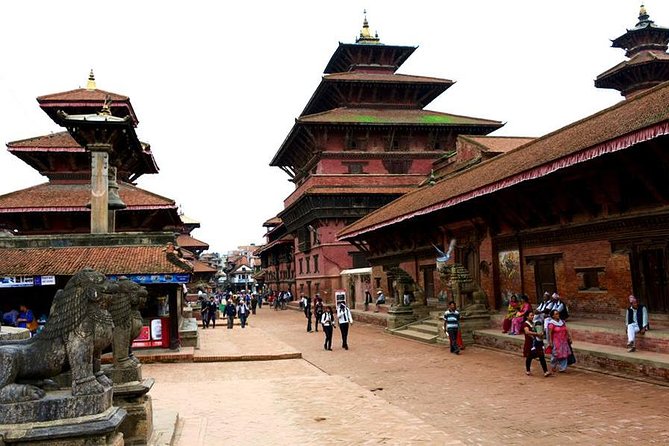
- Patan’s craft-and-temple focus: Patan Durbar Square and major temples like the Golden Temple and Krishna Mandir
- Boudhanath’s big-stupa atmosphere: two hours to slow down at one of the world’s largest Buddhist shrines
- Pashupatinath ghats on the Bagmati River: rituals, sadhus, pilgrims, and sometimes funeral pyres in a sacred setting
- Private guide + vehicle + entrance fees: fewer logistics headaches than DIY, and more time spent understanding what matters
- Smart-casual dress code and real walking: plan for uneven steps and crowds while keeping things respectful
Just your group, at your own pace
- Private Kathmandu Sightseeing Tour | UNESCO World Heritage sites★ 5.0 · 756 reviews
- Kathmandu: Full Day 7 UNESCO Tour with Lunch – Private/Group★ 5.0 · 415 reviews
- Private Bhaktapur and Nagarkot Day Tour From Kathmandu★ 5.0 · 305 reviews
- Kathmandu: Full Day Top 4 UNESCO Tour with Lunch – Private/Group★ 5.0 · 269 reviews
Why this private Kathmandu Valley day works (and for whom)
Kathmandu Valley can feel like a maze, especially if you’re trying to connect multiple UNESCO sites in a single day. This tour is built for efficiency: a dedicated guide, a driver, and a private vehicle mean you’re not negotiating buses or hunting for entrances while you’re tired.
The best match is you if you want classic heritage sites without turning your trip into a transport project. You’ll also like it if you enjoy religious context—this itinerary is set up to show Hindu and Buddhist practices side by side, including cremation traditions at Pashupatinath and monastic-style devotion around Boudhanath.
A possible mismatch: if you want a relaxed day with minimal walking, or if intense ritual scenes make you uncomfortable, this route may feel like a lot. The itinerary includes ghats activity where funeral pyres can burn, so the day has emotional weight as well as sightseeing.
Entering Swayambhunath (Monkey Temple) with the best viewpoints first
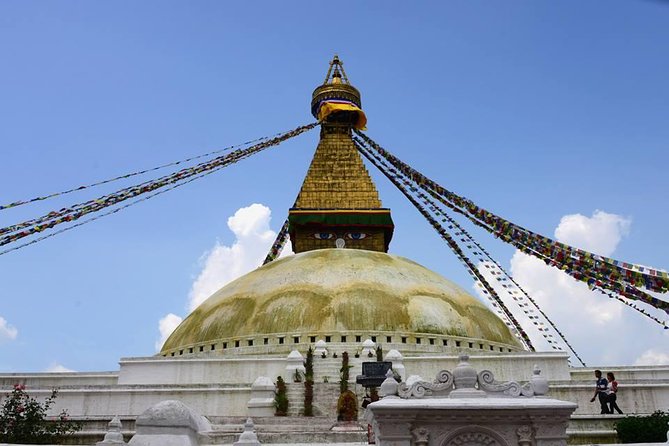
You’ll start with Swayambhunath (also called Swoyambhu Mahachaitya / Monkey Temple). This is one of the oldest Buddhist stupas you’ll see in Nepal—believed to be over 2,000 years old—and it sits on a hill west of the Kathmandu city center.
Why I think this first stop is smart: going early helps you get a foothold on the city. Once you’re on the hill, you get excellent views of Kathmandu Valley, which makes later sites easier to place in your mind. It’s also the kind of stop where the “tourist checklist” turns into real observation. You’re not only looking at a stupa—you’re watching how people treat it: prayer, movement around the sacred area, and the steady flow of visitors.
The itinerary gives you about 1 hour here, with an admission ticket included. That’s usually enough time to:
- get your bearings from the hilltop perspective,
- enjoy the main stupa area,
- and still move on before the day thickens with crowds.
Practical note: Swayambhunath is on a hill, and the tour information calls for strong physical fitness. Expect uneven ground and steps. Also, the name Monkey Temple hints at what you might see nearby, so keep an eye on your belongings and follow your guide’s cues.
Patan Durbar Square: temples, artisans, and the City of a Thousand Roofs
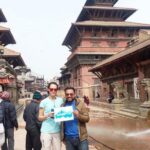
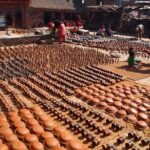
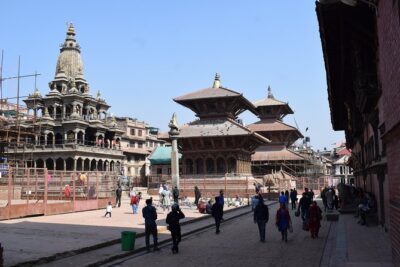
After Swayambhunath, you head to Patan and specifically Patan Durbar Square, described as the City with a Thousand Roofs and City of Fine Arts. Patan is known for craftsman and metal workers, so the area has a “made by local hands” feel rather than just a monument-gawking vibe.
This stop is about 1 hour with entrance included. Within that time, you’ll see multiple standout religious buildings around the square, including:
- Krishna Mandir
- Golden Temple
- Bhimsen Temple
- Manga Hiti
- Jagan Narayan Temple
- Bishwanath Temple
…and more.
Here’s what’s valuable about pairing Patan with the rest of the day: you’re comparing traditions and architecture styles in quick succession. Swayambhunath sets a Buddhist visual tone. Patan brings you into a dense cluster of Hindu temple architecture and artisan culture. If your guide is good (and past groups mention guides like Rohit and Ram), you’ll get useful explanations for what you’re looking at—without turning it into a lecture.
A consideration: because it’s a square packed with temples and details, you may feel like you’re constantly turning your head. If you like to read every sign, this stop can feel fast. If you prefer atmosphere and structure rather than museum-style pacing, the 1-hour window works well.
Boudhanath Stupa: one of the biggest Buddhist shrines in the world
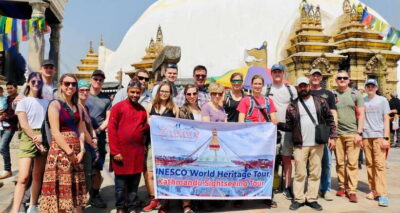
Next up is Boudhanath Stupa, one of the biggest Buddhist shrines in the world. You’re allocated about 2 hours, with the admission ticket included.
This is the emotional slowdown point of the day. Swayambhunath is about views and a hilltop experience. Boudhanath is more about space, devotion, and staying long enough to notice rhythms—prayer movements, quiet conversations, and the way people pace the stupa area. Even if you don’t know the full religious background, the setting is unmistakable.
One practical plus: 2 hours is generous enough for a real rest. The day includes a lunch plan near Boudhanath, but lunch itself isn’t included in the tour price. So treat this as your built-in food break. Budget for lunch and drinks separately, or plan to buy what you need on-site.
Because this is a World Heritage site, you’ll likely see a mix of locals and visitors. If the crowd feels dense, I’d still spend time at the stupa rather than rushing photos. The stupa is the point, and you’ll get more out of it if you let your attention settle.
Deeper into old Kathmandu
Pashupatinath Temple and the Bagmati River ghats
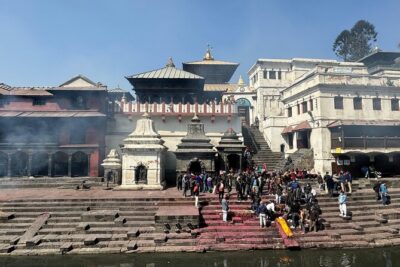
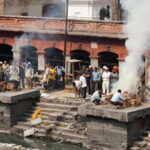
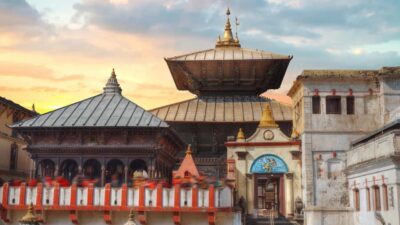
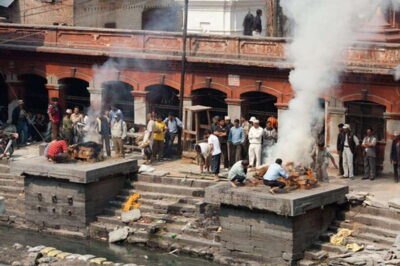
The last major stop is Pashupatinath Temple on the banks of the Bagmati River. This is described as the most famous Hindu temple in Nepal, and this stop is allocated about 2 hours with entrance fees included.
This isn’t just architecture. It’s a living religious site where you can observe:
- Hindu holy men (sadhus) and pilgrims,
- ritual bathing on the ghats,
- and—on occasion—funeral pyres burning.
The tour information also notes that cremation at this site is used by the royal family and also by simple residents living nearby. That detail matters because it helps you understand the scale of meaning attached to the location. It’s not staged for tourists; it’s part of how a community handles life, death, and belief.
How to handle this respectfully: follow your guide’s direction on where to stand and what to watch. Keep your pace slow, speak quietly, and avoid turning it into a spectacle. If you’re carrying a camera, treat it as a tool you use carefully, not a trophy you need to pose with.
You’ll likely feel a mix of awe and discomfort here—both are normal. If you know you want only light sightseeing, this is the moment where the “cultural depth” becomes heavy. If you can handle it with sensitivity, this is also the stop that makes the whole day feel real.
Transportation, timing, and what the day feels like in motion
This tour runs 7 to 8 hours and starts at 8:15am. That early start matters in Kathmandu Valley, where traffic and crowd density can otherwise eat into your temple time.
You’ll be in a private, air-conditioned car or van with a driver. Since this is a private tour/activity (only your group participates), you’re not sharing the experience with random strangers. That tends to make questions easier, and it also helps when you need your guide to shift your order or timing at a busy site.
The route is set up with these time blocks:
- Swayambhunath: ~1 hour
- Patan Durbar Square: ~1 hour
- Boudhanath Stupa: ~2 hours
- Pashupatinath: ~2 hours
In other words, you’re not just ticking boxes—you’re getting enough time at each place to feel like you visited, not just passed through.
About logistics you should double-check:
- Pickup is offered from central Kathmandu, but the tour details also say hotel pickup/drop-off isn’t included. Confirm the exact pickup point for your hotel area.
- Lunch and drinks aren’t included. The itinerary mentions lunch near Boudhanath, so you’ll want money set aside for that midday meal.
- Some sites are still in reconstruction after the April 25, 2015 earthquake. If you’re sensitive to seeing damage or ongoing restoration, it’s good to know before you go.
Price and value: what $107 is really buying you
At $107 per person, you’re paying for a full private setup: professional guide, driver, and transport by private air-conditioned car or van, plus entrance fees for the major stops listed.
That can be good value if you compare it to:
- paying separately for entry tickets,
- hiring a guide for only part of the day,
- and arranging transportation on your own.
The cost you won’t see included here:
- Lunch
- Drinks
- And any gap between the tour’s central pickup and true hotel door-to-door service
To me, the best part of the price is the combination: guide + vehicle + entry fees in one package. It reduces decision fatigue. And on a day like this, reducing friction is part of the value, not a luxury.
What I’d ask your guide before you even start
Since this is a private day, you can steer your experience. Here are a few smart questions that match what the tour is designed to show:
- Ask how each stop connects the Hindu and Buddhist traditions you’ll see that day.
- At Pashupatinath, ask what you should focus on to understand the ghats activity while keeping respectful distance.
- At Boudhanath, ask what visitors usually miss in the stupa setting, so you can look beyond the big photo angle.
- At Patan Durbar Square, ask what the major temples (like Krishna Mandir and Golden Temple) represent in local practice.
Past experiences shared by people who used this operator include guides such as Noor and Ram getting praised for being cooperative, on time, and fun with explanations. Even if your guide is different, your best results come when you use the private format to ask what you genuinely care about.
Should you book this Kathmandu Valley day tour?
Book it if you want a tight, well-organized UNESCO day: Swayambhunath + Patan + Boudhanath + Pashupatinath in about 7 to 8 hours, with entrance fees handled and a private guide to keep the cultural meaning clear.
I’d skip it (or choose a lighter alternative) if you:
- don’t handle intense ritual scenes well,
- hate walking on uneven temple ground,
- or strongly prefer a self-paced day with no fixed timing.
If you do book, I’d show up ready for a real day out—expect crowds, expect stairs, and lean on your guide to translate what you’re seeing. That’s the difference between collecting photos and actually understanding Kathmandu Valley.
FAQ
What’s the duration of the Kathmandu Valley private tour?
It runs about 7 to 8 hours.
What time does the tour start?
The start time is 8:15am.
Which World Heritage sites are included?
You’ll visit Swayambhunath (Monkey Temple), Patan Durbar Square, Boudhanath Stupa, and Pashupatinath Temple.
Are entrance fees included?
Yes, entrance fees are included for the sites on this tour.
Is lunch included?
Lunch isn’t included. The plan includes a lunch break near Boudhanath Stupa, but you’ll pay for lunch separately.
Do I get pickup from my hotel?
Pickup is offered from central Kathmandu, but hotel pickup/drop-off is listed as not included—so confirm the exact meeting point for your hotel area.
Is this a private tour?
Yes. It’s a private tour/activity, so only your group participates.
What’s the dress code?
Smart casual dress code is requested.
Is free cancellation available?
Yes, you can cancel for a full refund up to 24 hours in advance of the experience start time.
Private Days, Your Group Only

More Tours in Kathmandu

More Tour Reviews in Kathmandu

Just Reviewed in Kathmandu
- Mountain Bike Tour
★ 5.0 · 3 reviews - Annapurna Panaroma
★ 5.0 · 3 reviews - Mount Everest Scenic Flight 50 Minutes
★ 5.0 · 3 reviews - Kathmandu : Swambhunath & Durbar Square Guided Half Day Tour
★ 3.3 · 3 reviews - Chandragiri Cable Car & Monkey Temple Tour – Private/Group
★ 5.0 · 3 reviews - Kathmandu: Shivapuri National Park Hiking Day Trip
★ 3.3 · 3 reviews
Kathmandu UNESCO Heritage Tours, compared.
 ★ 4.87 UNESCO Sites with LunchFrom $2744 reviews
 ★ 5.0Full Day 7 UNESCO Tour with Lunch – Private/GroupFrom $10415 reviews
 ★ 5.0Full Day Top 4 UNESCO Tour with Lunch – Private/GroupFrom $10269 reviews
 ★ 5.0UNESCO Seven World Heritage Tour in KathmanduFrom $180253 reviews
★ 4.9Full-Day 7 UNESCO Tour with Lunch – Private/GroupFrom $5247 reviews
★ 5.0UNESCO Seven World Heritage Tour in KathmanduFrom $180253 reviews
★ 4.9Full-Day 7 UNESCO Tour with Lunch – Private/GroupFrom $5247 reviews
 ★ 4.97 UNESCO Sites Tour in 1 Day (Private Tour)From $4204 reviews
 ★ 4.9Top 4 UNESCO Tour with Lunch – Private/GroupFrom $5181 reviews
 ★ 5.0Kathmandu Private Sightseeing Tour | UNESCO World Heritage SitesFrom $35109 reviews
Browse the lists this tour appears in