
Review · KATHMANDU UNESCO HERITAGE TOURS
Private Kathmandu Day Tour – UNESCO World Heritage Sites
Four UNESCO stops, one smooth day. I love how this route links Swayambhunath Monkey Temple views with the weighty spirituality of Pashupatinath, and you still get time to actually look instead of rushing like you’re late for a train. One thing to consider: entrance fees are not included, so you’ll want cash ready and to follow local rules once you’re inside.
You also get the practical stuff that makes a long day in Kathmandu Valley easier: an air-conditioned vehicle, plus hotel pickup and drop-off. In past experiences with this company, guides such as Hari and Kamil have been described as careful and flexible, which matters a lot when temples have their own rhythms and photo angles.
Finally, this tour is private, meaning it’s built around your group, not random strangers. That’s great for comfort, but if you’re the type who hates stairs, plan ahead for the hilltop areas and busy sidewalks, especially at Swayambhunath.
In This Review
- Key highlights worth your attention
- Why this 6-hour Kathmandu Valley loop is so satisfying
- Swayambhunath Monkey Temple: a hilltop stupa with prayer wheels and Buddha details
- Pashupatinath Temple: pagoda-style Hindu grandeur and a dense shrine ecosystem
- Boudhanath Stupa: Tibetan spiritual center and a strong comeback after 2015
- Kathmandu Durbar Square: royal-era architecture turned into a living museum
- Price and what you’re really paying for
- What I’d do to make your day smoother (and more enjoyable)
- Who this Kathmandu UNESCO day tour suits best
- Should you book this Private Kathmandu UNESCO Day Tour?
- FAQ
- What sites are included in this private Kathmandu day tour?
- How long is the tour, and how is time split between stops?
- Is hotel pickup and drop-off included?
- What’s included in the price?
- Are monument entrance fees included?
- Is food and drink included?
- Is this tour private or shared with other groups?
- What is the cancellation policy?
Key highlights worth your attention
- Temple-to-stupa contrast: You’ll move from a hilltop Buddhist complex to one of Nepal’s most important Hindu temples.
- UNESCO World Heritage certified stops: Boudhanath is clearly noted as UNESCO-listed, and the day’s other heritage sites fit right into the same Kathmandu Valley story.
- Clear timing for a 6-hour day: 1 hour at Swayambhunath, 2 at Pashupatinath, 1 at Boudhanath, 2 at Durbar Square.
- A guide who handles the flow: Licensed, experienced guidance is part of the deal, and prior customer feedback highlights real-world flexibility.
- Comfort on the road: Hotel pickup/drop-off and air-conditioning help when traffic and heat stack up.
- Budget item: entrance fees: Monument entry is not included, with a listed total of NPR 2600 (about USD 21).
Just your group, at your own pace
- Private Kathmandu Sightseeing Tour | UNESCO World Heritage sites★ 5.0 · 756 reviews
- Kathmandu: Full Day 7 UNESCO Tour with Lunch – Private/Group★ 5.0 · 415 reviews
- Private Bhaktapur and Nagarkot Day Tour From Kathmandu★ 5.0 · 305 reviews
- Kathmandu: Full Day Top 4 UNESCO Tour with Lunch – Private/Group★ 5.0 · 269 reviews
Why this 6-hour Kathmandu Valley loop is so satisfying
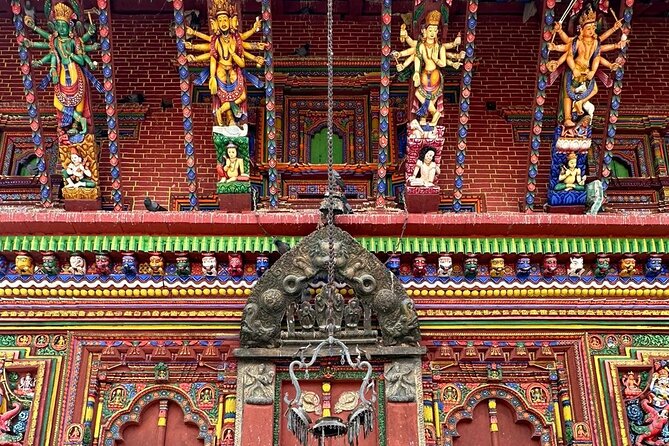
Kathmandu Valley can feel like a plate of food with too many spices. You start with one “must-see,” then realize every turn leads to another shrine, another courtyard, another story. This tour works because it chooses four headline sites that each represent a different thread of Nepal’s religious life—Buddhist pilgrimage, Hindu devotion, Tibetan culture, and royal-era art and architecture.
The pace is also realistic. You’re out for about 6 hours, with a logical order that keeps the day from becoming “sit in the car, sprint to a monument, repeat.” The stop durations aren’t vague, either—1/2/1/2 hours—so you can plan your energy and decide what you want to linger at.
And because it’s private, you’re not stuck with a fixed group pace. If you want more time looking at carvings or you’d rather take fewer photos and watch what people are doing, you can usually work with your guide to match the mood.
Swayambhunath Monkey Temple: a hilltop stupa with prayer wheels and Buddha details
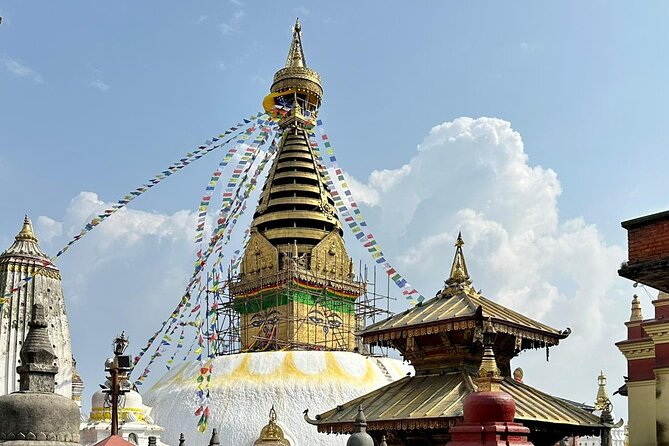
Swayambhunath is the kind of place that starts “up close” and ends in “wow.” It sits on a hill on the northwest side of Kathmandu Valley, and the first thing you notice is how layered the site feels. This is not one single structure; it’s a complex landscape of Buddhist stupas and shrines with long history behind them.
What I like here is the way the architecture guides your eye upward. Around the base you’ll find prayer wheels, which give the whole area a lived-in, repeating rhythm. As you go higher, there are Buddhist shrines and chaityas, plus Hindu deities placed from the bottom to the hill upward. That blending shows up visually, not just in explanations.
On the western side, there’s also the largest image of Shakyamuni Buddha located on the pedestal. It’s the sort of detail that makes the hill feel designed for both pilgrims and first-time visitors—people come for worship, and you can come for understanding.
Practical considerations:
- Expect a hilltop climb. Even if you’re not struggling, plan for steps and uneven footing.
- This is a busy, popular site, so give yourself a little time for crowds to thin out if you want calmer photos.
- The tour gives about 1 hour here, which is enough for a meaningful walk, but not enough to read every single inscription if that’s your style.
Pashupatinath Temple: pagoda-style Hindu grandeur and a dense shrine ecosystem
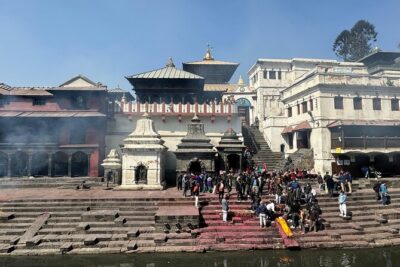
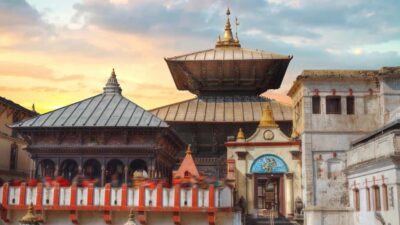
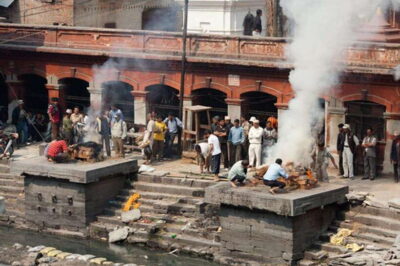
Pashupatinath Temple is one of Nepal’s most important Hindu temples, dedicated to Lord Shiva. If you want a place where Hindu belief is obvious at a glance, this is it. The guide-based experience helps because there’s a lot to see, and it’s easy to get stuck just staring at the main structures without noticing the surrounding layout.
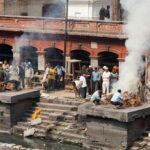
The temple’s architecture is described as pagoda-style, with four silver doors and a golden roof. There’s also fine wood carving and standout stone sculpture. What makes it special (and worth your time) is that it isn’t a “single building and done” stop. The Pashupatinath area is surrounded by many Shiva shrines and related structures—Shivalaya shrines, hundreds of temples, and shrines tied to jyotirlinga concepts (including phallic shrines).
Even if you don’t want to memorize every category, the scale changes your perspective. You start to see why this place remains a major spiritual center, not just a tourist photo spot.
Also in the area is Guheswori Temple, connected to Lord Shiva’s consort. That matters because it shows the complexity of worship here: it’s not one-note, and it’s not only about one deity image. You’re looking at a full religious ecosystem.
Practical considerations:
- This stop lasts about 2 hours, which is a good amount of time if you want more than a quick circuit.
- Entrance fees are not included, so confirm how you’ll pay once you arrive.
- Treat this as a sacred area. If you’re unsure where to stand or how to move, let your guide show you.
Boudhanath Stupa: Tibetan spiritual center and a strong comeback after 2015
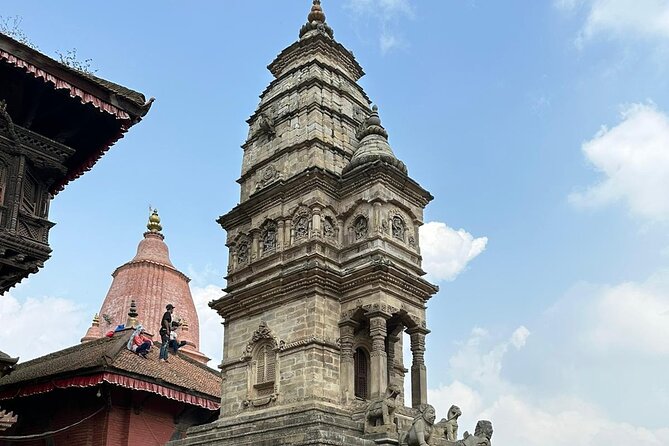
Boudhanath Stupa is one of the top places to visit in Kathmandu, and the reason is simple: it’s visually powerful and culturally focused. It sits on the northeastern outskirts of Kathmandu Valley, surrounded by Tibetan settlements. That neighborhood context matters—you’re not just visiting a monument; you’re stepping into a setting where Tibetan culture is part of the day-to-day fabric.
The stupa is known for its spherical structure, and it’s also a center point of Tibetan Buddhist culture in Nepal. If you’re into symbolism, you’ll probably enjoy how many people come here specifically for Buddhist practice, including pilgrims.
There’s also a key historical detail that makes this stop feel real: the stupa was devastated by the April 2015 earthquake, and the renovation is now completed. That recovery story is not abstract. You can literally see the shape of what was rebuilt, and it adds meaning to the visit.
Boudhanath is also listed as UNESCO World Heritage, which helps explain why it’s treated as a must-do site for international visitors and serious architecture lovers alike. Another practical detail: this area is popular for thanka production (so you might see the crafts that connect to what people practice and pray).
Practical considerations:
- The tour gives about 1 hour here. That’s enough for a slow walk around the stupa, plus time to absorb the Tibetan cultural vibe.
- Expect crowds at peak times. If you want quieter moments, go a bit slower and let your guide time your movements.
Deeper into old Kathmandu
Kathmandu Durbar Square: royal-era architecture turned into a living museum
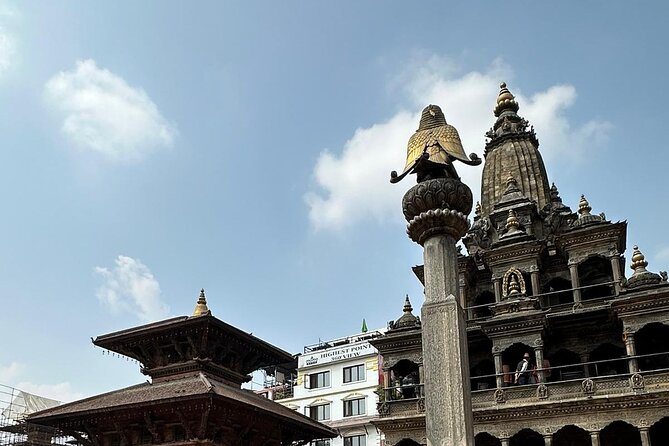
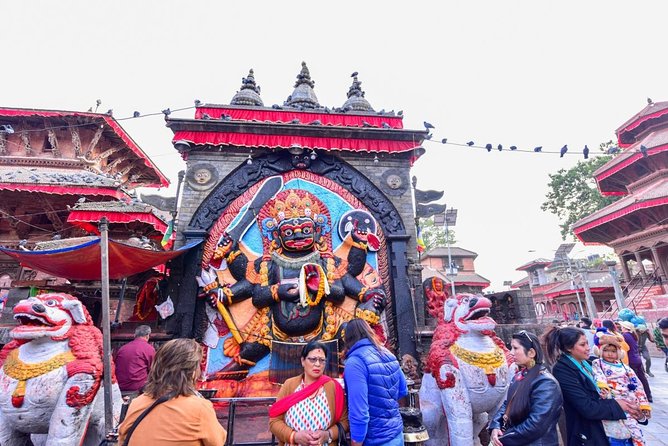
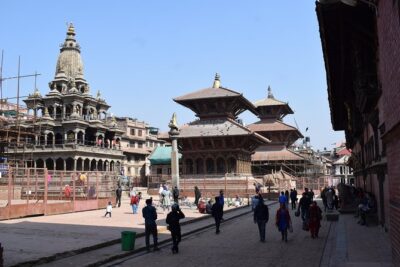
Kathmandu Durbar Square is the neighborhood-level version of grandeur. It’s in the heart of Kathmandu City, near Thamel, and historically it was the residence of the Royal Nepalese family until the 19th century, when monarch coronations took place there.
This stop feels different from Swayambhunath and Pashupatinath because it’s more architecture-and-art than pilgrimage-and-ritual, even though it’s still religious and meaningful. The area is often described as a living museum of temples. Many buildings, temples, art, and sculptures date from the 15th to the 18th centuries.
In other words: you’re looking at centuries layered together in stone and wood, plus the kind of craftsmanship that takes time to appreciate. If you rush through, you’ll miss what makes it special.
One specific landmark that helps orient you is the big sculpture of Hanuman in front of the Durbar Square.
Practical considerations:
- You get about 2 hours here, which is useful because Durbar Square rewards slow wandering. You’ll likely want the time for side courtyards and detailed facades.
- It’s near Thamel, so after your tour you’ll have easy access to food and a place to cool down.
Price and what you’re really paying for
The price is listed as $45 per person for about 6 hours, with group discounts offered. That sounds simple until you break down what you’re buying.
At this price you’re getting:
- an air-conditioned vehicle
- hotel pickup and drop-off
- a licensed, experienced guide
- a private experience format (only your group participates)
- a mobile ticket
The big tradeoff: monument entrance fees are not included. The listed total is NPR 2600 (about USD 21), plus food and drink.
So is it good value? For me, the value comes from the combination of convenience and guidance. Kathmandu Valley sites can be time-consuming to route yourself, and temple layouts aren’t always intuitive. Having a guide who can handle timing and explain what you’re looking at usually saves you from wasting an entire day feeling confused and under-informed.
If you’re traveling as a couple or small family, private transport plus pickup is usually where the money feels justified. If you’re on a tight schedule and want a dependable hit list of UNESCO-linked stops, this is a sensible way to do it without turning your day into a patchwork of taxis and guesswork.
What I’d do to make your day smoother (and more enjoyable)
Here are practical moves that match what the sites demand.
Wear shoes that handle uneven ground. Hill areas and temple edges can be slippery or just plain irregular.
Carry small cash for entrances. Since admission fees are not included, having the money ready keeps the day from stalling.
Plan for short waits and rules. Sacred sites have their own flow. If your guide slows down, it’s usually for a reason—viewing angles, respectful movement, or access.
Use the car time on purpose. Don’t just stare at your phone. Look up one or two key features you’ll see at the next stop (like the prayer wheels at Swayambhunath or the pagoda-style elements at Pashupatinath). It makes the guided explanations land faster.
Be ready to choose your pace at Durbar Square. Two hours is enough to enjoy the main areas, but if you love architecture details, you’ll want to keep your energy steady.
Who this Kathmandu UNESCO day tour suits best
This tour fits best if you:
- want a structured 6-hour itinerary with four major Kathmandu Valley sites
- like guided explanations more than wandering with zero context
- prefer comfort and simplicity, with hotel pickup and air-conditioned transport
- want a private day plan rather than moving with a large group
It may be less ideal if you want a long, slow, hours-on-end museum-style visit at each site. This day is designed for coverage and connection, not an all-day deep study at one monument.
Should you book this Private Kathmandu UNESCO Day Tour?
If you want a well-organized day that hits Swayambhunath, Pashupatinath, Boudhanath, and Kathmandu Durbar Square without turning your trip into a logistics puzzle, I’d book it. The guide-led format plus the four distinct religious and cultural settings is a strong mix, and the timing makes sense for a first trip to Kathmandu Valley.
Just go in with two expectations set: you’ll pay monument entrance fees separately, and you’ll be walking on uneven ground in at least one hilltop area. If that’s fine with you, this is a smart way to experience Kathmandu’s spiritual and historic heart in one day.
FAQ
What sites are included in this private Kathmandu day tour?
You’ll visit Swayambhunath (Monkey Temple), Pashupatinath Temple, Boudhanath Stupa, and Kathmandu Durbar Square.
How long is the tour, and how is time split between stops?
The tour runs about 6 hours. Swayambhunath is about 1 hour, Pashupatinath about 2 hours, Boudhanath about 1 hour, and Kathmandu Durbar Square about 2 hours.
Is hotel pickup and drop-off included?
Yes. The tour includes hotel pickup and drop-off.
What’s included in the price?
Included features are an air-conditioned vehicle, hotel pickup and drop-off, and a licensed, experienced tour guide.
Are monument entrance fees included?
No. Monument entrance fees are not included, and a total of NPR 2600 (about USD 21) is listed.
Is food and drink included?
No. Food and drink are not included.
Is this tour private or shared with other groups?
It’s private. Only your group will participate.
What is the cancellation policy?
Free cancellation is available. You can cancel up to 24 hours in advance for a full refund. If you cancel less than 24 hours before the experience starts, you won’t get a refund.
Private Days, Your Group Only


More Tours in Kathmandu


More Tour Reviews in Kathmandu




Just Reviewed in Kathmandu
- Mountain Bike Tour
★ 5.0 · 3 reviews - Annapurna Panaroma
★ 5.0 · 3 reviews - Mount Everest Scenic Flight 50 Minutes
★ 5.0 · 3 reviews - Kathmandu : Swambhunath & Durbar Square Guided Half Day Tour
★ 3.3 · 3 reviews - Chandragiri Cable Car & Monkey Temple Tour – Private/Group
★ 5.0 · 3 reviews - Kathmandu: Shivapuri National Park Hiking Day Trip
★ 3.3 · 3 reviews
Kathmandu UNESCO Heritage Tours, compared.
 ★ 4.87 UNESCO Sites with LunchFrom $2744 reviews
 ★ 5.0Full Day 7 UNESCO Tour with Lunch – Private/GroupFrom $10415 reviews
 ★ 5.0Full Day Top 4 UNESCO Tour with Lunch – Private/GroupFrom $10269 reviews
 ★ 5.0UNESCO Seven World Heritage Tour in KathmanduFrom $180253 reviews
★ 4.9Full-Day 7 UNESCO Tour with Lunch – Private/GroupFrom $5247 reviews
 ★ 4.97 UNESCO Sites Tour in 1 Day (Private Tour)From $4204 reviews
 ★ 4.9Top 4 UNESCO Tour with Lunch – Private/GroupFrom $5181 reviews
 ★ 5.0Kathmandu Private Sightseeing Tour | UNESCO World Heritage SitesFrom $35109 reviews
Browse the lists this tour appears in