
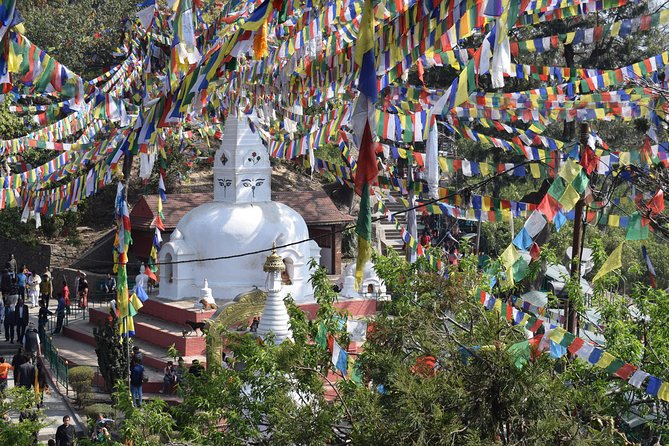
Review · KATHMANDU UNESCO HERITAGE TOURS
Seven World Heritage Day Tour in Kathmandu Nepal
Seven UNESCO stops, one smooth day. If you want a big-hit Kathmandu Valley day without the stress of figuring out routes, this one runs as a private vehicle tour with a local guide and hotel pickup within the ring road. You also get multiple morning start times, so you can match the schedule to your energy level.
I especially like the way the day is built around momentum: you move between sites in comfort, then slow down where it matters at each monument. The itinerary also mixes the headline temples with quieter, more local-feeling stops like Amideva Buddha Park and Changu Narayan, so it does not feel like a checklist. One consideration: it’s a long 10–12 hour day, and entrance fees and food are on you.
In This Review
- Key things I’d watch for
- Seven UNESCO stops in one day: what you’re really buying
- Your best mental model: “legs” of the day, not one endless march
- Swayambhunath and Amideva Buddha Park: morning views plus Buddhist statue time
- Kathmandu Durbar Square and Kumari Chowk: where the city’s identity shows
- Patan Durbar Square and Krishna Temple: Newari craft on an easier, more architectural scale
- Bhaktapur Durbar Square: the afternoon slow-down you’ll be glad you took
- Changu Narayan Temple: the less-hit UNESCO stop that pays off
- Pashupatinath Temple: a dense complex that explains devotion
- Boudhanath Stupa: ending with a 36-meter mandala
- Price, value, and what to budget for
- Who should book this, and who should skip it
- Should you book the Seven World Heritage Day Tour?
- FAQ
- How long is the Seven World Heritage Day tour?
- How much does it cost per person?
- Are hotel pickup and drop-off included?
- Is the tour private?
- What UNESCO sites are included?
- Are entrance tickets included?
- Is food provided?
- Are there different morning start times?
- What company runs the tour?
Key things I’d watch for
- Seven UNESCO World Heritage sites packed into one route, with driving time planned between stops.
- Hotel pickup and drop-off inside the ring road, which saves you from daily Kathmandu logistics.
- Private group setup so your pace is more flexible than a big public group.
- Mix of mega-famous and lesser-seen sites, including Changu Narayan and Amideva Buddha Park.
- Guide flexibility is a standout in feedback, with named guides like Shanti Karki and Pankaj mentioned for adjusting pace (including stairs).
- Admissions and meals aren’t included, so budget for tickets and plan snack breaks.
Deeper into old Kathmandu
- Private Kathmandu Sightseeing Tour | UNESCO World Heritage sites★ 5.0 · 756 reviews
- UNESCO Seven World Heritage Tour in Kathmandu★ 5.0 · 253 reviews
- Nepal Discovery Tour: Heritage Sites & Scenic Hill Easy Hike★ 5.0 · 121 reviews
- Kathmandu Private Sightseeing Tour | UNESCO World Heritage Sites★ 5.0 · 109 reviews
Seven UNESCO stops in one day: what you’re really buying
This tour is designed for one goal: get you to the Kathmandu Valley’s major UNESCO sights in a single day, without forcing you to bounce between taxis, tickets, and confusing directions. For $65 per person, you’re paying for time management, transport, and guided interpretation—not just admission lines.
The day is structured around a private vehicle and a local guide, so you’re not spending your limited Kathmandu time negotiating rides or trying to decode where you are. It’s also built around multiple morning start times, which matters because Kathmandu traffic and temple crowds are real, and a later start can make the day feel longer.
The trade-off is simple: 10 to 12 hours means you’ll be on the go. If you hate long days, want a slow museum pace, or have mobility limits, you’ll need to plan around stairs and walking and communicate your needs early.
Your best mental model: “legs” of the day, not one endless march
A day like this feels easiest when you think in legs. You’ll have a morning block with the big hilltop and palace-area sites, then a mid-day block focused on Patan and the Krishna and pagoda-style temples, and then a longer afternoon in Bhaktapur before you finish with Changu Narayan and the two mega-religious anchors: Pashupatinath and Boudhanath.
Because transport is included via a private vehicle, the breaks between sights are actually useful. You can use them to refill water, reset your camera battery, and decide what you want to linger at versus just see quickly.
Also, since this is a private tour/activity with only your group, you’re not stuck matching the slowest or fastest walkers in a mixed crowd. In feedback tied to this style of tour, guides such as Shanti Karki and Pankaj are specifically called out for adapting pace, including minimizing stair climbing when needed.
Swayambhunath and Amideva Buddha Park: morning views plus Buddhist statue time
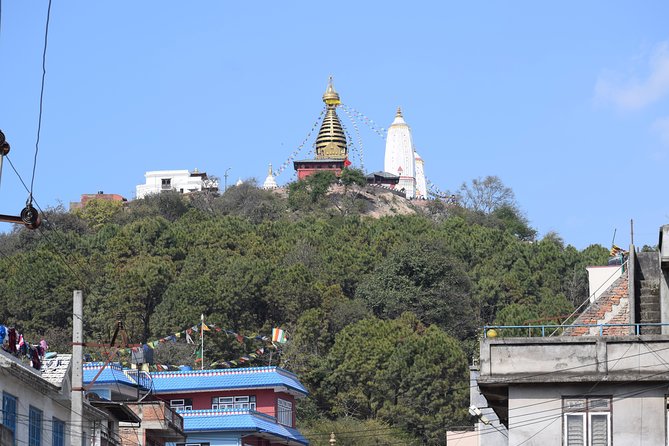
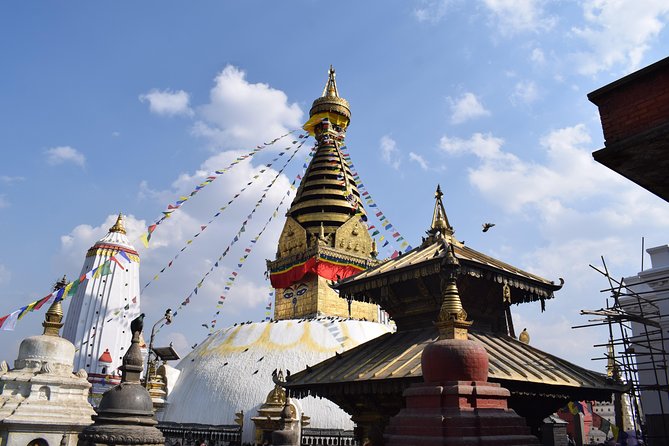
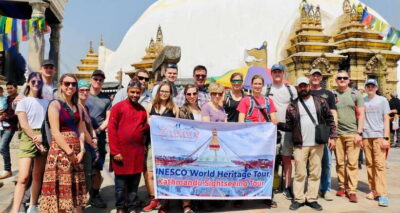
Your day typically starts at Swayambhunath, one of Nepal’s best-known pilgrimage sites on a hill above the city. Plan about an hour here. Admission ticket is not included, but the time block is enough to walk in, take in the views, and understand what you’re looking at instead of just rushing for photos.
Swayambhunath is accessible via two entrances: one is a more direct path and another involves an inclined walk up to the top. If you’re managing stairs or knees, choose the route that feels best and tell your guide your comfort level so they can steer you accordingly.
Right after, you’ll stop at Amideva Buddha Park for about 30 minutes. This one is free and often feels calmer than the main temple surge. You’ll see large Shakyamuni Buddha statues plus smaller religious and architectural details scattered through the park. It’s a nice contrast: same spiritual zone, different mood, and it helps you avoid the stop-and-stare fatigue that can happen when every location is equally crowded.
Kathmandu Durbar Square and Kumari Chowk: where the city’s identity shows
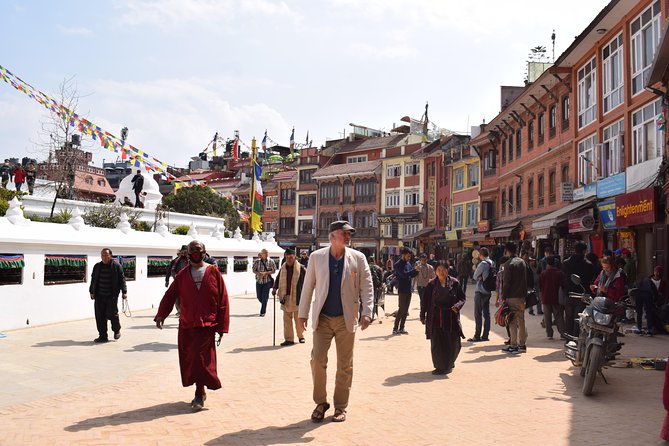
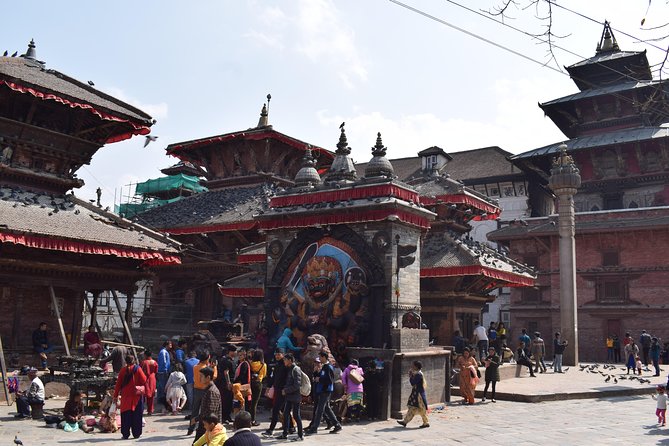
Next up is Kathmandu Durbar Square, about an hour on site. Admission ticket is not included, and it’s also worth knowing that some parts can be under construction, so expect scaffolding or ongoing restoration as part of the scene. That’s not a flaw in the experience; it’s part of how living heritage works—buildings and courtyards are maintained, not frozen.
This is where Kathmandu’s royal-era architecture becomes real. You’re not just looking at monuments—you’re seeing a layered urban space where history is woven into courtyards, temples, and surrounding streets.
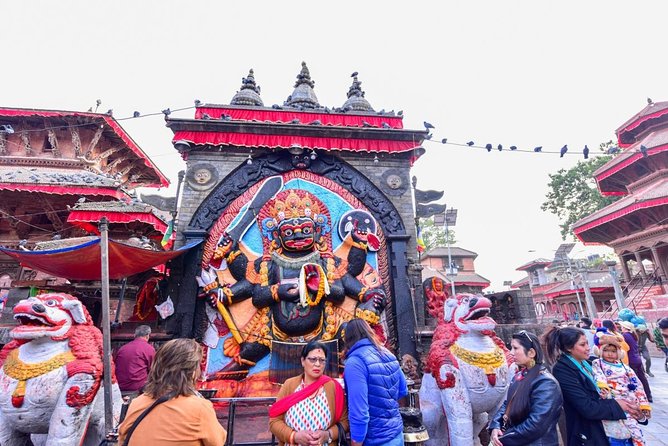
Then you’ll get a quick stop at Kumari Chowk for about five minutes. This courtyard is red-bricked and strongly tied to Newari tradition. You’re seeing the three-level courtyard area where the living goddess, Kumari, resides until puberty. It’s brief, but it’s one of those moments where the cultural context makes the place click.
Patan Durbar Square and Krishna Temple: Newari craft on an easier, more architectural scale
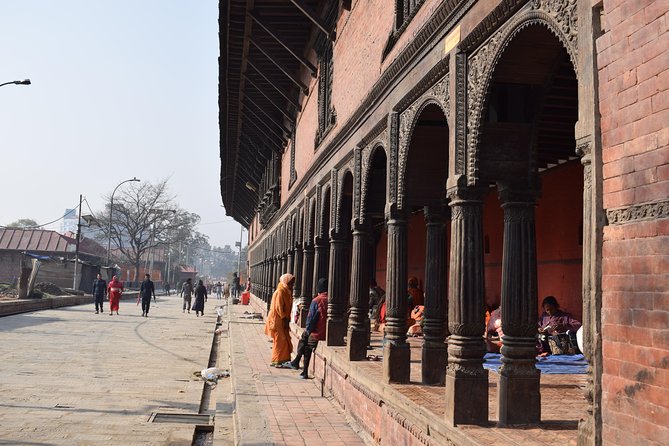
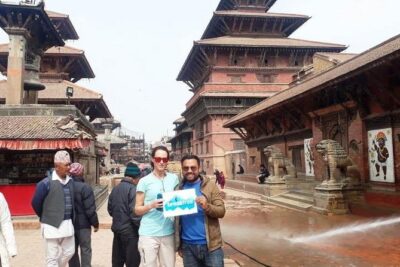
After Kathmandu, the tour heads to Patan Durbar Square (about 1 hour). Admission ticket is not included. Patan’s version of Durbar Square often feels more architectural and tactile than you’d expect if you’ve only seen Kathmandu’s biggest temples on prior trips. You’ll notice the Newari style in the way the square is laid out and in the layers of brickwork.
From there, the route includes the Krishna Temple area, described with 21 shrines and carvings tied to the Ramayana and Mahabharat. There’s also a large bell nearby. This stop is a good example of how the tour balances famous UNESCO landmarks with specific craft details that are easy to miss if you’re sightseeing on your own.
You then move into the Golden Temple (Hiranya Varna Mahavihar) for about 15 minutes. Admission ticket is not included here too. It’s a 12th-century, pagoda-style temple with bronze statues and silver and gold decorations. Even with a short time slot, it’s a strong contrast to the brick-and-stone Durbar Square setting.
To round out the Patan block, there’s time at the Patan Museum (about 30 minutes). Admission ticket is not included. This is connected to the Keshav Narayan Chowk museum area and is focused on records of ancestors’ lifestyle and artifacts. If you’ve ever felt you understand a monument better after you see how people lived around it, this museum time helps.
Bhaktapur Durbar Square: the afternoon slow-down you’ll be glad you took
Bhaktapur is where the tour length turns into a benefit. Bhaktapur Durbar Square is where you spend about 2 hours. Admission ticket is not included, and the scale is such that two hours feels more reasonable than it sounds. This is where Newari culture and architecture come through as a lived-in city space, not only a viewpoint or a single temple photo.
One of the best parts of Bhaktapur here is the “set” of stops that let you choose what to linger on:
- Nyatapola Temple: about 10 minutes, free. It’s a five-level roofed pagoda-style temple and is described as one of the tallest pagodas in the area, over 30 meters.
- Dattatraya Temple: about 15 minutes, free. The tour description says it was built using the stem of a single tree, which gives you something concrete to look for as you walk around.
- 55 Window Palace: about 15 minutes, free. The palace has exactly 55 carved windows across interconnected courtyards, so it’s a geometry lesson disguised as a photo stop.
- Siddha Pokhari: about 15 minutes, free. This human-made pond is 171 meters long and about 3 meters deep. It’s also a local hangout, so you can breathe for a minute instead of only circling temples.
This is also the part of the day where mobility matters most. If stairs or uneven ground are an issue for you, this is when the guide’s flexibility matters most. Since named guides like Shanti Karki and Pankaj are specifically praised in feedback for adjusting pace and minimizing stair climbing, it’s smart to set expectations early and ask for easier routes when possible.
Changu Narayan Temple: the less-hit UNESCO stop that pays off
By the time you reach Changu Narayan Temple, you’ll likely appreciate the change of pace. This is described as the least visited of the UNESCO World Heritage Sites, and it’s framed as a village setting where you can observe Newari craftsmen working on traditional carvings.
The tour time here is about 30 minutes, and admission ticket is not included. It’s not the kind of stop where you need to rush. Instead, it works best when you slow down and look at the craftsmanship on structures, not just the overall temple silhouette. In a day packed with major landmarks, this is the stop that can make the entire tour feel more personal.
Pashupatinath Temple: a dense complex that explains devotion
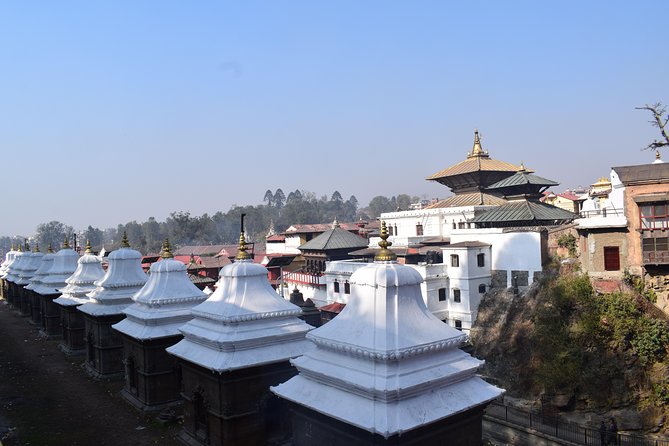
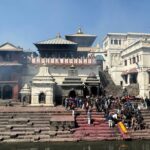
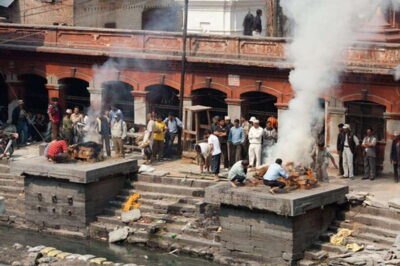
Next is Pashupatinath Temple, about an hour. Admission ticket is not included. This is one of Nepal’s biggest Hindu temple complexes, and the tour description puts it at over 500 temples and shrines in a 0.64-hectare area.
What that means for you on this tour: you won’t see everything, and you don’t need to. You’re seeing the scale and understanding that this is not a single building visit. It’s a living religious complex where devotion is the central purpose.
If you’re sensitive to crowds or have a limited schedule for people-watching, take your time but keep your expectations grounded. Plan to focus on one or two key vantage points and then allow the rest to flow around you.
Boudhanath Stupa: ending with a 36-meter mandala
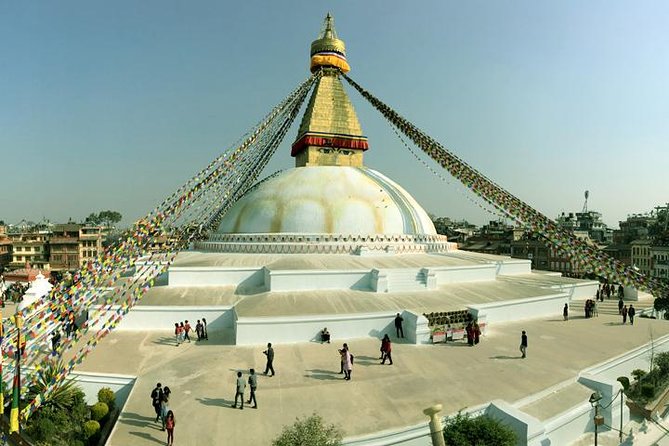
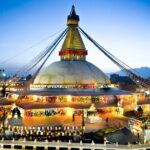
You’ll finish with Boudhanath Stupa for about an hour. Admission ticket is not included. This is described as one of Nepal’s greatest mandalas, 36 meters tall, with over 50 gompas constructed around its vicinity.
This stop works well as a closer because it’s visually strong and emotionally steady. You can spend the hour absorbing the stupa’s scale, watching people move around it, and resetting after the heavier religious density of Pashupatinath.
If you’re thinking about photos, the stupa’s height and surrounding gompas give you angles even if you don’t have a perfect view of every side. Just aim for steady time here rather than sprinting for pictures and missing the atmosphere.
Price, value, and what to budget for
At $65 per person, the value depends on how you see the day. If you’re trying to DIY all seven UNESCO stops, you’d likely spend more than the tour price once you add transport and the time tax of planning. This tour bundles private vehicle transfers, guide time, and a route built to fit the distance.
What’s not included is important. Entrance fees are not included for the heritage sites, and food and drinks are not included either. The good news is that several stops are listed as free (for example, Amideva Buddha Park, Kumari Chowk, Nyatapola Temple, Dattatraya Temple, 55 Window Palace, and Siddha Pokhari). So your total admissions cost may be lower than it sounds, but you should still budget for tickets where they apply.
Practical move: carry small cash for snacks and tickets, and plan on buying meals as you go rather than assuming lunch is covered.
Who should book this, and who should skip it
This tour makes the most sense for you if:
- You’re short on time in Kathmandu and want the UNESCO highlights of the valley in one day.
- You like guided explanations more than self-guided wandering.
- You want private transport so you’re not fighting for taxis between far-apart neighborhoods.
It may not be the best fit if:
- You want a relaxed day with long lunches and slow museum pacing.
- You have difficulty with stairs and long walking routes and don’t want to manage that with the guide.
If you do book and stairs are a concern, set it upfront. Based on feedback that names guides like Shanti Karki and Pankaj, your guide can be flexible about taking things slow and minimizing stair climbing when possible.
Should you book the Seven World Heritage Day Tour?
If you want a smart, structured day that hits Kathmandu Valley UNESCO without turning your trip into a transportation puzzle, I think this is a strong choice. The big win is the balance of major sites plus smaller stops like Amideva Buddha Park and Changu Narayan, which can make the day feel more than a photo sprint.
Book it if you’re ready for a full day and you’re willing to manage admissions and meals yourself. Skip it if you’d rather do fewer sites at a calmer pace, since 10–12 hours is simply a lot of time in transit plus on your feet.
FAQ
How long is the Seven World Heritage Day tour?
The tour runs about 10 to 12 hours.
How much does it cost per person?
The price is $65.00 per person.
Are hotel pickup and drop-off included?
Yes. Pickup and drop-off are included for hotels inside the ring road.
Is the tour private?
Yes. It’s a private tour/activity, so only your group participates.
What UNESCO sites are included?
The tour includes Swayambhunath, Kathmandu Durbar Square, Patan Durbar Square, Bhaktapur Durbar Square, Changu Narayan, Pashupatinath Temple, and Boudhanath Stupa.
Are entrance tickets included?
No. Entrance fees for heritage sites are not included. Some specific stops are listed as free.
Is food provided?
No. Food and drinks are not included, but you can buy them at each site.
Are there different morning start times?
Yes. You can choose from multiple morning start times.
What company runs the tour?
The experience provider is Himalayan Planet Adventures.
The Old Kathmandu, Properly Toured

More Tours in Kathmandu


More Tour Reviews in Kathmandu

Just Reviewed in Kathmandu
- Mountain Bike Tour
★ 5.0 · 3 reviews - Annapurna Panaroma
★ 5.0 · 3 reviews - Mount Everest Scenic Flight 50 Minutes
★ 5.0 · 3 reviews - Kathmandu : Swambhunath & Durbar Square Guided Half Day Tour
★ 3.3 · 3 reviews - Chandragiri Cable Car & Monkey Temple Tour – Private/Group
★ 5.0 · 3 reviews - Kathmandu: Shivapuri National Park Hiking Day Trip
★ 3.3 · 3 reviews
Kathmandu UNESCO Heritage Tours, compared.
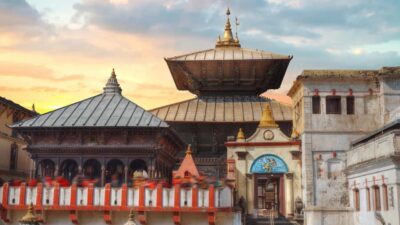 ★ 4.87 UNESCO Sites with LunchFrom $2744 reviews
 ★ 5.0Full Day 7 UNESCO Tour with Lunch – Private/GroupFrom $10415 reviews
 ★ 5.0Full Day Top 4 UNESCO Tour with Lunch – Private/GroupFrom $10269 reviews
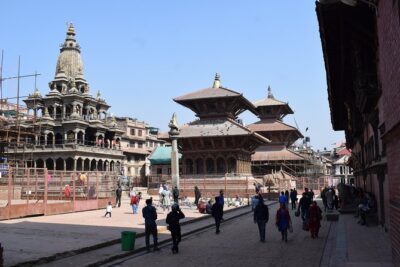 ★ 5.0UNESCO Seven World Heritage Tour in KathmanduFrom $180253 reviews
★ 4.9Full-Day 7 UNESCO Tour with Lunch – Private/GroupFrom $5247 reviews
★ 5.0UNESCO Seven World Heritage Tour in KathmanduFrom $180253 reviews
★ 4.9Full-Day 7 UNESCO Tour with Lunch – Private/GroupFrom $5247 reviews
 ★ 4.97 UNESCO Sites Tour in 1 Day (Private Tour)From $4204 reviews
 ★ 4.9Top 4 UNESCO Tour with Lunch – Private/GroupFrom $5181 reviews
 ★ 5.0Kathmandu Private Sightseeing Tour | UNESCO World Heritage SitesFrom $35109 reviews
Browse the lists this tour appears in