
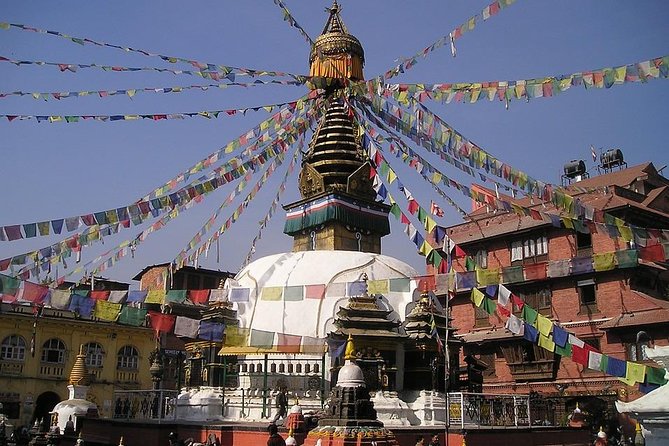
Review · KATHMANDU HERITAGE WALKING TOURS
Smells of Kathmandu Walking Day Tour
Follow your nose through Kathmandu’s market streets. This 2.5-hour walk is built around Asan, the old Kathmandu food and spice corridor between Durbar Square and Thamel, and it’s the kind of tour that makes the city feel real fast. I love how the guide points out everyday ingredients you’d normally ignore—spices, grains, pulses, fruit, and more—while the smells do the guiding. I also like the bonus stops in tight local lanes, including Indrachowk and the bead bazaar, where you see how people shop when they’re not thinking about cameras.
One thing to consider: it’s a walking tour of narrow, busy streets, and it depends on good weather. If you’re uncomfortable in crowds or don’t enjoy sensory-heavy markets (spices, fish, meat, and all the rest), you may want a quieter option.
In This Review
- Key things that make this walk worth your time
- Why this late-afternoon market walk makes sense
- Price and what you actually get for $28
- Meeting at Tridevi Sadak: getting started clean
- Stop 1: Asan market and the ingredient-by-ingredient smell tour
- Indrachowk and the bead bazaar: trade, craft, and narrow-lane Kathmandu
- Bangemudha and Nardevi: why the route includes more than markets
- What the guide really brings (and why German can be a plus)
- Pacing, photos, and how to make the most of tight lanes
- Who should book this Kathmandu walking tour
- Should you book the Smells of Kathmandu walking tour?
- FAQ
- FAQ
- What time does the tour start and how long does it last?
- Where does the tour start and end?
- Is hotel pickup available?
- What places will I see on the walk?
- What’s included in the price, and what isn’t?
- What if the weather is poor?
Key things that make this walk worth your time
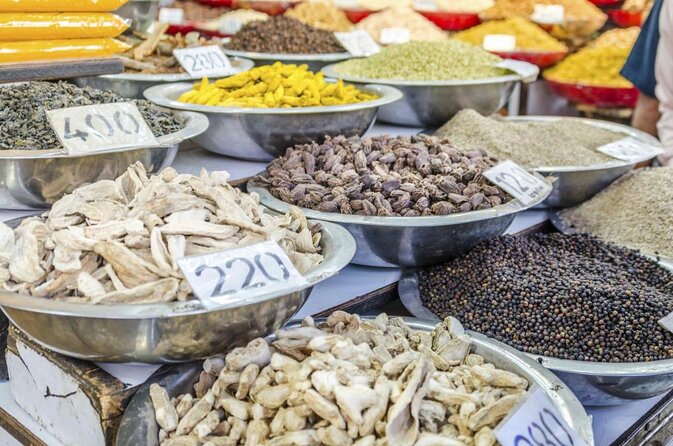
- Asan first, between Durbar Square and Thamel for a fast “old Kathmandu” orientation
- Senses-led market stops focused on everyday items locals actually buy
- Indrachowk + bead bazaar to broaden beyond food into craft and trade
- Small group size (max 10) for easier questions and smoother pacing
- Hotel pickup can be arranged if you’re staying somewhere convenient
- Guide-driven explanations, including stories about local ingredients and how the area works
Kathmandu at walking pace, more routes
- Kathmandu Food and Drink Walking Tour★ 5.0 · 266 reviews
- Kathmandu: Food and Drink Walking Tour★ 4.9 · 119 reviews
- Walking Street Food Tour in Kathmandu★ 5.0 · 111 reviews
- Walking Food Tour in Hidden Local Eateries of Kathmandu★ 5.0 · 40 reviews
Why this late-afternoon market walk makes sense
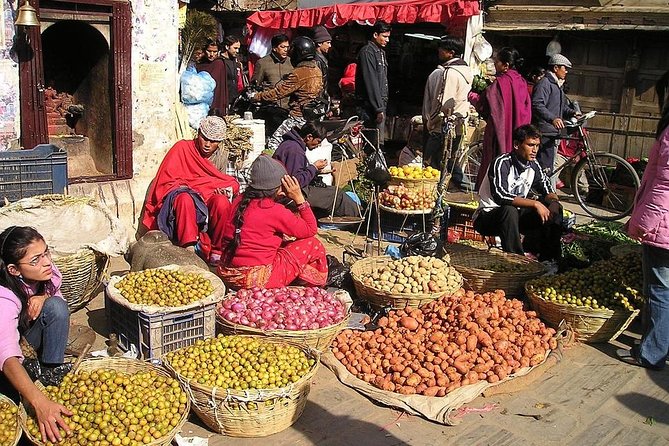
This tour starts at 2:45 pm and runs about 2.5 hours. That timing matters more than you’d think. Late afternoon is often when market rhythms feel both lively and manageable: shops are open, people are out, and you can still walk without the worst heat pressure that some daytime hours bring.
Also, walking through old Kathmandu works best when you’re not racing. You’ll spend most of your time in Asan markets, but the route also links several nearby local areas so you get a bigger picture than just one stall block.
If your Kathmandu plan is packed, this is a smart way to add context to everything you’ll see later—Durbar Square, Thamel, and the surrounding neighborhoods all start to feel connected once you’ve walked the local shopping grid.
Price and what you actually get for $28
At $28 per person, this isn’t a “cheap and cheerful” tour where you’re left to fend for yourself. The main value is the in-person guide plus the time you spend in the market lanes without getting lost.
What’s included:
- In-person guide and expert information
- Admission ticket included for the Asan stop
- Mobile ticket (you have something practical in-hand)
What’s not included:
- Gratuities, food, drinks, shopping
That last part is actually helpful for budgeting. You can treat this like a tour where the city is the attraction, not a built-in meal. Still, it’s very normal to buy a snack or drink during a market walk, and one guest specifically noted trying local tea during the walk. Just don’t assume all stops include food—plan on bringing money for what you personally want.
For me, the value comes from two things: you’re paying for direction (where to go, what to notice) and interpretation (why those ingredients and shops matter). If you want to wander markets on your own, you can—but you’ll likely miss the “what this is and why it’s here” layer.
Meeting at Tridevi Sadak: getting started clean
The start and end point is the same: Karmachari Sanchaya Kosh Building, Tridevi Sadak, Kathmandu 44600. After the tour finishes, you’ll come back to that location.
That matters because market walking tours can sometimes leave you stranded across town. Here, you can plan a follow-up with less stress. If you’re taking a taxi or grabbing dinner afterward, you’re returning to a known pin.
Pickup: hotel pick up can be arranged. If you want that, it’s worth coordinating so you don’t spend the first 20 minutes hunting down your group in a dense area.
Group size: maximum of 10 travelers. That’s small enough for a real back-and-forth conversation, especially when you’re asking what an ingredient is or why a shop sells one thing and not another.
Stop 1: Asan market and the ingredient-by-ingredient smell tour
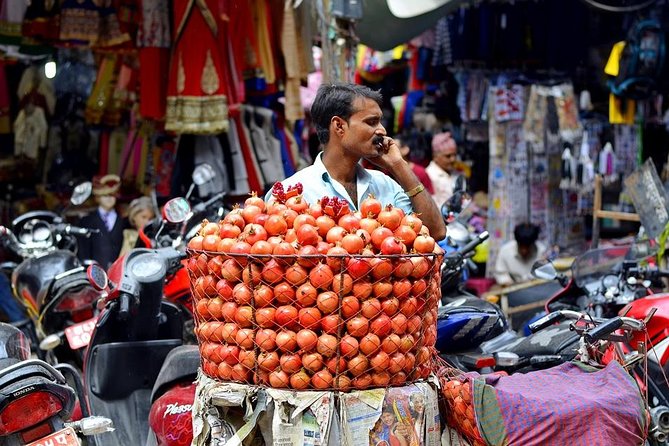
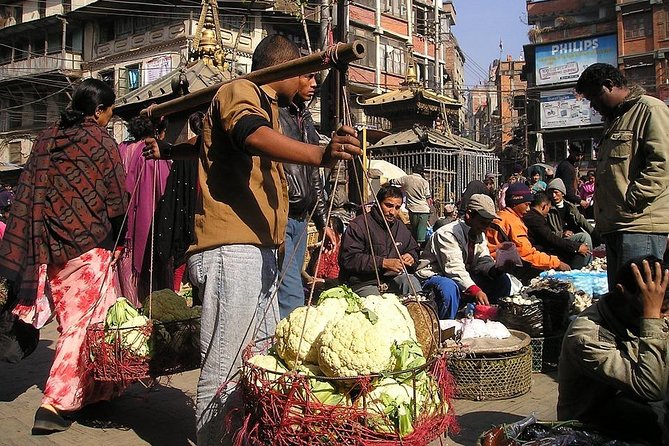
Asan is the heart of this experience, and it’s where the name starts to make sense. Expect the market to focus on everyday essentials: spices, fruit and vegetables, fish, meat, grains, and pulses. Even if you don’t plan to buy anything, this is one of the easiest places in Kathmandu to understand daily life.
This is also where you benefit most from a guide. Markets can feel chaotic from the outside—rows of stalls, overlapping smells, people moving fast—but your guide’s job is to put order on it. You’ll be shown local ingredients and given stories along the way. That kind of explanation turns a “look at the shops” walk into a “now I understand what I’m seeing” walk.
One practical point: Asan is a working market. That’s good for authenticity, but it also means you should expect real crowd movement and active vendors. Go slow through the busiest lanes, keep your phone ready but don’t block people, and be patient when scooters and pedestrians share space.
Possible drawback: if you’re sensitive to strong food smells, Asan will not be subtle. Fish and meat are part of the market’s daily mix. If that bothers you, consider pairing this with a lighter food tour later—or choose a time when you can comfortably handle sensory intensity.
Still, if you want Kathmandu beyond postcards, this is a strong anchor stop.

Indrachowk and the bead bazaar: trade, craft, and narrow-lane Kathmandu
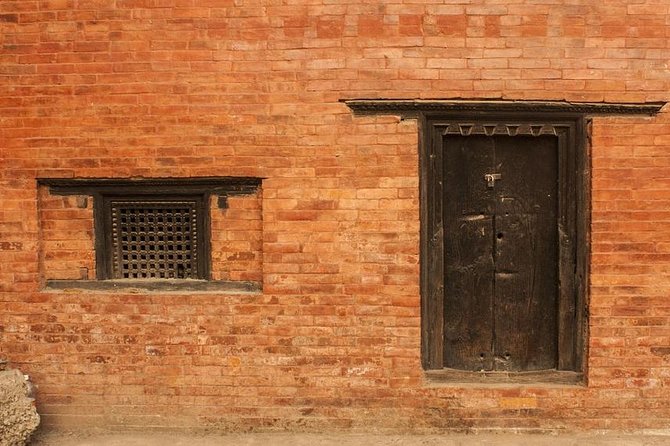
After Asan, the walk broadens into older streets and specialty shopping zones. You’ll visit local spots such as Indrachowk and the bead bazaar (plus areas in the old Kathmandu surroundings like Bangemudha and Nardevi, depending on how the route flows that day).
Indrachowk is a useful contrast to Asan. Instead of focusing only on food ingredients, you get a look at how neighborhoods function around key junctions—street life, foot traffic, and the feel of a place locals pass through every day.
The bead bazaar adds another dimension: craft commerce. Even if you don’t shop for jewelry or materials, it helps you understand that this area of Kathmandu isn’t only about eating—it’s also about objects, trade networks, and local craftsmanship economies.
One reason I like these add-on stops is simple: they prevent the tour from turning into a single-theme loop. You get one main market corridor (Asan), then you move into lanes where different goods—and different kinds of street behavior—show up.
And because the tour is small group, the guide can keep you moving without leaving anyone behind.
Bangemudha and Nardevi: why the route includes more than markets
You might notice that the tour description doesn’t just say “see Asan.” It points you toward old Kathmandu surroundings and names additional areas like Bangemudha and Nardevi.
That’s not random. Adding a couple of neighborhood nodes helps you build spatial sense. After this walk, Durbar Square and Thamel don’t feel like separate islands. You start to see how the market zone connects with surrounding local streets.
This matters if you’re planning other sights later. You’ll find it easier to pick directions, understand what neighborhoods you’re walking through, and avoid the mental blank spot that hits when you’re only ever in tourist lanes.
What the guide really brings (and why German can be a plus)
The biggest recurring theme is guidance quality—people talk about it because it changes how the walk feels.
Some guests got guides like Rajendra, and one person specifically mentioned that he spoke perfect German and explained everything during the walk. That kind of fluency matters: it means you don’t just get a quick overview—you get explanations you can actually follow.
Others had Sunil, and he’s described as taking visitors into narrow streets and alleys where many tourists don’t go. The emphasis was on seeing everyday life—locals moving through the area for daily tasks, alongside pedestrians and scooters. You can treat that as a warning and a promise: it’s real Kathmandu, and it can be a bit intense, but it’s exactly the point.
If you want a tour that teaches you what to notice in markets—what ingredient forms are, how vendors think about what they sell—this guide-led format is the advantage. A self-guided walk is cheaper, sure. But it’s also guesswork.
Pacing, photos, and how to make the most of tight lanes
This is a walking tour, so your comfort setup matters more than fancy planning.
Here’s what I’d do to make it enjoyable:
- Wear shoes that handle uneven pavement and constant stop-start walking
- Keep your bag zipped and close in crowded lanes
- Take photos when you’re not blocking flow; step aside and let people pass
- Bring water, especially since the walk is outdoors and you’ll be in active market zones
Pacing is also part of the “value” equation. With a maximum of 10 travelers, your guide can pause for questions without the group turning into a traffic jam. If you want to ask what a spice is, or how a stall specializes, you’ll likely get your turn.
One more thing: plan to be mentally flexible. Markets aren’t like museum routes with fixed steps. You’ll likely follow the guide through changing footpaths and street movement. That’s normal here.
Who should book this Kathmandu walking tour
This fits best if you want:
- A quick orientation to old Kathmandu
- A sensory introduction to local shopping culture
- A guided walk that shows ingredients and explains what you’re seeing
- A small group experience with time to ask questions
You might skip it if:
- You dislike crowded streets or sensory-heavy food markets
- You prefer sightseeing that feels quieter and less focused on everyday trade
- Your schedule can’t handle about 2.5 hours of walking
It’s also a good pick for couples and solo travelers who want to add local context without committing to a full-day market excursion.
Should you book the Smells of Kathmandu walking tour?
If you’re choosing between a quick market glance and a guided walk that helps you decode what you see, I’d book this. At $28 with an in-person guide, a small group limit, and a dedicated focus on Asan plus nearby trading lanes, you’re paying for clarity and direction—not just walking time.
Book it if you want the Kathmandu most people miss: the lanes where locals shop, the junction energy around Indrachowk, and the specialty commerce of the bead bazaar. And if you get a guide like Rajendra (German) or Sunil (narrow-lane old-city focus), you’ll likely come away with that rare feeling of having understood the place, not just photographed it.
FAQ
FAQ
What time does the tour start and how long does it last?
The tour starts at 2:45 pm and lasts about 2 hours 30 minutes.
Where does the tour start and end?
It starts at Karmachari Sanchaya Kosh Building, Tridevi Sadak, Kathmandu 44600 and ends back at the same meeting point.
Is hotel pickup available?
Yes, hotel pick up can be arranged.
What places will I see on the walk?
You’ll visit Asan and other old Kathmandu areas such as Indrachowk and the bead bazaar, with additional surroundings like Bangemudha and Nardevi.
What’s included in the price, and what isn’t?
Included: in-person guide/expert information and an admission ticket for the Asan stop. Not included: gratuities, food, drinks, and shopping.
What if the weather is poor?
This experience requires good weather. If it’s canceled due to poor weather, you’ll be offered a different date or a full refund.
Kathmandu on Foot: More Walks


More Tours in Kathmandu

More Tour Reviews in Kathmandu


Just Reviewed in Kathmandu
- Mountain Bike Tour
★ 5.0 · 3 reviews - Annapurna Panaroma
★ 5.0 · 3 reviews - Mount Everest Scenic Flight 50 Minutes
★ 5.0 · 3 reviews - Kathmandu : Swambhunath & Durbar Square Guided Half Day Tour
★ 3.3 · 3 reviews - Chandragiri Cable Car & Monkey Temple Tour – Private/Group
★ 5.0 · 3 reviews - Kathmandu: Shivapuri National Park Hiking Day Trip
★ 3.3 · 3 reviews
Kathmandu Heritage Walking Tours, compared.
 ★ 5.0Kathmandu Walking TourFrom $2636 reviews
 ★ 5.0Old Kathmandu Walking Tour, Historic World Heritage Durbar SquareFrom $2822 reviews
★ 4.3Kathmandu Walking TourFrom $3015 reviews
★ 5.0Old Kathmandu Walking Tour, Historic World Heritage Durbar SquareFrom $2822 reviews
★ 4.3Kathmandu Walking TourFrom $3015 reviews
 ★ 5.0Kathmandu Heritage Walk | Heritage Walk of KathmanduFrom $404 reviews
Browse the lists this tour appears in