
Review · KATHMANDU UNESCO HERITAGE TOURS
UNESCO Five World Heritage Tour in Kathmandu
Kathmandu is a city of temples on purpose. This private UNESCO-style day strings together the big names in the Kathmandu Valley, with a guide to explain what you’re seeing and why it matters. I like that you get all entry fees included, plus a smooth pick-up and drop-off loop that keeps you from negotiating with taxis all day.
Two things I’d strongly choose again: the Ring Road hotel transfers (including the Bouddha area) and the fact that admission is handled for each site, so you’re not scrambling for tickets mid-morning. One drawback to keep in mind: it’s a long day—about 7 to 8 hours—and with many stops (some only 5–15 minutes), you’ll see a lot, not linger forever.
In This Review
- Quick hits
- Why This One-Day UNESCO Loop Works in Kathmandu
- Price and What You Actually Get for $130
- The Morning Start: Swayambhunath and Amideva Buddha Park
- Kathmandu Durbar Square: Royal Courtyards, Reconstruction, and Everyday Sacred Corners
- Patan Royal Palace and Patan Durbar Square: Newari Craft and Royal Space
- Taleju Mandir, Patan Museum, and the Golden Temple Finish
- Shiva Devotion and Trade-Centered Worship: Vishwanath Mandir and Bhimsen Temple
- Pashupatinath and Boudhanath: The Day’s Big Religious Bookends
- Keeping the Day Comfortable: How to Think About 16 Stops
- Who Should Book This Kathmandu UNESCO Day
- Booking Timing, Guide Quality, and What to Watch For
- Should You Book This UNESCO Kathmandu Day?
- FAQ
- What time does the Kathmandu tour start?
- How long is the tour?
- Where do you get picked up and dropped off?
- Is transport included?
- Are entry fees included?
- Is food included?
- Is this a private tour?
- Do I need to book far ahead?
- What is the cancellation window?
Quick hits
- Private car + guide + entry fees included means less hassle and fewer moving parts
- Ring Road pickup and drop-off, including Bouddha, saves real time
- Swayambhunath to Boudhanath to Pashupatinath keeps the Hindu-Buddhist story easy to follow
- Kathmandu and Patan Durbar Squares give you Newari architecture and royal-court context
- Amideva Buddha Park is a quick, beautiful pause right by the Swayambhunath hill
Deeper into old Kathmandu
- Private Kathmandu Sightseeing Tour | UNESCO World Heritage sites★ 5.0 · 756 reviews
- UNESCO Seven World Heritage Tour in Kathmandu★ 5.0 · 253 reviews
- Nepal Discovery Tour: Heritage Sites & Scenic Hill Easy Hike★ 5.0 · 121 reviews
- Kathmandu Private Sightseeing Tour | UNESCO World Heritage Sites★ 5.0 · 109 reviews
Why This One-Day UNESCO Loop Works in Kathmandu
Kathmandu rewards you for doing a planned day. The temples are amazing, but the geography can be tricky when you’re bouncing across the valley with taxis. This tour is built to solve that: hotel pick-up and drop-off within the Ring Road area, plus a private vehicle to cover the long stretches without burning your whole day on logistics.
What I like most is the way the route tells a story. You start at Swayambhunath, a holy place that’s important to both Buddhist and Hindu communities, then you move through the royal-courtyard world of the Durbar Squares, and end with two major religious magnets—Pashupatinath for Hindu devotees and Boudhanath for Buddhism. That order helps you connect the symbolism instead of treating each site like a random photo stop.
It’s also a solid value if you’re the type who hates surprise costs. You’re not just paying for transport. You’re paying for a professional guide, transport by private car, and admission for the heritage sites, which keeps your budgeting calm.
Price and What You Actually Get for $130
At $130 per person, this is priced like a full-day, guided heritage product—not just a driver plus a list of temples. You also get a professional tour guide, entry fees for all heritage sites, and hotel pick-up and drop-off inside the Ring Road area including Bouddha. For a one-day plan that hits major UNESCO-listed stops, that package structure matters.
The time commitment is the other part of the equation. The tour runs about 7 to 8 hours, starting at 9:00 am. That can feel like a lot at first, but the route is designed to be efficient: you’ll get scheduled time blocks at each place, and the shorter visits help you fit the most important sites into one day.
Food and drinks are not included, so you’ll want to budget for lunch on your own. The good news is that the tour is structured enough that you can plan where you’ll grab something nearby rather than improvising from scratch.
The Morning Start: Swayambhunath and Amideva Buddha Park
You begin at Swayambhunath, a UNESCO-listed stupa and holy ground that’s equally important to Buddhist and Hindu communities. This is the kind of site that makes Kathmandu feel like it has one big religious conversation running through it. A guide helps you read the place instead of just admiring it.
After that, the route includes Amideva Buddha Park, right near the hill where the Swayambhunath temple sits. The stop is short—about 15 minutes—but the detail is clear: you’ll see three large statues of Shakyamuni Buddha. This is a good reset after a main stupa stop, and it works well if you want a break without losing momentum.
One practical consideration: since Swayambhunath is a major magnet, early timing helps you get there before the day gets too crowded. Starting at 9:00 am also gives you a bigger chance of calmer movement between stops.
Kathmandu Durbar Square: Royal Courtyards, Reconstruction, and Everyday Sacred Corners
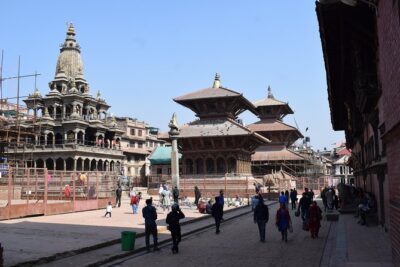
Next you move into the dense cultural heart of Kathmandu at Kathmandu Durbar Square, where you’ll see historic and religious sites and architectural structures that are currently being reconstructed. That detail matters. The square isn’t staged for visitors—it’s an active place tied to royal and spiritual identity, and reconstruction signals the city’s ongoing story rather than a frozen past.
From there, you’ll see a set of smaller, high-meaning stops that cluster inside the Durbar Square area:
- Basantapur Tower (about 30 minutes) is one of the attractive highlights of the square, a natural “pause and look” moment.
- Degu Taleju Temple (about 10 minutes) dates to 1564. Even in a short stop, knowing the build date gives you a sense of how long these sites have anchored the city.
- Kumari Chowk (about 10 minutes) is the courtyard inside a red-brick, three-level building that once housed Kumari, the living goddess selected until puberty. It’s one of those Kathmandu traditions that feels both deeply local and surprisingly modern in its public visibility.
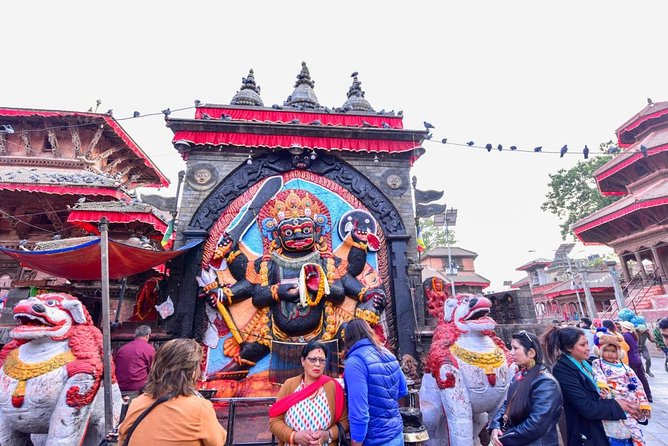
- Kaal Bhairab (about 5 minutes) is a statue of Bhairav, and the stop is brief but focused—just enough to register the role of Bhairav in Kathmandu’s sacred landscape.
The Durbar Square block is where the day can feel packed. It’s not because the guide runs fast; it’s because the square itself is layered. If you like structure—knowing what to notice first—you’ll enjoy this. If you want long, slow wandering, you may feel a little “moved along” by the schedule.
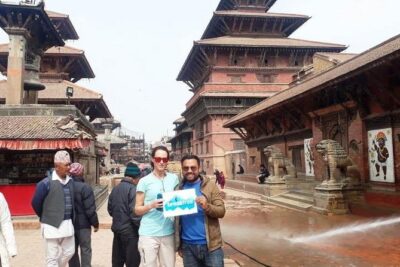
Patan Royal Palace and Patan Durbar Square: Newari Craft and Royal Space
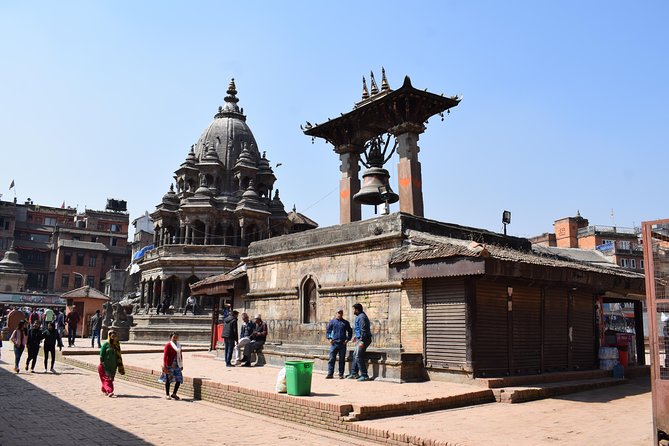
After Kathmandu, the tour shifts to Patan in Lalitpur, starting with the Patan Royal Palace area near Durbar Square. It’s described as one of the oldest royal palaces of Patan, and you’ll find key nearby landmarks such as the Krishna Temple and Tulaja Devi Temples, along with the Patan Museum and references to a Golden Temple complex.
Then comes Patan Durbar Square itself (about 45 minutes). This one is a strong architectural choice if you care about the Newar community’s craft and religious art. The square is described as an adobe for Newari architecture, with temples and artistic creations tied to local tradition. You also get the “royal courtyard” feel—space shaped for ceremony, not just worship.
Here’s a small advantage of this tour design: you’re not only seeing buildings. You’re being guided through the idea of royal spaces as living religious centers. That turns stone and woodwork into something with function, not just form.
Taleju Mandir, Patan Museum, and the Golden Temple Finish
Back inside the Patan zone, the tour includes Taleju Mandir Temple (about 15 minutes). The important historical point here is that it was rebuilt by Srinivasa Malla after a fire in 1676. That’s another reminder that these sites survive through time, repair, and changing hands.
Next you’ll visit Patan Museum (about 15 minutes). The stop is worth it for anyone who enjoys details you might miss outside a museum setting. The museum is described as having old statues and carved windows and wooden pillars, so it’s a chance to connect what you saw in the square with preserved craft examples. Even a short museum visit can make the surrounding architecture feel more legible.
Then comes one of the most famous visual stops on the day: Golden Temple (Hiranya Varna Mahavihar). It’s a 12th-century temple with bronze statues, and it’s described as covered in silver and golden decorations. The temple is pagoda-style, with a golden image of Lord Buddha. The quick time here (about 10 minutes) makes sense because the visual impact is immediate—your guide can focus you on what to notice fast.
Shiva Devotion and Trade-Centered Worship: Vishwanath Mandir and Bhimsen Temple
The tour continues with two smaller-but-specific temple stops that show how religion in the valley isn’t only about grand monuments—it also lives in community identity.
Vishwanath Mandir Temple is described as dedicated to God Shiva and built during the reign of Siddhi Narsingh Malla. The timing is very short—about 5 minutes—but naming the patron reign gives context for the style and importance.
Then there’s Bhimsen Temple (about 15 minutes). Built in 1680 by Srinivasa Malla, it’s worshiped as a god of business and trade by the Newar community. That’s a great contrast to the grand royal-court atmosphere. It’s Kathmandu’s reminder that sacred space often protects everyday livelihoods too.
If you’re the kind of traveler who likes religion as a social system, these two stops are payoff points, even if they’re brief.
Pashupatinath and Boudhanath: The Day’s Big Religious Bookends
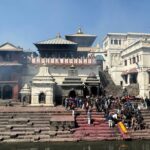
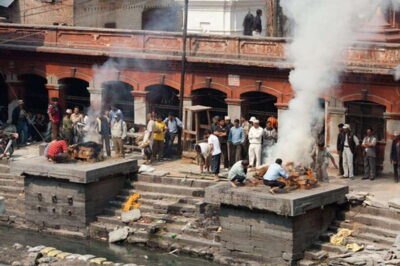
Now you hit the heavyweight Hindu site: Pashupatinath Temple complex, which consists of over 500 shrines and temples. It’s described as the main temple for all Shiva devotees, and the complex is full of pagoda structures as you enter. With about 1 hour here, you get time to absorb the scale and the devotion without feeling purely rushed.
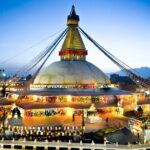
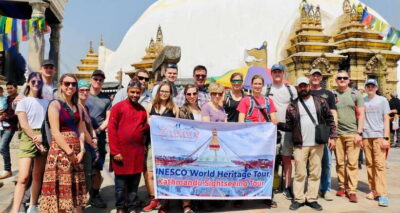
Finally, the day ends at Boudhanath Stupa (about 1 hour). This is the Buddhism anchor. It’s described as a 36 meters high, large dome-shaped structure surrounded by prayer wheels and picture carvings of Buddha. Even if you don’t consider yourself religious, this is one of the easiest sites to understand emotionally: it’s made for repetition, focus, and calm.
This is also where the tour’s structure really clicks. You’ve moved from a shared Buddhist-Hindu opening (Swayambhunath), through royal squares and Newari temples, and now you land with major Hindu and major Buddhist icons as clear final chapters.
Keeping the Day Comfortable: How to Think About 16 Stops
This tour packs a lot in—15 or so structured stops, with several being 5–10 minutes. That doesn’t mean the guide is rushing you. It means the schedule is built for first-time visitors who want the essentials in one run.
So plan like this:
- Expect short focus windows at some sites, especially inside crowded squares.
- Save your biggest questions for the guide. A good guide can turn a 5-minute stop into something you understand.
- Bring your energy for a full 7–8 hour day. You’ll be moving between clusters, not sitting at one location.
One more practical note: because food and drinks aren’t included, you’ll want to plan a simple lunch option near where the tour spends time. Build in the idea that you might be hungry at predictable times rather than waiting until you’re starving.
Who Should Book This Kathmandu UNESCO Day
This is a strong fit if you:
- Want a single, structured day that covers the major UNESCO-listed Kathmandu Valley sites.
- Prefer private transport over hopping between taxis.
- Like your culture with context, especially the connections between Hindu and Buddhist traditions.
It’s also good for people with limited time. If your Kathmandu schedule is tight and you don’t want to choose between Durbar Square and the big stupa sites, this route aims to do the hard selection for you.
I’d be more cautious if you’re the type who needs hours at one place to feel satisfied. This tour is about breadth and clarity, not slow wandering.
Booking Timing, Guide Quality, and What to Watch For
The average booking window is about 55 days in advance, which tells me this is a popular way to start a Kathmandu trip. If your dates are fixed, I’d treat it like a real reservation, not something to decide last minute.
Guide quality is a core part of the experience here. The tour is designed for commentary—religious meaning, architecture, and how traditions developed. If you end up with a guide such as Shanti, Sarita, Tej, Shanthi, or Rabina (names that come up for this kind of tour), you’ll likely get the kind of explanation that makes short temple stops feel worth your time.
The other “watch for” item is reconstruction and living heritage. Kathmandu Durbar Square includes ongoing reconstruction. That can be fascinating if you like real-world history, but it can also mean some areas look unfinished compared to the idealized photos you might expect.
Should You Book This UNESCO Kathmandu Day?
If you want an efficient, guided, and fee-covered day through Kathmandu Valley’s top UNESCO sites, this is an easy yes. At $130 you’re paying for a private car, a professional guide, and entry fees, plus Ring Road pick-up and drop-off that keeps the day from turning into a taxi math problem.
Book it if you’re craving clarity: Hindu and Buddhist sites arranged in a logical sequence, with shorter stops that still feel meaningful because you’ll have context. Skip it or consider a slower alternative if you know you need long, quiet time in each place.
In short: this tour is built for travelers who want the highlights, understood—not just photographed.
FAQ
What time does the Kathmandu tour start?
The start time is 9:00 am.
How long is the tour?
It runs about 7 to 8 hours.
Where do you get picked up and dropped off?
Hotel pick-up and drop-off are included inside the Ring Road area, including the Bouddha area.
Is transport included?
Yes. The tour includes transport by private car.
Are entry fees included?
Yes. Entry fees of all heritage sites are included, and admission tickets are listed as included at each stop.
Is food included?
No. Food and drinks are not included.
Is this a private tour?
Yes. It’s private, and only your group will participate.
Do I need to book far ahead?
On average, it’s booked about 55 days in advance.
What is the cancellation window?
You can cancel up to 24 hours in advance for a full refund.
The Old Kathmandu, Properly Toured

More Tours in Kathmandu


More Tour Reviews in Kathmandu

Just Reviewed in Kathmandu
- Mountain Bike Tour
★ 5.0 · 3 reviews - Annapurna Panaroma
★ 5.0 · 3 reviews - Mount Everest Scenic Flight 50 Minutes
★ 5.0 · 3 reviews - Kathmandu : Swambhunath & Durbar Square Guided Half Day Tour
★ 3.3 · 3 reviews - Chandragiri Cable Car & Monkey Temple Tour – Private/Group
★ 5.0 · 3 reviews - Kathmandu: Shivapuri National Park Hiking Day Trip
★ 3.3 · 3 reviews
Kathmandu UNESCO Heritage Tours, compared.
 ★ 4.87 UNESCO Sites with LunchFrom $2744 reviews
 ★ 5.0Full Day 7 UNESCO Tour with Lunch – Private/GroupFrom $10415 reviews
 ★ 5.0Full Day Top 4 UNESCO Tour with Lunch – Private/GroupFrom $10269 reviews
 ★ 5.0UNESCO Seven World Heritage Tour in KathmanduFrom $180253 reviews
★ 4.9Full-Day 7 UNESCO Tour with Lunch – Private/GroupFrom $5247 reviews
★ 5.0UNESCO Seven World Heritage Tour in KathmanduFrom $180253 reviews
★ 4.9Full-Day 7 UNESCO Tour with Lunch – Private/GroupFrom $5247 reviews
 ★ 4.97 UNESCO Sites Tour in 1 Day (Private Tour)From $4204 reviews
 ★ 4.9Top 4 UNESCO Tour with Lunch – Private/GroupFrom $5181 reviews
 ★ 5.0Kathmandu Private Sightseeing Tour | UNESCO World Heritage SitesFrom $35109 reviews
Browse the lists this tour appears in