
Three UNESCO stops, one smooth Kathmandu loop. This private day tour is a practical way to see major spiritual and architectural landmarks in Kathmandu Valley, without fighting traffic or wasting time figuring out logistics. You’ll move between Boudhanath, Pashupatinath, and Bhaktapur Durbar Square in an air-conditioned vehicle with a guide.
I especially like the hands-on flow of the day: you get focused time at each site rather than the classic rush-and-skip. I also like that you travel in a private setup with a certified English-speaking guide from Best Heritage Tours, which makes it easier to ask questions and get clear explanations.
One thing to consider: the details about entry fees look inconsistent. The stop notes say admission tickets are not included, but the included section says entry fees for cultural and historical sites are included—so you’ll want to confirm what’s actually covered before you go.
In This Review
- Key things to know before you go
- Kathmandu’s UNESCO World Heritage day, in plain terms
- The value of a private loop
- Private transport and your English-speaking guide (Best Heritage Tours)
- Stop 1: Thamel departure to Boudhanath Stupa
- Boudhanath Stupa: prayer wheels and pilgrim circles
- A small practical note
- Pashupatinath Temple: pagodas, Shiva, and ceremonies on the Bagmati
- The architecture and Shiva Linga
- The Bagmati River ceremonies
- Bhaktapur Durbar Square: the 55-Window Palace and the Lion and Golden Gates
- Why Bhaktapur feels different
- Price, entry fees, and what $95 really buys
- The one confusing part: admission fees
- Is it good value?
- Practical tips for a smooth day at sacred sites
- Plan for food and water
- Dress and behavior: when in doubt, go respectful
- Timing: the start time needs checking
- Expect more walking than you think
- Should you book this UNESCO Kathmandu tour?
- FAQ
- How long is the UNESCO Kathmandu day tour?
- What sites are included in this Kathmandu UNESCO tour?
- Are admission tickets included?
- What transportation will I use during the tour?
- Are meals and drinks included?
- Is free cancellation available?
Key things to know before you go
- Boudhanath Stupa’s pilgrim rhythm: watch Tibetan pilgrims circumambulate the stupa and spin prayer wheels.
- Pashupatinath’s Shiva focus: pagoda-style architecture and the sacred Shiva Linga are front and center.
- Bagmati River rituals in action: you’ll see Hindu ceremonies along the riverbanks, including cremation practices.
- Bhaktapur Durbar Square highlights: plan time for the 55-Window Palace, plus the Lion Gate and Golden Gate.
- Private, air-conditioned vehicle: you won’t share a van with strangers or bake in the city heat.
- English guide quality matters: the guide Bimal Dhamala has been praised for careful, thoughtful explanations and tailoring the day to preferences.
Deeper into old Kathmandu
- Private Kathmandu Sightseeing Tour | UNESCO World Heritage sites★ 5.0 · 756 reviews
- UNESCO Seven World Heritage Tour in Kathmandu★ 5.0 · 253 reviews
- Nepal Discovery Tour: Heritage Sites & Scenic Hill Easy Hike★ 5.0 · 121 reviews
- Kathmandu Private Sightseeing Tour | UNESCO World Heritage Sites★ 5.0 · 109 reviews
Kathmandu’s UNESCO World Heritage day, in plain terms
If you only have a short window in Kathmandu, this tour gives you a strong “core Kathmandu Valley” day. You’re not just looking at buildings—you’re moving through living religious spaces. That means the mood changes at each stop: quiet and rhythmic at Boudhanath, intensely spiritual and ceremonial at Pashupatinath, and more historic-urban at Bhaktapur Durbar Square.
I like that the schedule is built around real site time: roughly 30 minutes to get oriented from Thamel, then about an hour at Boudhanath, around two hours at Pashupatinath, and about two hours at Bhaktapur. You’re also back to Thamel at the end, which is handy because it keeps your day from turning into a “transportation puzzle.”
The value of a private loop
Private tours sound fancy, but the practical payoff is simple: less waiting and more control. With your own group only, you can keep the pace that makes sense for you—slow for photos, quick for walking, or ask the guide to clarify something you notice at a temple or square.
And since it’s in an air-conditioned vehicle, you don’t arrive at the sites already exhausted. In Kathmandu, that matters more than people think.
Private transport and your English-speaking guide (Best Heritage Tours)
The tour runs in a private air-conditioned tourist vehicle, with a certified English-speaking guide from Best Heritage Tours. You also have ground staff support—so if something minor comes up (timing, directions, who pays what), there’s someone to help you handle it.
A recurring theme in the guide feedback is communication style. Bimal Dhamala is described as professional, friendly, and careful in how he explains what you’re seeing. Some reviewers also mention he can explain slowly and clearly even when English isn’t a traveler’s first language. That’s a real advantage on religious sites where details matter—symbols, architecture, and the meaning behind what people are doing.
If you’re the type who likes context—why a stupa is arranged a certain way, why rituals happen along the river, how palace squares were used—this kind of guided structure is where you get your money’s worth.
Stop 1: Thamel departure to Boudhanath Stupa
You start your day in Thamel, the neighborhood that acts like Kathmandu’s visitor hub. From there, you drive to Boudhanath in a private vehicle. The early part of the day is your buffer: you’re moving before the city gets too intense, so you can arrive with your head still clear and your camera ready.
Before you lock this one in, a few Kathmandu alternatives:
Boudhanath Stupa: prayer wheels and pilgrim circles
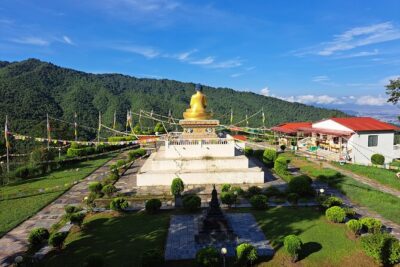
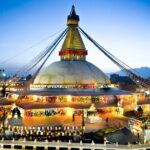
At Boudhanath Stupa, you’ll spend about an hour. This site is one of Nepal’s oldest and most significant Buddhist monuments, and it shows in the way people treat it like a daily anchor. The big visual action is circumambulation: you’ll see Tibetan pilgrims walk around the stupa, often spinning prayer wheels as they go.
What’s valuable here is the atmosphere. Even if you’ve seen photos before, being near the stupa changes how you read it. The stupa isn’t a static object; it’s part of a repeating practice.
What to watch for
- The flow of pilgrims moving in circles
- Prayer wheels and the rhythmic motion people keep
- How the stupa sits within the surrounding streets and everyday life
A small practical note
Boudhanath can be lively, so keep your pace steady. If you want photos without getting swept into the walking stream, you’ll likely do best stepping to the side for a moment and then rejoining when the movement clears.
Pashupatinath Temple: pagodas, Shiva, and ceremonies on the Bagmati
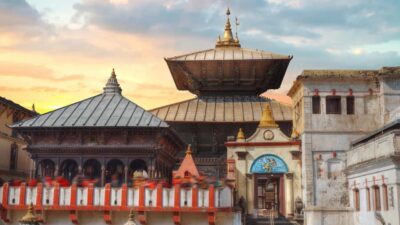
Next comes Pashupatinath Temple, another UNESCO World Heritage site and one of the holiest places in Hinduism. You’ll have about two hours here, which is enough time to see the main temple area and still pause to understand what’s happening around you.
The architecture and Shiva Linga
The standout features are the pagoda-style architecture and the Shiva Linga. You’ll notice that the space is structured for devotion and attention. People aren’t milling around like at a museum. They’re coming with purpose, and the guide will help you interpret the parts you might otherwise overlook.
The Bagmati River ceremonies
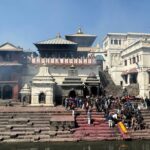
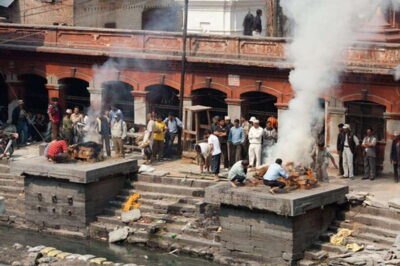
Pashupatinath is also known for the Hindu rituals carried out along the Bagmati River. You’ll witness ceremonies, and the information provided for this tour includes cremation practices along the riverbanks.
This is the stop that can feel the most intense if you’re not used to it. If you’re sensitive to religious ceremony or graphic realities, give yourself extra mental space here. You don’t have to force yourself to stand where every detail is most visible. You can stay at a respectful distance and still get the meaning of the place.
My practical advice
- Wear comfortable shoes; you’ll likely do more walking than you expect once people gather.
- Keep your camera use respectful and selective—focus on what helps you understand rather than what just satisfies your feed.
Bhaktapur Durbar Square: the 55-Window Palace and the Lion and Golden Gates
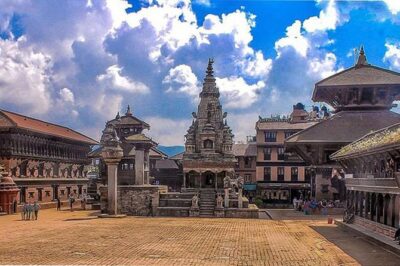
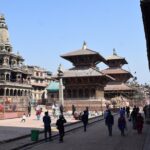
After Pashupatinath, you’ll head to Bhaktapur Durbar Square. This is the historic palace complex where you get a different kind of Kathmandu Valley experience: more civic space, more craftsmanship, and a strong sense of how power and art shaped the town.
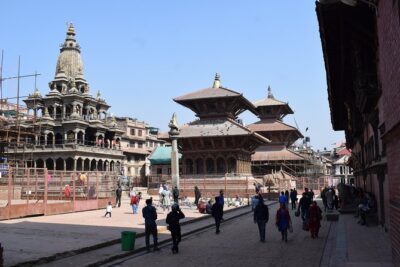
You’ll spend about two hours here, which is a good amount of time for looking slowly. Bhaktapur’s highlights include the 55-Window Palace, plus intricately carved temples and statues. You’ll also get to see the Lion Gate and Golden Gate.
Why Bhaktapur feels different
Boudhanath gives you living Buddhist practice. Pashupatinath shows Hindu ritual in a dramatic setting. Bhaktapur gives you the historic “built environment” side of UNESCO—architecture that communicates status, belief, and artistry.
If you like details, this is where you can slow down and actually read the stonework. The square has a “pause and notice” quality. And because it’s a palace area, it’s easier to connect what you see to how people once moved through the space.
Quick tip for enjoying this stop
Set a personal goal. For example, pick two things you want to learn from the guide—one palace feature and one gate feature—and let the rest be bonus. It keeps your brain from turning into a photo-taking machine.
Price, entry fees, and what $95 really buys
The tour price is $95.00 per person, and it’s structured like a comfortable, guided day rather than a bare-bones taxi ride.
Here’s what the included section states you get:
- Private air-conditioned land transportation
- A certified English-speaking guide from Best Heritage Tours
- Entry fees for temples, parks, monasteries, and cultural/historical sites
- Essential ground staff (drivers and assistants)
- Administrative costs and government taxes
Not included:
- Meals (breakfast/lunch/dinner)
- Beverages, including bottled and boiled water
- Gratuities for the hostess and driver (tipping is customary)
- Anything not specified in the included section
The one confusing part: admission fees
The schedule notes for each stop say admission tickets are not included, but the included section says entry fees are included. That’s important enough that you should confirm directly with the operator before the day starts.
If you end up paying out of pocket for an admission you thought was covered, it won’t ruin the day—but it could ruin the budget.
Is it good value?
For many visitors, yes—because you’re buying three things at once: guided interpretation, private transport, and a full day that clusters UNESCO sites. If you tried to assemble this yourself with separate drivers and tickets, the time cost and confusion cost can be higher than you’d expect.
Practical tips for a smooth day at sacred sites
Here’s how to set yourself up so you get the best experience from the time you have.
Plan for food and water
Meals and beverages aren’t included. That means you’ll want to decide how you’ll handle energy during the day. If you tend to get cranky when you’re hungry, plan a strategy in advance (even if it’s just grabbing something before you start).
Since bottled and boiled water aren’t included, make sure you have your own plan for hydration.
Dress and behavior: when in doubt, go respectful
At Boudhanath and Pashupatinath in particular, you’re walking into spaces where people have real devotion. Keep your behavior calm. If you’re unsure about what’s appropriate, follow the lead of locals who are there for prayer.
Timing: the start time needs checking
The start time listed is 12:15 am. That seems unusual for a same-day UNESCO loop, so treat it as a scheduling detail you should confirm in your confirmation message. You’ll want the exact pickup time nailed down so your day doesn’t start with a surprise.
Expect more walking than you think
Even though this is a “tour,” it’s still a day of temples, squares, river areas, and stone steps. Comfortable shoes are not optional.
Should you book this UNESCO Kathmandu tour?
Book it if:
- You want Boudhanath Stupa + Pashupatinath + Bhaktapur Durbar Square in one day.
- You prefer a private vehicle and a guide who explains what you’re seeing (Bimal Dhamala has been praised for that kind of careful, friendly approach).
- You like structure when you’re visiting spiritual sites where context matters.
Consider a different option if:
- You’re on a tight budget and want to skip paying for guide time and private transport.
- You might be uncomfortable with the ceremony element at Pashupatinath (the tour information includes cremation practices along the Bagmati River).
- You’re the type who hates schedule ambiguity—because the entry-fee wording in the provided details doesn’t match, you’ll need to confirm what you pay for.
If you do book, send one quick question to Best Heritage Tours about admissions being included, and confirm the real pickup time tied to your date. Then you can focus on what you came for: three major UNESCO sites, stitched into one manageable Kathmandu day.
FAQ
How long is the UNESCO Kathmandu day tour?
The tour is listed as lasting from 1 hour to 1 day, and the stop timings add up to roughly a half-day to full-day experience. Based on the stop durations provided, you can plan for about 6 hours of sightseeing time plus driving.
What sites are included in this Kathmandu UNESCO tour?
You’ll visit Boudhanath Stupa, Pashupatinath Temple, and Bhaktapur Durbar Square, with time in/around Thamel at the start and end of the day.
Are admission tickets included?
The stop notes say admission tickets are not included, but the included section says entry fees are included for temples, monasteries, and cultural/historical sites. Before the tour, confirm with the provider what you’ll need to pay on-site.
What transportation will I use during the tour?
You’ll ride in a private air-conditioned tourist vehicle with pickup offered.
Are meals and drinks included?
No. Meals and beverages, including bottled and boiled water, are not included.
Is free cancellation available?
Yes. You can cancel up to 24 hours in advance for a full refund, and the tour may be rescheduled or refunded if it’s canceled due to poor weather.
The Old Kathmandu, Properly Toured

More Tours in Kathmandu


More Tour Reviews in Kathmandu

Just Reviewed in Kathmandu
- Mountain Bike Tour
★ 5.0 · 3 reviews - Annapurna Panaroma
★ 5.0 · 3 reviews - Mount Everest Scenic Flight 50 Minutes
★ 5.0 · 3 reviews - Kathmandu : Swambhunath & Durbar Square Guided Half Day Tour
★ 3.3 · 3 reviews - Chandragiri Cable Car & Monkey Temple Tour – Private/Group
★ 5.0 · 3 reviews - Kathmandu: Shivapuri National Park Hiking Day Trip
★ 3.3 · 3 reviews
Kathmandu UNESCO Heritage Tours, compared.
 ★ 4.87 UNESCO Sites with LunchFrom $2744 reviews
 ★ 5.0Full Day 7 UNESCO Tour with Lunch – Private/GroupFrom $10415 reviews
 ★ 5.0Full Day Top 4 UNESCO Tour with Lunch – Private/GroupFrom $10269 reviews
 ★ 5.0UNESCO Seven World Heritage Tour in KathmanduFrom $180253 reviews
★ 4.9Full-Day 7 UNESCO Tour with Lunch – Private/GroupFrom $5247 reviews
★ 5.0UNESCO Seven World Heritage Tour in KathmanduFrom $180253 reviews
★ 4.9Full-Day 7 UNESCO Tour with Lunch – Private/GroupFrom $5247 reviews
 ★ 4.97 UNESCO Sites Tour in 1 Day (Private Tour)From $4204 reviews
 ★ 4.9Top 4 UNESCO Tour with Lunch – Private/GroupFrom $5181 reviews
 ★ 5.0Kathmandu Private Sightseeing Tour | UNESCO World Heritage SitesFrom $35109 reviews
Browse the lists this tour appears in