
Review · GOKYO LAKES & EVEREST HIGH PASSES
Ama Dablam expedition with Island peak- 30 Days
Two summits, one careful acclimatization plan. This 30-day Ama Dablam + Island Peak expedition mixes classic high-altitude trekking with two major climbs in Nepal’s Khumbu region, starting with a flight to Lukla and ending back in Kathmandu. Ama Dablam’s name means Mother’s necklace, and Island Peak is famous for how it towers over the Imja Tse valley like an island.
What I love most is how well the schedule sets you up for altitude: you build up gradually to Namche Bazaar, then work through Thyanboche and Dingboche before reaching Island Peak base camp. I also really like the base-camp setup—think dining and toilet tents, shower tent, mattresses, plus a solar panel for battery charging and light.
One possible drawback: the package doesn’t include climbing rope/fixed ropes, and it also doesn’t cover helicopter evacuation or medical charges. That can add cost and stress right at the moment you want everything to be simple.
In This Review
- Key highlights you’ll feel on the ground
- Ama Dablam and Island Peak: what you’re really signing up for
- Kathmandu kickoff: transfers, prep, and breathing room
- Lukla to Phakding and onward to Namche Bazaar (first altitude steps)
- Thyanboche and Dingboche: the quiet work before the technical climb
- Island Peak base camp at 4,970m: switching from trekking energy to climbing energy
- Ama Dablam base camp at 4,600m: where comfort matters
- The long Ama Dablam summit window (days 13 through 26)
- Base-camp services with Monterosa: food, tents, and the small helps
- Price and value: what $4,500 per person really covers
- What’s not included: the planning items you shouldn’t ignore
- Group size, fitness, and who should choose this expedition
- Should you book this 30-day Ama Dablam + Island Peak combo?
- FAQ
- FAQ
- How much does the Ama Dablam and Island Peak expedition cost?
- How long is the expedition?
- Where does the expedition start?
- Is airport pickup included in the price?
- What climbing permits are included?
- What camp comfort and facilities are included?
- Are meals included during trekking and climbing?
- Are climbing rope and fixed ropes included?
- What is the cancellation policy?
- Is helicopter rescue evacuation included?
Key highlights you’ll feel on the ground
- Two climbs, paced by altitude: Island Peak first, then Ama Dablam with time to settle in.
- Comfort-focused camp design: dining tent, table & chair, toilet tent, shower tent, mattresses.
- Solar power for electronics: charging and base-camp lighting via solar panel.
- Strong planning for acclimatization: Namche, Thyanboche, Dingboche before technical days.
- Small group size: maximum of 15 people, plus a liaison officer for coordination.
- Monterosa service reputation at base camp: emphasis on food, spacious tents, and helpful attention to detail.
Not sure yet? Here are other Kathmandu tours worth a side-by-side look.
- Everest Base Camp Trek – 14 Days★ 5.0 · 1,499 reviews
- Everest Base Camp Trek★ 5.0 · 842 reviews
- Private Kathmandu Sightseeing Tour | UNESCO World Heritage sites★ 5.0 · 756 reviews
- Kathmandu: 7 UNESCO Sites with Lunch★ 4.8 · 744 reviews
Ama Dablam and Island Peak: what you’re really signing up for
This is not just a trek with a photo at the top. You’re doing an expedition that combines serious altitude work with technical mountaineering, starting at a fast rhythm (Lukla flight) and then slowing down deliberately for acclimatization.
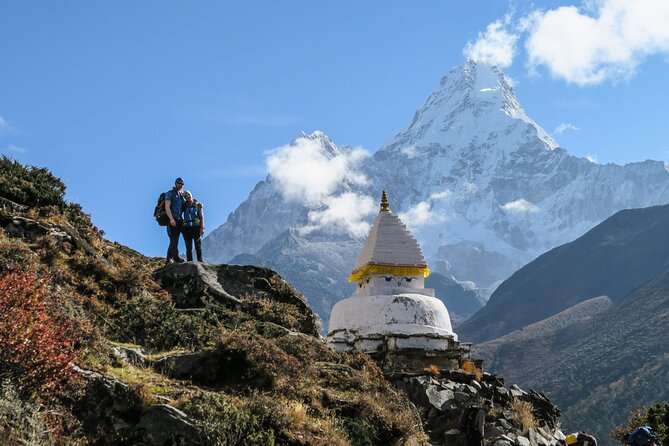
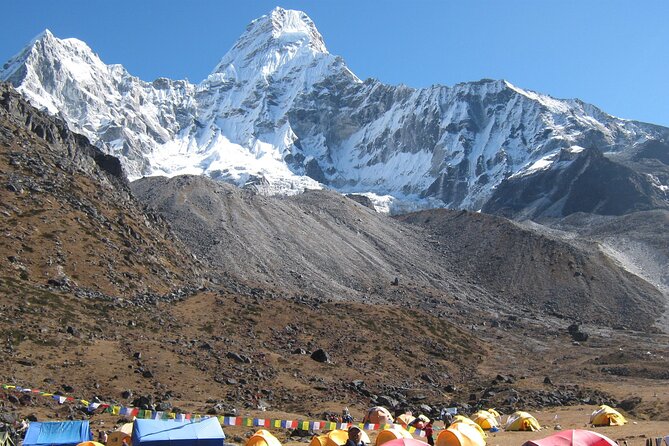
Ama Dablam (6,812m) is one of the most iconic peaks in Nepal for good reason. The name Mother’s necklace connects to the mountain’s look: long ridges on each side like a mother’s arms, and a hanging glacier suggested as the necklace. In Sherpa tradition, that double-pendant carries images of gods and is worn by Sherpa women—so even before you climb, you’re climbing something with cultural meaning.
Island Peak (6,189m, Imja Tse / Imja Tse valley) has its own pull. It’s known as Imja Tse Himal, and because it appears like an island rising above the valley, early mountaineers kept the name Island Peak. Expect dramatic views here, but also expect that the day-to-day work is the real test.
Kathmandu kickoff: transfers, prep, and breathing room
You start in Kathmandu with an arrival transfer to your hotel. Then you spend time preparing—packing checks, expedition logistics, and getting your body ready for the altitude shift that comes next. There’s also a briefing session held at the department of tourism hotel, which is useful if you want clarity early rather than scrambling later.
Another practical plus is that this keeps some meals out of the total day math. Your Kathmandu stay includes accommodation with breakfast, while lunch and dinner in Kathmandu are not included—so you can choose places that fit your appetite and schedule without feeling forced into a set menu.
If you’re the type who likes your first day calm, this setup helps. You’re not immediately tossed into a long travel day with no prep time.
Lukla to Phakding and onward to Namche Bazaar (first altitude steps)
The expedition transitions quickly: you fly to Lukla and trek to Phakding and then keep climbing to Namche Bazaar (3,440m). This is where your altitude story begins in earnest, and where trekking pace matters more than speed.
Phakding is a practical warm-up zone. It’s your first chance to feel how your legs behave under a loaded daypack and how quickly you get out of breath. The key is to keep your efforts smooth and controlled.
Then comes Namche Bazaar (3,440m), a classic Khumbu stop. Your stay there includes lodging, and you also get an acclimatization/day-hike style moment afterward. Even if you feel good, this pause is not wasted time. At these heights, the goal isn’t to conquer your fitness; it’s to help your body learn how to function with less oxygen.
One note: this trip flies into and out of Lukla, so it’s built around Nepal’s mountain aviation reality. You’ll want a flexible mindset if weather changes the schedule.
Thyanboche and Dingboche: the quiet work before the technical climb
After Namche, you trek to Thyanboche (3,800m) and then onward to Dingboche. These higher steps are part of the acclimatization system, not just scenic padding. In the mountains, padding becomes expensive. Here, it’s used on purpose.
You’ll have lodge stays along the way, and each move is usually short enough to keep you in the rhythm your body prefers. That matters because the expedition later includes camp time near technical climbing zones and summit days for both peaks.
A day-hike/acclimatization day at the lodge earlier in the plan sets you up for this section. Think of it as learning how to recover: move, stop, hydrate, sleep, repeat. That’s what keeps later summit pushes safer and steadier.




Island Peak base camp at 4,970m: switching from trekking energy to climbing energy
Eventually you reach Island Peak base camp at 4,970m, then you move into the climb flow. On paper, it looks like a “few days” between base camp and summit day, but in reality this is where your habits get tested.
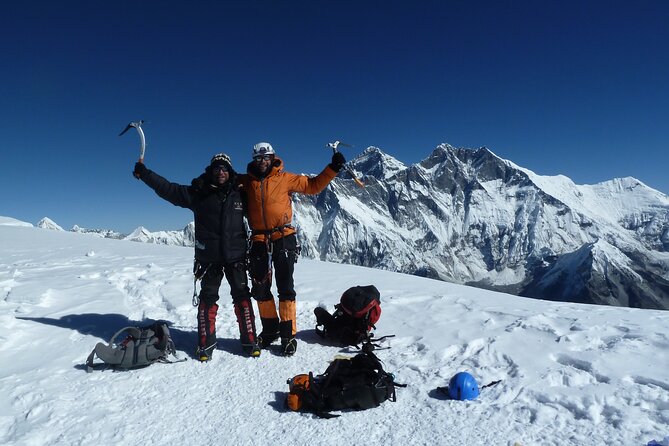
You’ll camp higher at around 5,600m (Island high camp), then push to the summit of Island Peak (6,189m) and finish the day down toward Chukkung and back into lodge time. That summit day rhythm is typical of technical peaks: start early, climb efficiently, descend before fatigue takes control.
Here’s the practical angle you’ll care about: after your Island summit day, you’re not done. The plan then shifts you toward Ama Dablam base camp at 4,600m, meaning you’ll need to recover without letting your mind loosen too much. Your lungs might feel better after descending, but the overall expedition is still climbing uphill—mentally and physically.
Ama Dablam base camp at 4,600m: where comfort matters
When you reach Ama Dablam base camp at 4,600m, the expedition changes tone. This is no longer a quick “try-hard” window. It’s an extended climb, and you’ll spend a long time living out of camp systems.
This is where the included base-camp infrastructure shows its real value:
- Dining tent with table and chair
- Toilet tent
- Shower tent
- Mattresses
- A solar panel for charging batteries and lighting
The reviews associated with this style of setup highlight exactly this kind of everyday comfort: spacious tents, shower facilities, reliable charging, and food that keeps morale up. On a long expedition, that stuff matters more than people expect. Hunger and discomfort are the sneaky problems that can derail summit plans.
Even though you’re aiming for technical climbing, base camp is where you’ll win or lose the expedition’s emotional battle: sleep quality, food timing, and getting through weather waiting time without your mood crashing.
The long Ama Dablam summit window (days 13 through 26)
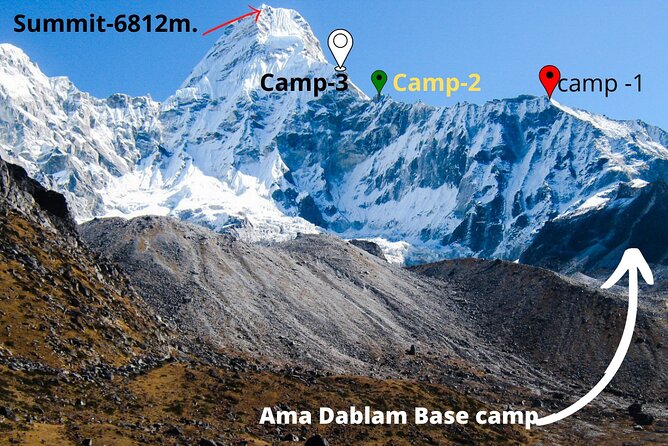
From the Ama Dablam base camp section, the plan places you in a long climb block. The climb segment is described as 13 days for Ama Dablam, running through roughly the middle of the expedition window (days 13 to 26 in the schedule). That’s a big deal. High-altitude peaks don’t always work on your calendar.
A longer summit attempt period is often better than a short, aggressive “one-day chance.” It gives room for weather, fatigue management, and changing conditions. Still, it also means more camp life—more time in cold temperatures, more time eating simple meals, and more time waiting for the mountain to behave.
What you’ll want to manage during this period:
- Pace and recovery between attempts
- Hydration habits when it feels annoying
- Keeping your gear organized and ready
- Mental focus on the next step rather than the entire summit objective at once
Also, remember that the expedition package includes permits and camp support, but it does not list climbing rope and fixed ropes as included. For a long technical climb, that’s something to confirm early with your operator so you’re not stuck late in the process.
Base-camp services with Monterosa: food, tents, and the small helps
The strongest praise tied to this expedition style focuses on how base camp is run. You’re not just paying for permits and a trek leader. You’re paying for the daily systems that keep you functioning at altitude.
From the provided feedback, the standout themes are consistent:
- Food at camp is described as tasty and plentiful
- Tents feel comfortable and spacious
- There’s attention to details like shower facilities and charging electronics
I also like that this tour includes solar power for batteries and lighting. In base camp, that’s a practical upgrade. Your phone might not be life-critical, but charging helps you keep maps, photos, and communication ready when needed.
And with a liaison officer in the mix, you get someone focused on coordination. That reduces small friction when logistics shift due to mountain conditions.
Price and value: what $4,500 per person really covers
At $4,500.00 per person for a 30-day expedition, you’re paying for a serious package of mountain infrastructure, not just guiding. The included items cover several high-cost categories that you’d otherwise have to arrange yourself:
- Permits for Island Peak and Ama Dablam
- Expedition camp systems (dining tent, toilet tent, shower tent, mattresses, basic camp furniture)
- Solar panel for lighting and charging
- 3 meals during trek and climbing
- Kathmandu accommodation (breakfast included) plus airport transfers (arrival and departure)
- Insurance for Nepali staff and expedition support staff coordination
Where value gets tricky is what’s not included. Since helicopter evacuation and medical charges aren’t included, the real cost of risk management shifts to you. And since rope/fixed ropes aren’t included, you may need to budget for technical gear depending on what you bring and what the company plans to supply.
Still, when a team handles food, camp setup, and permit paperwork well, it reduces the number of decisions you have to make at altitude. That matters when your brain is running low on oxygen.
What’s not included: the planning items you shouldn’t ignore
Here’s the stuff you need to handle outside the base package:
- Personal equipment for climbing
- Lunch and dinner in Kathmandu
- Rescue evacuation by helicopter
- Climbing rope and fixed ropes
- Bar bills and beverage in the expedition
- Any evacuation and medical charges
- Extra porter costs for carry bags
This doesn’t mean the trip isn’t well supported—it means your budgeting and gear checklist needs to be sharp.
My practical advice: treat rope/fixed ropes as a must-confirm item before you lock in travel. Technical peaks live or die by safety systems, and you don’t want any ambiguity after you’re already in Nepal.
Also consider how much extra porter cost could apply if your gear is heavier than expected. This expedition is long, and expedition packing creep is real.
Group size, fitness, and who should choose this expedition
This trip caps at 15 travelers, which usually keeps logistics manageable. A smaller group also means you’re less likely to feel swallowed by crowd pacing.
The stated requirement is strong physical fitness. With two major climbs and a long climb block on Ama Dablam, you should treat this as an expedition that expects endurance, not just ambition.
This fits best if:
- you’re comfortable with high-altitude trekking for multiple days
- you have mountaineering experience or the willingness to train seriously before departure
- you want an organized setup where camp comfort is not an afterthought
It may not fit if you’re chasing a quick summit story, or if you’re not prepared for uncertainty during a longer Ama Dablam attempt period.
Should you book this 30-day Ama Dablam + Island Peak combo?
If you want one organized expedition that covers permits, camp systems, base-camp comfort, and the altitude pacing needed for two peaks, this is a strong option. The repeated praise for camp food, showers, spacious tents, and charging makes it feel built for the long haul.
But book it only if you’re ready for the parts that aren’t included: rope/fixed ropes, your personal climbing gear, and the fact that helicopter evacuation isn’t covered in the package. If you plan your safety and gear early, the rest becomes a focused mountain journey—less guesswork, more climbing time.
FAQ
FAQ
How much does the Ama Dablam and Island Peak expedition cost?
The price is $4,500.00 per person.
How long is the expedition?
The duration is 30 days (approx.).
Where does the expedition start?
The meeting point is Tribhuvan Airport, Kathmandu, Nepal.
Is airport pickup included in the price?
Yes. Airport to hotel and hotel to airport transfers in Kathmandu are included.
What climbing permits are included?
Climbing permits for Island Peak and Ama Dablam are included.
What camp comfort and facilities are included?
Included items list mattresses, a dining tent, a toilet tent, a table and chair, a shower tent, and a solar panel for batteries charging and lighting in base camp.
Are meals included during trekking and climbing?
Yes. Three meals are included during the trek and climbing.
Are climbing rope and fixed ropes included?
No. Climbing rope and fixed ropes are not included.
What is the cancellation policy?
Cancellation is free, and you can cancel up to 24 hours in advance for a full refund.
Is helicopter rescue evacuation included?
No. Rescue evacuation by helicopter is not included, and any evacuation and medical charges are not included.
More Tour Reviews in Kathmandu






Just Reviewed in Kathmandu
- Mountain Bike Tour
★ 5.0 · 3 reviews - Annapurna Panaroma
★ 5.0 · 3 reviews - Mount Everest Scenic Flight 50 Minutes
★ 5.0 · 3 reviews - Kathmandu : Swambhunath & Durbar Square Guided Half Day Tour
★ 3.3 · 3 reviews - Chandragiri Cable Car & Monkey Temple Tour – Private/Group
★ 5.0 · 3 reviews - Kathmandu: Shivapuri National Park Hiking Day Trip
★ 3.3 · 3 reviews
Gokyo Lakes & Everest High Passes, compared.
 ★ 5.0Gokyo to Everest Base Camp TrekFrom $2,200113 reviews
 ★ 5.0Everest Base Camp – Cho La Pass – Gokyo TrekFrom $1,39465 reviews
 ★ 5.012 Days Everest Base Camp Kala Patthar TrekFrom $1,79961 reviews
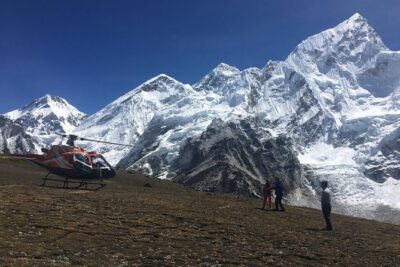 ★ 5.0Guaranteed Landing at Everest Base Camp Kalapathar by HelicopterFrom $3,50038 reviews
 ★ 5.0Everest Gokyo Valley Trek – 12 daysFrom $1,39927 reviews
 ★ 4.214-Day Everest Base Camp with Kala Patthar TrekFrom $1,29621 reviews
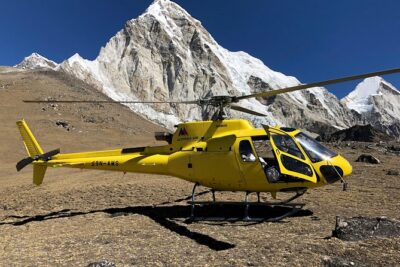 ★ 5.0Landing Private Helicopter at Everest base camp & Gokyo for photoFrom $4,39920 reviews
 ★ 5.0Gokyo Valley TrekFrom $1,51419 reviews
Browse the lists this tour appears in