
Review · GOKYO LAKES & EVEREST HIGH PASSES
Everest Gokyo Valley Trek – 12 days
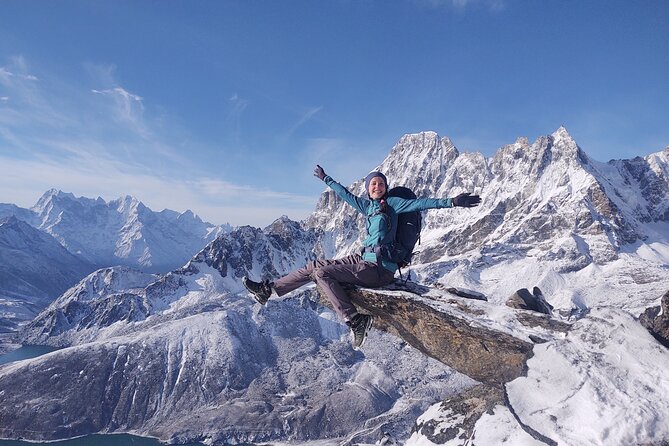
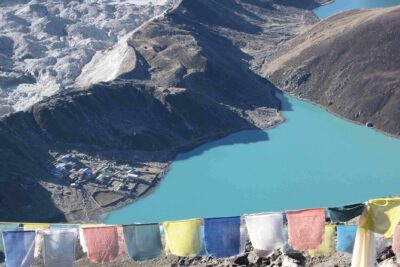
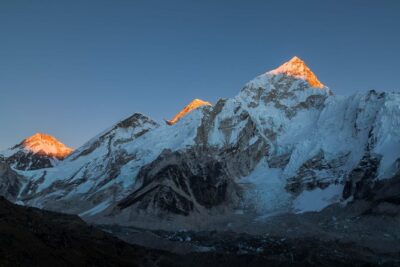
This trek earns its bragging rights fast. You’re hiking into the Everest region for Gokyo Ri sunrise and the emerald lakes with the Ngozumpa glacier backdrop, with Cho Oyu and even Everest showing up in big, dramatic ways. You’ll also get a sweep of four of the world’s highest mountains from Gokyo Ri, plus a long list of Sherpa life details along the way.
What I like most is how the route mixes high-mountain views with real “everyday trail” moments: suspension bridges on the Dudh Koshi, prayer flags and mani stones, and the feeling of moving through living Sherpa villages. One consideration: the Lukla flight can be weather-stressed, and your days can tighten up if flights shift, so you need a flexible mindset.
If you want a trek that’s scenic, culturally grounded, and organized down to guides, park fees, and porter support, this one fits well—especially if you’re aiming for big Everest-area views without turning it into an ultra-long, multi-pass grind.
In This Review
- Key highlights you’ll actually feel on the trail
- From Kathmandu to Lukla: the short flight that changes everything
- Phakding to Namche Bazaar: suspension bridges and Sagarmartha Park energy
- Namche acclimatization and Everest View Point: use the morning, beat the clouds
- Khumjung Hill and Phortse: Buddhism roots, ridge chortens, and long switchbacks
- Rhododendron climb to the Gokyo Lakes route: kharkas, yaks, and mountain quiet
- Machhermo and Gokyo: the Ngozumpa moraine is the real boss fight
- Gokyo Ri sunrise and the afternoon fifth-lake walk
- The return trek: Dole, Namche, and the Mongla Dada descent rhythm
- Lukla back to Kathmandu: when “scenic flight” is code for luck
- Price and what $1,399 really covers (and why it’s usually good value)
- Who should book this trek (and who should check alternatives)
- Should you book the Everest Gokyo Valley Trek?
- FAQ
- How long is the Everest Gokyo Valley Trek?
- Where does the trek start and end?
- What time does the trek start?
- Are flights to Lukla included?
- Are airport transfers included?
- Is there a guide and porter support included?
- What permits or entry fees are included?
- What accommodation will I have during the trek?
- What meals are included?
- Do I need to bring my own travel insurance?
Key highlights you’ll actually feel on the trail
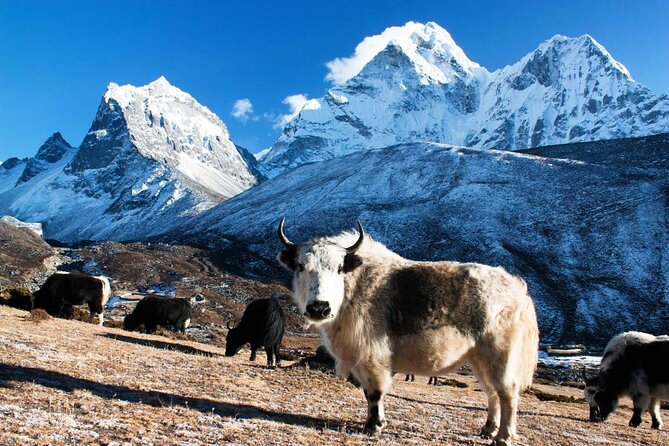
- Gokyo Ri (5,463m) sunrise with views toward Everest and Cho Oyu, plus the glacier-filled valley below
- Ngozumpa glacier terminal moraine stretch that makes you earn your lake views
- Tea house trekking with 1 porter for every 2 people, with porter insurance and equipment covered
- Sherpa culture stops like the Khumjung area and Mohang (Buddhism roots in the Khumbu region)
- Plenty of prayer-flag bridges and mani stone moments on the Dudh Koshi river route
- Guides named in real trip feedback (Sonam & Kiran, FT Sherpa, Dibash, Pasang) known for helpful, calm support
More trails out of Kathmandu, boots ready
- Everest Base Camp Trek – 14 Days★ 5.0 · 1,499 reviews
- Everest Base Camp Trek★ 5.0 · 842 reviews
- Everest Base Camp Trekking★ 5.0 · 485 reviews
- Nagarkot Sunrise View and Day Hiking from Kathmandu★ 5.0 · 471 reviews
From Kathmandu to Lukla: the short flight that changes everything
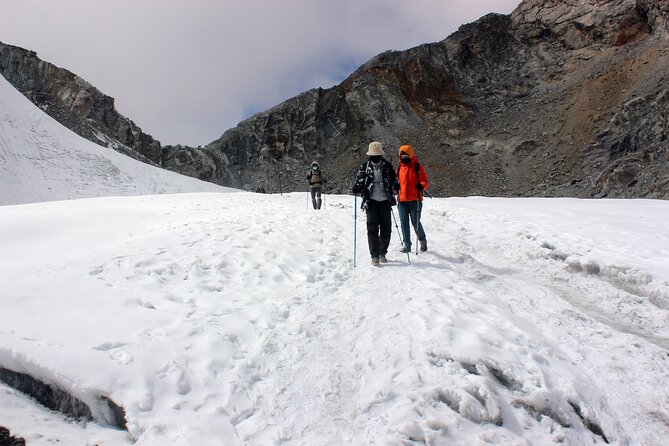
Your day starts early in Kathmandu, with pickup and private-vehicle transfers. Then comes the headliner logistics move: a quick flight to Lukla (it’s about a 35-minute hop). Even when you’ve read about Lukla a hundred times, the reality still hits. The approach gives you that layered look over terraced hills and distant Himalayan giants—then you’re suddenly in trekking mode.
After landing, you start walking right away. The trek to Phakding takes around three hours and follows the Dudh Koshi River. Expect rolling up-and-down sections rather than a brutal wall. This is a good warm-up day because you’re not dealing with extreme altitude yet, but you’re already collecting those classic “Everest region” visual beats: prayer flags, stone markers, and river crossings.
What you’ll appreciate here: you’re not spending days figuring out how to get to the trekking start. The flight is included, along with the departure tax, so you can focus on pacing and acclimatization from day one.
Phakding to Namche Bazaar: suspension bridges and Sagarmartha Park energy
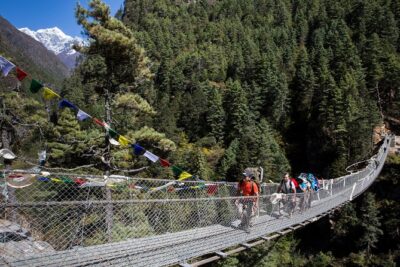
Day two is where the trek starts feeling more serious in the best way. You follow the Dudh Koshi banks and cross the river repeatedly on suspension bridges, often decorated with prayer flags. These crossings can feel like mini-adventures—especially when wind adds a bit of bounce to the bridge.
As you go, you enter Sagarmartha National Park. Then the trail climbs more strongly toward Namche Bazaar, often described as the gateway to the Everest region. The day is about six hours of trekking, with a steep climb from the Larja Dobhan area. Tea house overnight in Namche keeps things practical: warm meals, hot drinks when available, and a place to rest before altitude work ramps up.
Value tip: Namche is where you’ll feel the “trail systems” come together—shops, lodges, and the bustle of people preparing for big routes. Even if you’re not shopping, it’s the place where your trek starts to feel real.
Namche acclimatization and Everest View Point: use the morning, beat the clouds
Day three is a rest and acclimatization day, but it isn’t a sit-around waste. Namche has enough going on to keep you comfortable, including plenty of shops and food options. The key move is an early hike above town—timed so you catch sunrise before clouds roll in.
When it works, the views can be jaw-dropping: Everest and Lhotse in the same sweep, plus Ama Dablam and other towering peaks. This is also a great day to do something cultural without stealing trekking energy—like visiting the Sherpa Museum. It includes exhibits on Sherpa lifestyle and photography by a Nepalese naturalist, which helps explain what you’re seeing while you walk.
You’ll sleep again in a tea house. The altitude is already reminding you: take it easy, hydrate, and don’t “win” the day by moving faster than your body wants.
Khumjung Hill and Phortse: Buddhism roots, ridge chortens, and long switchbacks
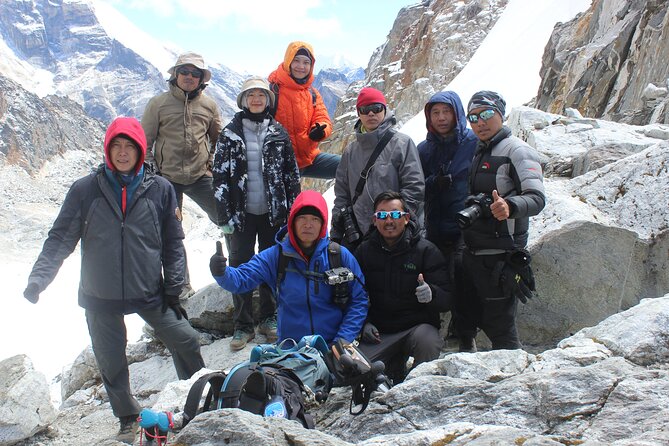
On day four, the trail turns more scenic and a bit more demanding. You climb Khumjung hill and descend toward the east of the village, then the route turns north. You’ll pass a chorten on a ridge top at about 3,973m, then descend further on steep switchbacks through sandy slopes toward the Dudh Koshi.
This is also one of the more meaningful cultural days. You visit Mohang, described as the birthplace of the re-incarnate Lama of Rongbuk monastery of Tibet, and it’s tied to the introduction of Buddhism in the Khumbu region. Even if you don’t read every plaque, having a guide explain the significance makes the walk feel connected instead of random.
Why this day matters: it’s not only about getting altitude done. It’s where the trek starts feeling like a route through history—still rugged, still high, but with a clearer sense of place.
Rhododendron climb to the Gokyo Lakes route: kharkas, yaks, and mountain quiet
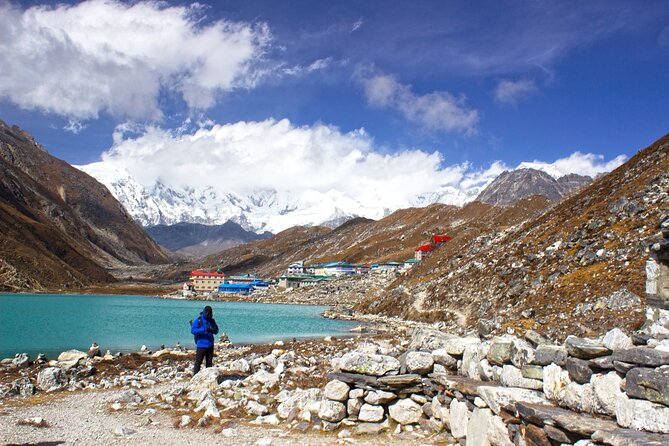
By day five, you’re leaving the lower Everest-region “hub feel” and stepping toward the Gokyo side. The climb out of the valley is steep at times, and you move through rhododendron forests. Higher up, the vegetation changes, and the air starts to feel thinner for your lungs.
You’ll pass through summer settlements—kharkas—used by Sherpas when herds of yaks graze. The route includes places like Tongba (around 3,950m) and Gyele (around 3,960m). These stops aren’t just pinpoints. They show how the region works seasonally and why people are here even when modern roads aren’t.
At the end of the day, you’ll settle into a tea house overnight, continuing your progression toward the emerald-lake zone.
Practical note: this is a good moment to manage your layers. Cool shade plus altitude can trick you. I prefer a system I can adjust fast—base layer, mid layer, and a wind layer—so I’m not stuck sweaty or freezing.
Machhermo and Gokyo: the Ngozumpa moraine is the real boss fight
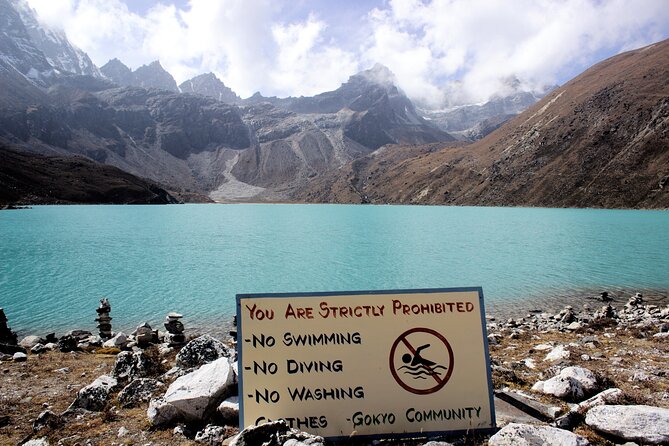
Day six brings a shorter trek to Machhermo (about 4,410m), often timed around lunch. The route climbs steadily along the side of the valley. Rhododendron transitions into scrub juniper as altitude increases, and you’ll pass more summer grazing settlements. Views start to sharpen: you get excellent looks at Cho Oyu, while the trail also frames Kantega and Thamsherku.
Day seven is the day that earns the “this is why we came” feelings. Beyond Machhermo, you climb a ridge for a strong view down the valley and up toward Cho Oyu. Then the valley widens as you pass Pangram (around 4,390m). The route descends toward a river bank before tackling the climb to the terminal moraine of the Ngozumpa glacier.
Here’s the part to know in advance: it’s a steep climb on the moraine. It’s not technical like climbing gear, but it’s relentless—boulder-strewn and slow going. Afterward, the trail levels and follows the valley past a second lake called Longponga (around 4,690m). You may see notes or markings like Lama footprints. Then it’s up again on a boulder-strewn path to Gokyo (around 4,750m), sitting near the edge of the third lake.
Why I love this stretch: it’s where the trek becomes “whole picture.” You’re not just looking at peaks; you’re walking through the physical logic of glaciers, valleys, and lakes.
Gokyo Ri sunrise and the afternoon fifth-lake walk
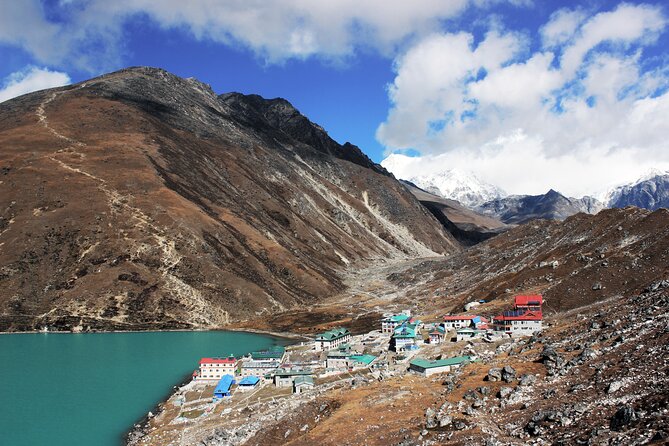
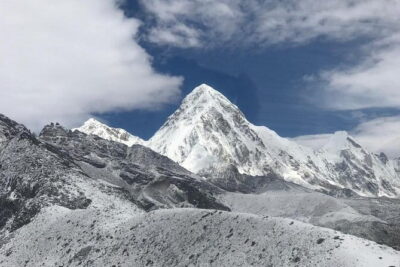
Day eight is built around early morning effort: a guide takes you to Gokyo Ri (about 5,463m) for sunrise. This is the moment for the biggest photo sweep—views toward Everest and Cho Oyu, lake views in the valley, and mention of the Na-Jumpa glacier as part of the panorama from up there.
Then you return for breakfast, and later in the day you get a chance to explore up to the fifth lake. That afternoon hike helps you see the lakes from a different angle than the sunrise viewpoint—often the light is softer later, and the terrain feels less intense after you’ve already done the hard part.
Tea house overnight in Gokyo keeps the loop comfortable: you’re not searching for transport or waiting on permits to move. You just hike and recover.
The return trek: Dole, Namche, and the Mongla Dada descent rhythm
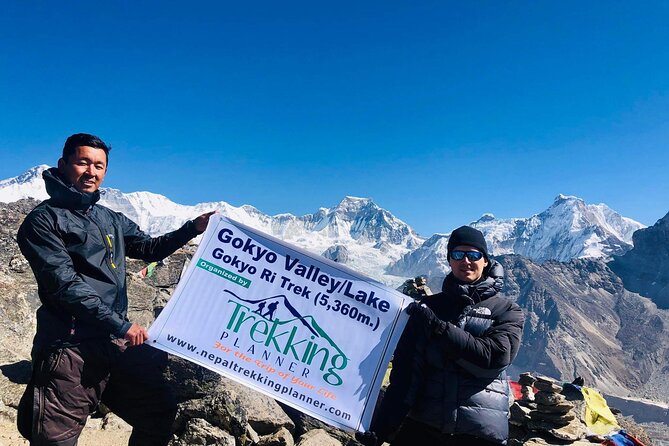
Day nine is a retrace day—back from Gokyo to Dole via Machhermo. That typically means more gentle, familiar footing compared with the moraine push. You get to keep moving without constantly facing the hardest climbing moments.
Day ten adds a longer day feel. You start on the same trail back, with a big descent to Phortse Tanga, then an ascent to Mongla Dada. After that, it’s a slow down all the way to Namche Bazaar. By now, your body knows altitude patterns, but your legs can still feel the effects—especially if you’re tired from the earlier steps and you’ve accumulated foot soreness.
Day eleven is trekking back to Lukla with some up-and-down sections. It’s a classic “end of trek” day: you’re tired, but the finish line starts to feel close. Tea house overnight in Lukla gives you a buffer before flight time.
Lukla back to Kathmandu: when “scenic flight” is code for luck
Day twelve wraps with a short but scenic flight back to Kathmandu. On arrival, you’re picked up and transferred to your hotel by the airport representative.
One honest point: with Lukla flights, weather can affect timing. That’s not unusual in this region, and you’ll be glad your trip is run with flexibility. In real-world trip feedback, operators and guides have handled diverted flights calmly—getting people onto the next available option—so the trek didn’t collapse into chaos.
This is where having a supportive guide matters. The difference between stressed and steady often shows up in small moments: how you pace, how you handle cold or minor aches, and whether your plan stays coherent when conditions change.
Price and what $1,399 really covers (and why it’s usually good value)
At $1,399 per person, the main question is whether you’re paying for logistics you’d otherwise struggle with. Here’s what’s included that tends to make this price feel fair for most people:
- Flights Kathmandu–Lukla–Kathmandu, plus airport departure tax
- Private airport pickup/drop in Kathmandu
- National park fee and TIMS card
- An English-speaking guide, with salary, food, accommodation, and insurance covered
- Porter support: 2 guests = 1 porter, and the porter has salary, insurance, food, accommodation, and equipment included
- Twin/double sharing tea house accommodation on the trek
- Breakfast included for 11 days
What’s not included matters too. You’ll still need to budget for:
- Your international air fare and Nepal visa fees
- Meals in Kathmandu and lunch/dinner during the trek
- Personal travel/health insurance, including coverage for helicopter evacuation
- Tips for the trekking crews and driver
My take on value: the “hidden” costs on Himalayan treks are often the logistical ones—getting to Lukla, covering park fees/TIMS, hiring a guide/porter with real responsibility, and making sure the porter ratio is handled. Since those are included here, the $1,399 price mostly buys you fewer headaches and steadier day-to-day decisions. You’re still paying for your own lunch and dinner, but that’s common on tea house routes.
Who should book this trek (and who should check alternatives)
This one suits you if you:
- Want major Everest-region views without turning your trip into a long expedition
- Are interested in Gokyo Lakes + Gokyo Ri as the core highlight
- Prefer a trek with organized support—guide, porter, permits, and flights handled—so you can focus on hiking and acclimatization
- Have moderate physical fitness and you’re comfortable with day-to-day walking at altitude
You might want to compare options if you:
- Are only interested in walking to Everest Base Camp specifically (this experience, as described, centers on Gokyo valley viewpoints rather than that endpoint)
- Hate the idea that Lukla weather could shift flight timing
Should you book the Everest Gokyo Valley Trek?
If you want turquoise lakes, the drama of Cho Oyu and Everest views, and a sunrise moment from Gokyo Ri that feels like the payoff to every uphill step, I’d seriously consider booking. The trek is also practical: flights, park/TIMS, guide and porter support, and tea house accommodation are handled in a way that keeps you from juggling logistics at altitude.
Just go in with two expectations: you’ll work hard at altitude, and you should stay flexible about Lukla flights. If that sounds like your kind of adventure, this trek has the right mix of mountains, culture, and real trail life to make it memorable for years.
FAQ
How long is the Everest Gokyo Valley Trek?
It runs for about 12 days.
Where does the trek start and end?
It starts at Tribhuvan Airport in Kathmandu, Nepal, and ends back at the same meeting point.
What time does the trek start?
Start time is 6:15 am.
Are flights to Lukla included?
Yes. Kathmandu to Lukla and back to Kathmandu flights are included, including airport departure tax.
Are airport transfers included?
Yes. There are airport pickups and drop-offs by private vehicle.
Is there a guide and porter support included?
Yes. A highly experienced English-speaking guide is included. Porter support is included with a ratio of 2 guests to 1 porter, and the porter’s insurance, salary, food, accommodation, and equipment are covered.
What permits or entry fees are included?
National park entrance fees and the TIMS card (Trekkers’ Information Management System) are included.
What accommodation will I have during the trek?
Twin/double sharing accommodation in the mountains is included during the trekking days.
What meals are included?
Breakfast is included for 11 days. Lunch and dinner during the trekking are not included, and meals in Kathmandu are also not included.
Do I need to bring my own travel insurance?
Yes. Personal travel and health insurance, including insurance for helicopter evacuation, is not included.
More Trekking Out of Kathmandu
More Tour Reviews in Kathmandu
Just Reviewed in Kathmandu
- Mountain Bike Tour
★ 5.0 · 3 reviews - Annapurna Panaroma
★ 5.0 · 3 reviews - Mount Everest Scenic Flight 50 Minutes
★ 5.0 · 3 reviews - Kathmandu : Swambhunath & Durbar Square Guided Half Day Tour
★ 3.3 · 3 reviews - Chandragiri Cable Car & Monkey Temple Tour – Private/Group
★ 5.0 · 3 reviews - Kathmandu: Shivapuri National Park Hiking Day Trip
★ 3.3 · 3 reviews
Gokyo Lakes & Everest High Passes, compared.
 ★ 5.0Gokyo to Everest Base Camp TrekFrom $2,200113 reviews
 ★ 5.0Everest Base Camp – Cho La Pass – Gokyo TrekFrom $1,39465 reviews
 ★ 5.012 Days Everest Base Camp Kala Patthar TrekFrom $1,79961 reviews
 ★ 5.0Guaranteed Landing at Everest Base Camp Kalapathar by HelicopterFrom $3,50038 reviews
 ★ 4.214-Day Everest Base Camp with Kala Patthar TrekFrom $1,29621 reviews
 ★ 5.0Landing Private Helicopter at Everest base camp & Gokyo for photoFrom $4,39920 reviews
 ★ 5.0Gokyo Valley TrekFrom $1,51419 reviews
 ★ 5.0Everest Base Camp Kalapathar Trek 14 DaysFrom $1,99017 reviews
Browse the lists this tour appears in