
Review · POKHARA TOURS & SIGHTSEEING
From Kathmandu/Pokhara: 2, 3, or 4-Day Chitwan Jungle Safari
Chitwan is wilder than you expect. I like that this safari puts you in the right places for real wildlife time inside Chitwan National Park (not just a quick drive-and-out), with chances for Royal Bengal tiger and one-horned rhinos. I also love the evening rhythm: you get a sunset plus an ethnic Tharu cultural program after time in/near the Tharu village, then you sleep either at a hotel in town or in a jungle tower for that proper “out there” feeling.
The main consideration is the natural one: animals move. Your day plan can shift based on weather and animal activity, so you should go with patience, especially on the early mornings and after long travel days from Kathmandu or Pokhara.
In This Review
- Key highlights you’ll actually feel
- Getting to Chitwan: Kathmandu or Pokhara, and why timing matters
- Day-by-day: what you do on 2, 3, and 4 days
- Day 1: arrive, eat, then switch to local culture mode
- Day 2: choose your pace—short return or full safari day
- Day 3: another early start, then optional turnaround
- Day 4 (only on the 4-day option): jeep safari in the unexplored area + jungle tower night
- Final day (Day 4 on the 2- or 3-day options / Day 5 doesn’t exist here): bird watching then return
- Jeep safari strategy: buffer areas vs unexplored sections
- Beyond the jeep: Rapti River canoe ride and jungle walk
- Tharu village tour and sunset cultural program
- Conservation stops that actually teach you something
- Where you sleep: Hotel Rainforest vs the jungle tower
- Hotel Rainforest (or similar) in Chitwan
- Jungle tower inside the forest (best for the 4-day option)
- Price and value: what $35 covers (and what it doesn’t)
- Practical travel tips: what to pack and how to stay comfortable
- Who this tour suits best
- Should you book the Chitwan jungle safari from Kathmandu or Pokhara?
- FAQ
- How long is this Chitwan jungle safari?
- Where does the safari start and end?
- Do I need to take a bus the whole way?
- What animals can I realistically look for?
- What safari activities are included?
- Is there a cultural program?
- What conservation stops are part of the trip?
- Where will I stay overnight?
- What language is the guide?
- What should I bring, and what’s not allowed?
- Is bottled water included?
Key highlights you’ll actually feel
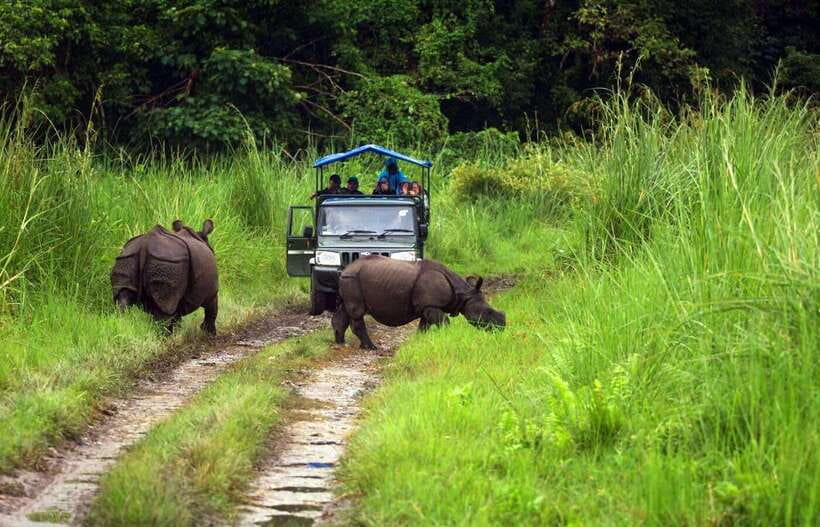
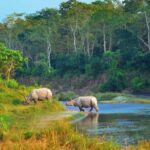
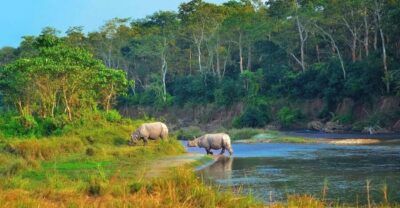
- Big-cat and rhino focus: chances for Royal Bengal tiger and one-horned rhino on jeep safaris in park and buffer/unexplored zones
- Two ways to see wildlife: jeep safari time plus a Rapti River canoe ride and a jungle walk
- Tharu village sunset: a cultural program in the evening after a village tour
- Meaningful conservation stops: Elephant Conservation Center and Gharial Conservation Center
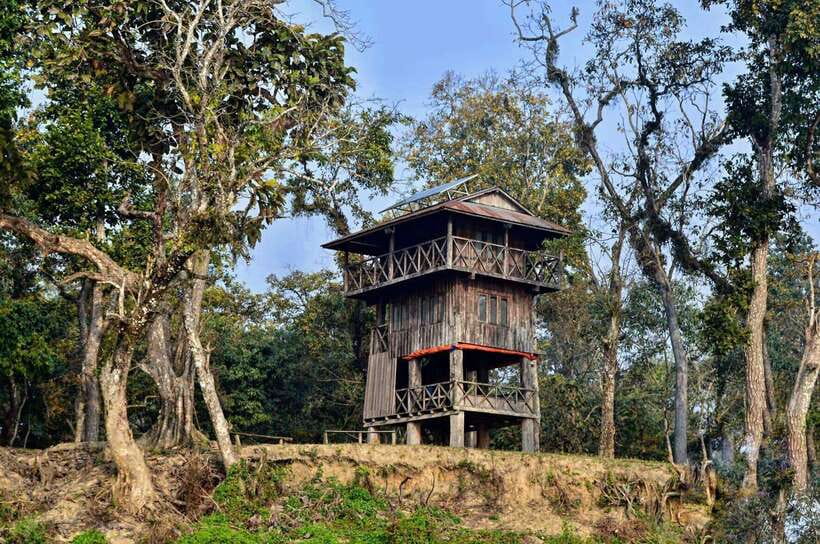
- Real wilderness sleep: option to stay overnight in a jungle tower inside the forest
More time out in the wild
- 3-Day Chitwan National Park Jungle Safari Tour Package with Pick Up★ 5.0 · 184 reviews
- Kathmandu: 3-Day Chitwan Safari Tour with Hotel Transfers★ 4.6 · 127 reviews
- Kathmandu/Pokhara: 3 Day Chitwan Jungle Safari Tour★ 4.7 · 87 reviews
- 2 Days Chitwan Jungle Safari Tour from Pokhara/Kathmandu★ 4.5 · 27 reviews
Getting to Chitwan: Kathmandu or Pokhara, and why timing matters
Most people start this trip by road. From Kathmandu or Pokhara, you’re looking at about a 5–6 hour bus ride to Chitwan for the 3- and 4-day options. That’s a chunk of time, but it also gets you into the park area while the day is still young enough for animal activity.
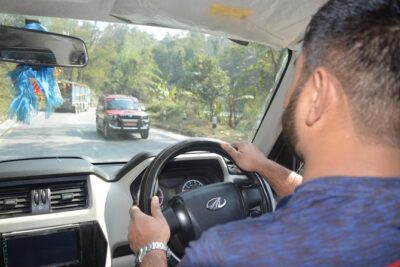
If you choose the 2-day option, you’ll travel by private car instead. The value here is simple: you typically reach the park earlier and can start jungle activities sooner, which matters a lot when your total time is short.
One small but useful detail: hotel pickup and drop-off are included in Kathmandu or Pokhara. Plan to be ready on time—pickup is scheduled, and you’re asked to wait about 5 minutes before the driver arrives.
Day-by-day: what you do on 2, 3, and 4 days
This is a flexible trip length with a shared core: wildlife time, conservation stops, and (usually) Tharu culture + a sunset program. The big difference is how many mornings/afternoons you get in the jungle and whether you sleep in the hotel or in a jungle tower.
Day 1: arrive, eat, then switch to local culture mode
Your first day starts with that road transfer from Kathmandu or Pokhara. Once you arrive, you’ll have lunch, then head out for a tour around the ethnic Tharu village.
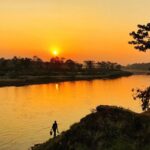
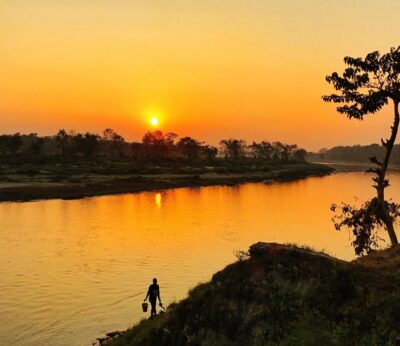
In the evening, you’ll catch a sunset followed by a Tharu cultural program. This is the part that helps the trip feel more human-scale. You’re not just ticking off animals—you’re seeing the culture tied to this region.
Dinner is served later, and you sleep in Chitwan at Hotel Rainforest (or similar).
Day 2: choose your pace—short return or full safari day
If you pick the 2-day option, Day 2 is built for people who want a fast hit of Chitwan. You start with bird watching before breakfast, then you head back to Kathmandu or Pokhara in the morning.
If you pick 3 or 4 days, Day 2 becomes your first major wildlife day:
- You’ll have breakfast at the hotel.
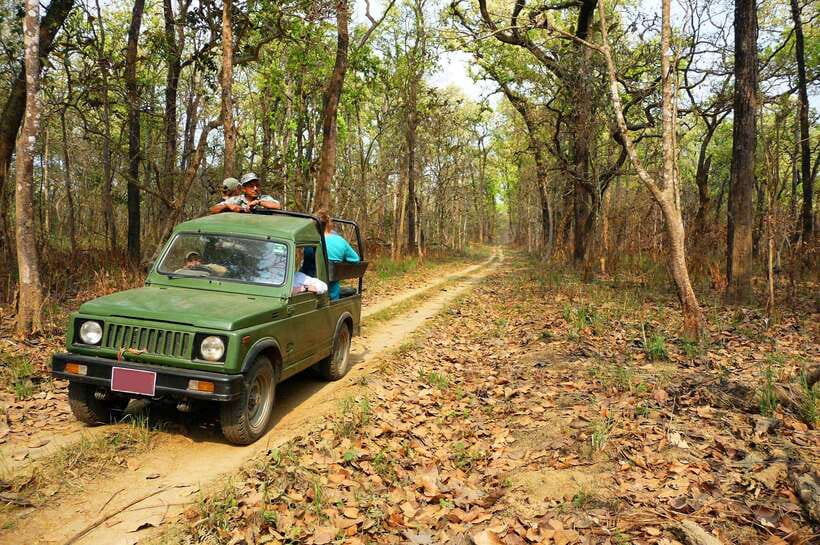
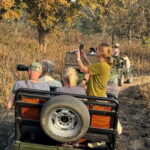
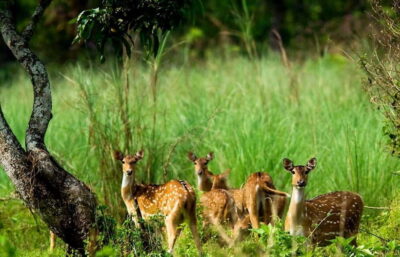
- Then you go out on a jeep ride deep into the buffer area of the forest, with chances for Royal Bengal tiger, wild elephants, and one-horned rhinos.
- You get an afternoon lunch break.
- Later you visit the Elephant Conservation Center and Gharial Conservation Center.
- Back at the hotel for dinner.
Also included in the trip overall (not tied to a specific day in the info you provided): a jungle walk and a canoe ride on the Rapti River. In a good safari, those “in-between” hours are where you feel the place—so I’d treat them as part of the main event.
Before you lock this one in, a few Kathmandu alternatives:
Day 3: another early start, then optional turnaround
For the 3-day option, Day 3 is another early bird day: bird watching before breakfast, then direct return to Kathmandu or Pokhara in the morning.
For the 4-day option, you’re not turning around yet. Day 3 is your lead-in to deeper park time.
Day 4 (only on the 4-day option): jeep safari in the unexplored area + jungle tower night
After breakfast on the 4-day itinerary, you go on a jeep safari inside an unexplored area of Chitwan National Park. The point of phrasing it this way is that it’s not just standard road routes. You’re aiming for more variety in where you spend time tracking wildlife.
Then it’s lunch, followed by driving to a jungle tower inside the forest. You sleep there overnight—so you get that experience of being physically close to the wilderness, not just visiting it for a few hours.
Dinner is served at the jungle tower.
Final day (Day 4 on the 2- or 3-day options / Day 5 doesn’t exist here): bird watching then return
On the final day, you do bird watching before breakfast, then you head back to Kathmandu or Pokhara on a 5–6 hour bus ride.
Jeep safari strategy: buffer areas vs unexplored sections
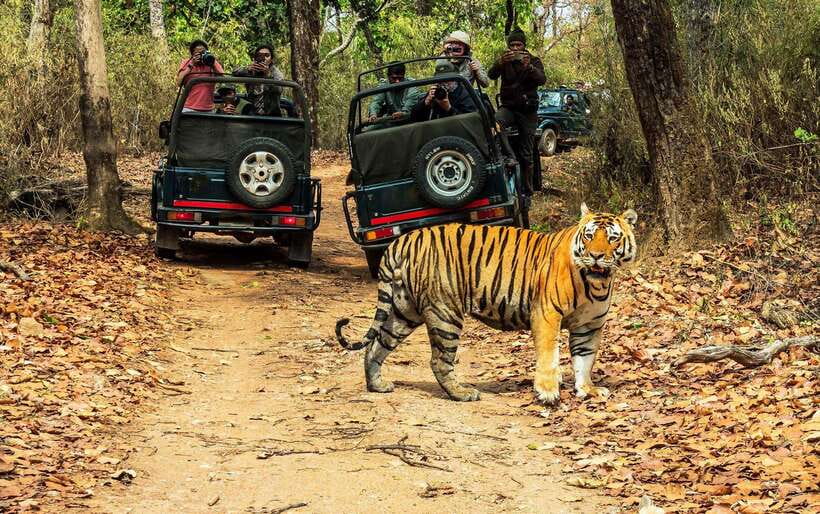
Jeep safaris are the core of this trip. The big detail is the type of terrain and access:
- The earlier jeep day for the longer options focuses on the buffer area.
- The 4-day option adds a jeep safari in an unexplored area of the park.
Why that matters to you: when sightings happen, they happen where animals are moving, feeding, or crossing. More time in different zones gives you more chances to line up with those natural moments.
This isn’t a guarantee machine. But it does mean you’re not stuck doing the same “loop” for every safari hour.
To help your odds, come ready for practical wildlife viewing:
- bring binoculars
- wear comfortable shoes
- use insect repellent
- keep your camera ready at eye level, not buried in a bag
And remember the rule: no littering, and don’t feed animals.
Beyond the jeep: Rapti River canoe ride and jungle walk
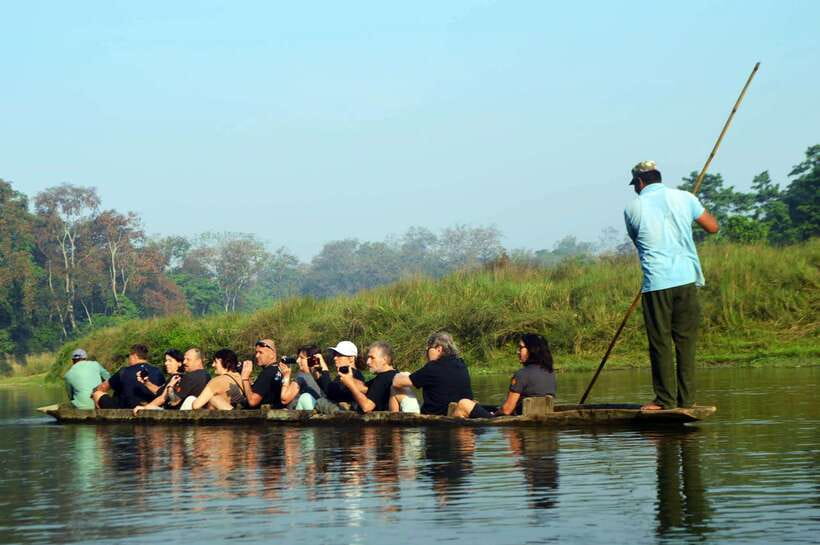
This tour includes more than road-based sightings. You’ll also do:
- a canoe ride on the Rapti River
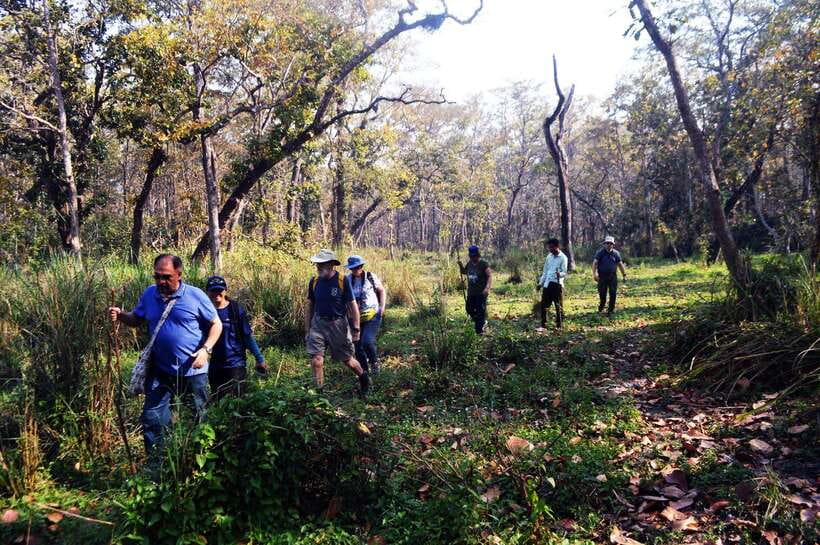
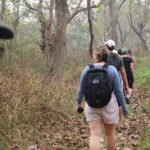
- a jungle walk
Even without getting a minute-by-minute day schedule here, the value is clear. A canoe ride slows your senses down. A jungle walk changes your perspective—you notice tracks, calls, and small movements that you miss when you’re only looking from a jeep window.
It’s also where you can get a break from sitting. The safari days include early starts and a lot of stillness. These included activities help the pace feel more balanced.
Tharu village tour and sunset cultural program
One reason I like this itinerary is that it gives the evening a purpose. After wildlife time, you head to the ethnic Tharu village, then you watch the sunset and attend a Tharu cultural program.
This part works for two kinds of travelers:
- If you care about wildlife, it gives you context for where the animals and habitats sit in relation to local life.
- If you’re more culture-minded, it keeps the trip from being only about big sightings.
Either way, it prevents the days from feeling like a checklist.
Conservation stops that actually teach you something
Two visits are included:
- Elephant Conservation Center
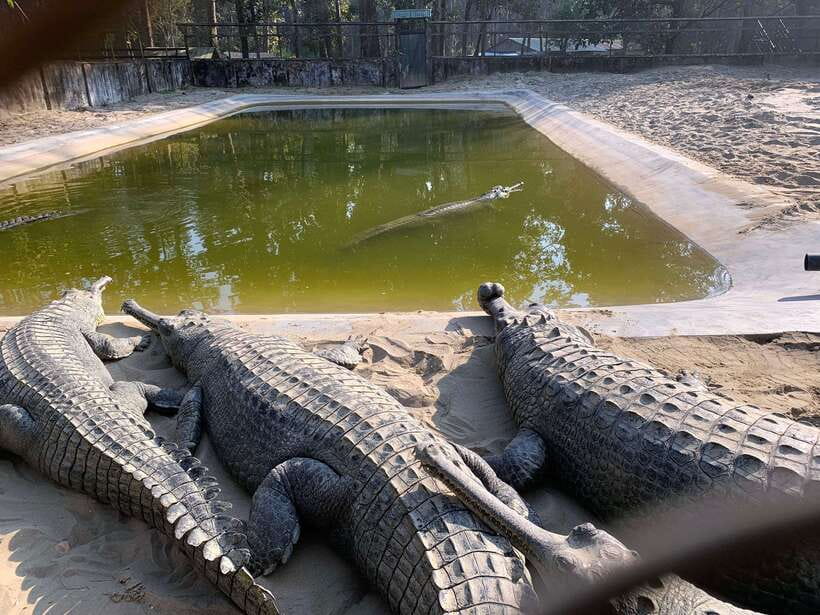
- Gharial Conservation Center
These are not just “look and go” stops in the way some tours treat conservation. Gharial conservation, in particular, matters because gharials are tied to river ecosystems, so it connects wildlife viewing to what’s happening in the water you’ll be near via the Rapti.
If conservation fits your travel style, plan to pay attention. Ask your guide questions during the visits. A good guide helps you understand what you’re seeing and why these animals matter beyond the park boundaries.
Where you sleep: Hotel Rainforest vs the jungle tower
You’ve got two accommodation styles depending on the option:
Hotel Rainforest (or similar) in Chitwan
On the 2- and 3-day options, you’ll stay at Hotel Rainforest (or similar) for the night(s) included. One review notes the hotel has a pool, which is a real quality-of-life perk after long drives and jungle hours.
A hotel night also means fewer logistics for you. You can recharge, freshen up, and regroup before the next early start.
Jungle tower inside the forest (best for the 4-day option)
The 4-day option adds a stay in a jungle tower inside the forest, and that’s the part people remember. One review called the atmosphere majestic.
Why you’ll like it: you’re not just arriving for a few sightings and leaving. You’re experiencing the area after dark, which changes the whole feel of the safari.
If you dislike “rustic,” you might find a tower stay mentally challenging. But if you like the idea of being out where the jungle is the main character, this is the upgrade.
Price and value: what $35 covers (and what it doesn’t)
This tour is listed at $35 per person for the 2–4 day range. That’s a budget number for an experience that includes a surprising amount:
- transport from Kathmandu or Pokhara (bus for 3–4 days, private car for 2 days)
- hotel pickup and drop-off
- nature guide (English and Hindi)
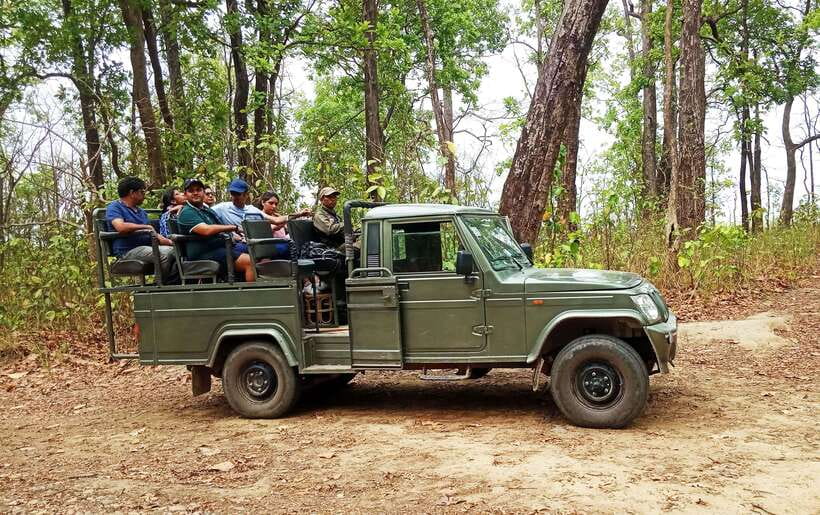
- jeep safari inside the national park
- visits to the Elephant and Gharial conservation centers
- Tharu cultural program
- overnight accommodation (1, 2, or 3 nights depending on your option)
- meals listed per option (breakfasts, lunches, dinners)
- tea and coffee
- plus included safari-adjacent time like canoe ride and jungle walk
Not included: alcoholic and cold beverages, and bottled water. That means you’ll want to budget a little extra for drinks you prefer, and plan to bring water if you run out during breaks.
Also, the info you provided says transport gets top marks, with 100% of reviewers giving perfect scores. For a road trip in Nepal, that’s not a small detail. Smooth transfer time makes the whole safari feel less stressful.
Practical travel tips: what to pack and how to stay comfortable
This trip is active. Pack for heat, insects, sun, and long sitting in vehicles.
Bring:
- comfortable shoes
- hat
- camera
- sunscreen
- water
- insect repellent
- binoculars
And keep it clean and respectful:
- no littering
- don’t feed animals
One more practical note: the itinerary is subject to change due to adverse weather conditions and animal movements. That’s normal in wildlife travel. If you’re the type who hates uncertainty, you might find it stressful. If you can roll with it, it’s part of the bargain.
Who this tour suits best
This is a great fit if you:
- want a wildlife-first trip that still includes culture and conservation
- have limited time and still want multiple safari-style activities (especially on the 3- and 4-day options)
- like the idea of a small group and a guide-led experience (English or Hindi)
It might be less ideal if you:
- expect a guaranteed tiger sighting (no safari can promise that)
- strongly prefer predictable schedules regardless of weather or animal activity
- hate early starts and long transfer days
Should you book the Chitwan jungle safari from Kathmandu or Pokhara?
I’d book it if your priority list looks like this:
- You want jeep safari time in Chitwan with realistic chances for tiger and rhino.
- You care about more than animals, so you’ll value the Tharu village sunset and cultural program.
- You want at least one overnight that matches the wilderness mood—especially if you choose the 4-day option for the jungle tower.
Choose the 2-day option if you’re time-limited and want a fast entry, since you’ll use a private car to start jungle activities earlier. Choose the 3-day option if you want two key wildlife windows plus the conservation stops without committing to the extra night. Choose the 4-day option if you want the fullest wildlife time and the standout overnight.
If you want, tell me which option you’re considering (2, 3, or 4 days) and where you’re starting from (Kathmandu or Pokhara). I can help you pick the best fit for your schedule and comfort level.
FAQ
How long is this Chitwan jungle safari?
The tour runs for 2, 3, or 4 days depending on the option you choose.
Where does the safari start and end?
You can start and end from either Kathmandu or Pokhara, with hotel pickup and drop-off included in those cities.
Do I need to take a bus the whole way?
If you choose the 3- or 4-day option, you’ll use bus transfer from Kathmandu or Pokhara. If you choose the 2-day option, the transfer is by private car.
What animals can I realistically look for?
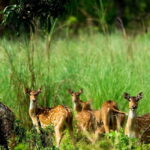
The tour includes chances to spot Royal Bengal tiger and one-horned rhino. It can also include sightings of wild elephants and other wildlife.
What safari activities are included?
Jeep safaris are included, along with a jungle walk and a canoe ride on the Rapti River.
Is there a cultural program?
Yes. You’ll enjoy a Tharu cultural program in the evening, along with a sunset experience and a tour around the ethnic Tharu village.
What conservation stops are part of the trip?
The itinerary includes visits to the Elephant Conservation Center and the Gharial Conservation Center.
Where will I stay overnight?
You’ll stay overnight in a hotel in Chitwan (Hotel Rainforest or similar). If you pick the 4-day option, you’ll also have an overnight in a jungle tower inside the forest.
What language is the guide?
The tour guide provides support in English and Hindi.
What should I bring, and what’s not allowed?
Bring comfortable shoes, a hat, camera, sunscreen, water, insect repellent, and binoculars. Littering and feeding animals are not allowed.
Is bottled water included?
Bottled water is not included. Tea and coffee are included. Alcoholic and cold beverages are also not included.
More 4-Day Experiences in Kathmandu
More Days in the Wild
More Tour Reviews in Kathmandu

Just Reviewed in Kathmandu
- Mountain Bike Tour
★ 5.0 · 3 reviews - Annapurna Panaroma
★ 5.0 · 3 reviews - Mount Everest Scenic Flight 50 Minutes
★ 5.0 · 3 reviews - Kathmandu : Swambhunath & Durbar Square Guided Half Day Tour
★ 3.3 · 3 reviews - Chandragiri Cable Car & Monkey Temple Tour – Private/Group
★ 5.0 · 3 reviews - Kathmandu: Shivapuri National Park Hiking Day Trip
★ 3.3 · 3 reviews
Pokhara Tours & Sightseeing, compared.
 ★ 4.63-Day All-Inclusive Chitwan SafariFrom $149133 reviews
 ★ 4.73 Day Chitwan Jungle Safari TourFrom $12987 reviews
 ★ 5.06 Days Special Kathmandu Pokhara Tour in NepalFrom $1,00028 reviews
 ★ 4.52 Days Chitwan Jungle Safari Tour from Pokhara/KathmanduFrom $11727 reviews
 ★ 5.0Kathmandu to Pokhara drop-off service by private vehiclesFrom $22527 reviews
 ★ 4.0Kathmandu to Pokhara Tourist Bus Tickets reservationFrom $2225 reviews
 ★ 4.0Kathmandu to Pokhara Bus Ticket- SofaFrom $2124 reviews
 ★ 5.08 Days Tour in Nepal – Kathmandu, Chitwan & Pokhara (3 & 4 Star)From $29923 reviews
Browse the lists this tour appears in