
Review · CHITWAN JUNGLE SAFARI
12-Day Nepal Adventure Trek with Jungle Safari
Two weeks, mountains, and jungle in one loop.
This 12-day Nepal adventure stitches together Kathmandu heritage, an Annapurna region intro trek with Poon Hill sunrise views, and a Chitwan jungle wildlife break with Tharu village culture. You’ll also get a full transport circuit by tourist bus, so you’re not constantly figuring out the next move.
I like how the trip balances big sights with real trekking time. Two things I especially appreciate: the pacing on the trek days (mostly 4–7 hours) and the built-in support, including a local guide throughout and a small group size (max 14). Meals and key logistics are also handled for you with most breakfasts, lunches, and dinners included.
One possible drawback to plan for: day-2 entrance fees in Kathmandu (Swayambhunath, Durbar Square, Boudhanath, and Pashupatinath are extra at $25 per person). Also, even though this is labeled moderate, expect some steep effort and stairs during the Annapurna segment.
In This Review
- Key highlights that make this Nepal combo work
- A 12-Day Nepal Loop: Kathmandu to Pokhara to the Mountains, Then Chitwan
- Kathmandu Days 2: Monkey Temple, Durbar Square, Boudhanath, and Pashupatinath
- The Pokhara Drive (Day 3): Scenic River Route and Trek Setup
- Annapurna Trek Days 4–8: From Tikhedhunga to Ghorepani to Ghandruk
- Day 4: Nayapul area to Tikhedhunga (about 6 hours)
- Day 5: Tikhedhunga up toward Ghorepani (about 7 hours)
- Day 6: Toward Poon Hill viewpoints from the Ghorepani area (about 7 hours)
- Day 7: Ghorepani to Ghandruk (about 4 hours)
- Day 8: Last trek day to Syauli Bazaar, then back to Pokhara (about 6 hours)
- Poon Hill Sunrise: The View That Makes This Trek Click
- Chitwan National Park Days 9–10: Tharu Village, Jungle Walking, Safari Time
- Day 9: Drive to Chitwan, check in, and Tharu village tour
- Day 10: Full day jungle activities
- Day 11 and 12: Bird Watching in Chitwan and the Trip Back to Kathmandu
- Price and Logistics: What $950 Buys You, and What Costs Extra
- What’s included
- What costs extra (plan ahead)
- Guides, Pace, and What to Expect Day-to-Day
- Who This Nepal Adventure Trek Is Best For
- Should You Book This One?
- FAQ
- What trekking permits are included?
- Are Kathmandu sightseeing entrance fees included?
- Do I need travel insurance?
- Is a porter included?
- What fitness level should I have?
- Where do we meet and what time does it start?
- How large is the group?
Key highlights that make this Nepal combo work
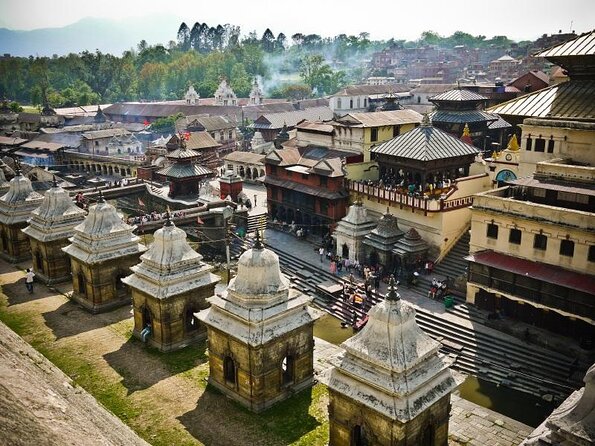
- Kathmandu’s top sites in one guided loop, including Swayambhunath (Monkey Temple), Kathmandu Durbar Square, Boudhanath, and Pashupatinath
- Poon Hill at 3,232m for early mountain-view payoff, with famous peaks like Dhaulagiri and Annapurna on clear mornings
- An Annapurna intro trek with manageable daily hours and a route through villages like Ulleri and Ghandruk
- Chitwan National Park with active jungle time, including jungle walking plus a safari, not just a drive-and-hope plan
- Tharu culture included via a Tharu village tour and a cultural stick dance moment
- Value built into the price with trekking permits (TIMS and route permit), transport between Kathmandu–Pokhara–Chitwan, and most meals included
More trails out of Kathmandu, boots ready
- Everest Base Camp Trek – 14 Days★ 5.0 · 1,499 reviews
- Everest Base Camp Trek★ 5.0 · 842 reviews
- Everest Base Camp Trekking★ 5.0 · 485 reviews
- Nagarkot Sunrise View and Day Hiking from Kathmandu★ 5.0 · 471 reviews
A 12-Day Nepal Loop: Kathmandu to Pokhara to the Mountains, Then Chitwan
This is a classic Nepal sampler that still feels like a real trip, not a rushed “check-the-box” circuit. You’ll start in Kathmandu with guided cultural stops, shift to Pokhara for the trek setup, hike through the Annapurna region, then swap trails for jungle wildlife time in Chitwan.
I like that the schedule follows the natural geography of the country: Kathmandu’s temples first, then Pokhara as your launchpad, then the lower mountain villages, and finally the jungle ecosystem of southern Nepal. It also helps that the transport is planned by tourist bus for the long jumps, so you can focus on resting and hiking instead of navigating.
Kathmandu Days 2: Monkey Temple, Durbar Square, Boudhanath, and Pashupatinath
Kathmandu day is a guided “greatest hits” day with enough time to actually look, not just pose for photos and move on. You’ll cover:
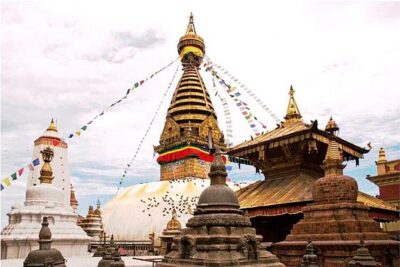
- Swayambhunath (Monkey Temple) for sweeping views over the city
- Kathmandu Durbar Square for the historical royal-square atmosphere
- Boudhanath Stupa for the huge Buddhist stupa complex vibe
- Pashupatinath Temple for one of Nepal’s most important Hindu pilgrimage sites
The big practical detail: entrance tickets are not included for these stops. The tour lists a combined entrance fee of $25 per person for the day-2 sightseeing.
This is also a day where your guide’s rhythm matters. You’ll likely move from one site to the next without much downtime, so if you tend to get tired in crowds, plan on slower walking and a small water break habit. Shoes that handle uneven stone paths are a must.
The Pokhara Drive (Day 3): Scenic River Route and Trek Setup
On day 3, you drive from Kathmandu to Pokhara along the Trisuli and Marsyangdi River corridor. The drive is listed at about 6 hours, and it’s one of those Nepal transitions that feels like it changes your pace: less temple-dense streets, more mountain-air calm.
This day matters because Pokhara is where your mind shifts from city culture to trail focus. You’ll arrive, settle into your hotel, and be ready for the next day’s trek start toward Nayapul and beyond.
Annapurna Trek Days 4–8: From Tikhedhunga to Ghorepani to Ghandruk
The Annapurna part is designed as an intro trek. You’re not trying to conquer a technical pass; you’re working up elevation gradually, passing through villages, and getting mountain scenery without needing advanced climbing skills.
More time out in the wild
Day 4: Nayapul area to Tikhedhunga (about 6 hours)
You’ll drive to Nayapul, then start hiking toward Tikhedhunga (1,577m) via Birethanti (1,065m). The itinerary frames it as a first trail day, so expect steady effort more than long, punishing climbs.
If you’re arriving from the Pokhara drive, treat this day as your warm-up: don’t sprint your way up. Start slow, and you’ll feel better when the stairs and elevation stack up later.
Day 5: Tikhedhunga up toward Ghorepani (about 7 hours)
Day 5 involves a sharper uphill start: the route ascends steeply for the first 2 hours, then turns gentler as you pass Ulleri (2,070m) and Banthanti. The payoff here is the sense that the valley is opening up and the trail is moving you toward the viewpoints around Ghorepani.
This is also a day to pay attention to footing. Village paths can be uneven and crowded with hikers, especially during peak seasons.
Day 6: Toward Poon Hill viewpoints from the Ghorepani area (about 7 hours)
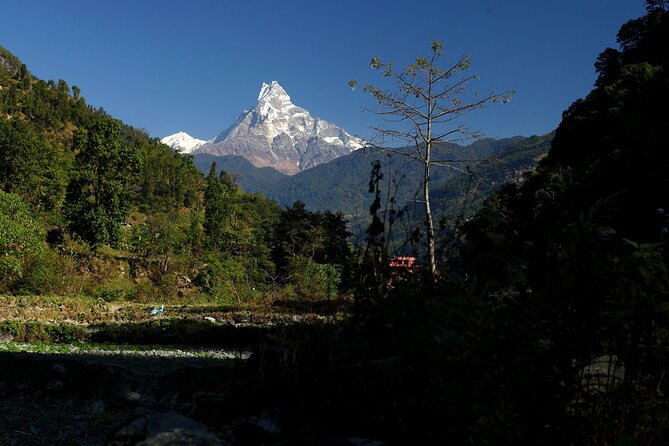
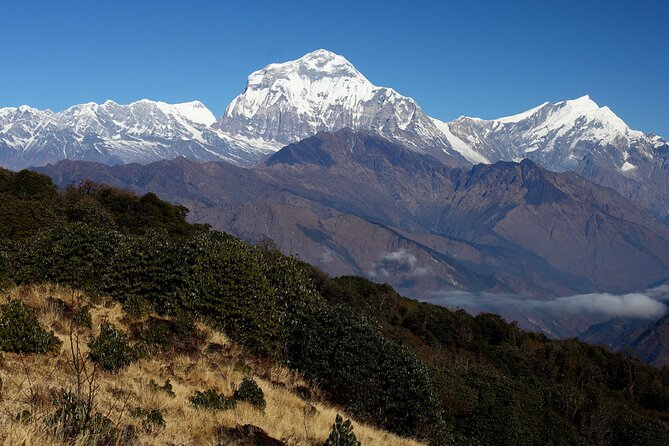
Day 6 is the day you’ll target Poon Hill (3,232m) for sunrise-style mountain views. The itinerary explicitly calls out views over major peaks including Dhaulagiri (8,167m), Tukuche Peak (6,920m), Nilgiri (6,940m), Varaha Shikhar (7,847m), and Annapurna I (8,091m).
Plan for the fact that “sunrise views” means an early wake-up and colder air. Your pack should include a warm layer and something to protect your face and hands.
Day 7: Ghorepani to Ghandruk (about 4 hours)
Day 7 shifts the style: it’s described as easier, with gentle descending through rhododendron, oak, and dense forests, and lots of birdsong along the way. You’ll reach Ghandruk, a village that feels like a classic Annapurna base stop.
This is a good day if you want to keep your legs fresh. Shorter hours here are an intentional recovery tool before your final trekking day.
Day 8: Last trek day to Syauli Bazaar, then back to Pokhara (about 6 hours)
You’ll descend gently through rice fields and local villages to Syauli bazaar, then head to Pokhara. The itinerary calls it the last trekking day and frames it as easy.
That matters because you’re ending with movement that doesn’t beat you up. You’ll have enough energy to enjoy Pokhara on the evening before the jump to Chitwan.
Poon Hill Sunrise: The View That Makes This Trek Click
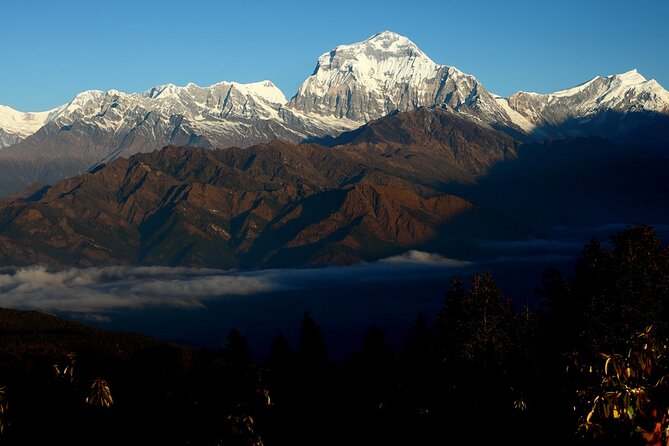
Poon Hill is the headline moment on this route. Even if you’re not a hardcore trekker, the altitude-to-view payoff is what draws most people here: you’re going up to a viewpoint high enough to see big names of the Himalayas on a clear morning.
What I like is that this tour doesn’t treat Poon Hill as a random detour. It’s timed as a main experience, and the itinerary explicitly highlights the mountain targets so you know what you’re looking for when the light finally hits the ridgelines.
A practical tip: if visibility is poor, don’t just assume it’s a wasted day. Clouds can shift, and mountain viewing improves as conditions change. Keep your schedule tight, but stay patient.
Chitwan National Park Days 9–10: Tharu Village, Jungle Walking, Safari Time
After the trek, you switch ecosystems fast. Chitwan is humid, lively, and very different from the Annapurna trail world.
Day 9: Drive to Chitwan, check in, and Tharu village tour
You’ll drive to Chitwan (about 6 hours), check into your jungle lodge, then take part in a wildlife Tharu village tour. This is useful because it gives context: you’re not just watching animals in isolation; you’re seeing how local communities relate to the jungle.
Day 10: Full day jungle activities
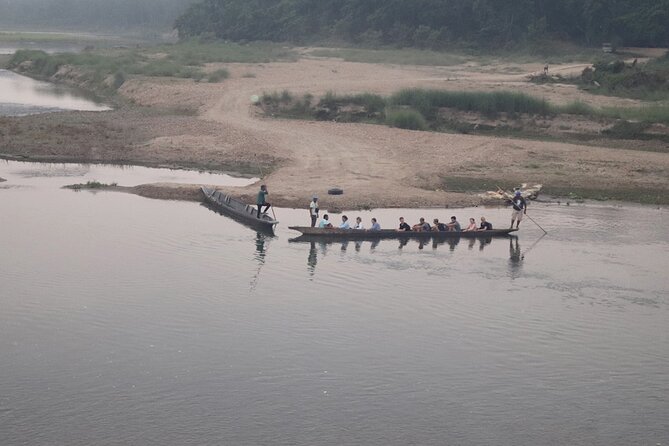
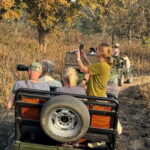
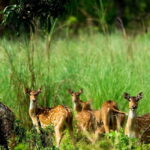
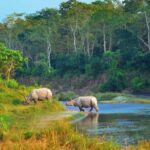
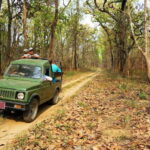
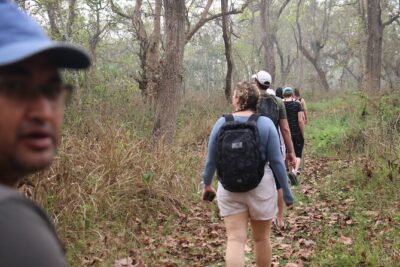
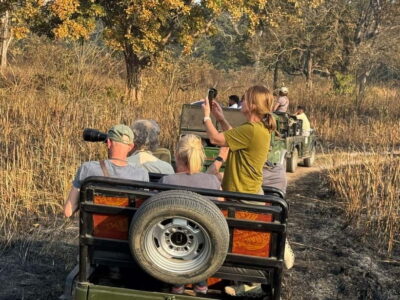
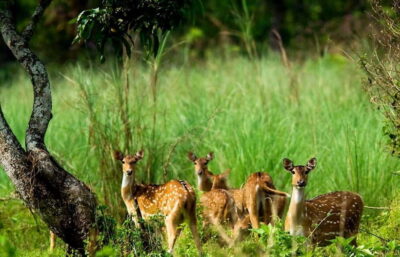
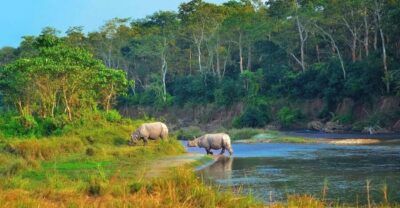
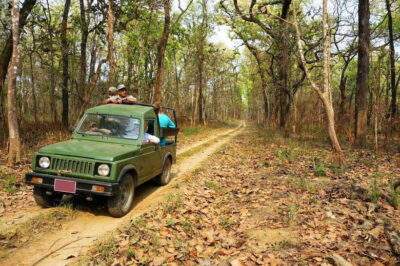
Day 10 is the active day, with jungle walking and a jungle safari described as going across streams and into the jungles. You’ll also get a Tharu cultural stick dance as part of the program.
This is one of the strongest parts of the overall trip because it’s not just a single drive. You’ll spend meaningful time on the ground and in the field, which is where wildlife viewing becomes more likely and where the jungle atmosphere gets real.
Day 11 and 12: Bird Watching in Chitwan and the Trip Back to Kathmandu
On day 11, you start with a bird watching tour in the morning, then drive back to Kathmandu and check into your hotel. That morning birding is a smart way to close the wildlife chapter while conditions are calm.
Day 12 is the wrap-up: you’ll finish the combo vacation and head home. It’s built to land you with stories from both the mountains and the jungle, not just one side of Nepal.
Price and Logistics: What $950 Buys You, and What Costs Extra
The listed price is $950 per person for roughly 12 days. For many travelers, the value comes from what’s bundled:
What’s included
- 11 nights of accommodation
- Airport transfers
- Local guide throughout
- Tourist bus transport between Kathmandu–Pokhara–Chitwan–Kathmandu
- Trekking permit and TIMS permit
- Meals: Breakfast (11), Lunch (7), Dinner (6)
This is the key money-saving logic. Trekking permits and most meals add up fast, and the Kathmandu–Pokhara–Chitwan shuttles are also expensive when booked separately.
What costs extra (plan ahead)
- Nepal entry visa fee (not included)
- Travel insurance (not included)
- Alcohol and non-alcoholic drinks and sweets (not included)
- Tips for guide, porter, and driver (not included)
- Trekking porter is listed as optional if you need it (not included by default)
- Kathmandu entrance fees for day 2 at $25 per person
- International airfare to and from Nepal (not included)
If you’re budgeting, treat the entrance fees and tips as part of the “real” cost. Still, compared to piecing together a trek-only trip plus Chitwan plus Kathmandu guide time, this package format often gives you a smoother path.
Guides, Pace, and What to Expect Day-to-Day
This tour has a strong “guided group” feel. In past departures tied to this program, guides like Raj and Amrit have been singled out for being attentive and for helping hikers keep going, especially when people aren’t at peak fitness.
Pace-wise, the schedule is built for workable effort: trekking days are mostly listed between 4 and 7 hours, with an easier day in the mix (like the 4-hour segment toward Ghandruk). That doesn’t mean it’s effortless. The Annapurna route still includes steep stretches, and you should expect at least one day with a serious stair-and-climb feel.
Accommodation is described as basic but clean, which is typical for lodge treks. Don’t expect five-star rooms up on the trail; do expect warm layers, simple food, and a bed after a long day.
Who This Nepal Adventure Trek Is Best For
This is a great choice if you want:
- a guided introduction to the Annapurna region (Poon Hill focus, villages, forest sections)
- the contrast of mountains followed by Chitwan jungle wildlife time
- a package that handles permits, transport, and most meals
- a group experience with a manageable size (max 14)
It’s less ideal if you want a very self-directed trek, a longer high-altitude challenge, or zero extra costs. Also, if stairs and steep uphill hiking will stress you, plan for slower pacing and consider a trekking porter option so your legs (and breathing) stay under control.
Should You Book This One?
Book this tour if you want a smart two-week Nepal hit: Kathmandu culture, Annapurna viewpoints with a realistic trek schedule, and Chitwan jungle safari time. I think the value is strongest when you care about convenience: airport transfers, permits, guides, transport, and most meals are already handled.
Skip it (or adjust expectations) if you are sensitive to steep climbs, or if you dislike paying extra for temple entrance tickets. Also, if you’re chasing the most extreme trekking bragging rights, this route is more “intro trek with big payoff” than “hardcore expedition.”
If you’re the type who likes clear plans but still wants the day-to-day experience to feel human—morning tea at a lodge, forest walking, a jungle safari moment—this one is built for you.
FAQ
What trekking permits are included?
The tour includes a TIMS permit and a trekking permit, both listed under what’s included.
Are Kathmandu sightseeing entrance fees included?
No. Admission tickets for the Kathmandu sights on day 2 are not included, and the itinerary notes $25 per person for those entrances.
Do I need travel insurance?
Travel insurance is not included in the package.
Is a porter included?
A trekking porter is not included by default. The information says you can arrange one if you need it.
What fitness level should I have?
The trip asks for a moderate physical fitness level. It also includes steep uphill segments on the trek, including a day that can involve a lot of stairs.
Where do we meet and what time does it start?
The meeting point is Tribhuvan Airport, Kathmandu, Nepal, with a start time of 6:15 am.
How large is the group?
The tour has a maximum group size of 14 travelers.
More Days in the Wild
More Trekking Out of Kathmandu
More Tour Reviews in Kathmandu
Just Reviewed in Kathmandu
- Mountain Bike Tour
★ 5.0 · 3 reviews - Annapurna Panaroma
★ 5.0 · 3 reviews - Mount Everest Scenic Flight 50 Minutes
★ 5.0 · 3 reviews - Kathmandu : Swambhunath & Durbar Square Guided Half Day Tour
★ 3.3 · 3 reviews - Chandragiri Cable Car & Monkey Temple Tour – Private/Group
★ 5.0 · 3 reviews - Kathmandu: Shivapuri National Park Hiking Day Trip
★ 3.3 · 3 reviews
Chitwan Jungle Safari, compared.
 ★ 5.03-Day Chitwan National Park Jungle Safari Tour Package with Pick UpFrom $180184 reviews
 ★ 4.63-Day All-Inclusive Chitwan SafariFrom $149133 reviews
 ★ 4.63-Day Chitwan Safari Tour with Hotel TransfersFrom $151127 reviews
 ★ 4.73 Day Chitwan Jungle Safari TourFrom $12987 reviews
 ★ 5.03 Nights 4 Days Chitwan National Park with Tower Night StayFrom $35041 reviews
 ★ 4.52 Days Chitwan Jungle Safari Tour from Pokhara/KathmanduFrom $11727 reviews
 ★ 4.82, 3, or 4-Day Chitwan Jungle SafariFrom $3524 reviews
 ★ 5.08 Days Tour in Nepal – Kathmandu, Chitwan & Pokhara (3 & 4 Star)From $29923 reviews
Browse the lists this tour appears in