

Review · GOKYO LAKES & EVEREST HIGH PASSES
Island Peak Adventure
Six thousand meters starts with a slow plan. This Island Peak adventure mixes trekking, altitude check-ins, and real climbing training, then rewards you with jaw-dropping views of Lhotse, Nuptse, Ama Dablam, and Makalu near the summit line. I love the way the route builds acclimatization into real hiking days instead of rushing, and I love the support setup: licensed English-speaking guide, a climbing sherpa, group climbing gear, and a porter ratio of 1 porter for every two clients. The main consideration is simple: the climb depends on weather, and because Island Peak is popular, the busiest parts can feel like a traffic jam at the wrong time.
Before you ever lace up boots, the trip starts with Kathmandu culture and a practical pre-trip meeting. You’ll do classic stops like Pashupatinath Temple, the Boudhanath Stupa prayer-wheel circuit, and Bhaktapur Durbar Square, plus a briefing where you confirm details with your team and come prepared with passport copies and insurance paperwork.
What I like best is how “adventure” stays organized. You get solid lodging in Kathmandu (three-star hotels), then switch to guesthouses for most of the trek and tented camps at base camp, with meals handled by a professional chef for the climbing section. The drawback, if you want to think ahead, is that you’ll need strong physical fitness for the altitude plus the early morning summit push.
In This Review
- Key Things That Matter on This Island Peak Adventure
- Island Peak at 6,187 m: Why People Want This One
- Kathmandu Setup: Pashupatinath, Boudhanath, and a Real Team Brief
- Lukla to Phakding: The Flight That Shapes Your Mood
- Namche Bazaar: Suspension Bridges and the Gateway to Everest
- Tengboche and Pangboche: Monastery Time That Feels Real
- Dingboche to Chukhung: The Altitude Checks Before Base Camp
- Imja Tse Base Camp: Tented Nights and Climbing Technique
- Summit Day on Island Peak: Early Start, Camp 1, and a Glacier-Aware Route
- Coming Down Through Tengboche: Where the Views Change Mode
- Flying Back to Kathmandu: The Last Mountain Glimpse and a Spare Day
- Price and What You Get for $2,240
- Gear, Porters, and the Stress-Free Feeling People Describe
- What You Should Pack (and What the Crew Already Covers)
- Who This Island Peak Adventure Suits Best
- Should You Book This Tour or Not?
- FAQ
- What is the start point and meeting time?
- How long is the Island Peak Adventure?
- How many people are in the group?
- What support and guidance are included for the climb?
- What does the price include and not include?
- Do you fly to Lukla or trek from Kathmandu?
- Is altitude acclimatization built into the schedule?
- What happens if weather affects the trip?
Key Things That Matter on This Island Peak Adventure
- Acclimatization built into the route: Namche, Dingboche, and Chukhung give your body time to adjust before base camp and the summit.
- You climb with purpose, not guesswork: a climbing sherpa gives technique instruction before the main ascent.
- Gear and logistics reduce stress: group climbing equipment, tent and kitchen setup, and a porter system help you focus on moving well.
- Tented base camp with food support: once you reach Imja Tse, you’re not just roughing it—you get camp cooking and staff support.
- Strong Kathmandu warm-up: temples and heritage sites are a meaningful start, not filler.
Not sure yet? Here are other Kathmandu tours worth a side-by-side look.
- Everest Base Camp Trek – 14 Days★ 5.0 · 1,499 reviews
- Everest Base Camp Trek★ 5.0 · 842 reviews
- Private Kathmandu Sightseeing Tour | UNESCO World Heritage sites★ 5.0 · 756 reviews
- Kathmandu: 7 UNESCO Sites with Lunch★ 4.8 · 744 reviews
Island Peak at 6,187 m: Why People Want This One
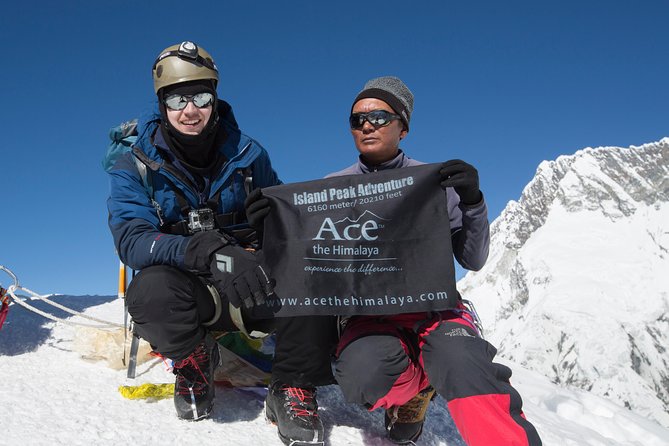
Island Peak sits in the Khumbu Himalaya and is one of Nepal’s most climbed “training summits.” That matters because it’s a climb you can aim for without needing a lifetime of high-altitude experience, but you still get a proper taste of glacier travel, ridge walking, and crevasse-aware footwork.
The payoff is more than the summit label. The route is designed so that, when you’re finally on the mountain, the surrounding giants feel close—Lhotse, Nuptse, Ama Dablam, and Makalu are described as nearly within reach from the top. That kind of perspective is hard to fake with photos, and it’s why people keep coming back for Island Peak.
Kathmandu Setup: Pashupatinath, Boudhanath, and a Real Team Brief
Your trip begins with airport pickup in Kathmandu and transfer to your hotel. On the first couple of days, you’ll have a pre-trip meeting in the office where your trek leader is introduced and you’ll review paperwork. Plan to bring your passport, three passport-size photos, and a readable copy of your travel insurance policy, plus copies and forms they ask you to sign.
Then the sightseeing is practical and varied. You’ll see Pashupatinath Temple from the riverbank (you can’t go inside unless you’re Hindu), and it’s the kind of place where you notice details immediately—ritual activity on the Bagmati River and the temple’s pagoda structure sitting on a single plinth. Next is Boudhanath Stupa, one of the holiest Buddhist sites in Kathmandu, where pilgrims walk around spinning prayer wheels in four cardinal directions. Finally, Bhaktapur Durbar Square gives you a dense dose of palace and temple architecture, including the five-storied Nyatapola-style pagoda elements and the famous Palace of 55 Windows.
I like this start because it sets context for the Khumbu culture you’ll be walking into later. You’re not just jumping from airport to trail; you’re getting your bearings.
Lukla to Phakding: The Flight That Shapes Your Mood
Most people first experience the Himalaya through a short scenic flight from Kathmandu to Lukla, landing at Tenzing and Hillary Airport at 2,804 m. That hop matters psychologically. After it, the whole rhythm of the trip changes, and you start walking with altitude in your lungs from day one.
From Lukla, the trek to Phakding is your warm-up. The route descends toward the Dudh Kosi River, then joins the main trail to Namche Bazaar above Chaunrikharka. The walking is described as easy, and you get a chance to settle in while your Sherpa crew sorts and loads trekking equipment.
The only thing to watch here is pace. “Easy” in Nepal can still feel like work when air gets thin, so aim for smooth breathing instead of speed.
Namche Bazaar: Suspension Bridges and the Gateway to Everest
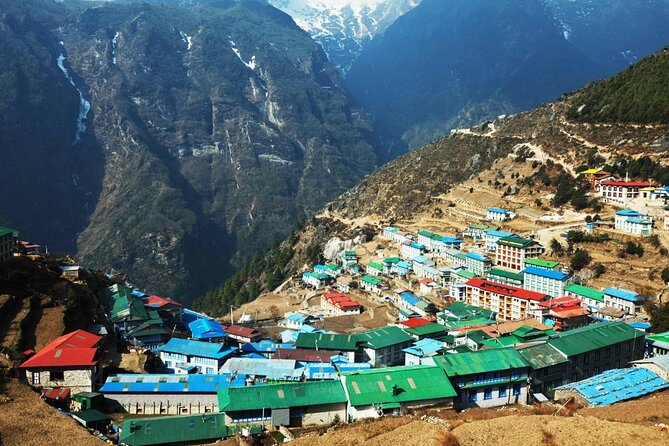
Namche Bazaar is called the Gateway to Everest for a reason. It’s a big hub in the Khumbu with restaurants, lodges, shops, and basic services like money exchange and internet cafes. But it’s also your first real altitude checkpoint, sitting at 3,441 m.
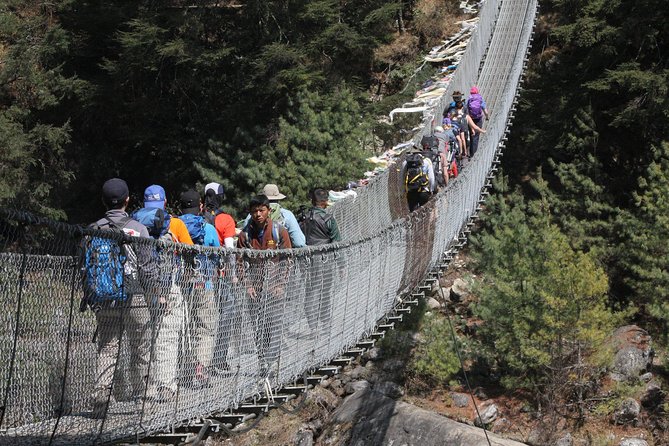
The trail along the Dudh Kosi keeps rewarding you with views whenever the weather allows it, and you’ll cross suspension bridges lined with prayer flags. Then the climb steepens as you enter Sagarmatha National Park.
What I like is that Namche doesn’t just serve as a stop. Day five is an adjustment day, with a museum focused on Sherpa customs and a hike up toward Syangboche Airport around Everest View Hotel. From there, sunrise and sunset can paint the Himalaya panorama, so you’ll want to keep your energy for the next climbing days.




Tengboche and Pangboche: Monastery Time That Feels Real
As you move deeper into the Khumbu, the trail continues along glacial waters of the Dudh Kosi with steady mountain views. Tengboche sits at a key cultural junction, and the monastery is central to the day. Inside, you’ll find ornate wall hangings and a large Buddha sculpture, plus instruments and robes connected to Lamas. The group is taken to observe a prayer ceremony, timed for either evening or morning based on how trekking progresses.
This is one of those moments where the scenery and the culture land together. It’s not just a photo stop. You’re watching how the region breathes when people slow down.
Later, the route reaches Pangboche among thousands of mani stones. Those prayer stones create a quiet sense of passage, and they make the trail feel like you’re moving through lived-in geography, not a theme park.
Dingboche to Chukhung: The Altitude Checks Before Base Camp
After Tengboche, you’ll reach Dingboche after crossing back toward the Imja Khola and climbing uphill. Dingboche is a classic high-altitude village, and the views here are a preview of what your summit day aims to culminate in: Lhotse, Island Peak, and Ama Dablam show up clearly in the area around the village.
Then comes Chukhung, and this part matters. The schedule calls Chukhung an important altitude adjustment stop for Island Peak climbing, and it’s also where you get guide information about the next day’s activities. Expect a short trek from Dingboche and a shift in mindset—from trekking rhythm to climbing preparation.
If you’re the type who wants to race ahead, resist that urge here. Your body needs time to adapt, and the trip is built to help you do that.
Imja Tse Base Camp: Tented Nights and Climbing Technique
The trek to Island Peak base camp at Imja Tse is about 4 hours from Chukhung, and from this point onward you switch to tented camps for the next two days. That change is more than comfort; it’s training for what you’ll need later. When your sleeping situation and mealtime rhythm match the mountaineering phase, you’re less likely to feel thrown off.
At base camp, you’ll spend a full day adjusting to thinning air and making short walks around camp to prepare for the climbing day. This is also where the “how” gets sharper. The overview explains that you’ll be briefed and instructed by your climbing Sherpa on climbing techniques. That kind of step-by-step coaching is crucial if you’re newer to using tools on snow or ice.
This is also where I think the guide team style really shows. From past experiences tied to this company’s trips, guides like Madan are noted for checking in daily with the group to see how everyone is feeling, not just calling the pace. Assistant guides such as Sauman are also mentioned as supporting the day-to-day flow and keeping everyone comfortable with what comes next.
Summit Day on Island Peak: Early Start, Camp 1, and a Glacier-Aware Route
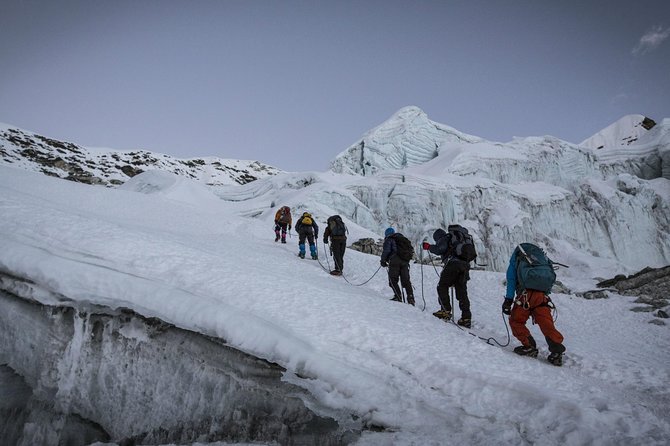
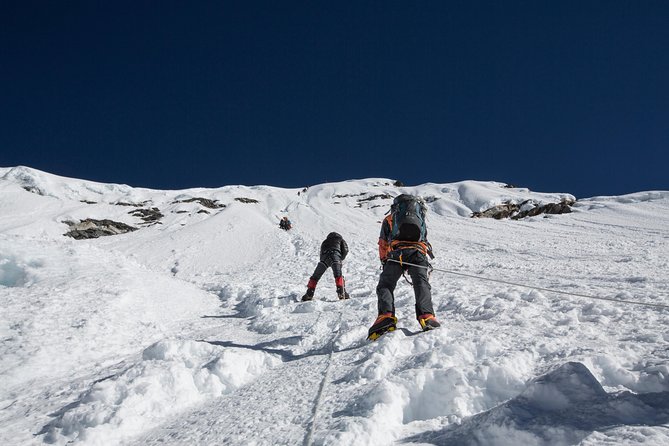
Summit day is planned for early morning, weather permitting. You ascend toward Camp 1 through a gully, then make a traverse to the right. The route includes a wide stone field, followed by crossing a ridge to reach glacier sections with crevasses. The climb is described as continuing through glacier and crevasse terrain, which is exactly why you don’t want to wing it.
After reaching the top (6,187 m for Island Peak), the plan is a same-day descent back to Chhukung. That “climb fast, descend carefully” structure is smart. The descent is often where people get tired and sloppy, so having a clear route and a guide watching footing helps a lot.
One practical expectation: even on a well-run trip, the mountain will decide your schedule. If clouds roll in or conditions shift, you could end up with changes. This is a weather-dependent climb, and that risk is part of the deal.
Coming Down Through Tengboche: Where the Views Change Mode
On the descent day, you head back from the high area to Tengboche. The trekking time is listed around six hours, passing back through Dingboche, Pangboche, and Diboche. This backtrack phase is mentally different. You’ve already done the big effort, so you’ll likely feel lighter, but you still need stable legs on uneven trail.
Then you return to Namche Bazaar, and the day includes an afternoon arrival with time to talk with fellow climbers over dinner. I like this part because it’s a natural decompression window. You can compare what you felt on summit day without turning it into a competition.
The next big movement is back down to Lukla for the flight window. The trek from Tengboche to Namche and then to Lukla keeps the rhythm of the Khumbu trail intact, so you’re not just teleporting between “adventure phases.”
Flying Back to Kathmandu: The Last Mountain Glimpse and a Spare Day
After reaching Lukla, you fly back to Kathmandu in about 35 minutes. This flight gives a last set of mountain views, which can be strangely emotional after a long week of walking toward one objective.
Kathmandu then offers a spare day if Lukla weather or timing needs a reset. You’ll also have a farewell dinner in a traditional Nepalese restaurant with cultural performances. This is a nice finish because it ties back to the early temple and stupa visits—you’re ending in culture, not just airport logistics.
Price and What You Get for $2,240
At $2,240 per person, this price is really a bundled package for altitude climbing. It includes Kathmandu-Lukla airfare (round trip), airport transfers, Kathmandu hotel stays (four nights in a three-star hotel), and the trekking portion with guesthouse accommodation for ten nights. It also includes two nights of tented camp lodging at base camp.
You also get practical support that adds value quickly:
- Licensed English-speaking trekking guide
- Climbing sherpa for Island Peak
- Group climbing gear (climbing rope, ice screw, snow bar, ice hammer, plus tents and kitchen equipment)
- A porter for every two clients
- Permits for trekking and the Island Peak climbing permit
- Down jacket and sleeping bag for the trek (returned at the end)
- Guided Kathmandu sightseeing with entrance fees
Meals are handled for the trek portion (breakfast, lunch, dinner counts are included), but Kathmandu meals like lunch and dinner aren’t included. Travel insurance that covers emergency high-altitude rescue and evacuation is also not included, which is a big one. If you’re spending this kind of money, don’t treat insurance like a checkbox. High-altitude rescues cost real money.
Tips are expected for trekking staff and the driver, so factor that into your total budget.
Gear, Porters, and the Stress-Free Feeling People Describe
What makes this trip feel less chaotic is the way it mixes responsibility. You’re still doing the work, but the heavy lifting isn’t on your back.
With 1 porter for every two clients, your load is controlled. On top of that, group climbing gear is provided, so you’re not chasing crampons, ropes, screws, and hammers at the last minute. You’ll also receive a free Ace the Himalaya duffel/kit bag and sun hat, which helps with planning.
In terms of leadership style, the names that show up in feedback for Ace teams tend to be consistent: Madan is noted for daily check-ins, Raj (and Raj Kumar) are described as helpful and friendly, and Pemba/Pemaba Sherpa gets credit for meticulous preparation for summit attempts. There are also mentions of guides like Ganesh and porters like Hira for looking after the group like family. That combination matters because it changes the vibe on hard days. You still feel pressure of altitude, but you don’t feel alone in it.
What You Should Pack (and What the Crew Already Covers)
The trip includes down jacket and a sleeping bag for the trek section, which reduces your gear burden. The included list also covers group climbing items and trekking staff equipment, plus camp tents and kitchen setup.
What’s not included is your personal trekking equipment. Since the data doesn’t spell out exactly what you must bring, the safest plan is to assume you’ll need your own base layers, gloves, trekking boots, and any personal items for altitude comfort. If you’re unsure, ask Ace before you buy anything expensive.
Also remember: this is a strong fitness requirement climb. You’ll want to train for steep hiking, sustained walking at altitude, and early starts.
Who This Island Peak Adventure Suits Best
This is ideal if you want a structured stepping-stone toward peak climbing. It suits both amateur climbers and serious trekkers who are ready to transition from hiking to glacier-aware mountaineering. The route includes enough altitude staging to help you acclimatize, while still pushing you on summit day.
It’s also a good fit if you like systems. The team runs a max group size of 15, and they use a licensed English-speaking guide plus a climbing sherpa, with 1:2 porter coverage.
I’d think twice if you’re not committed to training. The trip states you should have strong physical fitness, and the summit day timing is early and weather-dependent.
Should You Book This Tour or Not?
If your goal is an Island Peak summit with clear training and a team that focuses on safe, organized execution, this tour is a strong match. The value comes from what’s bundled: Kathmandu-Lukla flights, permits, climbing sherpa support, group gear, porter coverage, and a realistic acclimatization schedule.
Book it if you’re ready to work steadily, respect altitude, and accept weather risk. Don’t book it if you want a guaranteed summit regardless of conditions, or if you’re not comfortable being outdoors in a cold, high-altitude environment for multiple weeks.
FAQ
What is the start point and meeting time?
The tour starts at Tribhuvan Airport in Kathmandu, Nepal, with a start time of 8:00 am.
How long is the Island Peak Adventure?
The duration is listed as about 17 days.
How many people are in the group?
The maximum group size is 15 travelers.
What support and guidance are included for the climb?
You get a licensed English-speaking trekking guide, a climbing sherpa for Island Peak, and group climbing gear for the ascent.
What does the price include and not include?
Included: airport transfers, Kathmandu hotels, guided sightseeing, trekking and tented camp lodging, permits (trekking and Island Peak), Kathmandu-Lukla-Kathmandu airfare, meals during the trek portion, and down jacket plus sleeping bag for the trek. Not included: Kathmandu lunch and dinner, travel insurance for emergency rescue/evacuation, international airfare, Nepal entry visa, drinks, personal trekking equipment, and tips.
Do you fly to Lukla or trek from Kathmandu?
You fly from Kathmandu to Lukla (about 35 minutes) as part of the itinerary.
Is altitude acclimatization built into the schedule?
Yes. There are adjustment days and altitude staging stops in key places like Namche Bazaar, Chukhung, and a full base-camp adjustment day at Imja Tse.
What happens if weather affects the trip?
This experience requires good weather. If it’s canceled due to poor weather, you’ll be offered a different date or a full refund.
More Tour Reviews in Kathmandu






Just Reviewed in Kathmandu
- Mountain Bike Tour
★ 5.0 · 3 reviews - Annapurna Panaroma
★ 5.0 · 3 reviews - Mount Everest Scenic Flight 50 Minutes
★ 5.0 · 3 reviews - Kathmandu : Swambhunath & Durbar Square Guided Half Day Tour
★ 3.3 · 3 reviews - Chandragiri Cable Car & Monkey Temple Tour – Private/Group
★ 5.0 · 3 reviews - Kathmandu: Shivapuri National Park Hiking Day Trip
★ 3.3 · 3 reviews
Gokyo Lakes & Everest High Passes, compared.
 ★ 5.0Gokyo to Everest Base Camp TrekFrom $2,200113 reviews
 ★ 5.0Everest Base Camp – Cho La Pass – Gokyo TrekFrom $1,39465 reviews
 ★ 5.012 Days Everest Base Camp Kala Patthar TrekFrom $1,79961 reviews
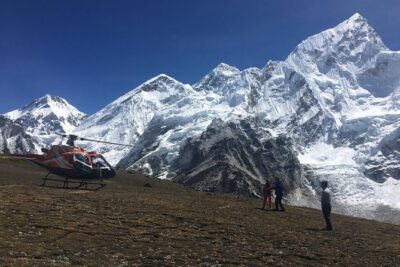 ★ 5.0Guaranteed Landing at Everest Base Camp Kalapathar by HelicopterFrom $3,50038 reviews
 ★ 5.0Everest Gokyo Valley Trek – 12 daysFrom $1,39927 reviews
 ★ 4.214-Day Everest Base Camp with Kala Patthar TrekFrom $1,29621 reviews
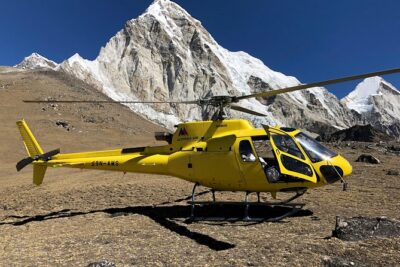 ★ 5.0Landing Private Helicopter at Everest base camp & Gokyo for photoFrom $4,39920 reviews
 ★ 5.0Gokyo Valley TrekFrom $1,51419 reviews
Browse the lists this tour appears in