
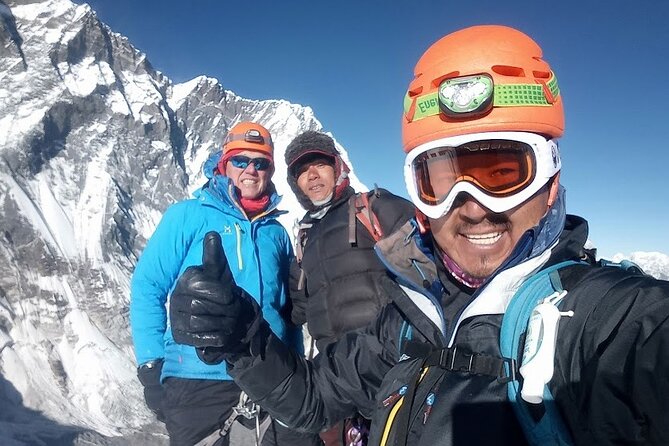
Review · GOKYO LAKES & EVEREST HIGH PASSES
Island Peak Climbing with Everest Base Camp
Island Peak is a big day, but it only gets better with Everest Base Camp stitched to it. This 20-day route pairs high-altitude trekking in Sagarmatha National Park with a real summit push on Island Peak (6,160 m). You get those classic Khumbu views, plus the chance to stand close to Everest’s world-famous icefall scenery.
What I like most is the build-up: you don’t just rush to altitude. You spend time on the trail for acclimatization, including a dedicated rest day in Namche Bazaar and the dawn payoff at Kala Patthar. Another big plus is the climbing structure, including base camp, a higher advance camp, and then a summit start before daybreak with a trained guide.
One drawback to think about up front: the whole plan relies on flights to Lukla, and weather can disrupt schedules. The itinerary accounts for this with an extra day buffer in Kathmandu, but you should still be ready for schedule shifts.
In This Review
- Key points worth knowing before you go
- Kathmandu start: temples, briefing, and getting set for altitude
- Lukla flights: a short hop that sets the tone for everything
- From Phakding to Namche Bazaar: Sagarmatha National Park gateway day
- Namche rest day: views, shops, and your altitude check
- Tengboche monastery day: forests, rhododendron, and spiritual Khumbu
- Pheriche and Dingboche: the acclimatization ladder gets real
- Lobuche and the push toward Everest Base Camp
- Gorakshep to Everest Base Camp: Khumbu Icefall in your frame
- Kala Patthar at 5,545 m: why dawn is non-negotiable
- Chukhung: where Island Peak gets its own stage
- The advance camp above 5,400 m: preparation before the summit day
- Island Peak summit day at 6,160 m: technical, cold, and worth it
- Coming down to Namche and Lukla: your legs learn patience
- Lukla to Kathmandu, plus the weather buffer day
- Price and Logistics: what you pay for (and what you still need to cover)
- Who this Island Peak + Everest Base Camp plan fits best
- Should you book this climb-and-trek combo?
- FAQ
- What’s the tour duration for Island Peak climbing with Everest Base Camp?
- Where does the trip start and what time does it begin?
- Are flights to Lukla included?
- What’s included during the trek and climbing?
- What about meals in Kathmandu—are they included?
- Do I need travel or health insurance?
- Is there a porter service included?
- Can I cancel and get a full refund?
Key points worth knowing before you go
- Twin Otter or Dornier Lukla flights: short flight time, big mountain drama on takeoff and landing.
- Real acclimatization rhythm: Namche rest day, plus staged hiking through Dingboche and Pheriche.
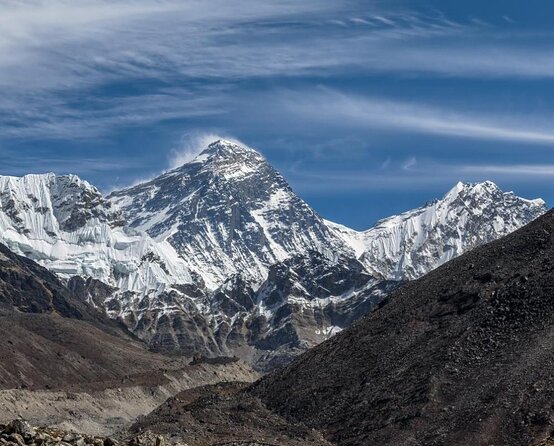
- Everest Base Camp focus: reaches Gorakshep and the base camp area with the Khumbu Icefall in view.
- Kala Patthar sunrise timing: early climb to 5,545 m for Everest-at-close-range views.
- Island Peak training days: base camp, an advance camp above 5,400 m, then a pre-dawn summit push.
- Porters with insurance and support: porter ratio is set (2 guests to 1 porter) with coverage and included gear needs.
Not sure yet? Here are other Kathmandu tours worth a side-by-side look.
- Everest Base Camp Trek – 14 Days★ 5.0 · 1,499 reviews
- Everest Base Camp Trek★ 5.0 · 842 reviews
- Private Kathmandu Sightseeing Tour | UNESCO World Heritage sites★ 5.0 · 756 reviews
- Kathmandu: 7 UNESCO Sites with Lunch★ 4.8 · 744 reviews
Kathmandu start: temples, briefing, and getting set for altitude
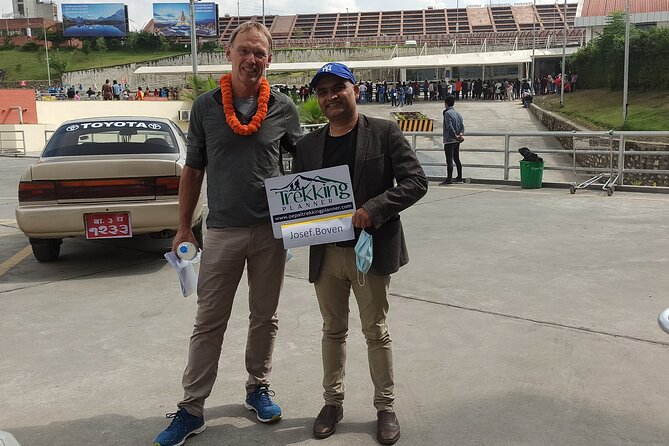
Your trip begins in Kathmandu with pickup and a warm welcome at the international airport, then a transfer into the city. After you settle into a 3-star hotel, there’s time to explore around on your own. This matters more than people think. Kathmandu is where you’ll get your rhythm, find simple meals, and confirm you have what you need before the mountain starts eating your time.
On Day 2, you’ll get a briefing with your guide about the Island Peak climb and the trekking. The trip isn’t just “walk and hope.” You’ll receive practical info about what equipment you’ll use, how the days will flow, and what to watch for as altitude ramps up. Then you’ll get a guided tour around Kathmandu and the valley’s major religious and historical sites (all described as World Heritage areas in the plan). It’s a good contrast day before the quiet, serious world of the Khumbu.
If you want a smooth departure, this Kathmandu buffer helps. You’ll also have time to relax in the afternoon and prep for the trek without feeling rushed.
Lukla flights: a short hop that sets the tone for everything
Day 3 is your first real shift from city to mountains. You fly from Kathmandu to Lukla on a small aircraft (described as Twin Otter or Dornier) for about 30 minutes. Yes, it’s short. No, it’s not boring. The route is designed around views of the Himalayan skyline and lands at Tenzing & Hillary Airport on Lukla’s famously demanding runway.
After landing, you start walking right away. The plan takes you downhill past Sherpa farm villages, terraced fields, and occasional snow views of peaks like Kwangde and Kusum Khanguru. Then you settle into Phakding, by the Dudh Kosi River, in a cozy lodge near the river’s noise.
This is a smart start day. You’re moving, but you’re not climbing yet. You’re also getting acclimatization in the only way the mountains accept: step by step.
From Phakding to Namche Bazaar: Sagarmatha National Park gateway day
On Day 4, the route climbs steadily toward Namche Bazaar. You follow the Dudh Kosi River upstream, cross bridges, and reach the Sagarmatha National Park entrance area near Monjo village. Then you move through a forested trail with views of snowcapped peaks and gradually “open up” into the bigger Namche valley.
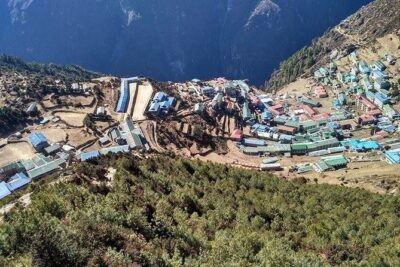
Namche isn’t just a stop. It’s a mountain crossroads packed with shops and lodges where you’ll feel the altitude for the first time in a noticeable way. The trek here is long enough to matter, but the focus is also scenic and varied—river scenery, forest sections, then suddenly a famous settlement.
You’ll sleep in Namche, and the next day is designed for acclimatization.
Namche rest day: views, shops, and your altitude check
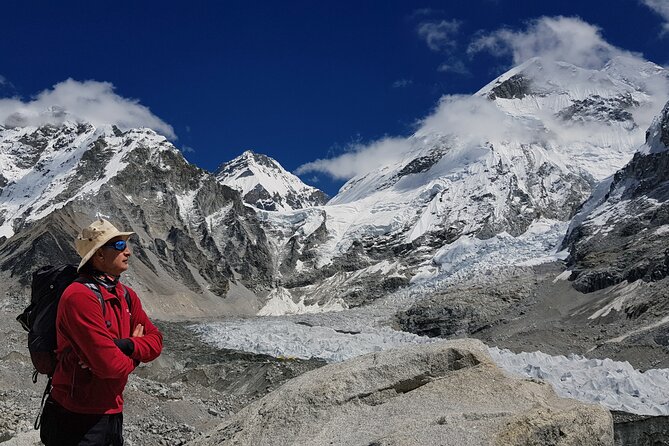
Day 5 is a true rest day at Namche Bazaar, and it’s a key part of this whole plan. At this height (above 3,440 m), you need recovery time so the next stages don’t feel like a wall.
You can hike to viewpoint areas on top of Namche, with big mountain views including Everest and Amadablam. The plan also calls out the weekly Saturday market vibe, which is a fun break from trekking monotony—simple, local, and busy without feeling like a theme park.
Even if you keep it easy, you’re still training your body for what’s coming: more elevation, colder nights, and longer days.




Tengboche monastery day: forests, rhododendron, and spiritual Khumbu
On Day 6 you hike toward Tengboche Gompa, climbing through rhododendron, pine, and fir forests. You’ll pause for lunch around Imjatse River area at Phunge-Tenga, then continue upward with major payoff views.
Tengboche is one of those places where the scenery and the culture line up. From the monastery area, the view includes Everest, Nuptse, Lhotse, and multiple surrounding peaks, with Amadablam highlighted in the plan. You’ll also have time to visit the monastery and observe monks and priests on prayer, which adds meaning to the stop instead of making it just another photo point.
The trek to Tengboche takes effort, but it’s a comfortable type of hard: regular steps, consistent elevation, and a reward that feels earned.
Pheriche and Dingboche: the acclimatization ladder gets real
Day 7 moves you toward Pheriche, with a route that includes crossing a metal bridge over Imjatse River and hiking past Pangboche and Somare. Pangboche is described as the last permanent Sherpa farm village before Island Peak and Everest base camp territory. That line matters. After this, things feel more sparse, more alpine, and more exposed.
You’ll end in Pheriche for a windy overnight stop at a higher elevation valley location. Day 8 continues the ladder to Dingboche, described as above 4,240 m with strong mountain views, including Lhotse and peaks like Taboche and Cholatse.
There’s also a practical health stop here: the route includes a visit to the Himalayan Rescue Association (HRA) office with a small medical post. Even if you don’t need it, it’s useful context and reassurance that help exists in the region.
The overall message of Days 7 and 8 is clear: you’re not racing. You’re getting altitude ready.
Lobuche and the push toward Everest Base Camp
Day 9 moves toward Lobuche. You’ll hike along the valley end, take a short climb to Thugla (Dugla), and reach the area where the trail for Everest Base Camp comes together. The plan highlights views of Taboche, Cholatse, Lobuche, Pumori, and Amadablam from this stage.
Then you shift from scenery to reality. From the ridge area, you move into terminal debris of the Khumbu Glacier, and you pass memorials for climbers who died on the mountain. It’s sobering. And it’s part of understanding what you’re stepping into.
Lobuche is your overnight base before Gorakshep and the base camp walk.
Gorakshep to Everest Base Camp: Khumbu Icefall in your frame
Day 10 is one of the biggest days: walking to Everest Base Camp. The plan calls it a few hours of trekking with short steep sections between glacier and moraine, then reaching Gorakshep beneath Pumori and Kalapathar.
From Gorakshep, the route continues to base camp for the main highlight. You’ll spend time at base camp with views that include the massive Khumbu Icefall and glaciers. Even if you’ve seen Everest photos before, this is different because the Icefall is right there, on your horizon, not just in a postcard.
Then you retrace your steps back to Gorakshep for the night. It’s long but logical, and it keeps the day from turning into a scramble you regret.
Kala Patthar at 5,545 m: why dawn is non-negotiable
Day 11 starts very early with the climb to Kala Patthar (over 5,545 m), described as the highest point on the trekking portion. This is your Everest-at-close-range day.
The plan emphasizes spectacular views including Everest, and it’s timed so you get them before clouds and tired legs start making decisions for you. After spending time up top, you descend back to Gorakshep for breakfast, then continue walking down toward Dingboche with lodges at the end of the day.
This is also where smart planning pays off. The climb takes energy. The descent takes focus. You’ll want to keep moving steadily, not fast.
Chukhung: where Island Peak gets its own stage
Day 12 takes you to Chukhung, described as the last human settlement before Island Peak territory. The route includes an uphill walk into the Imjatse valley and then lodge stays.
In the afternoon, you can day hike toward Chhukung Peak for panoramic views of snow mountains. This kind of side hike is more than sightseeing. It helps you confirm how your body feels at the altitude level where technical climbing is next.
By Day 13 you reach Island Peak base camp at Parshya Gab and shift into tent camping for a few nights until the climb is done. Setting camp at the staging area matters because it gives you time to practice and prepare with your guide. This is also the point where the whole trip stops being only “trekking” and turns into “climbing with trekking legs.”
The advance camp above 5,400 m: preparation before the summit day
On Day 14, you head higher to establish an advance camp above 5,400 m. The route description puts you climbing above moraine and into an open gully between ridges to reach a higher camp area beneath a small hanging glacier above 5,400 m.
This is where you’ll finish final preparations for the early summit. The plan doesn’t sugarcoat it: the big climb begins soon after this, so your job is simple—sleep, hydrate, and follow your guide’s instructions.
Island Peak summit day at 6,160 m: technical, cold, and worth it
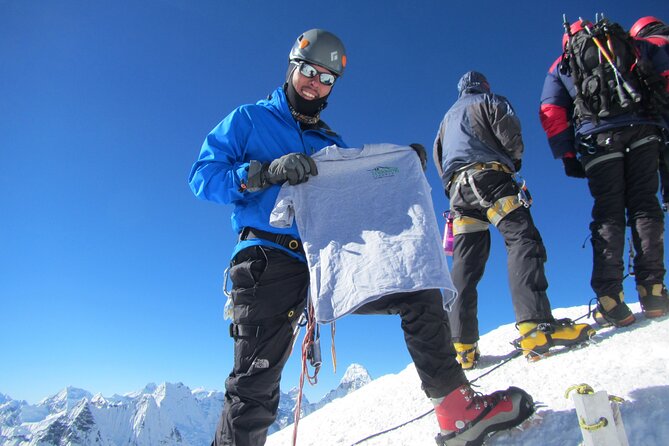
Day 15 is the big moment: a very early pre-dawn start to climb Island Peak (6,160 m / 20,328 ft). The route states a PD+ grade using the French and Swiss Alpine Climbing System. Translation: this is not a casual hike. Expect snow and ice travel.
The guide leads you across a broad open gully, then onto snow-covered glacier sections while avoiding serac and crevasses. You climb northward over snow-covered scree in the margin between glaciers facing a top ridge. The plan also notes there’s a gully crossing with stone and icefall danger, then a steep snow and ice ramp that rises about 100 meters (300 ft) to the summit.
From the top, you get the views you came for: a panorama of Himalayan peaks with Everest framed close from Island Peak’s vantage point. The route promises it as a major highlight.
The best part of a summit day like this is that it feels earned, not rushed. The drawback is that it can be physically and mentally intense—especially if you’re not comfortable with cold hands, packed snow, and moving carefully on uneven terrain.
Coming down to Namche and Lukla: your legs learn patience
Days 16 to 17 bring you back through the Imjatse valley. Day 16 routes you toward Dingboche, then Tengboche for lunch, and finally back to Namche for the overnight. This is a long day, but it’s mostly about steady descent and preserving energy.
Day 17 is your last walking day: you descend toward Sagarmatha National Park entrance at Monjo village, cross a long bridge, reach Phakding, then continue on to Lukla for your final night in the Khumbu region.
This matters because the next day is your flight back to Kathmandu, and you’ll be grateful if you haven’t arrived there completely spent.
Lukla to Kathmandu, plus the weather buffer day
Day 18 is the flight from Lukla back to Kathmandu with mountain views if skies cooperate. You’ll return to your Kathmandu hotel, with free afternoon time to recover and reflect.
Day 19 is an extra day reserved in Kathmandu for flight delay or cancellation due to unfavorable weather in Lukla. If everything works as planned, this day becomes flexible time for relaxing or adding an extra Kathmandu tour.
Day 20 is your departure day. Your staff transfers you to the airport based on your international flight time.
Price and Logistics: what you pay for (and what you still need to cover)
At $2,899 per person for roughly 20 days, the value here comes from the details that usually cost extra on trekking-style trips. You get private transportation in Kathmandu, full board during the trekking and climbing period (breakfast and lunch during trek, and dinners plus breakfasts), plus lodging in Kathmandu and lodges/guesthouses during the trek.
You also get the climbing and trekking permits, and you’re guided by an English-speaking, government license-holding guide and climbing Sherpa support. The plan also includes porter support with insurance and specific coverage: a porter ratio of 2 guests to 1 porter, with porter salary, food, accommodation, and equipment needs taken care of.
What’s not included is just as important. You’ll need to budget for:
- Nepal visa fees
- International flights to and from Kathmandu
- Lunch and dinner in Kathmandu
- Personal travel and health insurance, including emergency evacuation insurance
So the real question is this: are you the kind of person who wants the logistics handled end-to-end while you focus on walking, acclimatizing, and climbing safely? If yes, this price feels built for that. If you prefer to self-arrange everything, then you’re paying for convenience and structure.
Who this Island Peak + Everest Base Camp plan fits best
This is best for you if you want the full Khumbu mix: monasteries and Sherpa villages, Everest Base Camp, and then a real mountaineering objective on Island Peak.
The physical requirement is described as moderate physical fitness. But once you factor in the climbing grade (PD+), high-altitude days, and the summit start before dawn, you should treat this as a serious commitment. If you’ve never done glacier travel or technical snow/ice steps, you’ll want to take training and guidance seriously from the start.
It’s also a good fit if you like a private group setup. The tour is described as private, meaning only your group participates, which often leads to smoother pacing and less waiting.
Should you book this climb-and-trek combo?
I’d say book it if you want one trip that covers both sides of the Everest story: the trekking pilgrimage to Everest Base Camp and the mountaineering challenge of Island Peak’s summit.
You should think twice if you’re not comfortable with weather risk around Lukla flights or you hate technical terrain and cold, early starts. Still, the plan includes an extra Kathmandu day for delays, and the route pacing is built around acclimatization rather than brute force.
If your goal is a structured, guided route with permits, climbing support, and a clear path from Namche to Kala Patthar to Island Peak, this is a strong match.
FAQ
What’s the tour duration for Island Peak climbing with Everest Base Camp?
It runs for about 20 days.
Where does the trip start and what time does it begin?
It starts in Kathmandu, with the meeting point listed as a 6:15 am start time.
Are flights to Lukla included?
Yes. The plan includes scenic flights between Kathmandu and Lukla.
What’s included during the trek and climbing?
Lunch and breakfast during the trek/climbing portion, plus dinner and breakfasts during that same period, along with trekking and climbing permits, lodge/guesthouse stays during the trek, and the guide/climbing Sherpa support.
What about meals in Kathmandu—are they included?
Lunch and dinner in Kathmandu are not included.
Do I need travel or health insurance?
Personal travel and health insurance are not included, including insurance for emergency evacuation.
Is there a porter service included?
Yes. There’s porter support included with a ratio of 2 guests to 1 porter, and porter insurance, salary, food, accommodation, and equipment are covered.
Can I cancel and get a full refund?
Yes. Free cancellation is offered if you cancel at least 24 hours before the experience’s start time for a full refund.
More Tour Reviews in Kathmandu






Just Reviewed in Kathmandu
- Mountain Bike Tour
★ 5.0 · 3 reviews - Annapurna Panaroma
★ 5.0 · 3 reviews - Mount Everest Scenic Flight 50 Minutes
★ 5.0 · 3 reviews - Kathmandu : Swambhunath & Durbar Square Guided Half Day Tour
★ 3.3 · 3 reviews - Chandragiri Cable Car & Monkey Temple Tour – Private/Group
★ 5.0 · 3 reviews - Kathmandu: Shivapuri National Park Hiking Day Trip
★ 3.3 · 3 reviews
Gokyo Lakes & Everest High Passes, compared.
 ★ 5.0Gokyo to Everest Base Camp TrekFrom $2,200113 reviews
 ★ 5.0Everest Base Camp – Cho La Pass – Gokyo TrekFrom $1,39465 reviews
 ★ 5.012 Days Everest Base Camp Kala Patthar TrekFrom $1,79961 reviews
 ★ 5.0Guaranteed Landing at Everest Base Camp Kalapathar by HelicopterFrom $3,50038 reviews
 ★ 5.0Everest Gokyo Valley Trek – 12 daysFrom $1,39927 reviews
 ★ 4.214-Day Everest Base Camp with Kala Patthar TrekFrom $1,29621 reviews
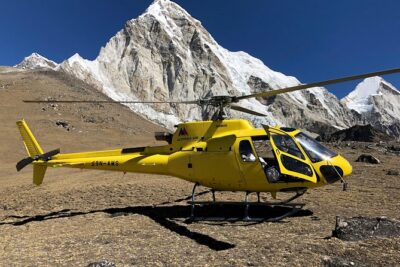 ★ 5.0Landing Private Helicopter at Everest base camp & Gokyo for photoFrom $4,39920 reviews
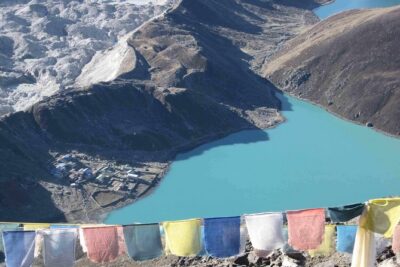 ★ 5.0Gokyo Valley TrekFrom $1,51419 reviews
Browse the lists this tour appears in