
Review · LANGTANG VALLEY TREKS
Journey to Dhunche A Scenic Bus Ride to the Gateway of Langtang
That first turn out of Kathmandu hits fast. This is a long, winding bus ride to Dhunche, the gateway to Langtang National Park, where the scenery shifts from river valley calm to serious Himalayan views.
I love the Trishuli River stretch—watching the water and greenery slide by for a good chunk of the morning. I also really like how the mountains start to loom as the day goes on, so the last part feels like you’re getting closer to the real reason people come to this area.
The main drawback is simple: it’s an all-day road trip with a bumpy, steep-hill kind of drive. If you’re sensitive to rough rides, plan for it and keep expectations realistic.
In This Review
- Key highlights you’ll actually care about
- Kathmandu to Dhunche: the road to Langtang starts with views
- Price and value: what $17 gets you (and what it doesn’t)
- Timing, start point, and how early you get going
- The Trishuli River stretch: where the ride turns scenic
- Steep hills and bumpy moments: be ready for the reality of Nepal roads
- Stops for tea and local meals: small breaks that change the feel
- Reaching Dhunche and continuing to Syapru Besi: why the endpoint matters
- Comfort and planning tips for a smooth day on the bus
- Who this bus ride is best for
- Should you book this bus to Dhunche?
- FAQ
- What is the price of the Kathmandu to Dhunche bus ride?
- How long does the bus ride take?
- Where does the tour start in Kathmandu?
- What time does the bus depart?
- Where does the bus end?
- What’s included in the ticket price?
- Are meals and drinks included?
- How many people are in the group?
- When will I receive confirmation?
- What is the cancellation policy?
- Is this suitable for most people?
Key highlights you’ll actually care about
- Trishuli River scenery: long enough to make the ride feel like more than transport.
- Mountains gain on you: the approach to the Himalayas builds as you get nearer to Dhunche.
- Leg-stretch stops: the bus makes a few breaks so you’re not trapped the whole time.
- Tea-stall and local food chances: you’ll have opportunities to buy simple Nepali snacks and meals.
- Small group limit: capped at 20 travelers, so it’s not a huge crowd experience.
Not sure yet? Here are other Kathmandu tours worth a side-by-side look.
- Everest Base Camp Trek – 14 Days★ 5.0 · 1,499 reviews
- Everest Base Camp Trek★ 5.0 · 842 reviews
- Private Kathmandu Sightseeing Tour | UNESCO World Heritage sites★ 5.0 · 756 reviews
- Kathmandu: 7 UNESCO Sites with Lunch★ 4.8 · 744 reviews
Kathmandu to Dhunche: the road to Langtang starts with views
This isn’t a fancy sightseeing circuit. It’s a practical connector—Kathmandu to Dhunche, then onward to Syapru Besi—but the drive itself is where a lot of the value lives.
The route runs along the Trishuli River for much of the trip, and that matters more than you might think. River roads tend to move at a more predictable pace than high passes. You get stretches where the bus keeps rolling and you can actually enjoy the view without feeling like you’re bracing every few minutes.
Then, as the day progresses, the scene starts to change. You move from valley life toward the bigger, sharper feeling of the mountains in the distance. Even if you’ve seen photos before, the build-up is different when you’re watching peaks gradually grow more specific as the bus climbs and bends.
By the time you reach Dhunche, you’re at the entrance to Langtang National Park. That’s not just a label. It’s the start of the region’s trekking logic and mountain rhythm—where people base themselves to go deeper into the park’s valleys.
Price and value: what $17 gets you (and what it doesn’t)
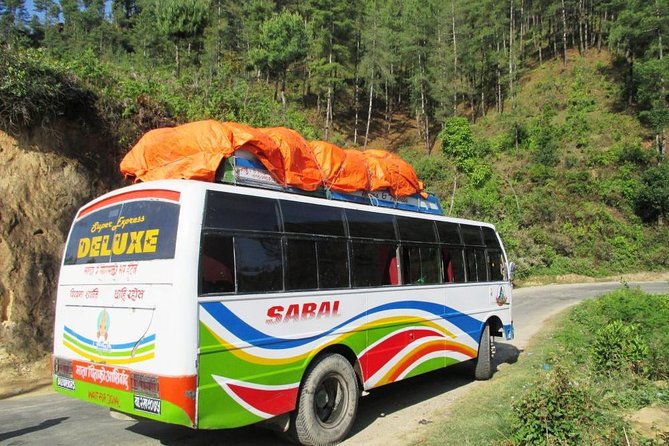
The ticket is $17 per person for a deluxe bus ticket. For this route, the value is mainly about time and stress. Instead of arranging separate transport, you get one booking that takes you directly from Kathmandu to the Langtang gateway area in a single shot.
But do not assume the price covers meals. The ticket includes only the bus ride—anything else (like food or tea you buy at stops) is not included.
So here’s how I think about value on this kind of trip:
- If you want an easy start to Langtang—without extra transfers—this price feels fair.
- If you’re the type who hates paying for every little snack, you’ll want to budget for food and drinks at the stops since the ride includes opportunities to grab local meals.
Also, the ride duration is listed as about 8 to 9 hours, depending on traffic. That’s a long day, and $17 makes sense only if you’re comfortable spending most of the daylight in transit.
Timing, start point, and how early you get going
This tour starts at 7:15 am. The meeting point is Machha Pokhari, Ring Rd, Kathmandu. The end point is Syapru Besi (45000).
The key detail is that this isn’t a late-morning plan. You’ll want to be ready early, not just on time in theory. In practice, it’s the kind of morning where being a few minutes late can mess with your day.
After booking, you’ll be given your bus and seat details, including the reporting and departure times. That’s helpful because bus rides often feel chaotic if you don’t know exactly where you’re supposed to be.
A few more timing notes I’d keep in mind:
- Expect the drive to take 8–9 hours.
- Traffic affects arrival time.
- You’ll likely have multiple short stops, so the “clock time” will stretch more than you’d expect if you only think of travel time.
If you’re planning a same-day trek start or a tightly timed next booking after Syapru Besi, give yourself buffer time. A road trip can run long.
The Trishuli River stretch: where the ride turns scenic
The best part of this bus trip is the fact that the road doesn’t feel like a blur the entire time. The journey follows the banks of the Trishuli River, and you get frequent chances to look out at water and valley scenes as the bus moves along.
I like this stretch because it’s not just “pretty.” It helps you settle into the day. When you’re starting from Kathmandu, a river route feels like a release. You trade the city’s pace for a slower rhythm—buses, roads, and villages moving in a calmer pattern.
This section also tends to make the ride easier to tolerate. When the road is smooth-ish and the view keeps changing, you stop thinking about the drive as suffering and start treating it like time on a moving viewpoint.
And the river gives you a horizon line, which makes it easier to track where you are in the route. You get this constant sense of direction, even when the road curves.




Steep hills and bumpy moments: be ready for the reality of Nepal roads
No sugarcoating here: the route includes steep hills and winding terrain. That’s part of why the trip takes 8 to 9 hours and why you may feel every twist and climb.
One thing I’d take from past experiences on similar mountain roads is that you should plan your comfort like you’re riding out weather and road conditions—not like you’re in a smooth highway bus. The driver can be skilled, but the road still has its own personality.
What to do:
- Sit in a position where you feel most stable for you.
- Keep your movement slow when you stand up at stops.
- If you’re prone to motion sickness, bring whatever you normally use. There’s no mention of onboard comfort extras, so don’t assume you can solve it with the bus alone.
The good news: people consistently enjoy the ride because the views are strong. So yes, expect some roughness. The fix is mindset. Focus on the scenery and the fact that this is transport with payoff.
Stops for tea and local meals: small breaks that change the feel
The bus makes a few stops so you can stretch your legs and sample local food. This is one of those details that makes a huge difference on a long ride.
At least one stop is described as a chance to have tea at a roadside tea stall. That’s not just a caffeine break. It’s also a cultural moment: simple tea stops along the road are where you can see everyday life—people chatting, locals moving through the same route, the normal flow of the day outside your bus window.
There are also opportunities to enjoy a traditional Nepalese meal during the journey. Since meals are not included in the ticket price, you’ll be paying separately, but that’s also part of the point. You’re not just passing through—this gives you a chance to taste basic local food along the highway and then get back on track.
Practical tip: treat stops as your main window for hydration and eating. If you wait until you’re hungry-cranky, you’ll lose patience fast on a long drive.
Reaching Dhunche and continuing to Syapru Besi: why the endpoint matters
The journey’s high point is when you arrive in Dhunche, described as the entrance to Langtang National Park. That means you’re reaching the start of the “Langtang world,” where many visitors connect onward to explore trails and mountain areas.
What I like about this setup is that the ride doesn’t stop at some random location. It takes you to a place with clear travel meaning—Dhunche as the gateway—and then it ends in Syapru Besi.
Syapru Besi being your end point is useful because it gives you a practical place to base yourself for next steps. If you’re continuing into the Langtang region, having a bus drop-off at Syapru Besi can save you time and hassle compared to arranging separate local transport after you’ve already spent hours on the road.
One caution: your arrival might not feel like a finish line. It’s more like a transition point. If you’re tired, the last hour can still feel long. Plan to slow down after you arrive. Your next day will go better if you avoid stacking too many activities immediately.
Comfort and planning tips for a smooth day on the bus
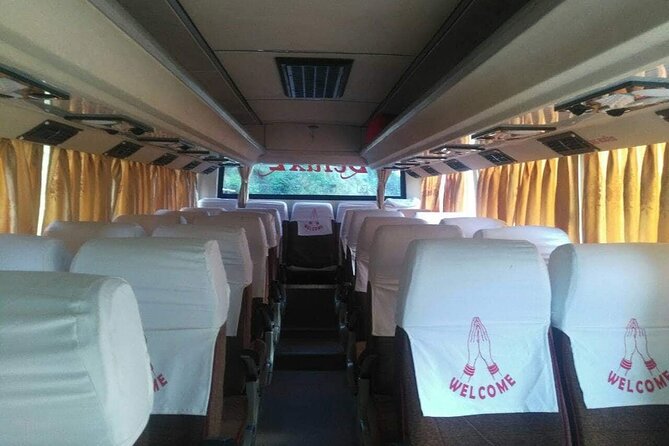
This is a full morning into afternoon plan, so comfort planning matters. Even though the ticket is described as deluxe, the drive is still a road trip through steep terrain.
Here’s what I recommend you do before you go:
- Eat something before pickup. You’re leaving at 7:15 am, and you may not get your first proper food chance right away.
- Bring a layer. Even if Kathmandu feels warm in the morning, mountain-adjacent areas can feel cooler, and buses don’t always keep a consistent temperature.
- Expect long stretches where you’ll just sit and watch. Have something to occupy time if you want it—offline music, a book, or simply good window time.
- Pack cash or a payment method for tea and food at stops, since the ticket covers the bus only.
Also, since the maximum group size is 20 travelers, your bus experience is likely more manageable than mass tours. Still, it’s a shared ride. Keep your pace flexible during stops.
Who this bus ride is best for
This trip is a great fit if you want:
- A straightforward way to reach the Langtang gateway area without complicated logistics.
- Mountain views as part of the journey, not just at your destination.
- A budget-friendly option: for many people, the $17 price is the deciding factor because it covers long-distance transport.
It’s also ideal if you enjoy road travel—watching the valley shift, spotting changing scenery, and treating the bus as part of the experience.
Who might want to skip it:
- Anyone who dislikes long early starts.
- Anyone who gets motion sick easily and hasn’t solved it before.
- People hoping for a gentle, easy ride with minimal bumps. This road is steep enough that the driving style and road texture can be felt.
Should you book this bus to Dhunche?
I’d book it if you’re planning to spend time in the Langtang region and want the cheapest, simplest way to get there. The combination of river views, a clear connection to the Langtang gateway, and a low price makes this a smart choice for independent travelers.
Skip it only if your top priority is comfort over scenery, or if you need a very strict schedule. Traffic can shift timing, and you’re dealing with 8–9 hours on the road.
If you’re flexible, this bus ride becomes more than a transfer. It’s a slow, scenic on-ramp into the Langtang mountains.
FAQ
What is the price of the Kathmandu to Dhunche bus ride?
The price is $17.00 per person.
How long does the bus ride take?
It takes about 8 to 9 hours, depending on traffic conditions.
Where does the tour start in Kathmandu?
The start point is Machha Pokhari, Ring Rd, Kathmandu, Nepal.
What time does the bus depart?
The start time is 7:15 am.
Where does the bus end?
The end point is Syapru Besi 45000, Nepal.
What’s included in the ticket price?
A deluxe bus ticket is included.
Are meals and drinks included?
Anything except the ticket(s) is not included, so tea and meals at stops would be extra.
How many people are in the group?
The maximum group size is 20 travelers.
When will I receive confirmation?
Confirmation is received at the time of booking.
What is the cancellation policy?
This experience is non-refundable and cannot be changed for any reason.
Is this suitable for most people?
Most travelers can participate.
More Tour Reviews in Kathmandu






Just Reviewed in Kathmandu
- Mountain Bike Tour
★ 5.0 · 3 reviews - Annapurna Panaroma
★ 5.0 · 3 reviews - Mount Everest Scenic Flight 50 Minutes
★ 5.0 · 3 reviews - Kathmandu : Swambhunath & Durbar Square Guided Half Day Tour
★ 3.3 · 3 reviews - Chandragiri Cable Car & Monkey Temple Tour – Private/Group
★ 5.0 · 3 reviews - Kathmandu: Shivapuri National Park Hiking Day Trip
★ 3.3 · 3 reviews
Langtang Valley Treks, compared.
 ★ 5.0Langtang Valley TrekFrom $555140 reviews
★ 5.0Langtang Valley TrekFrom $83061 reviews
Langtang Valley TrekFrom $70050 reviews
 ★ 5.08 Days Tour in Langtang Valley TrekFrom $69845 reviews
 ★ 5.0Private 8 – Day Langtang TrekkingFrom $58429 reviews
★ 5.0Langtang Valley TrekFrom $1,00023 reviews
 ★ 5.06-Day Limitless Langtang TrekFrom $18121 reviews
★ 5.0Langtang Valley TrekFrom $56020 reviews
Browse the lists this tour appears in