
Review · LANGTANG VALLEY TREKS
Langtang Valley Trek
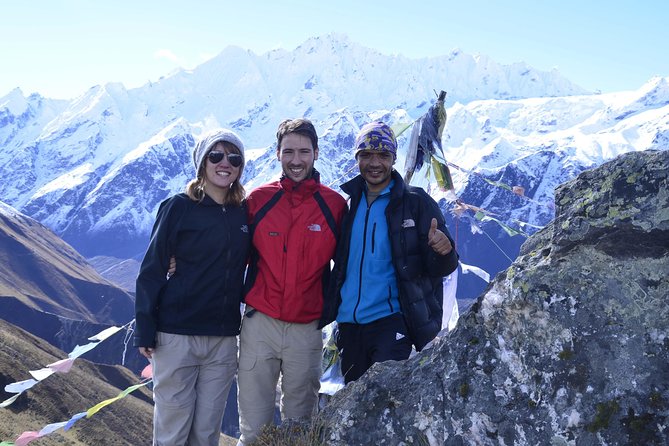
Langtang Valley hits fast. In a short hop from Kathmandu, you walk into a glacial basin with huge Himalayan views and Tamang village life. You’ll also get the best kind of day: one that mixes a real Buddhist monastery visit with high viewpoints like Kyanjin Ri (4773 m) and Chorkari Ri (5050 m).
I like the way this itinerary balances hiking with breathing room. You start with gradual altitude gains through Syabru Bensi and Lama Hotel, then you earn bigger views later. I also like the practical setup: airport pickup, a team with an English-speaking guide and porter, trekking permits, and full-board meals during the trek.
One thing to plan for: the trail gets high fast on summit days. Even with gradual stages, you still crest major elevations, and there are no hot showers during the trek—so your comfort will be basic, especially after long walk days.
In This Review
- Key things I’d zero in on before you go
- Why Langtang feels close, but still earns the “Himalaya” label
- The day-by-day route: Kathmandu to Syabru Bensi to Kyanjin Ri and back
- Day 1: Arrive in Kathmandu
- Day 2: Kathmandu to Syabru Bensi (1462 m)
- Day 3: Syabru Bensi to Lama Hotel (2500 m)
- Day 4: Lama Hotel to Langtang Village (3307 m)
- Day 5: Kyanjin Ri (4773 m) and back to Kyanjin Gompa (3798 m)
- Day 6: Kyanjin Gompa exploration and Chorkari Ri (5050 m)
- Day 7: Kyanjin Gompa back down to Lama Hotel (2500 m)
- Day 8: Lama Hotel to Syabru Bensi (1462 m)
- Day 9: Bus back to Kathmandu
- Day 10: Depart Kathmandu
- Kyanjin Gompa, Kyanjin Ri, and Chorkari Ri: the core “big day” trio
- Lodges, meals, and yak cheese: what “full board” really means
- Price and logistics: what you’re paying for with $830 and how it adds up
- Altitude reality check: the trek is “gradual,” but your body decides the pace
- Should you book the Langtang Valley Trek with this operator?
- FAQ
- What time does the trek start?
- Is airport pickup and drop-off included?
- How do you travel between Syabru Bensi and Kathmandu?
- What kind of accommodation is included in Kathmandu and on the trek?
- Are meals included during the trek?
- Are hot showers available during the trek?
- Is there WiFi during the trek?
- Who will guide and support us?
- What are the highest points on the route?
- Is there free cancellation, and how far in advance do I need to cancel?
Key things I’d zero in on before you go
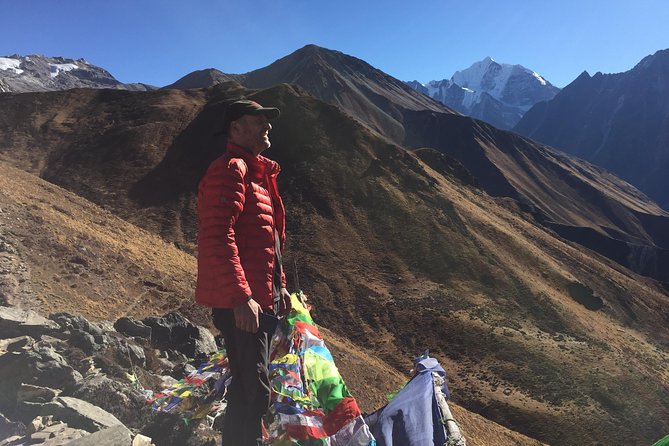
- Langtang National Park: you’re trekking inside Nepal’s first Himalayan National Park, with protected flora and fauna
- Glacial basin walking: the valley floor feels wide open, not just a narrow trail
- Two big viewpoint days: Kyanjin Ri plus Chorkari Ri give you earned panoramas
- Tamang village culture: you pass welcoming communities in the Langtang Valley
- Monastery time at Kyanjin Gompa: not only trekking, you also slow down for history and faith
- Small-group feel (max 15): you’ll likely get more teamwork and smoother pacing
More trails out of Kathmandu, boots ready
- Everest Base Camp Trek – 14 Days★ 5.0 · 1,499 reviews
- Everest Base Camp Trek★ 5.0 · 842 reviews
- Everest Base Camp Trekking★ 5.0 · 485 reviews
- Nagarkot Sunrise View and Day Hiking from Kathmandu★ 5.0 · 471 reviews
Why Langtang feels close, but still earns the “Himalaya” label
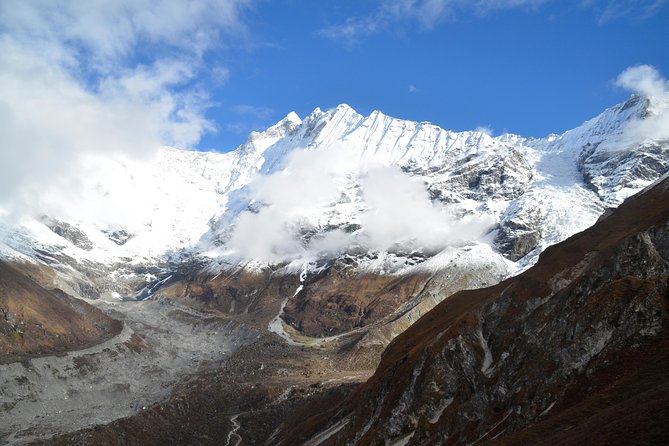
Langtang Valley is one of those treks that works even when you don’t have weeks. You’re based in Kathmandu at the start, then you drive out to the valley and settle into a world that feels clearly Himalayan: glacial terrain, fast rivers, and big walls of mountain rising above you.
What makes this route special is the mix of scenery and culture. On one hand, you’re hiking through a glacial basin with impressive natural formations and nonstop mountain drama. On the other, you’re passing through Tamang settlements, then spending time at Kyanjin Gompa—a day that adds meaning beyond the photo stops.
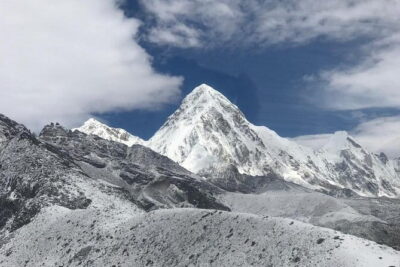
The peak list is also a strong reason to pick this trek. On clear days, you’re looking at Mount Langtang Lirung (7,227 m), Ganesh Himal (7,422 m), and other named giants like Dorje Lakpa. You don’t have to stand on a summit to feel the scale—these ridgelines and viewpoints do the job.
The day-by-day route: Kathmandu to Syabru Bensi to Kyanjin Ri and back
This itinerary is built around steady movement and altitude awareness. It’s not a sprint. It’s also not “easy.” It’s a walk that gradually teaches you how to pace yourself.
Day 1: Arrive in Kathmandu
You land at Tribhuvan International Airport and then you’re set up with airport pickup. You’ll spend two nights in Kathmandu at a 3-star category hotel with breakfast. This matters because you’re going to trek next, and having a real base night in town helps you organize your gear and meals.
A practical tip: Kathmandu air and traffic can be intense after a long flight. Use the first day to sort your layers and make sure you know what you’ll carry daily versus what can stay in your duffle.
Day 2: Kathmandu to Syabru Bensi (1462 m)
You drive from Kathmandu to Syabru Bensi. The schedule calls for about 7 hours. This long transfer turns the valley into your “new start line.” By the time you arrive, you’re ready to walk, not just stare out the window.
The route is often your first taste of what the trek will feel like: river corridors, changing vegetation, and the gradual shift from city rhythm to trail rhythm.
Day 3: Syabru Bensi to Lama Hotel (2500 m)
Today you climb to Lama Hotel (about 5 hours). This is a key day because it’s where you start feeling the altitude, even if the ascent is gradual.
You’ll likely appreciate how the itinerary doesn’t jump immediately to the high ridges. Lama Hotel acts like a buffer night before you go higher toward Langtang Village.
Day 4: Lama Hotel to Langtang Village (3307 m)
You gain another big chunk, reaching Langtang Village at 3307 m (about 5 hours). This is where the trek starts to feel more “in the valley” and less like a hike that could belong anywhere.
Langtang Village is also part of the cultural core of the trek. You’re moving through the kind of Tamang community areas the trip is designed to include, so the day isn’t just about elevation—it’s about place.
Possible consideration: you’re now at an altitude where you’ll want to focus on easy breathing and steady steps. If you’re prone to altitude headaches, this is where smart pacing becomes non-negotiable.
Day 5: Kyanjin Ri (4773 m) and back to Kyanjin Gompa (3798 m)
This is your first big “wow” day. The day is scheduled at 7–8 hours and includes climbing to Kyanjin Ri (4773 m), then returning to Kyanjin Gompa (3798 m).
Kyanjin Ri is one of those viewpoints that makes the whole trek feel worth it. You get high-angle panoramas with major peaks in view, and you see the valley system from above instead of beside it.
Tradeoff: it’s a long outing. Even if the trail is described as easier with gradual elevation overall, this day is still a serious altitude effort. Build in patience and don’t treat it like a jog.
Day 6: Kyanjin Gompa exploration and Chorkari Ri (5050 m)
Today splits into two halves: exploration at the Kyanjin Gompa area, then a climb to Chorkari Ri (5050 m). The schedule says about 7 hours.
I like this design. Instead of going from sleep to “maximum altitude” immediately, you get monastery time and a slower pace before the climb. That means you experience the spiritual side of the region, not just the strenuous one.
At 5050 m, you’ll feel the thin air. The reward is big-view intensity, and the sense of standing in the high country.
Day 7: Kyanjin Gompa back down to Lama Hotel (2500 m)
You hike back to Lama Hotel (about 5–6 hours). This is a relief day in altitude terms, which matters after the high passes.
This kind of downshift is also where you start appreciating the “river corridor” walking you had earlier. You’ll likely notice more birds, different plant types, and changes in weather as you drop back toward the warmer lower elevations.
Day 8: Lama Hotel to Syabru Bensi (1462 m)
Another descent day, about 5–6 hours. By the time you reach Syabru Bensi, you’re back at the start altitude zone (1462 m). It’s the moment where you can breathe normally again and enjoy the end of the trek without the altitude clouding your decisions.
Day 9: Bus back to Kathmandu
You drive back by bus from Syabru Bensi to Kathmandu. This is one of those travel-day details that people gloss over—until they’re tired. Plan for a long ride and keep snacks and water on hand.
Day 10: Depart Kathmandu
Your trek ends with departure and farewell.
Kyanjin Gompa, Kyanjin Ri, and Chorkari Ri: the core “big day” trio
If you want one reason to choose this trek, it’s that your highlights aren’t random. They’re stacked in a way that makes sense.
First, you reach Kyanjin Gompa—with time for exploration. The monastery piece matters because the trek is inside a living cultural landscape, not a theme-park. You’re there for the Buddhist monastery experience as part of the route, not as an extra detour.
Then you go up to Kyanjin Ri, which functions like your panoramic stage. From high viewpoints like this, you can see the glacial basin pattern and understand how the valley system cuts through the mountains. It helps the entire week “click” into place.
Finally, Chorkari Ri (5050 m) gives you the second high-stakes viewpoint. It’s higher than Kyanjin Ri, so the air is thinner and the effort is real. But the payoff is a very clear sense of altitude, distance, and scale.
Practical note: since you have both high points scheduled, your best strategy is to treat every step as a vote for your energy. Don’t start too fast on the climb days.
Lodges, meals, and yak cheese: what “full board” really means
This is a trek where you should expect simple lodge life. Your trekking accommodations are described as the best available twin sharing lodge to lodge accommodation.
That twin-sharing format matters. If you’re traveling as a solo hiker, you still get a place in a shared setup—just coordinated by the operator and your guide/porter team.
Food is a brighter story. During the trek, you get full board meals: breakfast, lunch, and dinner, plus tea/coffee. That’s a lot of planning handled for you. It means you can spend your energy on walking instead of negotiating meals at every stop.
The trek also includes a chance to try yak cheese as part of the Himalayan delicacy experience. That’s exactly the kind of regional food that feels connected to the landscape and local herding life, not just a novelty item.
What’s not included is also important: hot showers during the trek are not provided. So if you’re hoping for spa-level recovery, you’ll want to adjust your expectations now. You can still feel clean enough for the next day, but don’t assume warm water.
Price and logistics: what you’re paying for with $830 and how it adds up
At $830 per person, the value isn’t only that you’re getting guides. It’s the bundle of things that would otherwise cost time and money to arrange yourself.
Here’s what’s included that usually costs you effort when you arrange a trek independently:
- Airport pickup and drop off by private vehicle
- Two nights in Kathmandu at a 3-star hotel, breakfast included
- Full board meals during the trek (breakfast, lunch, dinner) with tea/coffee
- English-speaking guide and porter (set up as 1 English-speaking guide and porter, with a 2 trekkers : 1 porter arrangement)
- All trekking permits plus government taxes and office service charge
- A first aid medical kit
- A duffle bag for the trek (and it needs to be returned)
- Surface transfer to/from Syabru Bensi by public bus (private vehicle for that part is not included)
What you might not love: your Kathmandu side still has a gap. Lunches and dinners in Kathmandu aren’t included. So factor in a couple meals when you’re back in the city.
Also, connectivity is limited. WiFi internet during the trek is not included. That’s normal for the route, but it’s worth planning for if you need to upload photos or message family daily.
One more practical note from the tour info: this is a maximum 15 travelers group. That usually helps keep the rhythm sensible and the logistics manageable.
Altitude reality check: the trek is “gradual,” but your body decides the pace
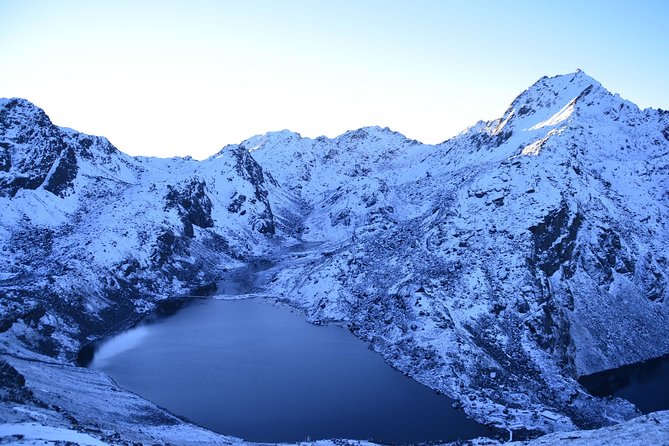
The trek is described as an easy trail with gradual elevation and rivers gushing by, and that’s a big advantage. But the itinerary still pushes you to major elevations—especially on the viewpoint days.
Key altitude points you’ll need to plan around:
- Kyanjin Ri: 4773 m
- Chorkari Ri: 5050 m
- Plus Langtang Village at 3307 m and Kyanjin Gompa around 3798 m
The important takeaway: gradual hiking doesn’t mean “no altitude effects.” It means the schedule gives you time to adjust before the highest efforts.
Your best move is simple:
- Go slower than you think you need to on climb days.
- Keep your breathing steady.
- Use the “in-between” days (like return hikes and Gompa exploration) to rest your system.
Also, bring the right mindset. This route works best when you treat the high points like the main event, not like a box to check quickly.
Should you book the Langtang Valley Trek with this operator?
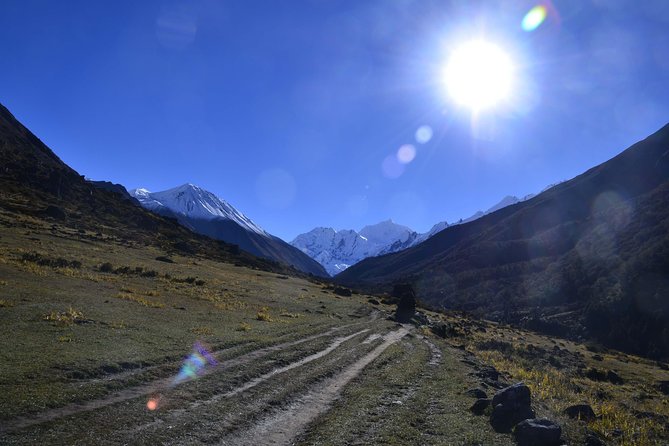
If you want an accessible Himalayan trek with real scenery and real culture, I think this one is a strong choice.
Book it if:
- you like the idea of starting near Kathmandu and getting into the mountains fast
- you want a balanced mix of viewpoints, a monastery day, and Tamang village trekking
- you’d rather have the permits, permits paperwork, and meal planning handled
- you value a small group size (max 15) and a team setup with a guide and porter
Skip it or plan carefully if:
- you’re not comfortable with high altitude days at 4773 m and 5050 m
- you strongly prefer comfort perks like hot showers (not included)
- you need reliable WiFi on the trek (also not included)
- you want your Kathmandu meals fully covered (lunches and dinners aren’t included)
FAQ
What time does the trek start?
The start time is 7:15 am.
Is airport pickup and drop-off included?
Yes. The package includes airport pickup and drop off by private vehicle.
How do you travel between Syabru Bensi and Kathmandu?
The transfer to and from Syabru Bensi is included as surface transfer by public bus. Private vehicle for this part is not included.
What kind of accommodation is included in Kathmandu and on the trek?
In Kathmandu, you get two nights’ accommodation with breakfast at a 3-star category hotel. During the trek, you stay in the best available twin sharing lodge to lodge accommodation.
Are meals included during the trek?
Yes. The trek includes full board meals with tea/coffee: breakfast, lunch, and dinner during the trek. Lunches and dinners in Kathmandu are not included.
Are hot showers available during the trek?
No. Hot showers during the trek are not included.
Is there WiFi during the trek?
No. WiFi internet during the trek is not included.
Who will guide and support us?
You get 1 English-speaking guide and porter. The arrangement listed is 2 trekkers to 1 porter.
What are the highest points on the route?
The itinerary includes Kyanjin Ri at 4773 m and Chorkari Ri at 5050 m.
Is there free cancellation, and how far in advance do I need to cancel?
Free cancellation is available. You can cancel up to 24 hours in advance for a full refund. The experience may also be canceled due to poor weather, with an offered different date or a full refund.
If you tell me your trekking date range and your fitness level (beginner, intermediate, or experienced), I can help you decide whether the Kyanjin Ri and Chorkari Ri days feel like a good fit.
More Trekking Out of Kathmandu
More Tour Reviews in Kathmandu
Just Reviewed in Kathmandu
- Mountain Bike Tour
★ 5.0 · 3 reviews - Annapurna Panaroma
★ 5.0 · 3 reviews - Mount Everest Scenic Flight 50 Minutes
★ 5.0 · 3 reviews - Kathmandu : Swambhunath & Durbar Square Guided Half Day Tour
★ 3.3 · 3 reviews - Chandragiri Cable Car & Monkey Temple Tour – Private/Group
★ 5.0 · 3 reviews - Kathmandu: Shivapuri National Park Hiking Day Trip
★ 3.3 · 3 reviews
Langtang Valley Treks, compared.
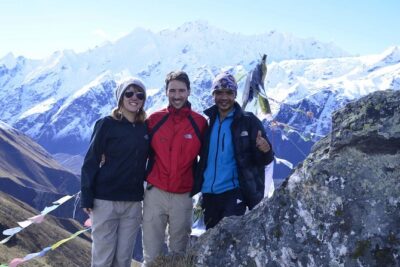 ★ 5.0Langtang Valley TrekFrom $555140 reviews
Langtang Valley TrekFrom $70050 reviews
★ 5.0Langtang Valley TrekFrom $555140 reviews
Langtang Valley TrekFrom $70050 reviews
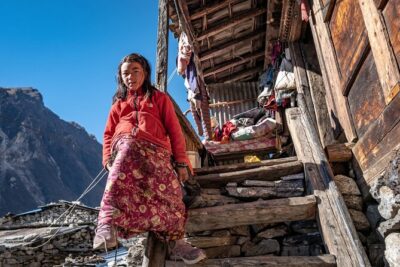 ★ 5.08 Days Tour in Langtang Valley TrekFrom $69845 reviews
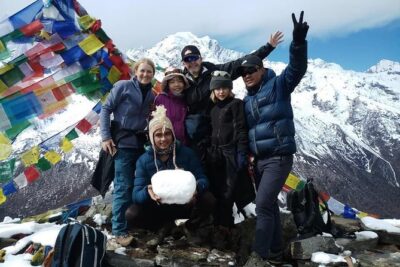 ★ 5.0Private 8 – Day Langtang TrekkingFrom $58429 reviews
★ 5.0Langtang Valley TrekFrom $1,00023 reviews
★ 5.0Private 8 – Day Langtang TrekkingFrom $58429 reviews
★ 5.0Langtang Valley TrekFrom $1,00023 reviews
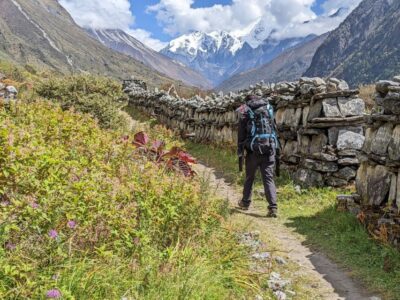 ★ 5.06-Day Limitless Langtang TrekFrom $18121 reviews
 ★ 5.0Langtang Valley TrekkingFrom $75020 reviews
★ 5.0Langtang Valley TrekFrom $56020 reviews
★ 5.0Langtang Valley TrekkingFrom $75020 reviews
★ 5.0Langtang Valley TrekFrom $56020 reviews
Browse the lists this tour appears in